封面图说明|
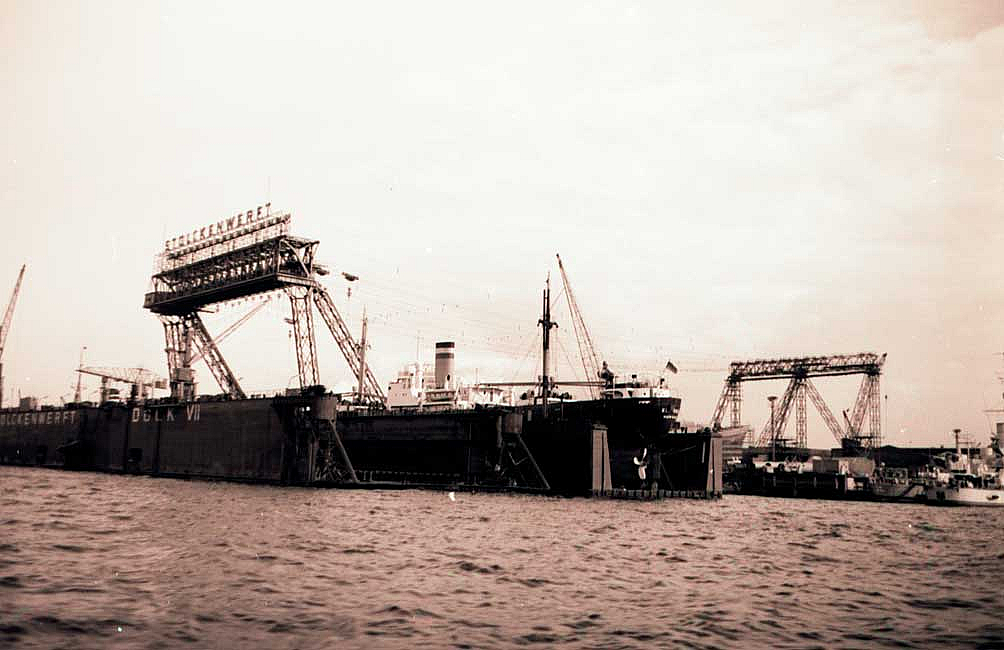
1962年6月5日,
Stülcken-Werft仍在易北河边工作,
船舶停在Dock VII,
大型起重机矗立在船坞上方。
图片来源:Willy Pragher|Landesarchiv Baden-Württemberg,Staatsarchiv Freiburg|馆藏编号 W 134 Nr. 069401|Wikimedia Commons|CC BY 4.0。
引文|她驶过出生地,却再也看不见船厂
河岸仍在,
航道仍通向北海,
造船的厂房已经消失,
出生地换了模样。
1883年8月9日,
NO. 5 ELBE从船台下水,
易北河托住她,
岸边的工人抬头望着,
新船缓缓离开Stülcken-Werft。
一百多年过去,
她沿着同一条航道回来,
北海仍在前方,
熟悉的厂房已经消失,
高大的起重机也不见了。
原来的厂区仍在,
两座音乐剧院亮起灯光,
观众乘船渡过易北河,
他们前来观看另一个故事,
很少有人知道,
这里曾经造过船。
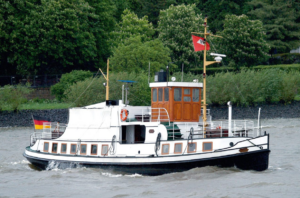
NO. 5 ELBE还在,
她保留着1883年的木船身,
造出她的船厂却不在了,
每当她经过Steinwerder,
那片河岸便短暂拥有了过去。
一、一艘木船诞生在工业时代以前
钢铁尚未进入船厂,
木材撑起船的身体,
双手延续古老的经验,
河流把新船送向海洋。
1. 从修船开始
1846年,
Heinrich Christopher Stülcken来到Steinwerder,
他在北易北河岸租下土地,
先从修理木船开始。
旧船被拖到岸边,
工匠俯身检查木板,
他们更换腐烂的船材,
再把修好的船送回河上。
1853年,
船台迎来第一艘新船,
她是一艘木制三桅帆船,
名字叫作HERMANN。
木板沿着肋骨铺开,
桅杆从甲板向上伸展,
船厂不再只修补旧船,
也开始建造自己的船。
1858年,
船厂建成木制浮船坞,
船身可以离开水面,
工人也能从船底维修,
汉堡此前没有这种设施。
更多木船离开船台,
桅杆沿着河岸排列,
烟囱尚未遮住天空,
钢铁也还没有取代木材。
2. Dorothea与NO. 5 ELBE
1873年,
船厂创办人去世,
妻子Dorothea接过经营,
河岸上的工作继续进行。
企业更名为H. C. Stülcken Wwe.,
Wwe.是Witwe的缩写,
这个词在德语中意为遗孀,
Dorothea也被写进船厂名称。
当时的汉堡需要一艘新船,
她要把引航员送往海上,
也要停在易北河口等待,
为进港船舶带回引航员。
河口的风向不断改变,
德意志湾的浪更高,
船身必须足够坚固,
操纵也必须灵活可靠。
1882年10月,
Stülcken-Werft取得合同,
船价为66,000马克,
船厂必须使用最好的材料。
橡木构成船身骨架,
外板沿着肋骨铺设,
水线以下覆盖铜皮,
两根桅杆立上甲板。
1883年8月9日,
NO. 5 ELBE离开船台,
木船身缓缓滑入河水,
她开始为汉堡运送引航员。
她出生在木船时代末期,
铁板已经走进船厂,
蒸汽机的声音也越来越近,
Stülcken-Werft即将改变。
NO. 5 ELBE仍是一艘新船,
远航故事还没有开始,
木材、手艺与河岸经验,
已经留在她的身体里。
当钢铁接管汉堡船台,
她带着木材、手艺与河岸经验,
继续在易北河上呼吸。
3. Stülcken-Werft 船厂小档案
- 正式创立:1846年。
- 创办人:Heinrich Christopher Stülcken。
- 创办企业:H. C. Stülcken船厂,后来定名H. C. Stülcken Sohn。
- 最初性质:私人经营的家族帆船船厂。
- 最初地点:汉堡Steinwerder。
- 周边水域:北易北河与Fährkanal。
- 早期业务:木船维修、木制帆船建造与浮船坞业务。
- 著名船舶:NO. 5 ELBE、PUDEL、ADELE及多艘重货船。
- 现存历史船代表:NO. 5 ELBE、OTTO LAUFFER与帆船EUROPA。
- 企业变迁:Dorothea接掌后使用H. C. Stülcken Wwe.之名,1892年改称H. C. Stülcken Sohn,1966年由Blohm + Voss收购。
- 现况:船厂已经消失,原厂区现为两座音乐剧剧院所在地。
延伸阅读|NO. 5 ELBE:为什么汉堡港需要引航船?
这篇文章从NO. 5 ELBE出发,
回到引航员守候海上的年代,
看她如何穿过易北河口,
也读懂汉堡为何需要引航船。
二、木船厂学会建造另一个时代
一座木船厂若想留下,
就必须学会建造新时代的船。
木材还躺在船台上,
钢铁与机器已经走进厂房。
1. 从木船走向钢船
十九世纪七十年代,
木船仍停满易北河岸,
远洋船却越造越大,
钢铁开始回应新的尺度。
1876年前后,
Stülcken建造第一批铁壳船,
铁板沿着船身铺开,
铆钉声穿过原来的木船厂。
木材没有立刻离开,
旧工艺仍在船台上延续,
铁板却走进更多船身,
两种造船时代在河岸交会。
1885年,
船厂制成第一台船用蒸汽机,
机器被吊进船舱,
烟囱也开始出现在桅杆之间。
拖轮穿行于港池,
渔船前往更远的海面,
蒸汽船陆续离开船台,
风帆不再是唯一的动力。
车间沿着水岸扩展,
工人走进铸造与机械部门,
造船需要更多专业分工,
昔日的小船厂逐渐长大。
1914年,
员工人数达到约895人,
Stülcken已经能够建造钢壳远洋船,
木船厂进入大型工业时代。
2. 战争留下的阴影
第一次世界大战爆发,
民用船舶让出船台,
渔船被改装为警戒船,
船厂开始接受军事任务。
战争结束以后,
军用订单迅速消失,
空下来的船台等待新工作,
Stülcken重新寻找民用市场。
1933年以后,
军事生产再次进入厂区,
大型船台不断扩建,
缆索起重架跨过整片河岸。
潜艇在船台上成形,
柴油机从车间送往船舱,
机器日夜运转,
战争一步步占据船厂。
1944年11月,
集中营外营设在厂区,
约250名匈牙利犹太人,
被迫站进机器与船体之间。
他们无法离开,
也不能选择自己的工作,
船厂不断交付战争需要的船,
数字背后却是被囚禁的人。
3. Stülcken桅杆走向世界
战争结束时,
大片厂房已经成为废墟,
起重架仍立在河岸,
脚下却只剩瓦砾与钢筋。
1948年,
工人重新走进厂区,
他们清理破碎的船台,
也把机器一台台装回车间。
此时的海运需要重货船,
机车与发电设备等待装船,
成套机器越来越沉重,
普通吊杆已经不够使用。
五十年代初,
设计师Sprengel提出新方案,
Stülcken与DDG Hansa合作,
开始开发重货装卸系统。
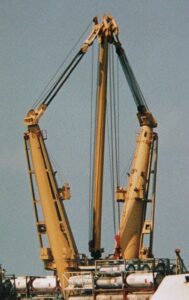
两根支柱向外张开,
V形轮廓高过甲板,
粗大的吊杆悬在中央,
钢索从高处垂向货舱。
吊杆可以越过船身,
也能在两座货舱之间转动,
船舶不必等待岸上起重机,
远方的港口也能卸下重货。
过去需要数小时的准备,
最快可以缩短至十五分钟,
吊钩缓缓落入货舱,
沉重的机器随之离开甲板。
最强的Stülcken重吊系统,
单次可以吊起约350吨,
两套设备共同工作,
重量还能增加到约600吨。
V形支柱驶向世界各地,
也成为重货船的醒目标志,
Stülcken不再只是船厂名称,
它已经成为一种航运技术。
船厂从废墟中站起,
没有重复过去的模样,
它把名字装上船舶,
再让技术驶向世界。
船厂造过的最后一艘船,
已经离开,
Stülcken的名字却没有消失,
它被装上世界各地的重吊船,
继续航行。
三、当起重机退场,音乐剧灯光亮起
有些工业现场被保存下来,
有些只留下改变后的地址,
最后一艘船离开船台,
河岸开始等待另一种生活。
1. 最后一次下水
六十年代初,
德国造船业进入危机,
新订单越来越少,
空下来的船台越来越多。
Stülcken仍在建造船舶,
起重机也还跨过厂区,
河岸看起来没有改变,
危机却已走进船厂。
1966年,
Blohm + Voss收购Stülcken-Werft,
船厂失去独立地位,
剩余订单继续完成。
最后一艘船仍在船台上,
工人完成船身与设备,
她是一艘海军运输船,
名字叫作STEIGERWALD。
1967年3月10日,
STEIGERWALD滑入易北河,
河水托起最后一艘新船,
船台也完成最后一次送行。
她离开以后,
船厂没有迎来下一艘船,
经营一百二十年的Stülcken-Werft,
结束了自己的造船历史。
2. 船台变成舞台
新船不再出现,
起重设备逐步停用,
厂房失去原来的工作,
河岸开始安静下来。
部分设施陆续拆除,
船台也失去完整轮廓,
曾经覆盖天空的起重架,
一座接一座退出河岸。
1988年,
原厂区交还汉堡市政府,
剩余建筑开始拆除,
旧船厂很快变成空地。
土地留下工业污染,
土壤必须重新处理,
造船留下的油污与废料,
也被一层层移出地下。
清理完成以后,
河岸等待新的用途,
厂房没有重新建起,
船台也没有成为纪念设施。
1994年,
音乐剧剧院在原厂区落成,
第一批观众渡过易北河,
来到过去的船厂看戏。
2001年以后,
《狮子王》长期在这里演出,
剧院的灯光照向Landungsbrücken,
观众从对岸乘船抵达。
2014年,
第二座音乐剧院在旁边开放,
两座剧院并肩面对易北河,
舞台接替了曾经的船台。
锤击声已经停止,
焊接的火光也不再出现,
夜色降临以后,
音乐与掌声从同一段河岸传来。
船台送走最后一艘船,
舞台迎来第一批观众,
河岸没有离开原地,
却换了一种声音继续生活。
曾经锤击钢铁的河岸,
现在回响着音乐与掌声,
船台变成了舞台,
河岸没有离开原地,
只是换了一种方式活着。
尾之声|只有她还记得这里曾经造船
船厂已经消失,
船还在。
每一次驶过Steinwerder,
被造出来的船成为最后的见证。
当NO. 5 ELBE再次驶过Steinwerder,
白色船身掠过两座剧院,
水流仍通向北海,
河岸却换了一种生活。
她的橡木船身来自1883年,
船板保留工匠的手艺,
船厂的建筑没有活到现在,
她成为一份仍能航行的船厂档案。
夜色落在易北河上,
音乐从剧院传向水面,
NO. 5 ELBE从灯光前经过,
船与河岸短暂回到同一幅画面。
船厂消失了,
舞台亮起了灯,
每当NO. 5 ELBE驶过Steinwerder,
她仍是1883年,
从Stülcken船台下水的那艘船,
造船的地方换了模样,
被造出来的船却记得来处。
后记|考烈王、黄歇与令尹夫人的观后感
出生地还在吗?
第六家船厂写完,
地图上又少了一个名字,
河岸换成音乐剧舞台,
船却没有忘记来处。
考烈王望着两座剧院,
又看向易北河,
那里没有船台,
也找不到Stülcken-Werft。
考烈王问:
“船厂已经不在,
这里为什么仍是,
NO. 5 ELBE的出生地?”
我回答:
“别人问我文化祖籍,
我总是回答楚,
地图早已改变,
来处却没有改变。”
考烈王又问:
“你这样回答,
别人不会误会吗?”
我说:
“楚是文化来处,
不是现代行政区划,
现实生活使用现在的地名,
历史记忆保存更早的名字。”
黄歇望向剧院前的水面,
渡船正载着观众靠岸,
人们走向舞台,
脚下却是旧船厂的土地。
黄歇说:
“地址属于现在,
出生地却通向过去,
剧院改变了河岸的用途,
却不能改变船从哪里下水。”
土地不会主动说话,
河岸也不会解释过去,
必须有人指出消失的船台,
旧地址才会重新拥有时间。
剧院不会退场,
1883年的河岸也不会恢复,
但是Stülcken-Werft的故事,
应该要被写下来。
考烈王终于点头,
他替我们作出结论:
“你的文化祖籍仍是楚,
她的出生地仍是Stülcken-Werft。”
地图负责标出现在,
记忆却走得更远,
名字可以退出地图,
来处不会因此消失。
Appendix|English Narrative Overview
Stülcken-Werft: The Hamburg Shipyard Beneath the Musical Stages
From Wooden Ships to NO. 5 ELBE
When NO. 5 ELBE sails past Steinwerder, she passes the place where she was built in 1883.
The Elbe still leads towards the North Sea, but the shipyard has disappeared.
Two musical theatres now stand where slipways and workshops once met the river.
Heinrich Christopher Stülcken founded his yard at Steinwerder in 1846.
It began by repairing wooden vessels and completed its first new ship, HERMANN, in 1853.
In 1858, the yard built what is regarded as Hamburg’s first wooden floating dock.
Ships could now be raised from the water and repaired below the waterline.
After Stülcken died in 1873, his widow Dorothea took over the business.
The company continued under the name H. C. Stülcken Wwe., with “Wwe.” identifying it as the enterprise of Stülcken’s widow.
In 1882, the yard received an order for a pilot schooner.
The vessel had to endure the difficult waters of the Elbe estuary and the German Bight.
Her structure was built from oak, while copper protected the hull below the waterline.
On 9 August 1883, NO. 5 ELBE entered the river for the first time.
She came from the final decades of Hamburg’s wooden shipbuilding tradition.
Steel and steam were already entering the yards.
Learning to Build for Another Age
Stülcken began constructing iron-hulled vessels around 1876.
In 1885, the yard produced its first marine steam engine.
Wooden sailing ships gradually gave way to tugboats, fishing vessels and steam-powered ships.
By 1890, Stülcken was building steel-hulled ocean-going vessels.
The workforce grew with the yard.
By 1914, approximately 895 people were employed there.
Both world wars changed the purpose of the shipyard.
Civilian work increasingly yielded to naval construction and military conversion.
Under Nazi rule, Stülcken participated in submarine production.
In November 1944, a satellite camp of Neuengamme concentration camp was established at the yard.
Around 250 Hungarian Jewish prisoners were forced to work among the workshops and shipbuilding facilities.
Their imprisonment remains part of the site’s industrial history.
Repeated air raids brought production to a halt by March 1945.
The shipyard that survived the bombing had to rebuild both its facilities and its business.
The Stülcken Heavy-Lift Derrick
Reconstruction began in 1948.
During the following decade, the shipyard developed the technology that would make its name familiar far beyond Hamburg.
Working with the shipping company DDG Hansa, designer Sprengel created the Stülcken heavy-lift derrick.
Its two inclined posts formed a distinctive V above the deck.
The arrangement allowed a ship to lift exceptionally heavy cargo without depending on harbour cranes.
The derrick could serve two neighbouring holds and be prepared for work in a short time.
Some versions could lift approximately 350 tonnes with one system, or around 600 tonnes when combined.
This mattered in ports where suitable lifting equipment did not exist.
Heavy machinery, locomotives and industrial components could be loaded by the ship itself.
The design spread internationally.
Stülcken was no longer only the name of a Hamburg shipyard—it had become the name of a recognised cargo-handling system.
When the Slipways Became Stages
By the early 1960s, German shipbuilding was entering a serious crisis.
Orders declined as competition from overseas yards increased.
Blohm + Voss acquired Stülcken-Werft in 1966.
The naval transport vessel STEIGERWALD became the yard’s final ship and was launched on 10 March 1967.
After more than 120 years, the independent history of Stülcken-Werft came to an end.
The surviving facilities were gradually closed and dismantled.
The site returned to the City of Hamburg in 1988.
Most of the remaining industrial buildings disappeared during 1988 and 1989, and the contaminated land was remediated.
A musical theatre opened on the former shipyard site in 1994.
Theater im Hafen later became the long-term home of The Lion King, while Theater an der Elbe opened nearby in 2014.
Where hammers, engines and launching chains once filled the riverbank with noise, music and applause now cross the water.
The address remained.
Its purpose changed completely.
The Ship That Still Remembers
NO. 5 ELBE outlived the yard that built her.
Her oak hull still carries the workmanship of 1883, while the workshops, slipways and cranes of Stülcken-Werft have vanished.
A ship can be repaired plank by plank.
An entire industrial landscape cannot be reconstructed so easily.
Whenever NO. 5 ELBE passes the theatres at Steinwerder, the vessel and her birthplace briefly return to the same picture.
She is not a monument standing among ruins.
She is a surviving shipyard archive that can still move along the Elbe.
Across Civilizations
King Kaolie looked at the two theatres.
“If the shipyard has disappeared,” he asked,
“why is this still the birthplace of NO. 5 ELBE?”
I thought about the question people sometimes ask me.
When they ask where my cultural roots lie,
I answer, “Chu.”
Chu is not a modern administrative division.
It is the place from which I trace part of my history.
Lord Chunshen Huang Xie looked towards the river.
“An address belongs to the present,” he said.
“A birthplace connects the present to what happened there before.”
“The theatres changed the use of the riverbank.
They did not change the place from which the ship entered the water.”
I do not want the theatres to disappear.
Nor do I want Steinwerder restored to the landscape of 1883.
I only want to place the name Stülcken-Werft back on the map of Hamburg’s memory.
Maps record the present.
Memory travels further.
A name may disappear from the map.
Its origin does not disappear with it.
🤖 人工智能协作声明
本文的主题选择、田野调查、资料搜集、核心观点与中文原始内容,均由作者独立完成。
创作过程中,作者与人工智能模型,进行持续协作,包括多轮讨论、思路推演、节奏输出、部分翻译、英文 Narrative Overview 生成、语言检查、结构检测与文字润饰。
人工智能在此过程中,作为创作协作者,参与内容发展与语言表达,但不作为法律意义上的作者或著作权主体。
所有 AI 协作产生的内容,均由作者依据田野资料、原始文献与中文母稿,进行选择、审校、修改与艺术化重构。
文章的叙事方向、内容取舍、创作决策、最终表达与价值判断,均由作者决定并负责。
📜 本站所有原创作品均已完成区块链存证,确保原创凭证。部分重点作品另行提交国家版权登记,作为正式法律备案。原创声明与权利主张已公开。完整说明见:
👉 原创声明 & 节奏文明版权说明 | Originality & Rhythm Civilization Copyright Statement – NING HUANG
节奏文明存证记录
本篇博客文为原创作品,由黄甯与 AI 协作生成,于博客网页首发后上传至 ArDrive 区块链分布式存储平台进行版权存证:
- 博客首发时间:2026年08月15日
- 存证链接:6dc0aebb-4adf-4dff-879e-590e52658f52
- 存证平台:ArDrive(arweave.net)(已于 2026年08月15日上传)
- 原创声明编号:Rhythm_Archive_15_Aug_2026/stuelcken-werft-hamburg-musical-stage
- 用途声明:本文为《节奏文明观》之〈流动文明 〉与〈节奏文明地景书写 〉篇章,亦参与构建《AI×非遗文明共构档案》与《文明节奏回声计划》,用于文明节奏实地记录、区块链存证、跨域协作与版权登记用途。
© 黄甯 Ning Huang, 2026. All Rights Reserved.
本作品受版权法保护,未经作者书面许可,禁止复制、改编、转载或商用,侵权必究。
📍若未来作品用于出版、课程、NFT或国际展览等用途,本声明与区块链记录将作为原创凭证,拥有法律效力。