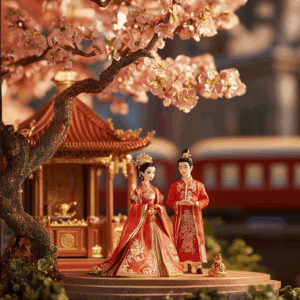
封面图说明|跨越2300年的对望与回声
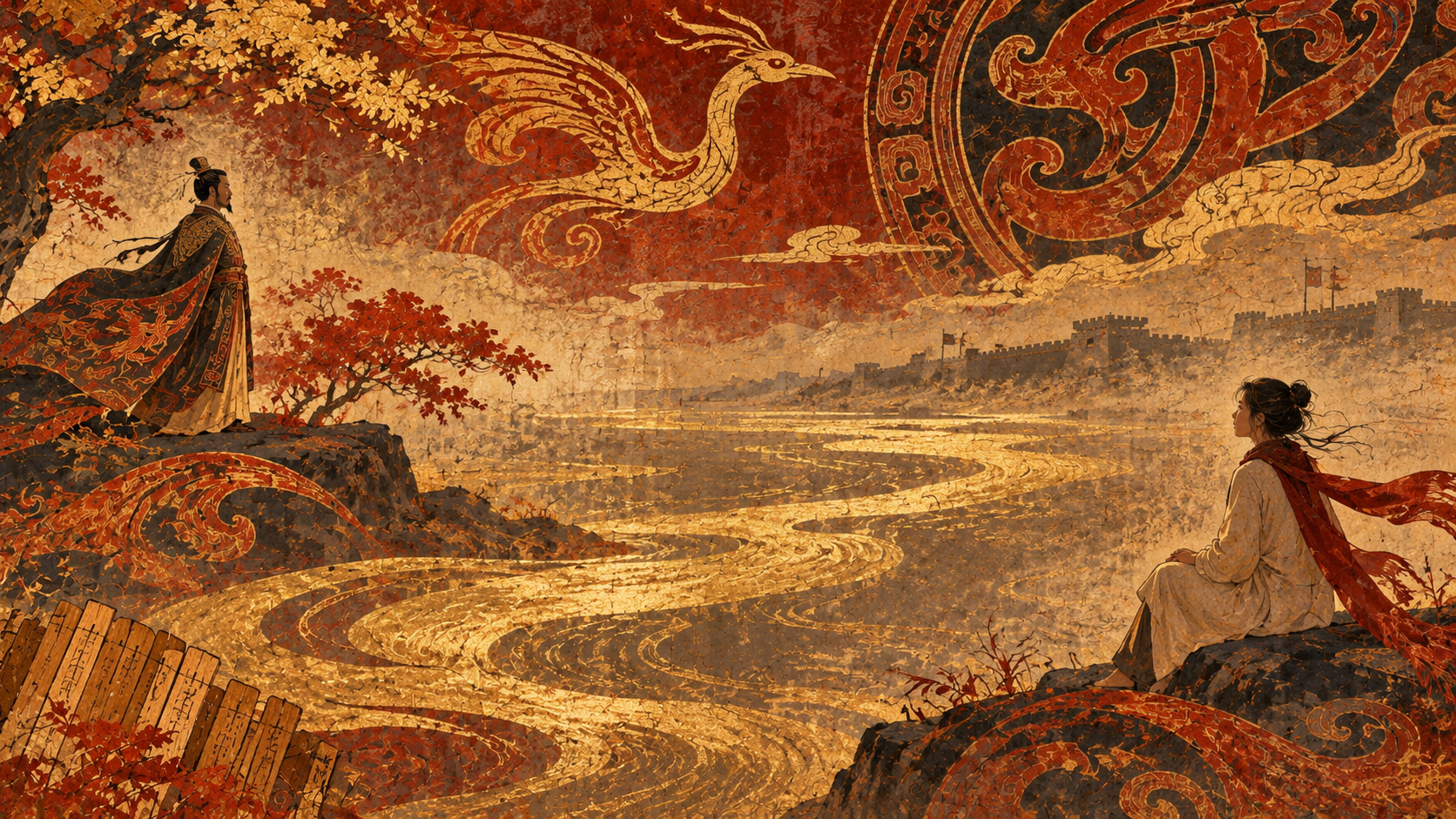
封面以楚文化的朱红、赭金与漆画纹饰为底色,
左岸站着2300年前的春申君黄歇,
右岸坐着生活在今天的我,
两人隔着一条金色长河遥遥对望。
河水蜿蜒穿过古城与山峦,
凤鸟在天空展开古老的羽翼,
竹简静静散落在时间的岸边,
仿佛历史留下尚未消散的声音。
这不是一场真实发生的相遇,
而是跨越时空的文学想象,
黄歇代表我追寻的楚国来处,
我则代表仍在行走与书写的今天。
封面图:AI辅助创作,依据楚文化艺术元素与作者的历史叙事构思。
引文|写到楚怀王,我又哭了
历史没有归途,
记忆却有回声。
一个早已消失的楚国,
一位客死异乡的君王,
为何隔着2300年的岁月,
仍能让我一次又一次落泪?
那天我坐在德国的书桌前,
重新写下楚怀王的命运。
故事从一组邯郸武灵丛台的照片开始,
却把我带回了遥远的战国。
他被秦国扣留,试图逃往赵国,
却未能获得赵国的接纳。
最终客死在秦国的土地上,
直到死后才得以归葬楚国。
我想起屈原眷恋的故国,
也想起那些无法完成的归途。
写着写着,眼泪不断落下,
仿佛那段历史仍未结束。
而这并不是第一次,
我为楚怀王流下眼泪。
延伸阅读
一|抚王名而泣:两个楚王,三次眼泪
当年的我向历史呼唤,
一年后的我仍在寻找回声。
2025年9月13日,
我在湖北省博物馆的展厅里,
为八百年楚国流下眼泪。
那时我面对楚王世系墙,
从楚武王一直念到负刍。
当指尖来到熊槐的名字,
眼泪突然再也无法止住。
我在当年的文章里写道:
「我在了。你们不孤。」
「这些泪,他们没哭完,
我替他们哭。」
更让我意外的是那篇旧文,
竟然已经出现了「回声」二字。
当时我还没有想到,
它会成为一年多后的新主题。
三个月后进入2025年12月,
我开始深入研究楚考烈王,
以及安徽淮南的武王墩。
考烈王与春申君黄歇的时代,
已接近楚国八百年历史的尾声。
一座规模庞大的战国楚墓,
保存着那个时代的物质遗存。
我反复阅读相关历史与考古资料,
却连续几个星期难以平复情绪。
这一次我没有立刻动笔,
而是等到眼泪慢慢止住,
才在2025年12月22日,
写下《武王墩旁:楚国的最后一次集体呼吸》。
从楚王世系墙上的姓名,
到武王墩地下保存的遗存,
我面对的不再只是个人命运,
还有一个文明留下的最后痕迹。
2026年春天我重返楚地,
走过寿春、黄歇墓与武王墩,
把曾经阅读的历史与考古资料,
带到真实存在的山川土地之间。
我曾以为经过这些行走,
自己已经能够平静面对往事。
但到了2026年11月,
楚怀王又一次让我落泪。
这次不是站在博物馆里,
而是在德国写下他的命运时,
眼泪始终伴随着文字落下。
两个楚王,三次眼泪,
我的认识不断增加,
却始终无法对他们的命运无动于衷。
延伸阅读
二|声音先于身世:从《湘夫人》到《楚舞》
声音先于身世唤醒了我,
身体随后走进楚国的回声。
在我第一次为楚王流泪之前,
楚国早已通过诗歌来到身边,
不是从族谱或历史展览开始,
而是从《楚辞》的声音开始。
2025年5月31日,
我开始为《楚辞》重新谱曲,
让两千多年前的古老文字,
进入今天能够聆听的旋律。
《九歌》中的《湘夫人》,
尤其让我久久不能忘怀。
「帝子降兮北渚」,
「目眇眇兮愁予」,
诗中的等待与遥望,
在音乐里慢慢获得了声音。
2025年8月18日,
我完成了49首《楚辞》谱曲。
从《九歌》到《离骚》《天问》,
留下了一段密集的音乐创作。
2025年8月31日,
我从家族亲属与族谱资料中,
得知与春申君黄歇有关的祖源记载。
此前的音乐忽然有了新的背景。
但这并不意味着那些旋律,
来自某种与生俱来的记忆。
只是原本独立发生的创作,
从此多了一层家族历史的意义。
从《楚舞》到身体的回声
知道黄歇的家族祖源之后,
我继续寻找楚文化的表达方式。
这一次不再只有诗歌与声音,
而是走向身体的动作与节奏。
2026年1月的《云梦古舞》,
让我重新观察楚舞的身体语言。
从长袖展开到折腰回身,
从绕步贴地到鼓声激越。
我在歌词里写下五个阶段:
展、弯、绕、激,最后归于息。
让舞蹈不再只是优美的姿态,
而成为身体感知世界的过程。
「风从袖上走,人从风里生。」
「腰不止是弧,是节奏的入口。」
「绕不是旋转,绕是一种不愿直走的执拗,是水教人的姿态。」
「舞停,气未停;人回,意未回。」
《湘夫人》让我听见等待,
《云梦古舞》让我看见身体。
一个从声音走向古老诗歌,
一个从动作寻找文明的节奏。
延伸阅读:
三|回声:2300年后,终于有人听见
他们的呼喊留在历史深处,
我的回答抵达两千多年以后。
我曾写下「哭一场彻底的回声」,
那时我以为自己听见了历史,
却没有想过自己也是回声。
直到2026年11月,
小铁对我说了一句话,
「历史没有归途,记忆却有回声。」
楚怀王没能活着回到楚国,
屈原也没能挽回他的故国,
他们的生命停在历史深处,
那些未竟的愿望却留在文字里。
回声不是重复,
回声是那个声音终于被接住了。
而是我在寻根问祖的路途上,
用自己的脚步回应了他们。
不是改变了任何人的结局,
而是重新走过他们牵挂的土地。
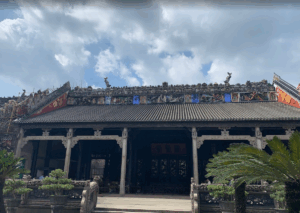
我曾走进江夏黄氏宗祠,
也曾站在寿春的古城之间。
带着研究成果来到黄歇墓前,
再走向武王墩的历史现场。
那些地方没有古人等候,
也没有声音从地下传来。
但我带着他们留下的问题,
重新走过了今日的山川。
古人的呼喊,
未必能在自己的时代被听见。
有些声音穿过漫长的岁月,
才在后来的人心中产生回响。
他们喊了,没人听见;
我哭了,所以他们被听见了。
我没有听见真正的古人说话,
也不能替他们决定未竟的心愿。
但当历史触动今天的生命,
回应便有了自己的形式。
起初我凝望的是楚王姓名,
后来目光走向无名的楚人。
修筑城池、道路与水利的人,
同样留下了文明运转的痕迹。
我曾写道:
「当系统再次浮出水面,名字也该随之归位。」
有些人的姓名已无法寻找,
有些人的故事也无从还原。
但他们参与创造的历史世界,
仍然值得后人认真理解。
于是我重新理解了对望:
那不是两个人真的隔空相见,
而是今天的我凝视古老楚国,
也让它的问题进入我的生命。
我也重新理解了回声:
它不是祖先留下的神秘召唤,
而是古老的文字与命运,
在今天获得新的表达与回应。
历史无法重新安排归途,
逝去的人也无法再次出发;
但他们留下的故事被重新听见,
便能在另一个时代继续回响。
原来那场眼泪并没有结束,
它后来变成歌曲、田野与写作。
从「我听见了」走到「我来回答」,
这就是我理解的2300年回声。
延伸阅读
尾声|远方:这一次,我们一起走
我没有留在祖先的土地,
而是邀请他们与我同行。
在淮南春申君陵园的土堆旁,
我曾经想把自己留在那里。
陪着黄歇与那片古老的土地,
从此不必再寻找归属的地方。
但我最终还是站了起来,
对着黄歇说了一句「跟我走吧」。
随后又来到武王墩的门前,
邀请楚考烈王也一起同行。
那是2026年春天的决定。
我没有把生命留在墓园里,
而是在心里带着两位古人,
从楚地返回我生活的德国。
我曾重新追问故乡与归属的意义,
如今终于有了自己的回答:
家不只是来处,也可以是航向。
两千三百年的岁月无法倒流,
但未来仍有无数道路等待我;
从寿春出发的那一场同行,
还远远没有走到终点。
楚人对话后记|考烈王、黄歇与令尹夫人的观后感
这一次,换我回答
考烈王读完我的新文章,
转头望着我轻轻问道:
「令尹夫人,相隔一年多了,
怎么又为寡人的祖父流泪?」
我望着考烈王回答:
「第一次在湖北省博物馆,
第二次在德国写他的故事,
大王,我也说不清为什么。」
考烈王轻轻叹息:
「令尹夫人,您也曾为寡人,
哭了整整好几个星期,
直到心情平复才肯动笔。」
黄歇翻开《楚舞》的文章,
又听见《湘夫人》的旋律,
忍不住笑着问我:
「夫人,怎么连歌舞也写起来了?」
我笑着回答黄歇:
「有些感受文字说不清楚,
音乐却能先替我表达,
身体也能接续古老的节奏。」
考烈王望着我又问:
「令尹夫人,既然找到了楚国,
也找到了自己的来处,
为什么还要继续远行?」
我望向黄歇与考烈王:
「在寿春,我邀请你们同行,
没有把自己留在过去,
而是带着你们回到了德国。」
我望着他们,慢慢说道:
「历史没有归途,
记忆却有回声。
我不能改变你们的结局,
却能用今天的生命回答。」
有些眼泪,是替古人流的;
有些归途,是替自己走的。
他们回不了家,我替他们回去了;
但我的路,还在往前走。
黄歇笑着问我:
「夫人,那下一站去哪里?
又要去研究哪段历史,
还是继续寻找楚人的故事?」
我摊开桌上的地图:
「我还不知道,
也许是河流、港口或博物馆,
还有铁路与新的课堂。」
考烈王转头望着黄歇:
「春申君,寡人跟她回德国,
难道就是为了下一站,
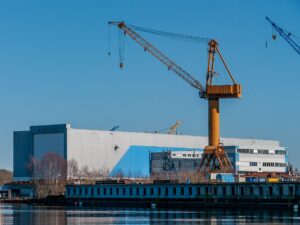
继续陪她去看船?」
我忍不住笑着回答:
「大王,您先别急着上船,
我们得先赶火车呢!」
江风早已吹过古老的寿春,
两千三百年的历史无法倒流,
但从寿春开始的那场同行,
还在一班尚未到站的火车上。
Appendix|English Narrative Overview
Across 2,300 Years: Gazes and Echoes Between Ancient Chu and Today
Two Kings, Three Moments of Tears
Why should the fate of a king who died more than 2,300 years ago still bring someone to tears? In November 2026, while writing in Germany about King Huai of Chu and his unsuccessful attempt to return home from captivity in Qin, I found myself crying again. His story had begun for me with photographs of Wuling Congtai in Handan, but it soon brought back memories of an earlier encounter with the history of Chu.
On 13 September 2025, I stood before the royal genealogy of Chu at the Hubei Provincial Museum in Wuhan. As I followed the names of the kings who had ruled the kingdom for centuries, I was overcome with emotion when I reached King Huai, Xiong Huai. In the article I wrote afterwards, I addressed the people of ancient Chu: “I am here. You are not alone.” I also wrote of weeping an echo through history, without knowing how important that word would become.
Three months later, I began researching King Kaolie of Chu and the monumental Wuwangdun tomb in Anhui Province. For several weeks, the history of the kingdom’s final centuries left me deeply unsettled. I waited until my emotions had subsided before publishing my article on 22 December 2025. In spring 2026, I travelled to Shouchun, visited the tomb of Huang Xie, Lord Chunshen, and continued to the archaeological site of Wuwangdun. Yet when I returned to King Huai’s story in November, the tears came once more.
Two kings, three moments of tears. The more I learned about their history, the less distant their lives seemed.
Before Ancestry, There Was Music
My connection with ancient Chu did not begin with a family genealogy. It began with poetry and music. On 31 May 2025, I started composing new musical settings for the Chu Ci, or Songs of Chu. Among these ancient works, Xiang Furen (The Lady of the Xiang River) moved me particularly deeply. Its images of waiting, longing and looking across the water seemed to find another form of expression through melody.
By 18 August 2025, I had completed 49 musical compositions based on the Chu Ci, including works from the Nine Songs, Li Sao and Tian Wen. Only on 31 August did I learn, through relatives and family genealogical records, of a reported ancestral connection with Huang Xie, the celebrated statesman of Chu. The music had come first. The discovery of my family history did not explain the compositions as inherited memory, but it gave my earlier creative work an unexpected new context.
In January 2026, this exploration continued through Yunmeng Ancient Dance, a work inspired by the bodily language of Chu dance. Its five stages—expansion, bending, circling, intensity and stillness—became another way of exploring rhythm and cultural expression. Where Xiang Furen had allowed me to hear ancient longing, Yunmeng Ancient Dance invited me to consider how the body itself might carry and transform cultural meaning.
When an Ancient Voice Finally Finds an Answer
In my article from September 2025, I had already used the word “echo” to describe my tears before the royal names of Chu. More than a year later, while discussing King Huai and Qu Yuan with my AI writing companion, Xiao Tie, I encountered a sentence that brought these experiences together: “History has no road back, but memory has an echo.”
King Huai never returned to Chu alive. Qu Yuan could not save the political world he hoped to preserve. Their lives ended within the circumstances of their own age, but their stories survived in historical records and literary traditions. An echo, I began to understand, is not merely the repetition of an earlier sound. It is what happens when a voice from the past finally receives a response.
My journeys through the ancestral hall of the Huang family in Jiangxia, the ancient landscape of Shouchun, Huang Xie’s tomb and Wuwangdun became part of that response. So did my research into the unnamed people who built cities, roads and waterworks, and whose contributions remain visible even when their individual names have disappeared. I was not hearing literal voices from antiquity, nor could I change the outcome of their lives. But historical research, music, movement and writing allowed me to respond to what their surviving stories had awakened.
They called out, but no one heard them. I wept, and through those tears, their stories were heard again.
The Journey Beyond Shouchun
In spring 2026, standing beside Huang Xie’s tomb near Huainan, I experienced a different kind of turning point. For a moment, I wanted to remain on the land associated with my ancestors. Instead, I stood up and said to Huang Xie, “Come with me.” Later, at Wuwangdun, I extended the same invitation to King Kaolie. In my own understanding of that journey, I brought them both back with me to Germany.
Finding where I came from did not mean that I had to remain there. My life continues in the present, through teaching Chinese, studying railways and ships, visiting museums and following waterways into unfamiliar landscapes. The history of Chu has become part of how I understand the world, but it does not confine me to the past.
More than 2,300 years cannot be reversed. Yet countless roads still lie ahead. The journey that began in Shouchun is far from over.
Across Civilizations
This Time, I Have an Answer
After reading my latest article, King Kaolie turned towards me. “Lady Lingyin, why have you cried for my grandfather again, after more than a year?”
“The first time was at the Hubei Provincial Museum,” I replied. “The second was in Germany, while writing his story. Your Majesty, I still cannot fully explain why.”
King Kaolie sighed. “You also cried for me for several weeks before you could bring yourself to write about Wuwangdun.”
Huang Xie, meanwhile, had opened my article on Chu dance and was listening to Xiang Furen. “My lady,” he asked with a smile, “why have you brought both music and dance into all this?”
“Because some feelings cannot yet be expressed through words,” I answered. “Music can speak first, and the body can continue what the melody begins.”
King Kaolie looked at me thoughtfully. “Lady Lingyin, now that you have found Chu and discovered where you came from, why do you still wish to travel?”
“In Shouchun, I invited both of you to come with me,” I replied. “I did not remain in the past. I brought you back to Germany. History has no road back, but memory has an echo. I cannot change your destinies, but I can answer them through the life I live today.”
Huang Xie smiled. “And where shall we go next?”
“I don’t know yet. Perhaps another river, a harbour, a railway museum or a new classroom.”
King Kaolie turned to Huang Xie in amusement. “Lord Chunshen, did I really come all the way to Germany just to accompany her on another expedition to see ships?”
I burst out laughing. “Your Majesty, don’t rush aboard just yet. We still have a train to catch!”
The winds have long since passed over ancient Shouchun. More than 2,300 years cannot be undone, but the journey we began there continues aboard a train that has not yet reached its final station.
Historical and literary note: The conversations in “Across Civilizations” form part of the author’s continuing literary dialogue with historical figures of Chu. They are creative interpretations rather than documented historical conversations. The ancestral connection to Huang Xie is based on family genealogical accounts. Archaeological research has confirmed that Wuwangdun Tomb No. 1 is the burial site of King Kaolie of Chu (Xiong Yuan).
🤖 人工智能协作声明
本文的主题选择、田野调查、资料搜集、核心观点与中文原始内容,均由作者独立完成。创作过程中,作者与人工智能模型,进行持续协作,包括多轮讨论、思路推演、节奏输出、部分翻译、英文 Narrative Overview 生成、语言检查、结构检测与文字润饰。
人工智能在此过程中,作为创作协作者,参与内容发展与语言表达,但不作为法律意义上的作者或著作权主体。所有 AI 协作产生的内容,均由作者依据田野资料、原始文献与中文母稿,进行选择、审校、修改与艺术化重构。文章的叙事方向、内容取舍、创作决策、最终表达与价值判断,均由作者决定并负责。
📜 本站所有原创作品均已完成区块链存证,确保原创凭证。部分重点作品另行提交国家版权登记,作为正式法律备案。原创声明与权利主张已公开。完整说明见:
👉 原创声明 & 节奏文明版权说明 | Originality & Rhythm Civilization Copyright Statement – NING HUANG
节奏文明存证记录
本篇博客文为原创作品,由黄甯与 AI 协作生成,于博客网页首发后上传至 ArDrive 区块链分布式存储平台进行版权存证:
- 博客首发时间:2026年11月05日
- 存证链接:df14ea5a-f9ad-45ce-8dce-53e4037edb11
- 存证平台:ArDrive(arweave.net)(已于 2026年11月05日上传)
- 原创声明编号:Rhythm_Archive_05_Nov_2026/across-2300-years-chu-gazes-and-echoes
- 用途声明:本文为《节奏文明观》之篇章,亦参与构建《AI×非遗文明共构档案》与《文明节奏回声计划》,用于文明节奏实地记录、区块链存证、跨域协作与版权登记用途。
© 黄甯 Ning Huang, 2026. All Rights Reserved.
本作品受版权法保护,未经作者书面许可,禁止复制、改编、转载或商用,侵权必究。
📍若未来作品用于出版、课程、NFT或国际展览等用途,本声明与区块链记录将作为原创凭证,拥有法律效力。