封面图说明|
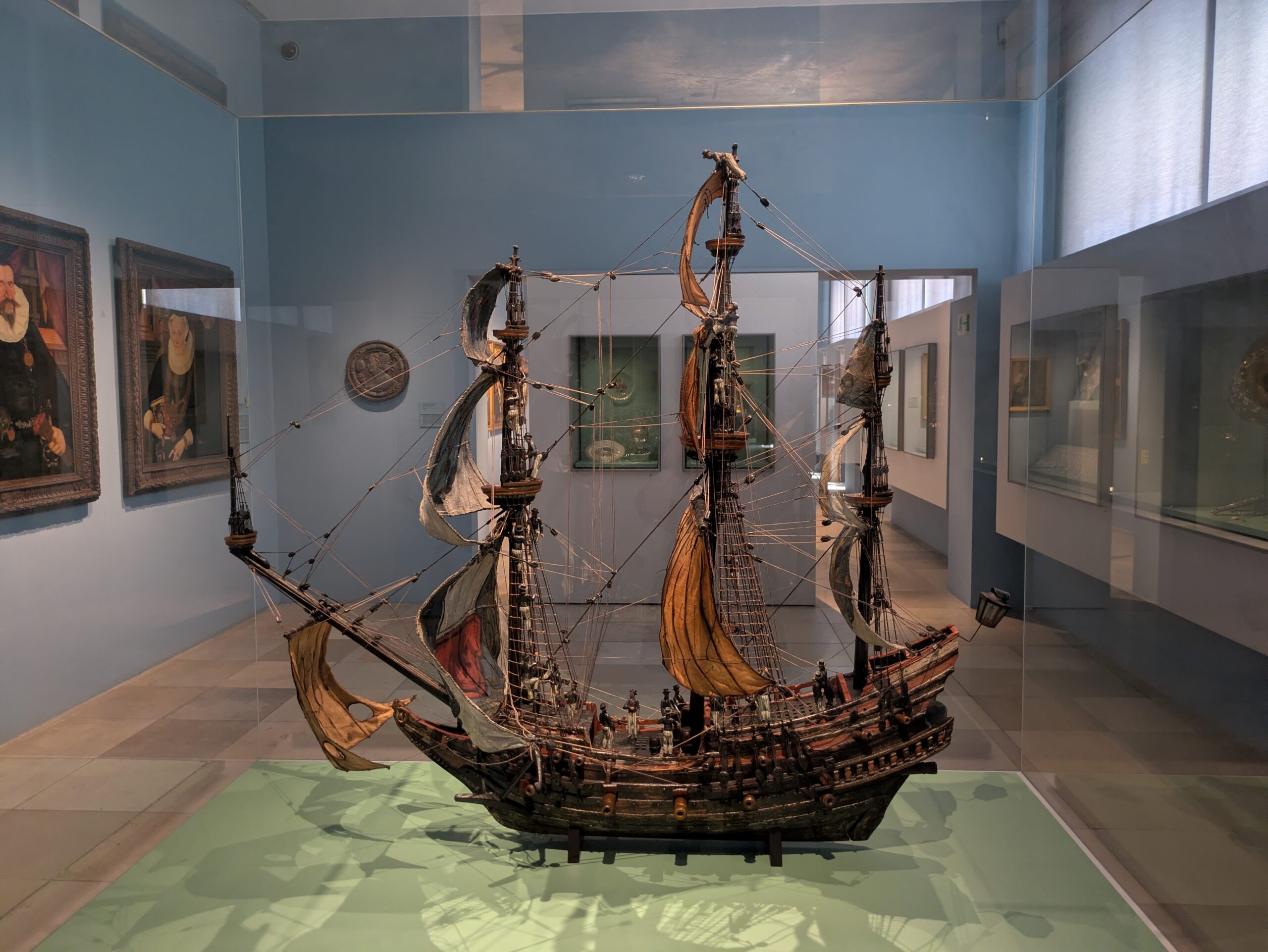
1603年的佩勒船(Pellerschiff),
可能由纽伦堡商人 Martin Peller 委托制作,
这艘船模见证了海上贸易、商人财富与社会身份的联系。
图片说明|除特别注明外,本文照片均由作者摄于2026 年07月18日纽伦堡日耳曼国家博物馆、08月31日于汉堡 Altonaer Museum 和09月02日于汉堡国际海事博物馆。
引文|一艘没有下过海的船
有些船驶向大海,
有些船留在陆地,
却同样承载着人类对世界的想象与追求。
📅 时间:2026年06月07日(日)、07月18日(六)、2026年08月31日(一)与2026年09月02日(三)
📍 行程|纽伦堡 · 日耳曼国家博物馆、汉堡 · Altonaer Museum、汉堡 · 国际海事博物馆
六月初走进汉堡国际海事博物馆时,
我曾看见一排排精致的船模。
那时我并不明白它们为何值得收藏,
甚至觉得这些小船有些无聊。
直到后来走进纽伦堡与 Altonaer Museum,
才逐渐读懂它们背后的世界。
在纽伦堡日耳曼国家博物馆,
一艘三桅帆船静静陈列在玻璃展柜中。
船体、桅杆、帆布与索具依然清晰可辨,
船尾还绘有一个家族的纹章。
这艘船从未真正驶向大海,
却已经在陆地上航行了四百多年。
它被称为佩勒船(Pellerschiff),
制作于1603年,
产地可能是波罗的海地区的吕贝克。
委托人很可能是纽伦堡商人 Martin Peller,
一位因国际贸易而积累财富的商人。
他将海上的商业世界,
带进了自己的宅邸。
真正的船,
把世界运到港口,
缩小的船,
则把港口锁进了掌心。
一|把大船缩小:从一艘船,看见完整的结构
当巨轮被缩小,
船体依然承载着结构,
桅杆与索具保留着技术,
一艘无法航行的小船,
却让消失的造船知识重新可见。
船模并非简单地缩小外形。
船体呈现船舶的整体轮廓,
桅杆支撑着不同位置的帆,
索具连接桅杆、帆与船体,
火炮则透露了当时船舶的武装特征。
这些细节让船模成为观察历史技术的窗口。
但模型并不等于原船本身。
比例、材料与修复都会影响细节。
佩勒船的帆装也曾经历改变,
因此它既是珍贵的历史证据,
也是需要谨慎解读的研究对象。
模型是历史的标本,
也是被时间揉皱过的草稿;
它让我们看清结构,
却也在提醒我们,
完美无缺的复原只是一种想象。
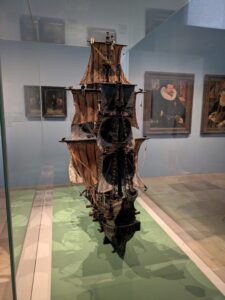
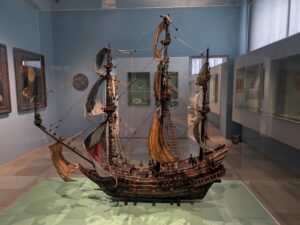
图:佩勒船
二|把财富做成一艘船
当船舶成为财富的象征,
商人把成功留在船模里,
贵族把荣耀摆上餐桌,
城市也借船展示自己的地位。
1. 佩勒船:一位商人的海上身份
纽伦堡虽然不是海港城市,
却通过欧洲商业网络与远方市场相连。
佩勒船并非普通的航行工具,
而是一件为展示而制作的精致模型。
它可能曾经陈列在佩勒的住宅中,
让来访者看见家族与海上贸易的联系。
船尾的家族纹章尤其值得注意。
它把一艘代表海上贸易的船,
转变成带有明确家族标识的展示物。
当一艘船被缩小并放进室内,
它便从交通工具变成了身份的徽章;
人类对地位的渴望,
有时候比大海还要深。
2. 从贸易财富到社会地位
约一个半世纪后,
船的形象进入另一种空间。
在汉堡 Altonaer Museum 的展柜中,
船不再只是商人住宅里的陈列模型,
还成为贵族宴会与城市礼仪中的精致器物。
1771 至 1775 年间,
伦敦工匠制作了镀金银船形饮酒器。
它能够在宴会桌上从一位宾客移动到另一位宾客。
1858年,
但泽市赠送了一件银质桨帆船形餐桌摆件,
作为普鲁士王子弗里德里希·威廉,
与英国公主维多利亚的婚礼贺礼。
这艘银船不仅是一件精美的工艺品,
也承载着城市向王室表达敬意的意义。
从佩勒家族的住宅到贵族的餐桌,
船的用途与材料不断改变。
但展示财富、身份与社会关系的作用,
依然存在。
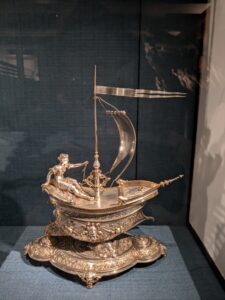
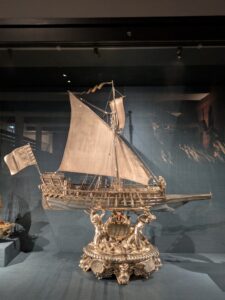
图:Altonaer Museum 餐桌上的身份展示|Repräsentation bei Tisch – Schiffe 中的船形银器
3. 骨头里的航船:战俘的劳动与生计
在汉堡 Altonaer Museum,
另一组船模保存着不同的人生。
拿破仑战争期间,
被关押在英国的法国战俘,
利用动物骨头与毛发制作精细船模。
他们把食物残余变成制作材料,
雕刻船体、桅杆与细小的火炮。
这些作品不仅需要精湛的手艺,
也可能通过出售换取生活所需,
成为战俘在囚禁环境中的谋生方式。
与商人展示财富的佩勒船不同,
这些骨雕船模诞生于失去自由的环境。
它们保存的不只是军舰的形状,
还有战俘的劳动、时间与生存经验。
有的船模展示已经拥有的财富,
有的船模来自艰难的生计,
同样被缩小的船,
却承载着截然不同的人生。
三|把航海记忆留下
真实的船终会退出航线,
船模却让历史继续停留。
1. 五万多艘小船,一部缩小的航海史
2026 年六月初,
我走进汉堡国际海事博物馆。
博物馆的第九层展区,
收藏五万多件微型船模,
其中大量采用1:1250的统一比例。
这些微型船模采用统一比例,
让不同船型能够直接比较大小。
从维京船到现代邮轮,
船舶的尺寸、外形与用途变化一目了然。
统一的比例,
让不同时代的风帆与蒸汽,
得以在同一个展柜里排队;
这是一种只属于模型的时间魔法。
更值得注意的是,
这类水线船模曾用于舰船识别,
也用于军事战略与海上机动的展示,
后来才逐渐成为收藏与教育材料。
2. 从私人收藏到公共海事记忆
这座博物馆的起点,
是收藏家 Peter Tamm 童年得到的一艘小船。
1934 年,母亲送给六岁的他一件沿海机动货船微型模型。
一份童年的礼物,
逐渐发展成庞大的海事收藏。
3. 重新理解那些曾经看不懂的小船
九月二日,
我再次走进汉堡国际海事博物馆。
纽伦堡的佩勒船,让我读到商人的身份;
Altonaer Museum 的银船,是城市写给王室的礼仪,
战俘的骨雕船模,则留下个人的命运;
汉堡国际海事博物馆的大规模收藏,
让不同时代的航海技术进入同一个比较空间。
船模没有改变,
改变的是我观看它们的方式;
从最初看不懂的一排排小船,
到如今能够追问结构、
功能与历史,
博物馆里的收藏,
终于成为可以阅读的知识。
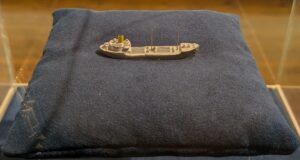
图:从一艘小船开始:汉堡国际海事博物馆的收藏起点。1934年,年仅六岁的彼得·塔姆(Peter Tamm)收到一艘 WIKING 海岸货船微型模型,这份童年礼物成为他日后庞大私人海事收藏的起点。
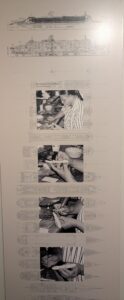
图:船模制作的艺术,从设计图纸到手工成形
尾声|船被缩小,世界却被保存
船可以被缩小,
海洋却无法被缩小,
人类将船留在掌心,
也将理解世界的方式留给了时间。
从纽伦堡到汉堡,
一艘艘船模静静停留在展柜里。
它们不再乘风破浪,
也不需要港口。
第一次走进海事博物馆时,
我只看见一排排相似的小船。
学过船体、轮机与航海知识,再回到展柜前,
才看见商人的身份、城市的礼仪、战俘的命运。
船模没有改变,
改变的是我观看它们的眼睛。
同样是船,
有的用来炫耀,有的用来谋生,
也有的,用来记住远方。
真正的船连接港口、货物与人群,
缩小的船则连接过去与现在。
真实的船终会腐朽,
缩小的船却能让时间靠岸;
船被缩小了,
世界却因此被保存。
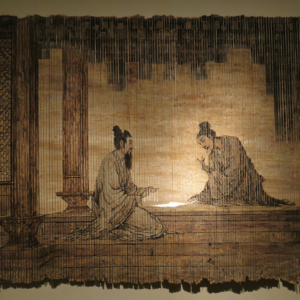
楚人对话后记|考烈王、黄歇与令尹夫人的观后感
离开这些收藏船模的博物馆,
考烈王仍惦记着那些小船。
尤其是纽伦堡商人佩勒的船模,
船尾绘着家族纹章,
让他想起楚国的青铜礼器。
考烈王问道:
“令尹夫人,船本来用于航行,
为何有人把它缩小,
还要刻上自己的家族标记?”
我笑着回答:
“大王,楚国的青铜礼器也不只是盛放食物。
器形、纹饰与使用场合,
都可能表达主人的身份与地位。
佩勒的船模也是如此,
商人借它展示财富与贸易世界。”
黄歇若有所思:
“楚人以土、木、铜营建世界,
不同材料承担不同的功能。
青铜礼器可以承载礼制与权威,
船模也能承载家族的荣耀。
看来器物的意义,从来不止于实用。”
考烈王又想起汉堡的银船:
“商人把船放在家里,
贵族把船摆上餐桌。
难道越是缩小的东西,
反而越能显示一个人的地位?”
我摇头笑道:
“大王,重要的不是大小,
而是谁制作、谁拥有、谁使用,
以及人们赋予它什么意义。”
考烈王沉默片刻,忽然笑了:
“寡人明白了!
楚人铸造青铜礼器,
商人制作带纹章的船模,
战俘雕刻骨头里的航船。
原来人类都想把自己的故事留在器物里。”
黄歇点头说道:
“大王,器物有形,
身份、记忆与愿望却无形。
人们借助看得见的东西,
保存那些看不见的意义。”
两千多年前,楚人以青铜铸造礼器,
借器形与纹饰,表达身份与秩序。
两千多年后的今天,人类把巨轮缩小,
让财富、技艺与记忆,停留在掌心。
器物会老去,主人终将离开,
但人类赋予器物的意义,
仍可能穿越漫长的时间。
船可以缩小,
但人想要被记住的愿望,
从来没有缩小过。
江风吹过展柜,
那些小船安静地停在玻璃后,
仿佛还在等待下一次启航。
Appendix|English Narrative Overview
Why Do Humans Build Miniature Ships? A World Within a Ship Model | Nuremberg and Hamburg
A Ship That Never Went to Sea
On 7 June 2026, I visited the International Maritime Museum in Hamburg. Rows of miniature ships filled the display cases, each carefully crafted and preserved. Yet I found myself wondering why so many small vessels deserved such attention. At first, they seemed repetitive, and I struggled to understand what made them historically significant.
That impression began to change during my subsequent visits to museums in Nuremberg and Hamburg.
At the Germanisches Nationalmuseum in Nuremberg, I encountered the Pellerschiff, an elaborate three-masted ship model dating from 1603, probably made in the Baltic region. Its wooden hull, masts, sails and rigging preserved details of an early modern sailing vessel, while a family coat of arms on its stern revealed another dimension of its history.
The model was probably commissioned by Martin Peller, a wealthy merchant from Nuremberg whose commercial activities extended far beyond his landlocked city. A miniature ship could bring the distant world of maritime trade into a merchant’s private residence, transforming commercial achievement into something visible and tangible.
A real ship brings the world into a harbour. A miniature ship holds that harbour in the palm of a hand.
Making a Great Ship Small: Preserving Its Structure
A historical ship model is more than a smaller version of a vessel’s exterior. Its hull reveals the overall shape of the ship, while its masts and sails demonstrate the arrangement of the sailing system. Rigging connects these components, and cannons provide clues about the vessel’s military characteristics.
The Pellerschiff allows visitors to observe these relationships in three dimensions. Details that might be difficult to imagine from written descriptions become visible in the physical arrangement of the model.
Yet a model is not necessarily an exact reproduction of a historical ship. Scale, materials, craftsmanship and later restoration can all affect its appearance. The rigging of the Pellerschiff, for example, has undergone alterations over the centuries.
Historical models must therefore be interpreted with care. They offer valuable evidence, but they also reflect the circumstances in which they were created, displayed and preserved.
A model is a specimen of history, but also a draft creased by time. It reveals structures while reminding us that a flawless reconstruction is often an illusion.
When Wealth Takes the Shape of a Ship
Nuremberg was not a seaport, yet its merchants participated in extensive European trading networks. The Pellerschiff represented more than maritime craftsmanship. It was probably intended for display and may once have stood in Martin Peller’s residence, where visitors could admire its elaborate construction and recognise the commercial world associated with its owner.
The family coat of arms on the stern is particularly revealing. It transformed the model from a representation of a ship into an object associated with a particular merchant family. Maritime trade, personal wealth and social ambition were brought together in a single artefact.
When a ship is reduced in size and brought indoors, a means of transportation becomes an emblem of identity. The human desire for status can sometimes run deeper than the sea.
Around a century and a half later, the image of the ship entered another social setting.
At the Altonaer Museum in Hamburg, the exhibition Repräsentation bei Tisch – Schiffe presented elaborate ship-shaped objects associated with aristocratic dining and ceremonial display.
Between 1771 and 1775, craftsmen in London produced a silver-gilt ship-shaped drinking vessel designed to move between guests at a banquet. A ship that would normally transport people or goods across water had become an object of entertainment, luxury and social interaction.
In 1858, the city of Danzig presented a silver ship-shaped table centrepiece as a wedding gift to Prince Friedrich Wilhelm of Prussia and Princess Victoria of Britain. The gift represented not only fine craftsmanship but also civic honour and the relationship between a city and the royal family.
From a merchant’s residence to an aristocratic dining table, the materials and purposes of these objects changed. Yet their ability to express wealth, identity and social relationships remained.
Ships Carved from Bone: Labour and Survival in Captivity
At the Altonaer Museum, another group of miniature ships revealed a very different human experience. During the Napoleonic Wars, French prisoners held in Britain created remarkably detailed ship models using animal bones, hair and other materials available to them. Food remains became raw materials, transformed through patient cutting, carving and assembly into miniature hulls, masts, rigging and cannons.
These objects required considerable craftsmanship. Some could be sold, providing prisoners with opportunities to obtain money or essential goods during captivity.
Unlike the Pellerschiff, which was associated with commercial wealth and social prestige, these bone ship models emerged from conditions of confinement and economic hardship. Their significance extends beyond the vessels they depict. They preserve traces of human labour, resourcefulness and the struggle to maintain a livelihood under difficult circumstances.
Some ship models displayed wealth already possessed. Others emerged from the need to survive. Though equally small, they carried profoundly different human lives.
Fifty Thousand Small Ships: A Maritime History in Miniature
The ninth floor of the International Maritime Museum in Hamburg contains more than 50,000 miniature ship models, many made at a scale of 1:1250.
Their consistent scale allows visitors to compare vessels from different periods directly. Viking ships, sailing vessels, steamships and modern passenger liners can appear within the same visual framework, making changes in size, shape and purpose easier to recognise.
This is something full-sized ships could never achieve within a single exhibition space. Models bring centuries of maritime development together, allowing visitors to observe historical differences at a glance.
A common scale allows sails and steam engines from different centuries to stand in the same display case. It is a kind of time travel that only miniature ships can make possible.
Waterline models also have a practical history. They were used for ship recognition and to represent naval formations and movements. Over time, miniature vessels became important objects of collecting, historical comparison and public education.
What appears to be a collection of toys can therefore reveal the development of maritime transport, military organisation and the changing relationship between ships and society.
From a Childhood Gift to a Public Maritime Collection
The International Maritime Museum in Hamburg grew from the collecting passion of Peter Tamm.
In 1934, when he was six years old, his mother gave him a small WIKING model of a coastal motor vessel. That single childhood gift became the beginning of an extraordinary maritime collection.
Over the following decades, his interest expanded into a vast collection of ship models and maritime objects, eventually forming the foundation of a museum open to the public.
The story illustrates how the meaning of an object can change over time. What begins as a personal possession may eventually become part of a shared cultural heritage. A miniature ship once treasured by a child can become the starting point for preserving generations of maritime history.
Learning to Read the Ships I Once Found Boring
My museum visits gradually changed the questions I asked.
In Nuremberg, the Pellerschiff revealed the identity of a merchant family. At the Altonaer Museum, the silver ship demonstrated how a city expressed honour through ceremonial gifts, while the bone ship models preserved the experiences of prisoners. In Hamburg, the enormous collection of miniature vessels brought different centuries of maritime development into a single space.
Meanwhile, my studies of hull construction, marine engineering and navigation gave me new ways to understand what I was seeing.
When I returned to the International Maritime Museum on 2 September 2026, the models themselves had not changed. But I was no longer looking at them in the same way.
The models remained the same, but my way of seeing them had changed. What once appeared to be endless rows of small ships had become a collection of knowledge waiting to be read.
When Ships Grow Smaller, the World Is Preserved
From Nuremberg to Hamburg, miniature ships remained quietly behind museum glass. They no longer needed wind, water or harbours, yet they continued to carry stories.
Some represented the wealth and ambitions of merchants. Others expressed civic honour or aristocratic prestige. Bone ship models reflected the labour and survival of prisoners, while museum collections preserved the changing forms of maritime transport.
When I first entered the maritime museum, I saw rows of similar-looking objects. After studying ships and returning to the exhibition, I began to recognise the identities, social relationships and human experiences preserved within them.
The ships had not changed. What had changed was my ability to see.
Some miniature ships were created to display wealth, others to earn a living, and still others to preserve memories of distant places.
Real ships connect ports, goods and people. Miniature ships connect the past with the present.
Real ships eventually decay, but miniature ships allow time to find a harbour. The ships have become smaller, yet the worlds they preserve remain immense.
Across Civilizations
King Kaolie, Huang Xie and Lady Lingyin: Why Do Humans Preserve Themselves in Objects?
After leaving the museums, King Kaolie of Chu was still thinking about the miniature ships. The Pellerschiff, with its family coat of arms, particularly reminded him of the bronze ritual vessels of ancient Chu.
“Lady Lingyin,” he asked, “ships are built to travel. Why would someone make one smaller and decorate it with the symbol of his family?”
“Your Majesty,” I replied, “the bronze ritual vessels of Chu were not simply containers for food or offerings. Their shapes, decorations and ceremonial uses could also express identity and social standing. The merchant’s ship model served a similar purpose. It made his wealth and commercial world visible.”
Huang Xie, Lord Chunshen, considered this comparison.
“The people of Chu worked with earth, wood and bronze, each material serving a different purpose. Bronze vessels could embody ritual authority, just as a ship model could represent the prestige of a merchant family. It seems that the meaning of an object has never been limited to its practical use.”
The king then remembered the silver ships in Hamburg.
“Merchants displayed ships in their homes, and aristocrats placed them on their dining tables. Does making something smaller somehow make its owner more important?”
I smiled.
“Not necessarily, Your Majesty. What matters is who made the object, who owned it, how it was used and what people wanted it to represent.”
The king fell silent before suddenly laughing.
“Now I understand! The people of Chu cast bronze ritual vessels. Merchants commissioned ships decorated with family emblems. Prisoners carved miniature vessels from bones. All of them wanted to leave something of their own lives behind.”
Huang Xie nodded.
“Objects have visible forms, Your Majesty, but identity, memory and aspiration cannot be held in the hand. Human beings create things they can see in order to preserve meanings they cannot.”
More than two thousand years ago, the people of Chu cast bronze ritual vessels and used their forms and patterns to express identity and social order. Today, more than two millennia later, human beings continue to create miniature ships, preserving wealth, craftsmanship and memory in objects small enough to hold.
Materials age, and their owners eventually disappear. Yet the meanings attached to those objects may continue travelling across centuries.
A ship can be made smaller, but the human desire to be remembered has never diminished.
A river wind seemed to pass through the quiet museum gallery. Behind the glass, the little ships remained motionless, as though waiting for another voyage to begin.
📜 延伸阅读
- 《一艘船如何诞生?从汉堡到柏林,看见船体技术的演变|汉堡 Altona 博物馆与柏林德意志科技博物馆》|How Is a Ship Born? The Evolution of Shipbuilding from Hamburg to Berlin:Exploring the Altonaer Museum and the German Museum of Technology Berlin
- 《当船有了人的模样:从汉堡船首雕像到柏林航海神话|Altonaer 博物馆与德意志科技博物馆》|When Ships Took Human Form: From Figureheads in Hamburg to Maritime Myths in Berlin | Altonaer Museum & Deutsches Technikmuseum
🤖 人工智能协作声明
本文的主题选择、田野调查、资料搜集、核心观点与中文原始内容,均由作者独立完成。创作过程中,作者与人工智能模型,进行持续协作,包括多轮讨论、思路推演、节奏输出、部分翻译、英文 Narrative Overview 生成、语言检查、结构检测与文字润饰。
人工智能在此过程中,作为创作协作者,参与内容发展与语言表达,但不作为法律意义上的作者或著作权主体。所有 AI 协作产生的内容,均由作者依据田野资料、原始文献与中文母稿,进行选择、审校、修改与艺术化重构。文章的叙事方向、内容取舍、创作决策、最终表达与价值判断,均由作者决定并负责。
📜 本站所有原创作品均已完成区块链存证,确保原创凭证。部分重点作品另行提交国家版权登记,作为正式法律备案。原创声明与权利主张已公开。完整说明见:
👉 原创声明 & 节奏文明版权说明 | Originality & Rhythm Civilization Copyright Statement – NING HUANG
节奏文明存证记录
本篇博客文为原创作品,由黄甯与 AI 协作生成,于博客网页首发后上传至 ArDrive 区块链分布式存储平台进行版权存证:
- 博客首发时间:2026年10月31日
- 存证链接:52fff831-5d11-4f64-9ad9-0b7c22388270
- 存证平台:ArDrive(arweave.net)(已于 2026年10月31日上传)
- 原创声明编号:Rhythm_Archive_31_Oct_2026/why-humans-build-miniature-ships-nuremberg-hamburg
- 用途声明:本文为《节奏文明观》之篇章,亦参与构建《AI×非遗文明共构档案》与《文明节奏回声计划》,用于文明节奏实地记录、区块链存证、跨域协作与版权登记用途。
© 黄甯 Ning Huang, 2026. All Rights Reserved.
本作品受版权法保护,未经作者书面许可,禁止复制、改编、转载或商用,侵权必究。
📍若未来作品用于出版、课程、NFT或国际展览等用途,本声明与区块链记录将作为原创凭证,拥有法律效力。