Reading Berlin from the Water: Through a City of Bridges, Canals and Locks
Field visit: 23 September 2026
Route: Berlin · C1 Bridge Cruise on the Spree and Landwehr Canal
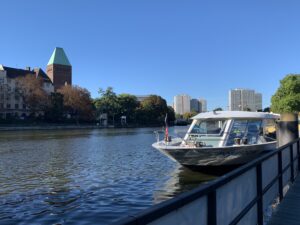
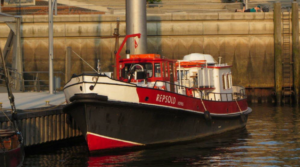
Vessel: MS Poseidon
Author’s Note|The ticket for this cruise was provided complimentary by Stern und Kreisschiffahrt GmbH. All content and opinions are independently written by the author.
When Berlin Changes Its Map
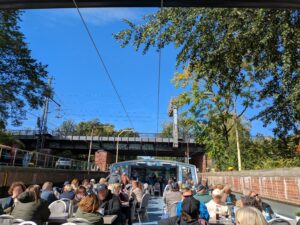
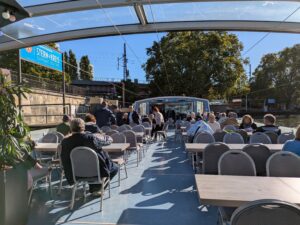
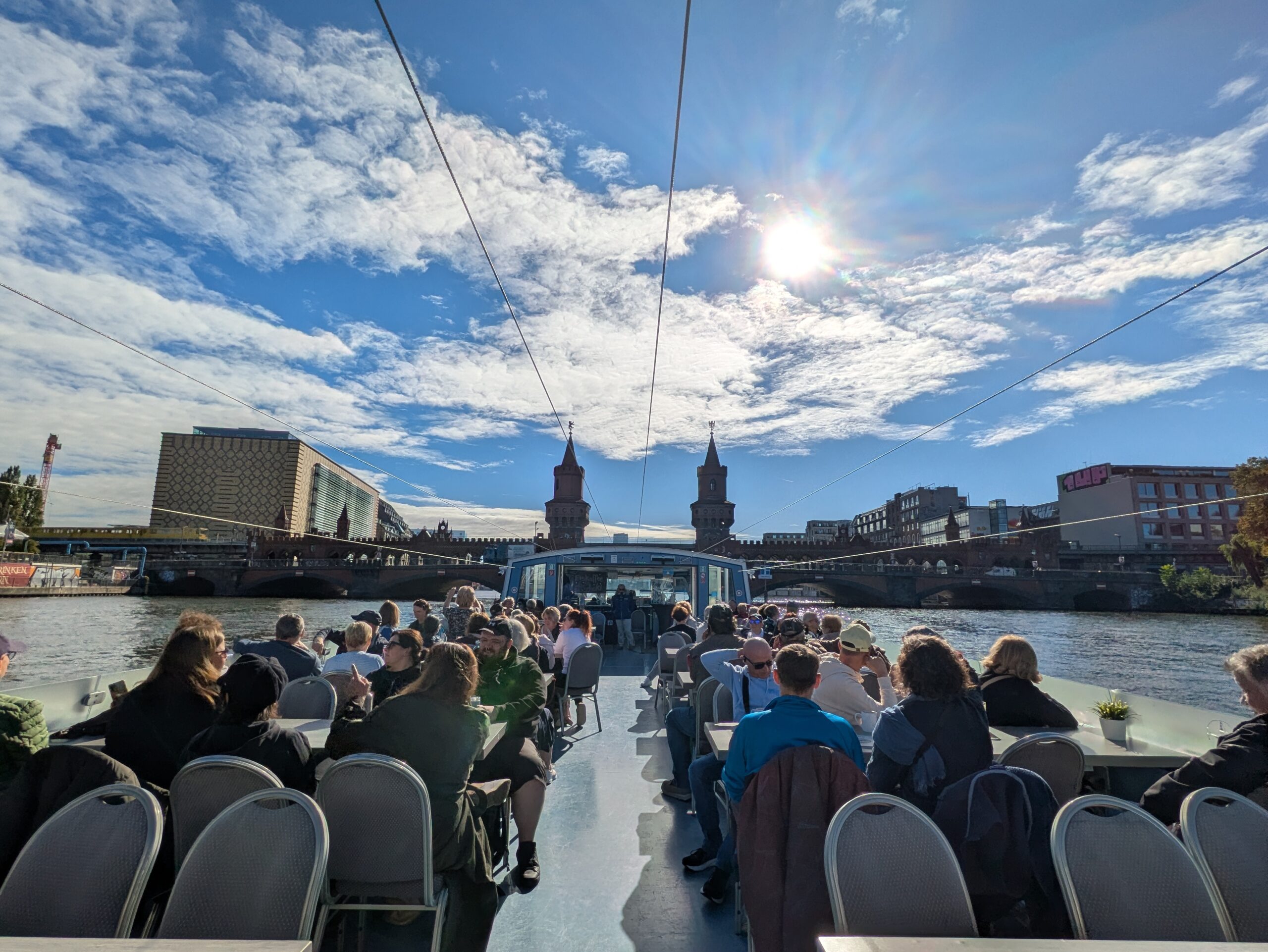
On 23 September 2026, I boarded the MS Poseidon at Jannowitzbrücke for a three-and-a-quarter-hour journey through Berlin. The C1 Brückenfahrt follows the Spree and the Landwehr Canal, passing bridges, locks, government buildings, museums, railway infrastructure and ordinary residential districts before eventually returning to its starting point. I had expected to see Berlin from a different angle. What I had not expected was that changing my way of moving would change the structure of the city itself.
On land, streets, stations and addresses tell us where we are. From the water, those familiar coordinates gradually retreat to the banks. The river determines the direction of travel, bridges appear overhead, and locks interrupt the journey. After more than three hours, I could no longer identify everything I was seeing, yet the bridges and locks remained surprisingly clear in my memory. Berlin had not become another city. I had simply entered it through another map.
When Roads Pass Over Your Head
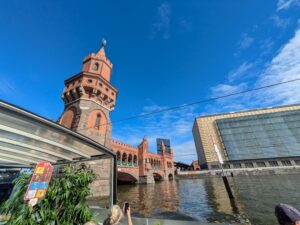
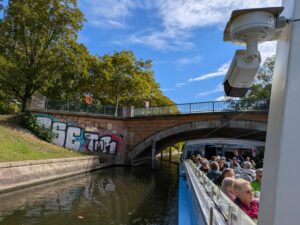
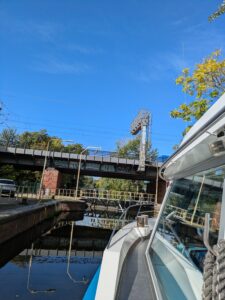
Only when I sorted through my photographs later did I realise how many bridges I had photographed. Some sat low above the water, while others carried roads or railways. Names appeared and disappeared above the boat: Weidendammer Brücke, Moltkebrücke, Lutherbrücke and many more. After a while, I stopped trying to remember them all. What remained was the physical experience of passing underneath them.
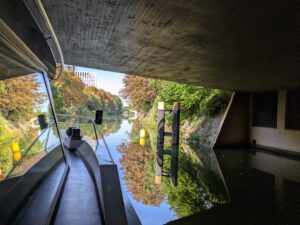
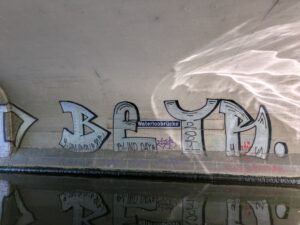
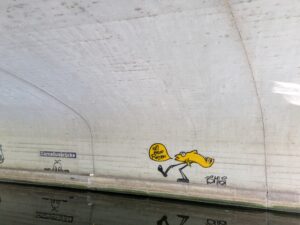
From the street, a bridge is a route across water. From a boat, the relationship is reversed: the road is now above you, and the underside of the bridge becomes a temporary ceiling. Concrete, brick and steel pass overhead, and for a few seconds the city seems to close around the vessel before opening again on the other side.
On land, roads determine where people can go. On water, bridges determine where a ship can go.
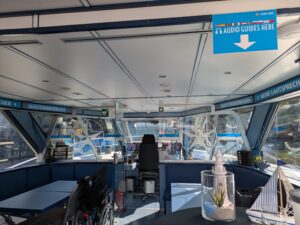
The Landwehr Canal makes this change of scale particularly tangible. Its waterways are narrower than the open stretches of the Spree, and low bridges repeatedly compress the view. A passenger vessel is no longer simply a floating viewing platform: its width, height and shape determine where it can travel. MS Poseidon is particularly suited to this urban environment, with dimensions that allow it to navigate Berlin’s narrower waterways and pass beneath the low bridges of the Landwehr Canal.
Water Is Not as Flat as It Looks
The locks revealed another part of Berlin that I had rarely considered from the street. The boat slowed down, walls rose on either side, and gates separated one body of water from another. For passengers, it looked like a pause in the journey. In reality, the infrastructure was working.
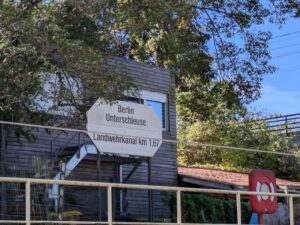
The C1 route passes through three locks: Oberschleuse, Unterschleuse and Mühlendammschleuse. Entering the Landwehr Canal through Oberschleuse, the vessel descends by roughly thirty centimetres. At Unterschleuse, the change is much greater, with the water level dropping by more than a metre. Later, at Mühlendammschleuse, the vessel rises again by approximately one and a half metres, bringing the journey back toward the higher level of the Spree.
I did not calculate any of this while sitting on the boat. I simply noticed that the walls beside me seemed to become higher and that the relationship between the hull, the water and the surrounding masonry kept changing. For the first time, I was not reading water levels from a diagram or a number. I was measuring height with my own body.
Water looks flat, but a city knows that it is not.
The Boat Was Changing Too
There was another transformation taking place during the journey, one that was much less visible. MS Poseidon looks like an established Berlin excursion vessel, yet beneath that familiar appearance its propulsion system has already entered another technological era. In 2023, Stern und Kreisschiffahrt converted MS Poseidon and MS Kreis from conventional propulsion to fully electric drive, with other vessels in the existing fleet following as part of the same transition.
Retrofitting an existing vessel is not simply a matter of replacing one engine with another. The company describes the conversion of diesel-powered vessels as technically demanding and costly, particularly because its fleet consists of different vessel and engine types. The old ship is not discarded; instead, an existing technological system is altered from within while continuing to serve the city.
The transition also extends beyond the vessel. Stern und Kreisschiffahrt states that almost all of its inner-city berths are equipped with shore-power connections, while Treptower Hafen has been supplied with green electricity since 2019.
Remembering a City by How It Moves
By the end of the cruise, I no longer knew what every building on the bank was. That did not feel like a failure. The bridges kept coming, locks opened and closed, and the vessel stopped and moved again. Sometimes the waterway narrowed; sometimes the view suddenly widened.
Berlin remained on both sides, but my position within it had changed.
Perhaps a city does not always have to be remembered through the names of its monuments. Streets connect places, bridges connect banks, and locks connect different water levels. A vessel moves between all of them, revealing relationships that remain difficult to see when standing still on land.
Berlin was not a city I had suddenly understood. It was a city I gradually remembered by travelling beneath its bridges, waiting inside its locks and following the movement of its water.
Sometimes, knowing a city is not about remembering what everything is called. It is about remembering how the city moves.
Across Civilizations
Why Does Berlin’s Water Need So Many Gates?
King Kaolie looked at the lock walls rising beside the vessel. “Doesn’t water flow by itself?” he asked. “Why does Berlin need to put gates in it?”
“Because water in a city is no longer only a natural river,” I replied. “Canals, bridges and locks have to work together so that ships can continue.”
Huang Xie looked back toward the locks we had already passed. “So the boat descended a little the first time, considerably more the second time, and then had to regain that height at the end?”
I smiled. “That is essentially what happened. We passed through three locks. Different water levels were separated and then connected again.”
King Kaolie thought for a moment. “So you came to see Berlin, forgot most of the buildings, and remembered the bridges and locks?”
I nodded. “After a while, I really had no idea what some of the buildings on the banks were. But whenever the boat stopped, I knew the water was doing something.”
Huang Xie looked across the river. “The Yangtze, the Han and Dongting Lake were also living spaces for the people of Chu. Boats carried people, goods moved along waterways, and settlements developed in relation to water.”
King Kaolie turned toward me. “When you have time, read the Songs of Chu again. There are rivers and boats everywhere. You once read them as poetry. Perhaps next time you will also see the Chu world beside the water.”
More than two thousand years later, the three of us had simply changed rivers. We boarded another boat and began, once again, to learn how to see the world from the water.
In Berlin, the question began with the water of a city. Returning to Chu, it becomes a question about the water of a civilization. The rivers have changed, but the question has not: how do people learn to live with water?

 时间:2026年09月23日 (三)
 行程|柏林 · 施普雷河与兰德韦尔运河上游船