节奏文明观的形成过程。
从身体经验、实践路径到结构理解,
这些文字记录了一种理论如何在生活与行动中逐渐长出。
Practice and Theory of Rhythm Civilization.
This section traces how ideas emerge from lived experience,
where practice, perception and reflection gradually shape a civilizational framework.
The Rhythm Civilization® Framework proposes rhythm as a fundamental mechanism for the generation and organization of civilization. By examining embodied practice, the structural patterns of Chu civilization, and modern high-speed rail systems, this study demonstrates how rhythm operates across body, culture, and technological systems, forming a multidimensional resonance through which civilization emerges and evolves.
This document is an abstract edition.
The full-length version is available in Chinese.
《节奏文明观白皮书》提出一种新的文明观察框架:节奏作为文明生成与组织的基础机制。通过身体实践、楚文明结构以及现代高铁系统三个不同尺度的案例,本研究展示节奏如何在身体、文化与技术系统之间形成共振结构,并揭示文明如何在多维节奏的互动中生成与演化。
The Rhythm Civilization Framework proposes rhythm as a fundamental mechanism for the generation and organization of civilization. By examining embodied practice, the structural patterns of Chu civilization, and modern high-speed rail systems, this study demonstrates how rhythm operates across body, culture, and technological systems, forming a multidimensional resonance through which civilization emerges and evolves.
《节奏文明观 · 导航地图》整理身体、材料、声音、语言、空间、时间与学习等十个入口,说明文明如何在不同维度的节奏中逐渐生成。本篇并非理论总结,而是一张阅读地图,引导读者理解节奏如何组织文明结构。
Rhythm Civilization · Navigation Map brings together ten entry points — body, material, sound, language, space, time, learning, and life — to explore how civilization gradually emerges through rhythms across different dimensions. Rather than a theoretical conclusion, this essay functions as a reading map that guides readers through the structural logic of rhythm in civilization.
本文讨论“旁观静默者”在文明结构中的位置:他们不进入行动,却构成节奏的边界。通过戏剧、祭祀与楚简的例子,文章指出文明往往在无人回应之处继续生长,书写因此成为一种投向时间的行动。
This essay explores the role of the “silent observer” within civilizational structures. Those who do not enter the action often define its boundaries. Through examples from theatre, ritual, and Chu bamboo manuscripts, the article shows how civilization often grows where there is no immediate response, and how writing becomes an act directed toward time.
当个人的行动持续发生,时间开始积累,个人时间与文明时间有时会在某个节点突然对齐。本文通过几个真实案例,讨论“共时性”如何出现,以及文明如何在时间与行动的交汇处显形。
When personal action continues over time, individual time and civilizational time may suddenly align at certain moments. Through several real examples, this essay explores synchronicity and how civilizations become visible where action and time converge.
《节奏文明观|身体篇》讨论文明如何从身体经验中生成。人在理解世界之前,身体已经通过重量、平衡与节律与环境互动。当动作不断重复,节律逐渐稳定,秩序与结构便开始形成。通过身体经验、身体节律与身体训练三个层面,本文提出“身体生成式智能”的概念,说明文明并非首先来自思想,而是在身体长期与世界互动的过程中逐渐形成。
This essay explores how civilization emerges from embodied experience. Long before language or abstract thought, the human body interacts with the world through weight, balance, movement, and rhythm. As actions repeat, rhythms stabilize and gradually form patterns of order and structure. Through embodied perception, bodily rhythm, and bodily training, the article introduces the concept of Embodied Generative Intelligence, arguing that civilization grows from the body's long interaction with the physical world rather than from abstract ideas alone.
在纪录片《中华考工记·新材料篇》的启发下,本文从材料的角度重新思考文明结构。从青铜、钢铁到碳纤维,新材料不断让世界变得更轻、更快,但文明并不能只有轻。重量带来阻力、经验与技艺,也是身体理解世界的方式。轻负责流动,重负责承载,重量因此成为文明的锚。
Inspired by the documentary The Crafts of China – New Materials, this essay explores how materials shape the structure of civilization. From bronze and steel to modern lightweight composites, technological progress continues to make the world lighter and faster. Yet civilization cannot exist on lightness alone. Weight creates resistance, experience, and skill, and remains a fundamental way for the human body to understand the world. Light enables movement, while weight provides grounding. Weight, therefore, becomes the anchor of civilization.
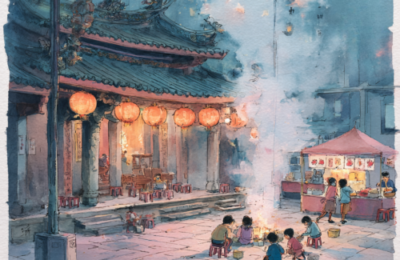
花莲的庙很多。
妈祖守港,玄天上帝镇山,
王母、玉皇、城隍并存。
但我真正记得的,不是哪一尊神。
是庙口——
戏台的灯光,
香肠的温度,
香火的烟,
水泥地上学骑脚踏车。
庙口不是景点。
是身体最早学会“和别人一起”的地方。
Hualien has many temples.
Mazu by the harbor, Xuantian Shangdi in the mountains, local shrines scattered across town.
Yet what I remember is not a particular deity,
but the temple front —
the glow of the stage lights,
the warmth of grilled sausage in my hands,
the sting of incense smoke,
the concrete ground where I learned to ride a bicycle.
The temple courtyard was not a religious concept.
It was where my body first learned how to belong among others.
这是一条从当代速度(高铁、美学、纪录片)
一路向前奔跑后,
意外撞见古代文明余温的路径。
我原以为只是旅行、只是写作、只是生活推进的节奏。
后来才发现:
高铁把我推回中文,
九歌把我推回音乐,
生日把我推回祖地,
写作把我推回楚国。
行动先行,意义延迟。
当意义出现的那一刻,
所有行动突然连成一条线。
这篇文章,是一条文明对齐的记录。
This is a story of how contemporary speed—
high-speed rail, aesthetics, documentaries, and writing—
unexpectedly led me back to a two-thousand-year-old civilization.
What began as ordinary actions—travel, notes, and musical impulses—
later revealed a hidden structure:
the railway brought me back to Chinese language,
The Nine Songs brought me back to music,
my birthday brought me back to my ancestral land,
and writing brought me back to ancient Chu.
Actions come first; meaning arrives later.
When meaning finally appeared,
every step aligned into a single coherent path.
This piece records that alignment.
声音,不只是被听见,而是文明显形的方式。
从楚简的五音、乐风,到楚辞的呼唤与叩问;
从高铁美学的香气、色彩、戏曲、工艺与乐器,
到速度时代被重新激活的气息结构——
声音将这些异质的材料对齐,
让古今在同一频率上共振。
本篇追问:
一个文明,是如何通过声音保持呼吸、记忆与秩序的?
Sound is not merely heard—it is how a civilization becomes visible.
From the Five Tones and musical governance in Chu bamboo texts,
to the chants and inquiries of the Chu Ci;
from the sensory systems of High-Speed Rail Aesthetics—
aroma, color, opera, craftsmanship, instruments—
to the breath-structures reactivated in the age of speed,
sound aligns these disparate materials into a single field of resonance.
This essay asks:
How does a civilization sustain its breath, memory, and order through sound?