本分类收录本网站各研究体系的导航地图与白皮书。
导航地图用于呈现文章之间的结构关系与阅读路径,
白皮书则系统整理相关理论框架、核心概念与研究方法。
它们构成本网站各主题研究的结构入口与整体说明,
帮助读者从宏观层面理解不同系列之间的关联与整体架构。
This category gathers the Navigation Maps and White Papers of the research projects presented on this website.
Navigation Maps outline the structural relationships and reading paths between articles, while White Papers provide systematic presentations of the theoretical frameworks, key concepts, and research approaches.
Together, they serve as the structural entry points to the different research series, helping readers understand the overall architecture and connections within the project.
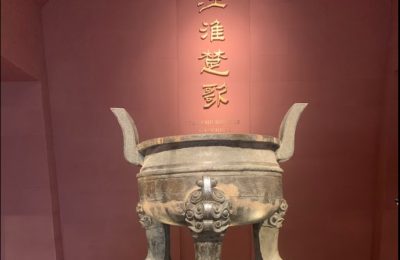
In April 2026, I traveled from Beijing and Henan to Shouchun, Shanghai, and Taipei, tracing what I later called the “Central Plains–Chu Route.” This is not simply a travel record, but a reading guide to twelve interconnected essays. From the Huangdi ceremony and the operational logic of Chu, to imperial ritual spaces, Lord Chunshen, Shanghai, and the backstage of railway maintenance, this journey became an exploration of how civilizations sustain themselves over time.
2026年4月,我从北京、河南、寿春、上海一路走到台北,重新整理这一条“中原—楚地线”。这不是一篇单纯的旅行记录,而是12篇文章的阅读导航:从黄帝拜祖、楚国后台、先农坛与国博里的楚考烈王,到黄歇与上海、台北铁道博物馆,我开始重新思考,一个文明如何长期维持运行。
In April 2026, I traveled from Beijing and Henan to Shouchun, Shanghai, and Taipei, tracing what I later called the “Central Plains–Chu Route.” This is not simply a travel record, but a reading guide to twelve interconnected essays. From the Huangdi ceremony and the operational logic of Chu, to imperial ritual spaces, Lord Chunshen, Shanghai, and the backstage of railway maintenance, this journey became an exploration of how civilizations sustain themselves over time.
This white paper examines China’s high-speed rail (HSR) system as a large-scale civilizational structure rather than a purely technical infrastructure.
With over 50,000 kilometers of track, China’s HSR network has fundamentally reshaped spatial organization, compressed temporal cycles, and transformed patterns of social interaction. Beyond engineering achievement, it represents the emergence of a new structural condition: a speed-based civilization.
However, as systems increase in scale and complexity, speed alone becomes insufficient to maintain stability. This paper argues that future infrastructure systems require a transition toward rhythmic organization—where coordination, balance, and temporal alignment sustain long-term operation.
Through analysis of engineering systems, cognitive frameworks, and cultural perception, the paper proposes a shift from speed toward rhythm as a key dimension of modern civilizational development.
The Rhythm Civilization® Framework proposes rhythm as a fundamental mechanism for the generation and organization of civilization. By examining embodied practice, the structural patterns of Chu civilization, and modern high-speed rail systems, this study demonstrates how rhythm operates across body, culture, and technological systems, forming a multidimensional resonance through which civilization emerges and evolves.
This document is an abstract edition.
The full-length version is available in Chinese.
《节奏文明观白皮书》提出一种新的文明观察框架:节奏作为文明生成与组织的基础机制。通过身体实践、楚文明结构以及现代高铁系统三个不同尺度的案例,本研究展示节奏如何在身体、文化与技术系统之间形成共振结构,并揭示文明如何在多维节奏的互动中生成与演化。
The Rhythm Civilization Framework proposes rhythm as a fundamental mechanism for the generation and organization of civilization. By examining embodied practice, the structural patterns of Chu civilization, and modern high-speed rail systems, this study demonstrates how rhythm operates across body, culture, and technological systems, forming a multidimensional resonance through which civilization emerges and evolves.
《高铁文明白皮书》从文明结构与系统思维的角度,重新理解中国高速铁路的发展。文章讨论高铁如何重组空间、时间与社会流动,并提出“六大思维”与“感官文明”两个观察路径,尝试从工程系统进入更深层的文明结构讨论。
The High-Speed Rail Civilization White Paper explores China’s high-speed rail network from the perspective of civilizational structure and systems thinking. It examines how high-speed rail reorganizes space, time, and social mobility, and introduces two analytical frameworks—six cognitive patterns of large-scale engineering and the sensory dimension of culture—to understand infrastructure as a civilizational system.
《节奏文明观 · 导航地图》整理身体、材料、声音、语言、空间、时间与学习等十个入口,说明文明如何在不同维度的节奏中逐渐生成。本篇并非理论总结,而是一张阅读地图,引导读者理解节奏如何组织文明结构。
Rhythm Civilization · Navigation Map brings together ten entry points — body, material, sound, language, space, time, learning, and life — to explore how civilization gradually emerges through rhythms across different dimensions. Rather than a theoretical conclusion, this essay functions as a reading map that guides readers through the structural logic of rhythm in civilization.
Embodied Generative Intelligence proposes a new framework for understanding intelligence through the body, rhythm, emotion, and civilization. This reading guide introduces four essays exploring how embodied practices generate knowledge, meaning, and social order, with ancient Chu civilization as a key historical archive of embodied intelligence.
本页为《身体生成式智能》系列阅读导航。通过四篇文章,提出“身体生成式智能”(Embodied Generative Intelligence)的理论路径:身体 → 节奏 → 情绪 → 文明。以楚文明为例,重新思考人类智能的起点与意义。
This page is the reading guide for the series Embodied Generative Intelligence. Through four essays, it proposes a generative path of intelligence — Body → Rhythm → Emotion → Civilization — and reinterprets human intelligence through the embodied traditions of ancient Chu civilization.
Prologue For three months I danced, and for three months I wrote.What began on the second day of the Lunar New Year—triggered by a stream of short videos showing ritual…