You are currently viewing 《从飞机到文化遗产:Kärcher 如何不断重组自己的五种底层能力》|From Aircraft to Cultural Heritage: How Kärcher Keeps Recombining Its Five Core Capabilities
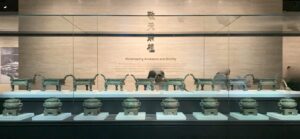
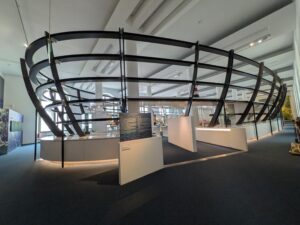
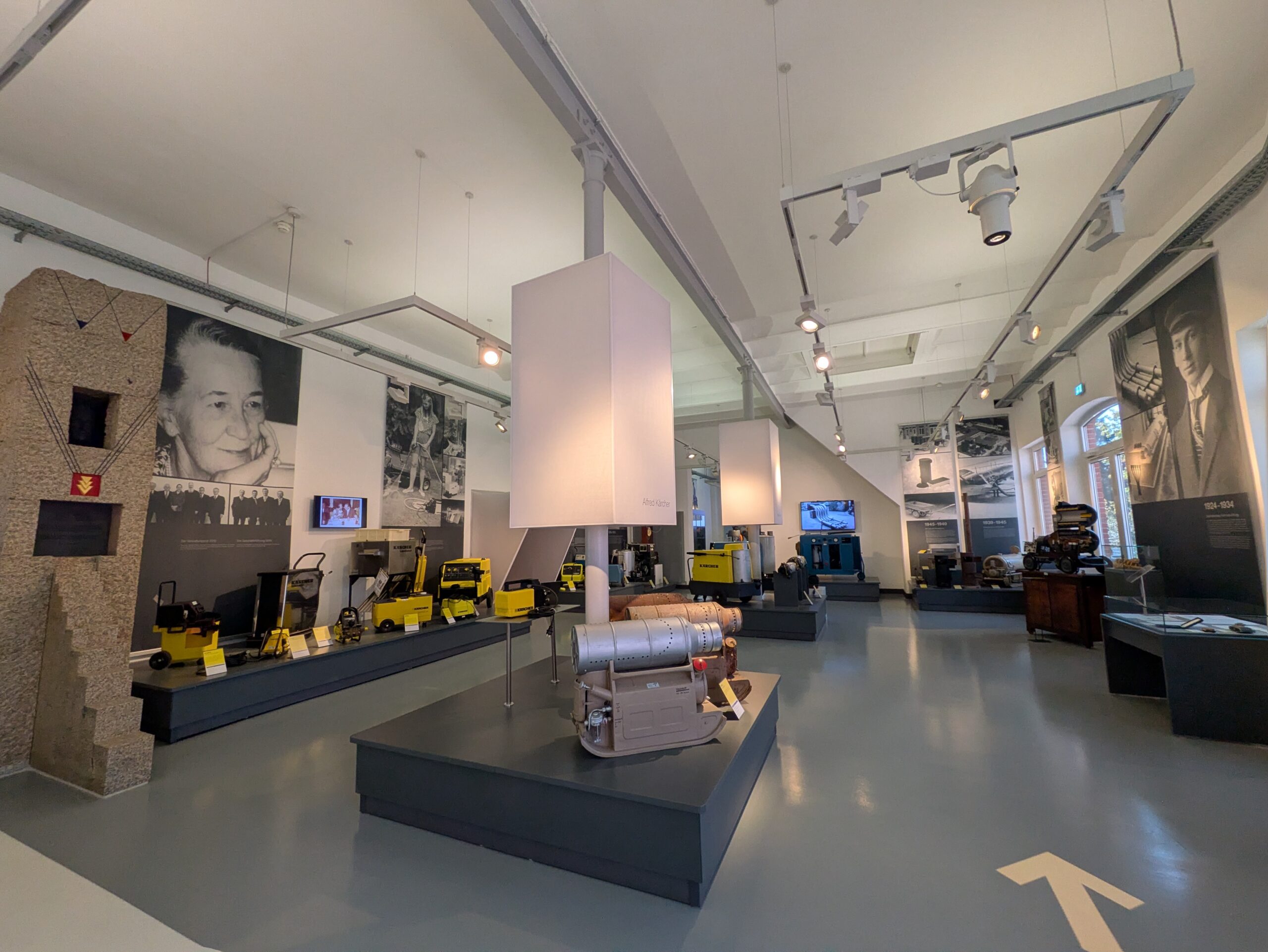
Kärcher Museum in Winnenden, Germany. Photo: Ning Huang, 2026.

《从飞机到文化遗产:Kärcher 如何不断重组自己的五种底层能力》|From Aircraft to Cultural Heritage: How Kärcher Keeps Recombining Its Five Core Capabilities

封面图说明|

Kärcher 博物馆全景,
从早期工业技术到现代清洁设备,
一家企业近九十年的技术演变,
被浓缩在同一个空间里。
摄影:黄甯,2026 年 9 月,Winnenden

引文|我原本以为,我来看的是清洁设备

机器会离开展台,
产品也会退出时代,
但有些能力不会消失,
它们只是换一种方式,
继续工作。

📅 时间:2026年09月28日 (一)
📍 地点:Kärcher 博物馆

故事从七月底开始,
在 OAV 举办的企业家交流会(Unternehmerstammtisch)上,
我认识了 Kärcher(中国大陆:卡赫;台湾:凱馳)财务高管 Philipp Salveter,
几句交谈以后,
一扇原本看不见的门打开了。

经由他的介绍,
我联系上博物馆负责人 Oliver Häuser,
邮件来回了几次,
时间慢慢落在九月底,
一场一对一的导览也确定下来。

九月二十八日早晨,
我来到 Winnenden 的 Kärcher,
走进那座收藏企业记忆的空间,
Häuser 先生已经在那里等我,
黄色机器静静排在身后。

我原本以为,
这会是一部清洁设备的历史,
高压清洗机、吸尘器、洗地机,
一代接着一代,
把 Kärcher 带到今天。

可是故事刚刚开始,
飞机就出现了。

不是模型里的偶然点缀,
也不是后来合作留下的纪念,
而是真正属于 Kärcher 的早期技术史,
发动机预热、座舱加热,
还有机翼与尾翼除冰。

在清洁以前,
他们先学会了怎样制造热,
怎样让空气带着热移动,
怎样在严寒之中,
让一台机器继续运转。

我站在那里,
屡屡想起儿子,
他正沿着自己的路,
一点一点走向航空世界,
而我来看一家清洁技术公司,
竟然也在第一段历史里,
遇见了一架飞机。

这个意外很短,
却改变了我观看展览的方式。

我开始不再只看机器,
而是看机器里面藏着什么,
热从哪里来,
空气怎样流动,
力量又怎样被控制。

因为机器会改变,
名字也会改变,
一种产品甚至可能彻底消失,
可是制造它的某些能力,
并不会跟着离开。

它们会被拆开,
等待下一次相遇,
再和水、压力、机械结合,
进入另一具机器的身体,
回答另一个时代的问题。

于是这座博物馆,
渐渐不再像产品的陈列室,
它更像一张展开的技术地图,
旧机器停在原地,
能力却一直向前移动。

从飞机到清洁设备,
从工厂走进普通家庭,
再从日常污垢走向古老石墙,
九十年的距离很长,
那条隐藏的线却没有断。

我原本来看清洁设备,
最后想追的却是另一个问题:

是什么底层能力,
让一家企业不断改变产品,
而留下来?

一、在「清洁」以前,Kärcher 首先掌握的是热

Kärcher 最早学会控制的,
是看不见的热。

1. 从工业炉开始

1935 年的 Stuttgart-Bad Cannstatt,
Alfred Kärcher 创办自己的公司,
那时还没有黄色清洗机,
也没有今天熟悉的清洁世界,
他的起点,
是加热技术(Heiztechnik)。

在独立创业以前,
Alfred 已经研究工业炉多年,
如何让热产生得更经济,
如何让温度稳定地抵达目标,
是他最早面对的工程问题。

所以 Kärcher 的第一种能力,
并不是把什么洗干净,
而是制造热、输送热,
再让热抵达需要的位置,
这条技术线比清洁更早。

2. 当热走向飞机

三十年代的航空工业,
给热提出了新的问题,
飞机停在寒冷的地面,
发动机必须顺利启动,
热也因此走向机场。

Kärcher 开发热风机(Heißluftbläser),
用热空气预热飞机发动机,
Mowäb B 便来自这个时期,
它把燃烧产生的热量,
送进冰冷的机械内部。
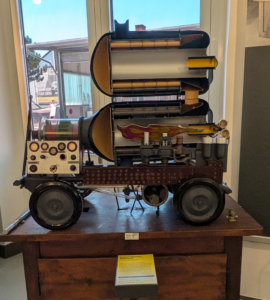
图:Mowäb B 模型
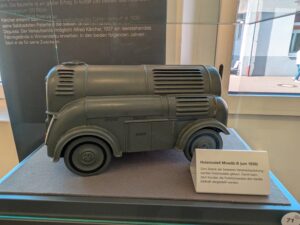
图:Mowäb B 木制教学模型

博物馆里的木制模型,
把这段技术变得具体,
空气从哪里被吸入,
热又沿着什么路径移动,
都可以顺着结构去阅读。

此时的 Kärcher,
仍然不是清洁公司,
它处理的是另一个问题,
如何在寒冷环境之中,
让机器恢复工作的温度。

3. 热进入飞机的身体

1939 年以后,
航空对加热技术(Heiztechnik)的需求增加,
Kärcher 迁入 Winnenden 新厂,
企业也被卷入战争工业,
技术进入更复杂的飞机系统。

座舱需要保持温度,
机翼不能任由冰层覆盖,
尾翼同样需要面对结冰,
于是加热与除冰设备,
成为当时的生产内容。
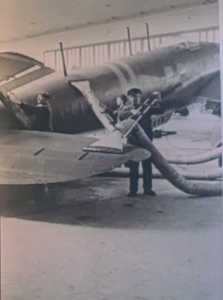
图:机翼与尾翼除冰

这里值得留下一个停顿,
因为技术本身没有立场,
但技术从来不脱离时代,
同一种控制热的能力,
会被历史带往不同方向。

展厅里的旧机器,
因此不只记录一项发明,
它也保存一个时代如何,
把工程能力、工业生产,
与战争紧紧缠在一起。

4. 战争结束,热没有消失

1945 年以后,
德国面对的是另一种寒冷,
城市需要重新站起来,
普通人的生活也要重建,
技术面对的问题完全改变。

Kärcher 一度只剩 40 人,
最初生产炉具与手推车,
随后又制造加热模板,
以及用于建筑干燥的,
新风加热设备(Frischluftheizgeräte)。

过去服务飞机的热,
开始走进大厅和帐篷,
也走进工地与牲畜棚,
战争改变了应用场景,
底层能力却继续留下。

历史可以突然断裂,
产品可以失去原来用途,
能力却可能寻找新出口。
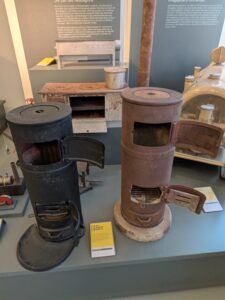
图: 1945—1948 战后炉具

5. 炸弹弹药筒(Bombenkartuschen)的第二次生命

其中有一件小小的炉子,
它没有飞机那么醒目,
也不像后来黄色的机器,
一眼就能认出 Kärcher,
但它身上留下的时代痕迹,
反而比许多机器更深。

它利用炸弹弹药筒制成,
原本属于战争的材料,
在战争结束以后,
被重新带回日常生活,
成为可以取暖的炉具。

材料没有选择自己的时代,
技术却能改变它的去向,
曾经服务战争的工业能力,
开始回答最普通的问题,
怎样让人重新获得温暖。

如果这一章需要一件物件,
替整段历史留下记忆,
我会选择这只炉子,
因为它让「重新组合」这件事,
第一次拥有了具体的形状。

6. 热,正在等待水

到这里为止,
Kärcher 仍不是清洁专家,
可是一个重要的能力,
已经穿过工业与航空,
又穿过战争与重建。

它会制造热,
也知道怎样传递热,
更知道怎样控制热,
让它进入不同的机器,
完成完全不同的任务。

接下来真正改变 Kärcher 的,
不是这项能力被淘汰,
而是它遇见另一种介质,
一个后来几乎与 Kärcher,
再也无法分开的东西,
那就是水。

创新有时不是告别过去,
而是让旧能力,
在新的相遇里,
获得第二次生命。

二、热、空气、蒸汽、水与压力:技术不是更替,而是重新组合

技术很少真正离开,
它只是从一台机器退场,
带着已经学会的能力,
进入下一种组合。

1. 热第一次遇见水

前一章里的 Kärcher,
还在学习怎样控制热,
热进入工业炉与飞机,
也进入战后的取暖设备,
它还没有成为清洁技术。

真正的转折来到 1950 年,
已经掌握多年的热,
第一次真正遇见水,
而压力也在这个节点,
同时进入新的技术系统。

这一年,Alfred Kärcher
开发出 DS 350,
欧洲第一台热水高压清洗设备,
Kärcher 也由此正式走进,
后来改变企业命运的清洁领域。
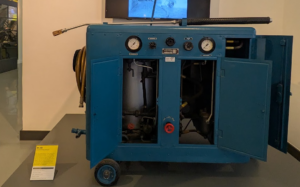
图:热水高压清洗设备 DS 350(Dampfstrahler)

水可以带走污垢,
热可以改变附着状态,
压力则赋予水机械力量,
三种原本分散的能力,
第一次在这里同时相遇。

这并不是简单的替换,
也不是前一种技术消失,
而是已经掌握的能力,
被拆开、移动、重新连接,
进入一个新的技术结构。

2. 蒸汽,把热带到表面

1950 年的 DS 350,
还有一个容易误解的名字,
Kärcher 称它为 Dampfstrahler,
也就是蒸汽喷射设备。

但它并不是后来意义上的,
单纯蒸汽清洗机,
而是一台热水高压清洗设备,
热、水与压力,
已经同时进入系统。

蒸汽在这里仍然重要,
因为当水持续获得热量,
温度与状态开始变化,
热也因此能够随着水,
直接抵达需要清洁的表面。

所以从 DS 350 开始,
真正值得注意的,
不是一种技术取代另一种,
而是几种能力第一次,
在同一台机器里交会。

热没有离开,
水也不再只是介质,
压力已经赋予它力量,
而蒸汽则让热的作用,
以另一种形式抵达表面。

3. 水开始拥有力量

如果把 DS 350 拆开来看,
压力已经站在那里。

它让水获得速度,
也赋予水机械作用力,
污垢不只可以被软化,
也能够从表面直接剥离。

从这一刻开始,
水不再只是普通介质,
它逐渐成为一种,
可以精确控制的工具。

而更有意思的是,
压力并不必须永远,
与热绑定在一起,
它后来可以继续拆分,
形成新的技术组合。

4. 热水与高压,再次相遇

随着技术继续发展,
热、水与压力的组合,
开始获得更精确的控制,
温度、流量与压力,
逐渐进入同一套系统。

热水高压清洗设备(HDS),
正是这种组合的结果,
热、水与压力同时工作,
机器还要控制流量温度,
以及整个运行过程。

到了 HDS 810 T,
组合已经更加复杂,
使用者可以在喷枪一端,
切换冷热水与清洁剂,
控制开始进入清洁过程。

机器表面看似更新,
内部逻辑却仍能追溯,
热没有被压力淘汰,
压力也没有取代热,
它们开始学会一起工作。

热水高压清洗设备,
热、水与压力再次相遇,
原本分散的技术能力,
被组织进同一套系统。

5. 如果拿掉热,会怎样?

答案就在另一边,
水仍然可以继续工作,
只要压力足够稳定,
热甚至可以暂时退出,
形成另一种技术路线。

冷水高压清洗设备(HD),
保留水与压力的组合,
减少加热这个环节,
却继续强化流量控制,
以及压力本身的作用。

1970 年代的 HD 1000 SL,
已经可以调节水量压力,
面对农业等使用环境,
机器需要稳定、耐用,
也必须容易操作。

这里最值得注意的,
反而不是多了什么,
而是技术也能做减法,
抽走其中一个能力以后,
剩下的组合仍可生长。

冷水高压清洗设备 HD 1000 SL,
热从这一组合中暂时退出,
水与压力继续独立发展,
形成另一条产品路线。

6. 空气也没有离开

与此同时,另一条旧线,
也在悄悄继续生长,
第一章曾经运送热量的空气,
后来进入完全不同的机器,
这一次,
它开始带走东西。

在吸尘设备里面,
空气形成持续的气流,
压力差产生吸取作用,
灰尘离开原来的表面,
再被带入机器内部。

干式吸尘器 T 140,
已经属于另一个产品世界,
它看起来远离飞机加热,
也远离高压水流,
空气却仍是重要介质。

当对象变成细微粉尘,
过滤又加入这个系统,
空气负责搬运颗粒,
滤材负责把它们留下,
清洁开始连接职业健康。

空气进入吸尘系统以后,
不再负责输送热量,
而是携带灰尘离开表面,
旧介质获得了新的任务。

7. 机器越来越像一个系统

到了喷抽清洗机 Puzzi S,
边界变得更加模糊,
清洁液先被喷向织物,
污垢从纤维中松动,
随后又被立即吸走。

喷水与吸取相遇,
机械过程彼此衔接,
一台机器不再依赖,
某一种单独的力量,
而是安排力量的次序。

百叶窗清洗机 Lamellomat,
更能看出这种思路,
喷洒、刷洗、冲洗、脱水,
被串进连续的工作流程,
机器试图一次完成。

它最终没有打开市场,
却留下一个重要证据,
技术能够重新组合,
不代表每一种组合,
都会成为成功的产品。

百叶窗清洗机 Lamellomat,
喷洒、刷洗、冲洗与脱水,
被组织成连续的工作流程,
但这次组合没有赢得市场。

8. 五种能力,开始浮现

走到这里再回头看,
机器已经越来越多,
名字也越来越复杂,
可是把外壳一层层拿掉,
反复出现的东西并不多。

第一种是热,
第二种是空气,
第三种是蒸汽,
第四种是水,
第五种是压力。

它们并非五条直线,
也没有依次取代彼此,
有时两种能力相遇,
有时三四种同时进入,
有时又主动拿掉一种。

于是产品不断变化,
底层能力却持续迁移,
一台机器退出市场以后,
其中的技术并未死亡,
而是等待下一次组合。
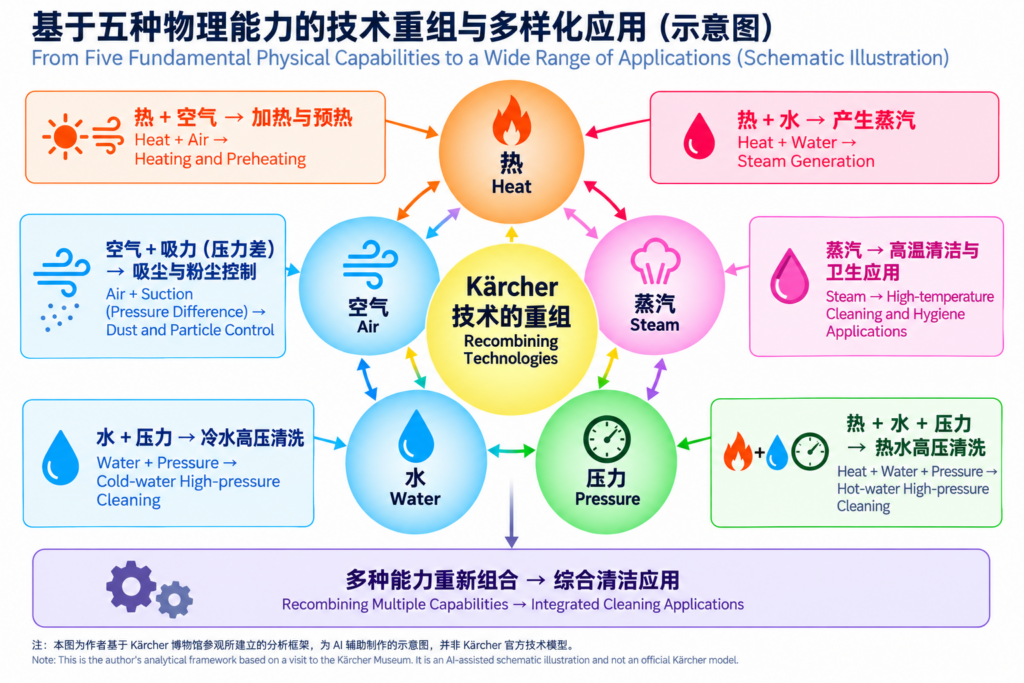
图:Kärcher 五种底层能力的技术重组(作者分析示意图)

九十年的产品不断变化,
底层能力却反复出现,
真正推动技术向前的,
是它们一次次重新相遇。

新机器并不总从零开始,
有些创新只是让旧能力,
在新的关系里面,
再活一次。

三、Irene Kärcher:当创始人的时代结束以后

发明可以打开一扇门,
但一家企业能走多远,
还取决于有没有人知道,
下一步应该往哪里走。

1. 1959 年,机器还在,创始人却离开了

1959 年,
创始人 Alfred Kärcher 去世,
留下已经进入清洁领域的公司,
也留下一个没有完成的未来。

热水高压清洗已经出现,
技术方向却仍可以分岔,
一家依赖创始人的企业,
也第一次必须回答,
没有创始人以后怎么办。

接过公司的,
是他的夫人 Irene Kärcher,
她不是工程师 Alfred 的替代者,
也没有试图成为第二个 Alfred,
她带进公司的另一种能力,
是经营、判断与方向。

所以从这里开始,
博物馆里的故事也变了,
前面不断出现的是机器,
现在走到机器背后的,
是一个人的选择。
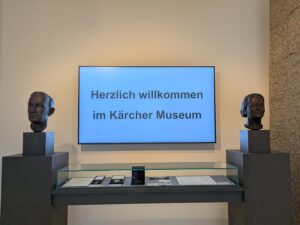

图:Alfred Kärcher 与 Irene Kärcher 肖像

2. 她选择了「清洁」

接手一家企业是一回事,
决定它以后成为什么,
却是完全不同的问题。

过去二十多年里,
Kärcher 做过不同工业设备,
从加热技术走向航空,
又从战后产品进入清洁,
技术路径并不只有一条。

Irene 面对这些可能性,
开始把方向慢慢收拢,
Kärcher 逐渐走向清洁领域,
企业也一步步找到新的中心。

这个决定看似简单,
其实改变了后来几十年,
因为真正的战略选择,
往往不是增加更多东西,
而是知道什么值得留下。

3. 从 Winnenden 走出去

方向确定以后,
下一步便是走得更远。

Kärcher 产品早已有出口,
但真正的国际化结构,
是在 Irene 领导时期,
一步一步建立起来的。

1962 年,
第一家海外公司落在法国,
奥地利与瑞士随后跟进,
原本从 Winnenden 管理的出口,
开始拥有海外自己的节点。

Irene 也持续走近市场,
她定期访问销售机构,
与当地负责人保持联系,
企业扩张不再只靠产品,
销售网络也成为基础。

4. 有时候,增长需要做减法

可是扩张也有代价,
产品越来越多以后,
企业的轮廓反而可能模糊。

到了七十年代初,
曾经重要的蒸汽发生器,
已经走向生命周期末端,
Kärcher 必须重新决定,
有限资源应该放在哪里。

1974 年,
公司作出一次重要收缩,
聚焦专业高压清洗技术,
其他产品类别逐步退出,
企业重新找到技术重心。

这与上一章正好呼应,
技术重组并非不断增加,
真正成熟的系统也需要,
知道什么时候拆掉支线,
把力量重新集中起来。

不是做得越多越强,
而是越来越清楚,
什么才是自己的核心。

5. 从蓝色变成黄色

也在这个转折时期,
机器的颜色改变了。

原来的锤纹蓝色,
逐渐让位给醒目的黄色,
后来人们一眼就能认出的,
「Kärcher 黄」开始出现。

颜色当然不是技术,
却让技术获得视觉身份,
当机器走向更多国家,
一种稳定的品牌记忆,
也跟着机器一起旅行。

几十年以后,
很多人甚至不看名字,
只看到那一抹黄色,
便已经知道眼前机器,
来自哪一家企业。
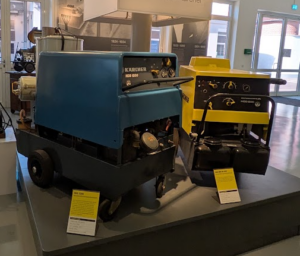
图:蓝色早期机器与黄色机器

1974 年前后,
机器由锤纹蓝转向黄色,
一次战略上的重新聚焦,
也逐渐获得鲜明的颜色。

6. 她把企业带到了更远的地方

1975 年,
第一座海外工厂落在巴西,
此后的销售网络继续扩大,
到 1988 年成立日本公司时,
Kärcher 已经遍及五大洲。

这时再回头看 1959 年,
两端已经相距三十年。

Irene 接手的那家公司,
拥有重要的技术基础,
却还没有今天的世界版图,
更没有完成全球布局。

1984 年,
她获颁联邦十字勋章,
表彰其企业经营成就,
这也让博物馆墙上的她,
不再只是 Alfred 身边的人。

她领导企业近三十年,
也完成属于自己的时代。

7. 1989 年,第二次交棒

1989 年 4 月,
Irene Kärcher 去世,
享年六十八岁。

图:Irene Kärcher 相片

三十年前,
她从 Alfred 手中接过公司,
三十年以后,
企业再次来到交棒时刻。

这一回接手公司的,
是 Alfred 与 Irene 的子女,
Susanne Zimmermann von Siefart,
以及 Johannes Kärcher。

一家公司的连续性,
于是有了另一种解释,
留下来的不只有技术,
还有每一代人在关键时刻,
重新判断方向的能力。

Alfred 留下了技术,
Irene 没有只守住它,
她为这些技术选择方向,
又把它们送向了世界。

四、从 Winnenden 到世界:技术怎样变成一家国际企业

真正的国际化,
不是把同一台机器卖得更远,
而是让同一组技术能力,
学会回答不同世界的问题。

1. 世界不是一张销售地图

从 Winnenden 出发以后,
Kärcher 的地图越来越大,
法国、奥地利、瑞士之后,
新的节点继续向外延伸,
企业逐渐跨出欧洲。

1975 年的巴西工厂,
让海外布局再向前一步,
生产第一次落到欧洲之外,
技术不再只是出口,
而开始在当地扎根。

到了 1988 年,
日本公司也正式成立,
Kärcher 的销售网络此时,
已经延伸至五大洲,
一家德国企业走向世界。

可是如果只画国界,
这个故事其实并不完整,
真正发生扩张的地方,
还藏在地图的另一层,
那就是使用环境。

从 Winnenden 出发,
Kärcher 逐渐建立海外网络,
技术跨越的不只是国界,
还有完全不同的使用环境。

2. 同样的机器,进入不同世界

走进博物馆下一部分,
时间轴渐渐退到身后,
展览开始换一种方式,
不再只问哪一年发生什么,
而是机器在哪里工作。

工厂需要清除油污,
农场面对泥土与病原体,
食品生产要求严格卫生,
公共空间不断产生污垢,
每个现场都有自己的问题。

这时再看高压水流,
它已经不是一种产品,
而是一种可以被调用的能力,
根据不同表面与污垢,
重新调整自己的参数。

压力可以升高降低,
水量可以重新控制,
温度也能加入系统,
清洁剂还能参与其中,
组合随着现场而改变。
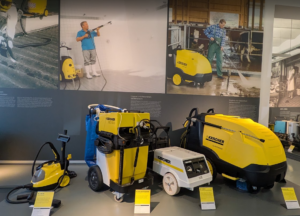
图:博物馆「清洁」展区

离开时间轴以后,
博物馆开始按照问题展开,
同一种基础技术能力,
进入越来越不同的现场。

3. 农场里,清洁关系到生命

到了农业环境,
问题又发生了变化。

这里需要清洁的对象,
可能是畜舍与储藏空间,
也可能是生产设备,
干净与否不只关乎外观,
还直接连接食品卫生。

热水高压清洗设备,
在这里重新组合能力,
热帮助处理油脂污垢,
压力进入缝隙与角落,
水把被剥离的污物带走。

必要的时候,
清洁剂还会形成泡沫,
停留在表面更长时间,
让清洁与消毒过程,
获得更充分的作用时间。

机器还是那台机器吗?
从外观看或许很接近,
但它面对的问题已经不同,
参数与工作流程随之改变,
技术也获得新的意义。

在农业与食品环境中,
清洁不只是去掉污垢,
热、水、压力与清洁剂,
共同进入卫生管理过程。

4. 当灰尘变成健康问题

有些地方没有水流,
甚至看不见明显污垢,
危险藏在空气里面。

石英粉尘、石棉粉尘,
还有打磨产生的细尘,
颗粒可以细小到进入肺部,
清洁因此不再只是整洁,
而成为职业健康问题。

空气在这里再次出现,
压力差形成吸取力量,
灰尘被带离工作表面,
过滤系统把颗粒留下,
避免重新回到环境。

针对不同危险程度,
安全吸尘设备继续细分,
M 级过滤要求很高,
H 级则进一步提高,
技术开始承担防护任务。

第一章里的空气,
曾经把热送向发动机,
到了这里却带走粉尘,
同一种基础能力,
已经进入另一个世界。

当污垢细小到进入肺部,
清洁便与健康发生关系,
空气、吸力与过滤技术,
共同构成另一道防线。

5. 游泳池里,角落也有尺度

公共卫生空间里,
问题又换了一张脸。

泳池与公共卫生设施,
每天面对大量使用者,
潮湿、缝隙与接触表面,
都让卫生变得复杂,
清洁也必须更加细致。

高压水流可以进入角落,
洗地设备处理大片地面,
蒸汽则进入另一类表面,
不同能力再次被调动,
完成同一空间的任务。

在这里决定结果的,
不只是某一台机器,
机械作用、温度、时间,
以及清洁剂之间的关系,
共同决定清洁效果。

技术走得越远,
反而越不像单一产品,
它逐渐成为一套方法,
根据现场重新安排力量,
再寻找合适的组合。

面对公共卫生空间,
一种技术已经不够,
温度、时间与机械作用,
必须根据现场重新组合。

6. 最后,它走进普通人的家

工业设备不断专业化时,
另一扇门也打开了。

1984 年,
HD 555 推向家庭市场,
一台约十五公斤的机器,
把专业高压清洗能力,
带进普通消费者的生活。

这一步真正改变的,
并不是水与压力本身,
而是机器的大小、操作方式,
价格与使用场景,
都必须重新被设计。

为了让人理解新产品,
Kärcher 甚至走进足球场,
在斯图加特对阵拜仁时,
当着六万名观众洗汽车,
把陌生技术变成现场经验。

第一年便售出五千多台,
一个原本不存在的市场,
开始从专业技术旁边长出,
到了八十年代末期,
家庭产品继续扩大。
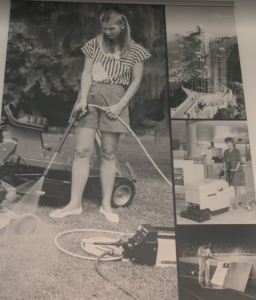
图:1984 年的 HD 555,
把专业高压清洗能力,
缩进普通家庭可以使用的,
一台便携机器之中。

7. 国际化,还有第二张地图

走到这里再回头看,
世界地图已经变了。

第一张地图画国家,
法国、巴西、日本,
一个个海外节点出现,
企业沿着地理空间扩张。

第二张地图却没有国界,
它画工厂、农场与泳池,
也画食品生产与家庭,
同一组底层技术能力,
不断进入陌生的问题。

这才是另一种国际化,
技术必须适应新的环境,
也必须理解新的需求,
才能从一个地方出发,
真正进入另一个世界。

而当 Kärcher 继续向外走,
它后来遇到的表面,
甚至不再属于工厂,
也不再属于普通家庭,
而属于人类共同的历史。

古老石像不会说话,
历史建筑也无法更换,
这一次,清洁面对的问题,
不再是怎样洗得更快,
而是怎样不伤害时间。

技术走向世界以后,
真正扩大的不是地图,
而是它能够理解、
并回答的问题。

五、洗掉污垢,却不能洗掉历史

清洁最难的地方,
不是拥有足够的力量,
而是知道力量抵达哪里,
就应该停下来。

1. 一半洗净,一半留下

博物馆里有一块石雕,
第一眼就让人停下来,
同一块古老的石头上,
一半已经完成清洁,
另一半仍留着岁月痕迹。
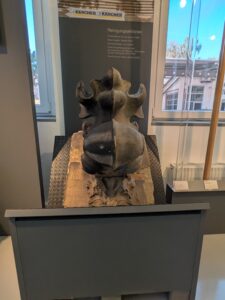
界线清楚得近乎锋利,
一边露出石材本来的颜色,
一边覆盖长期沉积的污层,
清洁前后的差异,
同时留在一件物体上。

这也是一个很好的问题,
如果技术能够洗得更深,
是不是就应该继续?

面对普通工业表面,
效率往往意味着更彻底,
可是面对文化遗产,
「彻底」反而可能危险,
因为历史也附着在表面。

清洁真正要判断的,
于是变成另一件事情,
什么应该被移除,
什么必须留下,
两者之间究竟在哪里分界。

2. 不是洗得越干净越好

文化遗产不会重新生产,
表面一旦受到损伤,
失去的部分无法补回来,
所以清洁首先面对的,
不是力量,
而是尺度。

石灰岩与花岗岩不同,
砂岩也有自己的结构,
附着其上的污染物,
硬度与厚度各不相同,
不能使用同一套参数。

于是每一次清洁以前,
都必须先理解对象,
石材能够承受什么,
污层又需要多少力量,
技术才知道如何介入。

这时决定清洁结果的,
已经不只是机器性能,
颗粒大小、材料硬度,
水量、空气与压力,
都必须重新被计算。

前面不断发展的力量,
到了古老石头面前,
第一次需要主动克制,
不是因为技术变弱了,
而是因为判断更精确了。

3. 连「粉末」都必须选择

有些文化遗产清洁中,
水并不是唯一介质,
空气可以携带细小颗粒,
以非常受控的方式,
作用在需要处理的表面。

核桃壳粉可以被使用,
石粉也可能进入系统,
还有白云石与玻璃珠,
甚至细小的玻璃粉,
不同材料有不同作用。

真正重要的不是名称,
而是它们各自的性质,
颗粒有不同的大小,
材料也有不同的硬度,
表面则有自己的承受范围。

莫氏硬度(Mohshärte),
于是成为判断尺度之一,
颗粒不能任意选择,
压力也不能无限增加,
否则清洁本身就会伤害文物。
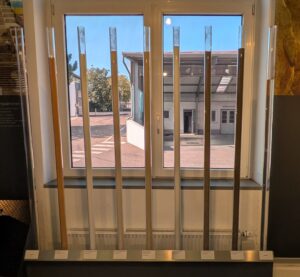
图:不同清洁颗粒

水、空气与颗粒,
再加上精确控制的压力,
前几章熟悉的技术元素,
到了文化遗产这里,
又被重新排列了一次。
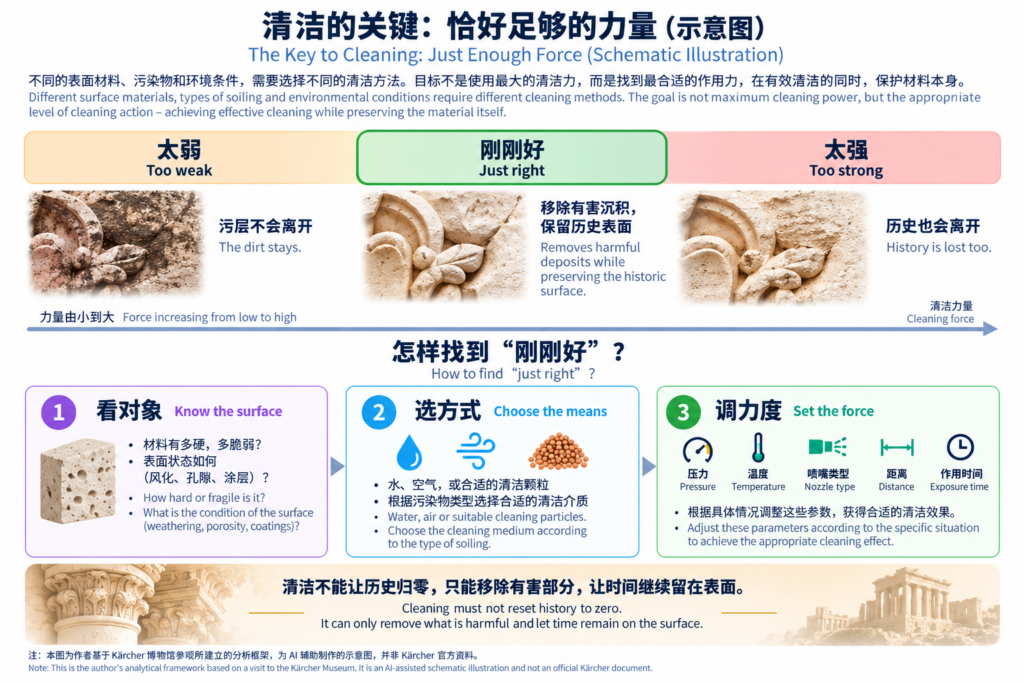
图:文化遗产清洁的力量与参数控制(作者分析示意图)

4. 当技术爬上基督像

有些需要清洁的对象,
比博物馆展柜巨大得多。

里约热内卢的基督像,
高高站在科尔科瓦多山上,
风雨、湿气与生物附着,
都会在表面留下痕迹,
维护因此成为长期工作。

自 1980 年开始,
Kärcher 参与基督像的清洁,
此后大约每隔十年,
又重新回到这座山上,
进行文化赞助项目。

三十米高的巨大雕像,
让清洁变成另一种工程,
工作人员必须悬在高处,
设备则留在有限空间,
力量还要准确抵达表面。

这里真正令人着迷的,
不是机器能够喷多远,
而是在如此巨大尺度上,
依然必须控制每一次作用,
避免伤害原有材料。
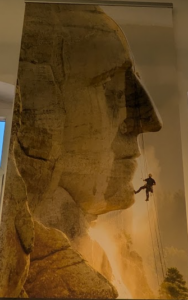
图:清理头像

工作人员悬在高处,
清洁巨大的历史表面,
设备拥有足够的力量,
操作却必须保持克制。

5. 在埃及,面对更久远的时间

技术继续向前移动,
下一站甚至更加古老。

埃及的门农巨像(Memnonkolosse),
已经站立了数千年,
时间、沙尘与环境变化,
一层层留在石材表面,
清洁面对的是漫长历史。

这样的对象无法替换,
也不能简单恢复成「崭新」,
因为文化遗产的价值,
从来不只是原始材料,
也包括时间留下的痕迹。

于是工程师必须区分,
哪些属于有害沉积,
哪些已经成为历史表面,
哪些可以安全移除,
哪些应该永远留在那里。

到了这一刻,
清洁已经不像清洁,
它更接近一次协商,
技术与材料协商,
现在也与过去协商。

面对数千年的石头,
清洁不能让历史归零,
它只能移除有害部分,
让时间继续留在表面。

6. 九十年的力量,学会克制

回头看前面的故事,
Kärcher 一直在增加能力。

热必须能够被控制,
空气必须能够被引导,
蒸汽需要准确地产生,
水获得越来越大的压力,
机器也越来越有效率。

进入工业与农业以后,
这些能力继续被加强,
面对粉尘与卫生问题,
控制又变得更加精细,
技术不断扩大作用范围。

可是到了文化遗产,
问题突然反了过来。

这里并不需要最大的热,
也不需要最高的压力,
更不是最快完成任务,
真正困难的是找到一个,
恰好足够的作用尺度。

太弱,污层不会离开,
太强,历史也会离开。

于是前面九十年的发展,
在这里出现另一种成熟,
技术不再只是证明,
自己能够产生多少力量,
而是能够控制多少力量。

从飞机发动机的严寒,
到古老石像的表面,
热、水、空气与压力,
一路换过许多机器,
也进入过许多世界。

最后真正留下来的,
并不是某一种设备,
甚至不是「清洁」本身,
而是一种越来越精确的能力,
知道什么时候应该停止。

真正成熟的技术,
不只是能够改变世界,
还知道世界的哪些部分,
不应该被它改变。

尾之声|我最后带走的,不是一台黄色机器

机器留在博物馆,
能力却没有停下,
它一次次换掉身体,
继续走向下一个时代。

将近两个小时的导览,
从一架飞机开始,
经过热、空气与蒸汽,
再遇见水与压力,
最后来到古老石像前。

九十年过去,
机器一代代退场,
新的产品不断出现,
使用的世界越来越大,
那几种力量却始终都在。

热曾温暖飞机发动机,
后来进入高压热水,
空气曾经输送温度,
后来又带走细小粉尘,
水与压力也不断重组。

它们走进工厂,
走进农场与家庭,
也进入卫生与健康,
直到面对几千年的石头,
力量忽然需要学会克制。

这时再看 Kärcher,
看到的已不只是机器,
而是一条能力迁徙的暗线,
旧技术没有真正消失,
只是不断换一种身体。

产品终究会停产,
市场也不断改变,
真正能够穿越时间的,
是那些留下来的能力,
以及重新组合它们的能力。

后记|考烈王、黄歇与令尹夫人的观后感

一家公司到底应该守住什么?

考烈王站在机器前,
看了一会儿那片黄色,
又看看墙上的老照片,
问了一句:
“所以九十年下来,
它到底还是不是原来的公司?”

黄歇看着他问:
“大王问的原来,
是原来的产品,
还是原来的能力?”

考烈王指着飞机:
“这个总不能算清洁吧?
发动机预热、座舱取暖,
还有机翼除冰,
怎么看都离得太远。”

我站在旁边:
“所以我刚进去的时候,
也觉得飞机很奇怪,
后来才慢慢发现,
奇怪的是我看错了东西。”

考烈王转头:
“你看错什么了?”

我说:
“我一直在看产品,
飞机是一种产品世界,
高压清洗又是另一个,
当然觉得它们没有关系。”

黄歇笑了:
“如果不看产品呢?”

我指着那些机器:
“那就开始看见热,
看见空气和蒸汽,
后来又看见水与压力,
它们其实一直都在。”

考烈王想了一会儿:
“所以旧机器消失了,
技术却偷偷跑掉了,
换一台机器躲进去,
继续假装自己是新的?”

我笑了:
“你这样说也可以,
只是它们不一定躲着,
博物馆其实全摆出来了,
是我们习惯只看外壳。”

黄歇点点头:
“这就像一支军队,
阵形可以不断改变,
真正决定它能做什么的,
还是手里那些能力。”

考烈王立刻问:
“那是不是组合越多,
机器就一定越厉害?”

我摇头:
“也不一定,
百叶窗清洗机很特别,
技术组合得很完整,
市场却没有留下它。”

考烈王笑了:
“原来技术也会白忙。”

黄歇看了他一眼:
“不是白忙,
只是一个组合能不能留下,
还要看它遇见的问题,
是不是真的需要它。”

我们继续往前走,
从工业走进农业,
又经过卫生与家庭,
最后来到文化遗产前,
那座石雕停在那里。

一半已经清洁,
另一半仍留着痕迹。

考烈王盯了很久:
“既然可以洗干净,
为什么只洗一半?
技术不是应该越来越强吗?”

我说:
“前面九十年,
确实一直在增加力量,
可是走到这里以后,
问题突然反过来了。”

黄歇接着说:
“不是还能洗掉多少,
而是应该留下多少。”

考烈王安静了一下:
“所以最厉害的时候,
反而不是力量最大,
而是知道什么时候,
不能再往前?”

我点点头:
“对,
水可以再快一点,
压力可以再高一点,
颗粒也可以再硬一点,
但历史不能重新长回来。”

黄歇笑了:
“这才叫真正会用力量,
能做得到是一回事,
知道该不该做,
是另外一回事。”

考烈王又回头看飞机:
“那我现在明白了,
从飞机到古老石像,
看起来走得那么远,
其实一直没有断。”

我问他:
“什么没有断?”

他说:
“不是黄色,
黄色后来才有。”

黄歇笑出了声。

考烈王继续说:
“也不是高压清洗机,
那东西更晚,
真正没有断掉的,
是那些能力一直在走。”

我看着最后那排机器:
“所以产品会退场,
市场也会改变,
有些机器甚至会失败,
可能力还能继续迁移。”

黄歇淡淡地说:
“留下来的东西,
未必要保持原来的样子。”

走出博物馆的时候,
黄色机器还留在身后,
飞机也停在旧照片里,
古老石像继续面对时间,
故事却没有真正停下。

产品留下的是年代。
技术留下的是能力。
真正穿越时间的,
是重新组合的可能。

Appendix|English Narrative Overview

From Aircraft to Cultural Heritage: How Kärcher Keeps Recombining Its Five Core Capabilities

Before Cleaning, There Was Heat

On September 28, 2026, I arrived at the Kärcher Museum in Winnenden expecting a familiar story.

I imagined yellow pressure washers, vacuum cleaners and floor-cleaning machines arranged along a timeline of technical progress.
Instead, near the beginning of the exhibition, I encountered an aircraft.

That unexpected image changed the way I looked at everything that followed.

Kärcher’s history did not begin with cleaning.
When Alfred Kärcher founded his company in 1935, his technological world was centred on heating.
He had already spent years working with industrial furnaces and exploring how heat could be generated, transferred and controlled more efficiently.

During the 1930s, that knowledge moved into aviation.
Hot-air blowers were used to preheat aircraft engines.
Heating and de-icing systems later addressed the problems of cold cabins, wings and tail assemblies.

Long before Kärcher became associated with cleaning, the company had already learned how to control an invisible physical force and direct it toward a practical problem. 

After 1945, the context changed dramatically.

Germany had to rebuild, and Kärcher’s technical capabilities were redirected toward civilian needs.
The company produced stoves, handcarts and fresh-air heating equipment for buildings and other spaces.

One particularly striking object in this part of the story is a small stove made using bomb cartridges.
Material once associated with war was given a second life as a source of everyday warmth.

The products had changed.

The underlying capability had not.

When Heat, Water and Pressure Met

The decisive turning point came in 1950.

By then, Kärcher had already spent years learning how to generate, transfer and control heat.
With the DS 350, that accumulated knowledge entered a new technological combination.

Heat met water.
But pressure was already there as well.

The DS 350 was a hot-water high-pressure cleaning system, also described as a Dampfstrahler.
What matters for this story is that heat, water and pressure had already converged in a single cleaning system by 1950.

This changes the way Kärcher’s technological development can be read.

Pressure did not simply appear after steam.
Nor did one technology neatly replace another.
The more revealing pattern is one of capabilities meeting, separating, developing further and then being recombined.

Steam represented another relationship between heat and water.
Pressure gave water mechanical force.
Hot-water high-pressure cleaning brought temperature and mechanical action together.

Later, cold-water pressure washers demonstrated that heat could also be removed from the combination.
Water and pressure could continue along another technological path of their own.

This ability to add and subtract capabilities is important.

Innovation did not always mean putting more into a machine.
Sometimes it meant taking one element away and discovering that the remaining combination could still develop.

Air followed another path.

In Kärcher’s early aviation technology, air had transported heat toward aircraft engines.
Later, in vacuum-cleaning systems, airflow began carrying something away instead.

Dust was removed from surfaces and drawn into machines.
When the problem became hazardous fine dust, filtration entered the system as another layer of control.

The medium remained familiar.

Its task had changed. 

Other machines made the logic of recombination even more visible.

The Puzzi S sprayed cleaning solution into textiles and immediately extracted the loosened dirt.
The Lamellomat attempted to combine spraying, brushing, rinsing and drying in one continuous process for vertical blinds.

It did not succeed commercially.

But that failure is revealing too.

Technical capabilities can be recombined in an ingenious way without necessarily producing a successful product.
A new combination must still encounter a problem that people actually need it to solve. 

Seen in this way, Kärcher’s product history begins to look less like a sequence of separate inventions.

Beneath the changing machines, five recurring capabilities become visible:

heat, air, steam, water and pressure.

Sometimes two meet.
Sometimes three or four work together.
Sometimes one is deliberately removed.

The machines change because the combinations change.

The capabilities continue to move.

Irene Kärcher and the Question of Direction

A technological capability cannot choose its own future.

When Alfred Kärcher died in 1959, Irene Kärcher took responsibility for a company that already possessed important engineering knowledge but had not yet become the global cleaning enterprise known today.

Her role was not to become another Alfred.

She brought a different kind of capability into the story: strategic judgement.

Under her leadership, cleaning increasingly became the company’s central direction.
International expansion accelerated.
The first foreign subsidiary was established in France in 1962, followed by further expansion in Europe.

Yet growth also required subtraction.

By the early 1970s, Kärcher had developed a broad product portfolio.
In 1974, the company made an important strategic decision to concentrate on professional high-pressure cleaning technology and gradually withdraw from other product categories.

Around the same period, another visible change occurred.

The earlier hammered blue gave way to yellow.

Colour was not a technology.
But it gave the technology a recognisable visual identity as Kärcher machines travelled into more markets. 

In 1975, Kärcher established its first overseas factory in Brazil.
By the time the Japanese company was founded in 1988, the network had extended across five continents.

Irene Kärcher had spent almost three decades helping transform a company with valuable engineering capabilities into an increasingly international enterprise.

She died in 1989 at the age of 68.

The company then passed to the second generation of the family.

This part of the story reveals another form of continuity.

A company does not survive simply because it preserves what it already knows.
Someone must decide which capabilities should remain central, which branches should be abandoned and where the remaining strengths should go next. 

A Second Map of Internationalisation

A conventional map of Kärcher’s internationalisation would show countries.

France.
Austria.
Switzerland.
Brazil.
Japan.

But inside the museum, another map gradually appears.

It has no national borders.

It contains factories, farms, food-production facilities, swimming pools, sanitary spaces and private homes.

The same underlying technical capabilities enter each environment.
But their parameters and combinations change according to the problem. 

On a farm, cleanliness can become a question of animal health and food safety.

Hot water helps deal with greasy contamination.
Pressure reaches corners and crevices.
Water carries loosened dirt away.

When necessary, cleaning agents can be applied as foam so that they remain on surfaces longer and support cleaning and disinfection.

The machine may look familiar.

The problem it is solving is different. 

In other environments, the danger is almost invisible.

Asbestos, quartz dust and fine particles produced by sanding can enter the lungs.
Cleaning then becomes a matter of occupational health.

Airflow and pressure differences generate suction.
Particles are removed from the working surface.
Filtration prevents them from returning to the surrounding air.

The air that once carried heat toward an aircraft engine is now carrying hazardous dust away.

The same physical medium has entered a completely different problem. 

Public swimming pools and sanitary areas present another set of conditions.

High-pressure water can reach corners and joints.
Floor-cleaning machines deal with large surfaces.
Steam can be used on other materials.

Mechanical action, temperature, time and cleaning agents have to be coordinated according to the environment.

Technology increasingly begins to look less like a single machine and more like a method for arranging different forms of action. 

Then, in 1984, professional high-pressure technology entered another world.

The HD 555 brought portable high-pressure cleaning into the household market.
A machine weighing only about fifteen kilograms translated professional cleaning capability into a form that ordinary consumers could use.

The underlying physics had not suddenly changed.

What changed were scale, mobility, usability, price and context.

Kärcher also had to teach people what this unfamiliar product could do.

During half-time at a Bundesliga match between VfB Stuttgart and FC Bayern Munich at Stuttgart’s Neckar Stadium, cars were cleaned in front of 60,000 spectators.

More than 5,000 units were sold in its first year.

A market that had previously not existed had begun to take shape.

This suggests a broader meaning of internationalisation.

The first map is geographical.

It shows countries and overseas subsidiaries.

The second map has no borders.

It shows factories, farms, swimming pools, food production, workplaces and homes.

Technology does not truly travel simply because a machine crosses a national border.

It travels when an established capability can understand a new environment, adjust itself and solve a different problem. 

When Power Has to Learn Restraint

The most striking test of this principle appears at the other end of the museum.

There stands an old stone sculpture.

One half has been cleaned.
The other still carries the traces of time.

The boundary between them raises a deceptively simple question:

If technology can clean further, should it?

For an ordinary industrial surface, greater efficiency may mean removing more contamination.

For cultural heritage, that logic can become dangerous.

History itself can be attached to the surface. 

Cultural heritage cannot simply be reproduced.

Once an original surface is damaged, what disappears cannot truly be restored.

Cleaning therefore begins not with maximum force, but with judgement.

Limestone behaves differently from granite.
Sandstone has its own structure.
Deposits vary in thickness and hardness.

Water, air, pressure, particle size and material hardness must therefore be considered together.

Before technology acts, it first has to understand the object. 

In some heritage-cleaning processes, even the powder has to be chosen carefully.

Walnut-shell powder may be used.
So may stone powder, dolomite, glass beads or fine glass powder.

Particle size matters.

Material hardness matters.

The Mohs scale becomes one reference for deciding how an abrasive material may interact with a historic surface.

Pressure cannot simply be increased without limit.

Otherwise, cleaning itself becomes the source of damage. 

The challenge becomes even more visible at monumental scale.

Since 1980, Kärcher has participated in cleaning Rio de Janeiro’s Christ the Redeemer as part of its cultural sponsorship activities, returning approximately once every ten years.

The thirty-metre statue turns cleaning into an engineering problem of extraordinary scale.

Workers operate high above the ground.
Equipment has to function within difficult spatial conditions.
And sufficient cleaning force still has to reach the surface without damaging the original material.

The impressive part is not simply that the technology can reach so far.

It is that the force must remain controlled when it arrives. 

At Egypt’s Colossi of Memnon, the timescale becomes longer still.

These ancient surfaces have stood for thousands of years.

They cannot simply be returned to a state of “newness,” because the value of cultural heritage does not lie only in the original material.

Time has become part of the object.

Engineers therefore have to distinguish between harmful deposits and traces that belong to the historical surface.

What can safely be removed?

What should remain?

At this point, cleaning begins to resemble a negotiation.

Technology negotiates with material.

And the present negotiates with the past. 

What Remains When the Machines Disappear

Looking back across the story, Kärcher spent decades increasing and refining its capabilities.

Heat had to be controlled.
Air had to be directed.
Steam had to be generated.
Water acquired mechanical force through pressure.

But cultural heritage reverses the question.

Here, the challenge is not maximum heat.
It is not maximum pressure.
Nor is it simply the fastest possible result.

The challenge is to find exactly enough force.

Too little, and the unwanted deposit remains.

Too much, and history disappears with it.

This is where technological maturity begins to mean something different.

It is no longer only the ability to produce force.

It is the ability to control it.

And, ultimately, to know when to stop. 

Nearly ninety years separate the early aircraft-heating systems from the cleaning of ancient stone.

Across that distance, machines disappear.
Product categories change.
Markets expand.
Some experiments fail.

Yet the underlying capabilities continue to move.

Heat once warmed aircraft engines.
By 1950, it had entered a new combination with water and pressure.

From there, capabilities could separate again, develop along different paths and meet in new combinations.

Air once transported heat.
Later, it carried dangerous dust away.

Water and pressure could work with heat, or without it.

The products changed because the combinations changed.

The museum can therefore be read as something more than a collection of machines.

It is a record of capabilities migrating through time.

At the beginning of the visit, the aircraft seemed strangely out of place in the history of a cleaning company.

By the end, it no longer seemed strange at all.

The aircraft, the pressure washer and the ancient stone monument belong to different worlds.

What connects them is not a single product.

Nor is it the colour yellow.

It is the continuing ability to take what has already been learned, separate it, develop it, recombine it and apply it with increasing precision.

Products preserve their moment in time.
Technology preserves capability.
And what truly travels through history is the possibility of recombination.

Across Civilizations

What Should a Company Actually Hold On To?

King Kaolie stood in front of the machines, looking first at the field of yellow and then at the old photographs on the wall. “So after ninety years, is this still the same company?”

Lord Chunshen Huang Xie looked at him. “When Your Majesty says the same, do you mean the same products, or the same capabilities?”

The king pointed toward the aircraft. “This cannot possibly count as cleaning. Engine preheating, cabin heating, and even wing de-icing—they seem far too removed from it.”

I stood beside them. “That was exactly what puzzled me when I first walked in. The aircraft seemed strange. Only later did I realise that the strange thing was the way I had been looking.”

The king turned toward me. “What were you looking at?”

“Products. An aircraft belongs to one product world, and high-pressure cleaning belongs to another. Of course they seem unrelated if that is all we see.”

Huang Xie smiled. “And if you stop looking at the products?”

I pointed toward the machines. “Then you begin to see heat. You see air and steam, and later water and pressure. They were there all along.”

The king thought for a moment. “So the old machines disappear, but the technology secretly slips away, hides inside another machine, and pretends to be new?”

I laughed. “You could put it that way. Except it is not really hiding. The museum has placed everything right in front of us. We are simply accustomed to looking at the outer shell.”

Huang Xie nodded. “It is rather like an army. Its formation can keep changing, but what it is capable of doing still depends on the capabilities it has at its disposal.”

The king immediately asked, “Then the more capabilities you combine, the better the machine?”

I shook my head. “Not necessarily. The Lamellomat was unusual. Its technical processes were carefully combined, but the market did not keep it.”

The king laughed. “So technology can work hard for nothing too.”

Huang Xie glanced at him. “Not for nothing. Whether a combination survives also depends on the problem it encounters, and whether anyone truly needs that problem to be solved.”

We continued through the museum, moving from industry into agriculture, then through hygiene and the home, until we finally arrived in front of cultural heritage. The stone sculpture stood there, one half cleaned, the other still carrying the traces of time.

King Kaolie stared at it for a long while. “If it can be cleaned, why clean only half? Is technology not supposed to become more and more powerful?”

I said, “For most of the previous ninety years, that was indeed the direction. More power, more control, greater effectiveness. But when we arrive here, the question suddenly reverses.”

Huang Xie continued, “It is no longer about how much more can be removed. It is about how much should remain.”

The king fell silent for a moment. “So when technology becomes truly powerful, its greatest achievement is not maximum force, but knowing when it must go no further?”

I nodded. “Yes. The water could move faster, the pressure could be higher, and the particles could be harder. But history cannot grow back.”

Huang Xie smiled. “That is what it means to know how to use power. Being able to do something is one matter. Knowing whether it should be done is another.”

King Kaolie turned back toward the aircraft. “Then I understand now. From an aircraft to an ancient stone monument, the distance looks enormous. But the line was never broken.”

I asked him, “What was never broken?”

He replied, “Not the yellow. The yellow came later.”

Huang Xie burst out laughing.

The king continued, “And not the pressure washer either. That came later too. What never disappeared was the movement of those capabilities.”

I looked toward the final row of machines. “So products leave the stage, markets change, and some machines even fail. But the capabilities can continue to migrate.”

Huang Xie said quietly, “What remains does not have to remain in its original form.”

When we left the museum, the yellow machines stayed behind. The aircraft remained in the old photographs, and the ancient stone continued facing time. But the story had not really stopped.

Products preserve an era.
Technology preserves capability.
What truly travels through time is the possibility of recombination.

📜 参考资料:

🤖 人工智能协作声明

本文的主题选择、田野调查、资料搜集、核心观点与中文原始内容,均由作者独立完成。创作过程中,作者与人工智能模型,进行持续协作,包括多轮讨论、思路推演、节奏输出、部分翻译、英文 Narrative Overview 生成、语言检查、结构检测与文字润饰。
人工智能在此过程中,作为创作协作者,参与内容发展与语言表达,但不作为法律意义上的作者或著作权主体。所有 AI 协作产生的内容,均由作者依据田野资料、原始文献与中文母稿,进行选择、审校、修改与艺术化重构。文章的叙事方向、内容取舍、创作决策、最终表达与价值判断,均由作者决定并负责。

📜 本站所有原创作品均已完成区块链存证,确保原创凭证。部分重点作品另行提交国家版权登记,作为正式法律备案。原创声明与权利主张已公开。完整说明见:

👉 原创声明 & 节奏文明版权说明 | Originality & Rhythm Civilization Copyright Statement – NING HUANG

节奏文明存证记录

本篇博客文为原创作品,由黄甯与 AI 协作生成,于博客网页首发后上传至 ArDrive 区块链分布式存储平台进行版权存证:

  • 博客首发时间:2026年10月09日
  • 存证链接:1f954709-4aff-41a4-86a9-cb0b6422b521
  • 存证平台:ArDrive(arweave.net)(已于 2026年10月09日上传)
  • 原创声明编号:Rhythm_Archive_09_Oct_2026/from-aircraft-to-cultural-heritage-karcher-five-core-capabilities
  • 用途声明:本文为《节奏文明观》之〈流动文明 〉与〈节奏文明地景书写 〉篇章,亦参与构建《AI×非遗文明共构档案》与《文明节奏回声计划》,用于文明节奏实地记录、区块链存证、跨域协作与版权登记用途。

© 黄甯 Ning Huang, 2026. All Rights Reserved.
本作品受版权法保护,未经作者书面许可,禁止复制、改编、转载或商用,侵权必究。

📍若未来作品用于出版、课程、NFT或国际展览等用途,本声明与区块链记录将作为原创凭证,拥有法律效力。