封面图说明|
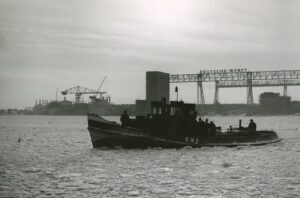
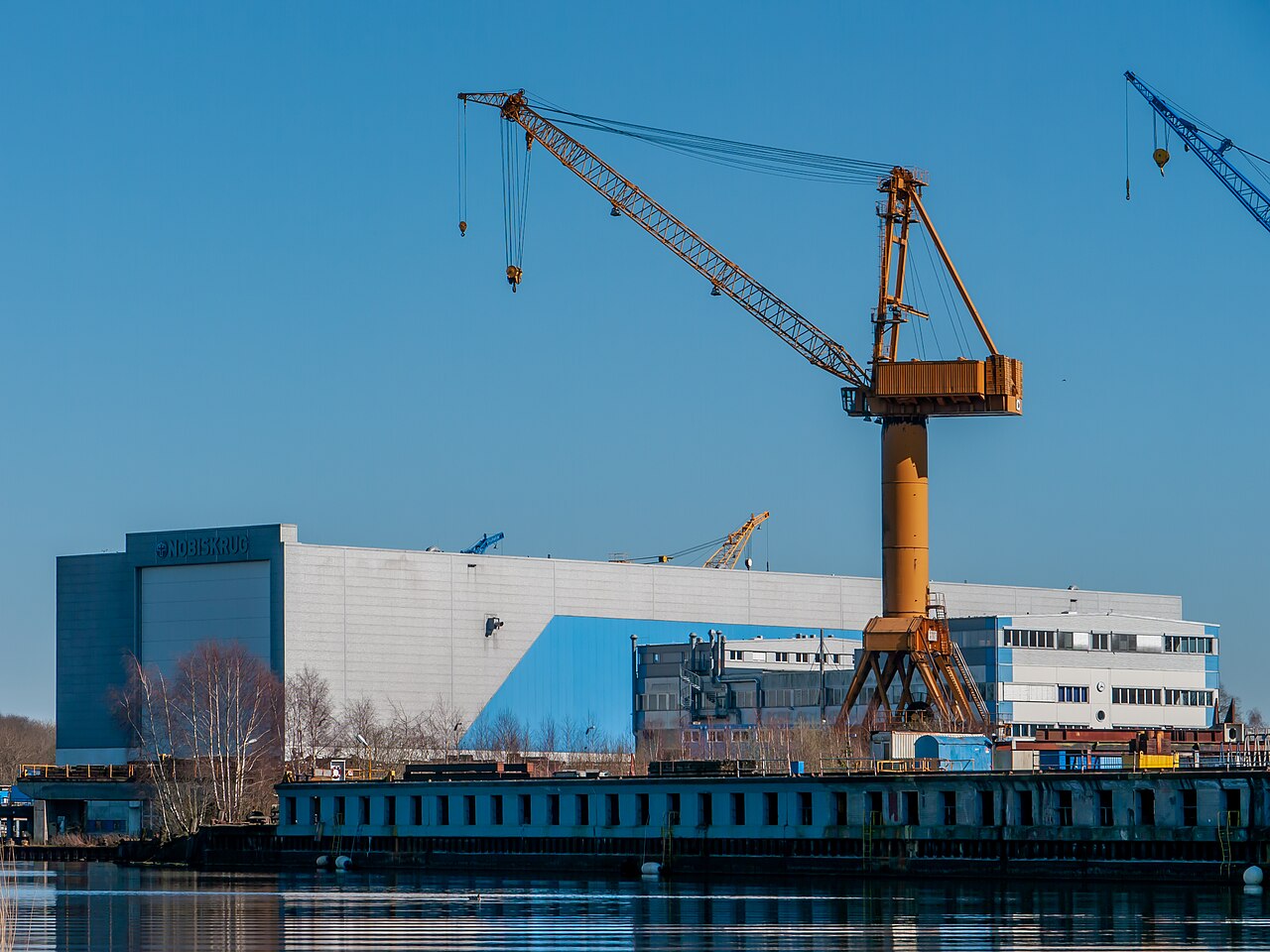
北海—波罗的海运河旁,
Nobiskrug 船厂坐落在 Rendsburg,
这里从1905年开始建造船舶,
BLEICHEN 也在这里诞生。
图片来源:Matti Blume / Wikimedia Commons,CC BY-SA 4.0。
引文|一艘老货船,带我回她出生的地方
船离开船厂以后,
开始了自己的生命,
船厂的名字,
则永远留在了她的出生记录里。
BLEICHEN 停在汉堡港,
她已经不再运送纸张,
也不再往返北欧港口,
甲板上的工作交给了志工。
她出生在1958年,
出生地却不在汉堡,
沿着她的生命往回走,
会来到更北方的 Rendsburg。
那里靠着 Eider 河,
也靠着北海—波罗的海运河,
水路穿过城市旁边,
船厂也因此在这里生长。
1905年,
Nobiskrug 出现,
Otto Storck 创建了这座船厂,
厂区紧邻 Eider 的旧河道,
离运河汇入口只有约250米。
1958年,
BLEICHEN 在这里出生,
她当时只是一艘普通货船,
随后离开 Rendsburg 去工作,
开始了属于自己的海上岁月。
几十年以后,她来到汉堡,
从工作船变成历史船,
而当我们沿着她往回寻找,
也重新走进 Nobiskrug 的故事。
这里造过货船和渡轮,
也造过研究船与特种船,
后来进入超级游艇时代,
一艘老货船,
就这样打开了,
一百二十年的造船史。
延伸阅读|BLEICHEN:为什么德国保存一艘运纸船?
BLEICHEN 从1958年开始航行,
往返德国、瑞典与芬兰,
她载着北欧的纸张与木材,
也维持着一条看不见的供应链。
那些纸卷进入汉堡以后,
再经铁路、公路与河流前往各地,
最后成为报纸、书籍与教材,
走进德国人的日常生活。
货柜时代到来以后,
这样的杂货船逐渐离开港口,
BLEICHEN 却被重新带回汉堡,
留下货柜革命以前的港口记忆。
一、1905:为什么这里会出现一家船厂?
船厂选择在哪里落脚,
从来不是偶然,
先有可以通向大海的水路,
才有一艘艘船从这里出发。
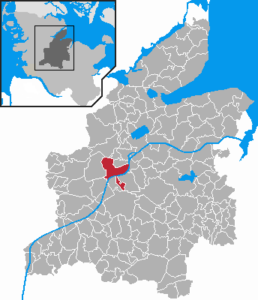
1. 一座长在水路上的城市
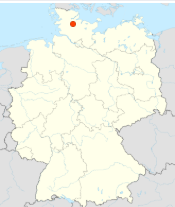
Rendsburg 很早就与水相连,
老城最初位于 Eider 河岛上,
河流从城市身边经过,
也带来了航行与贸易。
十八世纪后期,
这里已经出现人工运河,
Eider-Kanal 连接东西两侧,
第一次打通两片海域。
更大的改变发生在1895年,
Kaiser-Wilhelm-Kanal 正式开通,
也就是后来的 Nord-Ostsee-Kanal,
Rendsburg 从此站在重要航道旁。
船从北海驶向波罗的海,
不必再绕行丹麦半岛,
航道带来新的交通条件,
也为新的工业留下空间。
2. 1905:Nobiskrug 来到水边
十年以后,
一座新船厂出现了,
1905年,
Otto Storck 创建 Nobiskrug。
船厂的位置很特别,
它紧邻 Eider 的旧河道,
距离汇入运河的位置,
只有大约250米。
船可以在这里建造,
再沿水路进入运河,
从运河驶向两片海域,
地理位置成为船厂的一部分。
Rendsburg 也随运河改变,
Nobiskrug 与 Saatsee 两座船厂,
都在运河建成以后发展起来,
水路开始转化为工业力量。
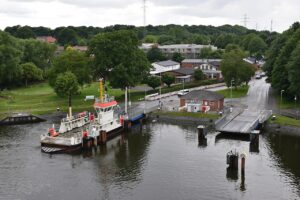
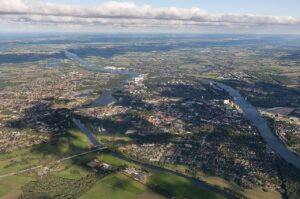
图:从空中俯瞰 Rendsburg,城市位于 Eider 与 Nord-Ostsee-Kanal 之间,右侧可见 Rendsburger Hochbrücke。资料来源:Ralf Roletschek / Wikimedia Commons,CC BY-SA 3.0。
3. 最初造的不是超级游艇
那时的 Nobiskrug,
还没有后来的超级游艇,
船厂面对的是水路运输,
以及最实际的工作需求。
第一次世界大战以前,
这里已经建造约70艘船艇,
其中主要是 Pontons 与 Leichter,
也就是浮桥与驳船。
战争结束以后,
产品再次随着需求改变,
货运蒸汽船与拖网渔船出现,
开始交付德国的船东。
到了1930年代初,
船厂开始进行系列建造,
Ich Verdiene 型沿海机动船,
成为这一时期的重要产品。
从驳船到货船,
从河道走向近海航运,
Nobiskrug 最初的发展轨迹,
始终跟着水路需求移动。
4. Nobiskrug 船厂小档案
- 建厂时间:1905年。
- 创办人:Otto Storck。
- 企业性质:德国造船厂,长期位于 Rendsburg,后期以超级游艇建造闻名。
- 船厂地点:Rendsburg,Eider 旧河道旁,距离 Nord-Ostsee-Kanal 汇入口约250米。
- 主要业务:早期建造浮桥与驳船,后来进入货船与渡轮,也建造研究及特种船舶,后期发展超级游艇业务。
- 曾制造的名船:BLEICHEN、DEUTSCHLAND、PETER PAN、POLARSTERN、TATOOSH。
- 现存历史船代表:ANNEMARIE、NIXE、IRIS-JÖRG,以及1958年的 BLEICHEN,这四艘 Nobiskrug 建造的船舶如今作为博物馆船保存。
- 企业变迁:1986年结束独立经营,此后经历多次收购与重组,2024年再次申请破产,最终由 Lürssen 接手船厂。Nobiskrug 名称从厂房撤下,延续约120年的 Nobiskrug 船厂历史进入新的阶段。
- 现况:Rendsburg 的船厂并未消失,消失的是 Nobiskrug 企业名称,船厂基地进入 Lürssen 体系,造船地点仍然继续存在。
二、1958:BLEICHEN 从这里下水
船厂造过许多船,
大多数后来消失了,
可是其中一艘货船,
六十多年后依然还在。
1. 从系列货船开始
1930年代初,
Nobiskrug 已经进入系列造船,
Ich Verdiene 型沿海货船,
成为船厂的重要产品。
战争结束以后,
德国重新需要运输船舶,
Nobiskrug 回到民用造船,
货船再次驶出 Rendsburg。
二十多年以后,
另一艘货船来到船台,
她没有特别的使命,
只是为了运输而生。
她的名字,
叫做 BLEICHEN。
2. 1958:一个船孩子出生了
1958年,
一艘新船在这里完成,
她的建造编号是607,
名字叫做 BLEICHEN。
6月26日,
BLEICHEN 正式下水,
她是一艘典型的杂货船,
属于货柜时代以前的船型。
她没有豪华的客舱,
也不是为了远征而生,
她的任务非常实际,
就是把货物送到目的地。
订购她的船东来自汉堡,
公司名为 H. M. Gehrckens,
船东经营斯堪的纳维亚航线,
BLEICHEN 因此拥有较高冰级。
她从德国驶向北欧,
再从芬兰运回纸张,
寒冷的波罗的海航线上,
这就是她最初的工作。
3. 没有人知道她会留下
BLEICHEN 离开 Rendsburg 时,
她只是一艘工作货船,
船厂完成了建造任务,
船东则开始使用她。
后来货柜改变航运,
传统杂货船逐渐失去优势,
BLEICHEN 也离开德国,
换过名字与不同的船东。
她曾叫 Canale Grande,
后来又成为 Arcipel,
最后以 Old Lady 航行,
直到2006年底仍在工作。
原本等待她的结局,
其实和许多老船一样,
停止航行以后拆解,
从此退出海上的世界。
可是 BLEICHEN 留下来了,
2007年她重新回到汉堡,
也重新拿回最初的名字,
成为汉堡保存的历史船。
4. Nobiskrug 留下的船孩子
一百多年造船历史里,
Nobiskrug 建造过许多船,
绝大多数继续工作后消失,
有几艘却进入博物馆。
1930年的 ANNEMARIE,
1939年的 NIXE,
1956年的 IRIS-JÖRG,
都成为后来保存的博物馆船。
名单最后还有一艘,
就是1958年的 BLEICHEN,
她如今停泊在汉堡港,
仍保存着当年的船体与机器。
于是六十多年以后,
我们还能走上她的甲板,
触摸一座船厂留下的作品,
也重新找到她出生的地方。
三、从货船、渡轮到 POLARSTERN(极星号)与超级游艇
船厂没有停在一个时代,
海上的需求不断改变,
船台上的孩子,
也一次次换了模样。
1. 船台上的孩子变了
BLEICHEN 下水以后,
Nobiskrug 继续往前走,
传统货船仍然在造,
新的船型也开始出现。
1963年,
训练船 DEUTSCHLAND 交付,
一年以后,
第一艘渡轮 PRINS BERTIL 出现。
接下来是沥青油轮,
也是 RoRo 船,
还有传统货船,
船厂的产品越来越多。
1969年至1973年,
船厂又建造14艘货船,
它们属于 Rendsburg 型,
延续着系列造船的经验。
渡轮也不断下水,
从 KRONPRINS CARL GUSTAF,
到 PETER PAN,
越来越多的渡轮,
从 Rendsburg 驶向新的航线。
船厂进入新的运输世界。
船还是从这里出发,
用途却已经不同,
Nobiskrug 没有守着一种船,
而是跟着需求不断改变。
2. POLARSTERN(极星号):船开始走向极地
到了1980年代,
新的任务出现了,
这一次要造的船,
准备驶向地球两端。
她叫 POLARSTERN(极星号),
是一艘科研破冰船,
她要进入北极,
也要前往南极。
1981年9月,
船体在基尔铺设龙骨,
随后来到 Rendsburg,
Nobiskrug 完成设备配置与最终建造。
她面对的不只是海浪,
还有厚重的海冰,
最低零下50摄氏度,
依然必须继续工作。
船上装进实验室,
也装进科研设备,
科学家在这里工作,
直升机也从甲板起降。
1982年12月,
POLARSTERN 正式服役,
此后超过百次远征,
把德国科研带向两极。
从 BLEICHEN 到 POLARSTERN,
只过去二十多年,
一边是普通货船,
一边已是极地科研平台。
3. 然后,船厂进入另一个世界
时代继续往前,
市场再次发生改变,
Nobiskrug 的船台上,
又出现完全不同的孩子。
这一次是超级游艇,
长度超过60米,
每一艘高度定制,
客户需求也完全不同。
2000年,
93米的 TATOOSH 交付,
随后是 TRIPLE SEVEN,
再后来是 SIREN。
JAMAICA BAY 出现了,
SYCARA V 也出现了,
接着还有 MOGAMBO,
船越造越大。
2017年,
143米的 SY A 交付,
当时的她,
是世界最大的私人帆船。
2020年,
ARTEFACT 完成建造,
这是一艘80米游艇,
采用混合动力系统。
再回头看 BLEICHEN,
世界已经完全不同,
船厂还在同一个地方,
造出来的船却变了。
4. 一家船厂如何活过不同年代
货船需要运输能力,
渡轮需要装载人与车辆,
POLARSTERN 要进入极地,
超级游艇面对私人定制。
这些船完全不同,
背后却有一条线,
那就是造船能力,
一直留在 Rendsburg。
市场改变一次,
船厂就调整一次,
新的需求来到水边,
船台便出现新的船。
所以 Nobiskrug 的历史,
不只是一串名船名单,
它更像一部记录,
记录德国造船如何改变。
BLEICHEN 是其中一页,
POLARSTERN 又翻过一页,
后来还有超级游艇,
每一页都属于不同的时代。
从 BLEICHEN 到 POLARSTERN,
再到后来的超级游艇,
改变的不只是船,
也是船面对的世界。
世界不断改变,
船厂也不断调整,
正是在一次次转身里,
Nobiskrug 走过了一百二十年。
尾之声|父母变了,孩子还认得自己的出生地
船离开船厂以后,
有了自己的命运,
可是她的身体里,
一直留着出生时代的痕迹。
BLEICHEN 已经六十多岁,
她离开 Rendsburg 很久了,
走过北海与波罗的海,
最后停泊在汉堡港。
她不再是一艘工作货船,
也不再承担运输任务,
志工接手了她的日常,
让她成为被保存的历史船。
可是她出生的地方,
也走过自己的六十多年,
所有权不断发生变化,
船厂的产品也一次次改变。
那里造过普通货船,
也造过渡轮与特种船,
后来进入超级游艇时代,
造船传统没有停在1958年。
2024年以后,
Nobiskrug 再次经历变化,
船厂最终由 Lürssen 接手,
熟悉的名字也从厂房撤下。
可是 Rendsburg 的船厂还在,
那片水边仍与造船相连,
企业与品牌可以改变,
造船的地方仍继续存在。
再回到汉堡看 BLEICHEN,
两个生命就这样相遇,
一艘老船被保存下来,
一处造船传统继续转型。
船离开船厂的那一天,
就开始拥有自己的命运,
可是钢板、机器与船体,
都来自她出生的那个年代。
所以一艘历史船留下来,
留下的不只有航行故事,
她也保存着造船人的技术,
以及一个时代制造船的方法。
六十多年过去以后,
父母已经换了许多模样,
孩子也早已不再年轻,
可她依然认得自己从哪里来。
无论船厂最后走向哪里,
只要还有一艘船留下,
钢板与机器仍会告诉我们,
那个时代怎样造出一艘船。
一艘老船,
不只是留下来的钢铁,
她也是一段造船史,
仍然漂浮在水面上的证据。
后记|考烈王、黄歇与令尹夫人的观后感
第三家船厂写完,
船孩子的故事,
开始慢慢往回走,
走到她们出生以前。
考烈王看完 Nobiskrug,
已经没有什么惊讶,
只是转头问我:
“第三家了?”
我点点头,
说道:
“第三家了,
这次是 BLEICHEN 的父母。”
黄歇在旁边笑道:
“前面一艘一艘写孩子,
现在已经开始,
一家一家写父母了。”
我想了一下,
好像真是如此,
船孩子写到一定数量以后,
问题自然往前走。
以前站在码头边,
我看到的是一艘船,
后来看到船员与志工,
也看到她走过的航线。
现在继续往回走,
就会走到船台,
看见一艘船第一次下水以前,
是谁把她造了出来。
考烈王说道:
“如此下去,
你最后写的,
恐怕就不只是船了。”
黄歇接着说道:
“还有谁造了这些船,
为什么在这里造,
又为什么这样造。”
我看着他们两个,
觉得有点好笑,
本来只是喜欢船孩子,
现在连父母也开始认识。
考烈王笑道:
“既然已经找到第三家,
后面大概还有,
第四家、第五家吧?”
我没有回答,
只是看了一眼资料,
德国那么多船厂,
这个问题最好先别问。
孩子一个一个认识,
父母也一家一家寻找,
沿着船继续往回走,
就会看见,
造船史不只写在书里,
也写在船台上,
写在留下来的船身上,
也写在一代代造船人的手里。
造船的人一代一代换,
船一代一代换。
但水边有人造船这件事,
一直没有变过。
Appendix|English Narrative Overview
NOBISKRUG: How Has a German Shipyard Built Ships for 120 Years?
A Shipyard Born Beside the Canal
Before BLEICHEN became a historic ship in Hamburg, she was simply a new cargo vessel standing at a shipyard in Rendsburg.
To follow her life backwards means leaving the Elbe and travelling north to the old course of the Eider and the Kiel Canal.
There, in 1958, steel plates, machinery and pipes were assembled into a general cargo ship.
Her yard number was 607, and her name was BLEICHEN.
Behind her stood a shipyard that had already been building vessels for more than half a century: Nobiskrug.
The story of Nobiskrug begins with geography.
Rendsburg had long been shaped by waterways, but a decisive change came in 1895, when the Kaiser-Wilhelm-Kanal opened.
Later renamed the Nord-Ostsee-Kanal, or Kiel Canal, it connected the North Sea and the Baltic without requiring ships to sail around the Danish peninsula.
Ten years later, in 1905, Otto Stork founded Nobiskrug beside the old Eider channel, only about 250 metres from its connection with the canal.
The location was not accidental.
Ships could be built beside the water, launched and then move directly into one of Europe’s most important artificial shipping routes.
Before the First World War, Nobiskrug had already built around seventy vessels, many of them pontoons and barges.
Later came cargo steamers, fishing trawlers and, by the early 1930s, series-built coastal motor vessels.
A pattern was already beginning to emerge.
As maritime transport changed, the ships on Nobiskrug’s slipways changed with it.
The yard would spend the following century repeatedly adapting its shipbuilding knowledge to new demands.
One of those ships would eventually bring us back to this story.
From BLEICHEN to POLARSTERN and Superyachts
In 1958, BLEICHEN was launched for the Hamburg shipping company H. M. Gehrckens.
She was built for practical work rather than prestige, carrying cargo between Germany and Scandinavia, including paper from Finland.
Her comparatively high ice class reflected the northern routes for which she had been designed.
At the time, nobody knew that this ordinary cargo ship would still exist more than sixty years later.
BLEICHEN belonged to the world before container shipping transformed the handling of general cargo.
Her importance today lies partly in preserving that everyday maritime world.
She represents the working ships that quietly carried raw materials and goods through European supply chains.
Nobiskrug, meanwhile, continued to adapt.
In the decades after BLEICHEN, new types of vessels appeared on its slipways as maritime transport and technology changed.
By the early 1980s, that evolution had brought the yard to a very different challenge: a ship designed not simply to transport goods or passengers, but to work at the limits of the planet.
In the early 1980s, Nobiskrug participated in the construction of POLARSTERN, Germany’s polar research icebreaker.
Her hull was built at Howaldtswerke-Deutsche Werft in Kiel, while equipment installation, scientific facilities and final construction were completed at Nobiskrug in Rendsburg.
POLARSTERN entered service in December 1982.
The distance between BLEICHEN and POLARSTERN was much greater than the two decades separating them might suggest.
One was a conventional cargo vessel.
The other had to operate in polar ice, support scientific laboratories, carry researchers and helicopters, and function in temperatures that could fall to around minus 50 degrees Celsius.
Within a single generation, the technical world of shipbuilding had changed dramatically.
Yet Nobiskrug changed again.
From the late twentieth century onward, the yard increasingly entered the world of large custom-built yachts.
TATOOSH, TRIPLE SEVEN, SIREN and MOGAMBO were followed by vessels such as the 143-metre SY A and the hybrid-powered ARTEFACT.
Their customers, purposes and technical requirements were completely different from those of BLEICHEN’s era.
Seen together, these ships tell the larger story of the yard.
BLEICHEN belonged to the world of conventional cargo transport.
POLARSTERN became a floating platform for polar science.
The superyachts represented another world again, built around individual design, advanced engineering and highly specialised construction.
Yet beneath those differences remained the same fundamental task.
Steel, machinery, engineering and human knowledge still had to be brought together and transformed into a vessel capable of going to sea.
What changed was what society expected a ship to do.
This is the central thread running through Nobiskrug’s 120-year history.
The yard did not continue by building the same kind of ship for more than a century.
It continued by repeatedly changing what it knew how to build.
When the Parent Changes but the Child Survives
The company itself changed as much as its ships.
Nobiskrug ceased to operate independently in 1986 and later passed through several phases of ownership and restructuring.
In December 2024, it again entered insolvency proceedings.
The yard was subsequently taken over by Lürssen, and the Nobiskrug name disappeared from the shipyard buildings.
Yet the shipbuilding site in Rendsburg did not disappear.
That distinction matters.
A company can change ownership, structure and name, while the industrial tradition of a place continues.
The vessels themselves can preserve another form of continuity.
BLEICHEN is one of them.
After decades of commercial service, several owners and several names, she returned to Hamburg in 2007 and regained her original name.
Instead of disappearing into a scrapyard, she became a historic ship.
Other Nobiskrug-built vessels, including ANNEMARIE, NIXE and IRIS-JÖRG, have also survived as museum ships.
A preserved ship carries more than her own biography.
Her hull records the construction methods of her time.
Her machinery reflects the engineering choices available to her builders.
Her cargo spaces reveal the transport system for which she was designed.
In that sense, a historic ship is also an industrial document made of steel.
More than sixty years after BLEICHEN left Rendsburg, the relationship between ship and shipyard has been strangely reversed.
The child has grown old, while the parent has changed owners, products, structures and finally even its name.
Yet BLEICHEN still carries the evidence of where she came from.
The ship left the shipyard and began a life of her own.
But her body still preserves the industrial world into which she was born.
A historic ship is not simply preserved steel.
She is a surviving page of shipbuilding history, still floating on the water.
Across Civilizations
By the third shipyard, King Kaolie was no longer surprised.
“This is the third one?” he asked.
I nodded.
“The third shipyard.
This time, we followed BLEICHEN back to her parents.”
Lord Chunshen Huang Xie smiled.
“At first you were meeting the children one by one.
Now you are meeting their parents one family at a time.”
I thought about it.
At first, I had simply looked at ships.
Then I began to notice their crews, their routes and the volunteers who preserved them.
After enough ships had been studied, however, the questions naturally began to move backwards.
Where had these ships come from?
Who had built them?
Why had shipyards emerged in particular places?
And why had people later begun building completely different kinds of ships there?
King Kaolie considered this for a moment.
“If you continue like this,” he said, “you will eventually be writing about more than ships.”
Lord Chunshen continued:
“You will be writing about the people who built them, the places that made shipbuilding possible, and the reasons one generation of ships gave way to another.”
I laughed.
At first, I had only wanted to know the ships.
Now their parents had begun to appear as well.
King Kaolie looked at the growing pile of material.
“If this is already the third shipyard,” he asked, “there will probably be a fourth and a fifth?”
I did not answer.
Germany had far too many shipyards for that question to be comfortable.
I simply opened the next set of documents.
One child leads back to a shipyard.
One shipyard leads into another period of industrial history.
And eventually, the individual ships begin to form a larger picture.
Shipbuilding history is not only written in books.
It is also written on slipways, in surviving hulls and in the knowledge passed from one generation of shipbuilders to the next.
The people change.
The ships change.
But beside the water, the work of building ships continues.
🤖 人工智能协作声明
本文的主题选择、田野调查、资料搜集、核心观点与中文原始内容,均由作者独立完成。创作过程中,作者与人工智能模型,进行持续协作,包括多轮讨论、思路推演、节奏输出、部分翻译、英文 Narrative Overview 生成、语言检查、结构检测与文字润饰。
人工智能在此过程中,作为创作协作者,参与内容发展与语言表达,但不作为法律意义上的作者或著作权主体。所有 AI 协作产生的内容,均由作者依据田野资料、原始文献与中文母稿,进行选择、审校、修改与艺术化重构。文章的叙事方向、内容取舍、创作决策、最终表达与价值判断,均由作者决定并负责。
📜 本站所有原创作品均已完成区块链存证,确保原创凭证。部分重点作品另行提交国家版权登记,作为正式法律备案。原创声明与权利主张已公开。完整说明见:
👉 原创声明 & 节奏文明版权说明 | Originality & Rhythm Civilization Copyright Statement – NING HUANG
节奏文明存证记录
本篇博客文为原创作品,由黄甯与 AI 协作生成,于博客网页首发后上传至 ArDrive 区块链分布式存储平台进行版权存证:
- 博客首发时间:2026年08月13日
- 存证链接:2efb7de5-07c2-43b2-93d4-847472808fc5
- 存证平台:ArDrive(arweave.net)(已于 2026年08月13日上传)
- 原创声明编号:Rhythm_Archive_13_Aug_2026/nobiskrug-shipyard
- 用途声明:本文为《节奏文明观》之〈流动文明 〉与〈节奏文明地景书写 〉篇章,亦参与构建《AI×非遗文明共构档案》与《文明节奏回声计划》,用于文明节奏实地记录、区块链存证、跨域协作与版权登记用途。
© 黄甯 Ning Huang, 2026. All Rights Reserved.
本作品受版权法保护,未经作者书面许可,禁止复制、改编、转载或商用,侵权必究。
📍若未来作品用于出版、课程、NFT或国际展览等用途,本声明与区块链记录将作为原创凭证,拥有法律效力。