《德国船厂系列》
聚焦德国造船业的重要船厂,
从汉堡、基尔、不来梅到德国其他造船中心,
探索一艘船背后的工业体系,
以及德国造船业如何参与塑造欧洲与全球航运的发展。
系列将从船厂的创立背景、技术发展与代表船舶出发,
追踪造船企业在战争、经济转型、全球竞争与产业重组中的兴衰变化。
这里关注的不只是船厂,
也是船舶如何从设计图纸走向船台与海洋,
以及造船技术、港口城市、产业网络与人的知识如何共同构成德国的海事工业文化。
German Shipyard Series
Focusing on major shipyards and shipbuilding centres in Germany, this series explores the industrial world behind the ships and the role German shipbuilding has played in the development of European and global maritime history.
Each shipyard is examined through its origins, technological development, representative vessels and changing role within Germany’s maritime economy.
The series also traces how shipyards responded to war, economic transformation, international competition and industrial restructuring.
Rather than examining ships alone, it looks behind the vessel itself—at the shipyards, engineers, workers, technologies and industrial networks that transformed drawings and materials into ships capable of crossing the world’s oceans.
Together, these stories reveal shipbuilding as an essential part of Germany’s maritime and industrial heritage.
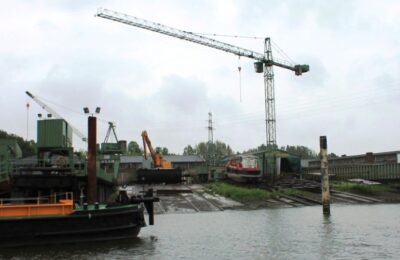
图:Reiherstieg岸边的Buschmann船厂。图片来源:Dr. Karl-Heinz Hochhaus|Wikimedia Commons|CC BY 3.0。
Theodor Buschmann是一座跟着汉堡港不断迁移的小型船厂。从港口驳船、海关艇到Fairplay拖轮,它用小船连接巨轮、码头与仓库,也让1962年建造的FAIRPLAY VIII得以回到出生地修复。
Theodor Buschmann followed the changing Port of Hamburg, building barges, harbour craft and Fairplay tugs. Its story continues through FAIRPLAY VIII, the 1962 tug that returned to her working birthplace for restoration.
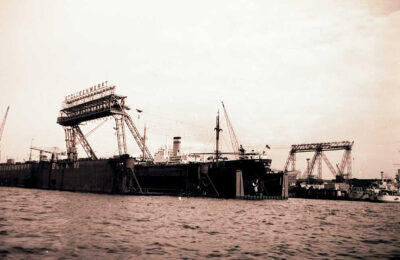
图:汉堡Stülcken-Werft临河厂区。图片来源:Willy Pragher|Landesarchiv Baden-Württemberg,Staatsarchiv Freiburg,馆藏编号 W 134 Nr. 069401|Wikimedia Commons|CC BY 4.0。
从1883年下水的NO. 5 ELBE,到走向世界的Stülcken重吊设备,回望这座汉堡船厂由木船走向钢船、经历战争与重建,最终消失在音乐剧舞台下的历史。
From NO. 5 ELBE and wooden shipbuilding to the Stülcken heavy-lift derrick, discover how a Hamburg shipyard entered the industrial age before its riverfront became a musical theatre site.
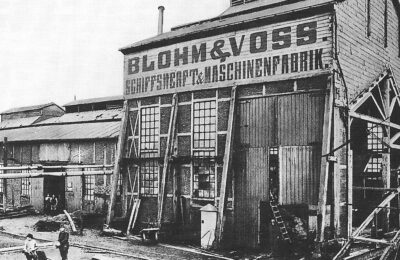
1877年的 Blohm & Voss 船厂。图片来源: 作者不详,Wikimedia Commons,公有领域(Public Domain)。
从1877年易北河畔的创业船厂,到建造PEKING、VATERLAND与HAPAG客轮BISMARCK,追溯Blohm + Voss经历战争、强迫劳工、战后拆除、重建与多次转型,最终进入Rheinmetall体系的近一百五十年历史。
Follow Blohm + Voss from its founding beside the Elbe in 1877 and the construction of PEKING to giant ocean liners, wartime production, postwar rebuilding and its incorporation into Rheinmetall.
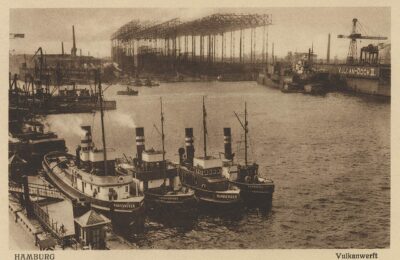
图:20世纪初的汉堡 Vulkanwerft 船厂。资料来源:Wiener Postkartenverlag, Hamburg;Image Zeno.org,ID 20000613487;公有领域。
沿着世界最大客船皇帝号的生命回到汉堡船台,寻找伏尔铿船厂从斯德丁来到易北河、建造巨轮并最终消失的历史。
Following IMPERATOR back to the Hamburg slipway where she was built, this narrative explores the rise, transformation and disappearance of Vulkanwerft Hamburg.
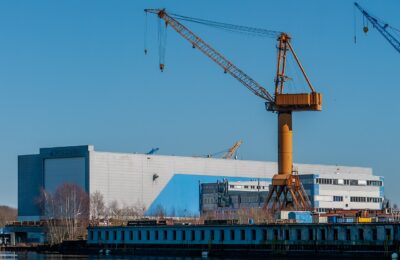
Nobiskrug 船厂建筑物,图片来源:Matti Blume |Wikimedia Commons,CC BY-SA 4.0。
从1958年出生的 BLEICHEN 出发,回到 Rendsburg 的 Nobiskrug 船厂。从货船、渡轮到 POLARSTERN(极星号)与超级游艇,看一座德国船厂如何在120年间不断改变船型,也留下德国造船工业的时代轨迹。
From BLEICHEN, built in 1958, to POLARSTERN and modern superyachts, explore how Nobiskrug in Rendsburg adapted its shipbuilding across 120 years of German maritime history.
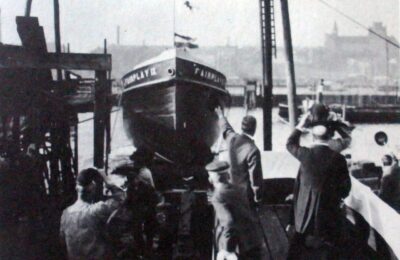
1910年,Fairplay IX 在 Janssen & Schmilinsky 船厂下水,资料来源:Wikimedia Commons / Sammlung Kludas,Public Domain。
1858年,Janssen & Schmilinsky 在汉堡 Steinwerder 创立,成为汉堡第一家专门建造铁船的船厂。从 Fairplay 系列、Schaarhörn 到近五百艘船,这篇文章沿着易北河追寻一座船厂如何诞生、成长、消失,以及为什么有些船孩子最终活得比自己的故乡更久。
Janssen & Schmilinsky was Hamburg’s first shipyard dedicated to iron shipbuilding. From its founding in Steinwerder in 1858 to Schaarhörn, Fairplay and nearly 500 vessels, this story traces the rise, transformation and disappearance of a shipyard whose ships outlived their birthplace.
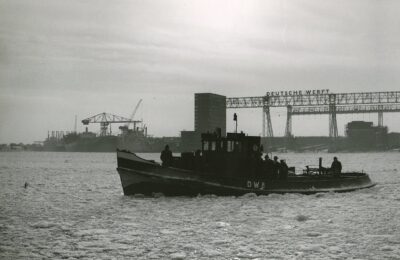
1962年冬季的德国船厂(Deutsche Werft),图片来源:Holger.Ellgaard |Wikimedia CC BY 3.0。
德意志船厂(Deutsche Werft)于1918年在汉堡 Finkenwerder 建立,从 Albert Ballin 重建远洋船队的构想,到6000名工人的造船时代、二战潜艇生产与强迫劳动,再到战后复兴、1973年关闭以及 Cap San Diego 的留存,讲述一座船厂如何改变汉堡的工业与海事历史。
Founded in Hamburg-Finkenwerder in 1918, Deutsche Werft grew into a major German shipyard. From Albert Ballin’s vision and 6,000 shipyard workers to wartime submarine production, forced labour, post-war revival and Cap San Diego, its history reveals the industrial world behind Hamburg’s ships.
