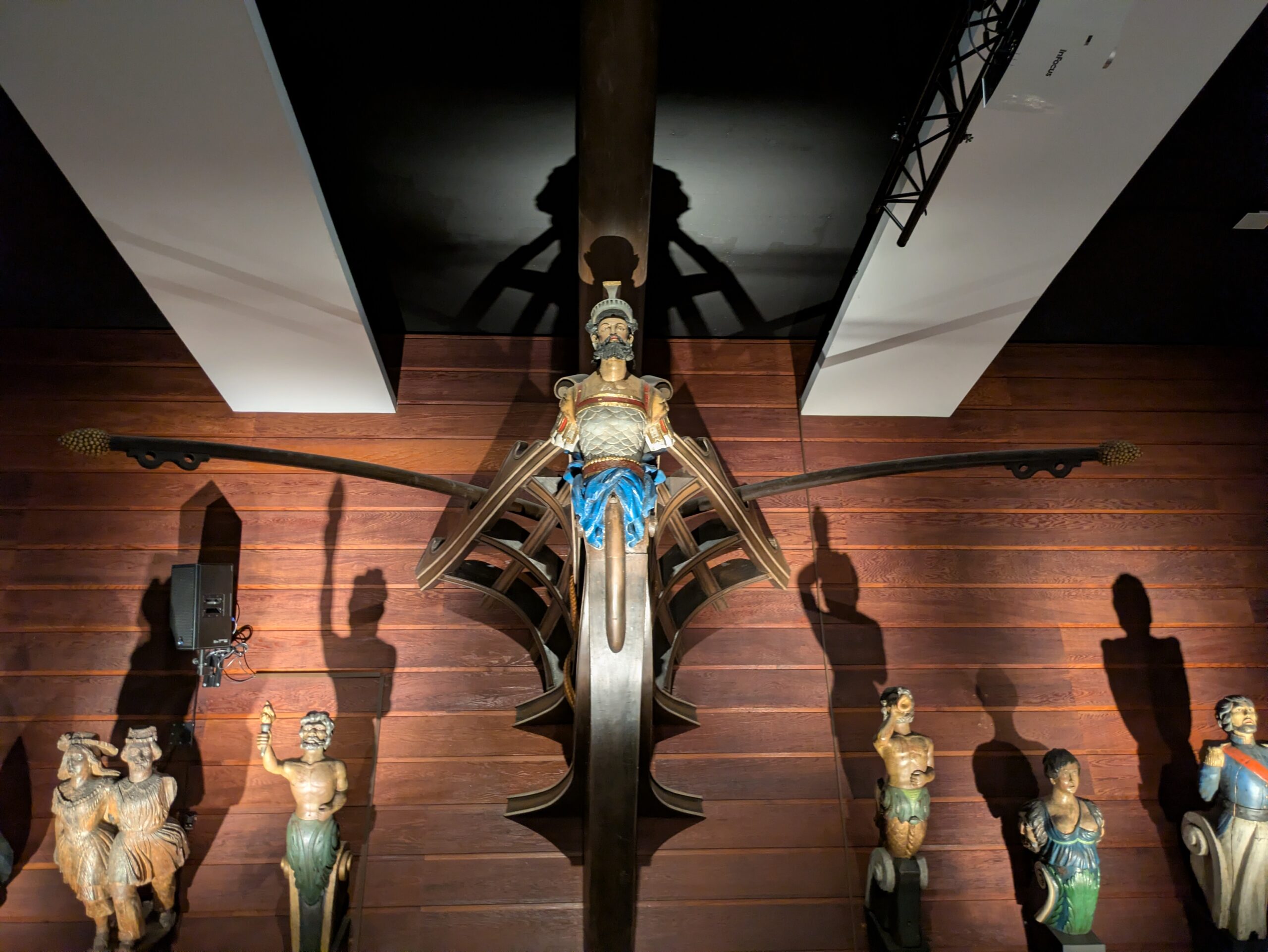
封面图说明|
漢堡 Altonaer Museum 的船首雕像展廳,
一尊身披盔甲的男性雕像高居中央,
兩側排列著不同造型與色彩的木雕人物。
图片说明|除特别注明外,本文照片均由作者摄于2026 年08月31日汉堡与 09 月 24日柏林的水路田野。
引文|当一艘船有了自己的臉
人类为船建造了身体,
又在船首雕刻了面孔,
仿佛一艘船也需要自己的灵魂。人类把木头变成了船,
又把船变成了“人”;
因为我们害怕面对一片,
没有表情的海洋。
 时间:2026年08月31日(一)与2026年09月24日(四)
 行程|汉堡 · Altonaer Museum 船首雕像展厅与柏林 · 德意志科技博物馆航海厅
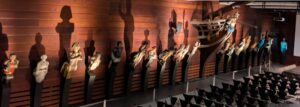
Dauerausstellung Schifffahrt | Deutsches Technikmuseum: Technikmuseum Berlin
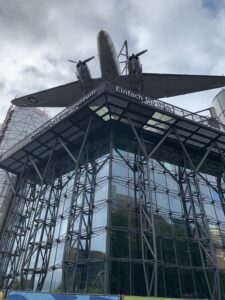
图:柏林德意志科技博物馆
走进汉堡的 Altonaer Museum,
一尊身披盔甲的男子高居中央。
两侧排列着不同姿态的木雕,
彩绘衣饰在灯光下显露细节。
龙骨支撑船舶的身体,
船板连接成坚固的外壳。
造船者以材料和技术完成船体,
却又在船首安置了人的面孔与身体。
船名写在船身上,
面孔雕刻在船首前。
一艘船由此获得了可以辨认的身份。
九月来到柏林科技博物馆的航海展厅。
墙上出现海怪与风暴的图像,
古老传说让未知的海洋有了形象。
船首雕像无法改变风向,
也不能阻止海浪拍打船身。
人们却让神祇与人物面向远方,
陪伴船员穿越陌生的水域。
一艘船为什么需要人的脸和身体?
一|船首雕像的诞生:从装饰到船的身份
船名写在船身上,
面孔雕刻在船首前,
一艘船由此获得了可以辨认的身份。
1. 从古代船首到欧洲帆船
船首雕像的历史,
远比欧洲大型帆船更加久远。
古埃及与地中海的航海者,
早已在船首绘制眼睛或动物形象。
北欧维京船也出现过龙首造型,
让船舶拥有醒目的外部标志。
到了十六世纪的欧洲,
大型帆船逐渐拥有复杂的结构。
人物与动物雕刻被安置在前端,
德语称之为 Galionsfigur。
十七世纪的欧洲战舰,
船首常见狮子与王权象征。
十八世纪以后,
神话人物与历史英雄相继出现。
2. 木雕如何成为船体的一部分
汉堡展厅上方重建了一段古典船首结构。
一尊身披盔甲的男性雕像,
被安置在向前伸出的船首位置,
观众可以看见雕像与船体的关系。
船首的空间并不宽裕。
雕像尺寸受到船型与结构限制,
过大的重量会影响船舶性能,
艺术设计必须服从实际的航行条件。
哪怕是一张木头做的脸与身体,
也必须服从船体结构与重量平衡的规矩;
浪漫,
从来不是造船厂的免死金牌。
3. 从船名到船主的身份
汉堡展厅里的人物各不相同。
有水手、军官与身穿礼服的女性,
也有战神阿瑞斯与商业之神墨丘利。
有些雕像直接呼应船名,
有些描绘历史人物或神话角色。
商船船主也可能选择家族成员,
让私人记忆进入船舶的公共形象。
船首的面孔,
一半是给神看的,
一半是给人看的;
前者用来祈求平安,
后者用来彰显体面。
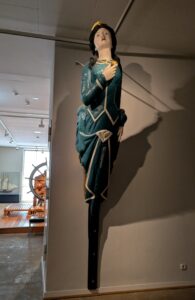
图:蓝衣女性船首雕像,从面孔到身体
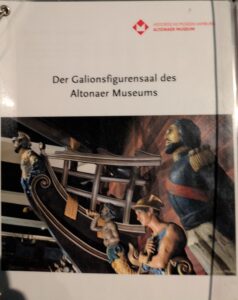
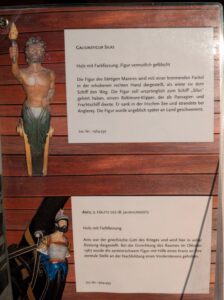
图: 汉堡船首雕像展厅,航海艺术的收藏
二|面对未知的海洋:神话、信仰与保护
海浪考验船舶的结构,
风暴考验航海者的勇气,
而神话与信仰,
承载着人类无法掌控的未知。
1. 当海洋还是未知的世界
柏林德意志科技博物馆的航海厅,
有一组名为“航海神话”的展览。
中世纪的欧洲航海图与文学作品中,
经常出现巨鱼、海蛇与奇异生物。
它们有时来自真实动物的观察,
有时混合了旅行传闻与宗教想象。
未知的海洋,因此拥有了具体形象。
2. 暴风雨中的船:自然力量与航海风险
一幅十九世纪的航海图像中,
帆船在巨浪之间艰难前行。
在现代气象预报出现之前,
船员依靠经验观察云层与风向,
但突如其来的风暴仍可能摧毁船舶。
即使进入蒸汽与钢铁船舶时代,
海洋仍然存在无法预料的危险。
1912 年泰坦尼克号撞上冰山,
成为现代航海灾难的重要记忆。
技术可以造出更大的船,
却无法造出更温顺的海;
钢铁能抵抗风浪,
却抵抗不了人类心底的恐惧。
3. 宗教与航海:把希望交给神明
柏林展厅保存的宗教图像,
将船舶置于基督教信仰的语境。
在欧洲基督教的艺术传统中,
船有时象征教会或人生旅程,
风暴代表人类遭遇的困难。
一些经历海难后幸存的船员,
会向教堂奉献小型船模或绘画,
感谢他们相信曾经提供保护的神明。
4. 船首雕像:航行在前方的守护者
回到汉堡 Altonaer Museum。
罗马神话中的墨丘利,
是商业、旅行与道路的守护神。
他的翅膀头盔成为鲜明标志。
希腊神话中的特里同,
常被描绘成手持海螺号角的海神。
战神阿瑞斯与身披盔甲的战士,
则呈现力量、勇气与军事威严。
人们把神明安置在船头,
不是为了让他指引航向,
而是为了在风暴来临时,
船上至少有一个“人”,
可以一起害怕。
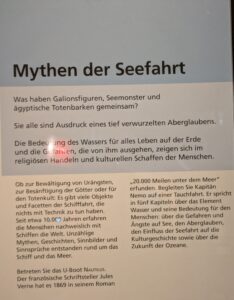
图:柏林德意志科技博物馆的“航海神话”(Mythen der Seefahrt)展览
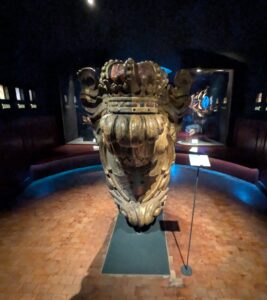
图:1901年 Mecklenburg 号客轮的船首装饰,以戴冠公牛呈现梅克伦堡的纹章
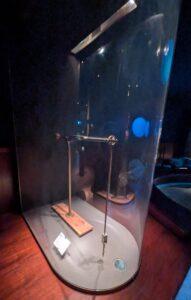
图:刺青机,将航海记忆留在身体上
三|当船有了人格:从海上象征到文化记忆
船舶终有退役的一天,
船体也会逐渐消失,
唯有那些留下的面孔,
继续诉说海洋的往事。
1. 当船成为有故事的个体
在漫长的航海历史中,
一艘船的生命并不止于建造。
对于长期生活在船上的人,
船不仅是工作的场所,
也是共同经历危险的空间。
人们会说一艘船坚固可靠,
也会形容它迟缓或难以驾驭,
仿佛船拥有自己的脾气。
船首的面孔也参与了这种记忆。
它曾经站在船体最前方,
陪伴不同船员驶过陌生海域,
成为整艘船最容易被记住的形象。
船本是没有性格的钢铁与木头,
是那些一起经历过风暴的人,
把脾气与故事,
借给了它。
2. 当船首雕像退出航海舞台
十九世纪的欧洲造船业,
经历了深刻的技术转变。
早期大型木帆船的船首,
常有向前延伸的复杂结构,
雕像能够安置在突出的位置。
但新的铁船与钢船不再需要相同的布局。
水线、外形与航行性能,
成为工程设计的重要考虑。
商业航运的经营方式同样改变。
船舶越来越强调运输能力,
港口周转与维护效率日益重要。
当效率成为唯一的信仰,
浪漫就成了最先被拆除的零件。
3. 从船首到博物馆:谁来保存一艘船的记忆?
在汉堡 Altonaer Museum 里,
那些木雕已经离开原来的船体,
不再面对海风与汹涌的波浪。
一艘旧船可能被拆解,
但船首雕像有时得以保留,
因为它具有独立的艺术价值。
然而离开船体之后,
雕像也可能失去原来的背景。
部分作品曾被赋予动人的航海故事,
但后来的来源调查提出疑问,
其中一些可能是较晚制作的复制品。
这意味着博物馆的任务,
并非只把美丽的雕像陈列出来,
还必须研究材料、年代与出处。
船首离开了船,
就像灵魂离开了身体;
留在展厅里的那张脸,
成了我们唯一能握住的历史。
尾声|船可以没有脸,人类却需要故事
技术让船驶向远方,
信仰让人面对未知,
而那些留在船首的面孔与身体,
让航行成为可以传承的故事。
回望柏林的航海神话,
海怪与风暴曾占据人类的想象,
宗教寓言回应着对危险的恐惧。
造船工程回答如何航行,
龙骨与船板承受海水的力量。
而神话、信仰与艺术,
回应人们如何理解未知的世界。
在中国沿海的传统木船上,
船眼仿佛凝望前方的水路,
龙首随着鼓声穿过江河。
不同文明以各自的艺术语言,
赋予船舶超越交通工具的意义;
因为人类从来不甘心,
只把远方交给冰冷的机械。
最后回到汉堡的展厅,
那些木雕早已离开昔日的船首。
船可以没有雕刻的面孔,
也能依靠技术驶向远方。
但人类总会为航行留下故事。
楚人对话后记|考烈王、黄歇与令尹夫人的观后感
两千年前,楚人会给船一张脸和一个身体吗?
走进汉堡 Altonaer Museum,
考烈王停在一尊船首雕像前,
望着那位高高站立的盔甲武士。
“大王,您有什么发现?”我问。
考烈王指着那些木雕:
“令尹夫人,这些人为何站在船头?
难道远航的时候,
还要带着木头做的船员?”
黄歇忍不住笑了:
“大王,他们不会划船,
也不会替船掌舵。
不过看这些衣饰与姿态,
想必各有来历。”
我笑着解释:
“有些代表船名与身份,
有些象征权威与荣耀,
也有些寄托平安的愿望。
船首的雕像不仅是装饰,
也是船舶向世界展示自己的方式。”
考烈王绕着雕像走了一圈,
想起楚国的器物:
“我们楚人也喜欢龙凤,
漆器上有飞舞的神鸟,
青铜器上有盘旋的龙纹。
难道我们的船,
就没有自己的模样?”
黄歇望着雕像,微微一笑:
“大王,楚人善于舟楫,
也拥有丰富的龙凤艺术。
虽然我们不能确定,
当年的船首究竟如何装饰,
但楚人对器物的想象,
从来不只停留在实用。”
考烈王点点头:
“如此说来,
汉堡人为船雕刻武士与神祇,
楚人则以龙凤表达自己的世界。
不同文明虽然相隔千里,
却都希望器物拥有自己的故事。”
我笑着回答:
“大王,正是如此。
船可以载人渡河,
也可以承载一个文明的想象。”
考烈王忽然问黄歇:
“春申君,若是楚国造出一艘大船,
你愿意在船首雕一条龙,
还是立一只凤?”
黄歇略一思索:
“大王,龙能腾跃江河,
凤能飞越山川。
若是为了彰显楚国气象,
臣倒想让龙凤同行。”
考烈王大笑:
“好一个龙凤同行!
我们的船还没有启航,
便已经有了自己的故事。”
几周后,我们走进柏林德意志科技博物馆,
三人来到航海神话展区。
海怪、神祇与古老的航海图像,
让考烈王停下了脚步。
他望着那些奇异的形象:
“令尹夫人,你们已经会造如此大的船,
也懂得测量方向与海水,
为何还留下这么多怪物?
难道仍然害怕海洋?”
我回答:
“大王,技术不断进步,
却不能消除所有危险。
风暴与海难依然存在,
即使掌握了航海知识,
人们仍然需要理解恐惧的方式。”
黄歇望着那些古老图像:
“楚人以龙凤表达想象,
欧洲航海者讲述海怪与神祇。
虽然故事并不相同,
却都在面对难以掌握的世界。”
考烈王若有所思:
“那么船首的面孔,
究竟是给海洋看的,
还是给船上的人看的?”
我想了一会儿:
“有些是为了彰显身份,
有些为了纪念与装饰,
有些则寄托守护的愿望。
但无论是哪一种,
最终都与船上的人有关。”
考烈王继续问:
“人类给船一个形象,
究竟是为了让船认识海洋,
还是让自己不再害怕海洋?”
我望着展厅里的古老船模,
又想起汉堡那些木雕,轻声回答:
“大王,也许两者都有。
但真正需要勇气的,
始终是登船出发的人。”
两千多年前,楚人以舟楫穿越江河,
以龙凤纹饰表达对世界的想象。
两千多年后,人类以钢铁建造巨轮,
却仍珍惜那些古老的面孔。
船的身体承载航行,
船的面孔承载故事;
人类真正想跨越的,
不只是眼前的江河与海洋,
还有心中对未知的恐惧。
木头会腐朽,钢铁会生锈,
但只要还有人愿意为船留下一个形象,
大海就永远不是一个没有故事的深渊。
离开柏林的航海展厅,
我们再次谈起汉堡的木雕。
那些船早已不再航行,
面孔却仍被后人保存。
仿佛两千多年前的江风,
穿过楚国的舟楫,
又吹向汉堡与柏林的展厅。
那些古老的面孔沉默不语,
却比任何一台引擎,
都更接近人心。
Appendix|English Narrative Overview
When Ships Took Human Form: From Figureheads in Hamburg to Maritime Myths in Berlin | Altonaer Museum & Deutsches Technikmuseum
When a Ship Acquires a Face
In August 2026, I entered the Altonaer Museum in Hamburg and found myself surrounded by faces. A warrior in armour stood prominently above a reconstructed ship’s bow, while painted wooden figures of different ages, costumes and expressions filled the exhibition space. These figures had once belonged to vessels that travelled across rivers and seas. Now, separated from their ships, they seemed to possess lives of their own.
A month later, at the German Museum of Technology in Berlin, I encountered another dimension of maritime imagination. Sea monsters, religious imagery and representations of storms revealed how generations of sailors had attempted to understand the dangers of an unfamiliar ocean. Together, these two museums raised a question beyond the engineering of ships: Why did human beings give vessels faces, bodies and personalities?
From Decoration to Identity
The practice of decorating ships is much older than the great European sailing vessels. Ancient Mediterranean cultures painted eyes and animal symbols on their bows, while Viking ships sometimes carried striking dragon-headed forms. By the sixteenth and seventeenth centuries, elaborate figureheads had become increasingly visible on European sailing ships.
At the Altonaer Museum, these wooden figures illustrated the relationship between craftsmanship, naval architecture and identity. A figurehead had to fit the structure of the bow. Its weight, proportions and position could not be determined by artistic imagination alone. Even a wooden face had to obey the practical demands of a vessel designed to move through water.
The figures also communicated something about the ships they represented. Warriors suggested courage and authority. Mythological characters such as Ares and Mercury evoked power, commerce and travel. Other figures reflected ship names, personal memories or the aspirations of their owners. A figurehead was therefore more than an ornament. It allowed a vessel to become recognisable, almost as though the ship possessed an identity that could be seen before its name was read.
A ship’s name was written on its hull, but its face stood at the bow. One identified the vessel in words; the other gave it a presence in the world.
When the Ocean Was Filled with Monsters
In Berlin, the exhibition on maritime myths presented a different question: how did people imagine the sea before they could fully explain it? Medieval European maps and stories frequently included enormous fish, sea serpents and unfamiliar creatures. Some emerged from observations of real animals, while others developed through travellers’ accounts, religious beliefs and the imagination of distant places. These images were not simply evidence of ignorance. They offered ways of describing a world in which danger could arrive without warning and where familiar rules seemed to disappear beyond the horizon.
Storms made this uncertainty particularly visible. Before modern weather forecasting, sailors depended heavily on experience, observation and judgement. Even as steam engines and steel hulls transformed navigation, technological progress could not eliminate the risks of the sea. The sinking of the Titanic in 1912 remains a powerful reminder that engineering achievement does not guarantee mastery over nature.
Technology can build larger ships, but it cannot make the sea more obedient. Steel may resist the waves, yet it cannot remove fear from the human heart.
Faith, Protection and the Figures at the Bow
Maritime beliefs offered another response to uncertainty. In Christian European traditions, ships could symbolise the Church or the journey of human life, while storms represented danger and adversity. Sailors who survived disasters sometimes donated ship models or paintings to churches as expressions of gratitude.
The figureheads in Hamburg belonged to this wider world of symbolism. Mercury, associated with commerce and travel, appeared with his characteristic winged helmet. Triton, a figure from Greek mythology, evoked the sea itself. Warriors and gods communicated strength, authority and hopes for protection. Not every figurehead served a religious purpose. Some represented political power, family identity or decorative fashion. Yet all revealed the human desire to attach meaning to a vessel that would eventually disappear beyond the safety of land.
People placed gods at the bow not because carved figures could steer a ship, but because even the most experienced sailors needed ways to confront the unknown.
When a Ship Becomes a Personality
A ship is constructed from materials, but its identity develops through experience. For sailors who spend months or years aboard, a vessel becomes more than a workplace. It is a shared environment of labour, danger, routine and memory. People describe ships as reliable, stubborn, graceful or difficult to handle, as though timber and steel possessed individual temperaments. A figurehead could reinforce this sense of personality, becoming the most recognisable expression of a vessel’s character.
Yet the history of shipbuilding gradually changed the place of such decorations. During the nineteenth century, iron and steel construction, new hull forms and the growing importance of commercial efficiency transformed ship design. Elaborate bow structures and large wooden figures became less common. As vessels grew increasingly concerned with cargo capacity, maintenance and operational performance, the figurehead lost much of its former practical and symbolic position.
When efficiency becomes the only object of devotion, romance is often the first component to be removed.
When the Face Outlives the Ship
At the Altonaer Museum, many wooden figures have survived the vessels to which they once belonged. Their ships may have been dismantled, destroyed or forgotten, but their faces remain visible. This survival creates a new responsibility for museums. A figurehead can be appreciated as sculpture, yet its historical meaning depends on understanding its original context.
Provenance research has raised questions about the authenticity and dating of some objects in historical collections, including figures that may have been produced or reproduced later than previously believed. Preserving maritime heritage therefore requires more than protecting beautiful objects. Museums must investigate materials, craftsmanship, origins and the stories attached to their collections. A figurehead without its ship can become both a precious survivor and a historical puzzle.
When the bow disappears, the face may remain. What once looked towards the horizon now looks back at us, asking what we are willing to remember.
A Ship May Lose Its Face, but Humanity Keeps Its Stories
The two museum visits revealed complementary dimensions of maritime history. Shipbuilding explains how vessels acquire the strength to travel. Navigation explains how people find their way. Myths, beliefs and artistic traditions reveal how human beings interpret the uncertainty surrounding those journeys.
This relationship extends beyond Europe. Traditional Chinese boats have carried painted eyes and animal imagery, while dragon-headed vessels remain familiar in cultural traditions. Different civilizations developed different visual languages, but they shared an impulse to give ships meanings beyond transportation.
A vessel does not need a carved face to cross an ocean. Its structure, propulsion and navigation systems make the journey possible. Yet people continue to preserve the symbols and stories associated with ships long after their voyages have ended.
Technology carries ships towards distant shores. Belief helps people face the unknown. The wooden face at the bow has always reflected something deeply human.
Across Civilizations
Did the People of Chu Give Their Ships a Face and a Body?
At the Altonaer Museum in Hamburg, King Kaolie stopped before a figurehead depicting an armoured warrior. He studied the wooden figure standing high above the bow.
“Lady Lingyin (a fictional title for the wife of Chu’s chief minister),” he asked, turning to me, “why are these people standing at the front of the ships? Do sailors really need wooden crew members for their voyages?”
Huang Xie (Lord Chunshen), the chief minister of Chu, could not help laughing. “Your Majesty, they cannot row or steer. But judging by their clothing and posture, each must have a story.”
“Some represent the names and identities of ships,” I explained. “Others symbolise authority and honour, while some express hopes for protection. These figures are more than decorations. They are how ships present themselves to the world.”
King Kaolie walked around the sculpture, remembering the artistic traditions of his own kingdom. “We people of Chu loved dragons and phoenixes. Our lacquerware was decorated with magnificent birds, and our bronze vessels carried intricate dragon patterns. Surely our ships had identities of their own?”
Huang Xie smiled. “Your Majesty, the people of Chu were skilled in building and navigating boats, and our artistic traditions were rich in dragons and phoenixes. Although we cannot say exactly how every ancient bow was decorated, our imagination was never limited to the practical purpose of an object.”
The king nodded thoughtfully. “So the people of Hamburg carved warriors and gods for their ships, while the people of Chu expressed their world through dragons and phoenixes. Different civilizations may be separated by great distances, yet they all want their creations to carry stories.”
“Exactly, Your Majesty,” I replied. “A boat can carry people across a river, but it can also carry the imagination of an entire civilization.”
The king suddenly turned to Huang Xie. “Lord Chunshen, if Chu were to build a magnificent ship, would you place a dragon or a phoenix at its bow?”
Huang Xie considered the question. “Your Majesty, the dragon moves through rivers and clouds, while the phoenix soars beyond mountains. To express the spirit of Chu, I would let them travel together.”
The king burst into laughter. “A dragon and a phoenix together! Our ship would have a story before it even began its voyage.”
Several weeks later, we entered the German Museum of Technology in Berlin and visited the exhibition on maritime myths. Images of sea monsters, ancient gods and unfamiliar creatures immediately caught the king’s attention.
“Lady Lingyin,” he asked, “you can now build ships of such enormous size and measure the direction of travel. Why do you still preserve so many monsters? Are you still afraid of the sea?”
“Your Majesty, technology continues to advance, but it cannot eliminate every danger,” I replied. “Storms and shipwrecks still happen. Even with modern knowledge, people need ways to understand their fears.”
Huang Xie studied the ancient images. “The people of Chu imagined dragons and phoenixes, while European sailors told stories of sea monsters and gods. Their traditions were different, yet both were attempts to understand a world that human beings could never completely control.”
The king fell silent for a moment. “Then tell me, is the face at the bow meant for the ocean to see, or for the people aboard?”
“Some figures express identity,” I answered. “Others preserve memories, serve as decoration or represent hopes for protection. But whatever their purpose, their meaning ultimately belongs to the people who sail.”
The king continued, “When humans give a ship a face, is it because they want the ship to recognise the ocean, or because they want to be less afraid of it?”
I looked at the old ship models in the gallery and remembered the wooden figures in Hamburg. “Perhaps both, Your Majesty. But the ones who truly need courage are always the people who step aboard and set out into the unknown.”
More than two thousand years ago, the people of Chu crossed rivers in wooden boats and expressed their understanding of the world through dragons, phoenixes and artistic traditions. More than two thousand years later, humanity builds enormous steel vessels while continuing to treasure the ancient faces of ships that have long since disappeared.
The body of a ship carries the voyage; its face carries the story. What humanity seeks to cross is not only the rivers and oceans before us, but also the fear of the unknown within ourselves.
Wood decays and steel rusts, but as long as people continue to give their ships a face, the sea will never become an abyss without stories.
As we left the maritime exhibition in Berlin, we spoke once more of the wooden figures in Hamburg. Their ships no longer sailed, yet their faces had been preserved. It was as though a river wind from ancient Chu had travelled across more than two thousand years, passing through wooden boats and distant waters before reaching the quiet museum galleries of Hamburg and Berlin.
Those ancient faces remain silent, yet they speak more deeply to the human heart than any engine ever could.
🤖 人工智能协作声明
本文的主题选择、田野调查、资料搜集、核心观点与中文原始内容,均由作者独立完成。创作过程中,作者与人工智能模型,进行持续协作,包括多轮讨论、思路推演、节奏输出、部分翻译、英文 Narrative Overview 生成、语言检查、结构检测与文字润饰。
人工智能在此过程中,作为创作协作者,参与内容发展与语言表达,但不作为法律意义上的作者或著作权主体。所有 AI 协作产生的内容,均由作者依据田野资料、原始文献与中文母稿,进行选择、审校、修改与艺术化重构。文章的叙事方向、内容取舍、创作决策、最终表达与价值判断,均由作者决定并负责。
📜 本站所有原创作品均已完成区块链存证,确保原创凭证。部分重点作品另行提交国家版权登记,作为正式法律备案。原创声明与权利主张已公开。完整说明见:
👉 原创声明 & 节奏文明版权说明 | Originality & Rhythm Civilization Copyright Statement – NING HUANG
节奏文明存证记录
本篇博客文为原创作品,由黄甯与 AI 协作生成,于博客网页首发后上传至 ArDrive 区块链分布式存储平台进行版权存证:
- 博客首发时间:2026年10月31日
- 存证链接:0f0d9170-d78c-4689-b49f-0ca175c89deb
- 存证平台:ArDrive(arweave.net)(已于 2026年10月31日上传)
- 原创声明编号:Rhythm_Archive_31_Oct_2026/when-ships-took-human-form-hamburg-berlin
- 用途声明:本文为《节奏文明观》之篇章,亦参与构建《AI×非遗文明共构档案》与《文明节奏回声计划》,用于文明节奏实地记录、区块链存证、跨域协作与版权登记用途。
© 黄甯 Ning Huang, 2026. All Rights Reserved.
本作品受版权法保护,未经作者书面许可,禁止复制、改编、转载或商用,侵权必究。
📍若未来作品用于出版、课程、NFT或国际展览等用途,本声明与区块链记录将作为原创凭证,拥有法律效力。