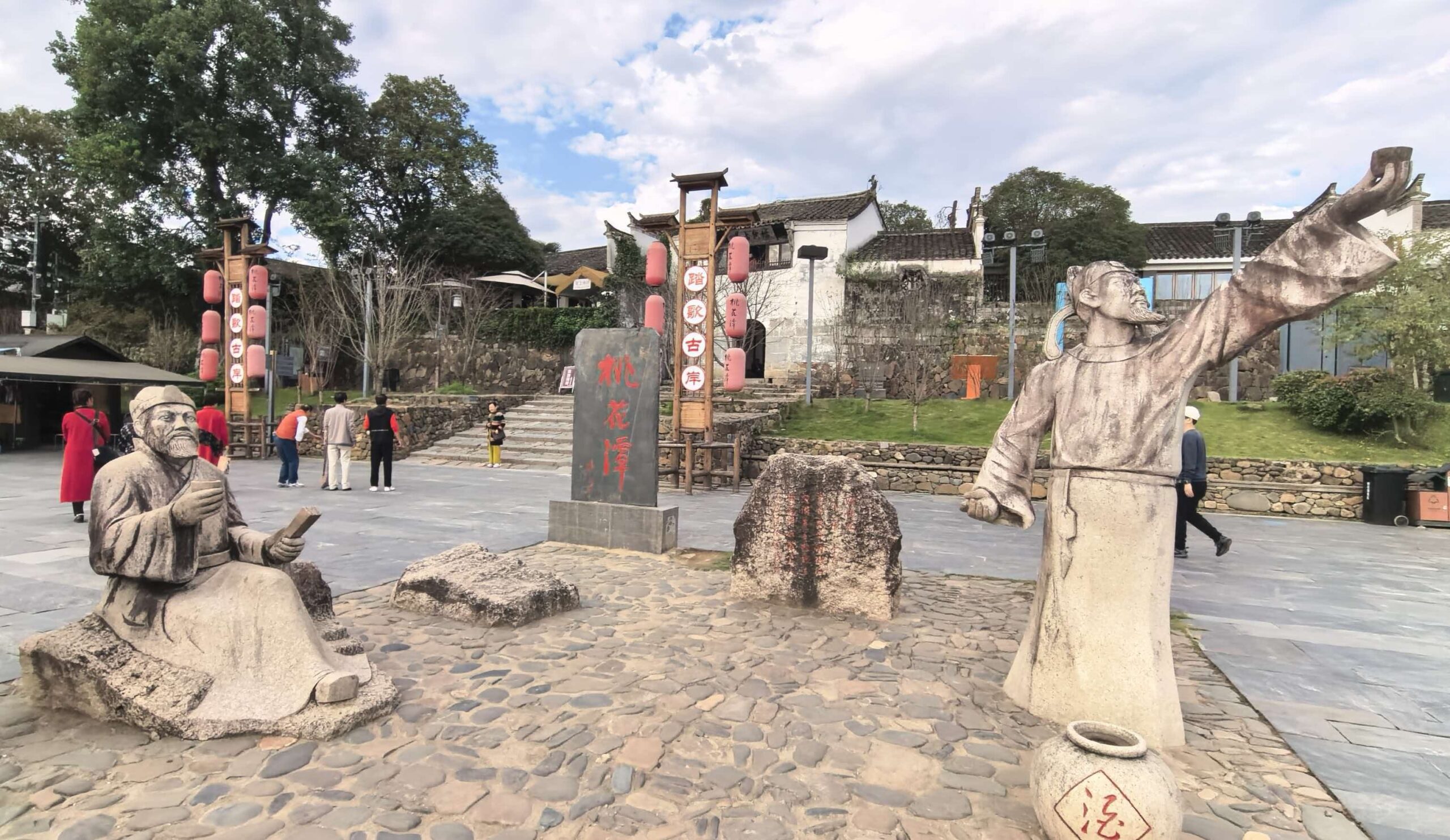
封面图说明|
桃花潭畔,石碑静立,
李白与汪伦的雕像相对而立,
一处真实的山水,
保存着一场唐代的相遇与送别。
摄影:安庆龙
拍摄:2026年10月23日
全文图片感谢安庆龙提供并授权作者使用。
引文|为什么一首诗,会让人走一千多年?
有些旅行,从抵达开始,
有些旅行,却从一首诗开始。人早已离开,船也早已远去,
文字却留在原地,
等待下一位旅人。
最近,朋友安庆龙正在旅行中国。
这一次,他到了安徽宣城泾县,
发来一组桃花潭的照片,
还附上李白的《赠汪伦》。
「李白乘舟将欲行,
忽闻岸上踏歌声。
桃花潭水深千尺,
不及汪伦送我情。」
这首大家耳熟能详的诗,
桃花潭这个名字也不陌生。
可是看着他从现场寄来的照片,
我反过来想:
为什么今天的人还会来到这里?
李白当年的旅行早已结束,
那一次送别也过去千年。
可是他离开以后,
一首诗却留了下来,
而且开始带着别人旅行。
一|故事发生在李白离开的时候
有些诗来自远方的风景,
有些诗,却诞生在即将离开的那一刻。
天宝年间,李白来到泾县,
桃花潭只是漫游途中的一站。
他在这里停留,
也认识了汪伦。
一次原本寻常的旅行,
因为两个人的相遇,慢慢有了故事。
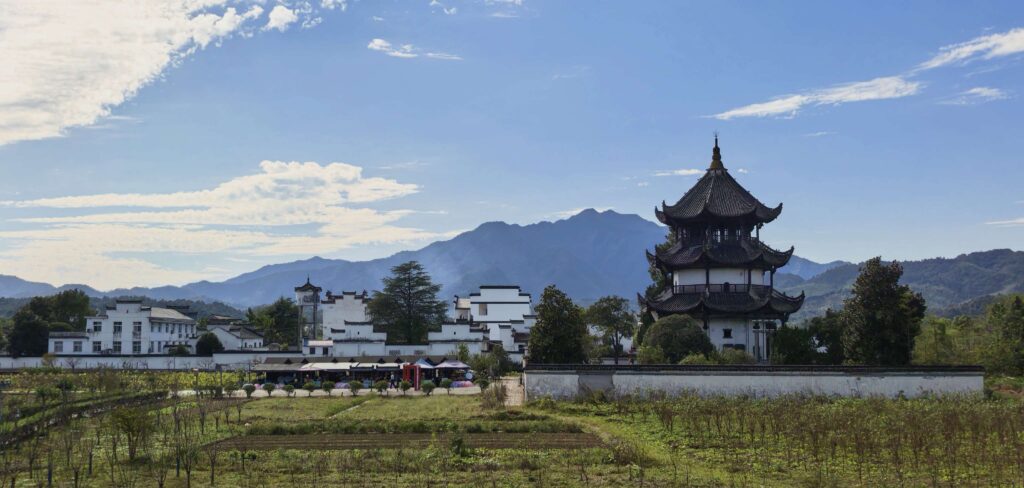
图:安徽泾县桃花潭一带的村落与山景,摄影:安庆龙
相传汪伦热情款待李白,
两人相聚数日,终究还是要分别。
李白再次准备登舟,
继续自己的漫游。
真正被写进诗里的画面,
却恰恰发生在他准备离开的时候。
「李白乘舟将欲行」,
船还没有真正离岸。
就在这个时候,
岸边忽然传来了踏歌声。
人们一边踏地打着节拍,
一边用歌声,为即将远行的人送别。
唐代的「踏歌」,
不是今天舞台上的表演。
人们踏地为节,边走边唱,
脚步、歌声与身体一起移动。
李白人在船上,
先听见的,正是岸上传来的声音。
一个人在水上,
一群人在岸上。
船即将把彼此的距离拉开,
歌声却越过水面,追上将要离开的人。
李白写下一个「忽」字,
那个突然响起的瞬间,也被留下了。
接下来,视线落到潭水。
「桃花潭水深千尺」,
眼前的水忽然成了一把尺。
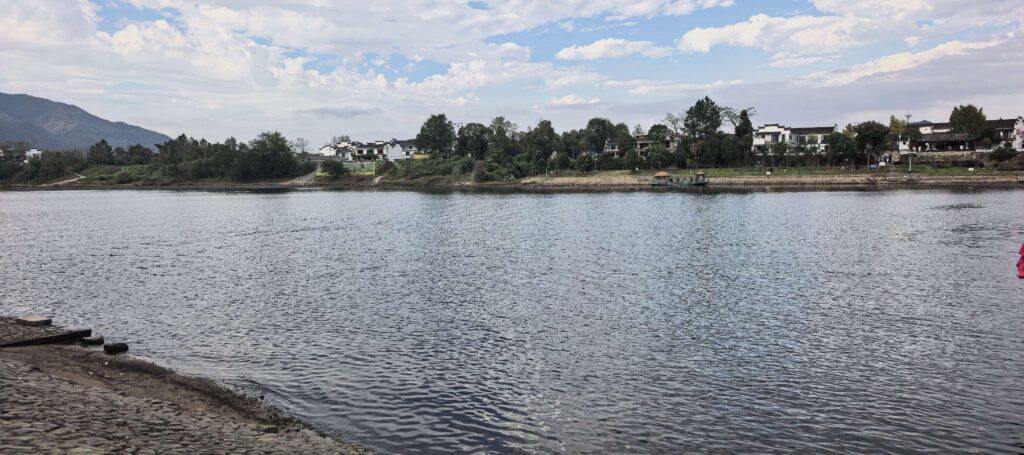
图:今日桃花潭水面,摄影:安庆龙
可是下一句,
李白把这把尺转向了人。
「不及汪伦送我情。」
水有深浅,
人的感情却没有刻度。
李白借眼前可以看见的潭水,
去衡量一种原本无法测量的情谊。
千尺已经很深,
却仍然不够。
一次寻常的相聚与告别,
因为一首诗,
从此有了留下来的方式。
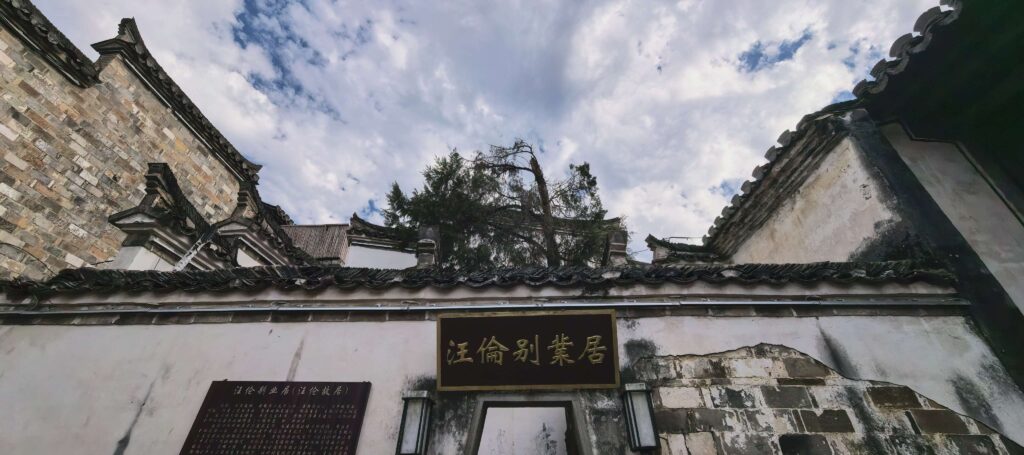
图:汪伦别业,传说中汪伦留在桃花潭的地方,摄影:安庆龙
李白最终还是离开了。
汪伦留在桃花潭,
那场送别也成为过去。
真正没有离开的,
反而是那几个极其简单的画面:
一艘船,一处岸,
一阵踏歌声。
二|当诗句开始长进一个地方
诗保存的不只是故事,
它也会重新命名土地,
让记忆慢慢长出可以行走的空间。
李白离开以后,
桃花潭当然还是桃花潭。
山没有因为一首诗改变,
古渡也继续连接两岸。
真正发生变化的,
是后来的人开始怎样理解这里。
一首诗提供了几个坐标,
桃花潭、舟、岸,还有踏歌。
它们原本属于一次送别,
随着诗句不断被阅读,
这些普通的空间与动作,
也渐渐有了共同的文化意义。
其中最清楚的一处,
就在今天的桃花潭东岸。
当年的东园古渡,
后来被称为「踏歌古岸」。
据地方文旅资料记载,
明代,人们在岸边建起踏歌岸阁,
又经历清代重修、民国复修,
以及现代维修。
一代代人的修建与保存,
把诗中的声音,
固定在真实的渡口。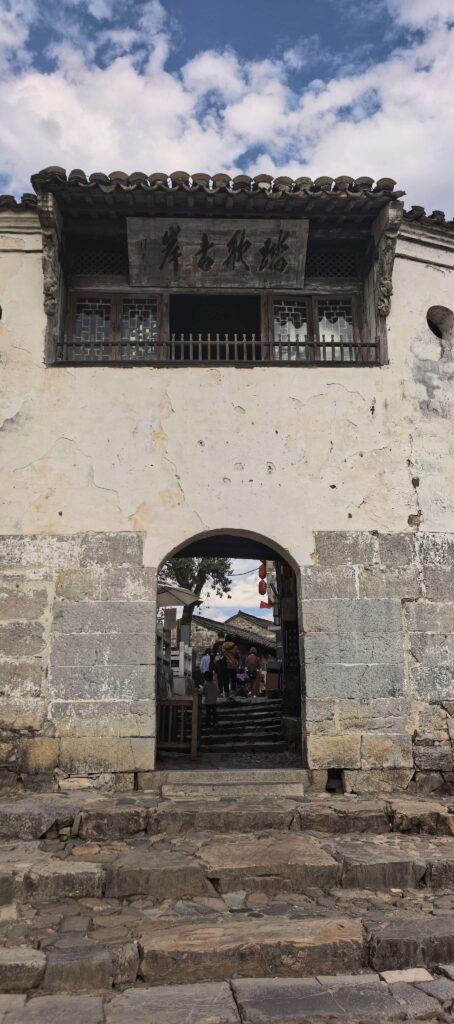
图:踏歌古岸,摄影:安庆龙
「踏歌」原本是一种动作,
声音响过,也就消失了。
可是当它成为一处地名,
又被写上建筑的匾额,
无法保存的声音,
第一次有了可以指认的位置。
文字并没有停留在书页里,
一句「忽闻岸上踏歌声」,
最后真的变成了一处
可以穿过的岸阁。
踏歌岸阁尤其有意思,
因为它本身仍然是一座通道。
从阁内走进去,
连接的是古南阳镇正街。
从另一边走出去,
面对的就是渡口与桃花潭。
也就是说,今天的旅行者,
不是只站在旁边观看一座纪念物。
身体会真正穿过这座建筑,
从古镇走向当年的渡口。
一首写在纸上的诗,
于是重新变成了一条行走路线。
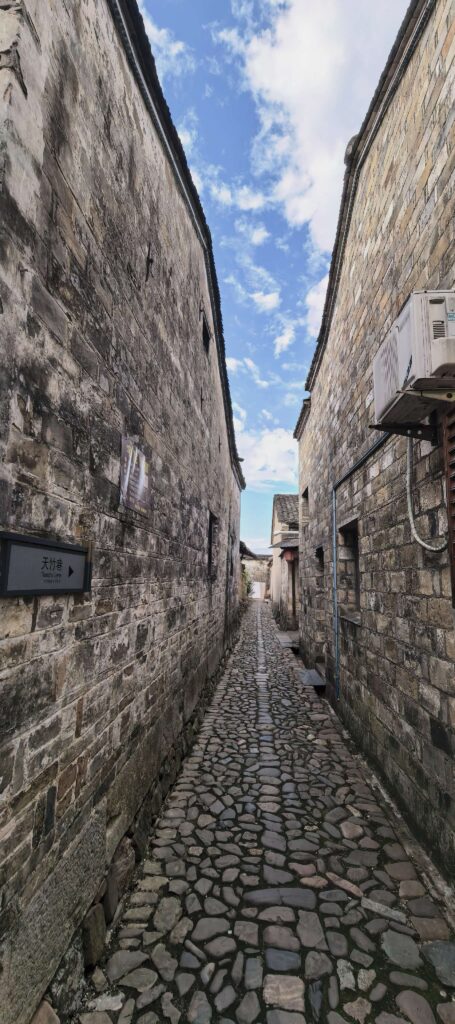
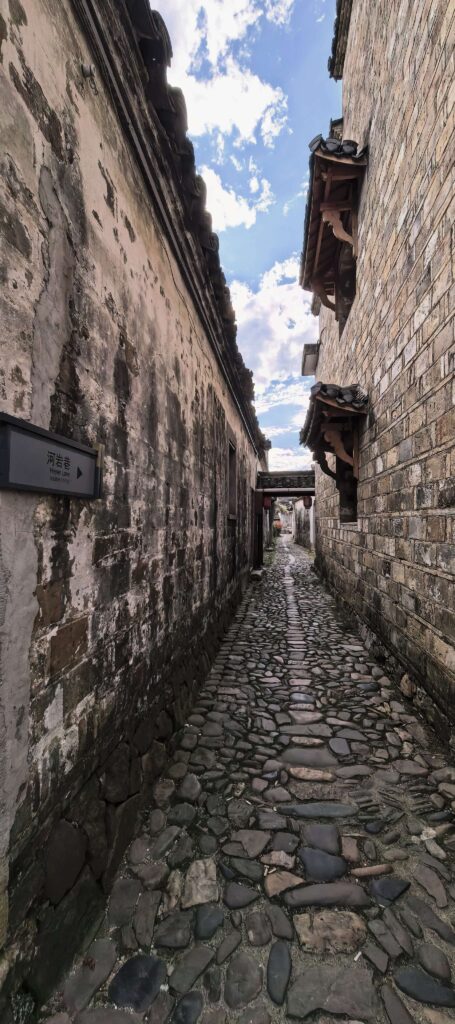
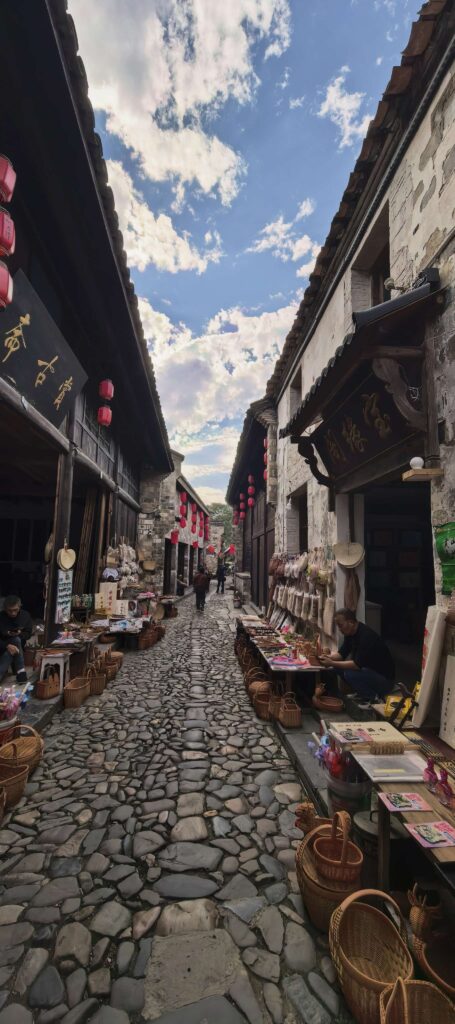
图:古巷,摄影:安庆龙
朋友拍来的照片里,
还有一条条窄窄的古巷。
石板向前延伸,
墙面留下今天的巷名。
它们未必都来自李白的时代,
却构成今天进入桃花潭的真实路径。
这里需要分清一点,
我们不能把眼前所有建筑,
都直接说成唐代遗迹。
今天看到的桃花潭文化景观,
本来就是不同年代不断留下的层次,
诗只是其中最持久的一条线。
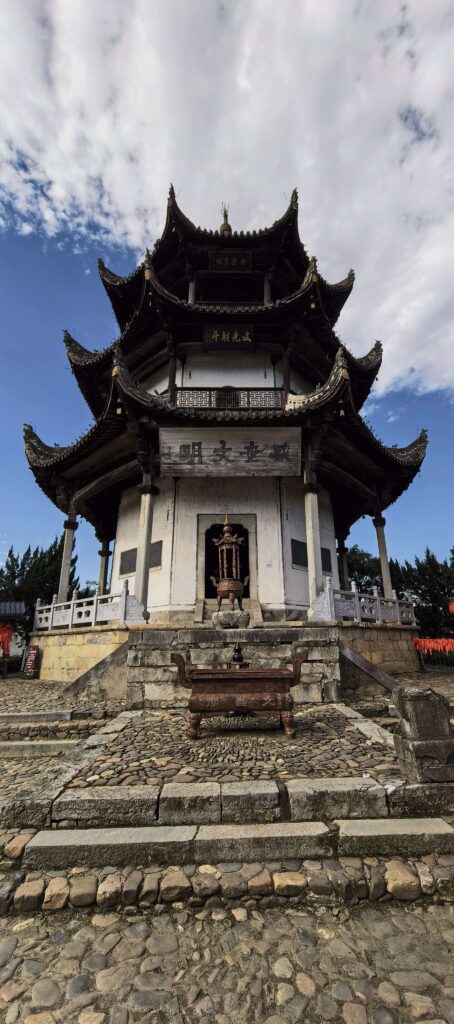
图:文昌阁,摄影:安庆龙
例如今天仍可见的文昌阁,
官方资料记载建于清代乾隆年间。
它曾是文人聚会与登临之处,
属于桃花潭后来形成的人文景观。
唐诗、明代岸阁、清代文昌阁,
不同时间因此叠在同一片土地上。
文化空间从来不是一次完成,
而是一代代人不断添加意义;
有人留下诗,有人建起楼阁,
后来的人,则沿着这些名字
继续行走。
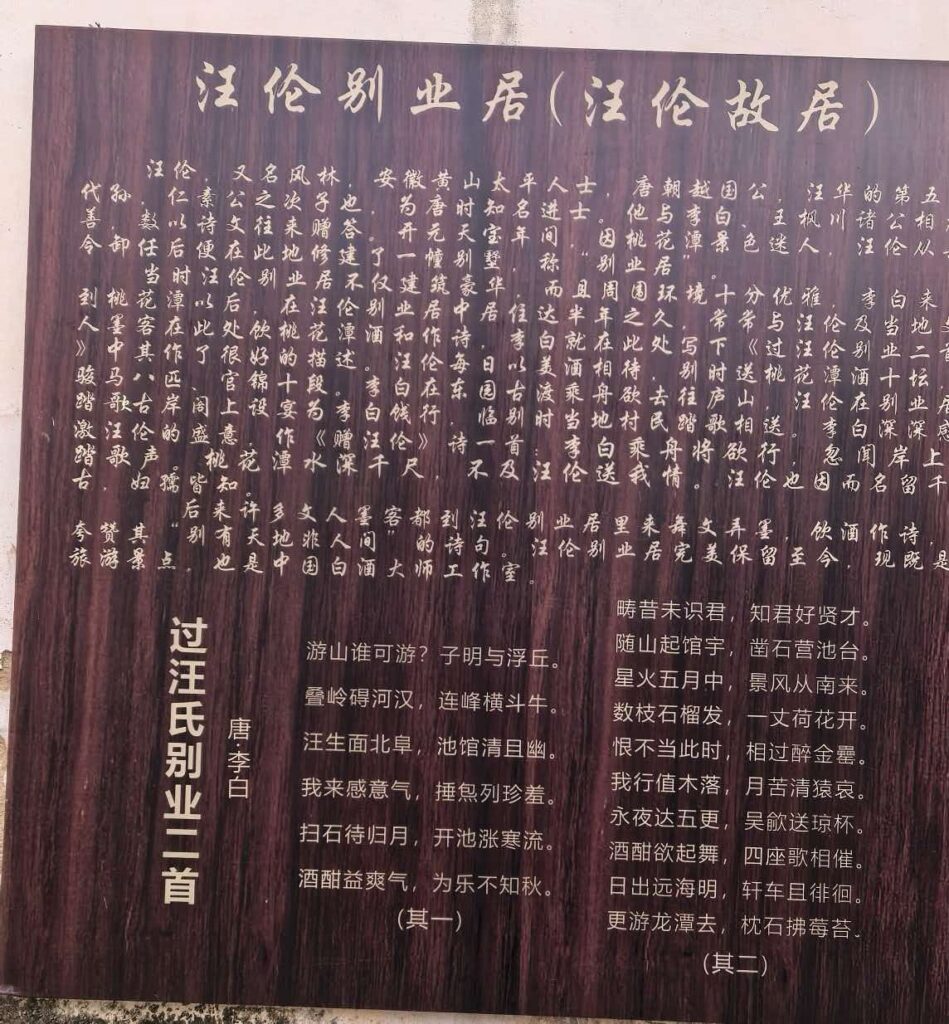
图:汪伦别业介绍(局部),摄影:安庆龙
所以,一首诗真正留下来的,
远远不只是四行文字。
它给地方留下名字,
也给后来的人留下寻找的方向。
人们循着诗句来到这里,
地方又用空间,
把诗重新讲了一遍。
三|为什么我们还要去一个早已认识的地方
有些地方,我们先在文字里抵达,
很多年后,身体才真正来到那里。
很多人第一次认识桃花潭,
其实远在真正旅行之前。
也许是在小学的课堂上,
也许是在第一次背唐诗的时候。
「桃花潭水深千尺」,
一个从未去过的地方,已经进入记忆。
那时候,我们不知道泾县在哪里,
也没有真正见过桃花潭。
可是潭水、船与岸边的歌声,
已经借着四句诗进入想象。
我们甚至还没有旅行的能力,
文字已经替我们去过一次。
这与一般的旅行很不一样。
面对陌生的城市与山河,
旅行常常从「不知道」开始,
陌生,是旅行的一种动力。
桃花潭却恰好相反。
我们是因为「认识」,才想抵达。
一个名字已经听过很多年,
一句诗甚至能够随口背出来。
真正没有经历过的,
反而是那个名字背后的真实空间。
于是,当旅行者来到这里,
眼前会发生一种奇妙的重叠。
书本里的桃花潭,
第一次遇见现实里的桃花潭。
曾经只能想象的地方,
终于有了山的距离、村落的尺度。
这也是为什么照片很重要。
朋友走进桃花潭,拍下古巷、建筑与远处的山。
这些景物未必出现在诗里,
却把一个熟悉的文学地名,
重新变成具体而复杂的现实地方。
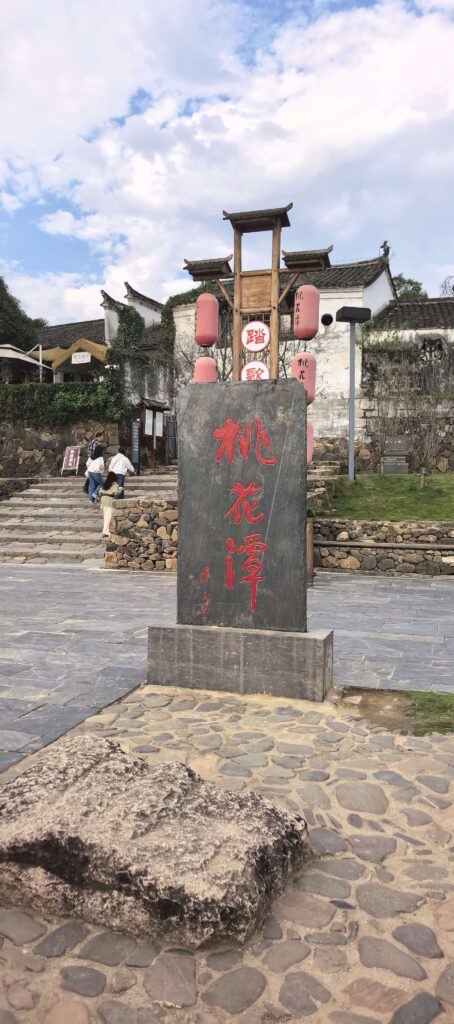
图:桃花潭,摄影:安庆龙
旅行因此不只是验证,
「诗里的地方真的存在」。
更重要的是身体抵达以后,
开始发现文字没有写下的部分。
这时,旅行的意义改变了。
我们不再只是寻找李白,
也不只是寻找汪伦。
我们沿着熟悉的文字出发,
却在真正的地方里,
重新认识文字之外的世界。
一千多年前,李白来到这里,
一次旅行因此产生一首诗。
诗离开当年的桃花潭,
进入无数后来者的记忆。
而这些记忆,又在不同年代,
不断把新的旅行者带回这里。
于是,一条很长的路线形成了。
李白的旅行产生了诗,
诗又召唤一代代人重新出发。
人们沿着文字寻找地方,
又把新的观看与记忆带走。
旅行,就这样继续旅行。
也许我们真正寻找的,
从来不只是一个目的地。
有些地方之所以值得抵达,
正因为它早已住进我们的记忆。
身体走过千里以后,
终于追上了很多年前读过的文字。
尾声|一场旅行,从来不只属于抵达的人
有人抵达一个地方,
也有人因为他的观看,
在远方重新出发。
安庆龙到了桃花潭,
我却远在德国。
他走过古巷,看见山村,
也站在那些被诗留下名字的地方。
然后,他把照片寄给了我。
于是很奇妙的事情发生了。
我没有走进桃花潭,
却因为另一个人的旅行,
重新读起小时候认识的李白。
一组今天拍下的照片,
把我带回一千多年前的送别。
旅行原来还可以这样流动:
一个人负责真正抵达,
另一个人在远方观看与思考。
照片越过地理距离,
文字又接住这些画面,
继续把它们带往别处。
这让我重新理解记录的意义。
旅行并不结束在回家的时候,
照片也不只是到此一游的证明。
当一次观看被分享出去,
它可能进入另一个人的经验,
然后长出原本没有预料的东西。
一次真正的抵达,
往往由两个人完成:
一个走过去,
一个看过来。
看着李白把「汪伦」的名字,
直接留在一首诗里,
我忽然想起很多年前,
我也曾在自己写的一首歌里,
留下一个真实的名字。
当时只是记录一个瞬间,
从没想过文字后来会走到哪里。
名字进入作品以后,
似乎就有了另一种时间。
现实中的人继续往前走,
关系也可能改变,甚至消失。
可是曾经写下来的名字,
却停在作品当时的位置。
人会继续往前走,
名字却留在了
写下它的那一刻。
李白留下的是一首诗,
安庆龙带回来的是照片。
他们当然属于完全不同的时代,
也进行着完全不同的旅行。
可是人在抵达之后,
总会带走一些东西,也留下些什么。
人离开了,照片留下来;
声音散去了,文字留下来;
而那些被保存下来的东西,
又会在某一天,
让另一个人出发。
楚人对话后记|考烈王、黄歇与令尹夫人的观后感
文字比人走得远
考烈王看完桃花潭的照片,
又把《赠汪伦》读了一遍,
盯着「一千多年」几个字,
忽然有些不服气:
“不过四句诗,
竟能让人走这么远?”
我点点头:
“而且还在继续走。”
考烈王皱了皱眉:
“李白早就不在了,
汪伦也不在了,
那艘船更不可能还在,
他们到底去看什么?”
黄歇在旁边说道:
“去看留下来的东西。”
考烈王转过头:
“人都不在了,
还能留下什么?”
黄歇没有马上回答,
反而看了我一眼:
“夫人最近几年,
不是也一直在找楚国吗?”
考烈王顿了一下:
“楚国?”
我忍不住笑:
“对啊,
大王也不在了,
春申君也不在了,
郢都早就不是当年的郢都,
可是我还在到处找你们。”
考烈王显然没有想到,
桃花潭的事情绕了一圈,
最后竟然绕回自己身上。
过了一会儿,
他有些警觉地问:
“你都在哪里找?”
我开始数给他听:
“博物馆里找,
遗址里找,
器物上找,
文字里也找。”
黄歇淡淡补了一句:
“她还写。”
考烈王看着我:
“写什么?”
我说:
“写楚人怎么想象天空,
怎么理解神灵与远方,
怎么把看不见的世界,
留在文字和器物里面。”
考烈王听了一会儿,问:
“所以你根本没见过楚国,
却觉得自己认识楚国?”
这个问题让我停了一下。
“不能说真的认识,
可是有些地方,
我确实在抵达以前,
就已经从文字里认识了。”
黄歇点点头:
“这和桃花潭一样。”
考烈王终于安静下来。
两千多年前的楚国,
早已不存在于地图上。
可是《楚辞》还在,
楚人的器物也还在。
一个已经消失的世界,
仍然留下许多入口。
考烈王继续问:
“那屈原呢?”
我看着他:
“更严重。”
考烈王:“怎么严重?”
我说:
“两千多年以后,
还有人读他的文章,
研究他的楚辞,
甚至循着文字,
重新寻找你们的世界。”
考烈王沉默了一会儿:
“比李白还久?”
黄歇点头:
“比李白还早一千多年。”
考烈王明显满意了一点:
“那还可以。”
我忍不住看他:
“大王,
重点不是楚国赢了。”
考烈王理所当然地问:
“不然呢?”
黄歇笑了:
“重点是人会消失,
国家会消失,
道路也会改变,
文字却可能继续带路。”
考烈王没有说话。
他重新看向照片,
桃花潭的石碑还在那里,
李白与汪伦已经成为雕像,
今天的旅行者从旁边经过,
又沿着古巷继续往前。
过了很久,
考烈王才慢慢说道:
“所以李白离开以后,
他的诗替他留在那里?”
我摇摇头:
“不只留在那里。”
“它还走进别人的记忆,
跟着读诗的人离开,
再过很多很多年,
把另一些人带回来。”
黄歇说:
“真正走得最远的,
未必是当年的那艘船。”
风从桃花潭吹过,
船早已不是当年的船,
岸也经历了无数变化,
只有那四句简单的诗,
还在人与地方之间往返。
人会离开,城会改变,
一个时代也终究会结束;
可是文字一旦开始旅行,
后来的人,
就可能沿着它回来。
两千多年前的楚国,
也有人把看见的世界,
写进一行一行的文字。
他们大概不会知道,
那些文字会走多远。
更不会知道有一天,
一个住在德国的台湾女人,
还会循着他们留下的字,
一次又一次走回楚文明。
Appendix|English Narrative Overview
When a Poem Begins to Call Us to Travel | Taohuatan and a Thousand Years of Arrivals and Departures
Why Can a Poem Keep People Travelling for More Than a Thousand Years?
Some journeys begin with arrival. Others begin with a poem. The people are long gone, and so is the boat that once carried them. Yet the words remain, waiting for another traveller.
Recently, my friend An Qinglong has been travelling through China. This time, he arrived at Taohuatan in Jing County, Xuancheng, Anhui, and sent me a series of photographs together with one of Li Bai’s best-known poems, To Wang Lun:
Li Bai is about to depart by boat,
when suddenly he hears singing and footsteps from the shore.
The waters of Taohuatan may be a thousand feet deep,
yet they cannot match the depth of Wang Lun’s affection.
Almost everyone who grew up reading Chinese poetry knows these lines. The name Taohuatan — the Peach Blossom Pool — is equally familiar. Yet as I looked at the photographs arriving directly from the place itself, I found myself asking a different question: why do people still travel there today?
Li Bai’s journey ended more than a thousand years ago. That particular farewell has long since passed. But after he left, a poem remained. And somehow, that poem began to make other people travel.
The Story Begins as Li Bai Is About to Leave
Some poems are born from distant landscapes. Others emerge at the very moment of departure.
During the Tianbao era of the Tang dynasty, Li Bai travelled to Jing County. Taohuatan was only one stop in a much longer life of wandering. He stayed there for a time and became acquainted with Wang Lun. What might otherwise have been an ordinary journey gradually became a story because two people happened to meet.
Wang Lun received Li Bai warmly, but eventually the visit had to end. Li Bai prepared to board a boat and continue his travels. Curiously, the moment that entered the poem was not his arrival, but his departure.
“Li Bai is about to depart by boat.” The boat has not yet left the shore. Then, suddenly, singing can be heard from the bank. The word Li Bai uses is tage — literally “treading songs.” In the Tang dynasty, this was not a staged performance in the modern sense. People sang while moving and stamping their feet to create a rhythm. Voice, footsteps and bodily movement came together in the act of farewell.
Li Bai is on the water. Others are on the shore. The boat is about to increase the distance between them, yet the singing crosses the water and reaches the person who is leaving. Li Bai captures that moment with a single word: hu — “suddenly.” Something that would otherwise have disappeared as quickly as the sound itself is preserved.
Then his gaze turns toward the water. “The waters of Taohuatan are a thousand feet deep.” For a moment, the visible landscape becomes a measuring instrument. But in the next line, Li Bai turns that measure away from water and toward human feeling: “Yet they cannot match Wang Lun’s affection in seeing me off.”
Water has depth. Affection has no scale. Li Bai uses something visible — the depth of the pool before him — to measure something that cannot actually be measured. A thousand feet is already unimaginably deep, and still it is not enough.
An ordinary meeting and farewell found a way to remain because of a poem.
Li Bai eventually left. Wang Lun remained at Taohuatan, and the farewell itself became part of the past. What did not leave were a few remarkably simple images: a boat, a shore, and the sound of people singing as they walked.
When Lines of Poetry Begin to Grow into a Place
A poem preserves more than a story. It can rename the land and gradually allow memory to grow into a space through which people can walk.
After Li Bai left, Taohuatan was still Taohuatan. The mountains did not change because of a poem, and the old crossing continued to connect the two sides. What changed was the way later generations understood the place.
The poem offered a small set of coordinates: Taohuatan, a boat, a shore and tage. Originally, they belonged to one farewell. But as the poem continued to be read, ordinary spaces and actions gradually acquired a shared cultural meaning.
One of the clearest examples can be found on the eastern bank of Taohuatan. The old Dongyuan ferry crossing later came to be known as Tage Gu’an — the Ancient Shore of Treading Songs. According to local cultural and tourism records, a pavilion was built by the shore during the Ming dynasty and was later restored during the Qing dynasty, the Republican period and modern times. Across generations, rebuilding and preservation gave architectural form to the sound remembered in the poem.
Tage was originally an action. The singing sounded, the feet moved, and then the moment disappeared. But once tage became attached to the name of a place and was inscribed on a building, an ephemeral sound acquired a location that people could point to.
The words did not remain on the page. A single line — “suddenly I hear singing and footsteps from the shore” — eventually became a pavilion through which people can physically walk.
That is what makes the pavilion particularly interesting. It is still a passage. Walk through it in one direction and it connects with the main street of the old settlement. Walk through it in the other and you emerge toward the ferry crossing and Taohuatan. Visitors today therefore do not merely stand beside a monument and look at it. Their bodies actually pass through the structure, moving from the old town toward the historic crossing. A poem once written on paper has become a walking route.
In An Qinglong’s photographs, there are also narrow old lanes, stone paving stretching ahead between walls that bear their present-day names. They do not necessarily date from Li Bai’s lifetime, but they form part of the physical route through which people now enter and experience Taohuatan.
That distinction matters. Not everything visible today should be described as a surviving Tang-dynasty site. The cultural landscape of Taohuatan was formed in layers over many centuries, and the poem is simply one of its most persistent threads.
Wenchang Pavilion, for example, dates according to official local records to the Qianlong period of the Qing dynasty. It later became part of the literary and cultural landscape of Taohuatan, serving as a place for gatherings and views. A Tang poem, a Ming pavilion and a Qing literary building now occupy the same cultural landscape.
Cultural space is never completed all at once. Generation after generation adds meaning: someone leaves a poem, someone builds a pavilion, and those who come later continue walking along the names they inherited.
A poem, then, leaves behind far more than four lines. It gives names to places. It gives later travellers directions for what to seek. People follow the poem to the place, and the place, through its physical spaces, tells the poem once again.
Why Do We Travel to a Place We Already Know?
Some places are reached first through words. Only many years later does the body finally arrive.
For many people, the first encounter with Taohuatan takes place long before any actual journey there. Perhaps it happens in a primary-school classroom, or while memorising Tang poetry for the first time. “The waters of Taohuatan are a thousand feet deep.” Before we have ever visited, the place has already entered memory.
At that age, we may not know where Jing County is. We certainly have not stood beside Taohuatan. Yet the water, the boat and the singing on the shore have already entered our imagination through four lines of poetry. Before we are even capable of travelling there ourselves, the words have travelled there for us.
This is different from the way we often imagine travel. When we encounter an unfamiliar city or landscape, travel begins with not knowing. We go because we have never seen it before. We use our bodies to discover the world piece by piece. The unfamiliar itself becomes a reason to leave home.
Taohuatan works in almost the opposite direction. We may want to go precisely because we already “know” it. We have heard the name for years. We may be able to recite the poem without thinking. What we have never experienced is the real physical space behind those familiar words.
And so, when a traveller finally arrives, two versions of the same place begin to overlap. The Taohuatan of the schoolbook encounters the Taohuatan of reality. A place that once existed only in imagination suddenly acquires the distance of mountains, the scale of a village, the width of lanes and the texture of actual buildings.
This is also why photographs matter. My friend walked into Taohuatan and photographed its lanes, architecture and distant mountains. Many of these things do not appear in Li Bai’s poem at all. Yet precisely because of that, the photographs transform a familiar literary name back into a complex, physical place.
Travel is therefore not merely a way of confirming that “the place in the poem really exists.” Once the body arrives, it begins to discover everything the text did not record.
At that point, the meaning of the journey changes. We are no longer simply searching for Li Bai or Wang Lun. We begin with familiar words, but once we enter the actual place, we discover a world beyond them.
More than a thousand years ago, Li Bai travelled to Taohuatan, and a journey produced a poem. The poem then left the historical Taohuatan and entered the memories of countless later readers. Across different generations, those memories began sending new travellers back to the place.
A very long route was formed. Li Bai’s journey produced a poem. The poem, in turn, called generation after generation to set out again. People followed words in search of a place, then carried away new ways of seeing and remembering it. Travel, in this sense, continues to travel.
Perhaps what we seek is never merely a destination. Some places are worth reaching precisely because they have already lived within our memory for years. After travelling a thousand miles, the body finally catches up with words we first encountered long ago.
Epilogue | A Journey Never Belongs Only to the Person Who Arrives
Someone reaches a place. Someone else, through that person’s way of seeing, begins another journey from far away.
An Qinglong arrived at Taohuatan while I remained in Germany. He walked through its old lanes, saw its villages and stood in places whose names had been shaped by poetry. Then he sent the photographs to me.
Something curious happened. I had never walked into Taohuatan myself. Yet through another person’s journey, I found myself returning to the Li Bai I had first encountered as a child. Photographs taken today carried me back to a farewell more than a thousand years ago.
Travel, I realised, can move in this way too. One person physically arrives. Another observes and thinks from afar. Photographs cross geographical distance; words receive those images and carry them somewhere else.
It changed the way I think about recording a journey. Travel does not necessarily end when the traveller returns home, and photographs are more than evidence that someone once stood in a particular place. Once an act of seeing is shared, it can enter another person’s experience and grow into something its original observer never anticipated.
Sometimes a true arrival requires two people: one who walks there, and one who looks back from afar.
This also reminded me of something I did many years ago. I once put a real person’s name directly into the lyrics of a song I had written. At the time, I was simply recording a moment. I never wondered where those words might travel later.
Once a name enters a work, however, it seems to acquire another kind of time. People continue moving forward. Relationships change and may even disappear. But a name that has been written down remains at the point in time when the work was created.
People move on. A name remains in the moment in which it was written.
Li Bai left behind a poem. An Qinglong brought back photographs. They belong, of course, to completely different times and completely different kinds of journeys. Yet whenever people arrive somewhere, they take something away and leave something behind.
People leave; photographs remain. Voices fade; words remain. And one day, what has been preserved may cause someone else to set out.
Across Civilizations
Words Travel Farther Than People
King Kaolie looked through the photographs of Taohuatan and then read To Wang Lun once more. His eyes stopped at the phrase “more than a thousand years.” He seemed slightly offended. “Four lines of poetry,” he said, “and they can make people travel this far?”
I nodded. “And they are still travelling.”
The king frowned. “Li Bai is long gone. Wang Lun is gone. That boat certainly cannot still be there. So what exactly are these people going to see?”
Lord Chunshen Huang Xie answered from beside him. “They go to see what remained.”
The king turned toward him. “If the people are gone, what can possibly remain?”
Huang Xie did not answer immediately. Instead, he looked at me. “Hasn’t my lady spent the past several years looking for Chu?”
The king paused. “Chu?”
I laughed. “Exactly. Your Majesty is gone. Lord Chunshen is gone. Ying is no longer the capital you knew. And yet I keep looking for all of you.”
The king had clearly not expected a discussion about Taohuatan to circle back to himself. After a moment, he asked suspiciously, “And where exactly have you been looking?”
I began counting. “In museums. At archaeological sites. On objects. In texts.”
Huang Xie added quietly, “She writes about us too.”
The king looked at me. “Writes what?”
“How the people of Chu imagined the sky. How they understood spirits and distant worlds. How they gave form, through texts and objects, to things that could not be seen.”
The king considered this. “So you have never seen Chu, yet you think you know it?”
That stopped me for a moment. “I would not say that I truly know it. But there are places I knew through words before I ever physically reached them.”
Huang Xie nodded. “Just like Taohuatan.”
At last, the king fell silent. The Chu state of more than two thousand years ago no longer exists on any modern map. Yet the Songs of Chu remain. Objects made by the people of Chu remain. A vanished world still leaves entrances through which later generations can return.
The king continued. “And Qu Yuan?”
I looked at him. “Even worse.”
“How is that worse?”
“More than two thousand years later, people still read his writing. They study the Songs of Chu. Some even follow those texts in an attempt to find your world again.”
The king was silent for a moment. “Longer than Li Bai?”
Huang Xie nodded. “Nearly a thousand years earlier.”
The king looked noticeably more satisfied. “That is acceptable.”
I stared at him. “Your Majesty, the point is not that Chu won.”
“What else could the point possibly be?”
Huang Xie laughed. “The point is that people disappear. States disappear. Roads change. But words can continue showing the way.”
The king said nothing. He looked again at the photographs. The stone bearing the name Taohuatan was still there. Li Bai and Wang Lun had become sculpted figures. Travellers of the present walked past them and continued through the old lanes.
After a long while, the king spoke again. “So after Li Bai left, his poem stayed there in his place?”
I shook my head. “Not only there. It entered other people’s memories. It travelled away with those who read it. And many, many years later, it brought other people back.”
Huang Xie said quietly, “Perhaps the thing that travelled farthest was never the boat.”
The wind moved across Taohuatan. The boat is no longer the boat of Li Bai’s time. The shore has changed through countless generations. Yet those four simple lines still move back and forth between people and place.
People leave. Cities change. An age eventually comes to an end. But once words begin to travel, those who come later may still follow them back.
More than two thousand years ago, the people of Chu also wrote the worlds they saw into lines of text. They could hardly have known how far those words would travel.
And they certainly could not have known that one day, a Taiwanese woman living in Germany would still follow the words they left behind, returning again and again to the civilization of Chu.
📜 参考资料:
延伸阅读:
- 《旅行为什么会改变我们的时间尺度?|从内蒙古阿斯哈图石林看一亿年的风景》|Why Does Travel Change Our Sense of Time? | A Hundred Million Years in the Asihatu Stone Forest, Inner Mongolia
- 《有些知识,必须出发与体验后才会生成|德勒斯登交通博物馆・“我们为什么旅行”特展》|Some Knowledge Can Only Be Generated Through Travel and Experience | “Why We Travel” at the Dresden Transport Museum
🤖 人工智能协作声明
本文的主题选择、田野调查、资料搜集、核心观点与中文原始内容,均由作者独立完成。创作过程中,作者与人工智能模型,进行持续协作,包括多轮讨论、思路推演、节奏输出、部分翻译、英文 Narrative Overview 生成、语言检查、结构检测与文字润饰。
人工智能在此过程中,作为创作协作者,参与内容发展与语言表达,但不作为法律意义上的作者或著作权主体。所有 AI 协作产生的内容,均由作者依据田野资料、原始文献与中文母稿,进行选择、审校、修改与艺术化重构。文章的叙事方向、内容取舍、创作决策、最终表达与价值判断,均由作者决定并负责。
📜 本站所有原创作品均已完成区块链存证,确保原创凭证。部分重点作品另行提交国家版权登记,作为正式法律备案。原创声明与权利主张已公开。完整说明见:
👉 原创声明 & 节奏文明版权说明 | Originality & Rhythm Civilization Copyright Statement – NING HUANG
节奏文明存证记录
本篇博客文为原创作品,由黄甯与 AI 协作生成,于博客网页首发后上传至 ArDrive 区块链分布式存储平台进行版权存证:
- 博客首发时间:2026年10月24日
- 存证链接:74040ec5-8ca2-4756-841b-fad7fd4853ca
- 存证平台:ArDrive(arweave.net)(已于 2026年10月24日上传)
- 原创声明编号:Rhythm_Archive_24_Oct_2026/taohuatan-poem-calls-us-to-travel
- 用途声明:本文为《节奏文明观》之〈流动文明 〉与〈节奏文明地景书写 〉篇章,亦参与构建《AI×非遗文明共构档案》与《文明节奏回声计划》,用于文明节奏实地记录、区块链存证、跨域协作与版权登记用途。
© 黄甯 Ning Huang, 2026. All Rights Reserved.
本作品受版权法保护,未经作者书面许可,禁止复制、改编、转载或商用,侵权必究。
📍若未来作品用于出版、课程、NFT或国际展览等用途,本声明与区块链记录将作为原创凭证,拥有法律效力。