The River Remains, the Ships Keep Changing | Reading a Thousand Years of Shipping at the Dresden Transport Museum
Field experience: 25 September 2026
Location: Dresden · Dresden Transport Museum
Walking into a Thousand Years of Shipping
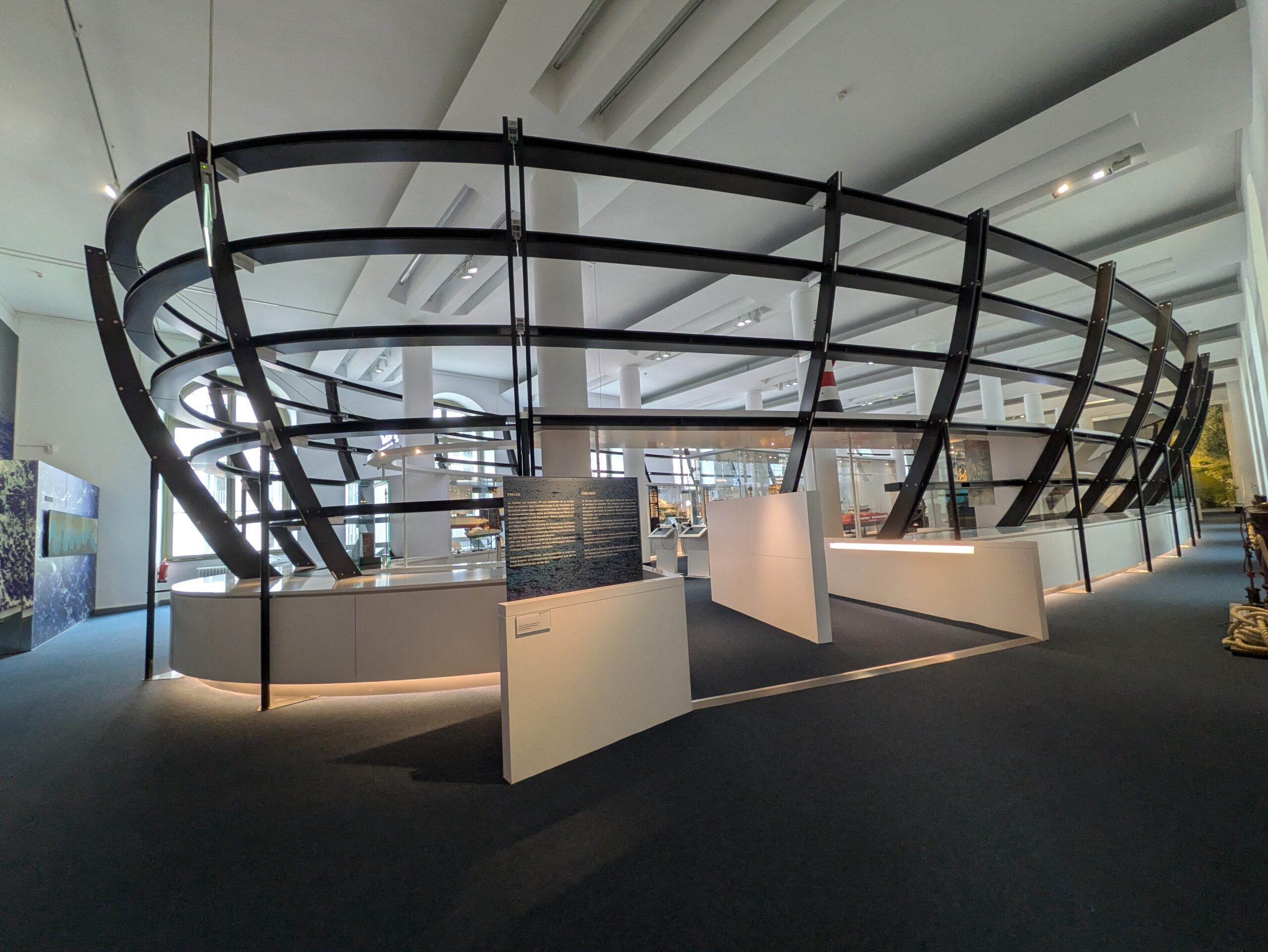
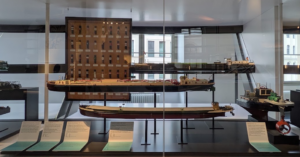
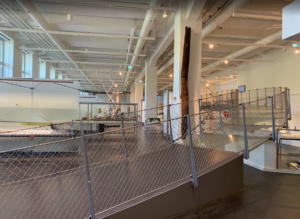
Entering the permanent shipping exhibition at the Dresden Transport Museum feels almost like walking into a ship. A large stylised hull stretches across the gallery, its dark structural ribs framing models, machinery and objects from different periods of shipping history.
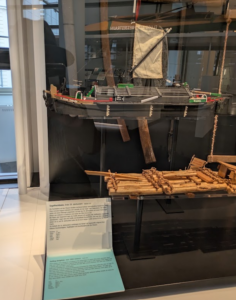
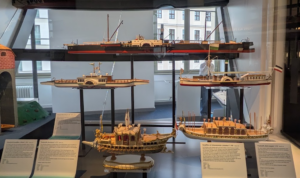
It is not the remains of a historical vessel. Instead, it provides a structure through which many different vessels can be read together. Early river craft give way to steamships, paddle steamers and chain tugs; later come self-propelled cargo vessels and new ways of organising inland transport.
Seen together, they raise a deceptively simple question: if the water remains, why do ships keep changing?
The exhibition suggests that there has never been one final answer. What people expect from water changes. They want to carry heavier cargo, travel more reliably, use less fuel, gain greater freedom of movement or organise transport differently. The river remains, while the solutions keep moving.
Before Machines, the River Was Already a Road
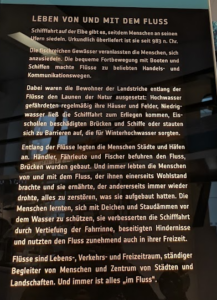
Long before engines entered ships, rivers were already places of settlement, production and transport. People built beside them, crossed them, fished in them and moved goods along them. They also had to deal with floods, ice, low water and changing currents.
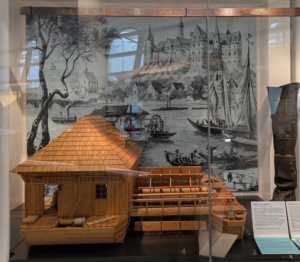
A ship mill makes this relationship especially visible. Instead of travelling along the river, it remained on the water and used the current itself to power the grinding of grain. In Saxony, such mills were once common along the Elbe. Yet the same structure that made productive use of the current could become an obstacle as navigation increased. The river was no longer simply water or landscape. It had become a space in which different human purposes had to be coordinated.
Transport faced another problem: movement depended heavily on forces people could not control. Sailing barges used the wind. Rafts travelled downstream with the current. In other waterways, boats were moved with poles. When wind and current were unfavourable, people themselves could become the source of power, hauling heavily loaded vessels upstream from the riverbank.
Wind and current were free, but they did not obey human schedules.
By the nineteenth century, the problem was therefore not whether rivers could transport goods. They already did. The problem was how to make that movement more powerful, reliable and predictable.
When Machines Entered the Elbe
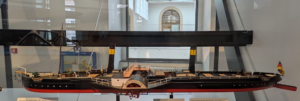
Steam changed the relationship between vessel and river. From the 1830s onward, steam navigation developed on the Elbe, allowing ships to rely less completely on wind, current and human muscle.
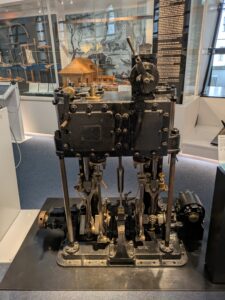
But the arrival of machinery did not simply solve an old problem. Engines, boilers and fuel added weight and occupied space. Ships still had to operate in shallow and changing river conditions. Steam made new forms of movement possible while creating a new set of engineering constraints.
Then another competitor appeared: the railway. Trains did not have to fight the current and were less dependent on river levels. Inland shipping therefore had to become more efficient if it was to remain competitive.
One remarkable answer was placed not on the ship, but on the riverbed.
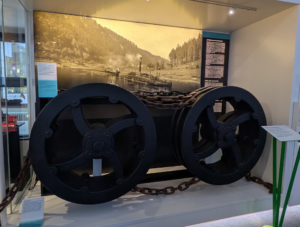
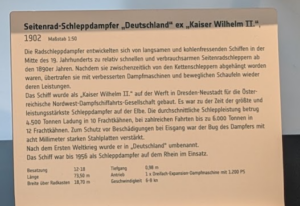
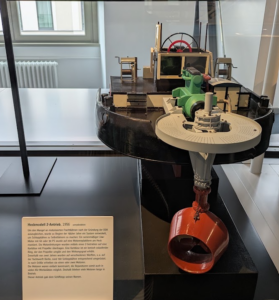
Beginning in the nineteenth century, a heavy iron chain was laid along the Elbe. Chain tugs lifted it from the riverbed, passed it through machinery on board and used it to pull themselves—and the barges behind them—along the river. Eventually, this largely invisible infrastructure extended for hundreds of kilometres.
The system reduced the cost of upstream towing and allowed larger loads to be moved more efficiently. Yet its strength was also its weakness. Ships gained traction by holding onto a fixed chain, but in doing so they became dependent on it.
The chain solved the problem of travelling upstream, but it also turned the river into something resembling a railway track.
Every Solution Creates Another Problem
The history displayed in Dresden is therefore not a simple progression from primitive vessels to better ones. It is a history of repeated adjustment.
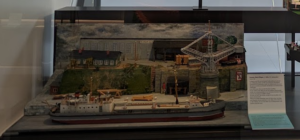
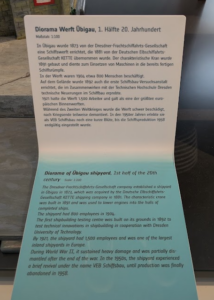
At the Übigau shipyard in Dresden, engineers experimented with ways to combine existing systems with greater freedom of movement. The Gustav Zeuner, for example, could still use the riverbed chain while also employing an additional propulsion system. Other vessels were rebuilt when different technologies proved more useful. Steam engines became more powerful, and paddle tugs eventually regained advantages that chain towing had once taken from them.
What appears at first to be a story of technological replacement is better understood as a series of changing compromises: power against weight, efficiency against flexibility, infrastructure against independence, and carrying capacity against the conditions of the river.
Technological history is not a straight line. It is repeated trial and adjustment on the same river.
A technology disappears not simply because something newer has arrived, but because the solution itself has produced limitations that another design can address more effectively.
The Country Changed, but the River Kept Carrying Goods
The twentieth century introduced a different kind of rupture. War changed Germany, borders were redrawn and political systems were replaced. Yet factories still needed raw materials, cities still needed energy and goods still had to move.
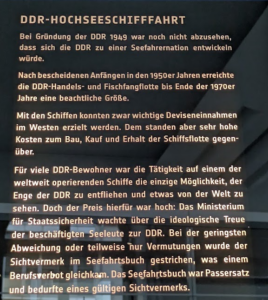
In East Germany, inland waterways became part of a newly organised transport system. By the early 1970s, the network extended for roughly 2,315 kilometres. The Elbe remained part of that system, while shipbuilding and inland navigation adapted to different economic and organisational conditions.
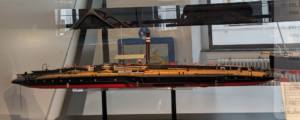
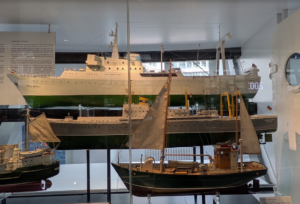
One important change was the movement from towing towards self-propelled cargo vessels. Instead of concentrating power in a tug pulling a line of unpowered barges, engines increasingly became part of the cargo vessel itself. Vessels such as the Breitenhagen represented the everyday scale of this industrial transport world: not glamorous passenger ships, but working vessels designed to keep goods moving.
Another change concerned the organisation of an entire convoy. Traditional towing placed barges behind the powered vessel. Push navigation reversed the arrangement. Barges were assembled ahead of the powered vessel and pushed as a coordinated unit.
It looks like a small change in position. In practice, it represents a redesign of the transport system.
Maps can be redrawn. Rivers do not necessarily follow them.
The Übigau shipyard itself eventually ceased shipbuilding in 1958. Political systems changed, industrial structures changed and technologies changed. The Elbe nevertheless continued to carry goods through the same landscape.
The Ship as an Answer
At the end of the exhibition, the large abstract hull takes on a different meaning.
There is no single vessel inside it because there has never been one vessel capable of answering every problem. People used currents, sails and human muscle. They burned coal, laid chains on riverbeds, escaped those chains again, placed engines inside cargo vessels and reorganised entire convoys from towing to pushing.
None of these was the final answer.
Each belonged to a particular combination of water, cargo, distance, technology and human intention.
The exhibition therefore leaves behind something more interesting than a sequence of old ships. It shows the traces of decisions made whenever people encountered the same fundamental problem: there is water in front of us—how do we cross it, travel along it and carry what we need across it?
The river remains. The sea remains. Ships keep changing.
Water does not provide the answer. People do. Ships grow old and answers change, while the river remains, waiting for the next response.
Across Civilizations
The Water Remains. Why Do People Keep Changing the Ship?
After leaving the enormous hull, King Kaolie stopped and looked back.
“I do not understand,” he said. “More than two thousand years after our time, why are people still thinking about ships? Is the water not still the same water?”
“More or less,” I replied. “What has changed is what people want to do with it.”
The king was not entirely convinced.
“Chu had ships too. Our lands were crossed by rivers, lakes and wetlands. People travelled across water, transported grain, moved armies and maintained connections between places.”
Huang Xie nodded.
“Chu was a civilization shaped by water. The Yangtze, the Han River and the waters of Yunmeng were not merely boundaries on a map. They were routes through which people moved.”
“Exactly,” said the king. “If people already knew how to build ships, why did later generations need so many more?”
“Because no single ship can answer every kind of water,” I said.
I pointed back toward the exhibition.
“Some travelled with the current. Some relied on wind. Some burned coal. Others pulled themselves along a chain lying on the riverbed. Then people decided the chain restricted them and found ways to leave it behind. Barges were once pulled from the front; later they were assembled together and pushed from behind.”
King Kaolie laughed.
“So after all that effort, they still failed to build the best ship?”
“No.”
“Then what were they doing for a thousand years?”
Huang Xie smiled.
“Your Majesty is asking the wrong question. Ships are not competing to win. A ship first needs a body of water. It also needs somewhere to go. Water does not have to answer. Water simply remains.”
The king looked at him.
“Then what should I ask?”
“Ask which water the ship must travel through,” Huang Xie replied. “Ask what it must carry, and whom it must bring to the other side.”
More than two thousand years ago, people in Chu also moved along rivers and built their world beside water. The kingdom disappeared. Cities changed, roads changed and shipbuilding changed many times. Yet whenever people stand before water, the questions remain surprisingly familiar.
Where do I want to go?
What do I need to carry?
What will this particular water allow me to do?
King Kaolie was silent for a moment.
“So the water never gave us the answer.”
Huang Xie nodded.
“The water was simply there.”
I looked at them both.
“The answer was always made by people.”
If we begin with the rivers of Chu and travel all the way to the Elbe today, more than two thousand years apart, we still find ourselves standing beside water.
The water remains. The ship is the answer people give.
And there has never been a final answer.