You are currently viewing 《港口不只装卸货物:斯图加特港的土地、物流与城市账本》|Beyond Cargo: Land, Logistics and the Urban Economy of Hafen Stuttgart
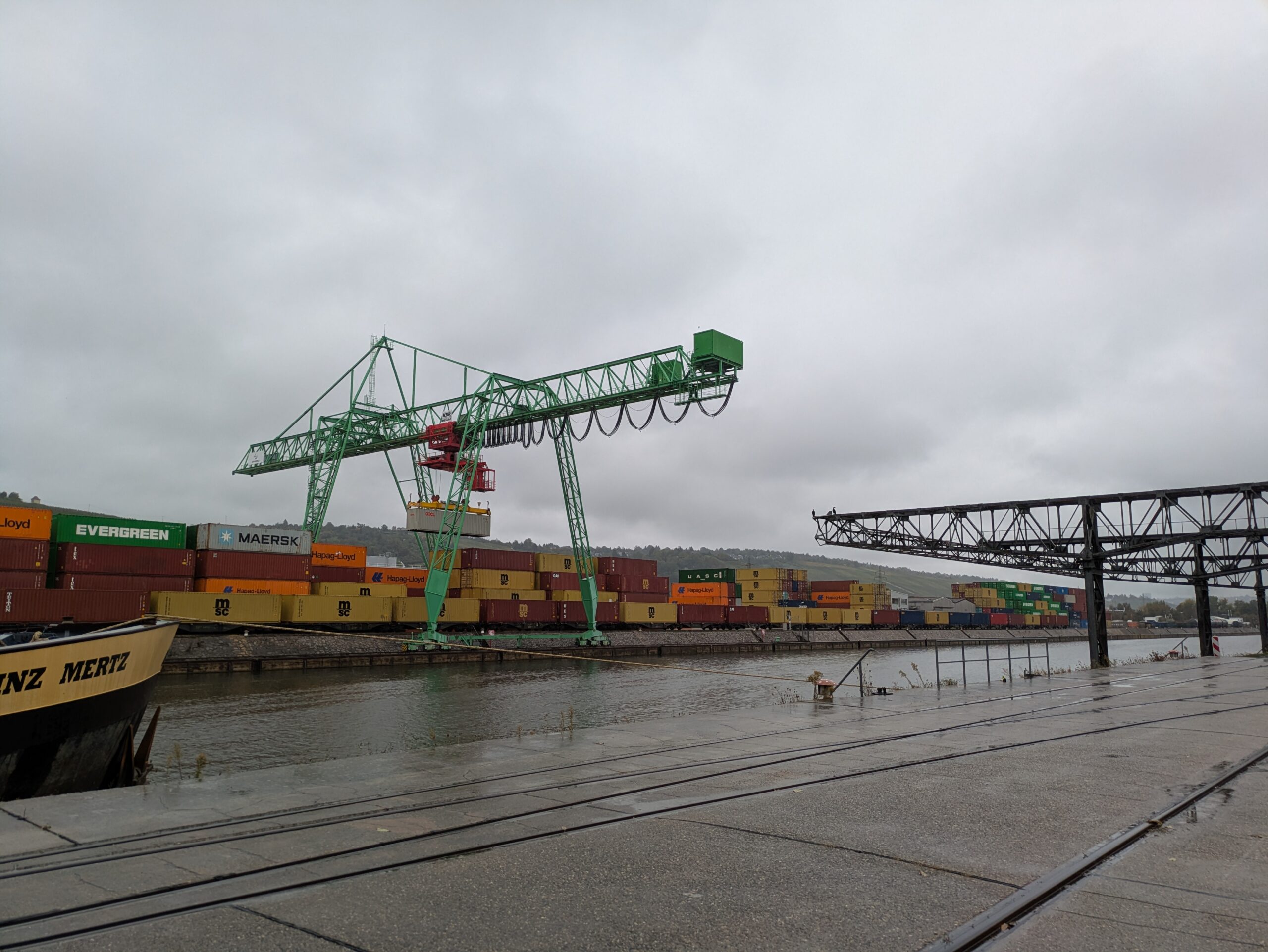
斯图加特港,作者摄于2026年10月17日。

《港口不只装卸货物:斯图加特港的土地、物流与城市账本》|Beyond Cargo: Land, Logistics and the Urban Economy of Hafen Stuttgart

封面图说明|

没有巨轮与繁忙码头,
这里更像一片安静的工业区,
土地、水路、铁路与企业,共同维持着斯图加特港的运转。

全文照片|除特别注明外,均由作者摄于2026年10月17日。

引文|一个港口究竟靠什么存在?

📅 时间:2026年10月17日 (六)
📍 行程|斯图加特 · 斯图加特港

Hafenrundgang über das Stuttgarter Hafengelände

斯图加特港区港口导览(步行参观)

特别感谢|感谢 Stuttgart-Marketing GmbH 提供本次参访港口赠票。
一个港口真正处理的,
不只是眼前的货物,
还有城市持续运转所需要的连接。

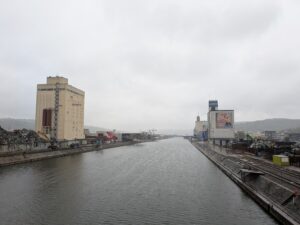
图:从桥上看内卡河边的斯图加特港区

这天下着细雨,
我却穿得不够暖,
导览沿着港区慢慢前进,
我一边听,一边发抖,
后来回家,还是生病了。

眼前没有巨大海轮,
也没有繁忙码头,
更多的是仓库与铁轨,
筒仓、货柜和卡车,
还有一家公司接一家公司。

这里不像汉堡港,
甚至不太像一个港口,
走在厂房与道路之间,
我不断冒出同一个念头,
这不就是工业区吗?

可是河就在旁边,
港池也一直延伸,
铁路穿过企业之间,
货物不断换一种方式前进,
这里显然又不只是工业区。

一个现代内河港,
究竟需要多少船,
才能继续被称为港口,
如果船不再是唯一主角,
它真正维持的又是什么?

看不见船的时候,
港口才第一次露出轮廓,
真正显现的不是码头,
而是连接。

延伸阅读|姐妹篇

一、港口首先是一块土地:一个不自己做生意的经营者

港口握住的不是货物,
而是脚下这片土地,
真正稳定的现金流,
也从土地而来。

1. Heilbronner Modell 海尔布隆模式(港口先掌握土地、再长期出租的经营模式)|港口先当地主

走进斯图加特港区,
最先看见的不是船,
而是大片工业用地,
仓库与厂房沿路展开,
铁路又从企业间穿过。

这不是偶然形成的景象,
而是一套经营模式的结果,
官方称作 Heilbronner Modell,
斯图加特港多年沿用至今,
港口自己先掌握土地。

港区土地属于港口公司,
港池与铁路也归其所有,
港口负责维护基础设施,
也负责保障设施安全,
却不替企业经营生意。

企业取得一块空地后,
再自己投入建设资金,
仓库、筒仓与储油罐,
吊机与办公楼等设施,
都由企业自行经营。

这种安排很像工业园区,
港口提供土地与骨架,
企业带着资本进驻,
再把自己的业务装进去,
彼此共享同一套交通网。

港口先做地主,
企业再进来做买卖,
真正更值钱的,
往往是位置。

2. 三十年的租约|港口卖的是位置

这里的租赁并不短暂,
许多关系持续很多年,
最长可以达到三十年,
企业才能放心投入设备,
港口也获得稳定收入。

2024年的市府报告显示,
港口约九成营业收入,
来自长期租赁与土地长期使用权,
合约最长达到三十年,
土地因此成为稳定底盘。

船多一点或少一点,
当然会影响货运表现,
却不是全部经营基础,
真正稳定港口现金流的,
反而是脚下这片土地。

于是眼前这些厂房,
不再只是杂乱背景,
每一块被长期使用的地,
都是港口商业模式的一环,
也是城市工业资产的一部分。

船多船少只是波动,
真正托住港口的,
是长达三十年的地租,
也是最稳的底盘。
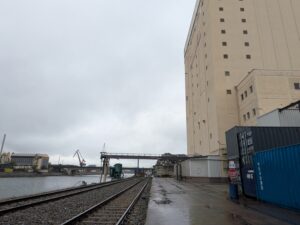
图:港区土地被不同企业长期使用,铁路、厂房与物流设施共同组成斯图加特港的工业空间。

3. 港口赚钱以后|钱流向了哪里?

更意外的事情还在后面,
斯图加特港能够产生利润,
这些利润并非全部留下,
而是进入市属企业体系,
形成另一条城市连接。

斯图加特港有限责任公司 (Hafen Stuttgart GmbH),
属于市属的 SVV 体系,
港口与 SVV 之间,
存在利润上缴协议,
2024年约为565万欧元。

另一边的 SSB,
也与 SVV 签有协议,
如果公共交通发生亏损,
SVV 必须负责承担,
两个系统因此被接在一起。

这不是港口直接养公交,
港口利润只是其中一部分,
它进入同一市属财务体系,
再与其他城市资源一起,
共同支撑公共交通运行。

水边的一块工业土地,
于是连到了斯图加特有轨电车,
货仓连到了公共交通,
港池连到了城市财政,
港口的边界突然变大了。

这也解释了我的困惑,
为什么这里如此像工业区,
因为它确实不仅经营水面,
它同时经营土地与连接,
港口价值也因此离开码头。

港口的利润没有留在水边,
它进入城市公共体系,
参与支撑公交与电车,
继续流进城市生活。
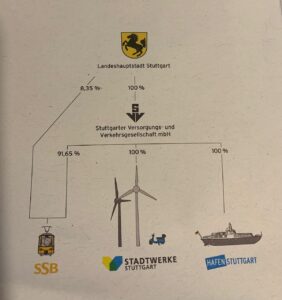
图:组织架构图

一块工业土地,
连到一条电车线,
港口真正的边界,
早已越过岸线。

二、它的腹地很近,它的网络很远:谁在 Hafen Stuttgart 做什么?

这些企业做着不同生意,
却需要同一片土地,
也共享同一套交通网络。

1. 从废料开始|港口里的循环经济

导览经过 ALBA 时,
眼前首先出现的是废料,
这里处理建筑废弃物,
也让材料重新进入循环,
港口因此不只接收新货。 

这些材料进入港区以后,
会重新分选与处理,
部分再回到生产循环,
原本准备丢弃的东西,
于是重新成为工业资源。

这种企业需要大片土地,
也需要卡车频繁进出,
重量大的材料还需要铁路,
港区刚好提供这些条件,
回收因此自然进入这里。

港口官方的企业名录中,
回收企业并不只有一家,
建筑废料、金属与玻璃,
都能在这里找到处理者,
循环经济已成为港区一部分。
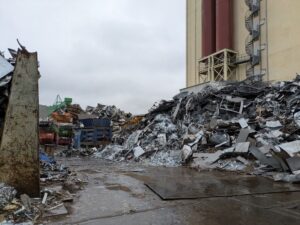
图:ALBA 的回收

2. 从谷物到货柜|不同货物需要同一个港口

再往前走一段路,
工业景象突然换了内容,
Frießinger 公司处理谷物,
也经营饲料相关业务,
这里又回到传统散装货。

谷物需要储存空间,
也需要稳定运输能力,
筒仓因此紧邻交通网络,
货物可以继续进入区域,
供给食品与相关产业。
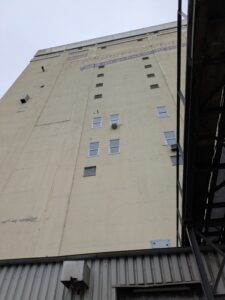
图:Frießinger

另一边的 DP World,
看起来则完全不同,
这里堆放的是集装箱,
岸边连接船与铁路,
公路也进入同一个 terminal。

DP World Stuttgart,
是港内唯一的三式联运站,
铁路连接 Rotterdam 等节点,
水路经内卡河接入莱茵河,
再连向 Antwerpen 与 Rotterdam。

谷物与货柜看似无关,
却共享同一片土地,
也依赖同一条铁路,
在港区里彼此相连。
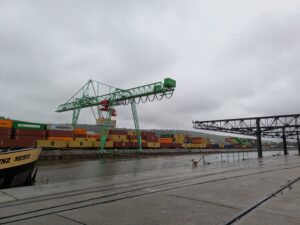
图:DP World

3. 铁路不是配角|港口也可以没有船经过

港区里的铁路很密,
轨道不断穿过企业之间,
整个网络约三十二公里,
每年有大量铁路货运进出,
铁路因此不是辅助设施。

DUSS 经营联运 terminal,
重点连接铁路与公路,
集装箱与半挂车在此换装,
货物不需要碰到水面,
却仍然属于港口系统。

Rhenus 又提供另一种连接,
它经营运输与仓储物流,
也服务生产物流需求,
另有港口物流与回收业务,
港区功能因此继续扩展。 

这也解释了一个现象,
船少并不代表港口停摆,
当水路出现运输限制,
部分货流可以转向铁路,
三式联运因此具有韧性。

船可以少一些,
铁路却不能中断,
港口真正的韧性,
往往藏在陆地上。
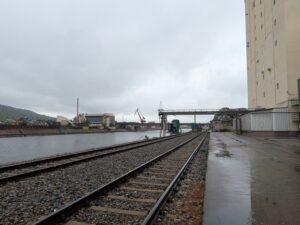
图:港区内的铁路

4. 旧砂重新回来|货物开始形成循环

港区还有一家 FSP,
处理的是使用过的铸造砂,
旧砂从铸造企业运来,
经过再生处理以后,
又重新送回客户手中。

2025年新设施开始动工,
斯图加特厂继续扩大能力,
处理对象不再只是废物,
而是一种可以恢复品质,
再次进入生产的材料。

这和传统港口不同,
过去强调货物向前移动,
现在材料可能绕一圈回来,
运输与生产开始形成闭环,
港口也进入循环经济。

一个港口处理的东西,
因此不再只有商品,
也包括废料与次生资源,
货物流动的方向改变以后,
港口角色也跟着改变。

5. 最后出现氢气|港口开始处理能源

走到今天的新项目时,
货物甚至变得看不见了,
Stadtwerke 正在港区建设,
绿色氢能生产与供应节点,
港口因此多了一种角色。

电力进入电解设备以后,
水被分解生成氢气,
氢气再经管线与车辆,
送往工业与交通用户,
能源开始从港区向外流动。

过去港口搬运能源,
未来也将生产能源,
原本熟悉的角色,
正在港区里悄悄翻转。

于是同一片港区里,
废料、谷物与货柜并存,
铁路、回收与能源交错,
这些企业彼此完全不同,
却都需要同一种基础设施。

过去港口搬运能源,
现在也开始生产能源,
原本熟悉的角色,
正在码头上悄悄翻转。

6. 腹地很近|网络却可以很远

斯图加特港首先服务的,
仍是周边产业与城市供应,
港口官方也把自身定位为,
区域工业的重要物流节点,
连接生产与供应企业。

它也不是缩小版的汉堡港,
据当天导览介绍,
很多货物流并不奔向远洋,
而是服务德国境内,
尤其连接南德产业腹地,
区域需求仍是基本盘。

多数货物服务区域需求,
却不等于网络只到这里,
铁路与内河航运继续外伸,
把斯图加特接向欧洲港口,
区域与全球因此相遇。

它的腹地非常接近,
它的网络却延伸很远,
地方工业需要这个节点,
全球物流也经过这个节点,
两种尺度在港区重叠。

7. 它为什么仍然是港口?

走完整个港区以后,
它还是很像工业区,
这里有厂房与仓库,
也有卡车不断进出,
这一点并没有改变。

可是普通工业区里面,
不会拥有自己的港池,
也没有三十二公里铁路,
更不会同时接入水路,
让三种运输方式交会。

所以真正定义这里的,
不是港池里有几艘船,
而是不同运输方式,
能否在同一空间接起来,
继续服务区域经济。

船只是其中一条血管,
铁路与公路也是血管,
企业则像不同器官,
港口提供共同的骨架,
整个系统才得以运转。

定义港口的,
不是停了几艘船,
而是几种运输方式,
能否在同一空间接上。

三、当“更多吨”不再等于“更成功”:一个港口绩效的新矛盾

港口过去计算多少吨,
未来或许更要计算,
一吨资源能循环多少次。

1. 当吨数开始说不清价值

传统的港口统计里,
货物吞吐量很重要,
搬运的吨数越高,
港口活动看起来越旺盛,
数字也更容易被比较。

斯图加特港也是如此,
每年统计水路与铁路货量,
也统计货柜与运输次数,
这些数字描述物流规模,
却未必说明全部价值。

2024年的港口年报甚至指出,
货物装卸收入占比很低,
只约占营业收入百分之五,
货运量发生一定波动时,
经营结果不会同步变化。

这让我想到一个问题,
如果港口功能正在改变,
继续只计算多少吨货物,
是否还足以衡量一座港口,
究竟创造了多少价值?

2. 一吨砂走完以后,又回来了

FSP处理的不是新商品,
而是使用过的铸造砂,
旧砂从铸造企业运来,
经过再生处理以后,
又重新送回生产现场。

2025年开始的项目中,
FSP为巴符州一家客户,
每年再生约八千吨湿砂,
斯图加特厂区的处理能力,
也提高到约两万五千吨。

这里改变的不只是技术,
材料流动方式也变了,
过去使用一次的旧砂,
现在可以重新恢复性能,
再次进入工业生产循环。

原生材料需求可能降低,
废弃处置也可能减少,
对企业是资源效率提升,
对传统港口统计来说,
却未必产生更多吨数。

ALBA带来另一种循环,
废料在这里重新分类,
材料经过处理与回收,
再次寻找新的用途,
港口开始处理“回来”的货。

旧砂绕一圈回来,
重新进入生产循环,
港口因此多了一种,
不靠吨数计算的价值。

于是问题变得很有趣,
如果循环经济越成功,
长距离原料需求越少,
港口的吨数未必上升,
系统效率却可能更高。
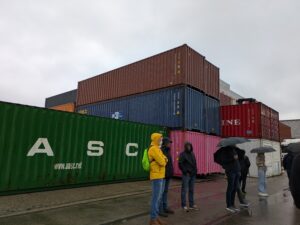
图:斯图加特港的工业空间,货物在这里不仅被转运,也开始进入回收与再生循环。

3. 从搬运能源,到生产能源

另一种变化更加明显,
它甚至不是传统货物,
Stadtwerke Stuttgart正在这里,
建设绿色氢能生产基地,
港口开始制造新的能源。

Green Hydrogen Hub建成后,
四套电解设备将在港区运行,
最终规划达到十二兆瓦,
利用可再生电力制氢,
再供应区域用户使用。

电力进入电解设备,
水被分成氢气与氧气,
氢气可以装入Trailer(氢气运输拖车),
也可以进入区域管线,
送往工业与交通用户。

过去的港口搬运煤炭,
也搬运矿物油与原料,
能源从外部抵达港区,
再继续送往城市内部,
港口承担的是运输节点。

现在关系正在改变,
未来能源可在港区生产,
也能储存与重新分配,
港口不再只是转运节点,
也开始准备成为能源基地。

货物流未必因此增加,
系统功能却明显增加,
同一块工业土地上,
物流、回收与能源并存,
吨数与价值开始脱钩。

能源过去从港区外面来,
未来也会在港区内生成,
这是港口角色,
一次安静的转身。

4. 船想变长,船闸却已经老了

港口向未来转型时,
水路却面对另一个问题,
内卡河上的许多船闸,
已经运行数十年,
部分甚至超过百年,
老化问题逐渐显现,
首先需要基本整修。

原来的规划很明确,
船闸准备继续加长,
让一百三十五米货船,
可以从Mannheim一路驶来,
直到Plochingen一带。

这个计划后来被暂缓,
联邦目前优先处理的,
是既有船闸与堰坝整修,
先维持航道安全运行,
再讨论进一步扩建。

对港口来说很矛盾,
企业正在发展新业务,
氢能与循环经济进入港区,
水路基础设施却在老去,
两种时间同时存在。

企业已经规划氢能,
船闸却来自另一个年代,
两种不同的时间,
在同一座港口并存。

5. 国防投入 (Rüstung)与基础设施 (Infrastruktur)

导览途中还谈到一个问题,
德国正在增加国防投入,
交通基础设施另一方面,
仍面对长期更新需求,
两种优先顺序被放在一起。

这里不能简单理解成,
船闸的钱被转去军备,
两笔预算并非直接转换,
德国基础设施投资本身,
近年也在明显增加。

但这种讨论仍有意义,
因为预算永远存在选择,
一座老化的船闸系统,
需要几十年的持续投入,
却很难制造即时声量。

国防面对当下风险,
基础设施面对长期老化,
两者使用不同时间尺度,
却争夺国家治理注意力,
这才是讨论真正的张力。

国防面对当下风险,
基础设施面对长期老化,
两者真正争夺的,
其实是国家注意力。

港口可以规划氢能,
企业可以发展循环经济,
物流也能不断数字化,
但船闸如果无法运行,
水路仍会失去基本能力。

6. 港口未来该计算什么?

如果只看吞吐吨数,
港口当然越忙越好,
如果开始看资源效率,
答案却可能完全不同,
少搬一些未必是失败。

可以计算多少货物,
也可以计算多少循环,
可以计算多少土地价值,
也可以计算交通替代能力,
指标本身正在发生变化。

未来的内河港口,
或许不再只是换装场/转运节点(Umschlagplatz),
它同时连接工业与物流,
连接能源与循环经济,
也连接区域公共利益。

港口的未来是什么,
不只取决于搬多少货,
也取决于它能否适应变化,
更取决于一个国家,
愿意长期维护什么。

少搬一些未必是失败,
真正值得判断的,
是整个系统,
是否因此更有效率。
尾声|那些不被看见的系统

真正成熟的基础设施,
往往不需要成为风景,
只需要让城市继续运转。

离开港区的时候,
我没有特别兴奋,
也没有哪一艘大船,
成为这一天的主角,
眼前仍是厂房与铁路。

谷物在这里卸下,
货柜在这里换上铁路,
废砂重新进入循环,
企业长期使用土地,
能源也开始在此生产。

这些事情每天发生,
很少有人特别注意,
只要系统继续运转,
港口就安静留在后台,
城市也照常向前。

可是船闸一旦故障,
物流一旦开始中断,
土地与能源出现缺口,
人们才会突然发现,
原来它一直都在这里。

所以港口的价值,
未必来自壮观场面,
也未必只来自吨数,
而是让不同系统之间,
始终保持可以连接。

真正成熟的基础设施,
往往不会提醒人们,
自己每天正在工作,
它只是安静地存在,
让一座城市继续运转。

港口的价值,
不在壮观场面,
而在不同系统之间,
始终能够接得上。

后记|考烈王、黄歇与令尹夫人的观后感

没有很多船,还叫港口吗?

考烈王看着港池,
又看看铁路和厂房,
忍不住问我:
“没有多少船,
这里还算港口吗?”

我说:
“船只是其中一部分,
土地、铁路与水路,
都在这里一起工作,
港口靠的是连接。”

黄歇听完笑了:
“楚人治水的时候,
也从来不只看河,
还要看田、看城、
也看人怎么活。”

考烈王又问:
“所以港口也是这样,
不能只看多少吨,
还要看它连接什么,
又养活什么?”

我点点头:
“货物可以少一点,
材料可以多用几次,
土地也能创造收益,
系统反而更有效率。”

黄歇望向内卡河:
“治水若只求水多,
那不是治理,
港口若只求吨数多,
大概也是一样。”

我笑了:
“所以两千多年以后,
我从楚地走到内卡河边,
看的还是同一件事,
水、土地与人怎么相连。”

楚人看水,
从来不只看水,
还看土地、城邑与民生,
今天看港口,
其实也没有不同。

两千多年过去,
看水的方式没有改变,
水、土地与人,
仍然必须一起被看见。

Appendix|English Narrative Overview

Beyond Cargo: Land, Logistics and the Urban Economy of Hafen Stuttgart

Special thanks|Many thanks to Stuttgart-Marketing GmbH for providing the complimentary ticket for this harbour visit.

When a Port Stops Looking Like a Port

On 17 October 2026, I joined a walking tour through Hafen Stuttgart. It was raining. I had not dressed warmly enough, and as the group moved slowly through the harbour area, I listened to the explanations while shivering. By the time I returned home, I was ill.

Yet the cold was not what stayed with me. What surprised me most was how little the place resembled the ports I usually imagine. There were no giant ocean-going vessels and no dramatic waterfront filled with cranes and ships. Instead, I saw warehouses, railway tracks, silos, containers, trucks and one company after another. At times, the entire area felt less like a harbour than an industrial district.

That impression raised a simple question. If a modern inland port no longer looks primarily like a place for ships, what actually makes it a port? The answer gradually emerged from what was almost invisible: land, rail, water, roads, and the connections between them.

A Port That Begins with Land

Hafen Stuttgart operates according to what is known as the Heilbronner Modell. The port company owns and manages much of the land, harbour basins and railway infrastructure. Private companies lease plots, sometimes under long-term arrangements lasting up to thirty years, and invest in their own warehouses, silos, terminals, cranes and production facilities.

The port itself does not need to become a grain trader, recycling company or logistics operator. It provides the physical platform on which others can do business. This explains why the harbour resembles an industrial estate. The port owns the framework. The companies fill it with economic activity.

The financial logic is equally revealing. According to Stuttgart’s municipal reporting, around ninety percent of Hafen Stuttgart’s operating income comes from long-term rental and Erbpacht arrangements. Cargo-handling income, by contrast, accounts for only a small share. Ships may come and go. Cargo volumes may fluctuate. The land remains.

In 2024, the port transferred approximately €5.65 million in profit into Stuttgart’s municipal corporate structure. That structure is also connected to the city’s public transport system. The relationship is indirect, but striking. Industrial land beside the Neckar helps generate income that ultimately enters the same municipal structure that supports Stuttgart’s public transport system.

A harbour basin, a warehouse plot and a tram line may appear to belong to separate worlds. Financially, they can be part of the same city.

Different Companies, One Shared Infrastructure

Walking through the harbour made this logic visible. ALBA represented one part of the recycling economy. Materials that might once have been treated simply as waste are sorted, processed and returned to economic circulation.

Nearby, the picture changed again. Frießinger handled grain and feed-related products, returning the harbour to the traditional world of bulk cargo, silos and regional supply.

Then came the containers. DP World operates Stuttgart’s trimodal container terminal, where inland shipping, rail and road meet. The name immediately evokes a global logistics network, yet the terminal also reveals something important about inland ports. Their economic role does not depend on everything travelling overseas.

As explained during the tour, much of the cargo handled here serves the surrounding region, Baden-Württemberg and the German domestic economy. Its hinterland is close. Its network is not.

Through the Neckar and Rhine, and through European rail connections, Stuttgart can reach larger hubs such as Rotterdam and Antwerp.

DUSS adds another layer, focusing on combined rail-road transport. Rhenus connects warehousing, transport and production logistics. Here, cargo does not necessarily touch water at all. It can arrive by rail, move by truck and still remain part of the harbour system.

That is why ships alone cannot define this place. Water is one transport artery. Rail and road are others. The port is the shared skeleton that allows all three to connect.

When Waste Returns as a Resource

One of the most interesting companies in the harbour area is FSP. Its business is not based on new cargo entering the system. It works with used foundry sand. Instead of treating that sand simply as waste, it can be regenerated and returned to industrial production.

That changes the direction of material flow. Traditional port logic is linear. A commodity arrives, is unloaded and moves onward. Circular-economy logic is different. A material may leave production, enter a regeneration process and then return to production again. The same material can circulate more than once.

This creates a strange statistical problem. Ports have traditionally measured success through Güterumschlag—how many tonnes of cargo are handled. More tonnes usually suggest more activity. But what happens when circular systems become more efficient?

If used materials can be regenerated locally, fewer virgin materials may need to travel long distances. Less waste may need to be transported away. Transport volumes may fall even while resource efficiency improves. The port could become more useful while moving fewer tonnes.

That is the paradox. The old indicator measures movement. The new economy increasingly values circulation.

From Moving Energy to Producing It

Another transformation is taking place through hydrogen. Stadtwerke Stuttgart is developing the Green Hydrogen Hub within the harbour area. The project adds a new function to land that historically served freight, storage and industry.

Ports have always moved energy. Coal, petroleum products and other fuels have long travelled through industrial harbours. But hydrogen changes the relationship. Energy can now be produced within the harbour itself.

Electricity enters an electrolyser. Water is separated into hydrogen and oxygen. The hydrogen can then be stored, transported or supplied to industrial and transport users. The port is no longer merely an Umschlagplatz, a place where energy passes through. It is becoming an Energiestandort, a place where energy is also produced and distributed.

The shift is quiet. There is no dramatic moment when one type of harbour disappears and another suddenly begins. Old and new functions simply accumulate in the same space. Grain remains. Containers remain. Railways remain. Recycling expands. Hydrogen arrives.

The harbour becomes more complex without necessarily becoming more spectacular.

Two Different Times in the Same Harbour

Yet the future depends on infrastructure inherited from the past. The Neckar is a federal waterway. Its locks have operated for decades, and some parts of the system belong to a much older generation of engineering.

There were once plans to adapt the locks so that vessels up to 135 metres long could travel farther along the Neckar. Those plans were postponed. The immediate priority became the renovation and continued operation of the existing infrastructure.

That creates an unusual contrast. Companies are planning hydrogen systems and new circular-economy processes. At the same time, the waterway still depends on ageing locks. Two different times coexist in the same harbour.

During the tour, the discussion also turned to Germany’s growing defence expenditure and the continuing need to modernise transport infrastructure. The two budgets cannot simply be treated as if money had been transferred directly from one to the other. But the discussion still matters.

Defence responds to immediate risk. Infrastructure responds to long-term ageing. Both compete for political attention. And infrastructure has a particular disadvantage. When it works, very few people notice it.

A lock can function for decades without becoming news. Only when it fails does everyone suddenly understand what depended on it.

The Systems We Notice Only When They Stop

When I left Hafen Stuttgart, I was still not especially excited by the scenery. No single ship had become the protagonist of the day. The view was still largely one of industrial buildings, tracks, roads and working land.

Yet that was precisely the point. Grain is unloaded. Containers are transferred to rail. Waste materials are recycled. Foundry sand is regenerated. Companies occupy industrial land. Hydrogen production is being developed. Profits from harbour land enter the wider municipal economy.

None of this needs to look dramatic. It simply needs to keep working.

Perhaps mature infrastructure is defined by this quietness. It does not constantly announce itself. It allows different systems to remain connected. And only when those connections fail does the city suddenly hear the infrastructure that had always been there.

A port’s value, then, may not lie in spectacular waterfront scenes. It lies in whether land, water, rail, road, industry, energy and public life can still meet.

Across Civilizations

If There Are Few Ships, Is It Still a Port?

King Kaolie looked across the harbour basin and then toward the railway tracks and industrial buildings. “There are not many ships,” he said. “Is this still a port?”

“Ships are only one part of it,” I replied. “Land, rail and water all work together here. The port depends on connection.”

Huang Xie smiled. “When people in Chu managed water,” he said, “they did not look only at the river. They looked at fields, settlements and the lives of the people as well.”

King Kaolie turned toward me. “So a harbour should not be judged only by how many tonnes it moves?”

I nodded. “Materials can be used more than once. Land can generate value. A system can become more efficient even when it moves less.”

Huang Xie looked toward the Neckar. “If water management only seeks more water,” he said, “that is not really management.” He paused. “Perhaps a harbour that seeks only more tonnes has the same problem.”

I looked across the river. More than two thousand years had passed, yet the question remained familiar. How should water, land and people be organised so that a region can continue to live?

The way we look at water has not changed as much as we think. Water, land and people still belong in the same picture. A harbour is therefore never only a place for ships. It is one of the places where a society learns how to connect them.

🤖 人工智能协作声明

本文的主题选择、田野调查、资料搜集、核心观点与中文原始内容,均由作者独立完成。创作过程中,作者与人工智能模型,进行持续协作,包括多轮讨论、思路推演、节奏输出、部分翻译、英文 Narrative Overview 生成、语言检查、结构检测与文字润饰。
人工智能在此过程中,作为创作协作者,参与内容发展与语言表达,但不作为法律意义上的作者或著作权主体。所有 AI 协作产生的内容,均由作者依据田野资料、原始文献与中文母稿,进行选择、审校、修改与艺术化重构。文章的叙事方向、内容取舍、创作决策、最终表达与价值判断,均由作者决定并负责。

📜 本站所有原创作品均已完成区块链存证,确保原创凭证。部分重点作品另行提交国家版权登记,作为正式法律备案。原创声明与权利主张已公开。完整说明见:

👉 原创声明 & 节奏文明版权说明 | Originality & Rhythm Civilization Copyright Statement – NING HUANG

节奏文明存证记录

本篇博客文为原创作品,由黄甯与 AI 协作生成,于博客网页首发后上传至 ArDrive 区块链分布式存储平台进行版权存证:

  • 博客首发时间:2026年10月18日
  • 存证链接:
  • 存证平台:ArDrive(arweave.net)(已于 2026年10月18日上传)
  • 原创声明编号:Rhythm_Archive_18_Oct_2026/beyond-cargo-hafen-stuttgart 
  • 用途声明:本文为《节奏文明观》之〈流动文明 〉与〈节奏文明地景书写 〉篇章,亦参与构建《AI×非遗文明共构档案》与《文明节奏回声计划》,用于文明节奏实地记录、区块链存证、跨域协作与版权登记用途。

© 黄甯 Ning Huang, 2026. All Rights Reserved.
本作品受版权法保护,未经作者书面许可,禁止复制、改编、转载或商用,侵权必究。

📍若未来作品用于出版、课程、NFT或国际展览等用途,本声明与区块链记录将作为原创凭证,拥有法律效力。