From “Chu Ci” to Airbus: How Humanity Turned the Dream of Flight into Reality | Dresden Transport Museum
Before Humans Flew, Poetry Had Already Taken Flight
More than two thousand years ago, humans could not fly. Yet in the Chu Ci anthology (楚辞, The Poetry of Chu), they were already moving through the clouds. In Yuan You (Far Roaming), a poem preserved in the Chu Ci anthology, the spirit rises into the glowing sky and travels beyond the floating clouds; in Da Siming (The Greater Master of Fate), a deity rides a dragon into the heavens. The body remained on the ground, but poetry had already taken flight.
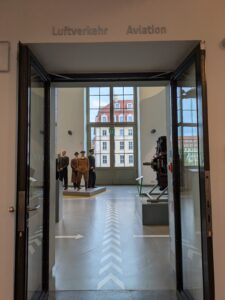
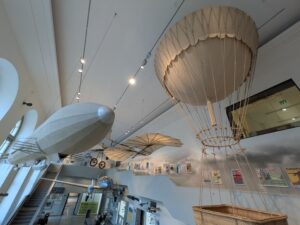
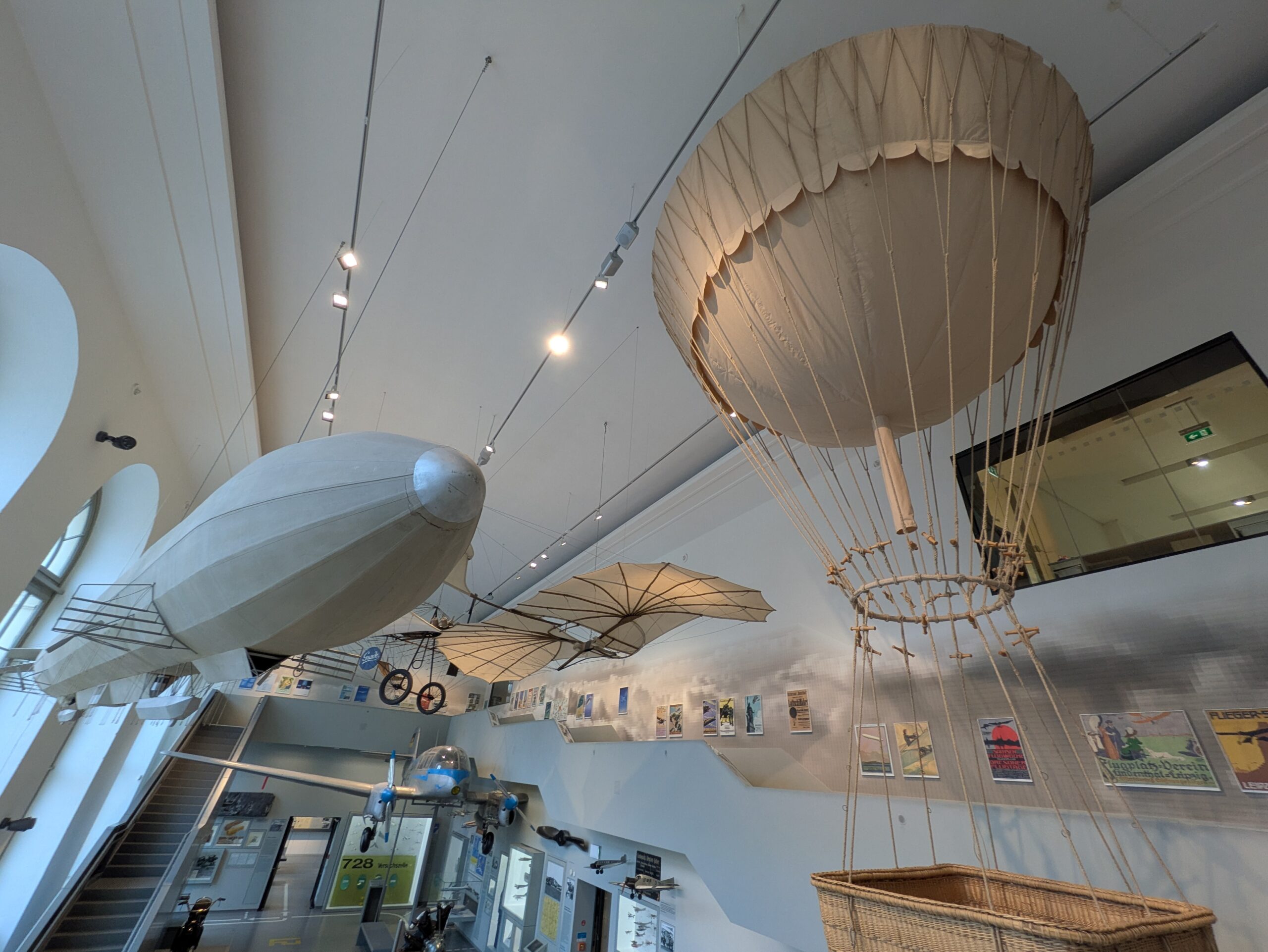
More than two millennia later, I walked into the aviation gallery of the Dresden Transport Museum. Balloons, airships, gliders and aircraft hung above me, preserving different answers humans had once given to the same desire: to leave the ground. Standing beneath them, I became interested in a question that came before aviation transformed travel: How did humans turn the imagination of flight into the ability to actually fly?
When Humans Began to Measure Wings
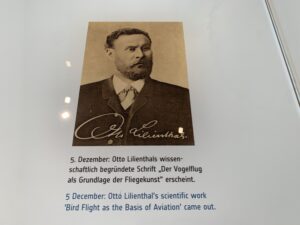
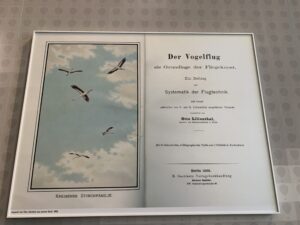
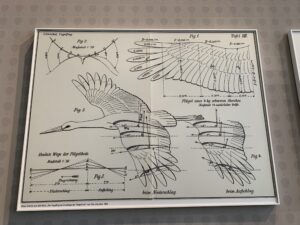
For thousands of years, people had watched birds fly, but seeing flight was not the same as understanding it. In 1889, Otto Lilienthal published Der Vogelflug als Grundlage der Fliegekunst (Bird Flight as the Basis of Aviation). One illustration shows storks still circling naturally among the clouds. In another, their wings have become objects of investigation: dimensions, angles and directions appear beside the feathers, while different wing positions are recorded and compared. The birds had not changed. The human way of looking at them had.
Flight was no longer only something to admire or imagine. It had become something that could be observed, drawn, measured and investigated. Humans did not first grow wings and then learn to fly. They first measured a bird’s wings on paper.
What Should a Flying Machine Look Like?
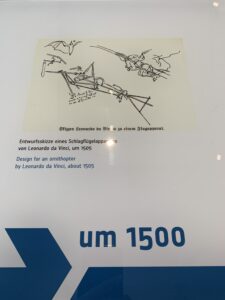
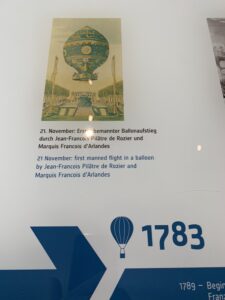
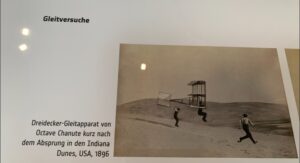
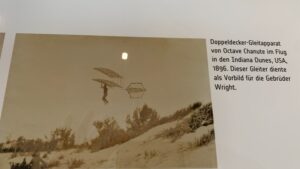
Understanding birds did not immediately reveal what a flying machine should look like. Should humans imitate wings, or should they let lighter-than-air gases lift them from the ground? Leonardo da Vinci sketched an ornithopter around 1505. In 1783, humans rose into the air in a manned balloon. By the late nineteenth century, Octave Chanute was testing different glider configurations in the air. Before the familiar aeroplane emerged, a “flying machine” had no fixed shape.
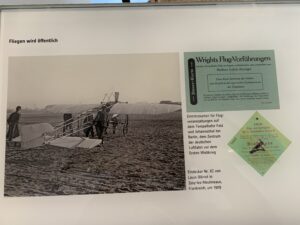
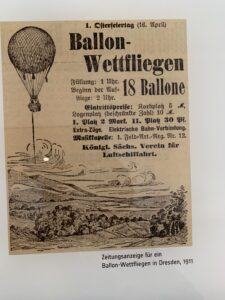
Balloons, airships, gliders and aeroplanes represented different technical possibilities, and for a time they developed alongside one another. Some experiments succeeded, some failed, and others worked only well enough to reveal the next problem. By the early twentieth century, flight was also entering demonstrations, competitions, flying schools and airfields. Humans did not know the answer first and then build the correct machine. Before the aeroplane had a settled form, the sky was a draft covered in revisions; the real answer was written again and again by wind, experiment and failure.
When Experiment Became Engineering
Once a machine could leave the ground, another problem appeared: a successful flight was not yet modern aviation. Engines had to provide reliable power, structures had to withstand loads, and aircraft had to be controlled, maintained and repaired. What had once been the experiment of an inventor was becoming an engineering task.
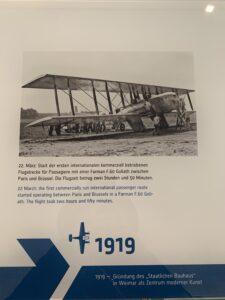
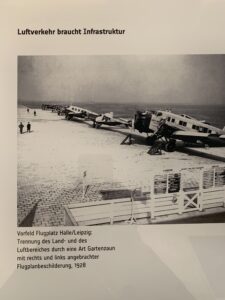
In 1919, an international commercial passenger service began operating between Paris and Brussels. As flight became repeatable rather than exceptional, aviation required more than aircraft alone. Engineers, factories and supply systems were needed to design and manufacture them; trained pilots had to operate them; airports, maintenance and navigation became part of the system. Flight was no longer simply the achievement of one machine. It had become a capability created and maintained by many people working together.
The Wings We Built for Ourselves
Aviation did not stop there. Jet propulsion, new materials and electronic systems continued to transform aircraft performance and structure, making flight increasingly the product of a complex industrial system.
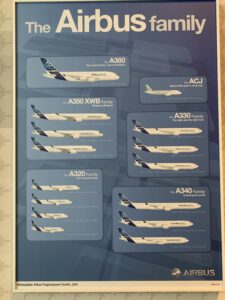
A 2012 poster in the museum shows the Airbus family of aircraft. By this point, the flying machine had become something entirely different from the experiments of the nineteenth century. Aerodynamics, materials, engines and electronic systems had to work together within a single aircraft, while an even larger network of design, manufacturing, operation and maintenance made repeated flight possible.
From the experimental machines of the nineteenth century to entire families of aircraft that could be designed, produced and operated again and again, humanity did not simply invent an aeroplane. It built an aviation system.
We never became birds. Modern humans did not grow feathers; with steel, aluminium and carbon fibre, we borrowed the sky.
Looking up once more before leaving the gallery, I realised that the distance between Chu Ci and Airbus was not simply a distance of more than two thousand years. It was a journey from imagination to observation, from observation to measurement, from measurement to experiment, and from experiment to engineering. Science helped humans understand how flight works; engineering made it repeatable. Yet neither brought imagination to an end. Once humans could finally enter the sky, another question remained: Was the sky really all we had wanted to reach?
Across Civilizations
King Kaolie looked upward.
“So more than two thousand years later, you really can fly?”
“Yes.”
“On dragons?”
“No.”
“On phoenixes?”
“No.”
He looked around again.
“Then where are the wings?”
I pointed above us.
“There.”
The king was silent for a moment.
“This does not look very much like what Chu Ci described.”
Huang Xie laughed.
“Of course not, Your Majesty. We sent gods into the sky on clouds and dragons. People in later ages began by measuring the wings of birds.”
“And once they measured them, they could fly?”
“Not yet.”
“Then why measure them?”
I explained that people first tried to understand why birds could fly. Then they built different wings and different machines. Some worked, some failed, and they changed the designs and tried again.
“That sounds troublesome,” the king said.
“It became even more troublesome later,” Huang Xie replied. “A machine capable of flying was still not enough.”
“What else did they need?”
“Engineers, factories, pilots, airports, maintenance and navigation—and many people whose professions Your Majesty would not even know how to name.”
The king looked at the poster of the Airbus family.
“So something this large was not made by one person?”
“No.”
“And one person cannot make it fly either?”
“No.”
The king thought for a while.
“So humans never really grew wings.”
Huang Xie smiled.
“No. They built wings that only many people working together could make possible.”
The king looked upward once more.
“If Qu Yuan could see this, perhaps he would be pleased.”
I thought about it.
“Perhaps. Or perhaps he would first ask why, after more than two thousand years, humans still have so many questions.”
Huang Xie laughed.
“That does sound like him.”
King Kaolie nodded.
“Then let him keep asking. Tianwen was never finished anyway.”
More than two thousand years ago, Qu Yuan looked upward and wrote Tianwen—Questions to Heaven—asking about heaven and earth, gods and the human world. More than two thousand years later, we look upward at airships and aircraft and have finally entered the sky he once contemplated.
We still have no wings, but we have turned the romance of Chu Ci into the roar of aircraft taking off and landing on airport runways.

 时间:2026年09月25日(五)
 行程|德勒斯登 · 交通博物馆航空厅