封面图说明|
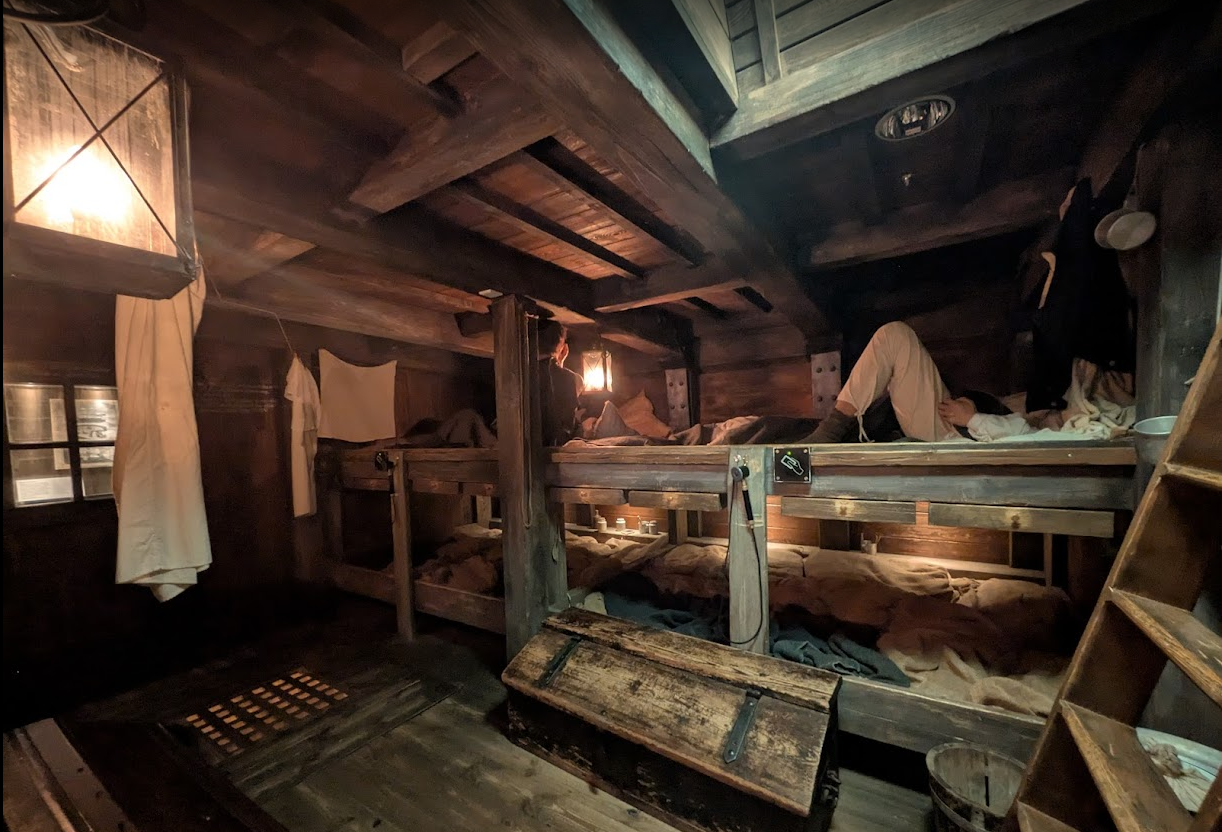
三等舱里的两层木铺,六周到十五周,
数百名移民就住在这样的空间里,
横渡大西洋。
引文|一张船票之外
 时间|2026年6月7日(日)
  行程|不来梅哈芬 • 德国移民之家博物馆
Deutsches Auswandererhaus Bremerhaven
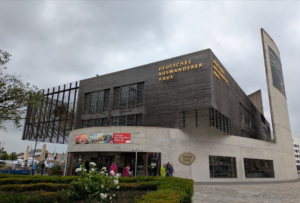
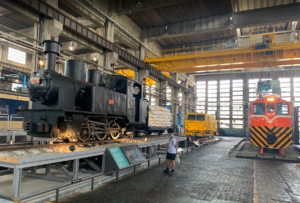
图:德国移民之家博物馆
移民不是一张船票,
而是必须先熬过六周到十五周的海上生活。
德国移民之家博物馆于2005年8月8日开馆,
2007年获得欧洲博物馆年度大奖,
2008年获得 Best in Heritage Award。
这是德国第一座以移民为主题的博物馆。
数百万离开欧洲的人们,
曾经从这里出发。
而他们留下的故事,
如今仍在这座博物馆里继续航行。
进入博物馆当天,
凭媒体证免费入馆。
工作人员除了门票之外,
还准备了一份媒体资料。
整个接待过程亲切而专业,
让人留下良好印象。
三天后,
馆方主动来信询问是否需要进一步协助,
并表示期待文章完成后寄回馆方阅读。
对于一座讲述移民故事的博物馆而言,
这样的热情与开放,
同样是一种跨越时间的接力。
馆方没有把历史放进玻璃柜里,
而是把观众放进历史里。
进入博物馆之前,
每个人都会领取一张对应真实移民经历的 i-CARD。
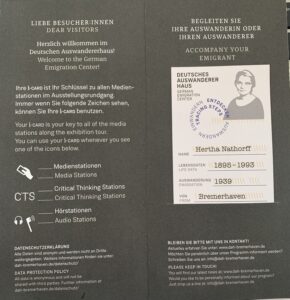
图:移民身份卡
从候船大厅开始,
穿过远洋客轮、
海上生活、
艾利斯岛检查站与新大陆城市。
观众跟随的不是虚构角色,
而是一位真实存在过的人。
拿着那张卡片向前走时,
会慢慢忘记自己是参观者。
彷佛下一班开往新大陆的船,
就要启航。
它记录着一个真实的人,
如何离开欧洲,
穿越海洋,
最终在另一个大陆继续生活。
一张卡片的背后,
是一整个人生。
船会靠岸。
但海上的日子,
不会结束。
一、从等待室到码头
离开故乡的第一步,
不是登船,
而是等待。
1. 等待的人
离开欧洲之前,
并不是所有人都能立刻登船。
许多人必须先在等待室停留,
等待文件,
等待船期,
等待检查,
等待自己的名字被叫到。
展厅里的长椅静静摆放在那里,
行李已经整理好,
船票已经买好。
但真正离开的那一天,
还没有到来。
有人带着期待,
有人带着不安。
也有人直到最后一刻,
仍然不知道自己的决定是否正确。
等待室里没有未来,
只有即将被抛弃的过去。
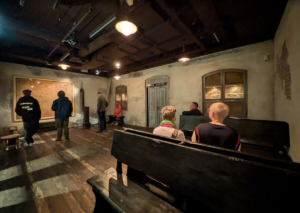 图:等待室
图:等待室
2. 前往码头
离开的日子终于到来,
人们提着箱子,
带着全部家当,
走向码头。
对于许多人而言,
这些箱子装着的,
就是他们能够带走的一切。
家乡留在身后,
大船出现在眼前。
没有人知道几周之后会发生什么,
也没有人知道,
是否还能再次回到这里。
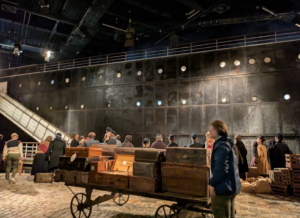
图:码头
3. 七百万人的脚步
十九世纪到二十世纪之间,
超过七百万人从不来梅哈芬离开欧洲。
他们来自不同国家,
拥有不同语言、
职业与信仰。
为什么有人愿意离开自己的家乡?
有人为了寻找自由,
有人为了信仰,
有人为了摆脱贫困。
也有人只是因为,
已经无法继续留下。
还有一些人,
根本没有别的选择。
对于这些人而言,
离开不是冒险,
留下才是。
七百万人拥有七百万个理由,
但他们都在这里,
走向同一片海洋。
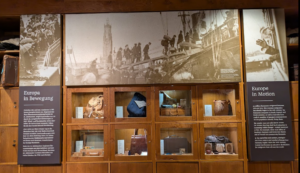
图:欧洲在流动
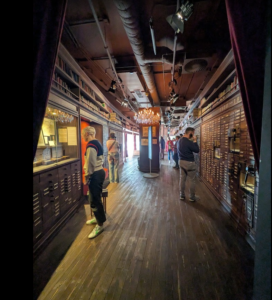
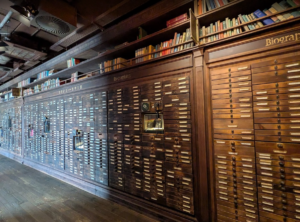
图:七百万人展厅
4. 通往港口的路
离开欧洲的人,
并不是历史书上的数字。
他们有自己的名字,
自己的家庭,
自己的人生。
他们曾经站在码头上,
最后一次回头望向故乡。
七百万人离开欧洲。
七百万人,
都曾回头。
而当越来越多人决定离开欧洲,
港口开始变得拥挤。
他们的人生,
也即将在另一座城市重新汇合。
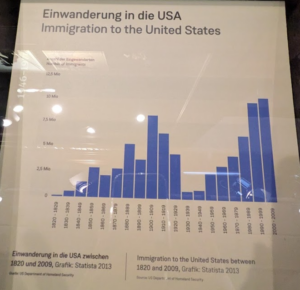
图:移民时间轴
二、漂浮的海上生活|
人在海上不只是等待,
而是在准备未来。
1. 双层木铺上的数周
离开码头之后,
真正的旅程才刚刚开始。
对于十九世纪的移民而言,
跨越大西洋并不是几天的旅行。
从欧洲前往纽约,
往往需要六周左右。
前往澳大利亚,
甚至可能长达十五周。
展厅里重建了一部分移民舱。
狭窄的空间里,
木铺一层层排列。
每个人拥有的空间极其有限,
吃饭、
睡觉、
休息,
都在同一个地方完成。
天气平静的时候,
人们还能到甲板透气。
一旦遇到风暴,
舱门关闭,
数百人只能继续待在狭窄的船舱里。
移民不是从抵达美国那一天开始。
当船离开欧洲海岸的时候,
他们的人生已经改变。
陆地上的身份,
在海上会慢慢剥落。
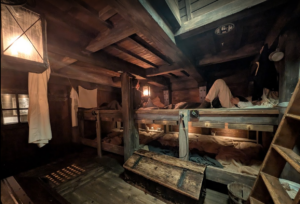
图:移民舱里的双层木铺
2. 同一艘船上的不同人生
同样横渡大西洋,
不同的人却拥有完全不同的海上生活。
一等舱与三等舱的生活,
在展馆里形成鲜明对比。
从客房、
餐厅、
休息空间,
到乘客的日常活动,
不同舱等拥有截然不同的航海经验。
宽敞舒适的客房、
布置典雅的餐厅,
让远洋航行更像一场漫长旅行。
而更多移民,
则住在拥挤的船舱里,
与陌生人共同度过数周的海上生活。
同一艘船驶向同一个目的地,
却承载着不同阶层的人生。
有人在甲板上欣赏海景,
有人在拥挤的铺位之间等待天亮。
有人期待新的投资机会,
有人则把全部身家都押在这一张船票上。
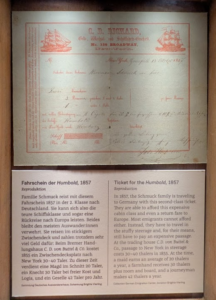
图:船票
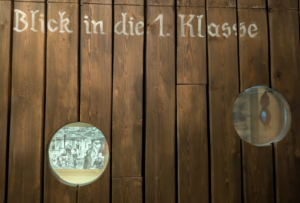
图:窥见一等舱
图:休息厅
3. 船上的餐桌
为了照顾数百甚至上千名乘客,
远洋客轮设有厨房、
餐厅与完整的服务系统,
维持长达数周的海上生活。
展厅保存了不同年代的菜单。
从移民船到豪华客轮,
餐桌上的食物不断变化。
十九世纪的移民船上,
食物首先必须解决的是生存问题。
到了二十世纪,
远洋客轮开始提供越来越丰富的餐饮服务。
菜单、
餐具、
餐厅空间,
逐渐成为船公司竞争的重要内容。
对于长达数周的航程而言,
一顿热食不仅填饱肚子,
也让人暂时忘记海洋的漫长。
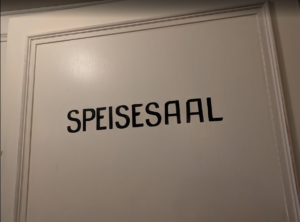
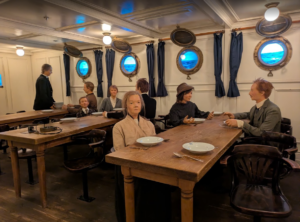
图:餐厅
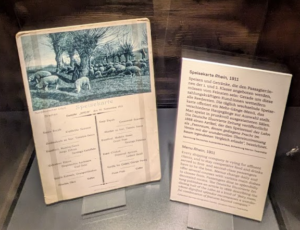
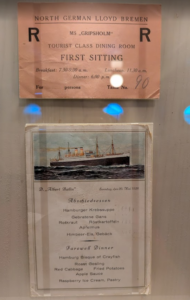
图:菜单
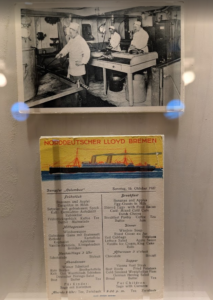
图:厨房
4. 在海上学习新生活
离开欧洲的人,
并不一定会说目的地国家的语言。
因此,
一些船公司开始在航程中提供语言课程。
当客轮驶向澳大利亚时,
乘客已经在船上学习英语。
新的国家尚未抵达,
新的语言却已经先一步进入生活。
对于许多人而言,
移民并不是下船之后才开始。
从登船那一天起,
他们已经在学习新的规则、
新的语言与新的生活。
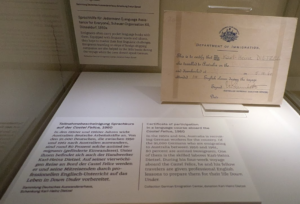
图:英语课程证明
5. 漂浮中的娱乐与仪式
天气晴朗的时候,
人们会来到甲板散步、
聊天、
晒太阳或参加活动。
当客轮穿越赤道时,
船上还会举行特别仪式。
乘客与船员共同庆祝这一刻,
并获得纪念证书。
对于许多人而言,
这是人生第一次跨越赤道,
也是第一次真正感受到自己已经远离故乡。
海洋隔开了两个世界。
在数周的航程里,
故乡逐渐远去,
新生活逐渐靠近。
当远方终于出现陆地时,
下船的人已经不再是登船时的模样。
海上漂流的不是时间,
是人的一生。
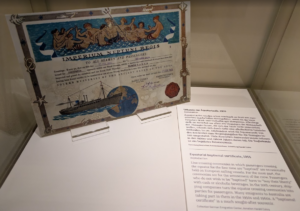
图:赤道仪式证书
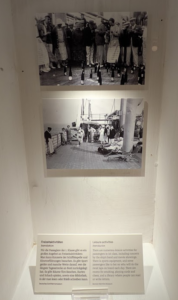
图:甲板娱乐
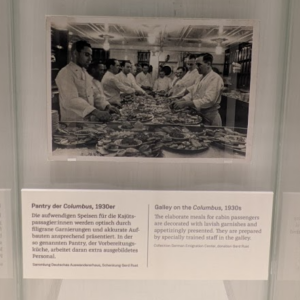
图:船上活动照片
三、抵达之后|成为新大陆的居民
船已经靠岸,
人生才刚刚开始。
1. Ellis Island
经过数周海上航行之后,
人们终于看见纽约港,
看见自由女神像,
看见陆地。
但踏上美国,
并不代表已经进入美国。
所有移民都必须先前往 Ellis Island,
接受一连串检查与审查。
这里不是欢迎大厅,
而是一道决定命运的门。
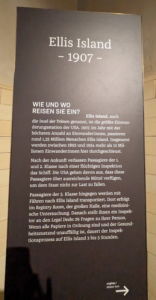
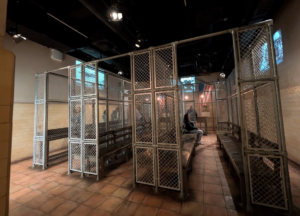
图:Ellis Island
2. 一个号码,一个身份
进入大厅之后,
每个人都会获得自己的号码,
依序等待检查。
医生观察身体状况,
官员核对姓名、
年龄、
职业、
出生地与家庭背景。
有人顺利通过,
也有人因为疾病、
资料问题或其他原因,
被要求进一步审查。
海洋已经过去,
新的考验才刚刚开始。
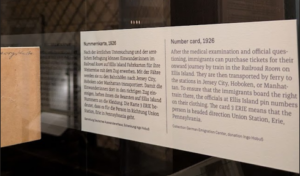
图:号码牌
3. 谁能够留下
馆内保存着大量移民档案、
表格、
证件与官方文件。
这些纸张决定的,
往往不是一次旅行,
而是一个家庭未来数十年的命运。
有些人获得许可,
开始新的生活。
有些人则必须等待,
甚至被迫返回原来的地方。
对于许多人而言,
最漫长的等待,
并不发生在海上,
而发生在岸上。
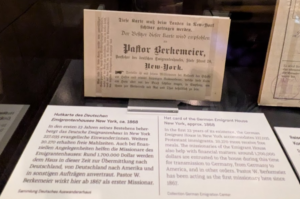
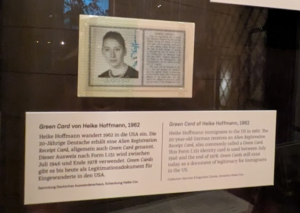
图:移民文件
4. 一份保证书
许多移民必须提供保证人,
证明自己抵达之后不会成为社会负担。
亲属、
朋友、
雇主,
都可能成为担保人。
馆内展示的保证书、
申请书与官方信件,
记录着移民进入新社会之前,
必须完成的各种程序。
新大陆并不是一个梦想自动实现的地方。
在那里生活,
同样需要证明自己。
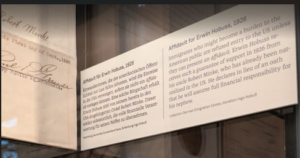
图:保证书
5. 跟随一个真实的人
离开展厅之前,
我看着手中的 i-CARD。
从进入博物馆开始,
它陪伴我走过等待室、
码头、
海上航程、
Ellis Island,
以及后来的新生活。
这张卡片对应的,
是一位真实存在过的人。
她的名字、
职业、
家庭与人生,
都曾经出现在这条移民路线上。
它记录着一个真实的人,
如何离开欧洲,
穿越海洋,
最终在另一个大陆继续生活。
而那些曾经离开的人,
后来散落在世界各地。
他们不再属于同一个故乡,
但他们曾属于同一条航线。
尾之声|海上的日子
有些旅程改变目的地,
有些旅程改变人。
离开德国移民之家博物馆时,
我一直想着那间狭窄的船舱。
双层木铺、
拥挤的空间、
看不见尽头的海洋。
六周,
八周,
甚至十五周。
对于今天的人而言,
那几乎难以想象。
可对于无数移民来说,
那却是新生活开始之前,
必须经历的日常。
他们在船上吃饭、
睡觉、
学习新的语言,
参加活动,
等待陆地出现。
故乡已经消失在身后,
而新生活,
仍然隐藏在海平线之外。
这座博物馆让我记住的,
不是纽约,
不是 Ellis Island,
而是那些人在海上的日子。
真正改变他们的,
或许不是抵达的那一天,
而是穿越海洋的那些时光。
船靠岸之后,
生活才开始。
但海上的日子,
不会结束。
后记|考烈王、黄歇与令尹夫人的观后感
离开展厅之后,
三人慢慢向出口走去。
墙上仍挂着那些移民留下的照片,
有些已经泛黄,
有些人的名字甚至无人记得。
考烈王看了许久,
说道:
“本王原以为,
他们最难的是渡海。”
黄歇点了点头,
说道:
“臣起初也这样以为。”
“后来才发现,
海洋结束之后,
真正的考验才刚刚开始。”
考烈王望着那些检查文件,
缓缓说道:
“也是。”
“外乡人进入楚国,
同样需要登记身份,
查验来历。”
“只是没想到,
这里竟连寻常百姓,
也要经过如此繁复的程序。”
黄歇望向远处的 Ellis Island,
说道:
“因为海洋不会问问题。
岸上的人会。”
“他们要证明自己的身份,
证明自己的健康,
证明自己不会成为负担,
证明自己能够留下来。”
考烈王缓缓说道:
“原来能够抵达的人,
未必能够留下。”
我点了点头,
说道:
“所以这座博物馆讲的,
其实不只是移民。”
“也是等待、
选择与重新开始。”
黄歇看着手中的 i-CARD,
说道:
“最特别的,
是馆里没有让我们观看历史。”
“而是让我们陪着一个人,
重新走完这段路。”
三人最后回头看了一眼展厅。
那里有船票,
有行李箱,
有菜单,
有担保书,
也有一张张陌生人的照片。
他们来自不同国家,
拥有不同语言与人生。
却都曾经站在同一个码头,
望向同一片海洋。
黄歇低声说道:
“离开的,是故乡。”
考烈王点了点头,
说道:
“抵达的,是人生。”
Appendix|English Narrative Overview
Life at Sea for Immigrants | German Emigration Center, Bremerhaven
A ticket doesn’t end a journey. For most emigrants, it barely begins one.
The German Emigration Center opened in Bremerhaven on 8 August 2005, Germany’s first museum dedicated entirely to migration. It won the European Museum of the Year Award in 2007 and the Best in Heritage Award in 2008. Millions of people once departed Europe from exactly this spot; their stories are still, in a sense, sailing through this museum today.
I entered on a media pass, and the staff went well beyond issuing a ticket — press materials were prepared in advance, the welcome was warm and professional, and three days later the museum wrote to ask whether I needed anything further, hoping to read the finished article once it was done. For a museum built around stories of migration, that same generosity — extended across time, from one stranger to another — felt like part of the exhibit itself.
The museum doesn’t put history behind glass. It puts the visitor inside it. Before entering, every guest receives an i-CARD tied to a real emigrant’s documented life — not a fictional character, but someone who actually made this crossing. Carrying that card through the waiting hall, the ocean liner, the shipboard quarters, and finally Ellis Island, I gradually stopped feeling like a visitor. It began to feel as though the next ship to the New World was about to depart, and I was on it.
Before departure, not everyone could simply board. Many spent time in a waiting hall — waiting on paperwork, sailing dates, inspections, their name being called. The reconstructed benches sit quietly in the exhibit, luggage packed, tickets purchased, the actual day of leaving still not arrived. Some carried hope. Some carried dread. Some, until the very last moment, weren’t sure they’d made the right choice. The waiting hall holds no future — only a past about to be left behind.
When the day finally came, people carried their belongings toward the pier — often everything they owned, packed into a single case. Homeland behind them, a great ship ahead. No one knew what the coming weeks would bring, or whether they’d ever return.
Between the nineteenth and twentieth centuries, more than seven million people left Europe through Bremerhaven — different nationalities, languages, occupations, and beliefs, but each with a reason for leaving: freedom, faith, escape from poverty, or simply the absence of any other option. For many, leaving wasn’t the risk. Staying was. Seven million people, seven million reasons, all walking toward the same sea.
Once the ship left port, the real journey began. For nineteenth-century emigrants, crossing the Atlantic wasn’t a matter of days — the trip to New York typically took around six weeks; to Australia, as long as fifteen. The museum reconstructs part of a steerage cabin: narrow space, tiered wooden bunks, eating, sleeping, and resting all happening within the same few square metres. On calm days, passengers could go up to the deck for air. In storms, the hatches closed, and hundreds of people simply waited it out below. Migration didn’t begin the day the ship reached America. The moment it left the European coast, an old identity had already started coming loose.
Crossing the same ocean looked completely different depending on which class you traveled in. First-class cabins, dining rooms, and lounges made the voyage feel almost like an extended vacation. Most emigrants, meanwhile, spent weeks in cramped shared quarters among strangers. Same ship, same destination — entirely different lives aboard it. Someone admired the view from the deck. Someone else waited out the night in a crowded bunk, hoping for daylight.
Feeding hundreds, sometimes thousands, of passengers required full kitchens, dining halls, and service systems running for weeks at sea. The museum preserves menus spanning different eras: nineteenth-century emigrant ships focused first on survival; twentieth-century liners increasingly competed on the quality of their food service, china, and dining rooms. On a voyage that could stretch for weeks, a hot meal did more than fill a stomach — it offered a brief escape from how long the ocean actually was.
Not every emigrant spoke the language of their destination. Some shipping companies began offering language lessons during the crossing itself — passengers bound for Australia sometimes began learning English before they’d even arrived. For many, migration didn’t start the moment they disembarked. It started the day they boarded, already absorbing new rules, a new language, a new way of living.
On fair-weather days, passengers walked the deck, talked, sunbathed, or joined onboard activities. Crossing the equator warranted its own ceremony, with passengers and crew celebrating together and receiving commemorative certificates — often marking the first time in someone’s life they had crossed that line, and the first moment the distance from home became truly real. By the time land finally appeared, the person disembarking was rarely the same person who had boarded. What drifted across those weeks at sea wasn’t simply time. It was a life.
Arrival didn’t mean acceptance. After the ocean crossing, every immigrant still had to pass through Ellis Island — not a welcome hall, but a gate that would decide their fate. Inside, each person received a number and waited their turn: doctors assessed physical condition, officials verified name, age, occupation, birthplace, and family background. Some passed easily. Others, due to illness, incomplete paperwork, or other concerns, faced further scrutiny. The ocean was behind them. A new test had only just begun.
The museum holds extensive immigration records, forms, and official documents — paperwork that often decided not just a single journey, but a family’s fate for decades to come. Some received permission and began new lives. Others were held back, or forced to return. For many, the longest wait wasn’t at sea at all. It happened on land.
Many emigrants needed a guarantor — a relative, friend, or employer willing to certify that they wouldn’t become a burden on their new society. The letters, applications, and guarantee documents on display record everything an emigrant had to complete before truly entering their new life. The New World wasn’t a place where dreams simply arrived on their own. Living there required proof, at every step, that you belonged.
Before leaving the exhibition, I looked down at the i-CARD still in my hand. It had walked with me through the waiting hall, the pier, the ocean crossing, Ellis Island, and the beginning of a new life. Behind that card was a real person — her name, her occupation, her family, her life, all once part of this same route. The people who once left, later scattered across the world. They no longer shared a single homeland. But they had once shared the same crossing.
Across Civilizations
Leaving the exhibition hall, the three of us walked slowly toward the exit. Photographs of departed emigrants still hung on the walls — some faded, some belonging to names no one remembers anymore.
King Kaolie studied them for a long moment. “I assumed crossing the ocean was the hardest part.”
Lord Chunshen Huang Xie nodded. “I thought so too, at first. It turns out the real test only began after the ocean ended.”
King Kaolie looked at the inspection documents nearby. “That makes sense, in a way. Foreigners entering Chu also had to register their identity, have their background verified. I just never imagined even ordinary people here would face such an elaborate process.”
Huang Xie looked toward the distant Ellis Island exhibit. “Because the ocean never asks questions. The people on shore do. They have to prove their identity, their health, that they won’t become a burden, that they deserve to stay.”
King Kaolie considered this. “So arriving was never the same as being allowed to remain.”
I nodded. “Which is why this museum isn’t really only about migration. It’s about waiting. Choosing. Starting over.”
Huang Xie looked at the i-CARD still in my hand. “What struck me most is that the museum never simply showed us history.”
“It let us walk the road alongside one real person.”
The three of us turned back for one last look at the gallery — tickets, suitcases, menus, guarantee letters, and photograph after photograph of strangers. Different countries, different languages, different lives. Yet all of them had once stood on the same pier, looking out at the same sea.
Huang Xie said quietly, “What they left behind was home.“
King Kaolie nodded. “What they arrived at was a life.“
🤖 人工智能协作声明
本文的主题选择、田野调查、资料搜集、核心观点与中文原始内容,均由作者独立完成。创作过程中,作者与人工智能模型,进行持续协作,包括多轮讨论、思路推演、节奏输出、部分翻译、英文 Narrative Overview 生成、语言检查、结构检测与文字润饰。
人工智能在此过程中,作为创作协作者,参与内容发展与语言表达,但不作为法律意义上的作者或著作权主体。所有 AI 协作产生的内容,均由作者依据田野资料、原始文献与中文母稿,进行选择、审校、修改与艺术化重构。文章的叙事方向、内容取舍、创作决策、最终表达与价值判断,均由作者决定并负责。
📜 本站所有原创作品均已完成区块链存证,确保原创凭证。部分重点作品另行提交国家版权登记,作为正式法律备案。原创声明与权利主张已公开。完整说明见:
👉 原创声明 & 节奏文明版权说明 | Originality & Rhythm Civilization Copyright Statement – NING HUANG
节奏文明存证记录
本篇博客文为原创作品,由黄甯与 AI 协作生成,于博客网页首发后上传至 ArDrive 区块链分布式存储平台进行版权存证:
- 博客首发时间:2026年06月25日
- 存证链接:d7b64048-3817-4568-a3a2-deafc32af468
- 存证平台:ArDrive(arweave.net)(已于 2026年06月25日上传)
- 原创声明编号:Rhythm_Archive_25_June_2026/life-on-an-emigrant-ship-bremerhaven
- 用途声明:
本文为《节奏文明观》之〈流动文明 〉与〈节奏文明地景书写 〉篇章,亦参与构建《AI×非遗文明共构档案》与《文明节奏回声计划》,用于文明节奏实地记录、区块链存证、跨域协作与版权登记用途。
© 黄甯 Ning Huang, 2026. All Rights Reserved.
本作品受版权法保护,未经作者书面许可,禁止复制、改编、转载或商用,侵权必究。
📍若未来作品用于出版、课程、NFT或国际展览等用途,本声明与区块链记录将作为原创凭证,拥有法律效力。