Ships Drift, Rice Mutates, Hollyhocks Face the Wind: Rethinking How International Assignees Grow
When Reality Enters the Plan
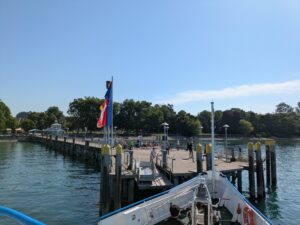
A ship leaves port. A rice plant grows differently from the others. A hollyhock continues upward into the wind.
At first, these observations had little to do with one another. One belonged to navigation, another to a field, and the third to the question of how a growing structure carries increasing loads. Only later, while thinking about the development of international assignees, did they begin to converge around the same question: what happens when a person enters an environment that no plan can fully anticipate?
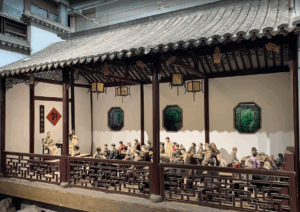
At the Dresden Transport Museum, I encountered the Wanderbuch of Adam Balz, a journeyman saddler. It recorded a period in which travelling was part of learning a trade. Young craftspeople left familiar places, worked elsewhere and acquired knowledge through movement and practice.
Modern organizations have far more elaborate systems for developing people. Careers can be planned. Employees can rotate through functions, receive training, take on projects and be prepared for international assignments. Language courses, intercultural preparation, relocation and family arrangements can all begin before departure. Yet preparation can only prepare departure.
Once the plane lands, a person enters more than a position. Colleagues appear. Relationships begin. Headquarters continues to make demands while the local organization develops its own rhythm. Housing, language, family life and the experience of living in an unfamiliar city become part of the assignment. A planned route still exists. But reality has entered it.
This is where the difference between a route and a track becomes useful. A route indicates where a ship intends to go. A track records where it actually travels once wind, current, waterways and surrounding traffic become part of the journey. Organizations can plan the route. They cannot draw every track in advance.
A Deviation Is Not Yet a Failure
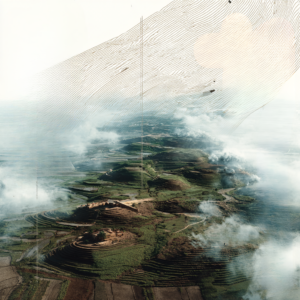
While writing about Yudao Yanzhihong, a red rice variety that emerged from a mutation, I became interested in what happens when something does not follow the expected form. The unusual plant was not immediately removed simply because it was different. It was observed. Only after observation came judgment and selection.
A ship raises a similar question. When its actual track begins to differ from its planned route, the difference itself does not yet explain what has happened. Something may need correction. But wind and current may also be acting on the vessel. Before deciding what to change, we first need to understand the forces that produced the deviation.
International assignments are no different. An employee may change the way they work. Their relationship with headquarters may shift. New local relationships may emerge. Their understanding of their own capabilities may also change. The immediate organizational response can be tempting: perhaps the person needs more intercultural training, better communication skills or stronger adaptation. But difference is not yet a diagnosis.
Adjustment itself has several dimensions. Someone may function well at work while still struggling to enter everyday local life. Another person may feel comfortable in the city while still searching for a workable position inside the organization. Navigation therefore offers a better first question than correction: Where are we now?
Positioning does not prove that a ship has gone wrong. It establishes where the ship actually is, so that the next decision can be made from reality rather than from the original plan. Before sending the sailor back to another intercultural training course, perhaps we should first ask where the wind is coming from, which way the current is flowing—and who actually needs to adjust.
Growth Creates New Loads
The hollyhocks led me to a different question. When my friend An Qinglong first sent me photographs of them, I noticed the flowers. They opened one above another along tall stems. Later, after studying ship structures, I began to notice something else: every new stage of growth also changes what must be carried.
A plant does not simply become taller. New stems, leaves and flowers add weight. Wind introduces external forces. As the plant grows, its load-bearing relationships change. A ship does not survive its loads because one piece of steel is strong enough to endure everything alone. Forces are received, transferred and distributed through a structure. Growth can be understood in much the same way.
When someone develops through an international assignment, we tend to notice the gains. They learn to operate in another language, understand different working practices, build cross-cultural relationships and handle more complex problems. But new capability often brings new loads.
Someone who can coordinate more relationships may be asked to coordinate more. Someone who understands both headquarters and the local organization may find themselves standing between the two. Someone who can solve problems independently may receive greater responsibility. Growth is not a stress test.
The question is not simply how much more a capable person can endure. The question is how new responsibilities, relationships and expectations are carried once they enter the structure. If responsibilities increase, does authority change with them? If coordination becomes more complex, do resources follow? If someone can now connect headquarters and the local organization, does the organization know how to use that capability?
A growing person changes the relationship between individual and organization. The structure must learn to grow as well.
When the Ship Returns
Every international assignment eventually ends. The project is completed. The assignment period expires. A return flight is booked. On a map, the employee has returned to the place of departure. But the person who comes back is not necessarily the person who left.
They may now understand another market, work differently, possess a new network and make judgments that would have been impossible before the assignment. Some of these capabilities fit neatly on a résumé. Others do not.
Meanwhile, the home organization has not remained still either. Managers change. Teams are reorganized. Business priorities shift. The position that once seemed obvious may no longer exist in the same form. Repatriation therefore cannot simply mean putting someone back where they were. The person has changed. The organization has changed. Returning requires both sides to reposition.
This brings career development, knowledge transfer and retention into the same question: what happens to everything that was created abroad once the person comes home? Does new market knowledge enter the next role? Do international relationships continue to matter? Is there room for the judgment developed overseas? Does knowledge brought home enter the team, or does it remain inside one person?
The value of an international assignment cannot be measured only by whether the assignment itself was successfully completed. A ship that returns to port does not erase its voyage. The waters it crossed, the winds and currents it encountered and the route it actually travelled have become part of its history. The same is true of people.
A complete approach to international assignee development is therefore not simply about sending someone abroad and later bringing them back. It is about recognizing that the journey has changed them—and finding a place where that change can remain useful.
Allow Drift, but Do Not Lose Position
At the end of this journey, I return to the three observations with which it began. The ship reminds me that a plan remains necessary, but reality requires continual positioning. The red rice reminds me that deviation should be observed before it is judged. Difference may require correction, but it may also reveal something worth understanding. The hollyhock reminds me that growth changes the structure of support. Becoming more capable does not simply mean becoming able to carry more.
And then there is the person. Someone leaves a familiar environment and enters another way of working and living. Reality becomes part of the experience. Deviations appear. New capabilities grow. Some changes need correction; others deserve to remain. Eventually, the person returns carrying something that did not exist at departure.
Human growth rarely means following a blueprint to a predetermined position. It is closer to a voyage: entering an environment, drifting from the planned line, finding one’s position again, carrying new loads, continuing to grow—and eventually returning changed.
A ship may drift without being lost. A person may change direction without having failed. The responsibility of an organization is not to prevent every deviation, but to keep understanding where the person is—and what the journey is making possible.
And after finishing this essay, I realized one more thing: two entirely innocent plants have somehow failed to escape human resource management. As for the red rice and the hollyhocks themselves, they have so far issued no statement on this cross-disciplinary use of their lives.
Across Civilizations
If Someone Returns Changed, Is There Still a Place for Them?
The ship had already returned to port. People were stepping ashore while the crew secured the lines. King Kaolie watched for a while.
“If the route has already been drawn,” he asked, “why allow the ship to drift at all?”
“Because water moves,” I replied. “And so does the wind.”
The king frowned. “Then correct the course. If you know where you are going, why not simply follow the route?”
Huang Xie laughed beside him. “Your Majesty, if everything under heaven happened exactly as planned once a route had been drawn, my work would have been considerably easier.”
The king glared at him. “I am talking about ships.”
“So am I,” Huang Xie replied.
I could not resist joining them. “People are much the same. Someone leaves a familiar place to work in another country. An organization can prepare many things in advance: language, work, housing, even arrangements for the family.”
King Kaolie nodded. “That sounds very thorough. What is the problem?”
“The problem begins after arrival,” I said. “New colleagues appear. Work changes. A family has to find a new rhythm. The original plan still exists, but reality has entered it.”
Huang Xie thought for a moment. “So leaving the original route does not necessarily mean that someone has done something wrong.”
“Exactly.”
“It may simply mean,” he continued, “that the person has actually entered another place.”
I nodded. The king remained unconvinced.
“But if everyone claims that every deviation is growth, who will follow instructions?”
“That is why judgment matters,” I said. “Not every deviation should be preserved, and not every deviation should be corrected.”
“Like the red rice?”
“Exactly. Observe first. Judge second. Then decide.”
Huang Xie looked toward the shore. “And the hollyhock?”
“That is more troublesome,” I said. “Because if someone truly grows, the problem does not end.”
King Kaolie looked surprised. “Why should becoming better create a problem?”
“Because the person can now do more, and may therefore be asked to carry more. The old position may no longer fit.”
Huang Xie smiled. “That sounds rather like government service. If someone leaves, gains ten years of experience and returns, then you place him in exactly the same position he held ten years earlier, he may not remain seated there for very long.”
The king turned immediately. “Are you criticizing me again?”
“I am merely discussing talent development.”
This time, I laughed.
The ship was alongside the quay now, and the last passengers were coming ashore. Perhaps the hardest part was never sending someone far away. It was recognizing them when they returned after living, working, judging and growing somewhere else.
King Kaolie was silent for a moment. “So the person comes back, but is no longer quite the person who left.”
Huang Xie nodded. “And the port may no longer be quite the port they left behind.”
I looked at them both. “That, I think, is the problem.”
A ship can return to its point of departure. A person cannot easily return to the self who once departed.
Perhaps genuine talent development is not about preventing people from ever drifting off course. It is about knowing how to recognize them after they have travelled, changed and returned.