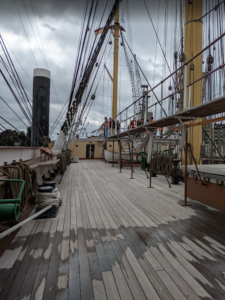
封面图说明|
一艘船的历史,
不仅写在航线、船名与运输记录里,
也藏在那些未曾留下姓名的普通人身上。
当镜头从船舶转向船上的人,
航运史便有了生活的温度。
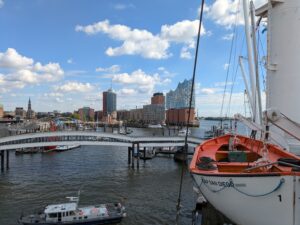
图片说明|除特别注明外,本文照片均由作者摄于2026 年 09 月 24日柏林的水路田野。
引文|船上的人间烟火
船承载的不只是货物与旅客,
还有一个家庭的一日三餐,
以及普通人走过的岁月。
 时间:2026年09月24日(四)
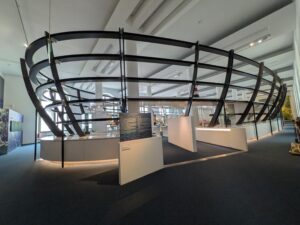
 行程|柏林 · 德意志科技博物馆航海厅
Dauerausstellung Schifffahrt | Deutsches Technikmuseum: Technikmuseum Berlin
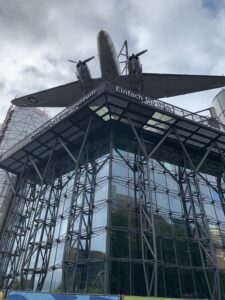
图:柏林德意志科技博物馆
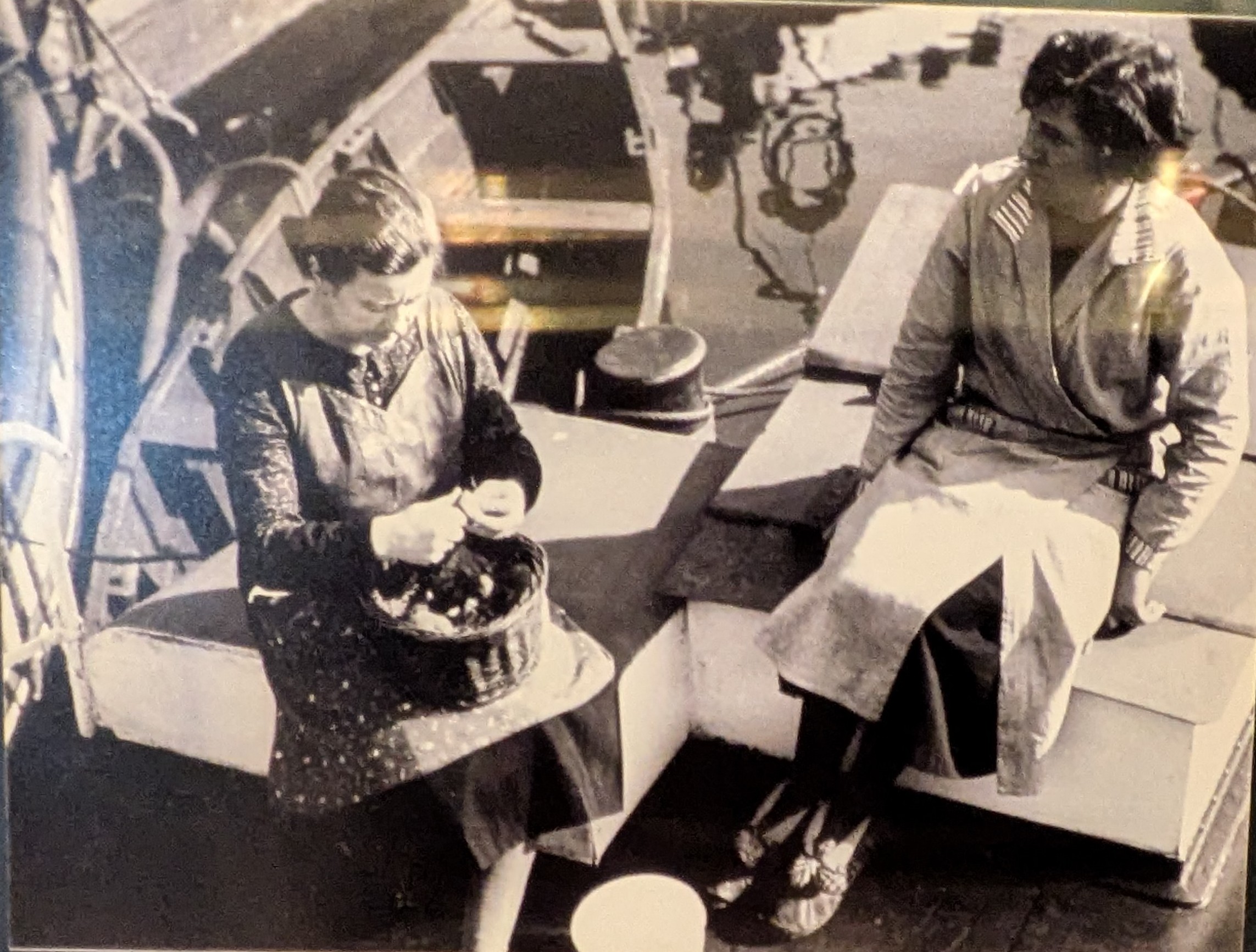
1930 年代的一张黑白照片里,
两位女性坐在船舶甲板上。
一人低头削着土豆,
另一人坐在旁边休息。
她们身后是船上的绳索与设备,
眼前却是最平凡的日常生活。
2026 年 9 月 24 日,
走进柏林德意志科技博物馆。
在船舶模型与航运史料之间,
这张照片让我停下脚步。
原来船不只是交通工具,
也是劳动、家庭与生活的空间。
航运史不只写在吨位与航线里,
也写在甲板上晾晒的衣服,
与锅里煮着的汤里。
一|以船为家:甲板上的生活与职业
河流是船员谋生的道路,
甲板是家人生活的地方,
船载着货物驶向远方,
也载着一家人的柴米油盐。
1. 为什么一家人住在船上?
在德国传统的内河航运中,
许多货船长期往返于河流与运河之间。
船员一次出航可能离家很久。
如果只是短途运输,
妻子与孩子通常留在岸上。
但遇到需要长期航行的路线,
家人便可能一起登船生活。
船不是家,
但漂久了,
家也就飘到了船上;
人类的安顿,
从来不是一块不动的地板,
而是一张能一起吃饭的桌子。
然而孩子到了入学年龄,
船上的生活便出现新的难题。
由于船舶不断更换停靠地点,
孩子难以固定在一所学校上课。
有些便寄住在亲戚家,
有些则进入寄宿学校。
2. 没有自来水的甲板生活
在 20 世纪中叶的许多内河货船上,
船舱空间狭小而且通风有限,
甚至没有自来水与电力供应。
没有宽敞的厨房与洗衣间,
烧水、洗衣和晾晒等家务,
便经常转移到露天甲板上。
博物馆展出的几张历史照片,
记录了船上的洗衣日。
妇女站在水桶与洗衣盆之间,
周围摆放着日常使用的器具。
原本用于航行作业的甲板,
也成为维持家庭生活的空间。
当技术还没有把家务,
变成按一下按钮就能完成的事情时,
生活就是在一方小小的甲板上,
用双手一点一点搓出来的。
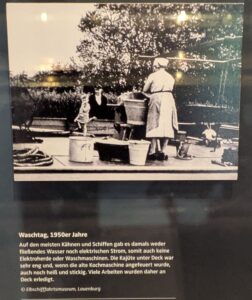
图|船上的洗衣日:甲板也是家庭的生活空间
3. 一位船长的两种职业人生
船员的生活不仅受到河流影响,
也受到季节与航运市场的限制。
Willi Zolchow (1901—1978),
出生于一个与航运有关的家庭。
1927 年取得易北河船长资格后,
他也曾从事轮机与司炉工作。
进入柏林 Stern 游船公司后,
他在夏季担任游船船长,
冬季则到 Borsig 工厂操作起重机。
博物馆保存了他的船长证书,
以及一个写着 Elite 的旧雪茄盒。
盒子里曾装着他的车票,
内侧还留下房东姓名缩写与地址。
一张证书记录职业资格,
一个旧盒子留下生活的痕迹;
历史从来不只是一组冷冰冰的数据,
它也是某个冬天里,
一个人在工厂与河流之间奔波的缩影。
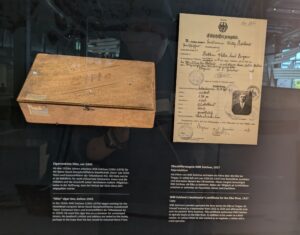
图|左侧为Willi Zolchow使用的Elite雪茄盒,右侧为1927年易北河船长资格证书复制件。
4. 船上的生活,岸上的人生
从甲板上的洗衣盆,
到船长的职业资格证书,
这些看似平凡的历史物件,
记录了航运技术之外的生活。
船舶让货物抵达目的地,
也让一些家庭拥有谋生的机会。
但河流并不能决定所有人生,
孩子需要教育,船员需要收入,
每个人都必须在航行与生活之间,
寻找属于自己的安顿方式。
二|从谋生到游乐:柏林人的水上时光
同一条河流,
有人靠它谋生,
有人乘船寻找快乐。
1. 从贡多拉到蒸汽游船
18世纪末的柏林,
乘船游览已成为市民的消遣。
人们挤在贡多拉式小船上,
伴着音乐沿施普雷河前行,
欣赏两岸的城市风景。
随着蒸汽船逐渐普及,
游船不再局限于市区河段。
航线延伸至柏林周边地区。
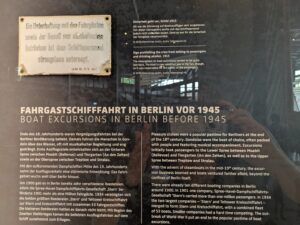
图|柏林游船业的发展
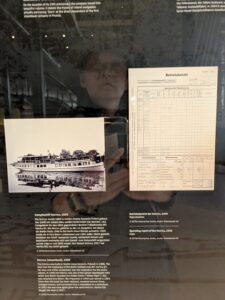
图|Dampfschiff HERTHA, 1929(HERTHA蒸汽游船)
2. Stern:一颗星星的航运事业
1888 年成立的 Stern 公司,
逐渐发展为柏林重要的游船企业。
1901 年,仅这一家公司,
就运送了超过一百万名乘客。
柏林人登船是为了游玩,
但在船上工作的人,
却依旧是在为生计忙碌。
游船上的游客欣赏沿岸风景,
驾驶舱里的船员关注航道水情;
同一条河流,
承载着两种截然不同的人生。
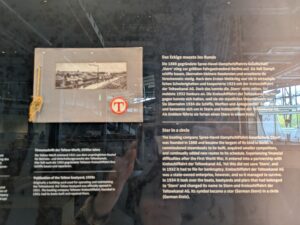
图|Stern公司的兴衰与合并
三|当桥梁断裂:船成为城市的生命线
桥梁断了,
河流仍在流动,
曾经载人游玩的船,
如今载着孩子去上学。
1. 从废墟中恢复航行
1945 年战争结束后,
柏林许多道路与桥梁被毁。
昔日用于周末游览的客船,
开始代替部分公共交通。
工人乘船前往工作地点,
孩子乘船去学校,
居民也前往郊外寻找食物。
船成为维持日常生活的重要工具。
当桥断了,
船就从“消遣”变成了“生存”;
技术的用途,
永远由最迫切的现实需求决定。
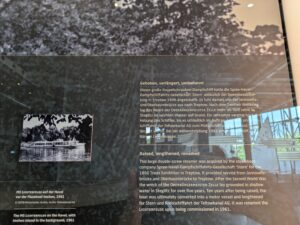
图|一艘船的第二次生命:从 Oberbürgermeister Zelle 到 Lichterfelde
2. 一条河流,两套航运体系
1948 年柏林逐渐分裂,
原有的客运船队也被分开。
东柏林发展出白色船队,
西柏林则重建自己的航运。
直到德国重新统一以后,
分隔多年的航运企业才再次合并。
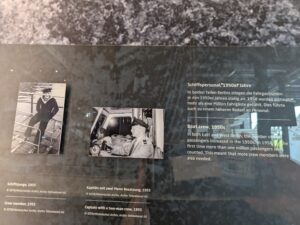
图|战后柏林的船员:恢复中的城市客运
尾声|一艘船,载着多少人间烟火
载着货物穿过河流,
也载着人们走过岁月,
航程终有抵达的一天,
生活却在每一次靠岸后继续。
从甲板上的洗衣盆,
到船长珍藏的旧雪茄盒。
从柏林人乘坐的观光游船,
到战后孩子上学的水上交通。
船舶可以用长度与吨位衡量,
航运可以用航线与客流量记录。
但那些无法写进技术参数的日常,
同样构成了航运历史的一部分。
船可以记下航程,
历史可以记下年代;
而真正让人记住的,
往往是有人在船上,
认真准备着一顿晚饭。
人类造出了钢铁与蒸汽的巨兽,
但最终让这巨兽有了温度的,
是在甲板上削着土豆的那双手。
楚人对话后记|考烈王、黄歇与令尹夫人的观后感
船上的一日三餐
走进柏林德意志科技博物馆,
考烈王停在一张黑白照片前。
望着甲板上的洗衣盆与水桶,
他转头问黄歇:
“这艘船不是用来运货的吗?
怎么连洗衣服的地方,也搬到船上来了?”
黄歇笑着回答:
“大王,船行千里,船夫总不能不吃饭、不换衣。
若是妻儿随船同行,甲板自然也成了家。”
考烈王又看见一张船长证书,
旁边放着一只旧雪茄盒。
他不禁觉得奇怪:
“既然已经当上船长,
为何冬天还要去工厂开起重机?”
我笑着解释:
“大王,游船有淡旺季,船长也得养家糊口。
夏天在河上掌舵,冬天到工厂谋生,
都是为了把日子过下去。”
考烈王点点头,
走到战后柏林的展板前。
听说桥梁毁坏以后,
孩子们竟然乘船去学校,
忍不住感叹:
“我们楚人以舟楫渡江,
这里的人却靠船上学。
看来不管相隔多少年,
百姓总有办法过日子。”
黄歇望着那些旧照片:
“大王,河流有时阻隔两岸,船却能让人重新往来。
有人要上学,有人要工作,
有人只想赶回家吃顿饭。”
考烈王想起第一张照片:
“令尹夫人,那位坐在甲板上削土豆的妇人,
忙了半天,晚饭究竟煮好了没有?”
我忍不住笑了:
“大王,这个博物馆没有记载。
不过我想,不论船驶向哪一条河流,
总有人等着锅里的饭熟。”
考烈王大笑:
“好!船可以慢慢开,饭可不能一直等!
我们回去吃饭!”
黄歇拱手笑道:
“大王,臣这就去看看,
今日厨房里,可还有一锅热藕汤。”
两千多年前,楚人驾舟穿行江河;
两千多年后,经历第二次世界大战的柏林人,
依然乘船上学、工作与旅行。
河流两岸的生活各不相同,
但对一顿热饭、一个安稳的家的牵挂,
却始终相似。
离开展厅时,
我又回头看了一眼,
那位低头削土豆的妇人,
依然静静坐在甲板上。
船可以记下航程,
历史可以记下年代,
而真正让人记住的,
往往是有人在船上,
认真准备着一顿晚饭。
江风吹过展柜,
那些旧照片依然安静。
但锅里,似乎还有热气在升腾。
Appendix|English Narrative Overview
Beyond Transportation: How Shipping Transformed Everyday Life | Deutsches Technikmuseum Berlin
The Everyday Life Hidden in Maritime History
In a black-and-white photograph from the 1930s, two women sit on the deck of a vessel. One is peeling potatoes, while the other rests beside her. Behind them are ropes and equipment associated with the work of shipping. Yet the scene itself has little to do with navigation, cargo or engineering. It captures something far more ordinary: the preparation of a meal.
On 24 September 2026, while visiting the Deutsches Technikmuseum in Berlin, I stopped before this photograph. Surrounded by ship models, historical documents and technical exhibits, I found myself looking not at a vessel but at the people who had lived aboard it. Maritime history is often told through tonnage, trade routes and technological progress. Yet ships were also places where families cooked, washed clothes, raised children and struggled to earn a living.
The history of shipping is written not only in routes and cargo records, but also in clothes drying on deck and meals simmering in a pot.
When a Ship Becomes a Home
For many families involved in traditional German inland shipping, the boundary between workplace and home was never clearly defined. Cargo vessels travelled along rivers and canals, sometimes keeping their crews away from home for extended periods. On longer voyages, wives and children might accompany the men aboard. A ship designed to transport goods could therefore become a family’s temporary or long-term living space.
This arrangement brought practical difficulties. Children of school age could not easily attend the same school when their family’s vessel constantly changed location. Some stayed with relatives, while others attended boarding schools. The mobility that provided a family with its livelihood could also make ordinary family life difficult to organise.
A ship may not have been built as a home, but after enough journeys, home could find its way aboard. What makes a home is not always a floor that stays still, but a table around which people can eat together.
Daily domestic work also demanded considerable effort. On many inland vessels in the mid-twentieth century, living quarters were cramped and modern utilities were limited or absent. Cooking, heating water and washing clothes required physical labour. Historical photographs displayed in the museum show women working with buckets and washbasins on deck. The same space used for navigation and cargo operations became a place for maintaining everyday life.
Before household work could be completed at the touch of a button, everyday life was washed, scrubbed and sustained by human hands on a small patch of deck.
A Captain Between the River and the Factory
The museum also preserves the story of Willi Zolchow (1901–1978), whose working life reveals the uncertainty of maritime employment. Born into a family connected with river transport, Zolchow obtained his captain’s qualification for the Elbe in 1927. He also worked in engine-room and stoking duties before joining Berlin’s Stern passenger-shipping company.
His employment followed the seasons. During the summer, he captained excursion vessels carrying passengers along Berlin’s waterways. In winter, when demand for leisure cruises declined, he worked as a crane operator at the Borsig factory. His life was therefore divided between the river and the industrial workplace, between steering a vessel and operating heavy machinery.
Among the objects preserved in the exhibition are his captain’s certificate and an old Elite cigar box. The box had been used to store tickets, and its interior retained initials and an address associated with his landlord. These modest objects tell a story that official employment records alone could never fully convey.
A certificate records a professional qualification; an old box preserves the traces of a life. History is not merely a collection of dates and figures, but also the story of someone travelling between a factory and a river on a winter’s day.
When the River Became a Place of Leisure
Berlin’s waterways were not only routes for commercial transport. By the late eighteenth century, boat excursions had already become a form of urban recreation. People travelled in gondola-like boats, enjoyed music and observed the city from the water. As steam-powered passenger vessels developed, excursions extended beyond central Berlin to the surrounding lakes and waterways.
The growth of passenger shipping created new businesses and new forms of leisure. Stern, founded in 1888, became an important operator in Berlin’s excursion-boat industry. In 1901 alone, the company transported more than one million passengers. Its history also reflected the commercial uncertainties of the industry, including financial difficulties and later restructuring.
For passengers, a boat trip offered relaxation, fresh air and a different view of the city. For the crew, however, the same journey represented working hours, responsibility and income. While tourists admired the scenery, those operating the vessel had to pay attention to navigation, water conditions and the practical demands of transporting people safely.
Passengers watched the scenery; the crew watched the water. The same river carried two very different ways of life.
When Broken Bridges Made Ships Essential
The meaning of passenger shipping changed dramatically after the Second World War. In 1945, much of Berlin’s transport infrastructure lay damaged or destroyed. Roads and bridges were no longer reliable connections between parts of the city. Vessels once associated with weekend excursions became essential to everyday mobility.
Workers travelled by boat to their workplaces, children used boats to reach school, and residents travelled towards surrounding areas in search of food. The river remained a possible route when other connections had been interrupted. What had once been a leisure service could suddenly become part of the city’s survival.
The museum also documents the changing identity of individual vessels, including the passenger ship originally named Oberbürgermeister Zelle, later known as Lichterfelde. Such histories demonstrate how ships can outlive the circumstances for which they were originally built. Their names, uses and operating environments may change, while the vessels themselves continue to serve new generations.
When bridges collapsed, boats changed from a means of recreation into a means of survival. The most urgent needs of everyday life gave familiar technology a new purpose.
Berlin’s political division subsequently reshaped passenger shipping once again. As the city became divided, its existing fleets and operating structures were separated. East Berlin developed its own passenger-shipping services, including the familiar white fleet, while West Berlin reorganised its waterways and operators. German reunification eventually opened the way for previously separated shipping organisations to come together again.
Through these transformations, the river remained part of the city’s daily life. The boats changed their functions, companies and names, but people still needed to reach schools, workplaces and homes.
The Human Stories Behind the Ships
The exhibits at the Deutsches Technikmuseum reveal a maritime history that cannot be understood through engineering alone. A washbasin on deck tells us about domestic labour. A captain’s certificate tells us about professional identity. An old cigar box preserves traces of a working man’s movements. An excursion vessel tells one story when carrying tourists and another when transporting schoolchildren through a damaged city.
Ships can be measured by length, displacement and capacity. Shipping networks can be described through routes, schedules and passenger numbers. Yet these measurements do not fully capture the experiences of the people who depended on them.
Humanity built great vessels of steel and powered them with steam, but what gave those machines a human warmth was the pair of hands peeling potatoes on a quiet deck.
The photograph that first caught my attention remained with me throughout the exhibition. It reminded me that the history of technology is also the history of how people organise their lives around it. A vessel carries goods and passengers, but it can also carry a family through changing seasons, a worker towards employment or a child towards school.
A ship can record a voyage, and history can record an era. Yet what stays in our memory may simply be someone aboard, carefully preparing an evening meal.
Across Civilizations
The Evening Meal on Deck
Inside the Deutsches Technikmuseum in Berlin, King Kaolie of Chu stopped before a historical photograph. He examined the buckets and washbasins arranged on a ship’s deck and turned towards Huang Xie, his chief minister.
“Is this not a vessel built to transport goods?” the king asked. “Why have they brought their laundry aboard as well?”
Huang Xie smiled. “Your Majesty, a boatman travelling a thousand miles must still eat and change his clothes. If his wife and children travel with him, the deck naturally becomes part of their home.”
The king moved towards another display, where a captain’s certificate lay beside an old cigar box. He studied the objects with growing curiosity. “If this man was already a captain, why did he have to operate a crane in a factory during winter?”
“Your Majesty,” I explained, “passenger shipping was seasonal. A captain still had a family to support. In summer, he steered a vessel along the river. In winter, he earned his living at a factory. Both jobs helped him keep his household going.”
King Kaolie nodded and continued towards the exhibition on postwar Berlin. When he learned that children had travelled to school by boat after bridges had been destroyed, he looked genuinely surprised.
“We people of Chu crossed rivers in boats,” he said. “But here, people even used them to reach school. It seems that no matter how many centuries pass, ordinary people always find ways to carry on with their lives.”
Huang Xie looked at the historical photographs. “Your Majesty, a river may separate two shores, but a boat allows people to meet again. Some need to attend school, some must go to work, and others simply want to return home in time for dinner.”
The king suddenly remembered the first photograph. “Lady Lingyin, tell me something. That woman peeling potatoes on the deck—did she ever finish preparing the evening meal?”
I laughed. “Your Majesty, the museum does not tell us. But I imagine that wherever a boat is travelling, someone is waiting for the food in the pot to be ready.”
The king burst into laughter. “Excellent! A boat may travel slowly, but dinner cannot wait forever. Let us return and eat!”
Huang Xie bowed with a smile. “Your Majesty, I shall go and see whether there is still a pot of hot lotus-root soup waiting in the kitchen.”
More than two thousand years ago, the people of Chu travelled along rivers in wooden boats. More than two thousand years later, Berliners relied on vessels to reach schools, workplaces and destinations across their city, particularly in the difficult years following the Second World War. Their circumstances were very different, but the desire for a warm meal, a secure home and a way to support one’s family remained remarkably familiar.
As we left the exhibition, I looked back once more at the woman peeling potatoes. She was still sitting quietly on the deck, preserved within the old photograph. The ships, the cities and the centuries had changed, yet that small domestic scene seemed to connect them all.
A ship may preserve the memory of a voyage, and history may preserve the passing of centuries. But what remains most deeply human is the thought of someone aboard, preparing dinner while the river continues to flow.
The photographs remained silent behind the museum glass. Yet somewhere in the imagination, a pot was still simmering, and the evening meal was almost ready.
📜 延伸阅读
🤖 人工智能协作声明
本文的主题选择、田野调查、资料搜集、核心观点与中文原始内容,均由作者独立完成。创作过程中,作者与人工智能模型,进行持续协作,包括多轮讨论、思路推演、节奏输出、部分翻译、英文 Narrative Overview 生成、语言检查、结构检测与文字润饰。
人工智能在此过程中,作为创作协作者,参与内容发展与语言表达,但不作为法律意义上的作者或著作权主体。所有 AI 协作产生的内容,均由作者依据田野资料、原始文献与中文母稿,进行选择、审校、修改与艺术化重构。文章的叙事方向、内容取舍、创作决策、最终表达与价值判断,均由作者决定并负责。
📜 本站所有原创作品均已完成区块链存证,确保原创凭证。部分重点作品另行提交国家版权登记,作为正式法律备案。原创声明与权利主张已公开。完整说明见:
👉 原创声明 & 节奏文明版权说明 | Originality & Rhythm Civilization Copyright Statement – NING HUANG
节奏文明存证记录
本篇博客文为原创作品,由黄甯与 AI 协作生成,于博客网页首发后上传至 ArDrive 区块链分布式存储平台进行版权存证:
- 博客首发时间:2026年11月01日
- 存证链接:bb109971-2a22-4c26-beb7-6a131d9a3dc8
- 存证平台:ArDrive(arweave.net)(已于 2026年11月01日上传)
- 原创声明编号:Rhythm_Archive_01_Nov_2026/how-shipping-transformed-everyday-life-berlin
- 用途声明:本文为《节奏文明观》之篇章,亦参与构建《AI×非遗文明共构档案》与《文明节奏回声计划》,用于文明节奏实地记录、区块链存证、跨域协作与版权登记用途。
© 黄甯 Ning Huang, 2026. All Rights Reserved.
本作品受版权法保护,未经作者书面许可,禁止复制、改编、转载或商用,侵权必究。
📍若未来作品用于出版、课程、NFT或国际展览等用途,本声明与区块链记录将作为原创凭证,拥有法律效力。