How Hamburg Became Hamburg | From the Elbe to a World Port
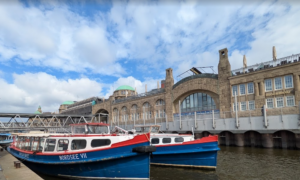
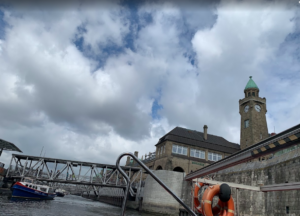
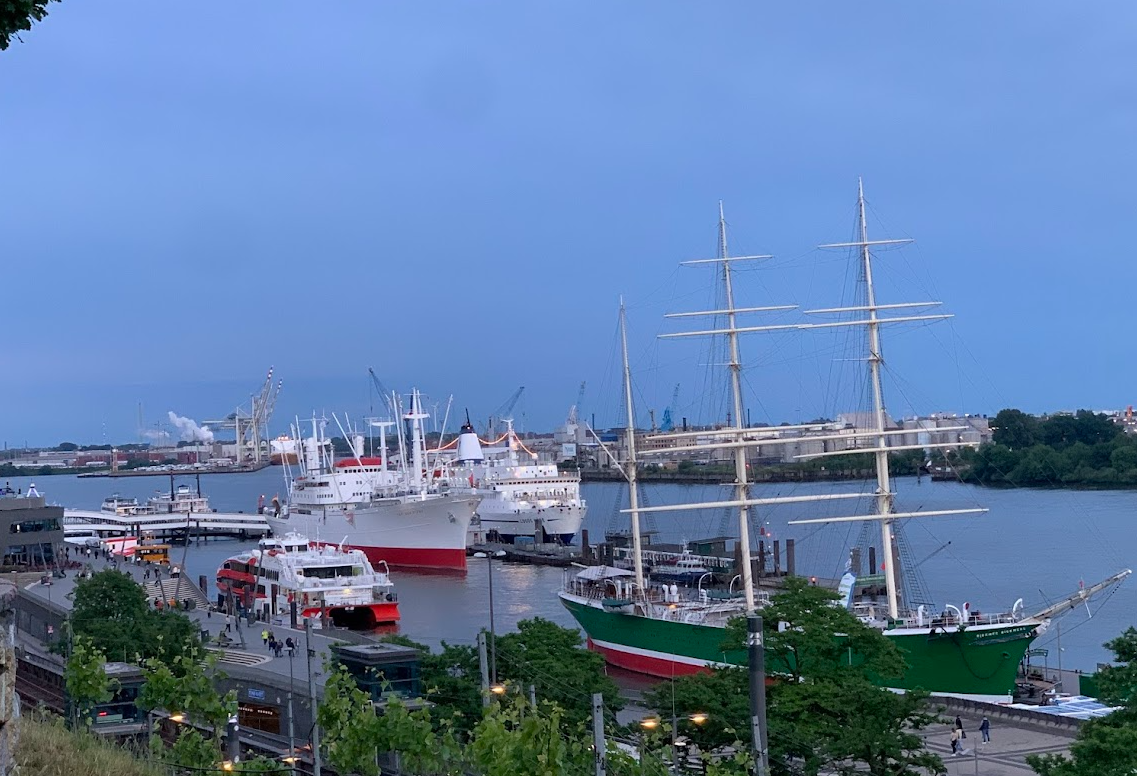
The boat pulls away from St. Pauli Landungsbrücken, and Hamburg begins unfolding across the water — Speicherstadt, cargo ships, gantry cranes, canals, quays, the Elbphilharmonie, each landmark appearing in sequence along the same river that ties them all together.
Sitting on deck, watching the banks slide past, one question kept returning to me: Germany has no shortage of river cities. Why did this particular one become a world port? By the time the boat reached open water, I understood: Hamburg didn’t choose the port. The port chose Hamburg.
Long before any harbor existed here, there was only a river. The Elbe flows from Central Europe to the North Sea, linking inland territory to open ocean. Hamburg’s earliest port emerged as far back as the ninth century, and by the twelfth century, the settlement at the meeting point of the Elbe and Alster had grown into a gathering place for merchants and ships. For medieval traders, the river wasn’t scenery — it was infrastructure. Goods moved inland along it, and out to the North Sea and beyond. Hamburg’s tourism board calls the city “the gateway to the world,” and standing on the water, the phrase makes immediate sense: long before any port structure was built, the Elbe had already connected Hamburg to the rest of the world.
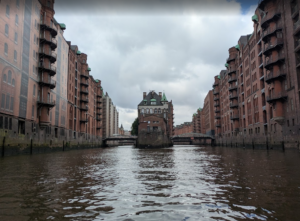
As trade expanded, cargo arriving from around the globe — coffee, tea, spices, cocoa, rubber, carpets — needed somewhere to be sorted, stored, and forwarded. Quays alone weren’t enough. In the late nineteenth century, Hamburg built Speicherstadt, a vast warehouse district on the former islands of Kehrwieder and Wandrahm, forming a key part of the city’s free-port system. Each warehouse connected to a waterway on one side and a road on the other; barges could unload directly, with cargo hoisted by winch to storage floors above. From the water today, Speicherstadt looks quiet and elegant, its red-brick facades reflected in the canals. But before the warehouses existed, this was a residential neighborhood. Roughly twenty thousand people were displaced to make way for the free port and its warehouses. Prosperity arrived — and it reshaped the city that received it.
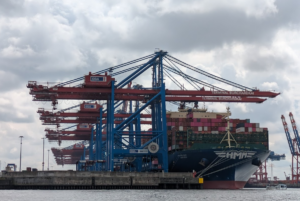
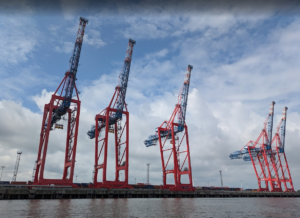
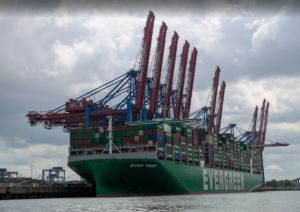
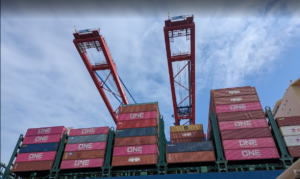
Continuing downstream, the scenery shifts again. Speicherstadt recedes; taller cranes, bigger container ships, and ever-expanding terminals take its place. Hamburg’s rise to major world port wasn’t simply a matter of having a river — it depended on continuously growing alongside global trade itself, adapting through the eras of sail cargo, ocean liners, and now ultra-large container vessels. As cargo volumes outgrew traditional docks, new container terminals like Burchardkai extended along the Elbe, their towering cranes lifting containers one after another, the moored container ships looking less like vessels than floating cities.
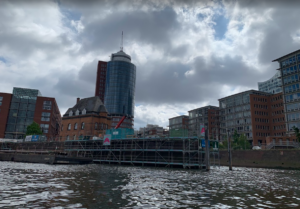
According to Hamburg’s tourism authority, the port ranks among the world’s top twenty, is Germany’s largest seaport, and is Europe’s third-largest after Rotterdam and Antwerp. In 2022, Hamburg handled roughly 119.9 million tonnes of seaborne cargo, including about 8.3 million TEU of containers and 36 million tonnes of bulk goods. That same year, around 3,500 container ships, 1,423 general cargo vessels, and 85 cruise ships called at the port. Passing Burchardkai by boat, what comes into view isn’t simply a few large ships — it’s a continuously operating node in a global logistics network. Nearby, HafenCity keeps expanding, the Elbphilharmonie rises along the bank, and the cruise terminal welcomes travelers from around the world. Cargo, capital, passengers, information, and culture all flow into Hamburg along the same river — and back out toward everywhere else.
From the Elbe to the North Sea, and from the North Sea to the world, Hamburg became something more than a port city: a gateway connecting Germany to the rest of the globe.
Across Civilizations
As the boat eased back toward St. Pauli Landungsbrücken, a container ship moved steadily toward the North Sea in the distance, gantry cranes still lifting cargo along the quay.
King Kaolie watched the water. “Chu had its great rivers too. Ying itself was once a port city. I never imagined a harbor could grow to a scale like this.”
Lord Chunshen Huang Xie nodded. “I’ve been counting, these past few minutes.”
“Counting what?” the King asked.
Huang Xie looked toward the distant container terminal. “Where these ships came from, and where they’re going. Chu’s ships mostly moved between rival states. These ships move through the entire world.”
I smiled. “That’s why people in Hamburg call this the gateway to the world.”
Huang Xie considered this. “To me, it looks more like a crossing point.”
King Kaolie looked surprised. “A crossing point?”
Huang Xie nodded. “Goods cross from here into the world. And the world crosses from here into Germany.”
A container ship in the distance slowly turned into the shipping channel.
King Kaolie watched it. “No wonder Hamburg became Hamburg.”
Huang Xie looked out at the Elbe and said quietly, “Ports change. Ships change. But as long as the water keeps flowing, someone will always keep following it forward.”
The three of us stood in silence, looking out at the river. Gulls rose and settled over the water. Cargo ships moved on — toward the North Sea, and toward the rest of the world.

 时间|2026年6月6日 (六)
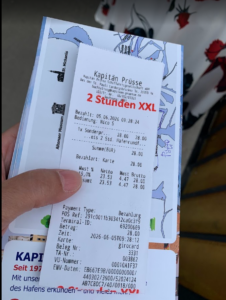
  行程|汉堡 • 港口巡航船两小时