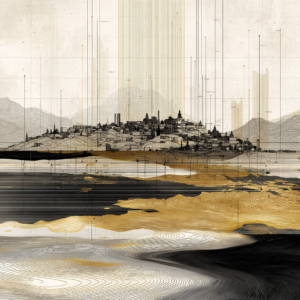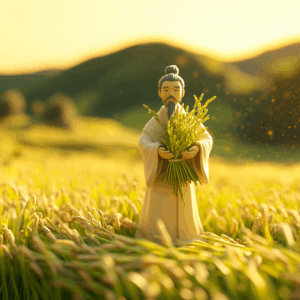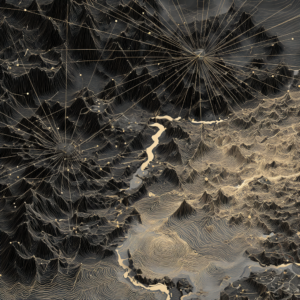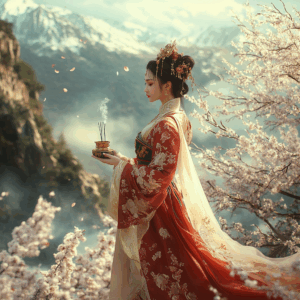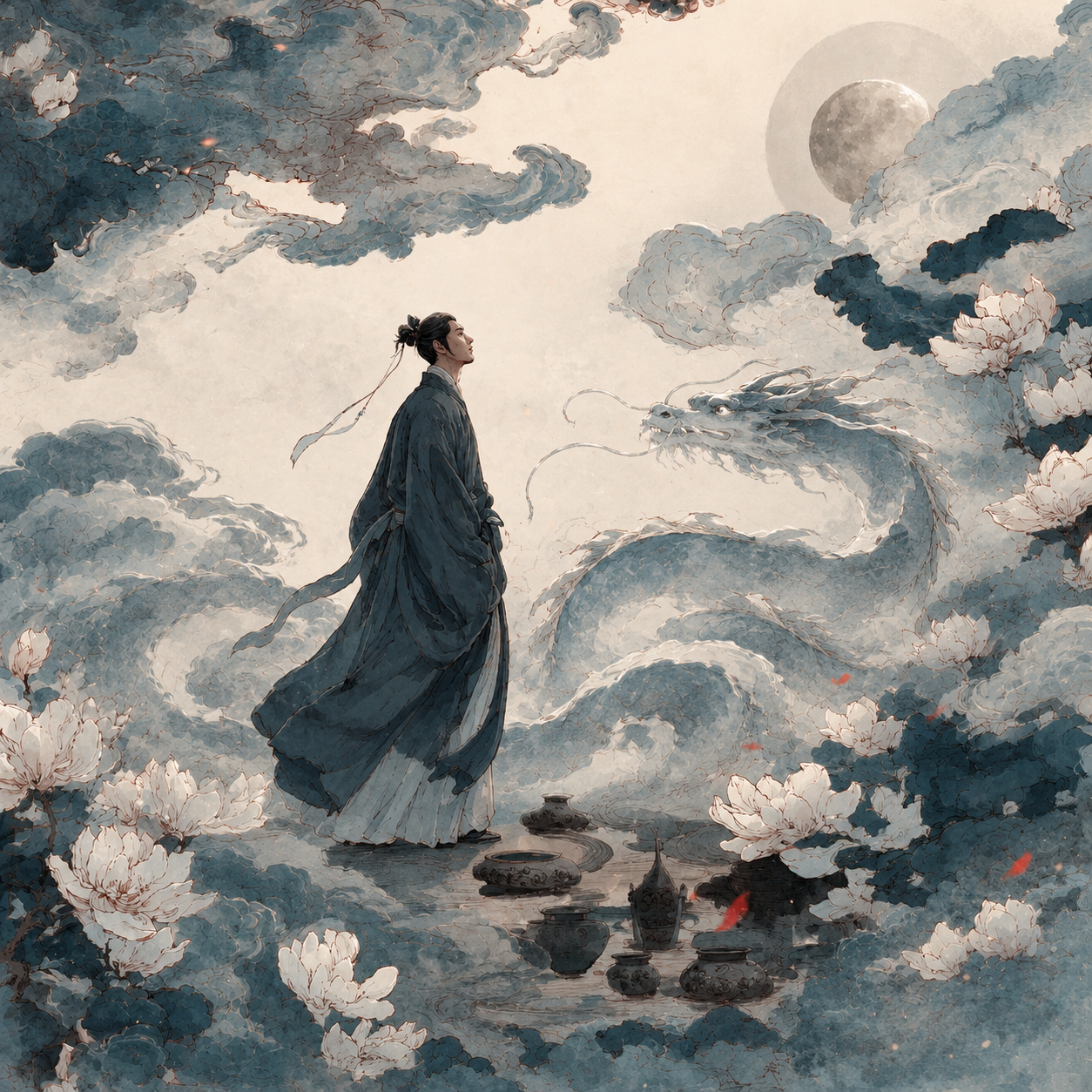
封面图说明|
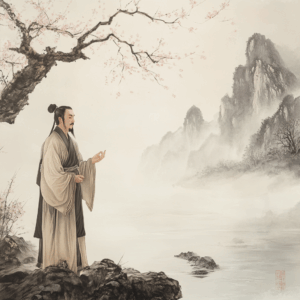
屈原佩兰而行,乘龙远游,
穿越昆仑云海与神话天门。
故国渐远,理想未灭,
漫漫长路,求索不止。
图片:原创数字插画。
引文|当理想无处安放,人该往哪里去?
「路曼曼其脩远兮,吾将上下而求索。」
当一个人无法改变时代,是否仍能选择不改变自己?
两千三百多年前的楚国,
一位诗人站在时代的裂缝之间。
他以香草象征高洁的品格,
却无法让自己的理想被君王理解。
他出身楚国贵族,怀抱美政理想,
希望君王任用贤能,遵循正道,
却在现实政治中屡遭排斥与误解。
忠诚换不来信任,
正直反而成为被攻击的理由;
一个坚持清白、不愿随俗的人,
究竟该如何面对自己的命运?
《离骚》正是从这样的困境展开,
将个人身世、政治理想与生命追问,
交织成一部长篇抒情诗。
2025 年 7 月 10 日,
我完成了《离骚》全篇四首 AI 谱曲。
到了 2026 年冬天,
我重新回到这些已经谱曲的文字。
这一次,我不再只关注文字如何歌唱,
而是追问这些诗句为何能够流传至今。
也许《离骚》留下的真正问题,
并不是一个人最终走到了哪里,
而是当理想无法在现实中实现,
他是否仍愿意守住最初的自己。
一|从香草美人到乘龙远游:《离骚》如何书写理想与命运?
当现实无法容纳一个人的理想,
他为何宁愿远行九天,也不愿改变自己?
1|内美与修能:屈原为何以香草象征人格?
「纷吾既有此内美兮,又重之以脩能。」
《离骚》开篇并未诉说悲伤,
而是从诗人的身世开始。
屈原自称高阳氏的后裔,
父亲名为伯庸。
父亲为他取名「正则」,又赐表字「灵均」。
然而,出身并非人格的全部。
诗人虽然拥有先天的美质,
仍然需要不断修养自身。
这便是「内美」与「脩能」的关系:
前者是与生俱来的美好禀赋,
后者是后天的修养与才能。
于是,诗人走进草木之间,
采集江离、辟芷与秋兰,
将芬芳植物编织成佩饰,
使看不见的德行获得具体形象。
香草不是装饰,
是屈原把“我是谁”这个问题,
戴在了身上。
2|忠诚与美政:为何贤者无法改变政治?
在屈原所描绘的政治世界里,
君王不仅是权力的拥有者,
更应当承担治理国家的责任。
他回望传说中的古代圣王,
赞美尧舜遵循正道的德行,
又以夏桀、商纣作为反面例证。
然而,现实中的楚国朝廷,
并未按照诗人的理想运转。
结党营私与谗言逐渐蔓延,
正直之士反而难以获得信任。
「亦余心之所善兮,
虽九死其犹未悔」——
这不是对痛苦的赞美,
而是面对现实压力时,
仍不愿放弃内心认可的价值。
3|女嬃、重华:谁能理解屈原?
「众不可户说兮,孰云察余之中情?」
在漫长的政治失意之后,
《离骚》忽然出现一位女性:女嬃。
她并非天界神女或爱情对象,
而是向屈原提出劝诫的人。
她所提出的劝告十分现实:
既然世人不愿理解你的坚持,
又何必独自守着高洁的品格?
女嬃并非完全否定屈原,
她更像一位忧虑亲人的劝说者。
然而,屈原无法接受这样的退让。
他渡过沅水与湘水,
向南寻找传说中的重华,
试图向他陈述自己的政治理想。
女嬃劝他顺应世俗,
屈原却向重华陈述理想;
一边是现实的劝诫,
一边是古代圣王的典范——
他仍然选择坚守自己的志向。
4|昆仑、宓妃与巫咸:楚人的神话世界
当现实政治无法回应理想,
屈原开始转向神话中的天地。
诗人驾起玉虬,乘坐凤鸟之车,
清晨从苍梧启程,傍晚抵达县圃。
他又命羲和缓行、望舒引路,
鸾皇与凤鸟传递消息,
雷师也加入这场天界远行。
然而,即使来到天界门前,
诗人仍然遭遇现实般的阻碍:
帝阍倚靠天门而不肯开启。
他前往春宫折取琼枝,
又命丰隆驾云寻找宓妃。
但宓妃虽美,却未能成为理想的归宿。
他找遍了天界,
帝阍不开门,
宓妃不回应;
原来人间的隔阂,
早已延伸到了天上。
5|乘龙诀别:为何远行之后仍然回望故乡?
在《离骚》最后的神话远行中,
诗人终于决定离开故国。
车驾穿过昆仑的云雾,
凤皇展开双翼护卫云旗,
飞龙载着车驾穿越流沙。
然而,就在旅程接近高潮时,
一个出乎意料的转折出现:
诗人从高处俯视大地,
忽然看见自己熟悉的故乡。
仆人因思念故土而悲伤,
连马匹也蜷曲回望、不肯前行。
他可以离开楚国的疆土,
却无法轻易割断内心的牵挂;
壮丽的神话,
最终败给了一次回望。
二|让《离骚》重新成为歌声:2025年夏天的AI谱曲实验
当两千三百多年前的文字,
重新化为歌声,
古老的楚辞,
便有了另一种被聆听的可能。
2025 年 7 月 10 日,
我完成了《楚辞·离骚》四部曲。
这次创作保留所选文本的原文顺序,
逐句整理汉语拼音,
再交由 SUNO AI 尝试生成旋律。
然而,古代汉语并不容易歌唱。
生僻字、通假字与复杂的句式,
经常使 AI 出现误读或漏唱。
1|内美自修 · 承古立志(第1–83句)
这首歌曲最令我意外:
第三版生成便获得可用的结果,
整首歌曲的文字发音没有发现重大错误。
对于充满古字的《离骚》而言,
能够第三版就唱对,
是难得的运气;
但运气只来一次,
后面的三首,
全靠硬磨。
《楚辞·离骚》|内美自修 · 承古立志
2|灵修幻影 · 美政受阻(第84–178句)
第二首进入屈原的政治困境,
从灵脩不察、众女嫉妒开始。
女嬃的出现带来另一种声音,
屈原则渡过沅湘、南行陈辞。
面对世俗不断改变的规则,
诗人仍然坚持清白与修养,
即使不被理解、屡遭责难,
也不愿以迎合换取个人安稳。
《楚辞·离骚》|灵修幻影 · 美政受阻
3|幻梦破碎 · 求索无门(第179–291句)
这一段的 AI 谱曲尤其困难。
SUNO 曾数度无法正常生成歌曲,
有时只输出约 0.3 秒的片段,
甚至一度唱出偏向粤语的风格。
AI 能唱出声音,
却未必读得懂《离骚》;
0.3秒的沉默,
比任何错音都更像“求索无门”。
《楚辞·离骚》|幻梦破碎 · 求索无门
4|终焉之佩 · 乘龙诀别(第292–352句)
最后一首从芳草变质写起。
诗人感叹世俗不断改变,
也更加坚定远离浊世的决心。
然而,当诗人登高回望时,
熟悉的故乡忽然出现在眼前。
四首歌走完《离骚》,
从内美到远游,
从远游到回望;
屈原没有走到终点,
歌声也没有。
《楚辞·离骚》|终焉之佩 · 乘龙诀别
尾声|谁还在寻找知音?
知音难寻,
或许是千古不变的困境;
但真正的求索,
不应因无人理解而停止。
两千三百多年前的楚国,
屈原在忠诚与失望之间徘徊。
他以香草寄托高洁的品格,
以神女象征理想中的遇合,
又向古代圣王与神灵求问。
然而,神话中的天地再辽阔,
也无法消除人间的隔阂。
即使乘龙远行,
遍访四方,
他仍然无法割舍自己的故乡;
走得越远,
越知道自己回不去。
两千三百多年后的今天,
人类社会早已发生巨大变化。
但人与人之间的理解困境,
似乎并未随着文明进步而消失。
《离骚》没有提供一条成功的捷径,
也没有保证坚持必然获得回报;
它只是让后人看见理想与现实的距离。
屈原没有找到理想中的美政,
却留下了不肯停止求索的文字;
两千三百多年后,
我们仍然走在各自的漫漫长路上。
知音未必总能在当下出现;
有些声音,
要在另一个时代,
才终于被听见。
楚人对话后记|考烈王、黄歇与令尹夫人的观后感
屈大夫难伺候,SUNO更难伺候!
2026年冬天,我打开电脑,
请考烈王与春申君黄歇,
一起欣赏《离骚》四部曲,
看屈大夫如何乘龙遨游九天。
考烈王听得津津有味,
看到屈原寻访宓妃、求问巫咸,
最后竟然驾着八龙远行,
忍不住问黄歇:
「春申君,屈大夫真有本事!
在人间找不到知音,
竟然跑到天上去找。
可他找遍神女与巫师,
怎么还是没有结果?」
黄歇微微一笑:
「大王,若是人心不能相通,
即使寻遍九天神灵,
又如何能够找到知音?」
我在一旁忍不住插嘴:
「大王,屈大夫已经够难伺候了,
可是SUNO比他还难伺候!
我教它唱了几十遍,
它竟然只唱出零点三秒,
有时还给我唱成粤语!」
考烈王顿时拍案大笑:
「寡人终于明白了!
屈大夫当年无人肯听,
如今有人愿意替他唱,
机器却又不肯开口!」
黄歇望着屏幕上的四首歌,
认真地问我:
「夫人,既然如此辛苦,
又未必有人愿意听,
你为何还要坚持做完?」
我笑着回答:
「你忘了吗?
屈大夫早就写过答案——
『亦余心之所善兮,
虽九死其犹未悔。』」
考烈王听罢,笑着摇头:
「寡人算是看明白了,
两千三百多年过去,
楚国竟然又出了一个,
跟屈大夫一样倔的人!」
屈原当年求索的是美政,
我今天寻找的是文明的回声;
道路不同,
时代不同,
但有些值得做的事情,
不必等到有人喝彩才开始。
屈大夫求索,
求到天上;
令尹夫人求索,
求到AI里;
两千三百年过去,
求索的人换了,
不肯停下来的劲,
没换。
江风吹过,
屏幕上的歌声已经结束,
而那条漫漫长路,
还在脚下。
说明:本篇为跨越时空的文学想象,人物对话并非真实历史记载。
Appendix|English Narrative Overview
The Long Road of Seeking: Qu Yuan’s Li Sao
Chu Ci · Li Sao (离骚)
When the World Has No Place for One’s Ideals
“What remains of a person’s convictions when loyalty is misunderstood, integrity brings no reward, and the world refuses to recognize the values by which that person has chosen to live? Must one eventually surrender those ideals, or is the search for a different possibility itself worth continuing?”
More than 2,300 years ago, the ancient kingdom of Chu became the setting for one of the most extraordinary journeys in Chinese literature. In Li Sao (离骚), traditionally attributed to Qu Yuan, political disappointment develops into a vast exploration of identity, moral conviction, and the desire to find a world in which ideals might be realized. The poem begins with the speaker’s ancestry and personal cultivation, moves through the conflicts of court politics, and eventually carries him beyond the human realm into a mythological universe of celestial gates, divine beings, dragons, and phoenixes. Yet the greater the distances he travels, the more difficult it becomes to escape the questions that first drove him away.
At the heart of Li Sao lies the relationship between moral integrity and political reality. The speaker believes in virtuous government, the recognition of capable individuals, and the responsibility of rulers to follow righteous principles. He imagines himself as someone prepared to serve these ideals through loyalty and continuous self-cultivation. But the political world around him is shaped by suspicion, competing interests, and the influence of slander. His sincerity fails to secure trust, and his refusal to accommodate prevailing expectations increasingly isolates him from those whose recognition he seeks.
In the summer of 2025, I transformed Li Sao into four AI-generated musical works, completing the sequence on July 10. During the winter of 2026, I returned to the poem through literary interpretation rather than musical production. What had initially been an experiment in giving ancient Chinese words a contemporary voice became a deeper inquiry into the poem’s enduring significance. Why does a work born from the political frustrations of ancient Chu continue to speak to readers living in entirely different historical circumstances? And why does its most celebrated declaration of determination remain meaningful even when the search itself offers no guarantee of success?
I. From Fragrant Plants to the Nine Heavens | The Search for a World Worth Belonging To
“Why would someone travel beyond the limits of the human world rather than abandon the principles that have made life within it so difficult?”
Li Sao begins with a declaration of identity. The speaker introduces his ancestry, recalls the names given to him, and describes the qualities he believes himself to possess. Yet inherited distinction is not sufficient. Inner beauty must be strengthened through cultivation, and natural gifts must be accompanied by conscious effort. This relationship between moral endowment and self-development becomes visible through one of the poem’s most distinctive symbolic systems: fragrant plants.
Orchids, angelica, and other aromatic herbs appear repeatedly as objects gathered, worn, and cherished. Their fragrance suggests the moral qualities that the speaker seeks to preserve, while their cultivation reflects his belief that character requires continuing attention. The plants are not simply ornaments added to a noble appearance. They express a form of self-definition. By surrounding himself with fragrance, the speaker gives an outward form to convictions that cannot be measured through political position or public approval.
The same moral vocabulary shapes his understanding of government. He invokes exemplary rulers such as Yao and Shun, contrasting their conduct with the destructive examples of tyrants. Political authority, in this vision, carries an obligation to recognize virtue and employ worthy individuals. Yet the court he describes operates according to very different principles. Personal alliances, jealousy, and slander obstruct the recognition of ability, while conformity becomes safer than independent judgment. The speaker’s disappointment is therefore not merely that he has lost influence. It is that the political order has failed to live according to the standards that would justify its authority.
This conflict becomes especially apparent when Nüxu enters the poem. Her warning introduces a practical perspective that the speaker cannot easily dismiss. If the world refuses to appreciate his convictions, why continue exposing himself to danger by maintaining them? Her concern is not necessarily a rejection of integrity; it reflects the human desire to protect someone from the consequences of an uncompromising position. The speaker nevertheless turns towards the legendary ruler Chonghua, or Shun, seeking a figure before whom his ideals might still be understood. The contrast reveals two competing necessities: the preservation of life and the preservation of the principles that give life its meaning.
When the human world offers no satisfactory answer, the poem expands into mythology. The speaker travels through extraordinary landscapes, commands celestial figures to guide his journey, and approaches the gates of heaven. Xihe, associated with the sun, and Wangshu, associated with the moon, become part of a procession in which familiar limitations of time and geography seem to disappear. Phoenixes and dragons carry the journey beyond ordinary experience, while divine women and supernatural messengers offer the possibility of encounters unavailable in the political world.
Yet these mythological encounters repeatedly reproduce the disappointments of earthly life. The celestial gatekeeper refuses admission. The search for Fufei, the goddess associated with the Luo River, fails to produce the desired union. Divine beauty does not guarantee mutual understanding, and access to the heavens does not ensure that the speaker’s aspirations will be recognized. The journey becomes an increasingly elaborate demonstration that changing one’s surroundings does not necessarily resolve the deeper problem of finding a place where one’s values can belong.
The poem’s final movement brings this contradiction to its most powerful expression. The speaker imagines a magnificent departure in a chariot drawn by dragons, accompanied by phoenixes and celestial banners. He seems ready to leave behind the world that has rejected him. But at the height of this extraordinary journey, he looks down and sees his homeland. His attendants are overcome with sorrow, and even the horses hesitate to continue. The spectacle of celestial freedom gives way to the intimate reality of attachment.
This moment transforms the meaning of the entire journey. The speaker can imagine travelling beyond mountains, rivers, and the boundaries of the human realm, but he cannot simply erase the emotional bond connecting him to Chu. His homeland is both the place where his ideals have been frustrated and the place he cannot bear to abandon. The final backward glance reveals that the search for moral freedom is not the same as freedom from memory, responsibility, or belonging. The mythical journey reaches extraordinary heights, yet its deepest conflict remains profoundly human.
II. Giving Li Sao a New Voice | Four Songs and the Limits of Artificial Intelligence
“Can a machine give an ancient poem a new voice without fully understanding the language, emotions, and cultural world from which that poem emerged?”
On July 10, 2025, I completed a four-part musical interpretation of Li Sao using SUNO AI. The project followed the sequence of the classical text, dividing the poem into four musical sections rather than adapting it into a conventional song with a newly written chorus. Each section required the preparation of Hanyu Pinyin, repeated musical generation, and careful listening to identify pronunciation errors, missing passages, and other difficulties. The objective was not to reconstruct the lost music of ancient Chu, but to explore how a classical literary work might become accessible through a contemporary form of musical listening.
The first song, Inner Beauty and Self-Cultivation: Upholding Ancient Ideals, covers lines 1–83 and lasts approximately eight minutes and eleven seconds. It introduces the speaker’s ancestry, personal cultivation, and commitment to moral principles. Unexpectedly, the third generated version proved usable, with no major pronunciation errors identified. For a poem containing unfamiliar classical expressions and characters, such an early result was unusually fortunate. It also created an expectation that the remaining sections would be similarly manageable—an expectation that subsequent attempts quickly overturned.
Video: Chu Ci · Li Sao I — Inner Beauty and Self-Cultivation | 8:11
The second song, The Elusive Ideal Ruler: Virtuous Government Obstructed, covers lines 84–178 and lasts approximately eight minutes and ten seconds. Here the musical narrative enters the speaker’s political disappointment, the failure of sincere counsel to gain recognition, and the tension between personal integrity and the demands of survival. Nüxu’s warning and the appeal to Chonghua become part of a sustained emotional movement in which the desire to be understood repeatedly confronts the impossibility of securing that understanding.
Video: Chu Ci · Li Sao II — The Elusive Ideal Ruler | 8:10
The third song, Shattered Dreams: A Search Without an Answer, covers lines 179–291 and lasts approximately six minutes and thirty-seven seconds. This section presented the greatest technical difficulties. SUNO repeatedly failed to generate complete musical passages, sometimes producing recordings of only approximately 0.3 seconds. Other attempts unexpectedly resembled Cantonese singing rather than the intended Mandarin pronunciation. Repeated trials were necessary before a comparatively acceptable version could be selected, and the accompanying Pinyin subtitles remained important for following the classical text.
There was a curious parallel between the literary subject and the creative process. In Li Sao, the speaker travels through the heavens in search of understanding, only to encounter closed gates and unsuccessful meetings. In the AI experiment, I repeatedly attempted to give those same verses a musical voice, only to receive incomplete recordings or unexpected pronunciations. The machine could generate sound, but its ability to produce sound did not imply an understanding of the poem. At times, its 0.3 seconds of near-silence seemed almost like an accidental musical expression of the very frustration described in the text.
Video: Chu Ci · Li Sao III — Shattered Dreams and Unanswered Seeking | 6:37
The fourth song, The Final Adornment: Farewell on a Dragon-Drawn Chariot, covers lines 292–352 and lasts approximately five minutes and fifty seconds. The poem moves towards its final imagined departure, where the speaker’s determination to leave a corrupted world culminates in a magnificent celestial procession. Yet the music also carries the unexpected emotional reversal of the final backward glance. The journey that began with the cultivation of personal virtue ends not in a simple triumph over adversity, but in the recognition that the homeland remains inseparable from the speaker’s identity.
Video: Chu Ci · Li Sao IV — The Final Adornment and Farewell | 5:50
Together, the four recordings last approximately twenty-nine minutes. They trace the poem’s movement from self-cultivation through political disappointment and mythical exploration to the unresolved attachment to home. The experience also illustrates a broader distinction between technological capability and cultural interpretation. Artificial intelligence can generate increasingly sophisticated musical performances, but the preservation of classical language, the identification of errors, and the interpretation of literary meaning still require human decisions. The experiment did not eliminate the distance between an ancient text and a modern listener. It created another way of crossing that distance.
Epilogue | When Understanding Arrives in Another Age
“An ideal may remain unrealized, and a voice may remain unheard in its own time. Does that mean the search was without meaning?”
The world of Li Sao is shaped by a persistent failure of understanding. The speaker seeks recognition from his ruler, encounters warnings from those concerned for his survival, appeals to legendary moral authority, and searches among divine beings for a response that the human world cannot provide. Each movement extends the geographical and imaginative scope of the poem, but none offers an uncomplicated solution. The inability to find a sympathetic listener remains present even when the speaker has travelled beyond the boundaries of ordinary existence.
This is one reason Li Sao cannot be reduced to a celebration of perseverance. It does not demonstrate that unwavering conviction necessarily produces success, nor does it establish that every refusal to compromise is automatically wise. Instead, it exposes the cost of sustaining ideals in circumstances where their realization may be impossible. The speaker’s determination is inseparable from his suffering, and his attachment to Chu makes the possibility of departure as painful as the prospect of remaining.
The poem’s imagery also suggests that human beings do not live by principles alone. Memory, belonging, and emotional attachment complicate the choices that might otherwise appear straightforward. The speaker can condemn the political failures of his world without ceasing to love his homeland. He can imagine freedom elsewhere without finding himself capable of accepting permanent separation. His final hesitation reminds readers that the relationship between identity and place cannot always be resolved through reason or determination.
More than 2,300 years later, the circumstances in which people pursue their ideals have changed dramatically. Political institutions, cultural expectations, and technologies of communication bear little resemblance to those of ancient Chu. Yet the difficulty of being understood has not disappeared. People may still discover that sincerity is interpreted as weakness, independent judgment is mistaken for disloyalty, or commitment to a long-term purpose receives little immediate recognition.
The enduring value of Li Sao lies partly in its refusal to resolve these contradictions too easily. Qu Yuan’s literary voice does not offer a shortcut to recognition or a promise that the world will eventually reward integrity. What survives is the expression of a person who continues to ask where his ideals might belong, even after the available answers have repeatedly failed him.
My musical experiment in 2025 and my return to the text in 2026 form a small contemporary encounter with that long history of seeking. The four songs do not resolve the poem’s ancient questions, and they do not claim to reproduce its original performance. They allow its words to be heard again through another medium, in another historical moment, by listeners who may bring entirely different experiences to them.
Perhaps understanding does not always arrive when it is most urgently needed. Some voices must travel across centuries before another generation becomes willing to listen. The road described in Li Sao remains long not because every traveller will reach an ideal destination, but because the questions of integrity, belonging, and recognition continue to accompany human lives.
Across Civilizations
King Kaolie, Huang Xie, and Lady Lingyin | Qu Yuan Was Difficult Enough, but SUNO Was Even Harder!
In the winter of 2026, I opened my computer and invited King Kaolie of Chu and Huang Xie, Lord Chunshen, to watch the four-part musical interpretation of Li Sao. On the screen, Qu Yuan travelled through the heavens, searched for divine women, consulted supernatural powers, and eventually departed in a chariot drawn by eight dragons. King Kaolie watched with fascination before turning to Huang Xie. “Lord Chunshen, Qu Yuan was quite extraordinary! He could not find anyone who understood him on earth, so he went searching in heaven. But after visiting divine women and supernatural beings, why did he still find no answer?”
Huang Xie smiled. “Your Majesty, when hearts cannot understand one another, even searching through the nine heavens may not bring two people together.” I immediately interrupted. “Your Majesty, Qu Yuan was difficult enough, but SUNO was even harder! I tried to teach it to sing these verses dozens of times, and sometimes it gave me only 0.3 seconds of sound. Occasionally, it even started singing in something resembling Cantonese!” King Kaolie burst into laughter. “Now I understand! In his own time, nobody wanted to listen to Qu Yuan. Today, someone finally wants to sing his words, but the machine refuses to open its mouth!”
Huang Xie looked thoughtfully at the four recordings. “Lady Lingyin, if the work was so exhausting, and you could not even be certain that anyone would listen, why did you insist on finishing it?” I smiled. “Have you forgotten? Qu Yuan gave us the answer long ago: he would remain faithful to what he believed was right, even if he had to face death nine times.” King Kaolie shook his head with amusement. “After more than 2,300 years, Chu has produced another person just as stubborn as Qu Yuan!”
Qu Yuan sought virtuous government, while I seek the echoes of a civilization. Our roads are different, and so are our times, but some things are worth doing without waiting for applause. Qu Yuan carried his search into the heavens; Lady Lingyin carried hers into the world of artificial intelligence. More than two millennia have passed, and the people undertaking the search have changed, but the determination to continue has not. Outside, the river wind continued to blow. The songs on the screen had ended, yet the long road of seeking still stretched ahead.
Historical and literary note: This dialogue is an imaginative encounter across time, not a historical record. King Kaolie of Chu and Huang Xie lived in a later period than Qu Yuan. Their conversations with Lady Lingyin are fictional reflections inspired by the poem and the author’s contemporary musical project.
🤖 人工智能协作声明
本文的主题选择、田野调查、资料搜集、核心观点与中文原始内容,均由作者独立完成。创作过程中,作者与人工智能模型,进行持续协作,包括多轮讨论、思路推演、叙事节奏调整、部分翻译、英文 Narrative Overview 生成、语言检查、结构检测与文字润饰。
人工智能在此过程中,作为创作协作者,参与内容发展与语言表达,但不作为法律意义上的作者或著作权主体。所有 AI 协作产生的内容,均由作者依据田野资料、原始文献与中文母稿,进行选择、审校、修改与艺术化重构。文章的叙事方向、内容取舍、创作决策、最终表达与价值判断,均由作者决定并负责。
📜 本站所有原创作品均已完成区块链存证,确保原创凭证。部分重点作品另行提交国家版权登记,作为正式法律备案。原创声明与权利主张已公开。完整说明见:
👉 原创声明 & 节奏文明版权说明 | Originality & Rhythm Civilization Copyright Statement – NING HUANG
节奏文明存证记录
本篇博客文为原创作品,由黄甯与 AI 协作生成,于博客网页首发后上传至 ArDrive 区块链分布式存储平台进行版权存证:
- 博客首发时间:2026年11月14日
- 存证链接:1fdd6856-c393-4353-9e06-358c23bdc75a
- 存证平台:ArDrive(arweave.net)(已于 2026年11月14日上传)
- 原创声明编号:Rhythm_Archive_14_Nov_2026/chu-ci-li-sao-the-long-road-of-seeking
- 用途声明:本文为《节奏文明观》之篇章,亦参与构建《AI×非遗文明共构档案》与《文明节奏回声计划》,用于文明节奏实地记录、区块链存证、跨域协作与版权登记用途。
© 黄甯 Ning Huang, 2026. All Rights Reserved.
本作品受版权法保护,未经作者书面许可,禁止复制、改编、转载或商用,侵权必究。
📍若未来作品用于出版、课程、NFT或国际展览等用途,本声明与区块链记录可作为创作时间及原创性的佐证。