A 115-Year-Old Walkway Beneath the River | How Hamburg Brought Workers to the Port — The Old Elbe Tunnel
A Road Beneath the Elbe
Ships move across the surface of the Elbe.
For more than a century, people have also crossed the river from below.
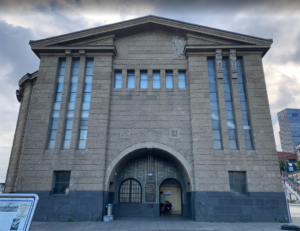
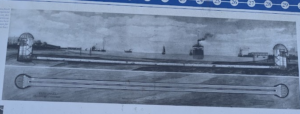
From the Landungsbrücken entrance, elevators descend toward two tiled tunnels running beneath the riverbed.
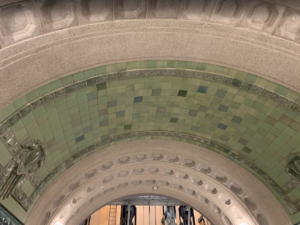
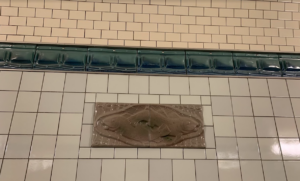
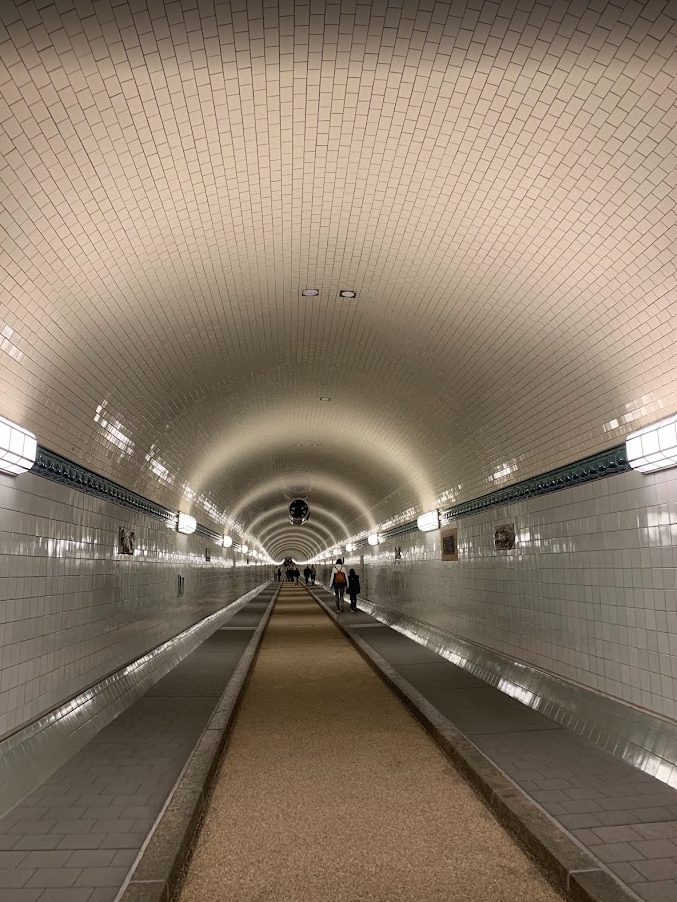
White tiles stretch into the distance, blue-green decorative bands line the walls, and reliefs of fish and other aquatic motifs quietly mark the passage.
Above is the Elbe, with cargo vessels continuing along one of Hamburg’s busiest waterways.
Today, visitors push bicycles, walk with children, and explore the tunnel as one of Hamburg’s best-known historic landmarks.
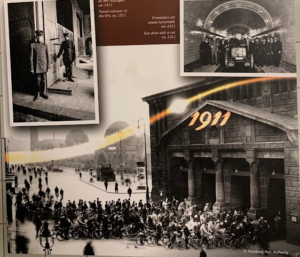
When it opened in 1911, however, it was not primarily a tourist attraction or an architectural curiosity.
It was infrastructure built for people who needed to reach work on the opposite side of the river.
Its southern end led directly toward the docks, shipyards, and industrial landscape of Steinwerder.
The Old Elbe Tunnel therefore tells more than the story of an engineering achievement.
It tells the story of how a growing port moved its workers.
Why Hamburg Needed a Tunnel
At the beginning of the twentieth century, Hamburg’s port was expanding rapidly.
Steinwerder, on the southern bank of the Elbe, had developed into one of the city’s most important harbour and industrial districts.
Shipyards such as Blohm & Voss, shipping companies, warehouses, docks, and other port facilities created an enormous demand for labour.
Every day, thousands of workers had to travel between the city and the harbour.
Ferries provided one solution, but they remained vulnerable to fog, storms, ice, and increasingly dense shipping traffic.
Taking a bridge meant making a detour of approximately twelve kilometres.
For workers whose wages depended on working hours, a delayed journey could mean more than inconvenience.
It could mean lost income.
As the port continued expanding southward, Hamburg faced a basic question.
How could large numbers of people cross a river already crowded with ships?
The answer was to move the route below the water.
In 1911, the new tunnel opened beneath the Elbe.
Workers no longer had to rely entirely on ferries or make long detours around the river.
Hamburg had built a road beneath the riverbed for people going to work.
Digging Beneath a Working River
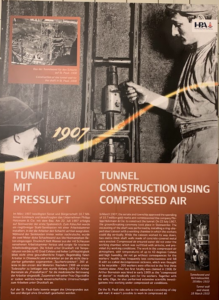
Construction had begun in 1907.
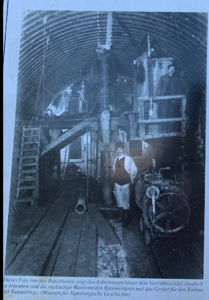
To create the passage beneath the Elbe, engineers used advanced shield-tunnelling techniques and maintained compressed-air conditions to prevent water from entering the excavation area.
Workers stood at the front of the shield, digging forward with shovels, picks, and small explosive charges.
As the excavation advanced, new structural sections had to be installed behind them.
The environment was hot, damp, confined, and physically demanding.
Many of the labourers came from outside Hamburg, including workers from Russia, Poland, and Italy.
Their bodies became part of an engineering experiment whose medical consequences were not yet fully understood.
Compressed air protected the tunnel from the river.
It did not protect the workers from pressure.
When Engineering Forced Medicine to Catch Up
Men working under high pressure began suffering from joint pain, paralysis, loss of consciousness, and other serious symptoms.
The condition would later be recognized as decompression sickness.
At the time, however, its causes and treatment were still poorly understood.
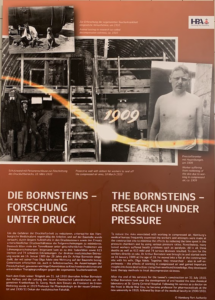
Physician Arthur Bornstein entered the construction environment himself to study what was happening to the workers.
The tunnel project therefore became connected not only with civil engineering, but also with the development of occupational and pressure medicine.
The demands of construction forced medical knowledge to respond to a new kind of workplace.
More than 4,400 workers, surveyors, and engineering personnel were involved in the project.
Around 700 suffered illness associated with the work, and three people died.
These figures can now be read as part of engineering history.
For the workers inside the tunnel, they described the physical risks of an ordinary working day.
When the River Broke In
Human physiology was not the only danger.
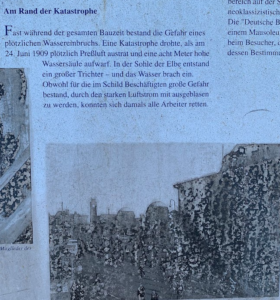
In 1909, the project suffered a serious accident when compressed air escaped and the riverbed above the construction zone collapsed.
Water broke into the works, and the project briefly faced the possibility of catastrophic failure.
A powerful column of water erupted through the damaged area.
The workers managed to escape.
No one was trapped beneath the river.
Today, the tunnel appears stable, elegant, and almost inevitable.
During construction, it was anything but inevitable.
For four years, workers advanced through darkness, pressure, mud, steel, and the constant presence of the river above them.
A Road Built with Human Bodies
The completed tunnel is remembered as an engineering landmark.
Its tiled walls, elevators, and long circular passages have become part of Hamburg’s visual identity.
Yet the finished structure can easily hide the conditions under which it was created.
Every metre beneath the river had to be excavated.
Every advance required new structural support.
Every section depended on workers entering an environment that pushed the human body beyond conditions it had evolved to withstand.
The prosperity of the port was visible above the water.
The physical cost of enabling that prosperity was buried beneath the riverbed.
Hundreds became ill.
Three died.
The tunnel remained.
From Workers’ Route to Living Heritage
The tunnel continued serving Hamburg through enormous changes.
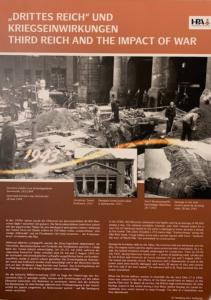
During the Second World War, the Steinwerder entrance and surrounding infrastructure suffered damage.
After the war, the tunnel returned to use and continued connecting the city with the harbour.
During the post-war economic boom, large numbers of people still travelled through it.
Then the port changed again.
Containerization transformed cargo handling.
Machines increasingly replaced work that had once required large groups of dockworkers.
The harbour remained active, but fewer workers needed to cross the Elbe every day.
A tunnel originally built around the daily movement of labour gradually lost much of its original function.
It could have become obsolete infrastructure.
Instead, Hamburg kept it.
Restoring a Century-Old Passage
Preserving the Old Elbe Tunnel required more than leaving it untouched.
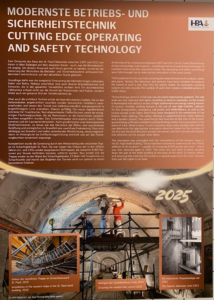
Large-scale restoration projects were undertaken on its two tubes.
Historic structural elements were opened, repaired, reinforced, and resealed.
Lighting and decorative details were restored.
More than 360,000 tiles were reproduced, while many of the historic reliefs were recreated according to their original designs.
At the same time, the tunnel received contemporary safety infrastructure, including cameras, sensors, fire-protection systems, updated lighting, and ventilation technology.
The result is a structure that exists in two periods at once.
Visually, much of it still belongs to 1911.
Technically, it has been adapted to survive in the twenty-first century.
Preservation here does not mean freezing the past.
It means continually maintaining an old structure so that people can keep using it.
Twenty-Four Metres Below the Riverbed
Walking through the centre of the tunnel, it is easy to forget where the passage actually lies.
The Elbe runs overhead.
Ships cross above the roof.
People continue along a road approximately twenty-four metres below the riverbed.
The blue-green tiles still catch the light.
Fish reliefs remain embedded in the walls.
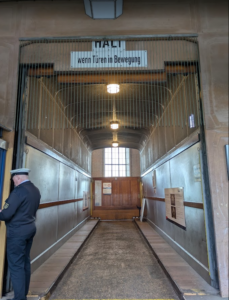
The historic elevators continue carrying people between street level and the underground passage.
The people using the tunnel, however, have changed.
Port workers were once among its most important users.
Today, cyclists, residents, families, and visitors walk the same route.
One hundred and fifteen years of footsteps have passed through the same underground space.
The tunnel is therefore more than transport infrastructure.
It is engineering heritage, labour history, and living urban memory.
What Keeps a Road Alive
Infrastructure often disappears once its original function becomes obsolete.
The Old Elbe Tunnel survived because generations continued to repair it.
Its history includes industrial expansion, hazardous construction, war damage, reconstruction, containerization, technological change, and heritage conservation.
The ships above the tunnel have changed many times.
The workforce of the port has changed even more.
The road itself remains.
Its endurance does not come from having escaped change.
It comes from continuous maintenance through change.
A road is not alive simply because it was once built.
It remains alive because, more than a century later, people are still willing to care for it.
A Passage Built for Workers
The Elbe continues carrying ships toward Hamburg’s harbour.
Cargo still moves through the city, and the port remains one of its defining landscapes.
Far below the vessels, the two tunnel tubes remain quietly in place.
They remember a different rhythm of the harbour.
They remember workers hurrying toward their shifts.
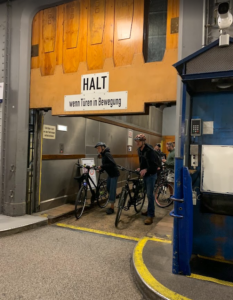
They remember bicycles descending in the elevators.
They remember war, reconstruction, industrial transformation, and restoration.
Ships travelled on the water.
Workers travelled beneath it.
That relationship shaped the tunnel from the beginning.
Today, many people know the Old Elbe Tunnel as a landmark.
Far fewer remember the simple reason it was originally built:
to bring people to work.
Across Civilizations
After leaving the tunnel, the three of us stood beside Hamburg harbour.
Cargo vessels moved slowly across the Elbe while cyclists and pedestrians continued entering and leaving the tunnel.
Lord Chunshen Huang Xie looked toward the river.
“So people did not always cross by boat.”
I smiled.
“No.
Many of them walked underneath the river.”
King Kaolie looked surprised.
“Chu had no road like this.”
Huang Xie nodded.
“We built bridges, embankments, canals, and gateways.
But digging a passage beneath a great river so that people could cross underneath it—that would have been something very different.”
King Kaolie continued looking toward the Elbe.
“Yet the problem sounds familiar.”
Huang Xie turned toward him.
“What problem?”
“How to move people,” the king replied.
“How to move goods.
How to keep a city connected.”
I nodded.
Huang Xie glanced back toward the entrance of the tunnel.
“Chu built its roads above the ground.”
I added:
“And Hamburg built one beneath the river.”
The three of us laughed.
Evening light spread across the Elbe.
Ships continued moving above the water.
Below them, people continued crossing the river on foot.

 时间|2026年6月5日 (五)
  行程|汉堡 • 老易北河隧道