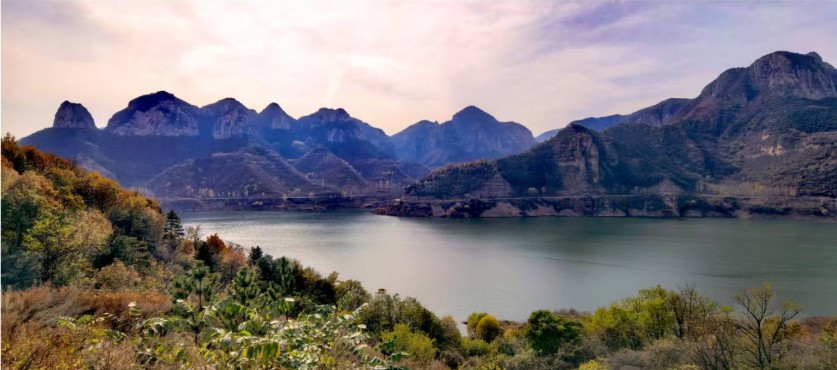
封面图说明|
河北邯郸东太行山的山水风光,
由友人安庆龙自驾游览时拍摄。
群山层叠,山水相映,
一张照片开启身体文明的探索。
全文照片均由安庆龙拍摄,感谢授权使用。
引文|山水不只是被观看的风景
山川有势,身体有律,
人在天地之间行走,
也在山水之间创造舞蹈。
一张来自河北邯郸的照片,
将目光带向东太行山。
远处的山峰层层叠起,
陡峭的岩壁映照着天光。
山间道路顺着地势蜿蜒,
湖水静静环抱着群山。
今天的人们可以驾车入山,
沿着公路穿越峡谷与峰峦。
然而在现代交通出现以前,
山川并非供人观赏的风景。
人们必须攀登陡峭的山坡,
涉过河流,穿越密林与峡谷;
脚步随着山路改变方向,
膝盖因坡度而自然弯曲——
身体在学会走路的同时,
也学会了大地。
那些攀登、涉水与转身的动作,
是否曾在漫长岁月中,
经过模仿、仪式与节奏的转化,
成为舞蹈与文明记忆的一部分?
人在山水中学会行动,
又通过舞蹈,
把行动变成了文化。
一|山川有势:大地如何塑造身体
山有高低,水有缓急,
大地以地形书写节奏,
身体以动作回应山川。
1. 山地的身体|攀登、屈膝与平衡
清晨的山路还带着露水,
石阶沿着陡峭的山坡向上延伸。
一位挑担的山民缓缓前行,
每走几步便调整肩上的重量。
遇到陡坡,膝盖自然弯曲,
身体向前倾斜以保持平衡。
下山又是另一种身体经验,
脚掌必须寻找稳定的落点。
这些动作并非为了表演,
而是山地生活的实际需要;
身体在反复行走中学习,
哪些地方需要放慢速度,
哪些转弯必须改变重心——
这种判断未必需要语言,
有时脚掌先感觉到石面的倾斜,
膝盖便已经开始调整角度。
然而,山地不会自动生成舞蹈,
生活动作也不等于舞蹈动作。
只有当这些经验进入模仿、
仪式、游戏与节奏组织之中,
才可能获得新的文化形式;
山川给予身体不同的难题,
人们则以动作寻找解决方法。
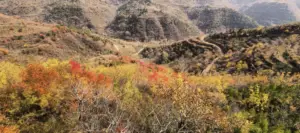
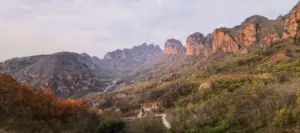
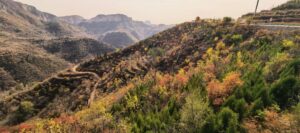
图:山地的身体,山路蜿蜒,身体随势而行。摄影:安庆龙。
2. 水域的身体|顺势、摆动与流动
清晨的河面升起薄雾,
一条小船缓缓离开岸边。
船夫握住长篙探向河底,
身体随着船身轻轻摇晃。
长篙触及水底的瞬间,
双脚必须稳住身体重心;
水与山地有着不同的力量——
岩石提供相对固定的支撑,
流动的河水却不断改变阻力。
在《身体力》第一季中,
我曾从楚地的划龙船、
沔阳采莲船等民俗表演出发,
研究托、摆、绕与顺势的动作。
那些在陆地上行走的旱船,
借助身体摇摆表现水上行舟;
舞者并未真正进入河流,
却让观众看见船行水面的姿态——
水域的身体经验,
可以经过模仿与节奏化处理,
成为节庆表演的动作资源。
山地让身体学习稳定,
水域则要求身体感知流动。
3. 平原的身体|农耕、劳作与季节节律
清晨的田野向远方展开,
农人沿着田埂走向耕地。
有人肩上扛着农具,
有人弯腰检查刚长出的禾苗。
今年四月走访安徽寿县时,
我曾进入当地的二十四节气馆。
展馆中陈列的农耕动作,
让我重新思考劳动与身体节奏。
插秧、挥镰、舂米与挑担,
原本都是具体的生产行为;
当动作被反复执行与协调,
身体便逐渐形成熟悉的节律,
农时又为这些动作安排时间。
然而,重复劳动并非舞蹈本身,
身体节律也不必然产生艺术。
当动作被赋予音乐与表演目的,
才可能转化为新的文化实践;
开阔地形虽然提供条件,
却不能单独解释舞蹈的形式——
生产方式、社会组织与信仰,
同样参与身体文化的形成。
山水并非舞蹈的唯一源头,
也不是决定动作的无形命令;
它为身体提供行动的条件,
人则在生活中创造文化形式——
当动作进入节奏与仪式,
大地便可能成为舞蹈的起点。
二|以身记山河:从楚地巫舞到山地民族的身体记忆
山川留下道路,
岁月留下歌声,
而祖先走过的世界,
仍在后人的身体里起舞。
1. 楚地巫舞|山川如何成为人与神灵相遇的空间
两千多年前的楚国大地,
江汉水系穿过广阔的原野。
生活在这片土地上的楚人,
不仅依靠山川获取生活资源。
山林、江河与风雨的变化,
也进入他们的神灵想象。
《东皇太一》描写祭祀盛况:
「扬枹兮拊鼓,
疏缓节兮安歌。」
鼓槌落下,节奏随之展开,
歌者的声音进入祭祀空间。
舞者如何配合这些节拍,
虽然无法从文字完整复原,
却能看见音乐与仪式的联系;
诗歌保存了仪式的重要线索,
却没有留下全部舞蹈动作。
最能呈现山林身体想象的,
是《九歌》中的《山鬼》。
「若有人兮山之阿,
被薜荔兮带女萝。」
植物不再只是周围的景物,
而是直接进入身体的装束。
「乘赤豹兮从文狸,
辛夷车兮结桂旗。」
山林不是背景,
是穿在身上的世界。
「雷填填兮雨冥冥,
猿啾啾兮狖夜鸣。」
雷声、雨声与山中猿鸣,
共同构成山林的声音世界。
人的情感与自然环境交织,
山林因此具有精神的深度;
《山鬼》并未提供完整的舞谱,
但诗中反复出现的衣饰、
出行、等待与环境感知,
已经构成丰富的身体想象。
《礼魂》则进一步呈现,
集体祭祀中的节奏与秩序。
「成礼兮会鼓,
传芭兮代舞。」
祭礼完成时鼓声汇合,
人们传递香草与花束。
舞蹈随着仪式交替展开,
身体成为集体行动的一环。
在这里,舞蹈不只是姿态,
也不是单纯的情绪宣泄。
它与鼓乐、祭品和礼仪配合,
共同建立人与神灵的联系。
而在《云梦古舞》的研究中,
我又从长袖、折腰与回身出发,
观察楚舞如何组织身体动势。
楚地的山川进入祭祀空间,
神灵通过诗歌获得形象。
鼓乐与舞蹈组织集体行动,
身体则成为仪式表达的媒介。
2. 瑶族长鼓舞|山地劳动如何进入舞蹈节奏
南岭山区的清晨,
云雾沿着山坡缓缓流动。
当村寨举行传统节庆,
长鼓的声音在山间响起。
舞者将长鼓置于身前,
随着节奏屈膝、转腰与击鼓;
脚步不断调整身体重心,
腰部则连接上下肢的运动——
这些动作不仅具有观赏性,
也与瑶族的生活经验相联系。
我曾在《瑶族长鼓舞》中,
特别研究过做屋长鼓舞。
从寻找适合建屋的地点,
到量树、砍木与锯木,
再到架木、上梁与压屋顶,
建造过程被编入舞蹈之中;
现实中的房屋需要木材与工具,
舞蹈却能够暂时离开实物,
用身体重新表现造屋过程。
房屋可以留在土地上,
建造的记忆却能够随人移动。
当长鼓再次响起,
身体便重新讲述家园的故事。
3. 土家族毛古斯舞|祖先如何活在身体动作之中
湘西的山地村寨之间,
传统节庆迎来新的热闹。
鼓声传出,人群逐渐聚拢,
披着草衣的舞者走进场地。
他们的身体被草束覆盖,
头部也以草编装束遮掩。
平日熟悉的村民面孔,
在表演中变成祖先的形象;
祖先的形象不是刻在碑上,
是穿在身上、走在人群里的。
舞者屈膝,身体微微前倾,
脚下以碎步不断移动。
肩膀随着动作轻轻颤动,
草衣也发出摩擦的声响。
我曾在《土家族毛古斯舞》中,
特别关注草衣与身体的关系。
当舞者遮住自己的面容,
个人身份便暂时退居幕后。
草衣不仅是表演的服饰,
也是转换身份的重要媒介。
观众眼前出现的不再只是村民,
而是舞蹈中被表现的祖先。
当草衣覆盖舞者的身体,
个人暂时让位于祖先。
一场古老的生活叙事,
便在新的时代重新展开。
4. 比较分析|三种身体文化的不同生成路径
楚地巫舞强调神人相遇,
瑶族长鼓舞表现劳动经验,
毛古斯舞借助草衣与扮演,
让祖先重新进入公共生活。
不同文化选择不同的方式,
将生活经验转化为身体表达。
| 文化案例 | 身体动作 | 文化意义 |
|---|---|---|
| 楚地巫舞 | 鼓乐、仪式动作、舞者交替 | 神灵信仰与祭祀秩序 |
| 瑶族长鼓舞 | 屈伸、拧转、平衡、击鼓 | 造屋劳动与家园记忆 |
| 土家族毛古斯舞 | 碎步、颤动、模仿、扮演 | 祖先叙事与生产记忆 |
这三种舞蹈之间,
不能直接建立传承关系;
相似的动作可能来自不同需要,
相近的仪式也未必同源——
然而,比较仍然具有意义,
因为它们提出共同的问题:
人类如何通过身体行动,
保存那些需要代代传递的经验?
文字可以记录仪式的名称,
图像能够保存舞者的姿态。
但动作的力量与时间顺序,
往往需要通过实践才能理解。
舞蹈不只是身体的运动,
也是经验进入文化的方式。
当一代人把动作交给下一代,
山河的记忆便有了新的身体。
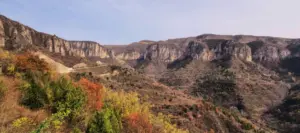
图:山川有势,群崖环立,山势纵横。摄影:安庆龙。
三|山水入灵:从身体记忆到身体生成式智能
山川留下行动的痕迹,
身体保存岁月的经验。
当旧动作遇见新的世界,
文明便有了再创造的可能。
1. 山水的痕迹|身体记忆如何被辨认?
同样一个弯腰的动作,
可能出现在农耕劳动中。
它也可能属于祭祀礼节,
或是舞蹈编排中的造型。
动作的外观虽然相似,
背后的形成条件却不同。
身体记忆并非一件古物,
不能简单地从舞姿中挖出;
它存在于动作的反复实践,
也存在于人们赋予它的意义——
动作能够保存过去的痕迹,
却不自动说明过去的真相。
辨认身体中的文明记忆,
必须同时理解动作与历史。
2. 动作的转译|相似动作为何具有不同意义?
在劳动中,举臂为了搬运;
在舞台上,举臂可以表现飞翔;
进入祭祀时,相近的动作,
又可能成为迎神的仪式姿态——
决定意义的不只是关节运动,
还有动作所在的文化情境。
身体保留某些动作特征,
同时改变其功能与意义;
转译不一定发生在劳动之后,
有些动作原本就来自仪式——
当身体重新组织旧经验,
文化便可能产生新的表达。
3. 节奏的重组|传统为何不是简单复制?
传承并非只有复制,
也可能包含选择与协商。
哪些动作必须继续保留,
哪些形式能够适应新场地?
当传统舞蹈进入现代舞台,
原有的表演条件可能改变。
村寨中的仪式空间,
被剧场灯光与观众席取代。
原本持续较长的表演,
可能被重新安排成短节目。
队形、音乐与动作顺序,
也可能因舞台需要而调整。
这些变化并非全都相同,
有些只是技术上的适应。
有些则涉及仪式意义,
甚至改变参与者的身份。
当不同动机进入同一舞蹈,
传统便面对新的选择。
某些动作可能逐渐消失,
另一些则被重新强调。
传统不是封闭的动作库,
而是持续运行的文化实践;
一段舞蹈能够跨越时代,
未必因为动作完全不变,
也可能因为后来的参与者,
仍愿意赋予它新的生命。
4. 身体生成式智能|从文明解释走向研究方法
我在《身体生成式智能》中,
已经提出身体与行动的关系。
身体不仅执行既有指令,
也能够在实践中形成理解;
重点不只是身体记住了什么,
更是它如何运用已有经验。
我尝试提出四个研究问题:
第一,动作保存了什么?
第二,动作改变了什么?
第三,动作创造了什么?
第四,动作如何继续传递?
这四个问题相互联系,
却不必按照固定顺序回答。
同一场舞蹈可以同时呈现,
记忆、转译、创造与传承。
身体记忆回答过去留下什么,
生成式智能追问未来如何创造。
当山水、节奏与文化相互作用,
文明便不再只是静止的遗产。
尾声|山水仍在,身体是否还记得?
山川依旧,行路的方式已经改变,
身体记得多少过去,
又将在新的相遇之中,
创造多少尚未出现的世界?
隔着车窗观看远方的山峰,
与双脚踏上崎岖的石阶,
虽然面对同一片山水,
身体获得的经验却不相同。
山水并未决定文明的形式,
身体也不是过去的静止容器。
人在环境中学习行动,
又在文化中重新创造动作。
也许下一次走进山林时,
我们仍会先举起手机拍照。
但当脚掌真正踏上山路,
身体便开始另一种认识。
山水仍在,身体仍在行动。
过去的经验未必完整留下,
但人与天地相遇的过程,
仍然能够生成新的文明想象。
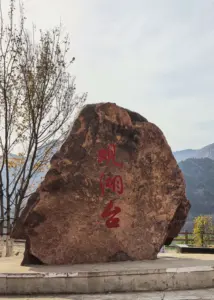
图:山水仍在,登临远眺,山水入眼。摄影:安庆龙。
楚人对话后记|考烈王、黄歇与令尹夫人的观后感
山水之间,楚人何以起舞?
夜色降临,云梦泽水波轻漾,
远处的山影隐入暮色。
一卷《九歌》摊在案前,
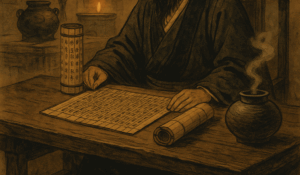
竹简旁放着东太行山的照片。
考烈王拿起照片端详许久,
望向身旁的春申君:
「黄歇,寡人有一事不明。
山川自古便在那里,
楚人为何偏要为它起舞?」
黄歇望向窗外的云梦泽:
「大王,山川本不会说话,
可人行走其间,便有了感受。
感受若要传给后来的人,
总得找到一种表达方式。」
考烈王轻轻敲着桌案:
「所以楚人祭祀山川神灵,
不只是为了祈求庇佑?
那些鼓声、歌声与舞步,
也是在讲述天地的故事?」
我坐在一旁,微笑着回答:
「大王,《九歌》里的山川,
从来不只是静止的风景。
《山鬼》披薜荔、带女萝,
连草木都进入了身体。」
考烈王低头细读《九歌》,
指尖停在《山鬼》的诗句上。
「如此说来,山中有神,
并不只是因为山中有雾。
而是我们楚人将自己的情感,
也一同带进了山林?」
黄歇点头,却又补充道:
「大王,臣以为还须谨慎。
诗歌能让我们想象祭祀,
却不能还原每一步古舞。」
我忍不住笑了起来:
「正是如此。
我研究瑶族长鼓舞,
也研究土家族毛古斯舞。
虽然都能看见身体记忆,
却不能说它们出自楚舞。」
考烈王若有所思地问:
「既然并非同一条传承,
令尹夫人为何还要比较?」
我回答:
「我寻找的并非相同舞步。
而是不同文化中的人,
如何把生活经验交给身体,
又让身体把经验传给后人。」
考烈王站起身来,
沿着案前缓缓走了几步。
他停下脚步,回头问道:
「那么寡人如今这一转身,
也算身体生成式智能?」
黄歇忍不住笑出声来:
「大王,若只是转个身,
恐怕还不能如此称呼。
但若大王改变原有动作,
创造新的节奏与意义,
倒值得夫人研究。」
我也笑着向考烈王解释:
「身体能够保存旧经验,
却不必永远重复过去。
当它面对新的环境,
重新组织动作与意义,
才显出值得研究的创造能力。」
考烈王重新坐回案前,
望着竹简与照片沉思。
楚国的城邑早已改变,
当年的祭祀也难以复原;
但屈原留下的诗篇,
仍能引出新的问题。
考烈王忽然笑了起来:
「令尹夫人,寡人明白了。
你并非要让楚人重新起舞,
而是借着楚人的歌舞,
追问人类为何能够创造。」
黄歇轻轻合上竹简:
「大王,山川不会替人作答,
古人也无法回答所有问题。
但只要后人仍愿意研究,
过去便能与现在继续对话。」
云梦泽上的风渐渐平息,
案前的烛火仍在摇曳;
一边是两千多年前的楚辞,
一边是今天的太行山影。
山川仍在,古人已经远去,
身体的动作却不断改变;
我们无法重走所有旧路,
却能够继续提出新的问题。
楚人以歌舞回应天地,
今人以研究重新认识山河;
当过去与未来再次相遇,
文明便在新的身体中延续。
说明:本篇对话为作者依据《楚辞》、楚国历史及现代身体文化研究创作的跨越时空文学想象,并非真实历史对话。「令尹夫人」为作者设置的文学角色。
参考文献与延伸阅读:
- 楚辭補註 – 维基文库,自由的图书馆
- 洪兴祖 《楚辞补註》- 集部 – 楚辭 – 漢典古籍
- 《身体力 · 第一季 · 导航地图》|人类身体的节奏文明系统说明
- 《节奏文明观 · 白皮书》|从身体出发的文明生成模型
- 《节奏文明观|身体篇 》|身体如何生成文明
- 《节奏文明观|地景篇 —— 地景的学习法:用空间的节奏理解文明》
- 《二十四节气馆:时间如何进入人的身体|安徽寿县》——劳动,本来就是最早的编舞
- 《瑶族长鼓舞|用身体把房子重新盖一遍》
- 《土家族毛古斯舞|祖先的身体》
- 《云梦古舞》|楚舞 · 湖北武汉 · 武汉站 × 汉口站 × 武昌站
- 《走到远方,遇见新的自己|身体、山水与跨文化知识的生成》|Going into the Distance and Encountering a New Self | Body, Shan Shui and the Making of Cross-Cultural Knowledge
Appendix|English Narrative Overview
When Mountains and Rivers Become a Score
Landscape, Dance, and Embodied Intelligence in Chinese Civilization
How Human Movement Transforms Geography into Cultural Memory
A photograph from the East Taihang Mountains in Handan, Hebei Province, shows steep cliffs rising above winding roads and quiet waters. My friend An Qinglong took the photograph during a journey through the region. Looking at the mountains, I began to wonder how people had experienced these landscapes before modern roads and vehicles made them accessible. What appeared to a traveller as scenery had once presented daily challenges of movement, balance, and survival.
A mountain path requires the body to respond to changing slopes. A river demands balance against moving water, while agricultural work on the plains involves repeated movements organised by the seasons. These experiences do not automatically produce dance, but they provide bodily knowledge that may later enter imitation, ritual, and performance. Through such transformations, practical movements can acquire meanings beyond their original purposes.
In my earlier research on Body Force, I examined how traditional performances could represent rowing, carrying, bending, turning, and other movements associated with everyday life. My studies of Chu dance, Yao long-drum dance, and Tujia Maogusi dance raised a related question. How do different communities transform bodily experience into cultural expression, and what happens to that expression when it passes from one generation to another?
This essay approaches the relationship between landscape and bodily culture through three connected perspectives: geographical experience, cultural memory, and embodied generative intelligence. Its central concern is not whether mountains and rivers directly created particular dances, but how people learned through their environments and subsequently reorganised bodily experience into forms of cultural expression.
I. The Landscape’s Rhythm | How Mountains, Rivers, and Plains Shape Bodily Experience
In the mountains, a traveller carrying a load must constantly adjust the distribution of weight. Climbing requires the knees to bend and the body to lean forward, while descending demands careful attention to the position of each foot. The movements arise from practical necessity rather than artistic intention. Yet repeated encounters with uneven terrain gradually develop forms of bodily judgement that do not always require conscious verbal instruction.
Water presents a different relationship between the body and its surroundings. A boatman standing on a small vessel must respond to the movement of the boat, the resistance of the water, and the changing position of his own weight. Unlike a rocky path, the surface beneath him cannot be treated as entirely stable. His movements depend on a continuous adjustment between balance and flow.
In the Chu cultural region, traditional performances associated with waterways offer opportunities to examine how such experiences can be represented through dance. In my earlier study of dragon-boat practices and the Mianyang lotus boat tradition, I explored movements involving support, swaying, circling, and following the direction of force. Performers carrying a symbolic boat on land can evoke the experience of travelling across water without entering a river. The practical movement has become a representation organised through rhythm and performance.
Agricultural landscapes introduce another form of bodily coordination. During my visit to the Twenty-Four Solar Terms Museum in Shouxian, Anhui, in April 2026, I encountered displays illustrating agricultural activities associated with the seasonal calendar. Planting rice, harvesting crops, pounding grain, and carrying tools all involve recurring movements. Their timing is influenced not only by the immediate demands of work but also by the agricultural year.
These movements reveal how bodily rhythm can develop through repeated participation in everyday activities. Yet repetition alone does not explain the emergence of dance. Music, ritual purposes, social organisation, and artistic choices may transform familiar actions into cultural practices. Similar environments can support different traditions, just as similar movements can acquire different meanings.
Mountains teach the body to negotiate height and balance, rivers require sensitivity to flow, and agricultural plains organise recurring forms of work. None of these landscapes dictates a particular choreography. They provide conditions within which people develop bodily experience, while culture determines how that experience may be selected, interpreted, and transformed.
II. The Body’s Memory | From Chu Ritual Dance to the Traditions of Mountain Communities
More than two thousand years ago, the kingdom of Chu occupied a region shaped by rivers, wetlands, forests, and mountains. Its inhabitants depended on these environments for everyday life, but the natural world also entered their religious imagination. Mountains and rivers were associated with spiritual presences, while ritual music and dance provided ways of expressing relationships between human communities and divine powers.
The Nine Songs, traditionally associated with Qu Yuan and preserved within the Songs of Chu, offers literary evidence of this ritual world. In Donghuang Taiyi, drums and ceremonial singing establish the atmosphere of worship. In Li Hun, coordinated drumming and alternating dance appear within the completion of ritual proceedings. These descriptions reveal the importance of rhythm and collective action, although they do not provide sufficient information to reconstruct the original choreography.
The relationship between landscape and bodily imagination becomes especially vivid in Shan Gui, or The Mountain Spirit. The mysterious figure wears climbing plants and fragrant vegetation, travels through a world of animals and mountain paths, and encounters thunder, rain, and the sounds of the forest. The natural environment becomes part of the figure’s appearance and emotional experience. Plants are no longer merely objects surrounding the body; they become elements of its imagined identity.
Such poetry allows us to examine how the people of Chu represented encounters between human emotion, nature, and spiritual belief. It does not establish that particular movements in contemporary dance originated in ancient Chu. The distinction between literary imagination and historical choreography remains essential. What survives in the poems is evidence of cultural meaning, not a complete record of bodily performance.
The Yao long-drum dance presents another relationship between movement and cultural experience. In the mountainous regions of southern China, dancers coordinate bending, turning, balancing, and drumming through recurring rhythmic patterns. My earlier research on the house-building long-drum dance examined how activities associated with constructing a home could be represented through movement. Selecting a building site, measuring timber, cutting wood, assembling structural elements, and raising a roof become parts of a performed sequence.
The transformation is significant because the dancers no longer need to construct an actual building. Through coordinated movement, they can represent a process that originally required materials, tools, and physical labour. A house may remain in one location, but the experience of building it can be communicated through performances carried by successive generations.
Among the Tujia people, the Maogusi dance provides a different example of embodied cultural memory. Performers cover themselves with grass garments and head coverings, temporarily concealing their ordinary appearance. Their bent knees, small steps, trembling movements, and the sounds produced by the grass costumes contribute to the representation of ancestral life. The performer becomes part of a collective narrative in which the ancestral world is brought into the present.
The three traditions therefore illustrate different relationships between bodily expression and cultural meaning. Chu ritual dance concerns encounters with divine powers and ceremonial order, the Yao long-drum dance can represent experiences of labour and home-building, and the Tujia Maogusi dance gives bodily form to ancestral narratives. They cannot be placed within a single line of historical transmission. Their comparative value lies in showing how different communities use movement to organise experiences that they consider worth remembering.
III. Embodied Generative Intelligence | How Cultural Memory Becomes New Creation
A person bending forward in a field may be harvesting crops. A dancer performing a similar movement may be representing an agricultural activity, while another performer may use the same bodily position within a religious ceremony. The visible movements can resemble one another, but their meanings depend on the circumstances in which they occur. The body alone cannot tell us whether an action belongs to labour, ritual, or artistic performance.
This creates an important difficulty for the study of bodily memory. A movement may preserve traces of earlier practices, but those traces cannot automatically establish historical continuity. Similar gestures can emerge independently under comparable physical conditions. To understand their cultural significance, researchers must examine movement together with historical evidence, social context, and the meanings assigned by participants.
Movements also change their functions when they enter new cultural settings. Raising an arm may help a worker carry an object, suggest flight in a theatrical performance, or become part of a ceremonial gesture. The physical action retains certain recognisable characteristics while acquiring a different purpose. Such transformations are not necessarily stages in a fixed progression from labour to art. Some movements originate within ritual, while others develop through games, imitation, or collective performance.
The transmission of dance introduces further possibilities for change. When a traditional village performance moves into a modern theatre, its original setting may be replaced by stage lighting, scheduled performances, and an audience seated apart from the dancers. Long ceremonial sequences may be shortened, while music, formations, and movements are reorganised. Some changes preserve important features of the tradition, whereas others alter its social or ritual significance.
Tradition therefore cannot be understood simply as the repetition of an unchanged sequence. Its continuation may involve selection, negotiation, adaptation, and the creation of new meanings. A movement can remain recognisable even when the circumstances of its performance have changed. What survives is not always an identical form, but an ongoing relationship between inherited practice and contemporary participation.
This perspective connects with my research on Embodied Generative Intelligence. The body does not merely store previous movements or execute established instructions. Through practice, it develops forms of understanding that can be applied to unfamiliar situations. Existing bodily experiences may be reorganised when people encounter new environments, purposes, or cultural expectations.
I approach this process through four research questions: What does a movement preserve? What does it change? What does it create? And how does it continue to be transmitted? These questions are interconnected rather than sequential. A single performance may preserve elements of an earlier practice while simultaneously changing its meaning, generating new expressions, and creating opportunities for further transmission.
Within my broader framework of Rhythm Civilization, this approach places bodily action alongside written records, material objects, and historical institutions as a subject of civilizational research. Bodily memory concerns the experiences that remain available from the past, while embodied generative intelligence concerns the capacity to reorganise those experiences in the present. Cultural continuity depends not only on preservation but also on the ability to respond creatively to changing circumstances.
Epilogue | The Mountains Remain, but Does the Body Remember?
The East Taihang Mountains remain visible in the photograph taken by An Qinglong. Their cliffs, valleys, and waterways continue to shape the landscape, yet the ways people encounter them have changed. A modern traveller can observe the mountains through a car window, while earlier inhabitants may have experienced the same terrain through long journeys on foot. The geographical setting remains recognisable, but the bodily experiences are not identical.
The difference reminds us that landscapes do not preserve human movement in an unchanged form. Roads, technologies, occupations, and cultural practices transform the relationship between people and their surroundings. A mountain path that once demanded daily physical effort may later become a destination for recreation. The movements associated with earlier ways of life may disappear, survive in altered practices, or acquire new meanings through performance.
The poems of ancient Chu offer another form of continuity. Their original ritual settings cannot be completely reconstructed, yet their descriptions of mountains, spirits, music, and ceremonial movement continue to inspire interpretation. The Yao long-drum dance and Tujia Maogusi dance likewise demonstrate how bodily performance can communicate experiences that extend beyond the immediate actions of individual dancers.
Perhaps the relationship between landscape and civilization is best understood as an ongoing process rather than a fixed inheritance. People learn through their surroundings, transform experience into cultural expression, and pass selected practices to later generations. Those generations may preserve familiar movements, but they may also reorganise them in response to new circumstances.
The next time we enter a mountain landscape, we may first reach for a camera. Yet when our feet begin to follow an uneven path, the body enters another relationship with the terrain. The mountains do not tell us how to dance, but they continue to provide conditions through which movement, perception, and imagination can develop.
The landscape remains, while human bodies continue to learn and change. Civilization survives not only through what people remember, but also through what they are still capable of creating.
Across Civilizations
King Kaolie, Huang Xie, and Lady Lingyin | When the Mountains Become a Dance
Night settled over Yunmeng Marsh. The wind moved gently across the water, and a scroll of the Nine Songs lay open on the table before King Kaolie of Chu. Beside the ancient text rested a photograph of the East Taihang Mountains, showing cliffs and winding roads from a world far beyond the king’s own time.
King Kaolie studied the photograph for a long moment before turning towards Huang Xie, Lord Chunshen.
“Lord Chunshen, there is something I do not understand. Mountains and rivers have existed since ancient times. Why did the people of Chu feel the need to dance for them?”
Huang Xie looked towards the dark waters beyond the window.
“Your Majesty, mountains and rivers do not speak. But people who travel through them experience their forces, their beauty, and their dangers. When those experiences must be shared with others, human beings seek ways to express what they have encountered.”
The king gently tapped the table.
“Then our ceremonies were not simply requests for protection from the gods? The drums, songs, and movements also expressed how our people understood the world?”
I had been listening beside them.
“In the Nine Songs, Your Majesty, mountains and rivers are never merely scenery. In Shan Gui, the mountain spirit wears plants upon the body, while animals, rain, and thunder become part of the surrounding world. The landscape enters the figure’s appearance and emotional experience.”
King Kaolie lowered his eyes to the scroll.
“Then perhaps the mountains became sacred not only because people imagined spirits living there, but also because they brought their own feelings into the forests.”
Huang Xie nodded, then paused.
“Yet we must be careful, Your Majesty. Poetry allows us to imagine ancient ceremonies, but it cannot tell us every movement performed by the dancers.”
“That is precisely the difficulty,” I replied. “I have also studied the Yao long-drum dance and the Tujia Maogusi dance. Both reveal relationships between bodily movement and cultural memory, but neither can be treated as a direct continuation of Chu ritual dance.”
King Kaolie looked puzzled.
“If they do not belong to the same historical tradition, Lady Lingyin, why compare them?”
“Because I am not searching for identical steps,” I answered. “I am asking how different communities transform their experiences into bodily expression, and how those expressions continue to carry meaning when they are passed to later generations.”
The king rose from his seat and walked slowly across the room. After several steps, he turned and looked back at us.
“Then tell me, does this turn of mine already count as embodied generative intelligence?”
Huang Xie laughed.
“Your Majesty, turning around is not quite enough. But if you were to reorganise a familiar movement and give it a new rhythm or purpose, perhaps the Lady would find something worth investigating.”
I smiled.
“The body can preserve experience without repeating it forever. When it encounters a new situation and reorganises movement into a new relationship of action and meaning, we can begin to investigate its creative capacity.”
King Kaolie returned to the table. His gaze moved between the ancient scroll and the photograph of the mountains.
“So you do not wish to make the people of Chu dance again exactly as they once did. You are using their songs and rituals to ask why human beings can continue to create.”
“Exactly, Your Majesty.”
Huang Xie gently closed the scroll.
“The mountains cannot answer every question, and the people of the past cannot explain everything to those who come after them. Yet as long as later generations continue to study these things, the past can remain part of their conversations.”
King Kaolie looked once more at the photograph. The ancient cities of Chu had changed, and the ceremonies described in the poems could no longer be completely recovered. Yet the questions raised by those poems had reached a world the king could never have imagined.
Outside, the wind gradually quietened over Yunmeng Marsh. The candle beside the scroll continued to flicker, illuminating an ancient text and a modern landscape.
The people of Chu had once responded to heaven and earth through music and dance. Later generations would approach those experiences through history, fieldwork, and new ideas about the human body. The movements were no longer the same, but the relationship between human experience and cultural creation had not come to an end.
The mountains remained beyond the reach of the ancient court. Across the centuries, the human body continued to encounter the world, transform its experiences, and give civilization new forms of expression.
Historical and literary note: This dialogue is a fictional encounter across time, inspired by the Songs of Chu, the history of the kingdom of Chu, and the author’s research into embodied cultural practices. King Kaolie and Huang Xie, Lord Chunshen, were historical figures. Lady Lingyin is a fictional literary persona created by the author. The conversation is not a historical record.
🤖 人工智能协作声明
本文的主题选择、田野调查、资料搜集、核心观点与中文原始内容,均由作者独立完成。创作过程中,作者与人工智能模型,进行持续协作,包括多轮讨论、思路推演、叙事节奏调整、部分翻译、英文 Narrative Overview 生成、语言检查、结构检测与文字润饰。
人工智能在此过程中,作为创作协作者,参与内容发展与语言表达,但不作为法律意义上的作者或著作权主体。所有 AI 协作产生的内容,均由作者依据田野资料、原始文献与中文母稿,进行选择、审校、修改与艺术化重构。文章的叙事方向、内容取舍、创作决策、最终表达与价值判断,均由作者决定并负责。
📜 本站所有原创作品均已完成区块链存证,确保原创凭证。部分重点作品另行提交国家版权登记,作为正式法律备案。原创声明与权利主张已公开。完整说明见:
👉 原创声明 & 节奏文明版权说明 | Originality & Rhythm Civilization Copyright Statement – NING HUANG
节奏文明存证记录
本篇博客文为原创作品,由黄甯与 AI 协作生成,于博客网页首发后上传至 ArDrive 区块链分布式存储平台进行版权存证:
- 博客首发时间:2026年11月27日
- 存证链接:7ccbaccb-b979-47bf-8d73-cfb41834010e
- 存证平台:ArDrive (arweave.net)(已于 2026年11月26日上传)
- 原创声明编号:Rhythm_Archive_27_Nov_2026/landscape-as-score-body-as-dance-chinese-civilization
- 用途声明:本文为《节奏文明观》之篇章,亦参与构建《AI×非遗文明共构档案》与《文明节奏回声计划》,用于文明节奏实地记录、区块链存证、跨域协作与版权登记用途。
© 黄甯 Ning Huang, 2026. All Rights Reserved.
本作品受版权法保护,未经作者书面许可,禁止复制、改编、转载或商用,侵权必究。
📍若未来作品用于出版、课程、NFT或国际展览等用途,本声明与区块链记录可作为创作时间及原创性的佐证。