封面图说明|
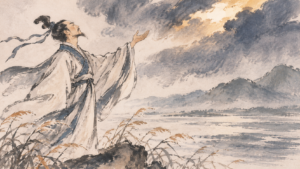
回風翻湧,雲海間隱現蒼龍。
楚衣孤影,獨立高崖凝望天地。
山川無言,心中悲思久久未解。
图片:原创数字插画。
引文|当岁月流逝,为什么有些悲伤始终无法消散?
风可以吹散云雾,
却吹不散心中的结;
岁月可以带走青春,
却带不走未竟的志向。
「悲回风之摇蕙兮,心冤结而内伤。」
山谷间,
一阵回旋的风吹过,
芳蕙在风中摇曳,
枝叶随之低垂。
《悲回风》开篇没有直接诉说政治遭遇,
而是从一阵风与一株香草写起;
屈原已经不再向外界要答案,
他转过身来,
面对自己心里那个解不开的结。
一|回风之下:从内心伤痛到生命终局
风吹落芳草,
却吹不散心中的忧伤;
岁月带走年华,
为何带不走未竟的理想?
1. 回风摇蕙:为什么芳草总是最先受伤?
「故荼荠不同亩兮,兰茝幽而独芳。」
「蕙」是楚辞中常见的芳草,
象征诗人所珍视的高洁品格。
诗中又写道「草苴比而不芳」,
与「兰茝幽而独芳」形成对照。
杂草可以聚集生长,
却未必因此具有芳香;
兰茝即使独处幽僻之地,
也不会因为孤独而失去本性——
但风并不知道哪一株草更加高洁。
2. 长夜不眠:当悲伤成为无法摆脱的日常
「涕泣交而凄凄兮,思不眠以至曙。」
「终长夜之曼曼兮,掩此哀而不去。」
「思不眠以至曙」短短六字,
记录了一个人从深夜清醒到天明的痛苦。
诗人并非没有尝试压抑悲伤,
也不是不知道应该继续生活;
只是当理想长期无法实现,
悲伤便不再是短暂的情绪,
而逐渐成为生命中难以摆脱的负担。
3. 岁月冉冉:生命正在流逝,志向却没有改变
「岁曶曶其若颓兮,时亦冉冉而将至。」
「宁溘死而流亡兮,不忍为此之常愁。」
最令他痛苦的并非单纯的衰老,
而是岁月已经流逝,
心中的志向却依然没有实现。
这里可以回望《九章·橘颂》。
在《橘颂》中,橘树生于南国,
以「受命不迁」象征坚定的品格。
到了《悲回风》,
同样的坚持却显露出沉重的一面。
年轻时立下志向或许并不困难;
真正艰难的是经历失望与衰老之后,
仍然愿意承担坚持所带来的后果。
4. 登高望远:从昆仑到江海的精神远行
「登石峦以远望兮,路眇眇之默默。」
「冯昆仑以瞰雾兮,隐岷山以清江。」
诗人的目光离开身边的草木,
转向高山、江河与广阔的天空。
天地可以容纳他的身影,
却未必能够安放他的心;
空间上的远行,
并没有真正消除内心的痛苦。
5. 介子、伯夷与子胥:历史人物为什么成为最后的参照?
「求介子之所存兮,见伯夷之放迹。」
「浮江淮而入海兮,从子胥而自适。」
当山川与神游都无法排遣忧伤,
诗人的目光开始转向历史。
诗人既理解前人的悲愤,
也无法轻易判断他们的选择究竟改变了什么;
他回望这些不同的生命道路,
却并没有因此获得明确的答案。
「心絓结而不解兮,
思蹇产而不释。」
从开篇的「心冤结而内伤」,
到结尾的「心絓结而不解」;
诗人经历了长夜、岁月与神游,
也曾向历史人物寻找参照——
然而那个最初的心结,
依然没有解开。
二|让回风重新吹起:从楚辞文本到AI音乐创作
古老的文字沉寂千年,
却不曾失去内心的悲鸣;
当回风再次化为歌声,
谁能听见那未解的忧思?
2025 年夏天,在《楚辞》AI 谱曲计划中,
我开始尝试为《九章·悲回风》谱曲。
我保留《悲回风》的古典原文,
尝试让反复出现的「兮」字,
成为旋律延展与情绪停顿的空间。
与《惜诵》的忠言难诉、《涉江》的孤独远行,
以及《橘颂》的坚定不迁相比,
《悲回风》呈现的是更加绵长的内心忧伤。
AI 能够生成旋律与丰富的声音层次,
却未必能准确理解每个古字的读音;
文本整理、声音选择与反复聆听,
仍然是这次创作不可缺少的工作。
《楚辞·九章·悲回风》|AI 谱曲作品
尾声|风仍在吹,心结仍在
走过漫长的黑夜,
也曾向天地寻找答案;
最难抵达的地方,
原来是自己无法释怀的内心。
《悲回风》从一阵回旋的风开始。
而当诗歌走向结尾,
那份悲伤依然没有消散。
屈原没有在诗末获得解脱,
也没有告诉后人如何消除悲伤;
他只是将无法排遣的忧思,
连同始终不愿放弃的志向,
留在诗中。
风可以吹散山间的云雾,
却未必吹得散人心中的结。
岁月可以带走一个人的生命,
却未必能够改变他坚持的理由。
《悲回风》没有给出最终的答案,
却让这个问题穿越漫长的历史;
风仍在吹,
心结仍在,
而那个没有得到回答的问题,
仍在两千多年的风中回旋。
《悲回风》不再向天地追问答案,
而是将目光转向自己的内心;
当所有远行都无法解开忧思,
诗人仍带着那个心结,
走向诗歌的最后一行。
楚人对话后记|考烈王、黄歇与令尹夫人的观后感
人心之结,何以解之?
《悲回风》的最后一句缓缓消散。
「心絓结而不解兮,思蹇产而不释。」
考烈王转向黄歇:
「春申君,屈大夫既然知道世道难改,
为何始终不肯放下心中的执念?」
黄歇放下茶盏:
「大王,屈大夫并非不懂世事艰难。
只是有些事情一旦认定,
便无法因为遭遇挫折,
就轻易改变自己的判断。」
考烈王摇了摇头:
「可为君者要顾全社稷,
为臣者也应懂得进退。
若一味坚持自己的道理,
岂不是让自己终生受苦?」
黄歇沉默了片刻:
「大王,臣也曾这样想。
所以臣选择权衡利害,
在复杂的朝局中寻找机会。
可是懂得妥协的人,
也未必能够掌握自己的命运。」
坚持未必能够改变结果,
妥协也未必能够换来安宁;
人生最难的不是作出选择,
而是承担选择之后的自己。
考烈王又问:
「那屈大夫心中的结,
究竟有没有办法解开?」
黄歇望向远处的江水:
「大王,有些结源于误解,
有些结源于遗憾。
但屈大夫心中的结,
或许还因为他始终不愿,
背离自己相信的道理。」
世人皆求解结,
却未必明白结从何来;
有些结需要放下,
有些结需要理解,
有些结却是一个人,
不愿背离自己的证明。
《悲回风》的结,
不是屈原解不开,
是他不想用“放下”来解;
他宁可带着它走,
也不愿把它换成另一种活法。
夜色渐深,云梦泽上风声未歇。
考烈王起身,缓缓走向岸边。
两千多年前,屈原留下了一个心结。
两千多年后,我们仍在追问:
究竟什么,值得一个人坚持一生?
说明:本篇对话为作者依据《楚辞·九章·悲回风》及楚国历史人物创作的跨越时空文学想象,并非真实历史对话。
Appendix|English Narrative Overview
When the Returning Wind Stirs Sorrow
Chu Ci · Jiu Zhang · Bei Hui Feng (Lament of the Returning Wind)
When the Wind Cannot Untie the Heart
A restless wind moves through the valleys of ancient Chu, bending fragrant plants beneath its force. Among them stands the delicate hui, a fragrant herb often associated with moral integrity in Chu Ci. Its leaves tremble in the wind, just as the poet’s heart struggles beneath the weight of unresolved sorrow.
In Bei Hui Feng, traditionally attributed to Qu Yuan, the poet no longer concentrates on persuading a ruler or defending himself against accusations. His attention turns inward. Years have passed, his hopes remain unfulfilled, and the ideals that once gave his life direction have become inseparable from his suffering.
The poem begins with a troubled heart and ends with that same heart still burdened. Between these moments, the poet moves through sleepless nights, distant mountains, imagined journeys, and memories of historical figures. Yet none of these encounters brings him peace.
I. Beneath the Returning Wind | A Sorrow That Time Cannot Heal
The fragrant plants of the opening scene are more than part of the landscape. In the moral world of Chu Ci, their fragrance represents qualities that may survive even when circumstances become hostile. The poet contrasts plants that grow together without fragrance with those that remain fragrant in isolation. But the wind makes no distinction between them.
As darkness falls, the poem enters a more intimate world. The poet lies awake through the night, unable to escape his thoughts. His grief is no longer a passing response to disappointment. It has become part of his daily existence, returning even when he tries to suppress it.
Time makes the struggle more painful. The poet senses the passing of years, while the ambitions he has carried for so long remain unrealized. In Ju Song (Ode to the Orange Tree), steadfastness appears as a noble quality embodied by a tree rooted in its native soil. In Bei Hui Feng, that same determination carries a heavier burden. Remaining faithful to an ideal may also mean living with the consequences of never seeing it fulfilled.
Seeking relief, the poet turns towards mountains, rivers, and distant horizons. His imagination reaches Kunlun and the great waterways beyond his immediate surroundings. Yet physical distance cannot resolve an inward conflict. The world is vast enough to contain his journeys, but not to quiet his mind.
He then looks towards figures remembered for their convictions, suffering, and difficult choices, including Bo Yi, Jie Zitui, and Wu Zixu. Their stories offer examples of lives shaped by moral decisions, but they provide no simple answer to his own dilemma. What did their sacrifices ultimately change? And what should a person do when remaining faithful to an ideal brings neither success nor peace?
At the end of the poem, the troubled heart remains unchanged. The poet has travelled through memory, history, and imagination, only to return to the sorrow with which he began.
II. Giving the Returning Wind a Voice | An AI Musical Experiment
In the summer of 2025, I returned to Bei Hui Feng as part of my project to create AI musical interpretations of Chu Ci. Unlike Xi Song, with its struggle to make loyalty understood, or She Jiang, with its journey through exile, this poem seemed to call for a more sustained expression of inward sorrow.
I wanted to preserve the ancient text rather than transform it into modern lyrics. Its recurring xi particles, repeated sounds, and shifting line lengths already offered a musical rhythm. The challenge was to allow that rhythm to emerge through melody without losing the character of the original language.
AI could generate melodies and layered vocal textures, but ancient Chinese pronunciation remained difficult. Uncommon characters required careful attention, while musical phrasing sometimes competed with the clarity of the words. Preparing the text, considering the sound, and listening critically remained essential parts of the process.
The finished composition was shared on YouTube, accompanied by an original digital illustration of swirling clouds, distant mountains, a dragon, and a solitary figure. It did not resolve every limitation of AI-generated singing. Instead, it offered another way for an ancient poem to be encountered—not only through reading, but through listening.
Epilogue | The Wind Continues, the Heart Remains Troubled
The returning wind passes over fragrant plants, mountains, and rivers. Generations come and go, yet the questions carried by the poem remain recognizable. What happens when a person can no longer change the circumstances of life, but cannot abandon the convictions that have shaped it?
Bei Hui Feng offers no final consolation. The poet does not overcome his sorrow, nor does he explain how others should overcome theirs. His unresolved grief remains alongside his determination to preserve what he believes matters.
The poem’s deepest conflict may not be between hope and despair, but between the desire for peace and the refusal to surrender one’s principles. The wind continues to move, while the heart remains unable to let go.
Across Civilizations
King Kaolie, Huang Xie, and Lady Lingyin | Must Every Inner Knot Be Untied?
The final notes of Bei Hui Feng faded away. King Kaolie remained silent for a moment before turning towards Huang Xie, Lord Chunshen.
“Qu Yuan knew that the world would not change simply because he wished it to,” the king observed. “Why, then, could he not release himself from his sorrow?”
Huang Xie set down his cup. “Your Majesty, perhaps he understood his circumstances perfectly well. But understanding that something cannot be changed does not always make it possible to abandon what one believes.”
“Yet a ruler must consider the welfare of his state,” the king replied. “And a minister must understand when to advance and when to withdraw. Is endless suffering truly a sign of wisdom?”
“I once believed that careful compromise could overcome almost any difficulty,” Huang Xie answered. “It allowed me to navigate the court and exercise power. But even those who understand political realities cannot always control their own fate.”
I looked towards him. “Then Qu Yuan suffered because he would not compromise, while you discovered that compromise could not guarantee security. What does that leave us?”
Huang Xie considered the question. “Perhaps the hardest part of life is not making a choice, but learning to live with who we become because of that choice.”
King Kaolie turned towards the dark river. “Then can Qu Yuan’s troubled heart ever find peace?”
“Some burdens arise from misunderstanding,” Huang Xie replied. “Others come from regret. But some remain because a person cannot surrender a conviction without feeling that something essential has been lost.”
I thought of the poem’s final lines. “But must someone carry such a burden for an entire lifetime?”
“Not every burden deserves to be preserved,” Huang Xie said quietly. “Nor should every sacrifice be praised simply because it is painful. We must first understand why a person chose to endure it.”
Beyond the pavilion, the wind moved across Yunmeng Marsh. The king rose and walked towards the water, while Huang Xie remained seated, watching the darkness gather over the river.
More than two thousand years earlier, Qu Yuan had left behind the image of a heart that could not free itself from sorrow. His poem still invited a question that neither political wisdom nor moral conviction could easily answer.
When does letting go become wisdom, and when does it mean abandoning something essential to who we are?
The wind continued across the water.
Historical and literary note: This dialogue is a fictional encounter across time, inspired by Chu Ci · Jiu Zhang · Bei Hui Feng and the history of ancient Chu. King Kaolie and Huang Xie, Lord Chunshen, belonged to a later historical generation than Qu Yuan. Their conversation with Lady Lingyin is a literary creation, not a historical record.
🤖 人工智能协作声明
本文的主题选择、田野调查、资料搜集、核心观点与中文原始内容,均由作者独立完成。创作过程中,作者与人工智能模型,进行持续协作,包括多轮讨论、思路推演、叙事节奏调整、部分翻译、英文 Narrative Overview 生成、语言检查、结构检测与文字润饰。
人工智能在此过程中,作为创作协作者,参与内容发展与语言表达,但不作为法律意义上的作者或著作权主体。所有 AI 协作产生的内容,均由作者依据田野资料、原始文献与中文母稿,进行选择、审校、修改与艺术化重构。文章的叙事方向、内容取舍、创作决策、最终表达与价值判断,均由作者决定并负责。
📜 本站所有原创作品均已完成区块链存证,确保原创凭证。部分重点作品另行提交国家版权登记,作为正式法律备案。原创声明与权利主张已公开。完整说明见:
👉 原创声明 & 节奏文明版权说明 | Originality & Rhythm Civilization Copyright Statement – NING HUANG
节奏文明存证记录
本篇博客文为原创作品,由黄甯与 AI 协作生成,于博客网页首发后上传至 ArDrive 区块链分布式存储平台进行版权存证:
- 博客首发时间:2026年11月20日
- 存证链接:0bd5d7f9-3bec-4e7f-9b7d-7703e58199a1 (arweave.net)(已于 2026年11月17日上传)
- 原创声明编号:Rhythm_Archive_20_Nov_2026/chu-ci-jiu-zhang-bei-hui-feng-lament-of-the-returning-wind
- 用途声明:本文为《节奏文明观》之篇章,亦参与构建《AI×非遗文明共构档案》与《文明节奏回声计划》,用于文明节奏实地记录、区块链存证、跨域协作与版权登记用途。
© 黄甯 Ning Huang, 2026. All Rights Reserved.
本作品受版权法保护,未经作者书面许可,禁止复制、改编、转载或商用,侵权必究。
📍若未来作品用于出版、课程、NFT或国际展览等用途,本声明与区块链记录可作为创作时间及原创性的佐证。