封面图说明|
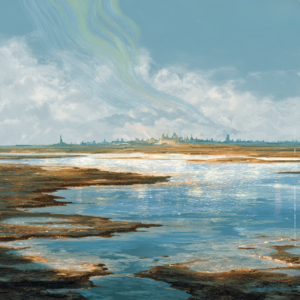
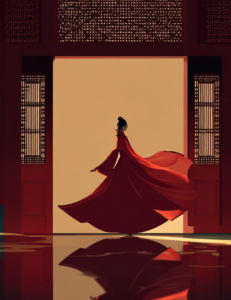
星河漫漫,孤影踏水而行。
郢都遥远,灵魂一夕九逝。
满怀忧思,斯言又能告谁?
图片:原创数字插画。
引文|当心声无法抵达,灵魂便开始远行
有些距离,
山川可以丈量,
人心却无法跨越;
当言语再也无法抵达,
灵魂便一次次踏上归途。
秋风吹过楚国的山川,
远离郢都的诗人独自行走。
昔日君臣曾有约定,
黄昏时分,本应是相见之期。
如今承诺已随人心改变。
屈原并非没有解释,
而是反复陈述自己的忠诚。
然而君王不愿倾听。
《抽思》所写的,
不只是流放的悲伤,
更是忠诚失去回应后的精神困境:
当一个人已经说尽真心,
却始终无法让对方理解自己的心意。
一|从失信到魂游:屈原的五重忧思
当世间无人倾听,诗歌便成为最后的自救。
1. 黄昏之约|君臣之间失去的承诺
「昔君与我成言兮,曰黄昏以为期。」
《抽思》从忧愁与叹息写起,
随后回望一段已经改变的关系。
「羌中道而回畔兮。」
《抽思》的第一重忧思,
不是失去君王的宠信,
而是曾经相信的承诺,
竟然失去了原有的分量。
2. 荪详聋而不闻|当忠言失去听众
「兹历情以陈辞兮,荪详聋而不闻。」
「详聋」通「佯聋」,
意味着假装听不见。
比起没有机会说话,
说了以后仍然无人倾听,
更容易使人陷入无力;
因为问题已不在言语是否清楚,
而在对方已经决定不再听。
3. 善不由外来|名声与德行的根源
「善不由外来兮,名不可以虚作。」
远离宫廷的纷扰之后,
诗人的目光转向自身。
外界可以改变对他的评价,
却不能抹去已经付出的行动;
这是《抽思》的转折点——
他不再只问君王为何失信,
而开始问:一个人的德行,
需不需要别人承认才算数。
4. 魂一夕而九逝|肉身远离,灵魂归郢
「惟郢路之辽远兮,魂一夕而九逝。」
这里的「九」不必理解为确切次数,
而是强调灵魂反复远行的强烈程度。
身体离乡越远,
灵魂归去越频繁;
肉身受山川限制,
思念却不遵守地理的边界。
5. 斯言谁告|最后的孤独
「道思作颂,聊以自救兮。」
「忧心不遂,斯言谁告兮?」
这句诗让《抽思》的意义发生转变:
写作不再只是表达悲伤的工具,
也成为诗人试图自救的方式;
当政治沟通已经受阻,
文字至少能让那些思绪获得形状。
然而,作颂并不意味着解脱。
他可以将心事写成诗篇,
却无法保证有人愿意理解。
《抽思》的第五重忧思,
是即使已经写下所有心事,
仍然不知道谁能够听见;
但“写下来”这件事本身,
已经是他能为自己做的最后一件事。
二|当《抽思》遇见 AI:歌声与字幕之间的距离
古老的文字可以重新歌唱,
现代技术却未必能够准确传达。
当歌声与字幕失去同步,
创作者也必须学会与不完美共处。
2025 年夏天,在《楚辞》AI 谱曲计划中,
《抽思》成为一场漫长的创作实验。
这首诗篇幅较长,情感层层递进,
又有「少歌」「倡曰」「乱曰」等不同结构。
最终采用的版本仍有几处错音,
而真正令人疲惫的挑战还在后面。
为了让观众理解诗句,
我在 FlexClip 中制作中文与拼音字幕,
并逐段校对歌声与文字出现的时间。
然而,编辑器中已经对齐的字幕,
输出影片后却出现了不同步的问题。
我当时曾感叹:
“我尽力了,
每个关卡都有问题,
我无法一一做好。”
这段经历也让我重新思考,
当现实无法完全符合期待,
创作者该如何在坚持品质与接受限制之间,
找到继续前行的方式?
《楚辞·九章·抽思》|AI 谱曲作品
尾声|声音可以留下,理解不能强求
有些心声,未必能够抵达当下,
却可能穿越漫长的岁月。
理解从来无法强求,
而表达本身,已是对遗忘的抵抗。
屈原曾经反复陈述自己的忠诚,
希望君王能够理解他的心意。
然而,言语终究未能改变现实,
他只能将无法排遣的忧思写入诗篇。
人无法决定自己的真心是否被接纳,
也无法要求别人给予期待中的回应;
却仍然可以选择如何表达与保存自己的思想。
有些话,
说出来是忠诚;
写下来是记忆;
唱出来,
便成为穿越时间的回声。
《抽思》没有给出明确的希望,
也没有让忧思得到真正的解脱;
然而,诗人选择将心事写下来,
在无人倾听的地方,
为自己的思想留下了一条路。
楚人对话后记|考烈王、黄歇与令尹夫人的观后感
当忠言无人倾听,究竟是谁失去了判断的能力?
《抽思》的最后一句渐渐消散。
「忧心不遂,斯言谁告兮?」
考烈王望着屏幕,久久没有说话。
过了一会儿,他转向黄歇:
「春申君,寡人倒觉得,
屈大夫最悲哀的地方,
不是他的忠言无人倾听,
而是他始终相信君王应该理解他。」
黄歇微微点头:
「大王所言不无道理。
君臣之间,本就不可能事事相合。
然而臣子进言,君王可以不采纳,
却不能因此失去辨别忠奸的能力。」
考烈王望着黄歇,笑了笑:
「春申君,你辅佐寡人多年,
应当知道朝堂之上的事情,
远比诗歌中的忠奸善恶复杂。
有时并非不愿听,
而是不能从。」
黄歇拱手回答:
「臣自然明白。
一国之君,必须权衡利害。
只是臣所忧虑的,
并非君王不从,
而是君王不察。」
我坐在一旁,忍不住问:
「这两者有什么不同?」
黄歇转头望着我:
「夫人,结果或许相同,
其中的道理却大不一样。
不采纳,是经过判断后的选择;
不倾听,则是放弃了判断的机会。」
考烈王轻轻敲了敲案几:
「说得好。
可是春申君,寡人也要问你,
若一个臣子始终认定自己正确,
君王又该如何与他相处?」
黄歇沉思片刻:
「大王,忠诚不等于永远正确,
君王也不可能永远明察。
所以朝廷真正需要的,
不是一个永远正确的臣子,
而是一个容得下不同意见的朝堂。」
忠诚不等于永远正确,
君王也不可能永远明察;
一个朝廷真正的底气,
不是有一个永远正确的臣子,
而是容得下争论。
考烈王沉默了很久,忽然轻声说道:
「春申君,寡人忽然想到:
君王在位时,人人都要听他说话。
可是君王身后,
又有多少话值得后人倾听?」
黄歇抬头望向星空:
「大王,权力能够决定一时的声音,
却未必能够决定历史的回声。」
权力能够决定一时的声音,
却未必能够决定历史的回声;
当年无人愿意听见的话,
或许正是后世反复思考的问题。
屈原没有等到他的君王,
却等到了两千多年后还在读他的人——
《抽思》问的是“斯言谁告”,
而答案,
是后来每一个愿意读它的人。
云梦泽上,夜色更深了。
只有江水缓缓东流,
仿佛仍在诉说那些未被听见的心声。
说明:本篇对话为作者依据《楚辞·九章·抽思》创作的跨越时空文学想象,并非真实历史对话。
Appendix|English Narrative Overview
When the Soul Wanders Nine Times, Who Will Hear Its Lament?
Chu Ci · Jiu Zhang · Chou Si (Drawing Out Thoughts)
When Words Can No Longer Reach the One Who Should Hear Them
Autumn winds sweep across the mountains and rivers of ancient Chu. Far from the capital of Ying, Qu Yuan looks back towards a world he once believed he could serve. His sorrow is not simply that he has been separated from his homeland. A relationship built on loyalty and mutual trust has broken down, leaving him unable to make himself understood.
There had once been a promise between ruler and minister, an appointed meeting at dusk. But the understanding that gave this promise meaning has disappeared. Qu Yuan continues to explain his intentions, only to find that his words no longer reach the person who matters most. The problem is no longer how clearly he speaks, but whether anyone in power is still willing to listen.
Chou Si follows this growing distance between two people who can no longer communicate. As the road to Ying stretches beyond his reach, Qu Yuan imagines his soul travelling home again and again in a single night. His body remains far away, but his thoughts refuse to leave the place where his hopes once belonged.
I. From Broken Promises to a Wandering Soul | Five Layers of Sorrow
The poem begins with the memory of a promise. For Qu Yuan, the loss of royal favour is painful, but the deeper wound lies in discovering that a commitment once taken seriously has lost its meaning. He had trusted the relationship between ruler and minister to provide a foundation for honest service. Now even that foundation has become uncertain.
His second sorrow arises from the failure of communication. Qu Yuan has not remained silent. He has tried to explain his feelings and defend his conduct, yet the ruler appears unwilling to hear him. There is a particular helplessness in speaking sincerely to someone who has already decided not to listen. Further explanations cannot resolve a refusal that has little to do with the words themselves.
The poem then turns towards a question of moral worth. If a person’s reputation depends entirely on the judgement of others, what remains when that judgement changes? Qu Yuan insists that goodness cannot simply be granted from outside, nor can a reputation be created without substance. The recognition of a ruler may affect his position, but it cannot erase the actions through which he has lived.
As the distance from Ying grows, his longing takes on another form. The poem imagines his soul returning to the capital nine times in a single night. The number expresses the intensity of repeated longing rather than a journey to be counted literally. Mountains and rivers may prevent a traveller from returning home, but memory crosses those boundaries without permission.
Finally, Qu Yuan turns to poetry itself. Unable to resolve his political isolation, he gives his thoughts a written form, hoping to find some measure of relief. Yet writing does not guarantee that his suffering will end. The poem closes with a question that remains unanswered: to whom can he tell what troubles his heart?
These five movements reveal a sorrow that reaches beyond exile. Qu Yuan cannot restore a broken promise, compel his ruler to listen, or determine how others judge his character. What he can still do is preserve his thoughts. Poetry becomes a way of continuing to speak when ordinary communication has failed.
II. Giving Chou Si a New Voice | Between AI Music and Subtitles
In the summer of 2025, I returned to Chou Si through my AI music project devoted to the Chu Ci. Its considerable length and changing structure presented challenges from the beginning. Lyrical passages appear alongside sections marked for different forms of singing and recitation, making the poem more complicated to adapt than a short, regularly structured song.
The final SUNO AI composition still contained several pronunciation errors. I then worked on Chinese and pinyin subtitles in FlexClip, carefully aligning the text with the singing. Although the timing appeared correct in the editor, the exported video did not always preserve that alignment.
Each stage demanded further corrections, and each correction consumed time that could have been devoted to another part of the project. Eventually, I found myself confronting a familiar question: when reality falls short of what we hoped to achieve, should we continue insisting on perfection or accept what can reasonably be accomplished?
The experience did not make the technical problems disappear. It taught me to distinguish between preserving the essential work and endlessly pursuing an ideal result. The recording remained imperfect, but the poem had acquired a new voice, and the project could move forward.
Epilogue | A Voice Can Survive Without Being Understood
Qu Yuan could not decide whether his ruler would accept his loyalty or even listen to his explanations. He could only decide what to do with the thoughts that remained. In Chou Si, he chose to write them down.
More than two thousand three hundred years later, those words can still be read, studied, and heard in new musical forms. Yet their survival does not mean that every listener will understand them. The distance between expression and understanding remains, even when technology makes communication easier.
Perhaps this is the lasting significance of the poem. A person cannot demand the response they hope to receive, but they can choose how to express and preserve what matters to them. Words spoken may be an act of loyalty; words written become memory; words sung may carry that memory across centuries.
Chou Si ends neither with reconciliation nor with a clear promise of hope. Its final question remains open. But by giving his sorrow a written form, Qu Yuan ensured that the question itself would survive.
Across Civilizations
King Kaolie, Huang Xie, and Lady Lingyin | When Power Stops Listening
The final words of Chou Si faded from the screen. King Kaolie sat quietly for a moment before turning towards Huang Xie, Lord Chunshen.
“Perhaps Qu Yuan’s deepest sorrow,” the king observed, “was not simply that his advice went unheard. He continued to believe that his ruler ought to understand him.”
Huang Xie nodded. “Your Majesty, a ruler cannot agree with every minister. But refusing advice is one thing; losing the ability to distinguish sound judgement from empty words is another.”
The king smiled. “You have served me for many years, Lord Chunshen. You know that governing a kingdom is more complicated than separating loyal men from disloyal ones. Sometimes a ruler understands an argument perfectly well and still cannot follow it.”
“Certainly,” Huang Xie replied. “A king must weigh the interests of his state. My concern is not that he may reject advice, but that he may cease to examine it.”
I had been listening beside them. “But if the advice is rejected either way, what difference does that make?”
“The difference is considerable, Lady Lingyin,” Huang Xie answered. “A decision made after careful consideration may be mistaken, but refusing to listen removes the opportunity for judgement altogether.”
King Kaolie tapped the table thoughtfully. “Then let me ask you something else. What should a ruler do with a minister who is absolutely convinced of his own correctness?”
Huang Xie paused. “Loyalty does not make a minister infallible, Your Majesty. Nor does royal authority make a king incapable of error. A court needs more than loyal advisers. It needs room for disagreement.”
The king remained silent for some time. Then another thought occurred to him.
“While a king reigns, everyone must listen when he speaks. But after his death, how many of his words will anyone still consider worth hearing?”
Huang Xie looked towards the stars above Yunmeng Marsh. “Power may determine whose voice is heard today, Your Majesty. It cannot necessarily determine which voices history will remember.”
I looked at the two men, separated from Qu Yuan by history yet now discussing the question he had left behind. His ruler had not given him the understanding he sought. Nevertheless, centuries of readers had continued to encounter his words, and I had returned to them through music.
The poem asks who will hear a sorrow that has nowhere to go. Its answer was never supplied by the court of ancient Chu. Instead, it has emerged gradually through generations of people willing to read and reconsider what Qu Yuan wrote.
Night deepened over Yunmeng Marsh. Neither the king nor Huang Xie spoke again, and the river continued flowing eastwards.
Historical and literary note: This dialogue is a fictional encounter across time, inspired by Chu Ci · Jiu Zhang · Chou Si and the history of ancient Chu. King Kaolie and Huang Xie, Lord Chunshen, belonged to a later historical generation than Qu Yuan. Their conversation with Lady Lingyin is a literary creation, not a historical record.
🤖 人工智能协作声明
本文的主题选择、田野调查、资料搜集、核心观点与中文原始内容,均由作者独立完成。创作过程中,作者与人工智能模型,进行持续协作,包括多轮讨论、思路推演、叙事节奏调整、部分翻译、英文 Narrative Overview 生成、语言检查、结构检测与文字润饰。
人工智能在此过程中,作为创作协作者,参与内容发展与语言表达,但不作为法律意义上的作者或著作权主体。所有 AI 协作产生的内容,均由作者依据田野资料、原始文献与中文母稿,进行选择、审校、修改与艺术化重构。文章的叙事方向、内容取舍、创作决策、最终表达与价值判断,均由作者决定并负责。
📜 本站所有原创作品均已完成区块链存证,确保原创凭证。部分重点作品另行提交国家版权登记,作为正式法律备案。原创声明与权利主张已公开。完整说明见:
👉 原创声明 & 节奏文明版权说明 | Originality & Rhythm Civilization Copyright Statement – NING HUANG
节奏文明存证记录
本篇博客文为原创作品,由黄甯与 AI 协作生成,于博客网页首发后上传至 ArDrive 区块链分布式存储平台进行版权存证:
- 博客首发时间:2026年11月18日
- 存证链接:c108ee7e-c2e1-4038-b35f-39d9ef2310fe (arweave.net)(已于 2026年11月17日上传)
- 原创声明编号:Rhythm_Archive_18_Nov_2026/chu-ci-jiu-zhang-chou-si-drawing-out-thoughts
- 用途声明:本文为《节奏文明观》之篇章,亦参与构建《AI×非遗文明共构档案》与《文明节奏回声计划》,用于文明节奏实地记录、区块链存证、跨域协作与版权登记用途。
© 黄甯 Ning Huang, 2026. All Rights Reserved.
本作品受版权法保护,未经作者书面许可,禁止复制、改编、转载或商用,侵权必究。
📍若未来作品用于出版、课程、NFT或国际展览等用途,本声明与区块链记录可作为创作时间及原创性的佐证。