封面图说明|
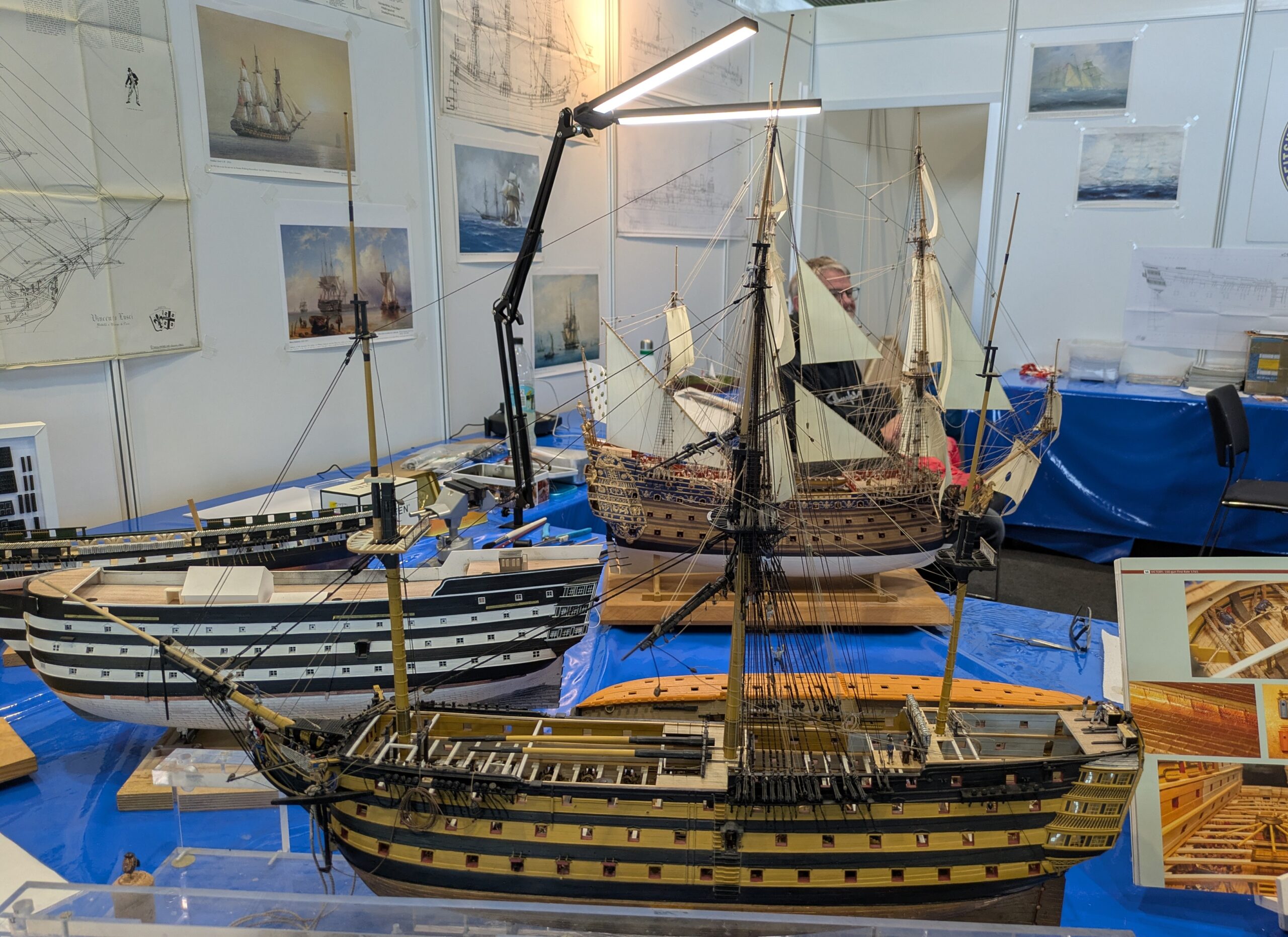
德国船模展会的展台上,
陈列着不同时期的历史帆船模型。
这些都是 Daniel Fischer 制作的英国胜利号,
展示了精密的船体结构与索具工艺。
图片说明:作者摄于2026年11月19-20日
引文|一艘战舰,六个没有门的厕所
历史记住了战舰的胜利,
却很少记住水兵的日常。
104门火炮,
约800名船员,
却只有六个供普通水兵使用的露天厕所座位。
这就是18世纪英国皇家海军,
传奇战舰胜利号上的生活现实。
1805年特拉法加海战,
纳尔逊率领英国舰队取得胜利,
胜利号也因此载入海军史册。
然而,在火炮与风帆之间,
数百名普通水兵如何生活?
2026年11月,
德国斯图加特秋季博览会上,
一位德国船模制作者,
向我展示了胜利号的另一面。
最先引起我好奇的,
竟然是六个没有门的厕所。
一|从特拉法加海战到德国船模制作者
战舰的历史写在炮火之中,
水兵的生活藏在船舱与甲板之间。
1765年5月7日,
英国皇家海军的胜利号战舰,
在查塔姆造船厂正式下水。
这艘拥有三层炮甲板的一级战列舰,
成为英国海上力量的象征。
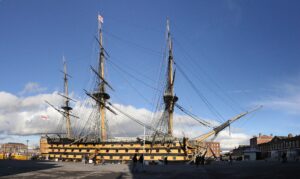
图:英国皇家海军胜利号(HMS Victory),图片来源:Wikimedia Commons|Cimosteve|CC0(公有领域)
1805年10月21日,
胜利号驶入特拉法加海战。
海军中将霍雷肖·纳尔逊,
以这艘战舰作为英国舰队旗舰,
迎战法国与西班牙联合舰队。
激烈的炮战持续了数小时,
英国舰队最终取得决定性胜利。
纳尔逊却在战斗中身负重伤,
当天在胜利号船舱内去世。
这艘战舰从此与他的名字紧密相连。
两个多世纪过去,
胜利号仍保存于英国朴茨茅斯,
成为海军历史的重要见证。
而在德国路德维希堡,
船模制作者 Daniel Fischer,
选择以另一种方式重现它的历史。
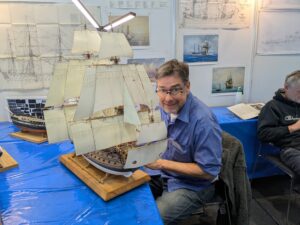
图:德国船模制作者 Daniel Fischer
从2002年开始,
他以Heller公司的1:100比例套件为基础,
反复研究并改造胜利号模型。
历史图纸、考古资料与船舶结构,
成为他重建战舰的重要依据。
他的研究并不止于船体外观,
甚至包括不同时期的涂装变化。
从船底铜板到复杂的桅杆索具,
从船首雕饰到炮甲板布局,
每一处细节都经过仔细推敲。
在2026年斯图加特秋季博览会上,
我看见了他制作的胜利号模型。
微缩甲板上站满了不同身份的水兵,
有人合力推动沉重的绞盘,
有人搬运船锚或准备操作火炮。
在另一处船舱里,
水兵们围坐在餐桌旁用餐。
军官与普通船员的生活区域,
也通过不同的微型场景呈现。
原本静止的模型,
仿佛重新出现了当年的海上生活。
2024年,英国出版的专业著作,
《Sailing Ships from Plastic Kits》,
由作者Kerry Jang专章介绍他的作品。
第九章以《Life at Sea》为题,
记录他如何重建胜利号的海军生活。
Daniel Fischer所追求的,
并不只是完成一艘精美的战舰模型。
通过长期考证与反复制作,
他试图理解那些曾在船上工作的人,
让战争机器重新成为有人生活的空间。
二|800名水兵与六个没有门的厕所
战舰可以容纳百门火炮,
却未必容得下水兵的尊严。
1|船首的秘密:六个露天厕所
在博览会上,
Daniel Fischer指着船模的船首,
特别让我看几个微型水兵。
他们没有操作火炮或整理绳索,
而是并排坐在露天厕所上!
更让我吃惊的是,
这些厕所竟然没有门。
Daniel还特地拿出一本专业书籍,
翻到介绍船首厕所的第126页,
向我解释当年的海上生活。
书中记载,约800名水兵,
只有六个共用的厕所座位。
他不但重建了船首的木质结构,
还亲手改造微型人物的姿势,
连水兵如厕的场景都不放过。

图|Daniel Fischer 的船首厕所模型

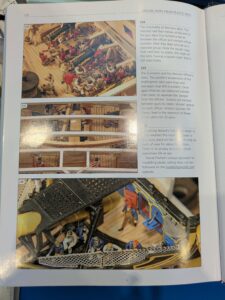
图|Kerry Jang在2024年出版的船模专著中,以《Answering Nature’s Call at the Head》介绍Daniel Fischer的船首厕所模型,并记载约800名水兵共用六个座位。
2|为什么厕所设在船首?
在古代欧洲帆船上,
普通水兵的厕所通常设于船首,
英文称为 the heads。
这里位于船体前方的外部结构,
排泄物可以直接落入海中。
船首迎向风浪时,
海水有助于冲洗污物。
但遇到恶劣天气或猛烈颠簸,
这样的厕所也十分危险。
对普通水兵而言,
隐私更是奢侈。
军官的生活条件则有所不同,
他们可以使用船尾较隐蔽的厕所。
在Daniel制作的胜利号模型中,
船尾侧廊与军官生活空间,
同样经过细致的历史复原。
一艘战舰的内部空间,
不仅按照军事功能进行安排,
也反映了严格的海军等级制度。
从船首到船尾的厕所位置,
竟然也能看出身份与待遇的差异。
等级不只写在军规里,
也藏在船舱的空间安排中。
人的生理需求不分贵贱,
战舰却为不同身份安排了不同空间。
船首是水兵的,
船尾是军官的,
风一吹,尊卑就出来了。
3|研究厕所,也是一门历史学问
更令人意外的是,
Daniel 早在 2012 年 6 月,
便在德国历史船模论坛上,
以《The Heads》为题展开研究。
开头是一句幽默的北德俗语:
„Watt mutt, datt mutt.“
意思大约是:
人有三急,该解决就得解决!
然而,这场讨论并非玩笑。
Daniel 搜集不同时期的船舶图纸,
比较船首与船尾的厕所结构,
研究座位、排水管及冲洗方式,
还参考历史绘画与其他船模。
论坛会员也纷纷加入讨论,
有人分享古船上的厕所照片,
有人讨论军官专用的卫生设施,
甚至有人注意到微型水兵,
坐在厕所上却忘了脱裤子!
这场始于2012年的讨论,
如今已经延续了十多年。
从一张图纸到一处船体结构,
从历史绘画到微型人物的姿势,
每个细节都可能引出新的问题。
Daniel 邀请我加入这个论坛,
并亲自用手机展示讨论内容。
看着那些认真考证的历史资料,
我才发现六个没有门的厕所,
竟然连接着如此丰富的海军生活史。
历史的大问题,
常常从小事上显露出来。
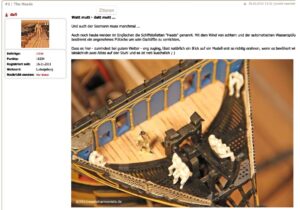
图:Daniel Fischer于2012年在德国历史船模论坛发起《The Heads》讨论,从厕所的位置、结构与使用方式,展开对帆船时代海军日常生活的考证。
尾声|当模型让普通水兵重新走进历史
战舰承载了国家的荣光,
也承载着普通人的一生。
在斯图加特的船模展台上,
Daniel Fischer 制作的几艘胜利号模型静静陈列。
三层炮甲板与复杂的索具之间,
那些微小的水兵依然忙碌,
仿佛时间停留在两百多年前。
他花了二十多年研究这艘战舰,
从船体结构到甲板上的生活细节,
不断寻找历史留下的线索。
即使是六个没有门的厕所,
也值得他认真考证与重建。
历史记住了纳尔逊的名字,
也记住了特拉法加海战的胜利。
但那些搬运船锚、操作火炮,
在狭窄船舱里吃饭的普通水兵,
大多没有留下自己的姓名。
Daniel Fischer 的微观世界,
让这些无名者重新拥有了身影。
他们不再只是战舰上的人数,
而是曾经劳动、生活与呼吸的人。
八百人同一条船,
共息,也共死。
缩小一百倍,
那些人才有位置站。
后记|考烈王、黄歇与令尹夫人的观后感
战争留下英雄,谁记得普通人?
考烈王站在胜利号模型前,
望着密密麻麻的火炮,
又看见甲板上的微型水兵。
他说:
“如此庞大的战舰,
后世记住的是哪一位将军?”
我说:
“英国人记住了纳尔逊,
可船上数百名水兵,
大多没留下名字。”
我指了指船首:
“连如厕,也只有六个没有门的座位。”
考烈王沉默了一会儿,
说:
“寡人曾拥有广阔的楚国,
却不知道每个士卒,
在军营里如何度过一天。”
黄歇俯身看了看船舱,
说:
“若有人肯这样认真地,
重现一个普通士卒的生活,
历史就不再只是君王与将领的功业。”
离开展台时,
我们回望那艘胜利号。
纳尔逊的名字早已载入史册,
而那些没有姓名的水兵,
在德国人的模型里重新有了身影。
历史记不住每个人的名字,
但可以记住他们如何生活。
说明:本篇对话为作者以楚国历史人物考烈王、春申君黄歇及令尹夫人为角色,结合历史背景创作的跨越时空文学想象,并非真实历史对话。
Appendix|English Narrative Overview
From Cannons to Toilets: Daniel Fischer and the Everyday World Aboard HMS Victory
A German Model Shipbuilder Reconstructs the Lives Behind a Legendary Warship
The scene was an exhibition hall at the Stuttgart MesseHerbst in November 2026. Among the historical sailing ship models stood several versions of HMS Victory, carefully reconstructed by German model shipbuilder Daniel Fischer. Their elaborate rigging, gun decks, and miniature crews invited visitors to examine the details of eighteenth-century naval technology. Yet the most surprising feature Fischer showed me was not a cannon or a sail. It was a group of sailors sitting on the toilets at the ship’s bow.
HMS Victory carried 104 guns at the Battle of Trafalgar in 1805 and had a crew of approximately 800 men. According to the historical reconstruction presented in Kerry Jang’s Sailing Ships from Plastic Kits, ordinary sailors shared just six toilet seats at the bow, without enclosed stalls. While naval history remembers admirals, battles, and national victories, the practical circumstances of everyday life aboard a crowded warship receive far less attention.
Fischer’s models offered an unexpected way into that neglected world. Their miniature figures did more than demonstrate the scale of the ship. They represented people who worked, ate, fought, and lived together under conditions very different from those of the officers who commanded them.
I. From the Battle of Trafalgar to a German Model Shipbuilder
HMS Victory was launched at Chatham Dockyard on 7 May 1765. Built as a first-rate ship of the line with three gun decks, she became one of the most recognizable vessels in British naval history. On 21 October 1805, she served as Vice-Admiral Horatio Nelson’s flagship during the Battle of Trafalgar, when the British fleet confronted the combined French and Spanish fleets.
The battle ended in a decisive British victory, but Nelson was mortally wounded and died aboard his flagship. His death became inseparable from the memory of Trafalgar, while HMS Victory came to symbolize British naval achievement. More than two centuries later, the ship survives at Portsmouth Historic Dockyard, where visitors can encounter a vessel that once stood at the centre of European naval warfare.
In Ludwigsburg, Germany, Daniel Fischer has pursued another way of understanding this history. Beginning in 2002, he worked with Heller’s 1:100-scale HMS Victory kit, repeatedly modifying and refining his reconstructions. Historical plans, studies of naval architecture, archaeological evidence, and research into the ship’s changing appearance informed his work. Rather than treating the kit as a finished representation, he used it as the foundation for further historical investigation.
His attention extended from the copper sheathing beneath the hull to the rigging above the decks, from decorative structures at the bow to the arrangements of the gun decks. At the Stuttgart exhibition, however, I was particularly drawn to the human figures distributed throughout the models. Some sailors operated the capstan, others handled heavy equipment or prepared the guns. Elsewhere, men sat together around a table, suggesting the ordinary routines that continued between periods of demanding work and combat.
The distinction between officers and ordinary sailors was also visible in the arrangement of spaces aboard the ship. These miniature scenes transformed a static model into something closer to a historical reconstruction of a working community. The warship was no longer simply a vessel built to deliver firepower. It became a place where hundreds of people had to organize their lives within a complex system of duties, discipline, and rank.
Fischer’s work received a dedicated chapter in Kerry Jang’s 2024 book, Sailing Ships from Plastic Kits. Chapter Nine, titled Life at Sea, presents his HMS Victory models and explains how his research and modifications brought human activity into the miniature environment. The inclusion of these everyday scenes reflects a central feature of his approach: understanding the ship not only as a technological object, but also as a place inhabited by people.
II. Eight Hundred Sailors and Six Toilets Without Doors
The Bow: An Unexpected Scene of Everyday Life
At the exhibition, Fischer directed my attention towards the bow of one of his HMS Victory models. Several miniature sailors were sitting together in a place where I would never have expected to find such a carefully reconstructed scene. They were using the ship’s toilets.
There were no doors separating them. Fischer had recreated the wooden structures and adapted miniature figures to represent the sailors using them. He then took out a professional reference book and showed me page 126, where this unusual part of his model was documented. The accompanying description noted that approximately 800 sailors had only six toilet seats available to them.
The contrast was striking. A warship could carry more than a hundred guns, employ an enormous system of sails and rigging, and support hundreds of men in combat. Yet the facilities for one of the most basic human needs remained remarkably limited. What initially appeared to be an amusing detail opened a much broader question about living conditions aboard eighteenth-century naval vessels.
The Heads: Where Rank Shaped Everyday Life
On historical European sailing ships, toilets for ordinary sailors were commonly located at the bow, in the forward structures outside the main hull. This arrangement helps explain why the English nautical term heads came to refer to toilets aboard ships. Waste could pass directly into the sea, and water washing over the bow sometimes helped clean the area.
Such arrangements offered little comfort or privacy. Rough seas could make the facilities difficult or dangerous to use, while sailors had to share a small number of exposed seats. The practical difficulties of life at sea were built into the physical organization of the vessel.
Officers generally enjoyed different arrangements, including more sheltered toilet facilities towards the stern. Fischer’s reconstructions also explore the stern galleries and living spaces associated with the officers. The contrast between bow and stern therefore reveals more than a difference in convenience. It reflects how naval hierarchy shaped the use of space and the daily experiences of people aboard the same ship.
Everyone needed to eat, sleep, and attend to bodily necessities, regardless of rank. Yet the ship assigned different spaces and degrees of privacy to different groups. Even the location of a toilet could reveal the social order of a naval community.
A Historical Discussion That Began in 2012
Fischer’s interest in naval toilets did not end with the construction of a few miniature seats. In June 2012, using the name dafi, he began a discussion about historical shipboard toilets on the German sailing ship modelling forum Segelschiffsmodellbau. The discussion, devoted to the shipboard facilities known as the heads, opened with a humorous northern German expression:
“Watt mutt, datt mutt.”
Its meaning is roughly that what needs to be done simply has to be done. Applied to the subject of toilets, the expression was an amusing introduction to a surprisingly serious historical investigation.
Fischer gathered historical ship plans, examined the structures of different vessels, and compared arrangements at the bow and stern. The discussion considered toilet seats, drainage, flushing arrangements, and the evidence preserved in historical paintings and surviving ships. Other forum members contributed photographs, drawings, technical observations, and examples from their own modelling work.
The exchanges combined detailed research with humour. At one point, a participant even noticed that some miniature sailors appeared to be sitting on the toilets without having lowered their trousers. The observation was funny, but it also reflected the extraordinary attention paid to the gestures and physical details of figures only a few centimetres tall.
The discussion continued over many years, turning an apparently minor aspect of shipboard life into an extended collaborative investigation. What interested me was not simply the number of posts devoted to historical toilets, but the method behind them. A question raised by a small model detail could lead to the examination of a drawing, the comparison of ship structures, or the discovery of an overlooked feature in a painting.
Fischer showed me the forum on his phone and invited me to join. By then, I understood that the six doorless toilets were more than a humorous addition to his model. They were one example of how historical research can begin with an ordinary question that traditional accounts of battles and admirals seldom ask.
Epilogue | When Ordinary Sailors Return to History
At the Stuttgart exhibition, Fischer’s HMS Victory models stood quietly beneath the hall lights. Their three gun decks, intricate rigging, and numerous miniature figures represented different aspects of a ship that had become part of naval legend. Yet the smallest scenes remained among the most memorable.
For more than twenty years, Fischer had studied the ship’s construction and the lives of those who served aboard her. His attention moved between the technical complexity of a warship and the ordinary requirements of human existence. Even six exposed toilet seats could become the subject of careful historical reconstruction.
Nelson’s name survives in history, as does the British victory at Trafalgar. The great majority of the sailors who handled the anchors, operated the guns, and ate together below decks are far less familiar to later generations. Most remain anonymous to us, although their labour made the ship function.
Fischer’s miniature world allows these ordinary men to become visible again. Instead of appearing merely as a crew total, they occupy places, perform tasks, and share the confined spaces of their vessel.
Eight hundred men lived aboard one ship, sharing its dangers and depending on one another. In a model reduced to one-hundredth of the original scale, they have been given individual places within the historical scene.
The ship has become smaller, but the human world it reveals has grown larger.
Across Civilizations
King Kaolie, Huang Xie, and Lady Lingyin | Who Remembers the Ordinary People?
King Kaolie stood before the model of HMS Victory, studying its rows of cannons and the miniature sailors distributed across the decks.
“Such a powerful warship,” he observed. “Which commander does posterity remember?”
“Horatio Nelson,” I replied. “He commanded the British fleet at Trafalgar. His name is remembered, but most of the hundreds of sailors aboard his ship have left little trace in popular historical memory.”
I pointed towards the bow. “For ordinary sailors, even the most basic needs were difficult to accommodate. There were only six shared toilet seats, without doors.”
The king remained silent for a moment.
“I once ruled a vast kingdom,” he said. “Yet I could not have known how every soldier lived, or what each endured during an ordinary day in camp.”
Huang Xie, Lord Chunshen, leaned forward to examine the miniature figures inside the ship.
“If someone were willing to reconstruct the life of an ordinary Chu soldier with such care,” he said, “our understanding of the past might become richer. History would no longer be concerned only with the achievements of rulers and generals.”
Lady Lingyin looked towards the sailors at the bow.
“A soldier may fight for a kingdom,” she observed, “but he must also eat, rest, and attend to the simplest needs of life. These things rarely enter the histories written about great victories.”
King Kaolie looked again at the model. The miniature sailors appeared almost insignificant beside the elaborate structure of the warship, yet without them the vessel would have remained motionless.
As we left the exhibition stand, I turned once more towards Fischer’s HMS Victory.
Nelson had secured his place in history long ago. The anonymous sailors, meanwhile, had acquired visible forms in a German model shipbuilder’s reconstruction.
Ancient Chu had also been shaped by people whose names were rarely preserved: soldiers who defended cities, craftsmen who built them, and boatmen who travelled its rivers. Their daily labour belonged to the history of the kingdom just as surely as the decisions of its rulers.
Historical records cannot preserve every individual life. But a model, an archaeological discovery, or a carefully examined everyday object can sometimes restore a small part of the world those people inhabited.
History may not remember every name, but we can still try to remember how those people lived.
Historical and literary note: This dialogue is a fictional encounter across time, featuring King Kaolie of Chu, Huang Xie (Lord Chunshen), and Lady Lingyin. It draws on the historical setting of ancient Chu and the author’s observations of Daniel Fischer’s HMS Victory models. The conversation is a literary creation, not a historical record.
📜 参考资料:
- Wikipedia. Victory (Schiff, 1778). 德文维基百科,HMS Victory 历史资料。
- Fischer, Daniel (dafi). (2012–). Watt mutt – datt mutt … / The Heads. Forum für historischen Schiffsmodellbau und Geschichte.
- HMS Victory | Royal Museums Greenwich
- HMS Victory Facts | Royal Navy Museums
- Jang, Kerry (2024). Sailing Ships from Plastic Kits. Barnsley: Seaforth Publishing (Pen & Sword Books).
🤖 人工智能协作声明
本文由作者主导构思、架构与撰写,并在人工智能模型的协作下,进行多轮讨论、叙事节奏调整、语言检查、结构检测与文字润饰。所有内容均由作者独立主创完成,AI 工具仅作为语言节奏的辅助,不参与著作权主体归属。最终内容由作者人工审校并艺术化重构,承担全部创作与价值判断责任。
📜 本站所有原创作品均已完成区块链存证,确保原创凭证。部分重点作品另行提交国家版权登记,作为正式法律备案。原创声明与权利主张已公开。完整说明见:
👉 原创声明 & 节奏文明版权说明 | Originality & Rhythm Civilization Copyright Statement – NING HUANG
节奏文明存证记录
本篇博客文为原创作品,由黄甯与 AI 协作生成,于博客网页首发后上传至 ArDrive 区块链分布式存储平台进行版权存证:
- 博客首发时间:2026年11月25日
- 存证链接:b0079e46-b2fc-4a67-814b-1839a77a80e7
- 存证平台:ArDrive(arweave.net)(已于 2026年11月20日上传)
- 原创声明编号:Rhythm_Archive_25_Nov_2026/daniel-fischer-hms-victory-cannons-to-toilets
- 用途声明:本文为《节奏文明观》之篇章,亦参与构建《AI×非遗文明共构档案》与《文明节奏回声计划》,用于文明节奏实地记录、区块链存证、跨域协作与版权登记用途。
© 黄甯 Ning Huang, 2026. All Rights Reserved.
本作品受版权法保护,未经作者书面许可,禁止复制、改编、转载或商用,侵权必究。
📍若未来作品用于出版、课程、NFT或国际展览等用途,本声明与区块链记录可作为创作时间及原创性的佐证。