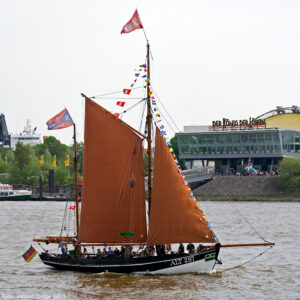
封面图说明|
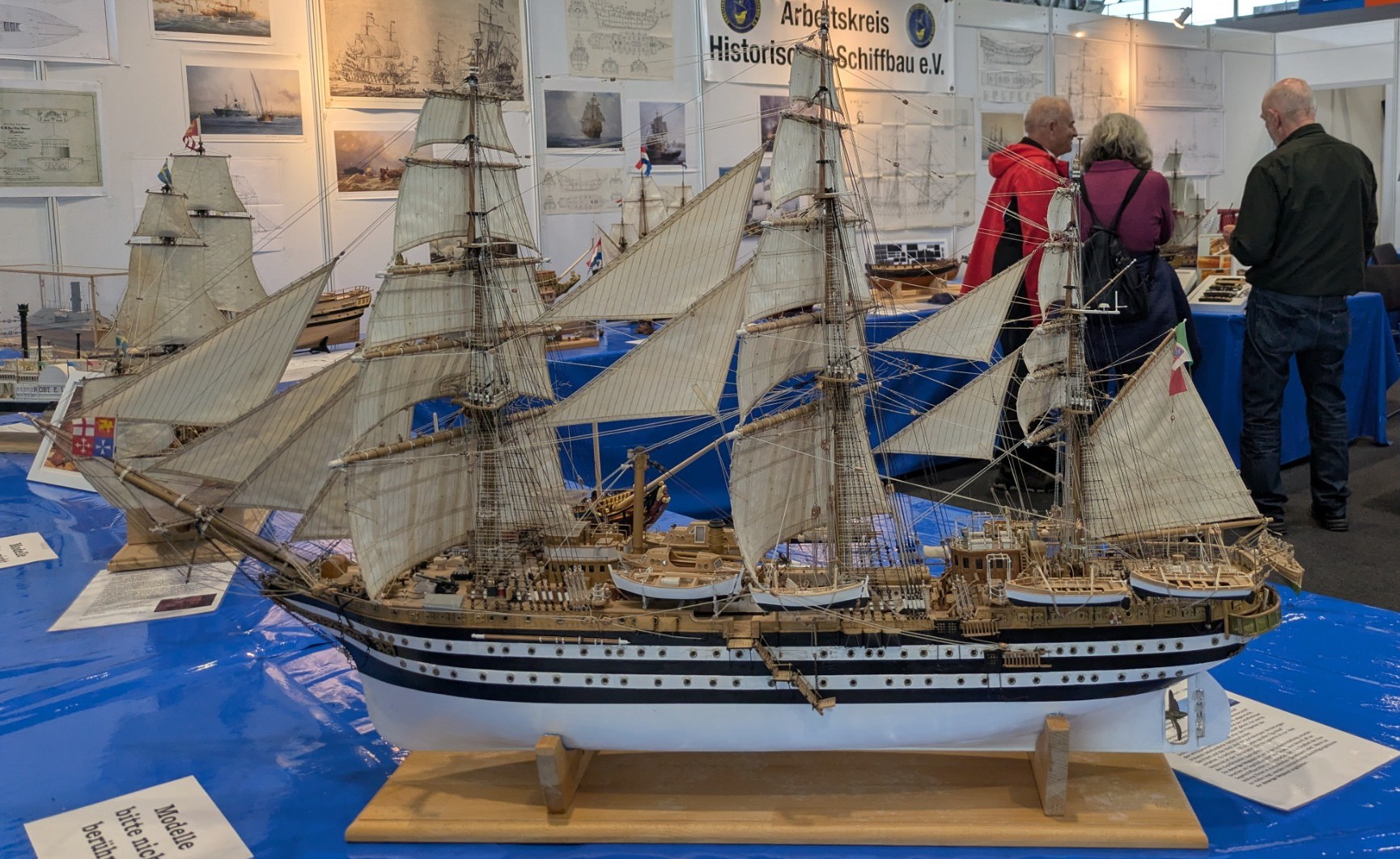
展会上停泊的历史帆船,
与正在交谈的现代人,
构成了一幅跨越时代的画面。
船舶已经成为历史,
但制造它们的知识,
仍然活在人们的双手与记忆里。
图片:作者摄于2026年11月19日至22日,斯图加特模型展览会现场。
引文|为什么模型制作是男人的世界?
当工业时代的机器逐渐成为历史,
为什么仍有一群男人,
愿意用双手重新建造它们?
2026年11月,
我参加了斯图加特的一场聚会。
这是德国历史船舶模型协会,
为会员举办的一场交流活动。
协会的德文名称是
Arbeitskreis Historischer Schiffbau e.V.。
走进东道主的家中,
我发现了一个有趣的现象。
除了家中的女主人,
在场的协会会员全是男性。
几天之后,
我又参加为期四天的模型展览。
展台上摆放着历史船模,
从古老帆船到近代军舰,
吸引着人们驻足欣赏。
而前来讨论技术的观众,
同样以年长男性居多。
关于船模协会的性别结构,
我曾与老会员 Dieter Krauss,
先后进行过两次讨论。
从会员聚会到公开展览,
这个反复出现的现象,
让我开始追问背后的原因。
模型制作需要机械知识,
也需要艺术审美与耐心;
它结合了技术与手工创造,
却长期由男性占据主导。
这究竟是兴趣的自然选择,
还是历史形成的性别分工?
视频:2026斯图加特历史船模展
一|谁把模型制作变成了男孩的世界?
模型从来没有规定主人的性别,
却在工业社会的教育与期待中,
逐渐成为男孩认识技术的世界。
1|工业革命:当机器成为现代文明的象征
十八世纪后期的工业革命,
逐渐改变了欧洲的生产方式。
蒸汽机推动工厂与交通的发展,
机器逐渐成为现代文明的象征。
然而,并非每个人都有机会,
亲自驾驶火车或操作轮船。
随着玩具工业不断发展,
真实机器开始以缩小的形式,
进入欧洲家庭的儿童房间。
1891 年,德国玩具制造商 Märklin,
在莱比锡博览会上展示模型铁路系统。
这种模块化的模型设计,
使孩子能够自行安排铁路布局。
2|男孩的玩具:技术兴趣如何被培养
进入二十世纪以后,
模型火车与机械组装玩具,
逐渐成为欧美儿童文化的一部分。
1901 年,英国发明家 Frank Hornby,
取得了机械组合玩具的专利。
这种玩具后来以 Meccano 闻名。
当一名男孩收到模型火车,
他获得的不只是一个玩具,
也可能是学习机械知识的机会;
技术玩具因此不只是商品,
更成为塑造男性身份的媒介。
3|女孩去哪了?被分配的童年兴趣
当男孩被鼓励组装机器,
女孩的童年却有不同的安排。
娃娃、厨房玩具与家庭游戏,
更经常被视为女孩的活动。
这种区别并非能力的证明,
而是社会期待的具体表现;
问题不是女孩缺乏创造能力,
而是相同的能力与兴趣,
未必得到同等程度的鼓励。
4|战后德国:模型如何成为一代人的技术记忆
1945 年第二次世界大战结束后,
德国进入重建与经济恢复时期。
对于战后成长的许多孩子,
模型铁路是一种特别的玩具。
不过,战后德国并非只有单一的技术教育模式。
研究指出,东德曾尝试通过模型,
让女孩接触工程与技术知识。
这说明技术教育的性别界线,
并非在所有制度下都相同,
而可能随着政策与教育目标改变。
5|男性主导,是天性还是历史的结果?
回顾两百多年的工业发展,
模型制作逐渐形成了独特文化。
原本形成于童年的兴趣,
逐渐发展成长期的文化传统;
女性参与人数较少,
并不能单纯归因于兴趣差异。
德国模型专业媒体 VTH,
曾以《被遗忘的一半》为题,
讨论女性在模型航空中的处境。
报道介绍了鼓励女孩参与的活动,
也呈现女性进入模型社群的可能。
当接触机会与参与环境改变,
原有的性别结构也可能松动。
二|当工程师退休,技术记忆留在模型里
退休可以结束一份职业,
却未必终止一生的技艺,
那些熟悉机器的双手,
仍在寻找创造的意义。
1|三千到五千小时:一艘船模背后的时间
在斯图加特的船模展览上,
一位年长会员告诉我,
制作一艘精细的历史船模,
大约需要三千到五千小时。
如果每天投入四个小时,
三千小时需要七百五十天。
五千小时则需一千二百五十天,
按照每天四小时计算,
相当于三年多的每日投入。
当一个人愿意投入数千小时,
他究竟在追求什么?
是对历史船舶的热爱,
还是对技术完美的坚持?
又或者,在漫长的制作中,
他找到了另一种生活意义?
2|从工程岗位到家庭工坊:技术能力的延续
德国是一个重视工程技术的国家,
机械、汽车与精密制造,
长期构成其工业发展的基础。
退休意味着离开职业岗位,
却不代表技术能力随之消失。
过去用于设计机械的知识,
如今可以用来研究船体结构;
职业经验因此获得新的用途,
也延续了个人对技术的兴趣。
不过,并非每位模型制作者,
都曾经从事工程技术工作。
有人通过阅读专业书籍、
参加协会与长期动手实践,
逐渐掌握复杂的制作技术。
兴趣本身也能培养专业能力;
一艘历史船舶的制作,
往往从寻找原始资料开始。
3|德国协会文化:男人们的技术社交空间
在德国,协会文化(Vereinskultur),
深深融入许多人的日常生活。
从体育、音乐到历史研究,
人们通过协会维持共同兴趣。
我参加的斯图加特聚会,
就是这种协会文化的缩影。
共同的兴趣让这些人相聚,
也形成了长期的社交关系;
一个人独自在家制作船模,
可能需要经历漫长的孤独劳动;
但当模型被带到协会展台,
作品便进入公共交流空间。
然而,当协会成员长期相似,
社群也可能形成进入门槛。
如何让新人容易进入社群,
便成为协会传承的重要问题。
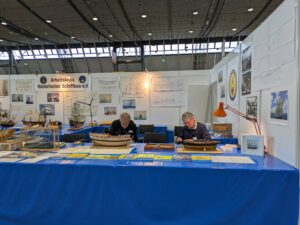
图|历史船模型协会:技术与社交的空间。德国历史船舶模型协会的展台上,
两位会员正在专注于各自的船模。
4|退休以后:模型为何成为生命的另一项事业?
现代社会经常通过职业,
判断一个人的能力与价值。
工程师、技术人员与工匠,
往往通过长期的专业工作,
建立自己的身份认同。
然而,当退休生活开始,
原本熟悉的工作节奏改变,
模型制作提供了一种可能。
一艘尚未完成的历史船舶,
意味着未来仍有明确的目标;
制作者不必追求商业利润,
也不需要满足公司的期限,
他可以按照自己的节奏,
研究、修改并完成作品。
模型制作也涉及身体活动。
双手需要操作细小的工具,
眼睛必须观察复杂的构件。
这些活动可能有助于维持,
退休生活中的身心参与;
不过,不能仅凭制作模型,
便认定一个人更健康长寿——
模型制作所提供的创造机会,
只是其中一种可能的支持。
三|一艘船模,如何保存一个时代的工业文明?
真正值得保存的历史,
不只是船舶留下的形状,
还有人类如何创造技术,
又如何借技术改变世界。
1|从历史图纸到微缩船舶:重新认识造船技术
一艘历史船舶消失之后,
人们仍可能通过图纸、照片与文献,
重新认识它的结构。
然而,文字能够记录的数据,
并不一定容易让人理解,
复杂船体的实际空间关系。
历史船模提供了另一种方式。
原本平面的历史图纸,
逐渐成为立体的船体;
人们不必登上真正的船舶,
也能观察部分设计原理。
船舶结构尤其复杂。
从龙骨到船肋与甲板,
不同部分需要相互配合。
当这些构件按比例组合,
原本抽象的技术知识,
便获得了可以观察的形态。
但历史复原并不容易。
有些原始图纸已经散失,
有些船舶经过多次改装,
不同年代留下的资料,
也可能存在相互矛盾之处。
模型制作者必须判断:
哪些结构具有可靠依据,
哪些细节仍需要推测——
一艘历史船模,
并不等于真实船舶本身。
这也说明历史模型制作,
为什么不同于普通装饰工艺。
它不仅追求外形精美,
还涉及历史证据的判断;
当制作者试图重建旧船,
他实际上也参与了一种,
以器物为中心的历史探索。
2|从胜利号到铁甲舰:船模中的技术变革
在这次模型展览期间,
我接触了不同的船舶历史。
其中让我印象深刻的,
是英国著名的胜利号战舰(HMS Victory)。
它以特拉法加海战闻名,
也保留了风帆战舰时代复杂的结构。
从模型可以观察到,
多层甲板如何安排火炮,
船舱空间又如何分配;
一艘能够远洋航行的军舰,
不仅依赖武器与航海技术,
也必须满足船员生活需求。
德国船模制作者 Daniel Fischer,
对胜利号的细节复原,
让我看见另一层历史。
从火炮到船上的厕所,
这些看似不同的设施,
其实共同组成了海军生活;
战争历史不只有战斗,
还有人在船上如何生存。
进入十九世纪以后,
工业技术改变了造船方式。
1862年,美国南北战争期间,
南方邦联的铁甲舰 CSS Virginia,
由原美国海军蒸汽护卫舰,
USS Merrimack 改装而成。
由于当时铁材资源紧缺,
部分装甲材料取自铁路铁轨,
经过重新轧制成为铁甲板,
展现了战时资源再利用,
以及蒸汽动力与装甲技术的结合。

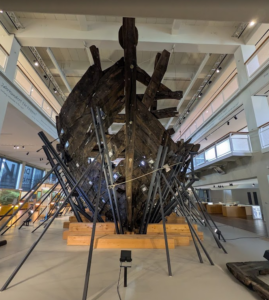
图|CSS Virginia(1862)
将这些船舶放在一起,
就能观察不同时代的变化;
一艘船模能够呈现的,
不只是船舶的外观,
还可能是某种技术为何在当时出现,
又如何受到其他技术影响。
3|当私人作品进入公共空间:模型与博物馆
博物馆保存历史文物,
也通过展览解释过去。
但大型船舶往往难以收藏,
有些甚至早已不复存在。
历史船模具有特殊优势。
它能够缩小庞大的船体,
让整体结构集中呈现。
模型是大型船舶进入博物馆,
并向公众展示的一种方式;
如果配合图纸与文字说明,
它也能够帮助解释船舶,
曾经采用的技术。
然而,私人制作的船模,
并不自动成为博物馆文物。
模型的文化价值可以存在于不同层次:
有些作品帮助解释历史,
有些展示精湛的手工技艺,
还有一些模型能够反映,
特定年代的材料与技术,
或一个社群的制作传统。
从这个意义上来说,
模型具有双重历史身份。
它既描绘过去的船舶,
也属于制作它的时代;
研究模型本身的材料、
设计与制作方法,
同样可以帮助我们认识,
技术兴趣与工艺文化的发展。
4|从个人爱好到公共知识:模型的文化价值
历史船舶模型的意义,
并不只存在于展示柜中。
在斯图加特的展览会上,
我亲眼看到这种交流。
会员向观众介绍船舶,
解释不同结构的功能。
原本复杂的技术知识,
通过模型获得了具体对象;
观众即使没有工程背景,
也可能从观察中产生兴趣。
这正是模型的重要价值。
它让技术史变得可接近,
也为不同领域的人们,
提供共同讨论的基础。
工程师关注结构与功能,
历史研究者追问时代背景,
艺术爱好者则可能欣赏,
造型比例与手工表现。
这些不同的理解方式,
并不需要彼此排斥。
技术解释模型如何运作,
历史研究它为何出现,
艺术则让人注意形式之美。
当几个视角相互结合,
模型便可能超越个人收藏,
成为公共教育的媒介。
不过,保存工业文明,
不能只依赖模型本身。
图纸、档案与原始文物,
仍然具有不可替代的意义。
只有将不同资料结合,
才能更完整地认识过去;
一艘船模无法让旧船复航,
也不能代替真实的历史,
但它可以提出新的问题,
引导人们阅读与观察。
尾声|模型背后,是一段关于工业与性别的历史
展览终有落幕的一天,
但那些凝聚一生的技艺,
能否找到下一双接续的手?
从斯图加特的会员聚会,
到展览会上的技术交流,
我不断看到相似的景象;
当目光从船模转向制作者,
那些微缩的历史船舶背后,
逐渐浮现出另一段历史。
那是关于工业文明与性别,
也是关于技艺如何传承的故事。
模型从来没有规定主人的性别,
是历史替它规定了;
一群年长的模型制作者,
仍然用双手重建历史船舶。
这不只是出于个人兴趣,
也是他们积累多年的技艺,
在晚年生活中继续施展的方式。
船模是缩小的船,
也是放大的记忆;
它记下的不只是船的结构,
还有谁被允许接近机器,
谁被留在门外。
2026年度船舶研究收官
今年的德国船舶研究,
终于可以暂时停泊了。
从历史船舶到工业遗产,
从航运技术到模型工匠,
这一年的研究旅程,
也在这里画下一个句点。
船已入港,
楚国的故事,
下一程再起航。
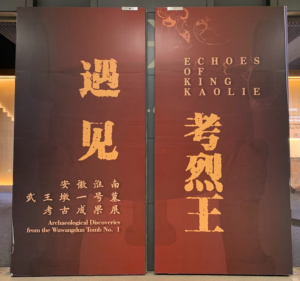
楚人对话后记|考烈王、黄歇与令尹夫人的观后感
匠人之手,何以传世?
斯图加特的模型展览结束了,
会员们正收拾桌上的船模。
考烈王站在展台旁边,
望着那些精致的历史帆船,
忍不住摇头感叹:
「春申君,你今日可看见?
那些德国的年长工匠,
竟然愿意花费数千小时,
制作一艘不能下水的船!」
黄歇笑着拱手回答:
「大王,他们制作的虽然是小船,
研究的却是真正的造船术。
从船体结构到火炮配置,
每一个细节都有讲究。
若没有这些精巧模型,
许多旧时船舶的样貌,
恐怕更难让后人理解。」
我站在两人身旁笑道:
「你们有没有注意到,
这些会员几乎都是男人?
今天在展览会上,
讨论技术的也多是男人。」
考烈王转头望着我:
「令尹夫人,寡人不解。
难道两千多年以后,
女子仍然不能学习造船?」
黄歇沉思片刻说道:
「大王,臣以为此事,
未必出于男女的天性。
若男孩从小接触机械,
女孩却少有学习机会,
成年后的兴趣与技艺,
自然可能形成差异。」
我笑着向黄歇点头:
「你说得有道理。
不过,今天的女孩,
已经拥有更多学习机会。
未来的模型协会,
或许也会出现更多女性。」
考烈王忽然指着展台:
「可是寡人更想知道,
那些老者既已退休,
为何还如此认真造船?
一艘小船不能运粮,
也不能载兵出征。」
我想起那位年长会员:
「大王,有人告诉我,
一艘精细的历史船模,
可能要做三千到五千小时。
他们已经不为薪水工作,
却仍愿意持续研究技术。」
黄歇望着收拾作品的会员:
「大王,这些老者虽然离开岗位,
却没有放下自己的本领。
人可以离开昔日的职位,
却不必停止学习与创造。」
考烈王听后微微点头:
「如此看来,人的价值,
倒不全在官位与俸禄。」
黄歇闻言笑了一笑:
「大王,只是这些精巧的船模,
真正令臣忧虑的,
并不是制作耗费时间,
而是谁来继承这门技艺。」
器物既成,百年之后,
若无人懂得制造之法,
即使保存得再完整,
也不过是供人观赏;
保存一国的技术,
不独在于保存器物,
更在于培养后来之人。
考烈王忽然望向我,
脸上露出狡黠的笑容:
「令尹夫人,你既然如此关心这些德国老工匠,
为何不亲手制作一艘?
寡人见你痴迷船舶,
却还没有造出一艘船!」
我忍不住笑了起来:
「大王,您别取笑我。
我家里没有工坊,
哪里能造复杂的帆船?
不过,有位年长会员 Michael Hübner,
借给我一本法文版造船的书。
他说等我完成第一艘船,
再把那本书还给他。」
黄歇听完微微一笑:
「夫人,这位德国老丈,
倒是懂得传授技艺。
他借出的不只是一本书,
也是邀请你亲自尝试。」
我连忙回答:
「所以我决定先用纸板。
三千到五千小时的船模,
现在实在不是我的目标。
先从最简单的船体开始,
弄清楚每块板的用途。」
考烈王哈哈大笑:
「好!寡人就等着看,
令尹夫人的第一艘船!
只是不知你的纸船,
能不能航行云梦泽?」
黄歇望着最后一艘船模,
被会员小心收进木箱,
忽然轻声说道:
“夫人,你今日写下的,
或许不只是船舶故事;
那些在展台前交谈的人,
同样值得后世记住。”
船模可以收进木箱,
技艺却要留在人手上;
器物会老,匠人会走,
唯有还在学的人,
能让一门手艺继续活下去。
展馆的灯光逐渐暗下来,
最后几位会员走向出口。
那些历史船舶留在箱中,
而关于技艺与时间的疑问,
仍陪着我们走向下一站。
说明:本篇为依据战国楚国历史人物及作者 2026 年德国船模展览经历创作的跨时空文学想象,并非真实历史记载。
参考文献
- Die vergessene Hälfte – VTH neue Medien GmbH
- Training Future Comrades: Gender Pedagogy and Model Train Sets in the German Democratic Republic – Mario Bianchini, 2026
- Flying into modernity: model airplanes, consumer culture, and the making of modern boyhood in the early twentieth century: History and Technology: Vol 25 , No 2 – Get Access
- ‘Engineering for Boys’: Meccano and the Shaping of a Technical Vision of Boyhood in Twentieth-Century Britain: Cultural and Social History: Vol 14 , No 3 – Get Access
- How a dolls house inspired a train set – National Railway Museum blog
延伸阅读
Appendix|English Narrative Overview
Why Is Model Making a Male-Dominated World?
Industrial Culture, Gender and Technical Memory in Germany
When Machines Become History, Who Continues to Build Them?
In November 2026, I attended a gathering of the Arbeitskreis Historischer Schiffbau e.V., a German association devoted to historical ship modelling, in Stuttgart. The meeting took place at a member’s home, where enthusiasts came together to exchange ideas and discuss their shared interest in historical vessels. Shortly after arriving, I noticed something unusual. Apart from the hostess, everyone attending as an association member was male.
A few days later, I participated in a four-day model exhibition. The association’s stand displayed historical ship models, ranging from traditional sailing vessels to more modern warships. Their intricate hulls, carefully arranged rigging and miniature equipment attracted visitors who stopped to examine the craftsmanship. Yet the people who came forward to discuss technical details were again predominantly older men.
I discussed this gender pattern twice with Dieter Krauss, one of the association’s longstanding members. The conversations, together with my observations at the gathering and exhibition, encouraged me to look beyond the models themselves. Why had an activity combining mechanical knowledge, artistic sensitivity, historical research and patient craftsmanship become so strongly associated with men?
Model making requires neither an exclusively masculine imagination nor abilities unavailable to women. Its gender imbalance invites a historical question: is this pattern simply the result of individual preferences, or have generations of education, industrial culture and social expectations helped produce it?
I. Who Turned Model Making into a Boy’s World?
The roots of modern technical model making reach back to the Industrial Revolution. From the late eighteenth century onwards, steam engines, railways and mechanised production transformed European societies. Ships and locomotives became highly visible expressions of technological achievement. Machines were no longer confined to specialised workplaces; they increasingly influenced how people imagined modern progress.
As manufacturing expanded, simplified representations of these machines entered domestic life. Children who could never operate a real locomotive or sail an ocean-going vessel could encounter their basic forms through miniature versions. The model offered a manageable world in which the scale of industrial technology was reduced without entirely losing its fascination.
In 1891, the German manufacturer Märklin presented a model railway system at the Leipzig trade fair. Its modular approach allowed tracks and accessories to be combined into increasingly elaborate layouts. Model railways gradually became more than individual toys. They offered children opportunities to experiment with arrangements, connections and, in later electrically powered systems, the elementary principles of mechanical and electrical operation.
During the twentieth century, technical construction toys became closely associated with boys’ education. In Britain, Frank Hornby patented a metal construction system in 1901 that later became famous as Meccano. Its perforated strips, screws, wheels and gears enabled children to assemble miniature mechanical structures. Such toys encouraged practical experimentation, but their advertising and cultural presentation also helped establish engineering as an activity particularly suited to boys.
When a boy received a model train or mechanical construction set, he was not simply receiving a toy. He might also be receiving an early opportunity to learn how technical systems worked. By assembling parts, correcting mistakes and experimenting with arrangements, he could begin to imagine himself as someone capable of understanding and manipulating machines.
Girls often encountered different expectations. Dolls, domestic play and other forms of creative activity were more frequently presented as appropriate for them, while mechanical toys were associated with male development. These distinctions did not demonstrate differences in inherent ability. They reflected the opportunities and encouragement that families, educational institutions and commercial culture distributed unequally.
The history of technical education also shows that these boundaries were not identical everywhere. Research on model railways in the German Democratic Republic has examined how technical activities could form part of educational efforts involving girls as well as boys. This suggests that the relationship between gender and technical interests is shaped partly by institutions and social objectives, rather than being fixed by nature.
After the Second World War, Germany’s industrial recovery provided another setting in which mechanical knowledge and technical interests retained considerable social importance. Model railways and construction activities became part of the childhood experiences of many people growing up in an increasingly industrialised society. For some, these early interests developed into hobbies that continued throughout adulthood.
Over time, a pattern could reproduce itself. Boys introduced to mechanical toys became adult enthusiasts, some of whom later entered technical occupations or joined established modelling associations. These associations, in turn, often reflected the experiences and social networks of their longstanding members.
But the resulting male predominance should not be mistaken for proof that women naturally lack interest in technical creativity. The German modelling publication VTH addressed this issue in an article entitled Die vergessene Hälfte (The Forgotten Half), discussing initiatives intended to bring more girls and women into model aviation.
The historical question, therefore, is not why women cannot make models. It is why so many generations of girls had fewer opportunities to discover that they might enjoy doing so.
II. When Engineers Retire | Technical Skills and the Meaning of Later Life
At the Stuttgart exhibition, an elderly association member told me that constructing a highly detailed historical ship model could require approximately 3,000 to 5,000 hours. The figure immediately changed the way I looked at the vessels on display.
At four hours of work every day, 3,000 hours would represent 750 days of effort. Five thousand hours would require 1,250 days, or more than three years of daily work at that pace. In practice, a model might take considerably longer to finish, particularly when construction takes place during weekends or spare evenings. The estimate was one member’s account of the work involved in an elaborate model, not a universal requirement for every ship.
The time invested is remarkable because these objects are not generally created to fulfil the ordinary demands of industrial production. They cannot transport passengers, carry cargo or replace the vessels they represent. Their immediate practical utility is limited, yet their makers devote enormous attention to details that many observers might barely notice.
What motivates someone to spend thousands of hours on a ship that will never sail?
For enthusiasts with professional backgrounds in engineering or technical work, model making can offer a continuation of familiar intellectual activities. Knowledge once applied to machinery, materials, structural design or precision measurement can find another purpose in the construction of miniature vessels. Retirement may bring an end to paid employment, but it does not necessarily bring an end to curiosity or technical competence.
Not every modeller has worked as an engineer. Some develop their expertise independently through books, historical research, association activities and years of practical experimentation. Model making can be both an application of existing knowledge and a means of acquiring new skills.
A historical ship model may begin with drawings, measurements and the examination of surviving evidence. Individual components must then be interpreted, reduced to the selected scale and assembled into a coherent structure. Mistakes demand correction, materials behave differently from expectations, and seemingly minor details may require extensive experimentation.
The activity therefore involves much more than repetitive manual labour. It demands sustained attention, decision-making and the ability to solve practical problems. For some retired enthusiasts, this continuing engagement may be one of the most rewarding features of the hobby.
The German tradition of Vereinskultur, or association life, adds an important social dimension. Clubs and associations bring together people with common interests, allowing them to share experience beyond the boundaries of their professions and families.
The gathering I attended in Stuttgart illustrated this culture particularly clearly. Men from different backgrounds came together because of their fascination with historical ships. During the subsequent exhibition, their knowledge became a means of communicating with visitors and with one another.
A model that had been constructed in relative solitude at home entered a public setting. Its maker could explain difficult problems, discuss historical details and receive questions from people interested in the same subject. What might have been an intensely individual activity became a shared experience.
For older participants, such interactions may offer continuity, recognition and a sense of belonging. A completed model gives tangible form to years of effort, while an unfinished model provides a reason to continue researching, experimenting and learning.
This does not mean that model making automatically improves health or guarantees a more satisfying retirement. Experiences of later life differ considerably. Nevertheless, activities combining manual engagement, intellectual effort and social participation can provide meaningful opportunities for continued involvement.
There is also a paradox within traditional modelling associations. The depth of expertise that makes them attractive can make them difficult for newcomers to enter. Specialised terminology, established friendships and long-standing working habits may feel unfamiliar to younger visitors or women with little previous exposure to the hobby.
An association composed largely of older men may therefore face questions about its future membership. How can a community preserve its distinctive interests while remaining accessible to people with different backgrounds?
The issue is not simply whether younger generations will reproduce the same interests. It is whether the association can create opportunities for them to discover those interests in their own way.
III. A Ship in Miniature | Preserving the Memory of Industrial Civilisation
A historical ship model performs a function that goes beyond personal recreation. It can make a complex technological object visible and comprehensible, even when the original vessel has disappeared.
Historical ships survive in different forms: drawings, photographs, written descriptions, archaeological remains and, occasionally, preserved hulls. Each source provides a particular kind of information. Yet written measurements and flat plans do not always communicate the spatial relationships among different parts of a vessel.
A three-dimensional model offers another way of examining these relationships. The arrangement of a keel, frames, decks, masts and rigging can become visible in a single object. Viewers do not have to board a full-sized ship to begin understanding aspects of its construction.
Such reconstruction also requires historical judgment. Original plans may have disappeared, surviving documents may contradict one another, and a ship may have undergone repeated modifications during its working life. The modeller must decide which features are supported by evidence and which remain uncertain.
A model should therefore not be confused with the historical vessel itself. The process of reducing scale, selecting materials and interpreting incomplete evidence introduces limitations. The value of a historical reconstruction depends partly on how carefully its maker recognises and addresses them.
This became particularly meaningful to me through the models associated with HMS Victory, the eighteenth-century British warship famous for its role in the Battle of Trafalgar. A model can reveal aspects of its multi-deck structure, including the arrangement of guns and the division of space aboard a large sailing warship.
Yet naval history is not confined to weapons, battles and famous commanders. A vessel undertaking an extended voyage also had to accommodate the everyday needs of its crew.
The work of German ship modeller Daniel Fischer helped me explore this less frequently discussed side of maritime history. His attention to details extending from cannon arrangements to toilets aboard HMS Victory raised questions about how sailors lived within the limited space of a warship.
The contrast between cannons and toilets might initially appear amusing. In reality, both belonged to the functioning world of a naval vessel. One concerned warfare; the other concerned everyday survival. Together, they remind us that military history is also a history of ordinary human lives.
The development of ironclad warships during the nineteenth century offers another example of how models can illuminate technological change. The French warship La Gloire, launched in 1859, combined a wooden hull with iron armour. Britain’s HMS Warrior, launched the following year, incorporated an iron hull and armour protection.
Placed within a broader history of shipbuilding, such vessels reveal the growing importance of metallurgy, mechanical engineering, steam propulsion and industrial manufacturing. A series of models representing different periods can help viewers recognise how technological systems developed in relation to one another.
This also explains the value of models in museums. Many historic ships are too large to collect or display in their entirety, while others no longer exist. A carefully documented model can provide a visual and spatial representation that supports historical explanation.
However, a privately constructed model does not automatically become a museum artefact of historical significance. Its value must be considered in relation to its accuracy, provenance, craftsmanship, age, documentation and intended interpretation.
Models may also possess a double historical identity. They represent vessels from an earlier period, but they are themselves products of the time in which they were constructed. Their materials, techniques and design choices can reveal how a later generation understood the technological achievements of the past.
In this sense, the history of model making is not only about ships. It is also about the people who chose to reproduce them, the knowledge available to them, and the standards of craftsmanship that guided their work.
At the Stuttgart exhibition, I watched association members explain their models to visitors. Technical concepts that might appear abstract in a textbook became easier to discuss when connected to visible structures. A visitor without an engineering background could still become interested in how a particular component worked.
Engineers, historians and artists might approach the same model with different questions. One may focus on structural accuracy, another on historical context, and a third on proportion, form and craftsmanship. These approaches need not compete. Together, they can deepen the interpretation of technological heritage.
A miniature ship cannot bring an old vessel back into service, nor can it replace the original historical evidence. But it can encourage people to ask new questions, examine old sources and consider how technology shaped human experience.
Epilogue | The Ship Is Small, but the Memory Is Large
From the members’ gathering in Stuttgart to the conversations at the exhibition, I repeatedly encountered the same social pattern. A community of predominantly older men had devoted remarkable amounts of time and skill to reconstructing vessels from the past.
Their models revealed more than an interest in maritime technology. They also reflected the history of industrial education, the distribution of technical opportunities between boys and girls, and the ways in which professional knowledge can remain meaningful long after retirement.
Models have never possessed a gender of their own. Their association with masculinity emerged through historical circumstances, educational practices and social expectations.
A miniature ship is also an enlarged memory. It preserves not only the appearance of a vessel but traces of the society that valued particular kinds of knowledge, encouraged certain people to approach machines and offered others fewer opportunities to enter the same world.
As the exhibition came to an end, members began preparing their carefully constructed ships for transport. Vessels that had required years of effort would return to their boxes, workshops and private collections.
The objects might survive for many years. The people who made them would not remain forever.
What would happen to the accumulated experience behind those models? Would future generations still be willing to spend hundreds or thousands of hours studying historical construction methods?
Perhaps the future of model making need not depend on preserving an exclusively male tradition. Its possibilities may become richer when technical knowledge, artistic creativity and historical curiosity are shared among people of different generations and genders.
The vessels can be placed safely in their boxes. The knowledge behind them needs something else: people willing to learn.
Across Civilizations
King Kaolie, Huang Xie, and Lady Lingyin | How Can a Craftsman’s Knowledge Survive?
The Stuttgart model exhibition was drawing to a close. Association members were carefully packing their historical ships, protecting the delicate masts, rigging and miniature fittings before carrying them away.
King Kaolie stood beside the exhibition stand, watching the preparations with obvious astonishment.
“Lord Chunshen, did you see those elderly German craftsmen? They spend thousands of hours constructing ships that cannot even sail! In all my years ruling Chu, I have rarely encountered such extraordinary patience.”
Huang Xie smiled and bowed slightly.
“Your Majesty, their ships may be small, but the knowledge they study is real. The structure of the hull, the positioning of the guns, the arrangement of the decks—every detail has a purpose. Without such models, some historical vessels would be much harder for later generations to understand.”
I turned towards them.
“Did you notice something else? Almost everyone in the association was male. We saw it at the members’ gathering, and we saw it again here at the exhibition. Most of the people discussing technical details were older men.”
King Kaolie looked genuinely puzzled.
“Lady Lingyin, are you telling me that more than two thousand years into the future, women are still not allowed to learn how to build ships?”
“It isn’t quite like that,” I replied. “Women can certainly learn. But for generations, boys were more frequently encouraged to play with mechanical toys and explore technical subjects. Girls often received different encouragement. Those early experiences helped shape the interests people carried into adulthood.”
Huang Xie considered my explanation.
“Then the distinction is not necessarily one of natural ability. If boys are given machines to examine while girls rarely receive the same opportunities, their later interests may reflect the different worlds in which they were raised.”
“Exactly,” I said. “And the situation can change when more people are given opportunities to participate.”
King Kaolie glanced towards an elaborate sailing ship being prepared for transport.
“But there is something else I do not understand. Many of these men have already retired. Their ships cannot carry grain or transport soldiers. Why do they continue working so seriously?”
“One of the members told me that an elaborate historical ship model might require between three thousand and five thousand hours,” I explained. “They are no longer completing these projects for an employer. Yet they still enjoy researching, solving technical problems and creating something with their own hands.”
Huang Xie watched an elderly member examining a model before it was packed.
“Perhaps leaving one’s profession does not mean leaving one’s abilities behind. Knowledge acquired over a lifetime can continue to find new uses. These men may have retired from their former occupations, but they have not retired from learning.”
King Kaolie nodded thoughtfully.
“Then a person’s value cannot be measured entirely by official rank or salary. Even after leaving office, one may continue to create something worthwhile.”
For a moment, Huang Xie looked unusually serious.
“Your Majesty, I am thinking about something beyond the time spent constructing these ships. What concerns me is who will inherit the knowledge of their makers.”
He looked towards the remaining vessels.
“Once an object has been completed, who will understand how it was made a hundred years later? Even if the object survives intact, it may become little more than something to admire if no one remembers the methods behind it. To preserve a country’s technical abilities, one must preserve more than its objects. One must also cultivate people who can continue the work.”
King Kaolie turned towards me with a mischievous smile.
“Lady Lingyin, since you are so concerned about these German craftsmen, why don’t you build a ship yourself? You have spent so much time studying vessels, yet I have not seen you make even one!”
I burst out laughing.
“Your Majesty, I don’t have a shipbuilding workshop at home! How am I supposed to construct one of these complicated wooden sailing ships? But there is something I haven’t told you. An elderly member named Michael Hübner lent me a French-language book about model shipbuilding.”
“And what did he ask in return?” Huang Xie inquired.
“He told me I could keep the book until I had built my first ship. Only then would I need to return it.”
Huang Xie smiled.
“Then he understands something important about teaching. He has not merely lent you a book. He has given you an invitation to begin learning.”
“That’s why I’ve decided to start with cardboard,” I replied. “A model requiring five thousand hours is certainly not my first objective. I would rather begin with a simple hull, identify the individual parts and understand how they fit together.”
King Kaolie laughed heartily.
“Excellent! Then I shall look forward to Lady Lingyin’s first ship. But tell me, will your cardboard vessel be able to cross Yunmeng Marsh?”
I shook my head, laughing.
“Your Majesty, my first ship doesn’t have to carry soldiers across a river. It only has to help me understand how a ship is made!”
At that moment, the last model was being carefully placed into its wooden transport box.
Huang Xie watched the member close the lid before speaking quietly.
“Lady Lingyin, perhaps what you have written today is not simply the story of historical ships. The people who stood beside these models, discussing and sharing their knowledge, also deserve to be remembered.”
His words stayed with me.
A ship model can be packed into a box, but craftsmanship cannot be preserved by storage alone. Objects grow old, and their makers eventually depart. A skill continues to live only when someone remains willing to practise and learn it.
The exhibition hall gradually became quieter as the final visitors and members made their way towards the exit.
King Kaolie, Huang Xie and I left together, as we had travelled together throughout this journey into German maritime culture.
The historical ships were safely packed away. But the questions they had raised about knowledge, time and human creativity accompanied us towards our next destination.
Historical and literary note: This dialogue is a fictional encounter across time, inspired by the history of ancient Chu and the author’s observations at a German ship-modelling exhibition in November 2026. King Kaolie, Huang Xie (Lord Chunshen), and Lady Lingyin are presented as companions witnessing the modern exhibition together. Their conversations are literary inventions, not historical records. The contemporary observations involving association members and the borrowed shipbuilding book derive from the author’s account, while the ancient characters’ responses are imagined.
🤖 人工智能协作声明
本文的主题选择、田野调查、资料搜集、核心观点与中文原始内容,均由作者独立完成。创作过程中,作者与人工智能模型,进行持续协作,包括多轮讨论、思路推演、叙事节奏调整、部分翻译、英文 Narrative Overview 生成、语言检查、结构检测与文字润饰。
人工智能在此过程中,作为创作协作者,参与内容发展与语言表达,但不作为法律意义上的作者或著作权主体。所有 AI 协作产生的内容,均由作者依据田野资料、原始文献与中文母稿,进行选择、审校、修改与艺术化重构。文章的叙事方向、内容取舍、创作决策、最终表达与价值判断,均由作者决定并负责。
📜 本站所有原创作品均已完成区块链存证,确保原创凭证。部分重点作品另行提交国家版权登记,作为正式法律备案。原创声明与权利主张已公开。完整说明见:
👉 原创声明 & 节奏文明版权说明 | Originality & Rhythm Civilization Copyright Statement – NING HUANG
节奏文明存证记录
本篇博客文为原创作品,由黄甯与 AI 协作生成,于博客网页首发后上传至 ArDrive 区块链分布式存储平台进行版权存证:
- 博客首发时间:2026年11月26日
- 存证链接:d4113114-736c-4b35-97f5-42473922966c
- 存证平台:ArDrive (arweave.net)(已于 2026年11月25日上传)
- 原创声明编号:Rhythm_Archive_26_Nov_2026/why-model-making-is-male-dominated-germany
- 用途声明:本文为《节奏文明观》之篇章,亦参与构建《AI×非遗文明共构档案》与《文明节奏回声计划》,用于文明节奏实地记录、区块链存证、跨域协作与版权登记用途。
© 黄甯 Ning Huang, 2026. All Rights Reserved.
本作品受版权法保护,未经作者书面许可,禁止复制、改编、转载或商用,侵权必究。
📍若未来作品用于出版、课程、NFT或国际展览等用途,本声明与区块链记录可作为创作时间及原创性的佐证。