封面图说明|
阳光下的蜀葵,
一节一节向上生长。
可是当我们抬头看花时,
很少会问:
支撑这些高度的力量,
藏在哪里?
摄影:安庆龙
拍摄:2026年9月
全文图片感谢安庆龙提供并授权作者使用。
引文|为什么我老是收到「节节高」?
我们总在看一株植物还能长多高,
却很少低头问一句:
上面不断增加的重量,
最后由谁承载?
以前,北京好友安庆龙给我发过芝麻花,
那是我第一次看见芝麻开花。
小小的花沿着细长的茎,
一节一节往上生长,
他说:「芝麻开花节节高。」
后来,他又发来蜀葵。
红的、粉的花沿着高高的茎开放,
有的已经盛开,有的还在等待。
他说,蜀葵也叫「节节高」。
我突然觉得奇怪,怎么又是它?
我们说起「节节高」,
眼睛总是不自觉地往上走。
看花又开了一层,
看植物又长高了一截,
于是,向上也成了一种祝福。
可是最近,我刚好在学《船体结构》,
再看这些高高的植物,
我的眼睛却慢慢往下走。
我不再只想知道它能长多高,
而开始好奇,它为什么没有垮?
如果每一节继续向上,
新的重量也随之增加。
风还在吹,花还在开,
新增的重量与风的作用,
形成的载荷去了哪里?
最后,又由谁来承载?
一、我们只看见花往上开,却没有看见下面正在承受什么
所谓「节节高」,
看见的是不断向上的花,
看不见的,
却是下面不断增加的承受。
1. 芝麻开花
我第一次看见芝麻开花,
是安庆龙发来的一张照片。
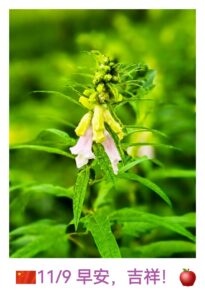
以前只认识碗里的黑芝麻,
却从来没有想过,
芝麻原来是这样开花的。
花沿着茎,一节一节出现。
下面的花先开,
上面的花随后继续。
「芝麻开花节节高」,
原来真的是可以看见的。
一根细细的茎上,
其实同时放着几个时间:
下面已经走过,
中间正在发生,
上面还没有到来。
所以我开始觉得,
「节节高」不只是高度,
它把原本看不见的时间,
沿着一根茎展开,
变成了可以看见的空间。
2. 丈高与颜色多彩的蜀葵花
后来,安庆龙又发来一种花,
我完全不认识,
就问他这是什么,
他说:「蜀葵,节节高。」
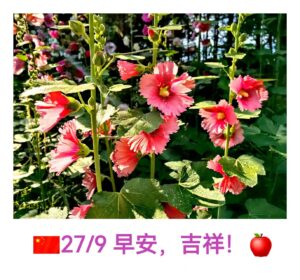
我第一反应是:怎么又是节节高?
于是我跑去查蜀葵,
这一查才发现,
这种看起来只是漂亮的花,
植株竟然可以长到两米左右。
我这才重新回去看他的照片和要更多照片。
原来照片里没有告诉我的,
是它真正的高度。
花可以沿着直立的茎展开,
有的已经开放,
更上面还有等待开放的花苞。
这时候,「节节高」变了。
它不再只是一句吉祥话,
也不只是花往上开的样子。
我第一次开始注意到,
高度本身需要结构来维持。
一株植物继续向上生长,
增加的不只是高度,
新的茎、叶与花出现,
自身的重量也在增加,
风吹过时,还有外部的作用。
于是我看蜀葵的方向,
开始从花往下移动,
不是因为花不重要,
而是我最近刚好在学《船体结构》,
我的眼睛开始寻找另一件东西:
载荷。
原来每一次「向上」,
都同时发生着另一件事:
新的东西被加了上去,
原有的结构,
必须继续把它撑住。
二、一艘船告诉我:载荷不会消失,它必须找到路径
载荷来了,
不会凭空消失。
它会进入结构,
沿着不同的路径传递。
真正重要的,
是结构怎样回应它。
1. 船不是一块钢板
刚开始看《船体结构》时,
我对船底的想象很简单。
既然要托住这么大一艘船,
下面大概就是很厚的钢板。
后来才发现,完全不是这样。
船底当然有钢板,
但钢板下面还有骨架,
有纵向的构件,
也有横向的构件,
它们共同组成船底结构。
因为船底面对的力很多。
海水从下面产生压力,
货物和机器设备也有重量,
整艘船发生总纵弯曲时,
船底同样参与承受力量。
所以问题并不只是,
这块钢板到底够不够厚,
我开始注意另一件事:
力进入结构以后,
接下来会往哪里走?
2. 力来了以后,会往哪里走?
船底受到局部载荷时,
并不是某个构件独自承担。
例如船底的肋板,
会承受船底的局部载荷,
再把它传递到船侧。
到了船的舷侧,
那里也不是只有一层钢板,
外板后面还有主肋骨,
用来支撑舷侧外板,
它们又与其他构件连接。
有些位置还设置舷侧纵桁,
它可以支持主肋骨,
也把一部分载荷继续传递,
交给强肋骨和横舱壁,
力就这样继续走下去。
我这才慢慢明白,
所谓「承载」并不是硬扛:
一个构件接住一部分,
再把力量交给其他结构,
整个船体一起回应载荷。
承受 → 传递 → 分配 → 再承受。
3. 为什么船不是哪里都一样厚?
接下来还有一件事,
让我觉得很有意思。
如果坚固真的那么重要,
为什么不把整艘船的钢板,
全部做得一样厚?
船体结构偏偏不是这样,
船中有些区域比较厚,
向船首、船尾可以逐渐减薄,
平板龙骨和舷顶列板等位置,
又有不同的加强要求。
舷侧结构也是如此,
除了普通的主肋骨,
有些地方会设置强肋骨,
也可以增加舷侧纵桁,
需要加强的地方,再加强。
原来一艘船的坚固,
并不来自处处一样,
不同的位置面对不同的力,
结构也作出不同的回应,
材料因此被放在需要的地方。
不是所有地方,
都必须一样坚强,
载荷在哪里出现,
结构就在那里回应,
力量,也因此有了去处。
这时候,我又想起了蜀葵。
也许真正值得看的,
从来不只是它长了多高,
而是当新的重量不断出现,
原有的结构怎样继续承受。
一株花和一艘船,
当然不是同一种结构。
但它们让我开始看见,
「节节高」的另一面:
每一次增加,
都带来新的载荷,
真正成熟的结构,
不是让每一个位置,
承担同样的重量。
三、节节高,不是不断往上,而是不断重新组织承载
真正的节节高,
不只是不断增加,
每一次向上,
都会改变原来的承载关系,
能够继续生长的结构,
也必须随之调整。
1. 我们为什么如此迷恋「向上」
「节节高」这个词,
在我们的语言里总是向上的,
职位更高,收入更多,规模更大,
成长仿佛天然意味着继续增加,
我们也习惯把「更多」理解成「更好」。
企业希望继续扩张,
系统希望不断升级,
个人也习惯累积更多成果,
完成这一件以后,还有下一件,
抵达这一层以后,还想寻找下一层。
我们不断寻找生命里的「下一节」,
不断问自己还能走到哪里,
还能增加什么,还能完成什么,
眼睛总是不自觉地继续向上。
可是我们通常只问,
下一节在哪里?
却很少回头问,
上一节还承受得住吗?
从《节奏文明观》来看,
文明本来就不是一条向上的直线,
不同结构同时发生,
也同时彼此牵动,
一个部分发生变化,
其他关系也可能随之改变,
系统因此始终处在持续组织之中。
2. 增长本身会制造新的载荷
一个系统每增加一层,
得到的不只是新的成果,
新的连接、新的责任与新的任务,
也同时进入原来的结构。
原来已经形成的关系,
需要承接这些新的东西,
增长因此从来不是单纯的加法。
规模扩大以后,需要更多协调,
信息增加以后,需要更多处理,
连接变多以后,需要更多维护,
新的可能出现,也同时带来新的风险。
所以增长并不是单向累积,
它会改变原有结构面对的条件,
原来能够稳定运行的关系,
也可能因此需要调整,
增加本身,
已经改变了系统。
这与《节奏文明观白皮书》里的「材料」维度正好发生连接,
材料能力改变,
会改变世界的重量,
重量改变行动方式,
行动方式又改变节奏,
文明结构也因此被重新组织。
增长不是只有收益,
增长本身也会制造载荷。
3. 成熟,不是无限增强,而是重新组织承载
这时候,再回头看船,
前一章的问题变了:
面对不同位置的载荷,
船体并没有处处一样,
而是让不同结构各自承担。
有些地方需要加强,
有些地方不必加厚,
不同的位置面对不同的力,
结构也作出不同回应,
这不是平均分配力量。
把这个观察放回《节奏文明观》,
并不是说文明就是一艘船,
船体结构只是让我看见,
当外部条件发生变化,
内部关系也需要调整。
白皮书第一版已经提出,
系统是节奏的组织网络,
不同模块彼此连接,
也可以组合、调用与协作,
关系就在运行中形成。
而这些关系并不固定,
不同维度会彼此改写,
材料改变身体的动作,
身体又改变空间的感知,
系统也会反过来影响行动。
白皮书也留下一个边界,
结构不能无限僵化,
当结构过度僵化时,
节奏便无法适应变化,
系统也可能因此失衡。
于是,「节节高」变了,
它不再只是继续向上,
也不是不断增加成果,
每一次新的增加,
都改变原来的承载关系。
成熟也不意味着硬撑,
更不是把所有地方加厚,
新的载荷出现以后,
原有关系需要重新调整,
承载,也因此重新组织。
一个能够持续生成的系统,
不是每增加一层,
就让原来的结构再硬撑一点,
而是在新的载荷出现以后,
重新组织彼此的关系,
让增长落在能够承受的范围之内。
上一篇的胭脂稻写的是「偏差」,
这一篇写的是「载荷」,
一个让我看见重新定位,
一个让我看见重新承载,
它们最后走向同一个问题:
稳定并不是保持不变,
成长也不是不断增加,
结构能够持续生成,
正因为它面对变化时,
仍能重新组织自己。
胭脂稻:
稳定不是没有偏差,
而是能够识别、判断,
并回应偏差。
芝麻开花与蜀葵:
成长不是不断增加,
而是能够随着增长,
重新组织承载。
尾之声|花在上面,答案却可能在下面
我们总在看盛开的地方,
却很少顺着它,
一路往下看。
我又回去看安庆龙发来的照片,
还是那些芝麻,
还是那些蜀葵,
照片其实一点都没有变。
变的是我看它们的方向,
以前第一眼看见的是花,
现在却会顺着花慢慢往下,
去看那些原本没有注意的地方。
花,
茎,
节,
下面的一节,
再下面的一节,
土地。
原来一朵花向上开放时,
下面已经有许多东西,
正在安静地接住它。
再看一艘船时,
我的眼睛也开始这样移动,
从最容易看见的地方,
一路走向藏在下面的结构。
甲板,
舷侧,
肋骨,
船底,
海。
于是我才发现,
我们总是很容易看见上面,
却很少注意下面,
而真正的承载往往并不显眼。
我们总喜欢抬头看,
看下一朵花会在哪里开放。可是所有真正能够继续向上的结构,
都有一个很少被看见的问题:
下一节到来以前,
谁正在下面承载?
照片里的花还在往上开,
而我的眼睛已经学会往下走。
所谓节节高,
也许从来不只是向上。
它同时也是一次又一次,
对承载关系的重新安排。
后记|考烈王、黄歇与令尹夫人的观后感
大王也想「节节高」
考烈王站在花前,
抬头看着一株蜀葵,
花沿着长长的茎往上开,
看了一会儿,忽然说道:
“这个名字好,
节节高,
寡人喜欢。”
我站在旁边问:
“为什么?”
考烈王理所当然地说:
“还能为什么,
一节比一节高,
当然是越高越好。”
黄歇没有看花,
反而顺着花茎往下看,
看了一会儿才问:
“那下面呢?”
考烈王愣了一下:
“什么下面?”
黄歇指着花茎:
“上面每多一节,
就多了一点东西,
花不会凭空浮在那里,
总要有人承载。”
考烈王又抬头看花:
“不过是一株蜀葵,
你们两个看一朵花,
也能看到朝政?”
我摇摇头:
“没有,
我看到的是船。”
考烈王转过头来看我:
“……又是船?”
我点头:
“最近在学船体结构,
看什么都容易往下看,
先看花,
再看茎,
然后就想知道载荷去了哪里。”
考烈王沉默了一会儿:
“所以别人送你一张花的照片,
你最后也能开船?”
黄歇笑了:
“大王应该习惯了,
上次一株稻,
她已经开过一次。”
考烈王看着我:
“那你这次又发现什么?”
我想了一下:
“以前看到节节高,
我也只会往上看,
看下一朵花开在哪里,
看它还能长到多高。”
我指了指下面:
“现在却会想,
每增加一节以后,
原来的结构,
是不是还接得住。”
考烈王不以为然:
“接不住就加固,
不够就再加,
这有什么难的?”
黄歇看了他一眼:
“大王果然适合节节高。”
考烈王很满意:
“那当然。”
黄歇慢慢补了一句:
“因为大王只管往上加,
从来不问下面,
是不是已经快撑不住了。”
考烈王:“……”
我忍不住笑:
“所以船不能这样造,
不是所有地方一起加厚,
而是看载荷在哪里,
再决定谁来承受。”
考烈王看着我们两个:
“所以你们绕了一大圈,
其实不是在讨论高不高,
而是在讨论谁来撑?”
黄歇点头:
“高只是看得见的结果,
承载却常常藏在下面,
真正决定还能不能继续向上,
反而是那些不显眼的地方。”
考烈王重新看向蜀葵,
这一次没有马上抬头,
而是顺着花茎慢慢往下,
一直看到土地。
过了一会儿,
他忽然问我:
“令尹夫人,
你以后还能不能,
正常看一朵花?”
我认真想了一下:
“恐怕有点难。”
黄歇淡淡地说:
“尤其不要再给她看船。”
考烈王立刻点头:
“寡人记住了。”
风吹过来,
蜀葵轻轻晃了一下,
花还在上面开着,
下面的茎依然稳稳接着。
「节节高」真正有意思的地方,
也许从来不只是下一节,
究竟还能长到哪里。
所有人都在祝你节节高。
很少有人问你,
越来越高以后,
谁正在下面承载。
Appendix|English Narrative Overview
After Growing Higher, What Bears the Load? — From Sesame Blossoms and Hollyhocks to the Loads on a Ship
Looking Up — and Then Looking Down
Some time ago, my friend An Qinglong in Beijing sent me a photograph of sesame blossoms. It was the first time I had ever seen sesame in bloom. The tiny flowers appeared one after another along a slender stem, and he reminded me of the Chinese expression zhīma kāihuā jiéjié gāo — sesame blossoms growing higher, section by section.
Later, he sent me photographs of hollyhocks and told me that they, too, were associated with jiéjié gāo. In Chinese, the phrase is a familiar blessing for continuous progress: higher positions, greater achievements, further growth.
But by then, I had begun studying ship structures. When I looked at the flowers again, my eyes no longer moved only upward. I began to look down: from flower to stem, from one section to the next, and eventually to the ground. A plant that continues to grow does not merely become taller. New stems, leaves and flowers add weight, while wind creates additional forces. That led me to a different question: as something continues to grow higher, who — or what — bears the increasing load?
A Ship Taught Me to Follow the Load
At first, I imagined the bottom of a ship rather simply: if it had to support such an enormous vessel, surely it was mainly a matter of having sufficiently thick steel. Studying ship structures quickly changed that picture. Behind the plating is an entire framework of longitudinal and transverse members. Loads from water pressure, cargo, machinery and the bending of the vessel as a whole do not simply stop at one piece of steel.
What interested me most was the path of the force. A structural member receives part of a load and passes it onward; another member supports it and distributes it further. At the ship’s side, frames support the shell plating, while stronger frames, stringers and bulkheads help transmit loads through the structure. I began to understand “bearing” not as one component simply resisting everything, but as a process: bearing → transmitting → distributing → bearing again.
The ship also taught me something else. It is not equally thick or equally reinforced everywhere. Different parts encounter different forces and therefore require different structural responses. Strength does not come from making every part identical. Material is placed where it is needed, and reinforcement appears where particular loads require it. A flower and a ship are obviously not the same kind of structure, but together they made me see the other side of jiéjié gāo: every addition creates a new load.
Growth Itself Creates Loads
We are remarkably fond of upward movement. A higher position, greater income, a larger organisation, another achievement — growth is easily understood as “more.” Companies expand, systems are upgraded, individuals accumulate accomplishments, and we keep looking for the next level. But we usually ask only, “What comes next?” We rarely ask, “Can what is already there still bear it?”
This question connected unexpectedly with my work on Rhythmic Civilization. In the first version of my white paper, I described systems not as fixed structures but as networks in which different dimensions and modules interact and continually reshape one another. A change in one part can alter the relationships around it. Learning about loads gave me a new way to see this process: addition itself changes the conditions under which an existing structure operates.
Growth therefore brings more than benefits. More scale requires more coordination; more information requires more processing; more connections require more maintenance. New possibilities can also introduce new risks. Growth itself creates loads.
Growth Requires a Reorganisation of Support
This is where the ship returned to the argument. A ship does not respond to every new demand by making everything uniformly thicker. Different structures perform different tasks, and reinforcement is introduced where it is needed. The lesson I drew from this was not that civilization is like a ship, but that continued growth may require internal relationships to change.
This connects with an idea already present in Rhythmic Civilization: relationships within a system are not completely fixed. If a structure becomes too rigid, it loses its capacity to respond to changing conditions. Seen from this perspective, jiéjié gāo acquires another meaning. Growth is not simply the addition of one more layer; every new layer changes the relationships that make continued growth possible.
My previous essay about Yudao Yanzhihong rice was about deviation. This essay is about load. One made me think about how systems reposition themselves when reality departs from an expected line; the other made me think about how systems reorganise support when something new is added. Stability does not mean remaining unchanged, and growth does not mean endlessly adding more.
The Flowers Are Above, but the Answer May Be Below
I returned once more to An Qinglong’s photographs. Nothing in them had changed, but the direction of my gaze had. Before, I saw the flowers first. Now I followed them downward: flower, stem, joint, the section below, another section, earth. When I looked at a ship, my eyes began to move in much the same way: deck, side, frames, bottom, sea.
We naturally notice what is above us: the flower that has opened, the next level reached, the visible result. What bears it is often much less visible. The flowers in the photographs are still growing upward, but my eyes have learned to travel downward.
Everyone wishes you jiéjié gāo — higher and higher, step by step. Very few people ask: as you keep growing higher, who is bearing the load below?
Across Civilizations
The King Wants to Keep Growing Higher
King Kaolie stood before a hollyhock and looked up at its flowers. “I like this,” he said. “Jiéjié gāo. Higher and higher. Excellent.” I asked why. “Because higher is better,” he replied.
Lord Chunshen Huang Xie did not look up. His eyes travelled down the stem instead. “And what about below?” The king frowned. “Below?” Huang Xie pointed at the stem. “Every new section adds something. The flowers do not float in the air. Something has to bear them.”
The king looked at us. “It is only a hollyhock. Have the two of you turned it into statecraft?” I shook my head. “No. I see a ship.” The king stared at me. “…Another ship?” I nodded. “I have been studying ship structures. Now I look at a flower, then the stem, and eventually start wondering where the load goes.”
Huang Xie laughed. “Your Majesty should be used to this. Last time, one rice plant was enough to send her into navigation.” The king turned to me. “So what did you discover this time?” I told him that I used to look upward too. “Now, whenever another section is added, I wonder whether the structure below can still bear it.”
“That is easy,” said the king. “If it cannot, reinforce it. If that is not enough, add more.” Huang Xie looked at him. “Your Majesty really is perfectly suited to jiéjié gāo.” The king smiled. “Of course.” Huang Xie continued, “Because you only think about what can be added above. You never ask whether what is below is already struggling to bear it.”
The king fell silent. I laughed. “That is why you cannot build a ship like that. You do not simply make everything thicker. You look at where the loads are, and then decide what should bear them.” The king looked at us. “So this is not really about how high something grows. It is about who supports it?” Huang Xie nodded. “Height is what everyone sees. What bears it is usually hidden below.”
The king looked at the hollyhock again. This time, his eyes travelled slowly down the stem to the earth. “Lady Lingyin,” he asked, “will you ever be able to look at a flower normally again?” I thought about it. “Probably not.” Huang Xie added quietly, “Especially if someone shows her another ship.” The king nodded. “I shall remember that.”
The wind moved through the hollyhock. The flowers were still opening above, while the stem below quietly held them.
Everyone wishes you jiéjié gāo. Very few people ask: as you keep growing higher, who is bearing the load below?
🤖 人工智能协作声明
本文的主题选择、田野调查、资料搜集、核心观点与中文原始内容,均由作者独立完成。创作过程中,作者与人工智能模型,进行持续协作,包括多轮讨论、思路推演、节奏输出、部分翻译、英文 Narrative Overview 生成、语言检查、结构检测与文字润饰。
人工智能在此过程中,作为创作协作者,参与内容发展与语言表达,但不作为法律意义上的作者或著作权主体。所有 AI 协作产生的内容,均由作者依据田野资料、原始文献与中文母稿,进行选择、审校、修改与艺术化重构。文章的叙事方向、内容取舍、创作决策、最终表达与价值判断,均由作者决定并负责。
📜 本站所有原创作品均已完成区块链存证,确保原创凭证。部分重点作品另行提交国家版权登记,作为正式法律备案。原创声明与权利主张已公开。完整说明见:
👉 原创声明 & 节奏文明版权说明 | Originality & Rhythm Civilization Copyright Statement – NING HUANG
节奏文明存证记录
本篇博客文为原创作品,由黄甯与 AI 协作生成,于博客网页首发后上传至 ArDrive 区块链分布式存储平台进行版权存证:
- 博客首发时间:2026年09月30日
- 存证链接:f9d439f4-aa84-4ae5-aee6-3684f8766551
- 存证平台:ArDrive(arweave.net)(已于 2026年09月30日上传)
- 原创声明编号:Rhythm_Archive_30_Sep_2026/what-bears-the-load
- 用途声明:本文为《节奏文明观》之〈流动文明 〉与〈节奏文明地景书写 〉篇章,亦参与构建《AI×非遗文明共构档案》与《文明节奏回声计划》,用于文明节奏实地记录、区块链存证、跨域协作与版权登记用途。
© 黄甯 Ning Huang, 2026. All Rights Reserved.
本作品受版权法保护,未经作者书面许可,禁止复制、改编、转载或商用,侵权必究。
📍若未来作品用于出版、课程、NFT或国际展览等用途,本声明与区块链记录将作为原创凭证,拥有法律效力。