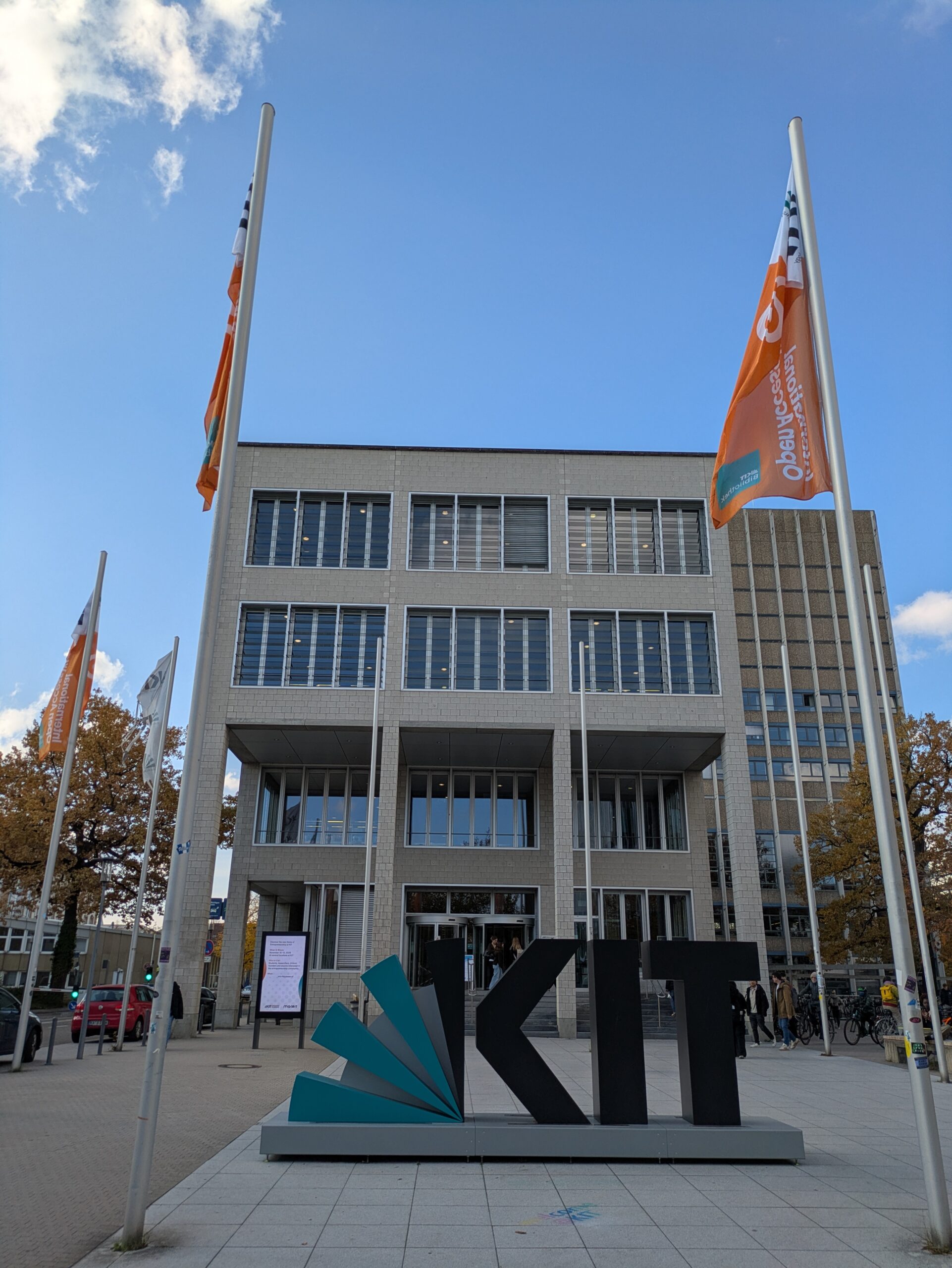
封面图说明|
走进卡尔斯鲁厄理工学院,
秋日校园里,
学生往来如常,
图书馆前的KIT标志,
见证着这所大学的两百年历史。
图片说明|除特别注明外,本文照片均由作者摄于2026 年 11 月 02日。
引文|2026年,卡尔斯鲁厄:走进一所两百岁的理工大学
一所大学的温度,
不只在于它创造多少知识,
更在于它如何对待走进这里的人。
一所大学的历史,
不只写在论文与专利里,
也写在陌生人递来的那张校园卡里。
2026年11月2日,
是我在卡尔斯鲁厄理工学院,
第一次教书的日子。
没想到出发当天,
斯图加特市内交通出了问题,
德铁又接连误点,
这趟旅程从一开始就不平静。
幸好我一早便提前出门,
原本就想先认识这座校园。
下车后竟然迷了路。
遇见一位刚入学两周的日耳曼学系新生,
他热心带我找到教室,
还介绍图书馆与学生餐厅。
知道我还没有校园卡,
他甚至主动提出替我付费。
一个自己才刚熟悉环境的学生,
让我感受到陌生校园的温暖。
这次课程筹备得飞快。
听说报名人数超过七十人,
秘书一周内完成两班的行政安排。
上课前却遇到设备故障,
iPad 教材无法投射到屏幕。
两班学生都主动借出电脑,
来自各国的学生也认真配合练习。
技术随时可能出故障,
但人与人之间的善意,
永远是最稳定的系统。
看着他们努力学习,
我重新找回久违的教学幸福感。
也开始好奇这所两百岁的大学,
如何从蒸汽时代走到人工智能时代。
一|技术教育的诞生:当人类开始用科学改造世界
当机器开始改变世界,
人类也必须重新学习,
如何理解并创造这个世界。
1|当莱茵河遇见蒸汽,工业时代驶向卡尔斯鲁厄
十九世纪初的欧洲,
蒸汽机将热量转化为机械动力,
机器逐渐摆脱风力、水力与畜力,
工业革命开始改变人类的生活。
1825年9月,英国斯托克顿—达灵顿铁路开通,
同月,卡尔斯鲁厄成立莱茵蒸汽航运公司,
人们希望让蒸汽船沿莱茵河运输客货。
与此同时,莱茵河仍在改变自己的河道。
工程师图拉正在推进上莱茵河整治工程。
从 1817 年开始的河道整治,
需要测量地形、计算水流与设计河道。
人类不再只是顺应河流的方向,
而开始尝试用科学重新安排水的道路;
从这一刻起,
自然不再是命运,
而是一道可以计算的问题。
2|当一所学校诞生,工程知识走进课堂
河流需要水利工程师,
蒸汽机需要懂得动力与机械的人。
1825 年 10 月 7 日,
巴登大公签署理工学校成立文件。
卡尔斯鲁厄理工学校正式诞生,
成为今日 KIT 大学历史的起点。
3|从蒸汽机的活塞,到科学家的计算
一台蒸汽机如何推动巨轮?
活塞为什么能够往复运动?
机械零件又该如何承受压力?
这些问题逐渐走进工程课堂。
1841 年,雷滕巴赫来到卡尔斯鲁厄。
他将数学、力学与机械设计结合,
改变过去主要依靠经验的教学方式。
学生不再只是模仿机器的形状,
还要计算尺寸、分析机械运动。
当机器从经验作品变成科学设计,
人类才真正踏入了工业时代的大门。
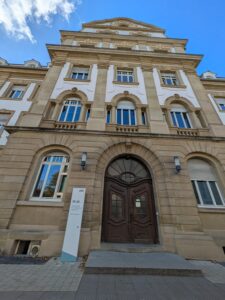
图:校园建筑,今日KIT校园里的Studienkolleg建筑。两百年前,卡尔斯鲁厄开始探索系统化的技术教育;今天,这片校园仍在迎接来自不同国家的学生。
二|科学改变生活:当看不见的知识,变成看得见的世界
一辆汽车,让人类走得更远,
一道电磁波,让声音越过山海,
一封电子邮件,让世界不再遥远。
理工教育最迷人的地方,
在于它能让一个抽象公式,
最终变成一辆在公路上奔跑的汽车。
1|当机器有了车轮,人类开始自由移动
1860 年,十五岁的卡尔·奔驰,
进入卡尔斯鲁厄理工学校,
学习机械制造与工程知识。
1886 年,奔驰取得汽车专利。
三轮车装上汽油内燃机,
汽车终于能够自行行驶。
这辆汽车并非诞生于大学实验室,
而是校友奔驰独立研发的成果。
但它背后的机械设计知识,
正是理工教育培养的重要能力。
2|当电磁波穿越空气,世界开始彼此连接
1885年,海因里希·赫兹,
来到卡尔斯鲁厄任教,
他在实验室里制造电火花,
观察电磁作用如何穿越空间。
1886年开始的关键实验,
逐渐证明电磁波确实存在,
看不见的电磁现象,
终于成为能够测量的物理事实。
赫兹在实验室里制造火花时,
并不知道自己点亮了未来的通信网络;
科学发现的当下往往安静,
回声却要响彻一个时代。
3|从一封电子邮件,到数字世界的诞生
1984 年 8 月 3 日上午 10 点 14 分,
一封来自美国的电子邮件,
抵达卡尔斯鲁厄大学的服务器。
这不是世界上的第一封邮件,
却标志着德国接入 CSNET 的重要一步。
当年需要科研网络完成的通信,
后来逐渐走进普通人的生活。
4 |历史的另一面:科学进步,也需要良知
然而,两百年的大学历史,
并非只有发明与科学成就。
纳粹统治时期的卡尔斯鲁厄,
也曾有师生遭受迫害与驱逐。
2016 年,KIT 设立纪念碑牌,
悼念那些被剥夺教职与求学权利的人。
科学可以拓展人类的边界,
但良知才决定边界之外,
是花园还是悬崖。
三|知识的重新组织:当一所大学,开始跨越自己的边界
当世界的问题跨越学科,
知识也必须打破围墙。
1|当两座科学殿堂,决定走向彼此
二十一世纪初的卡尔斯鲁厄,
拥有两座重要的科研机构。
一座是卡尔斯鲁厄大学,
另一座是卡尔斯鲁厄研究中心(Forschungszentrum Karlsruhe)。
2006年,卡尔斯鲁厄大学,
提出与研究中心深度合并的构想,
并在当年的卓越大学评选中胜出,
为一场大胆的制度改革打开大门。
2|当大学与研究中心,打破制度的围墙
这场合并并不容易。
2009 年 10 月 1 日,
卡尔斯鲁厄理工学院正式诞生。
新的 KIT 不只是更换名称,
而是结合大学的教学与自由研究,
以及研究中心的长期大型科研。
3|当人工智能走出实验室,机器开始学习与人相处
在KIT的人工智能研究中,
机器人不再只是工厂里的机械手臂。
研究人员让人形机器人走进学校、图书馆与医院,
探索机器如何与人类共同生活。
由Tamim Asfour教授参与推动的实境实验室,
甚至研究机器人如何协助儿童学习外语。
从蒸汽机的活塞到机器人的感知与互动,
工程科学开始面对新的问题:
机器如何理解人的需求?
两百年前,
工程师在图纸上计算蒸汽机的活塞;
两百年后,
科学家在服务器里训练人工智能;
知识的样子变了,
人类解决问题的渴望没变。
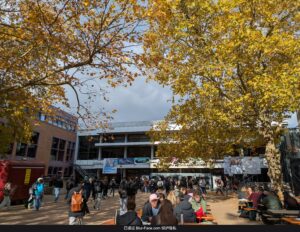
图: KIT秋日校园。金黄的树叶下,学生走向餐厅与课堂,两百年的大学历史仍在日常生活中延续。
尾声|两百年后,知识仍然需要人来传递
机器让人类走得更远,
科学让世界彼此连接,
而教育,让知识在人与人之间继续生长。
2026 年 11 月 2 日,
我站在 KIT 的课堂里。
眼前是来自不同文化背景的学生,
他们正尝试理解一门陌生的语言。
从蒸汽机到人工智能,
两百年的技术不断改变世界,
但知识真正延续的地方,
仍是人与人愿意相互理解的那一刻。
机器可以计算,
却不能理解;
技术可以跨越山河,
却不能替人搭桥。
一所两百岁的大学,
最终要回答的问题,
依然是:我们如何一起,
在这个世界上继续学习和生活。
楚人对话后记|考烈王、黄歇与令尹夫人的观后感
两千三百年前,楚人也懂科学
考烈王读完 KIT 的两百年历史,
望着蒸汽机、汽车与人工智能,
转头问黄歇:
“春申君,难道科学是德国人才懂的?”
黄歇笑着回答:
“大王,您忘了楚人的本事?
两千多年前,我们就会计算,
还懂得观察天象、记录星辰!”
我听完拿出清华简《算表》。
这套竹简能够进行乘法运算,
也能辅助处理除法与开方问题。
考烈王看得十分得意:
“原来我们的九九之术,
早在两千多年前,
就已经如此了得!”
黄歇又指着古代天文资料:
“大王,我们楚地出土的帛书,
也保存着古人对天象的认识。
马王堆帛书中还有彗星图呢!”
我笑着说:
“楚文化留下的数学与天文传统,
确实值得今天的人重新认识。”
考烈王沉思片刻,
又望向 KIT 的现代实验室:
“既然东西方都曾探索天地,
为何过了两千多年,
人们还是不容易理解彼此?”
黄歇笑着说:
“大王,机器能够跨越山河,
电磁波能够传递消息,
却不能保证人心彼此相通。”
我想起课堂里的学生,
他们来自不同国家与文化。
有人第一次学习汉字,
有人正尝试理解中文的声调。
“大王,语言也是一座桥。
我们学习的不只是文字,
还包括另一种看待世界的方法。
这大概就是我来到 KIT 的意义。”
考烈王听完哈哈大笑:
“原来两千三百年后,
令尹夫人不只研究火车和船,
还跑到德国教起我们楚人的语言与文化!”
黄歇轻轻纠正:
“大王,是今日的汉语。
不过她带去课堂的,
确实还有楚人对世界的好奇。”
两千三百年前,
楚人以竹简计算数字,
以天象追问天地的奥秘。
两千三百年后,
科学让世界越来越近,
而文明仍需要人来搭桥。
从青铜到芯片,
从星图到 AI,
人类一直在计算同一个问题:
我们是谁,
我们要往哪里去?
秋风吹过卡尔斯鲁厄的校园,
两百年与两千三百年,
在这里悄悄重逢。
Appendix|English Narrative Overview
From Steam Engines to Artificial Intelligence: 200 Years of the Karlsruhe Institute of Technology | KIT 1825–2025
A University’s History Is Also Written in Human Kindness
On 2 November 2026, I arrived at the Karlsruhe Institute of Technology (KIT) to teach Chinese for the first time. The journey from Stuttgart had been anything but smooth. Local transport disruptions and railway delays complicated my trip, and my train stopped about fifteen minutes short of Karlsruhe. Fortunately, I had left early, hoping to explore the campus before my classes began.
Once there, I managed to get lost. A student of German studies, who had himself arrived at the university only two weeks earlier, kindly helped me find my classroom. He also showed me the library and student cafeteria. When he discovered that I did not yet have a campus card, he even offered to pay for my meal.
The preparations for my courses had moved surprisingly quickly. I was told that more than seventy students had registered, and the secretary had arranged two classes within a week. Then, just before teaching began, my iPad refused to connect to the classroom display. Students in both classes generously lent me their laptops, while classmates from different countries participated attentively in the exercises.
Technology can fail unexpectedly, but human kindness is often the most reliable system of all. Watching these students learn, I rediscovered a sense of happiness in teaching that I had missed for some time. It also made me curious about the university itself. How had an institution founded in the age of steam developed into one researching artificial intelligence?
From Steam Power to Scientific Engineering: The Birth of Technical Education
In the early nineteenth century, Europe was undergoing a profound transformation. Steam engines converted heat into mechanical power, gradually freeing machines from their dependence on wind, water and animal labour. In September 1825, the Stockton and Darlington Railway opened in England, while a Rhine steam navigation company was established in Karlsruhe that same month. Steam power was beginning to transform the movement of people and goods.
Meanwhile, the Rhine presented another engineering challenge. Johann Gottfried Tulla was advancing the regulation of the Upper Rhine, a project that had begun in 1817. Surveying terrain, calculating water flow and designing river courses required scientific knowledge and precise engineering methods. Humanity was no longer simply following the course of a river. Nature was increasingly becoming something that could be measured, calculated and deliberately reshaped.
On 7 October 1825, the Grand Duke of Baden signed the founding document of the Polytechnic School in Karlsruhe, the historical predecessor of today’s KIT. The growing complexity of machines, waterways and infrastructure demanded engineers who could do more than reproduce established techniques.
One of the decisive figures in this development was Ferdinand Redtenbacher, who arrived in Karlsruhe in 1841. By combining mathematics, mechanics and machine design, he helped transform mechanical engineering education. Students learned not merely to imitate the appearance of a machine, but to calculate dimensions, analyse movements and understand the forces involved.
When machines became objects of scientific design rather than products of experience alone, engineering education entered a new era.
From the Automobile to Electromagnetic Waves: When Science Changed Everyday Life
The next chapter of Karlsruhe’s history shows how scientific knowledge could eventually transform ordinary human experience.
In 1860, at the age of fifteen, Carl Benz entered the Polytechnic School in Karlsruhe to study mechanical engineering. In 1886, he patented his three-wheeled motor vehicle powered by a petrol engine. The automobile was not invented in a university laboratory, but by a former student whose engineering education had helped prepare him for a world of increasingly sophisticated machines.
The significance of technical education becomes particularly visible here: an abstract mathematical principle can eventually become a vehicle travelling along an ordinary road.
Another transformation began in a laboratory. Heinrich Hertz came to Karlsruhe in 1885 and conducted experiments that demonstrated the existence of electromagnetic waves. By producing electrical sparks and studying electromagnetic effects across space, he helped establish the experimental foundations of modern wireless communication.
Hertz was investigating a fundamental physical phenomenon, not designing today’s communication networks. Yet his discoveries would eventually contribute to technologies connecting people across enormous distances. Scientific discoveries often begin quietly; their consequences may echo through an entire age.
A century later, Karlsruhe became part of another communications revolution. On 3 August 1984, at 10:14 a.m., an email from the United States reached the University of Karlsruhe through the CSNET research network. It was not the world’s first email, but it marked an important step in Germany’s connection to international computer communication.
What once required specialised research networks gradually became an ordinary part of everyday life.
Yet the university’s history also contains a darker chapter. During the Nazi period, members of the academic community suffered persecution and exclusion. In 2016, KIT installed a memorial plaque commemorating those deprived of their right to teach or study. Scientific progress cannot be measured through inventions alone. Knowledge may expand humanity’s possibilities, but conscience helps determine whether those possibilities lead towards a garden or a precipice.
When Institutions Cross Boundaries: The Creation of KIT
By the beginning of the twenty-first century, Karlsruhe had two major scientific institutions with different histories and organisational structures: the university and a large research centre.
In 2006, the University of Karlsruhe advanced a plan for closer integration with the research centre and succeeded in Germany’s Excellence Initiative. The ambition went beyond strengthening individual academic disciplines. Increasingly complex problems required cooperation between different fields of knowledge, research infrastructures and institutional traditions.
On 1 October 2009, the Karlsruhe Institute of Technology officially came into existence through the merger of the university and Forschungszentrum Karlsruhe. This was more than a change of name. It brought together university teaching and academic research with the long-term scientific work and large-scale facilities of a major research centre.
Today, challenges involving energy, materials, storage technologies and power systems demand cooperation across disciplines. Artificial intelligence and robotics similarly bring together mechanical engineering, computer science and control technologies.
From the engineering school established in 1825 to the research university created in 2009, it is not only the tools of science that have changed. The way humanity organises knowledge has changed as well.
Two centuries ago, engineers calculated the movement of steam-engine pistons on drawing boards. Today, scientists train artificial intelligence using powerful computer systems. Knowledge has taken on different forms, but the human desire to understand and solve problems remains.
At KIT, artificial intelligence research is no longer limited to industrial robotic arms. Researchers are bringing humanoid robots into schools, libraries and hospitals to explore how machines can interact with people and become part of everyday human life.
The Robotic Artificial Intelligence Real-World Lab, coordinated by Professor Tamim Asfour, even investigates how robots might help children learn foreign languages.
From the pistons of steam engines to the perception and interaction capabilities of modern robots, engineering science is confronting a new question: How can machines understand human needs?
Two Hundred Years Later: Knowledge Still Passes Between People
On 2 November 2026, I stood in a KIT classroom before students from different cultural backgrounds. They were learning to understand an unfamiliar language, discovering new characters, sounds and ways of expressing ideas.
Across two centuries, technology has transformed transportation, communication and scientific research. Yet the transmission of knowledge still depends on something profoundly human: the willingness to teach, to learn and to understand one another.
Machines can calculate, but calculation is not the same as human understanding. Technology can overcome physical distances, but it cannot replace the relationships through which people connect.
Perhaps one of the most enduring questions facing a two-hundred-year-old university is therefore surprisingly simple: How can we continue learning and living together in this world?
Across Civilizations
When the Ancient People of Chu Discovered Modern Science
After reading about KIT’s two hundred years of history, King Kaolie of Chu looked at the steam engines, automobiles and artificial intelligence systems before turning to Huang Xie, Lord Chunshen.
“Lord Chunshen,” he asked, “are you telling me that only the Germans understood science?”
Huang Xie laughed. “Your Majesty, have you forgotten what the people of Chu could do? More than two thousand years ago, our ancestors were already performing calculations, observing the heavens and recording celestial phenomena.”
I brought out the ancient Chinese multiplication table preserved among the Tsinghua bamboo manuscripts, known as the Suan Biao. Dating from the Warring States period, this remarkable mathematical text could be used for multiplication and also supported operations involving division and square roots.
The king looked delighted. “So our ancestors already possessed such impressive calculating skills more than two thousand years ago!”
Huang Xie then pointed towards ancient astronomical records. “Your Majesty, manuscripts discovered in the historical lands of Chu also preserve early observations of the heavens. The silk manuscripts from Mawangdui even contain illustrations of comets.”
I smiled. “The mathematical and astronomical traditions associated with the ancient Chu cultural world certainly deserve to be studied and understood today.”
The king fell silent for a moment before looking towards KIT’s modern laboratories.
“If people in both East and West were exploring the mysteries of heaven and earth,” he asked, “why is it still so difficult for different civilizations to understand one another after more than two thousand years?”
Huang Xie smiled. “Your Majesty, machines can cross mountains and rivers, and electromagnetic waves can carry messages across great distances. But neither can guarantee that human hearts will understand each other.”
I thought of the students in my classroom, coming from different countries and cultural backgrounds. Some were learning Chinese characters for the first time; others were trying to master the unfamiliar sounds and tones of the language.
“Your Majesty,” I replied, “language is also a bridge. We do not learn only words and characters. We learn another way of looking at the world. Perhaps that is why I have come to KIT.”
King Kaolie burst into laughter. “So, more than 2,300 years later, Lady Lingyin is not only studying trains and ships, but has travelled all the way to Germany to teach the language and culture of Chu!”
Huang Xie gently corrected him. “Your Majesty, she is teaching modern Chinese. But she has certainly brought something of the ancient Chu people’s curiosity about the world into her classroom.”
More than 2,300 years ago, people in ancient China used bamboo manuscripts to calculate numbers and studied celestial phenomena in their search to understand the universe. Today, science continues to bring distant parts of the world closer together, while understanding between civilizations still requires human bridges.
From bronze to microchips, from ancient star charts to artificial intelligence, humanity continues to ask the same fundamental questions: Who are we, and where are we going?
An autumn breeze drifted across the KIT campus in Karlsruhe. Two hundred years of university history and more than 2,300 years of ancient civilization seemed, for a moment, to meet quietly in the same place.
📜 参考文献
- Geschichte | KIT
- KIT – KIT-Archiv – Startseite KIT – Archiv
- KIT 1825 bis 2025 – Die ersten 200 Jahre
- Die Gründung des Karlsruher Instituts für Technologie KIT (Dr. Dennis Nitsche)
- Karlsruher Institut für Technologie – Wikipedia
- KIT gedenkt der Verfolgungen in der NS-Zeit | KIT
- Erste E-Mail erreichte Deutschland vor 30 Jahren | KIT
- From Knowledge to Action | KIT
🤖 人工智能协作声明
本文的主题选择、田野调查、资料搜集、核心观点与中文原始内容,均由作者独立完成。创作过程中,作者与人工智能模型,进行持续协作,包括多轮讨论、思路推演、节奏输出、部分翻译、英文 Narrative Overview 生成、语言检查、结构检测与文字润饰。
人工智能在此过程中,作为创作协作者,参与内容发展与语言表达,但不作为法律意义上的作者或著作权主体。所有 AI 协作产生的内容,均由作者依据田野资料、原始文献与中文母稿,进行选择、审校、修改与艺术化重构。文章的叙事方向、内容取舍、创作决策、最终表达与价值判断,均由作者决定并负责。
📜 本站所有原创作品均已完成区块链存证,确保原创凭证。部分重点作品另行提交国家版权登记,作为正式法律备案。原创声明与权利主张已公开。完整说明见:
👉 原创声明 & 节奏文明版权说明 | Originality & Rhythm Civilization Copyright Statement – NING HUANG
节奏文明存证记录
本篇博客文为原创作品,由黄甯与 AI 协作生成,于博客网页首发后上传至 ArDrive 区块链分布式存储平台进行版权存证:
- 博客首发时间:2026年11月03日
- 存证链接:969a6405-a0c5-455a-94dd-ea97dd746b8d
- 存证平台:ArDrive(arweave.net)(已于 2026年11月03日上传)
- 原创声明编号:Rhythm_Archive_03_Nov_2026/kit-200-years-steam-engines-artificial-intelligence
- 用途声明:本文为《节奏文明观》之篇章,亦参与构建《AI×非遗文明共构档案》与《文明节奏回声计划》,用于文明节奏实地记录、区块链存证、跨域协作与版权登记用途。
© 黄甯 Ning Huang, 2026. All Rights Reserved.
本作品受版权法保护,未经作者书面许可,禁止复制、改编、转载或商用,侵权必究。
📍若未来作品用于出版、课程、NFT或国际展览等用途,本声明与区块链记录将作为原创凭证,拥有法律效力。