You are currently viewing 《令尹夫人的愛船船隊》之八|将近百年的 Elfriede:一艘仍由馬匹拉行的纤船 |Beloved Ships Series VIII | Elfriede: A Living Canal Boat Still Drawn by Horses

《令尹夫人的愛船船隊》之八|将近百年的 Elfriede:一艘仍由馬匹拉行的纤船 |Beloved Ships Series VIII | Elfriede: A Living Canal Boat Still Drawn by Horses

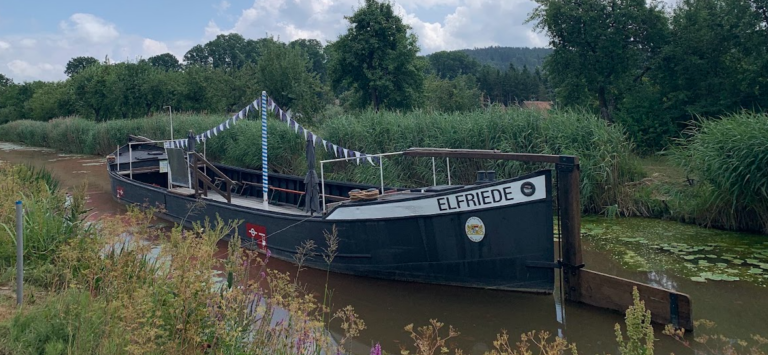
封面图说明|

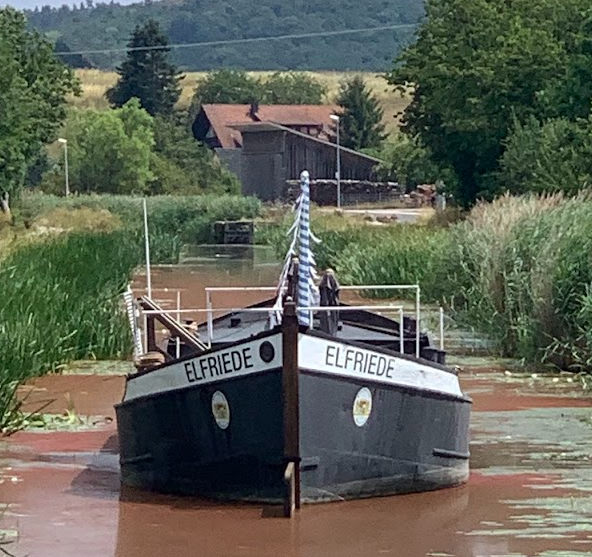
这艘名为 Elfriede 的纤船,
至今仍航行于德国巴伐利亚的路德维希-多瑙-美因运河。

它已有近百年历史,
却依然按照传统方式,
由马匹沿着纤道缓缓拖曳前行。

引文|活着的文明

真正被传承的,
从来不只是一艘船。
还有让这艘船,
继续航行的人。

📅  时间|2026年07月19日(日) 
📍 相遇地点|Burgthann・路德维希-多瑙-美因運河(Ludwig-Donau-Main-Kanal)

Das Treidelschiff „Elfriede“ | Gemeinde Burgthann

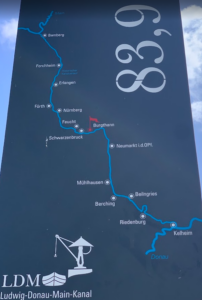
图:运河地图

每一艘船,
都有属于自己的航道。
每一条河流,
也都有属于自己的故事。

有些船,
航行在大海。
有些船,
停泊在港口。
还有一些船,
终其一生,
都在同一条河道上缓缓前行。

我一直相信,
真正值得记录的,
从来不是船有多大,
也不是它航行了多远。
而是岁月过去以后,
它是否仍然留在原来的地方,
继续做着原本的工作,
继续陪伴着那条河流。

来到德国巴伐利亚,
我终于见到了 Elfriede。
它没有离开这条运河,
直到今天,
仍然沿着近两百年前留下的纤道,
缓缓驶向前方。

真正让我感动的,
并不是一艘将近百年的纤船。
而是眼前这一切,
从船,
到马,
再到默默工作的船员,
共同守护着,
这条运河最后仍然活着的风景。

那一刻,
我知道自己认识的,
已经不只是一艘船。
而是一段,
仍然活着的运河文明。

博物馆里的船,
静静停在那里。
而 Elfriede,
今天还会启航。

一、 将近百年的 Elfriede(1930)| 一艘仍然活着的古船

每一艘船,
都有属于自己的名字。
而有些名字,
会随着河流,
留在人们的记忆里。

1. 初见 Elfriede

来到巴伐利亚的 Burgthann,
我只有一个目的,
就是看看这艘名叫 Elfriede 的纤船。

站在码头前,
我第一次看见 Elfriede,
它比我想象中更加朴实,
没有华丽的船身,
没有醒目的涂装,
只是安静地停泊在运河边,
等待今天下午的航程开始。

如果没有事先查阅资料,
大多数人可能会以为,
它只是当地的一艘观光船,
事实上,
它已经在这条运河上,
走过将近一个世纪。

我伸手摸着船舷,
木头已经被岁月磨得光滑。
那一刻,
我意识到,
我摸到的,
并不是为了展示而复制出来的船。

2. 一艘属于运河的工作船

根据船长 Günther Zitzmann 的说明与历史纪录,
Elfriede 推测建于1930年代。
它最初并不是为了观光而建造,
而是一艘真正投入运河运输的工作船。

直到约1970年,
它都仍然承担着自己的任务,
后来随着运河运输结束,
这艘船也退出历史舞台,
改作停泊用途,
静静留在河岸边。

当时,
一匹马可以拖曳约一百二十吨的运河货船,
标准货船全长约二十四公尺,
平均航行速度约每小时三公里。
如果从 Kelheim 前往 Bamberg,
全程约需要六天,
途中还必须经过近一百座船闸。

1925年,
一千立方米的罗马尼亚雪松木材,
经这条运河运往法贝尔-卡斯特尔铅笔厂。

1930年,
“Hans Schemm”号机动船,
载着雷根斯堡童声合唱团的孩子们靠岸,
一场音乐会,
就此在河边响起。

二战期间,
运河部分遭到毁损,
到1950年,
彻底停止使用。

直到1954年,
纽伦堡水利局才重新接手,
将残存的河道,
当作水利资产维护至今。

随着岁月流逝,
船体逐渐进水,
最终沉没在河中,
当时的 Elfriede,
原本已经被列入报废拆除的命运。

3. 从沉没到重生

1995年,
正值路德维希-多瑙-美因运河通航一百五十周年。

为了纪念这段运河历史,
纽伦堡水利局决定将沉没的 Elfriede 打捞起来,
并展开修复工程。

经过整修之后,
这艘几乎消失的工作船,
重新回到了运河之上。

根据资料记载,
Elfriede 这个名字,
来自当时纽伦堡水利局负责人的妻子。

有些船,
沉没以后,
就再也没有回来。
而 Elfriede,
再一次回到了运河。

4. 再一次行驶在熟悉的河道

Elfriede 经历过运输时代,
也经历过沉没与修复。
一艘原本几乎消失的工作船,
今天,
又回到了熟悉的河道。

如果没有1995年的那次打捞,
眼前这艘船,
或许早已沉睡在河底。
也不会有人知道,
它曾经陪伴这条运河,
走过漫长的运输岁月。

而今天,
它依然停泊在 Burgthann 的运河边,
等待下一次启航,
也等待下一批旅人,
重新认识它的故事。

二、开船前四十五分钟| 一艘船如何开始航行

一艘船的航行,
不是从离岸开始。
而是从每一个人,
回到自己的位置开始。

因为船长的邀请,
我比其他游客提早四十五分钟登上 Elfriede。

此时的码头十分安静,
船上几位船员正在忙碌,
游客尚未抵达,
整艘船却已经开始为今天的航程做准备。

我这才发现,
一趟四十五分钟的航程,
原来早在四十五分钟前,
就已经开始了。

1. 第一件事,不是开船

我原本以为,
船员会先检查缆绳,
或者准备迎接游客,
没想到第一件工作,
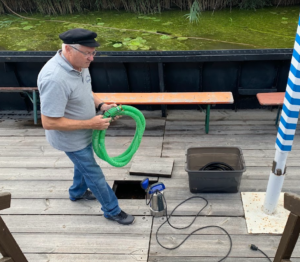
竟然是打开船底舱口,
把积存在船舱底部的积水抽出来。
这是每一次启航之前,
都必须完成的例行动作。

Elfriede 长约二十一公尺,
宽约四公尺,
吃水约零点八公尺。
空船重量约十五吨,
最大载货量可达五十吨。
这些数字,
都来自当年的运河货船规格。

它没有引擎,
也没有现代观光船常见的自动设备。
这艘接近百年的工作船,
直到今天,
仍然维持着属于自己的工作方式。

图:抽水

2. 每个人,都知道自己的位置

船上有一位船长,
四位工作人员。
船上没有人大声指挥,
也没有人催促别人。
船长来回检查各项准备工作,
大家各自忙着眼前的事情。
有人整理纤绳,
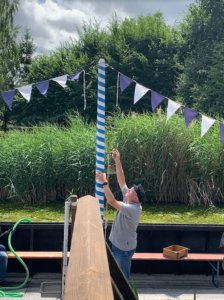
有人挂上船钟,
有人检查船上的设备。
直到一切准备完成,
前后各两位掌舵人,
才陆续回到自己的位置,
等待启航的那一刻。

图:船长挂上船钟

3. 马,比预计晚了一点

按照原本的安排,
负责拖船的马,
应该在开船前十五分钟抵达。

不过运输途中发生了一点小意外,
因此耽搁了十来分钟,
船员没有显得慌张,
只是继续完成手边的工作。
仿佛这样的等待,
也是工作的一部分。

直到马缓缓走进码头,
所有人欢呼,
今天的航程终于可以开始。

马会迟到,
但船会等。

4. 一声钟响,船开始前进

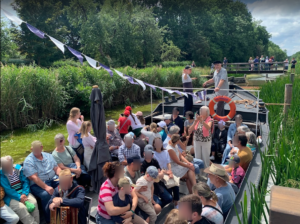
游客陆续登船之后,
船员将纤绳收好,
一位小朋友受船长邀请,
拉响了船上的钟声。

前后的掌舵人,
也各自站到自己的位置。
随着马缓缓向前,
绷紧的纤绳开始受力。

Elfriede 离开码头,
今天的第一趟航程,
正式开始。

图:前进中的纤船

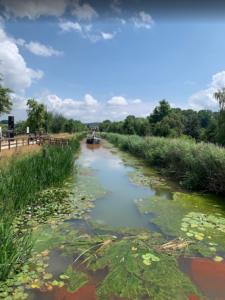
图:运河

三、"我们工作,不唱歌。"|一句话,道出一种工作的文化

一句简单的话,
往往比一段历史,
更让人记住,
一个地方的文化。

1. 我的提问

航程进行中,
马匹缓缓拉着纤船前进。
前后的掌舵人,
默默控制着船身方向。

船长一边喝着啤酒,
一边向游客介绍路德维希运河的历史。
解说与音乐交替进行,
整个航程大约四十五分钟。

站在船长旁边,
我一直看着他们工作的样子。
脑中忽然浮现一个问题,
于是趁着空档,
向船长请教。

我问船长,
以前拉纤的时候,
会不会像中国峡江的纤夫一样,
一边工作,
一边唱号子。

船长笑了一下,
回答得非常直接。

“Wir arbeiten. Wir singen nicht.”

我们工作,
不唱歌。

他说,
过去这里没有号子。
工作的时候,
大家只是各自完成自己的事情。

2. 一个意想不到的答案

这个答案,
我愣了一下。
因为这个答案,
和我想像的不一样。

过去读到长江纤夫文化,
脑海里总会浮现许多人一起拉船,
靠着歌声统一节奏的画面。

直到站在 Elfriede 上,
听见船长亲口说出这句话,
我才知道,
至少在这里,
我听见了一个和中国完全不同的答案。

3. 真正的工作,不是表演

今天的航程,
有音乐,
也有解说。

船长介绍几分钟运河历史,
乐手拉风琴。
音乐结束以后,
再继续下一段解说。
这一切,
都是为了让游客认识这条古老的运河。

但是,
船长告诉我的,
却是过去真正工作的年代。

他说,
真正拉纤的时候,
这里没有唱歌,
也没有号子。

没有歌声,
不代表没有节奏。
他们的节奏,
是沉默的。

4. 一艘船,正在寻找下一代

航程进行中,
我一直围着船拍照,
不停询问船的历史、
工作人员的分工,
还有每一个操作细节。

也许正因为如此,
船长忽然笑着问我:

“Willst du bei uns arbeiten?”

要不要留下来,
跟我们一起工作?

我笑了。
一时之间,
不知道该怎么回答。

如果这算录取,
那么,
这大概就是我人生收到的第一份海事工作邀请。

可惜,
我还要搭火车回纽伦堡。
否则,
《令尹夫人的爱船船队》,
也许真的会多出一篇:
《之X|我在德国当了一天纤船水手》。

视频:运河上的游船

尾之声|一艘船,一群人,一条仍然活着的运河

船会老去,
人会离开,
唯有愿意继续守护的人,
才能让历史继续前行。

今天搭乘的,
不是一艘复制船。
而是 Elfriede,
一艘真正经历过运输时代的运河货船。

脚下踩着的,
是真实走过近百年岁月的船板。
眼前看见的,
不是为了观光重新打造的场景。
而是一艘老船,
仍然继续航行在熟悉的河道上。

真正让我感动的,
不是它已经接近百年,
而是这艘船今天还能继续航行,
并不是因为它曾经被修复,
而是直到今天,
仍然有人愿意学习如何驾驶它,
如何照顾马匹,
如何维护船体,
如何把这一套工作,
一代一代传承下去。

航程结束前,
船长向所有游客说,
他们需要新的后继者。
后来,
他又笑着问我要不要留下来工作。

那一刻,
我忽然觉得,
这份邀请,
比任何一句导览解说,
都更能说明这艘船为什么还能继续航行。

今天我搭的,
不是一艘观光船。
而是一段,
仍然活着的运河文明。

一艘船可以修复,
一套技艺,
却必须继续传承。

后记|考烈王、黄歇与令尹夫人的观后感

临别之前,
船长笑着问我要不要留下来工作。

考烈王听见以后,
忍不住笑了。
他说:
“楚国若有这样的人,
寡人一定不会放他走。
先留下来,
学会驾船再说。”

我笑着摇了摇头,
我还得赶去下一个田野点。

黄歇望着船长,
又望着停泊在河边的 Elfriede,
他说:
“一艘船,
可以留下来。
真正不容易的,
是几十年以后,
还有人愿意,
继续驾驶它。”

我点了点头,
今天登船以前,
我看见他们抽掉船底积水,
挂上船钟。
我也看见四位舵手,
默默回到自己的位置。
也看见一匹马,
缓缓拉着这艘船,
重新驶向运河。

考烈王轻轻拍了拍船舷。
他说:
“原来,
留下一艘船,
并不算难。”

黄歇接着说道:
“真正困难的,
是留下懂得驾驶它的人。
船坏了,
还能修。
人若没有了,
这条河,
就真的安静了。”

我们一起沿着这条百年运河离开,
Elfriede 依然缓缓向前,
船上的游客正在听着解说,
孩子拉响了船钟,
船长站在熟悉的位置,
向每一位旅人挥手。

Elfriede 在运河上走,
我在文字与田野里走。
各自前行,
也各自留下痕迹。

跋|一封来自 Elfriede 船长的信:《守护 Elfriede 的人们|一代又一代的纤船团队》

就在本文完成之后,
我收到了一封来自 Elfriede 船长 Günther Zitzmann 的来信。

除了团队的历史照片之外,
他还寄来了当地报纸与《BURDA》杂志关于 Elfriede 的报导,
让我进一步了解这艘历史纤船的发展历程。

更让我感动的是,
他同意我在本文刊登团队照片,
并提供每位成员的姓名。

因此,
本文最后特别收录这组照片,
谨向长期守护 Elfriede、
守护运河文化的 Treidelteam 致上最深的敬意。

船长提供的历史资料

感谢 Günther Zitzmann 与 Elfriede Treidelteam 提供以下历史资料,
供有兴趣进一步了解这艘历史纤船的读者参考。

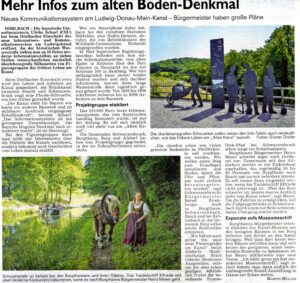
1.《Der Bote》地方报纸

2. 《mein schönes Land》(BURDA)《Treideln in Franken》(PDF)

守护 Elfriede 的人们|一代又一代的纤船团队 (Die Menschen hinter der Elfriede)

这组照片由 Elfriede Treidelteam 提供,
并经团队同意刊登于本文。

我希望记录的不只是这艘历史纤船,
也包括多年来默默守护它的人们。

因为一艘船能够保存至今,
靠的不只是木材和钢铁,
更是一代又一代的人,
愿意继续照顾它、
维护它,
并将这份文化传承下去。

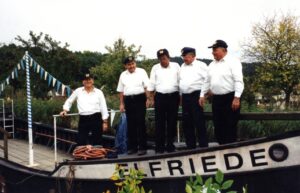
照片一|第一代 Elfriede 纤船团队
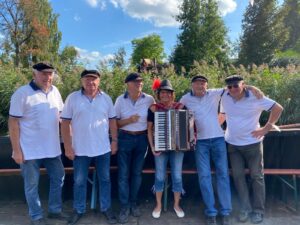
由左至右(Von links nach rechts):Richard Spiegel; Fritz Lang; Fritz Hönle; Josef Böhm; Hans Buchner (erstes Treidelteam)

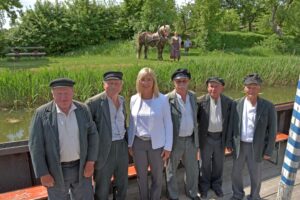
照片二|Elfriede 纤船团队
由左至右(Von links nach rechts):Reinhold Lang; Richard Spiegel; Ministerin Ulrike Scharf (CSU_Umwelt); Gerd Engler; Johann Albrecht; Werner Stritz (2017 Einweihung der Informations-Kommunikationssysteme am Kanal s.  Anhang)

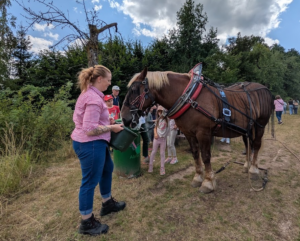
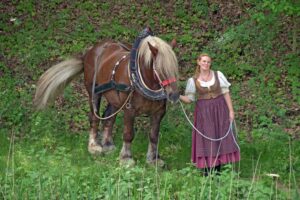
照片三|牵引 Elfriede 的挽马

Christina Marx (Gaststätte „Zum Ross“ in Hausheim) mit Pferd „Hias“ (Mathias)

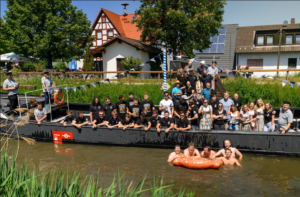
照片四|2026 年欢乐航行(Gaudifahrt)——与市议员及 Kärwaboum(教堂庆典青年)合影

照片五|Elfriede 团队合影
由左至右(Von links nach rechts):Klaus Steckmann; Reinhold Lang; Richard Spiegel; Christine; Günther Zitzmann; Karl-Heinz-Eder

资料提供|Günther Zitzmann 与 Elfriede Treidelteam(经授权刊登)
图片提供|Elfriede Treidelteam(经授权刊登)

Photos courtesy of the Treidelteam der Elfriede. Published with permission.

Appendix|English Narrative Overview

Beloved Ships Series VIII | Elfriede: A Living Canal Boat Still Drawn by Horses

Some boats are remembered for how far they sailed. Elfriede is remembered for never leaving.

Along the Ludwig–Danube–Main Canal in Burgthann, Bavaria, nearly a century of towpath still exists, and one boat still travels it exactly as boats once did—pulled by a single horse, no engine, no shortcuts. Elfriede was built sometime in the 1930s, not as a tourist attraction but as a genuine working cargo boat. Back then, a single horse could tow roughly 120 tons of canal freight; a standard boat measured about 24 metres and moved at walking pace, around 3 kilometres an hour. A trip from Kelheim to Bamberg took nearly six days and passed through almost a hundred locks. In 1925, a thousand cubic metres of Romanian cedar travelled this canal to the Faber-Castell pencil factory. In 1930, the motor boat Hans Schemm brought the Regensburg boys’ choir to a canalside concert. This was a working canal, doing the quiet, essential work that kept towns supplied.

Elfriede worked until roughly 1970. After that, her working life simply stopped—first repurposed as a mooring pontoon, then slowly filling with water until she sank. She sat on the canal bed, expected to be scrapped, one more casualty of a transport era that motor vehicles had already replaced. In 1995, to mark the 150th anniversary of the canal’s opening, the Nuremberg Water Authority raised her from the water and restored her. She was named after the wife of the authority’s director at the time. She could easily have stayed at the bottom of the canal forever. Instead, she came back.

I arrived at Burgthann with one purpose: to see Elfriede for myself. She wasn’t polished or dramatic—just a quiet boat waiting at the dock for the afternoon’s voyage. Touching her worn wooden rail, I understood immediately that this wasn’t a replica built for show. It was the real hull, the real decades, still here.

Thanks to the captain’s invitation, I boarded forty-five minutes before departure—and discovered that a forty-five-minute voyage actually begins forty-five minutes earlier than anyone realizes. The first task wasn’t checking ropes or welcoming passengers. It was pumping bilgewater out of the hull, a routine that has to happen before every single trip. Elfriede has no engine and none of the automated systems a modern tour boat would have. She still runs exactly the way she always has. One captain and four crew moved quietly through their tasks—coiling the towline, hanging the ship’s bell, checking equipment—no one shouting instructions, everyone simply knowing what came next. The horse arrived ten minutes late after a small mishap along the way; the crew didn’t panic, just kept working. The horse can be late. The boat waits.

When passengers had boarded, a child rang the ship’s bell at the captain’s invitation, the towline drew taut, and Elfriede pulled away from the dock.

Partway through the voyage, I asked the captain something that had been on my mind: did the horse-tow workers here once sing work songs, the way trackers on China’s Yangtze River traditionally did, using rhythm and voice to coordinate the labor? His answer came immediately, and it wasn’t what I expected.

“Wir arbeiten. Wir singen nicht.”

We work. We do not sing.

He explained that there had never been work chants here—people simply did their own part of the job, quietly, in parallel. It caught me off guard. I had always pictured towing culture, shaped by the Yangtze boat-trackers I’d read about, as inherently rhythmic and vocal. Standing on Elfriede’s deck, I learned that at least here, the rhythm of labor could be entirely silent—coordinated not through song, but through experience and quiet cooperation.

Near the end of the trip, the captain spoke to the passengers about needing a new generation willing to learn how to run the boat. Then, half-joking, he turned to me: “Willst du bei uns arbeiten?”—Do you want to work with us? I laughed, caught without an answer. If that counts as a job offer, it was the first one I’ve ever received in the maritime world. I had a train back to Nuremberg to catch. Otherwise, this series might have gained an unplanned ninth chapter: A Day as a Canal Boat Deckhand in Germany.

What moved me wasn’t that Elfriede is nearly a century old. It was that she’s still sailing today—not simply because she was once restored, but because people are still willing to learn how to steer her, care for the horse, and maintain her hull, passing the whole practice down, one generation at a time. A boat can be repaired. A living skill has to be carried forward by someone willing to learn it.

Across Civilizations

Just before we parted, the captain had asked, smiling, whether I wanted to stay and work with them.

King Kaolie laughed when he heard this. “If Chu had someone like that,” he said, “I would never have let him go. Learn to sail her first—then decide.”

I shook my head, smiling. I still had another field site waiting.

Lord Chunshen Huang Xie looked at the captain, then at Elfriede resting by the water’s edge. “A boat,” he said, “can stay. What’s truly difficult is that, decades later, someone is still willing to sail her.”

I nodded. Before boarding, I’d watched them pump the bilge, hang the ship’s bell. I’d watched four helmsmen quietly return to their positions. I’d watched a horse walk slowly forward, pulling the boat back onto the canal once more.

King Kaolie rested a hand gently on the hull. “So keeping a boat,” he said, “was never the hard part.”

Lord Chunshen continued. “The hard part is keeping the people who know how to sail it. A broken boat can be repaired. But if the people are gone, the river truly falls silent.”

We walked together along the old canal as we left. Elfriede kept moving slowly forward. Passengers listened to the captain’s stories. A child rang the ship’s bell. The captain stood at his post, waving to every traveler aboard.

Elfriede keeps moving along her canal. I keep moving through words and fieldwork. Each of us advancing in our own way—and each of us leaving something behind.

🤖 人工智能协作声明

本文的主题选择、田野调查、资料搜集、核心观点与中文原始内容,均由作者独立完成。创作过程中,作者与人工智能模型,进行持续协作,包括多轮讨论、思路推演、节奏输出、部分翻译、英文 Narrative Overview 生成、语言检查、结构检测与文字润饰。
人工智能在此过程中,作为创作协作者,参与内容发展与语言表达,但不作为法律意义上的作者或著作权主体。所有 AI 协作产生的内容,均由作者依据田野资料、原始文献与中文母稿,进行选择、审校、修改与艺术化重构。文章的叙事方向、内容取舍、创作决策、最终表达与价值判断,均由作者决定并负责。

📜 本站所有原创作品均已完成区块链存证,确保原创凭证。部分重点作品另行提交国家版权登记,作为正式法律备案。原创声明与权利主张已公开。完整说明见:

👉 原创声明 & 节奏文明版权说明 | Originality & Rhythm Civilization Copyright Statement – NING HUANG

节奏文明存证记录

本篇博客文为原创作品,由黄甯与 AI 协作生成,于博客网页首发后上传至 ArDrive 区块链分布式存储平台进行版权存证:

  • 博客首发时间:2026年07月22日
  • 存证链接:a50d69ee-bf4f-40a2-a0f9-0de2d9f95e1f
  • 存证平台:ArDrive(arweave.net)(已于 2026年07月22日上传)
  • 原创声明编号:Rhythm_Archive_22_July_2026/treidelschiff-elfriede-burgthann
  • 用途声明

    本文为《节奏文明观》之〈流动文明 〉与〈节奏文明地景书写 〉篇章,亦参与构建《AI×非遗文明共构档案》与《文明节奏回声计划》,用于文明节奏实地记录、区块链存证、跨域协作与版权登记用途。

© 黄甯 Ning Huang, 2026. All Rights Reserved.
本作品受版权法保护,未经作者书面许可,禁止复制、改编、转载或商用,侵权必究。

📍若未来作品用于出版、课程、NFT或国际展览等用途,本声明与区块链记录将作为原创凭证,拥有法律效力。