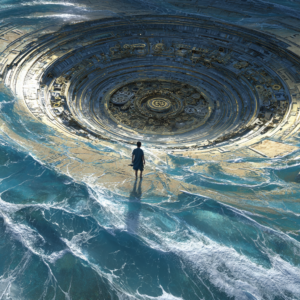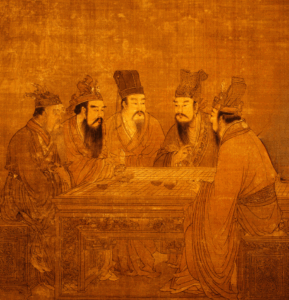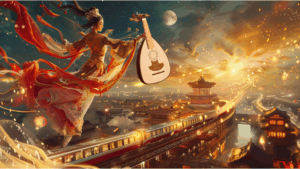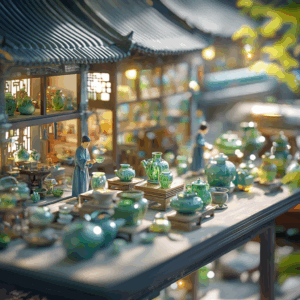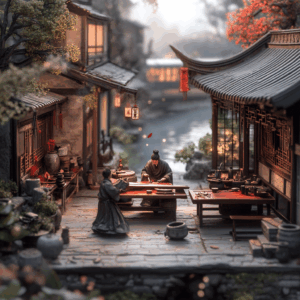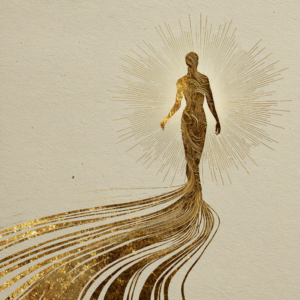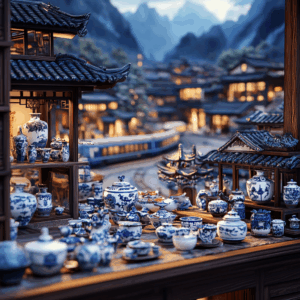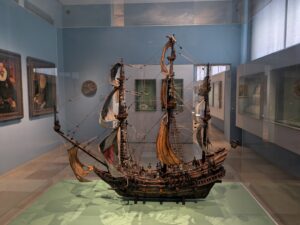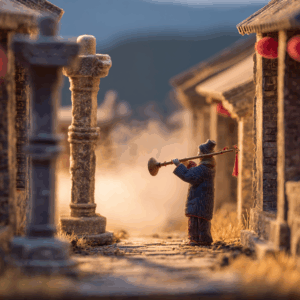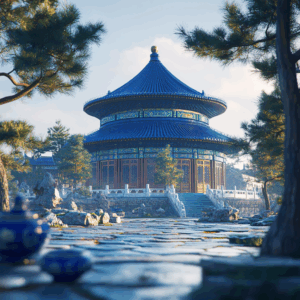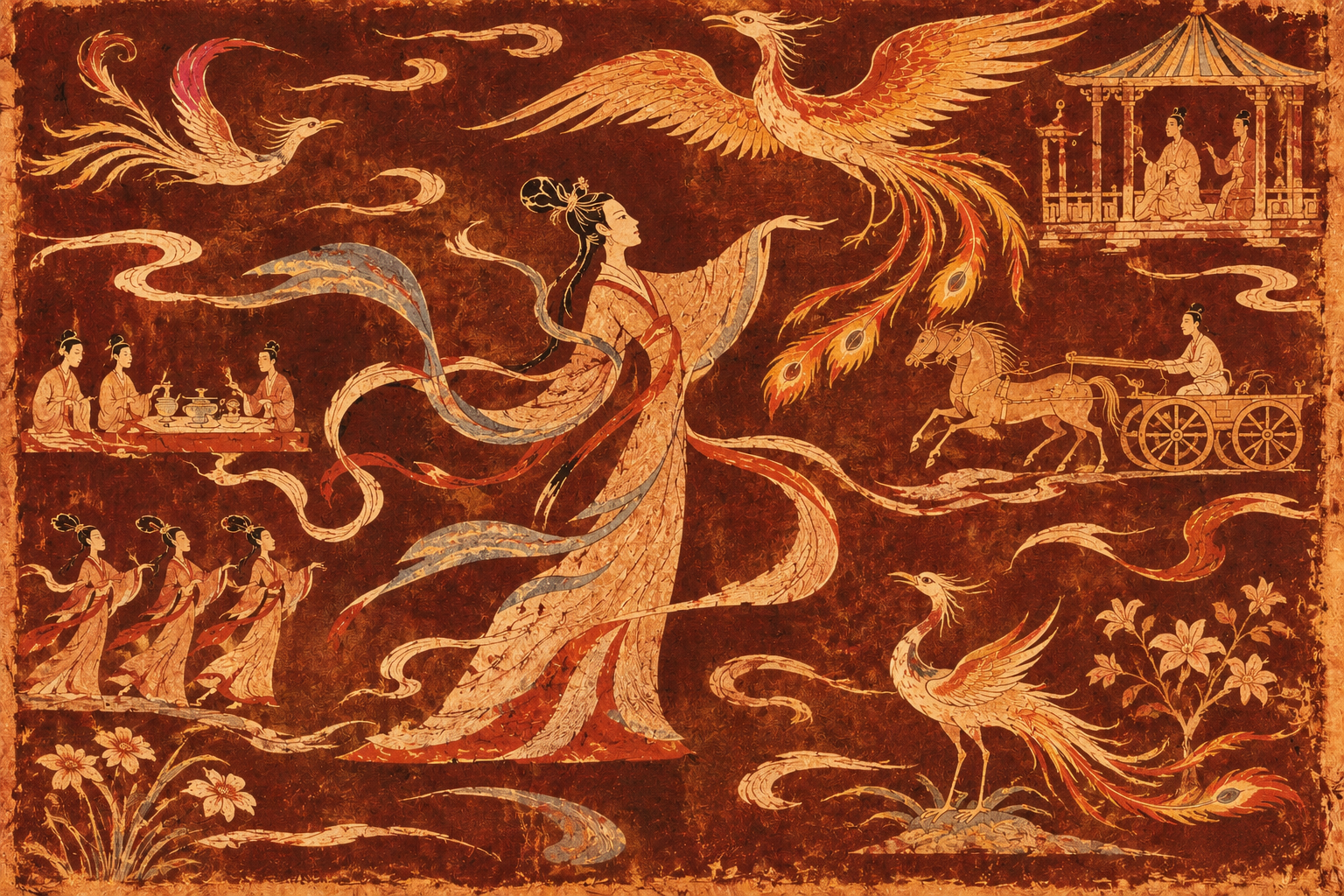
封面图说明|
魂兮归来,重返荆楚故土,
从饮食歌舞到身体礼仪,
在行动与交往中探寻文明的生成。
图片:原创数字插画。
引文|从归魂到起舞
身体在行动中感知世界,
文明在人与人的交往中生成。
两千多年前的荆楚大地,
一声声「魂乎归来」响彻天地。
远方的魂魄徘徊于四方险境,
等待着故土传来的召唤。
东方的大海波涛汹涌,
南方的山林潜伏着毒蛇猛兽。
西方流沙漫漫,
北方寒水深不可测。
魂魄无处安身,
只能循声归来;
而「归来」这两个字,
唤起一种身体经验——
从漂泊走向安定,
从无处停留到重新归属。
当魂魄重新回到荆楚,
眼前的世界渐渐明亮起来。
鼎中飘散着烹调食物的香气,
钟磬与歌声在殿堂之间回荡。
舞者随着乐声相继起舞,
长袖轻拂,宾客流连忘返。
然而,《大招》的召唤并未止于繁华。
诗歌随后转向国家治理与朝廷礼仪,
从赏罚公正到尚贤禁暴,
再到群臣登堂、执弓揖让。
品尝、歌唱、起舞与行礼,
如何成为人与世界建立关系的方式?
身体如何参与文明的创造与传承?
文本与研究说明
《楚辞·大招》的作者归属与成篇年代,历来存在不同看法。
本文不将诗歌视为战国楚国社会生活的直接记录,而是将其作为楚辞传统中身体行动与社会关系的文学材料。
通过分析诗中的动作词语,探讨环境感知、文化技艺与礼仪规范之间可能存在的联系。
相关历史解释仍需结合古籍训诂、考古资料与其他文献继续检验。
一|身体如何认识世界?从四方险境到感官选择
身体以行动丈量天地,
以感官辨识危险与美好,
在不断选择中寻找归属。
1. 四方险境:身体如何辨认危险?
「魂乎归来!无东无西,无南无北只。」
「代水不可涉,深不可测只。」
东方大海波涛汹涌,
螭龙随着水流上下浮沉。
南方炎火绵延千里,
毒蛇与猛兽出没山林。
西方流沙无边无际,
北方寒山笼罩天地。
「涉」意味着渡过水域,
「测」意味着探知水深;
当诗歌说「不可涉」,
它不只描写一条河流,
也让我们想象身体面对深水,
不得不停下脚步的处境。
这里并非真实的渡河记录,
而是召魂仪式中的文学想象。
身体能否跨越一道深水,
成为理解环境危险的尺度;
危险不仅存在于描述之中,
也能通过身体的行动限制,
获得可以感知的意义。
2. 魂魄归来:从行动方向到生命归属
「魂魄归来!闲以静只。」
「自恣荆楚,安以定只。」
四方的危险逐渐远去,
召唤的声音转向荆楚。
「无东」「无南」「无西」「无北」,
并非描写实际的行走,
而是对魂魄远行的劝阻;
诗歌通过禁止与召唤,
建立远方危险与故土安宁的对照。
当魂魄回到荆楚故土,
等待它的是安定与欢愉。
身体经验中的空间方向,
往往伴随着安全的判断;
而《大招》借魂魄的归返,
将荆楚描绘为值得停留的地方——
归返,
是身体重新找到可以放下的位置。
3. 味觉苏醒:身体如何辨识美好?
「魂乎归来!恣所尝只。」
「魂兮归来!恣所择只。」
鼎中的食物香气四溢,
各地风味陈列于宴席。
「尝」意味着亲身品味,
「择」意味着主动选择;
食物不再只是维持生命,
也成为感官享受的对象——
「尝」意味着亲身品味,
「择」意味着主动选择;
食物不再只是维持生命,
也成为感官享受的对象——
身体从「不能过河」到「可以从容挑选美味」,
中间隔着一整片安定的世界。
4. 从空间到宫苑:身体如何探索环境?
「腾驾步游,猎春囿只。」
「茞兰桂树,郁弥路只。」
春日的楚国宫苑之中,
车驾沿着园囿道路前行。
茞草、兰花与桂树沿路生长,
草木的芳香弥漫在游赏空间。
「腾」「驾」关联车马出行,
「步」则指向步行的身体动作;
「游」「猎」涉及游赏与狩猎,
呈现不同的空间活动方式。
「驾」借车马而行,
「步」以双足而游;
道路提供通行的方向,
车马扩大行动的范围,
园囿成为游赏与狩猎的空间。
这些动作让宫苑不只是建筑,
也成为可以探索的生活环境——
身体从被危险限制,
转为在空间里自由移动。
5. 身体的判断:从危险辨识到自主选择
「代水不可涉」描绘渡河的限制,
荆楚宴席却提供自由选择;
「涉」「测」关联环境危险,
「尝」「择」关联感官判断——
从身体生成式智能的视角,
感知使环境具有具体意义,
行动与选择则改变生活经验。
二|身体如何创造文化?从饮食技艺到歌舞交往
双手将自然化为生活,
歌舞让身体进入共同节奏,
人与人的互动孕育文化。
1. 鼎火之间:从食物加工到饮食文化
「炙鸹烝凫,煔鹑陈只。」
「煎鰿臛雀,遽爽存只。」
「鲜蠵甘鸡,和楚酪只。」
厨人将禽肉置于火上,
炙烤与蒸煮交替进行。
鼎中的食材逐渐烹熟,
不同的滋味汇聚于宴席。
「炙」是以火烤制,
「烝」是蒸熟食物,
「煎」涉及火候与器具,
「和」表现滋味的调配;
这些动作并非单纯进食,
而是身体参与制作的过程——
双手操作器具与食材,
通过经验掌握烹调的方法。
火候、器具与调味方式,
共同构成饮食文化的基础;
技艺不只是写在书上的,
也是双手在实践中学会的。
2. 钟磬齐鸣:身体如何创造共同节奏
「代秦郑卫,鸣竽张只。」
「讴和扬阿,赵箫倡只。」
「叩锺调磬,娱人乱只。」
宫廷之中乐声渐起,
竽声与歌声交织回荡。
钟磬随着演奏相继响起,
不同声音汇入共同的乐章。
「讴」描写人的歌唱,
「和」表现声音的应答,
「倡」意味着率先领唱;
歌者由此建立相互联系——
钟磬并非自行奏响,
歌声也不是孤立存在,
演奏者需要彼此配合,
才能完成共同的表演。
3. 二八接舞:身体如何学习与协调
「二八接舞,投诗赋只。」
十六位舞者的表演,
在诗歌中相继展开。
「二八」指向舞者人数,
「接舞」呈现舞蹈的衔接;
身体不再各自行动,
而是参与共同的表演——
舞者需要感知乐声,
也需要留意彼此动作,
当一段舞蹈接近结束,
另一段表演随之展开。
这种协调并非自然形成,
通常需要练习与熟悉;
动作、音乐与表演顺序,
共同构成可以传习的技艺——
身体在共同节奏里,
学会了如何与他人相处。
4. 长袖拂面:身体如何表达情感
「粉白黛黑,施芳泽只。」
「长袂拂面,善留客只。」
「施」涉及身体的修饰,
「拂」描写衣袖的轻触,
「留」指向宾客的停驻;
长袖拂过面容的画面,
不仅呈现服饰的动态,
也与「善留客」相连,
让举止具有交往的意义。
5. 从身体技艺到文化传承
烹饪需要掌握制作方法,
音乐与舞蹈需要相互协调;
这些技艺若要延续,
便需要观察、学习与练习,
才能形成可以传递的文化经验。
食物经过制作成为佳肴,
声音经过协调成为音乐;
身体通过举止表达情感,
人与空间通过行动建立联系——
人们在反复参与的过程中,
让技艺与行为具有社会意义。
三|技能与规范:身体如何参与社会秩序的生成
双手掌握器物的使用,
身体学习共同遵循的礼仪,
社会秩序在行动与交往中显现。
1. 车马与游猎:从个人技能到共同规则
「腾驾步游,猎春囿只。」
「琼毂错衡,英华假只。」
春日的荆楚宫苑之中,
华美的车驾沿着道路前行。
车轮转动,马匹迈步,
驾车者操纵车马前进。
「驾」关联车马的使用,
需要人与器物相互配合;
车轮、车衡与驾驭技术,
共同影响车马的移动——
驾驶者通过身体操作工具,
将行动意图转化为实际移动。
在多人参与的游猎活动中,
行动的时间与空间安排,
也可能受到共同规则的约束。
当身体技能进入共同活动,
个人行动便具有社会性意义;
技能不只是「我会」,
也是「我们一起」。
2. 察民与尚贤:从政治理想到治理规范
「察笃夭隐,孤寡存只。」
「魂乎归来!赏罚当只。」
「魂乎归来!尚贤士只。」
当诗歌离开宫苑与宴席,
叙事先转向国家治理。
「察」关联观察与考察,
「存」在此涉及抚恤关怀,
「尚」表达对贤才的尊崇,
「禁」意味着限制苛暴;
这些词具有政治行动意义,
却不全属于人体动作——
但政治规范需要有人实行,
社会关怀也需要具体落实。
「赏罚当只」强调公正,
「禁苛暴只」反对暴虐;
一个值得魂魄归来的世界,
不仅需要丰盛的饮食与歌舞,
还需要合理的社会秩序。
3. 登堂与降阶:身体如何表现身份秩序
「三公穆穆,登降堂只。」
「诸侯毕极,立九卿只。」
宫廷之中群臣依次出现,
三公在堂阶之间登降。
「登」意味着向上行进,
「降」意味着从高处下来;
这两个看似普通的动作,
在朝廷场景中具有礼仪意义——
台阶连接不同高度的空间,
人在其中如何移动身体,
可能受到身份与礼仪的约束。
「穆穆」描写庄重的仪态,
使登降不只是空间移动;
抽象的尊卑与职位关系,
通过殿堂中的行动被表现——
身份不只写在名册上,
也显现在步履之间。
4. 执弓挟矢:从工具操作到射礼实践
「昭质既设,大侯张只。」
「执弓挟矢,揖辞让只。」
殿堂之外的礼仪场景中,
射箭所用的器具已经陈设。
「设」涉及射箭标的的陈设,
「张」描写射侯的张挂,
「执」指向手中持握弓具,
「挟」则描写携持箭矢。
然而,诗歌并未止于弓矢,
紧接着便写「揖辞让只」。
工具操作与礼仪行为相连,
使射箭进入社会规范的场景——
射礼不仅涉及射中目标,
也重视参与者之间的行为;
弓矢是活动所需的器物,
揖让则体现相互交往的方式。
5. 揖辞与礼让:身体如何表达社会关系
「执弓挟矢,揖辞让只。」
「魂乎来归!尚三王只。」
参与者手中持握弓箭,
诗歌随即写到揖辞礼让。
技能让身体能够操作器物,
礼仪让行动表达社会关系;
一场射礼所呈现的秩序,
不只关乎射箭的技艺,
也关乎参与者如何揖让。
从「执弓」到「揖让」,
行动的意义逐渐发生变化;
身体不再只是操作工具,
也通过举止表达社会关系——
礼仪把技能变成秩序。
6. 从身体规范到文明秩序
从「驾」到「执」与「挟」,
身体参与工具的实际操作;
从「登」「降」到「揖」「让」,
行动又进入礼仪的规范——
技能使人能够完成行动,
礼仪则赋予行为社会意义。
当个人进入共同活动之中,
行动便不再只属于自己;
《大招》描绘的政治世界,
既包含理想化的治理原则,
也包含可见的身体礼仪——
文明秩序不在制度名称里,
也显现在人如何登堂、
如何执弓、如何揖让。
尾声|身体的动作,如何成为文明的行动逻辑
身体在感知中认识天地,
在节奏中创造文化,
在共同实践中生成文明秩序。
两千多年前的荆楚大地,
一声声「魂乎归来」仍在回荡。
北方的寒水深不可测,
魂魄被劝阻继续远行。
返回荆楚的丰盛宴席,
人们却能自由品尝与选择。
「涉」「测」指向环境的限制,
「尝」「择」呈现感官的判断;
「归来」重新确定行动方向——
身体先知道哪里不能去,
才知道哪里可以留下。
当鼎中的食物逐渐烹熟,
钟磬与歌声在殿堂中响起。
「炙」「烝」涉及制作技艺,
「讴」「和」连接不同的声音,
「接舞」「叩磬」呈现节奏协作,
「拂」「留」联系姿态与交往——
技艺使自然材料获得新用途,
节奏让不同的人形成共同活动。
诗歌随后转向国家治理,
从赏罚公正到尚贤禁暴,
勾勒出值得归来的政治理想。
接着,宫廷的画面进入朝仪,
三公在殿堂之间登降。
参与射礼的人执弓挟矢,
又以揖辞礼让表达相互尊重。
「登」「降」使身份关系可见,
「执」「挟」表现工具的使用,
「揖」「让」将规范化为举止——
从环境感知到文化协作,
再从身体礼仪到政治理想,
三组动作呈现不同的关系,
也构成重新理解文明的线索。
在此前的《节奏文明观》中,
我曾思考身体与文明的关系。
在《身体生成式智能》中,
我进一步提出研究的路径。
而在《楚人的身体文明》中,
我曾以歌、舞、简、城为线索。
如今重新阅读《大招》,
这些思考有了具体的文本对象;
不再只从理论推想文明,
而是回到古人留下的动作词语。
然而,诗歌并非历史实录。
它保存的是理想化的行动世界,
需要结合训诂与考古继续检验。
接下来重读其他《楚辞》篇章,
我仍将追问:
不同动作如何进入共同节奏,
又如何成为情感与礼仪的表达?
当歌声在祭祀中反复响起,
当舞步在仪式中相互衔接,
当行旅跨越江河与山川,
身体是否呈现不同的文明逻辑?
这些问题不必预设相同答案,
每篇诗歌都有独特的行动世界;
只有让文本自己提供证据,
理论才能在比较中不断修正。
《大招》的魂魄终于归来,
钟磬与歌舞仍在诗中回响;
而我沿着这些身体的轨迹,
继续寻找楚文明生成的线索。
由此,我提出一个有待继续检验的命题:
身体的算法,
就是文明的算法。
楚人对话后记|考烈王、黄歇与令尹夫人的观后感
当宫殿消失,楚人的身体还记得什么?
夜色笼罩着云梦泽,
远处的宫阙隐入暮色。
考烈王望着窗外的湖水,
问令尹夫人:
「寡人的宫殿、钟磬与宴席,
如今都已消失于岁月之中。
你凭什么说楚人的文明,
仍然存在于今日人间?」
我没有立即回答大王,
而是翻开案前的《大招》:
「大王,宫殿确实会倒塌,
钟磬也可能埋入泥土。
但楚人如何歌唱与起舞,
仍在诗句中留下了线索。
文明不只存在于器物之中,
也存在于身体的行动里。」
考烈王微微皱起眉头:
「夫人,寡人倒想问你,
酒爵可以留存两千年。
可当年举爵饮酒的人,
早已不知归向何处。
身体既然已经消失,
又如何保存文明记忆?」
黄歇轻轻展开一卷竹简:
「大王,臣以为夫人所言,
并非古人的身体仍然存在。
而是身体曾经参与的活动,
能够在文字中留下痕迹。」
我点头望向考烈王,
指着《大招》的宴饮诗句:
「炙鸹烝凫,煔鹑陈只。
这些字不仅描写佳肴,
也让我们看见古人烹调,
需要运用双手、火与器具。」
身体是第一个记住的人;
文字是第二个。
文字能保存动作的描述,
却不能完整保存身体经验——
我们可以研究古人的行为,
不能假装亲历当年的宴席。
黄歇望向殿外的长廊,
转身向我轻轻行了一礼:
「夫人,我再请教,
若只是举手行礼的动作,
为何也能成为文明研究?」
我起身向黄歇回礼:
「你方才向我行揖礼,
我也以相应的姿态回应。
两个人通过身体的举止,
表达了彼此之间的尊重。」
考烈王指向《大招》的后段:
「执弓挟矢,揖辞让只。
寡人如今才注意到,
弓箭原本是使用的器物,
为何还要写揖辞礼让?」
黄歇轻轻放下竹简:
「执弓挟矢需要掌握技能,
揖辞礼让则涉及行为规范。
若只有射箭而没有礼仪,
便少了人与人之间的秩序。」
技能让身体能够操作器物,
礼仪让行动表达社会关系;
一个朝廷真正的秩序,
不只看谁射得准,
也看参与者如何揖让。
考烈王忽然笑了起来:
「令尹夫人,寡人还有一问。
楚人乘车游猎、宴饮歌舞,
难道每一个身体动作,
都能称作身体生成式智能?」
我也笑着回答:
「当然不能如此解释。
单独一个动作的出现,
并不能证明智能的生成。
我研究的是身体与环境,
如何通过实践建立关系,
又如何在协作中形成意义。」
考烈王收起笑意,
重新端详《大招》的文字:
「如此说来,寡人明白了。
涉水与测量关乎危险,
歌唱与接舞关乎协调,
登堂与揖让关乎秩序。」
黄歇微微颔首:
「大王,这些关系虽有不同,
却都涉及人的实际行动。
只是诗歌描绘的理想世界,
不能等同于真实的楚国社会。」
考烈王沉默了片刻,忽然问:
「令尹夫人,《大招》写尽繁华,
为何后来又谈起政治?
既然美食歌舞如此动人,
难道还不足以召魂归来?」
我将诗的后半部分展开:
「大王,一个值得生活的世界,
不仅需要丰盛的饮食与歌舞,
还需要合理的规则,
以及能够安身的社会秩序。」
考烈王缓缓站起身来,
沿着长廊走向殿门。
他回头望向我,
神情若有所思地问道:
「令尹夫人,若后人只记得,
楚国曾经留下的文字,
却不再理解楚人如何生活,
如何行动、如何彼此相待,
那还算真正理解楚文明吗?」
我走到大王身旁,
望向夜色中的云梦泽:
「大王,文字是重要的入口,
却不是文明经验的全部。
我们还需要理解身体,
如何感知天地与环境,
如何通过技艺创造生活,
又如何在交往中建立秩序。」
文字能留下楚国,
却留不住楚人的手;
宫殿会塌,酒爵会锈,
但「如何登堂、如何执弓、如何揖让」,
这些问题还在追问着,
每一个读《大招》的人。
文明不只活在器物里,
也活在人的动作里;
而动作,是会消失的——
所以我们才需要一遍一遍地读,
一遍一遍地问。
黄歇合上《大招》:
「夫人所做的第二次研究,
原来不是重述楚国的繁华,
而是从那些具体的动作,
重新追问文明如何形成。」
夜风吹过云梦泽畔,
案前的烛火轻轻摇曳。
楚国的宫殿已经消失,
当年的宴席无法重现。
但古人留下的动作线索,
仍能引出新的文明问题。
说明:本篇对话为作者依据《楚辞·大招》、楚国历史及身体生成式智能研究创作的跨越时空文学想象,并非真实历史对话。「令尹夫人」为作者设置的文学角色。
Appendix|English Narrative Overview
From the Returning Soul to Dance
Bodily Actions, Social Relationships, and the Formation of Chu Civilization
Rethinking Cultural Life and Social Order through the Great Summons in the Songs of Chu
More than two thousand years ago, a voice called across the imagined landscape of ancient Chu: “Return, O soul!” Beyond the homeland lay dangerous waters, burning lands, shifting sands, and icy mountains beneath a vast white sky. The wandering soul was warned against travelling in every direction. Its only refuge was to return to the familiar world of Chu, where peace, pleasure, and security awaited.
The poem Da Zhao, or The Great Summons, preserved in the Chu Ci (Songs of Chu), gradually transforms this threatening landscape into a world of abundance. Food is roasted and steamed, bronze bells and stone chimes resound through ceremonial halls, and dancers perform in coordinated succession. Flowing sleeves accompany gestures of hospitality, while guests are invited to remain and enjoy the pleasures of the court.
Yet the poem does not end with food, music, and dance. Its later passages first turn towards ideals of governance, including fair rewards and punishments, respect for worthy individuals, and the rejection of cruelty and oppression. The poem then moves towards courtly ceremony: high officials ascend and descend the steps of the hall, while participants in ritual archery hold bows and arrows and exchange gestures of courtesy and deference. The imagined prosperity of Chu thus extends beyond material enjoyment to encompass political responsibility, social relationships, and ceremonial order.
This movement from danger to security, from sensory pleasure to coordinated performance, and from practical skills to ceremonial conduct offers a distinctive perspective on civilization. Rather than examining the poem only as a celebration of Chu’s splendour, I approach it through the bodily actions and behavioural relationships represented in its language. How do people recognise danger through movement, transform materials into cultural practices, and express social expectations through bodily conduct?
The following interpretation develops three interconnected perspectives: environmental perception, cultural creation, and social order. It also connects with my research on Rhythm Civilization and Embodied Generative Intelligence. The poem provides literary evidence of an imagined world of action, not a complete historical record of everyday life in ancient Chu. Its authorship and date of composition also remain subjects of scholarly debate. These distinctions are essential when considering what its descriptions can—and cannot—tell us about the formation of civilization.
I. The Body Encounters the World | From Dangerous Landscapes to Sensory Choice
The opening passages of The Great Summons organise the surrounding world through warnings against movement. The soul is discouraged from travelling east, west, south, or north. Rivers cannot safely be crossed, their depths cannot be measured, and unfamiliar regions are filled with threatening creatures and extreme conditions. Geography becomes meaningful through the possibility—or impossibility—of bodily passage.
Two expressions are particularly revealing: she (涉), meaning to cross water, and ce (测), meaning to measure or determine depth. When the poem declares that certain waters cannot be crossed, it does more than describe a geographical obstacle. It invites the reader to imagine a body confronting a dangerous environment and recognising the limits of movement. The passage is not an account of an actual river crossing, but a literary representation of danger through the language of bodily action.
The repeated command to return establishes a contrasting relationship between distant places and the homeland. The prohibitions against travelling in different directions are addressed to the wandering soul rather than describing actual human journeys. Within this symbolic structure, Chu becomes a place where movement may finally cease, uncertainty gives way to security, and the displaced soul is invited to recover a sense of belonging.
Once the poem turns towards the pleasures of Chu, the vocabulary of bodily experience changes. The soul is invited to taste and choose freely. The verbs chang (尝), to taste, and ze (择), to select, introduce a different relationship between the body and its surroundings. Food is no longer represented merely as something necessary for survival. It becomes an object of sensory judgement, enjoyment, and preference.
This contrast is significant. In the dangerous landscape, the body encounters restrictions: water cannot be crossed and unfamiliar places cannot be safely entered. At the banquet, the imagined body encounters possibilities: flavours can be appreciated, dishes can be selected, and pleasure becomes part of the experience of security. Between the inability to cross a river and the freedom to choose a meal lies an entire imagined world of stability.
The poem also describes carriage journeys, walking, excursions, and hunting within the royal gardens. The expressions associated with driving (jia, 驾) and walking (bu, 步) distinguish movement assisted by vehicles from movement undertaken on foot. Fragrant plants and trees line the pathways, turning the gardens into a sensory landscape. Roads provide routes, vehicles extend the range of travel, and cultivated spaces offer settings for exploration and recreation. The palace grounds become more than architectural surroundings: they form an environment in which the body can move, perceive, and interact with its surroundings.
From the perspective of Embodied Generative Intelligence, these passages raise a broader question about the relationship between perception and action. Environments are not experienced only as collections of physical objects. Their significance also emerges through what bodies can approach, avoid, cross, taste, or select. The poem does not demonstrate a cognitive mechanism, but its contrasting vocabulary provides a literary starting point for investigating how bodily possibilities contribute to human experience.
II. The Body Creates Culture | From Cooking Techniques to Collective Rhythm
The world awaiting the returning soul is filled with activities that require more than passive enjoyment. Behind the abundance of the banquet lie techniques of preparation, coordination, and performance. The poem describes roasting, steaming, frying, seasoning, singing, instrumental music, and dance. These activities allow us to consider how bodily skills participate in the creation of cultural life.
The preparation of food offers the first example. Verbs such as zhi (炙), to roast, zheng (烝), to steam, and jian (煎), to fry, refer to different ways of transforming ingredients through heat and technique. Such activities require the use of hands, tools, vessels, and accumulated practical knowledge. A prepared dish is therefore not simply a natural resource placed before a guest. It is the result of actions through which materials acquire new forms and cultural value.
Cooking depends on relationships between the body, the properties of ingredients, the behaviour of fire, and the tools available for preparation. The expression he Chu lao (和楚酪) also draws attention to the blending and preparation of flavours. Timing, temperature, and seasoning must be managed through practical experience. These skills may be communicated through instruction, observation, and repeated practice. The poem does not document the training of ancient cooks, but its vocabulary of preparation draws attention to the bodily techniques behind the pleasures it celebrates.
Music introduces another form of coordination. The poem evokes the sounds of the yu mouth organ, singing, bronze bells, and stone chimes. Expressions such as ou (讴), singing, he (和), responding or joining in song, and chang (倡), leading a performance, suggest relationships among performers. Musical sound does not arise independently of human activity. It requires actions that must be organised in relation to one another. Through singing, instrumental performance, and rhythmic coordination, individual contributions become part of a shared musical experience.
The line describing er ba jie wu (二八接舞), commonly interpreted as a performance involving sixteen dancers, is especially important for a study of collective rhythm. The expression jie wu (接舞) evokes the succession or connection of dance performances. Instead of imagining sixteen isolated bodies, the passage invites attention to the relationships through which movements become part of a shared event.
Such coordination generally requires performers to respond to music, timing, spatial arrangements, and the actions of others. One sequence may conclude as another begins, while individual movements become meaningful within the structure of the performance. These observations do not allow us to reconstruct the choreography of ancient Chu. They do, however, help explain why coordinated dance can be examined as a cultural practice involving learned bodily relationships.
The poem also describes the application of cosmetics and fragrant preparations, followed by long sleeves brushing across the face and gestures associated with entertaining guests. Bodily adornment, clothing, movement, and hospitality are brought together in these literary images. A sleeve is a material object, but its movement can become part of a social encounter. Bodily expression therefore extends beyond technical performance into the communication of attention, pleasure, and interpersonal meaning.
Cooking, music, dance, and hospitality represent different forms of cultural activity, but they share an important characteristic. Their continuation depends on more than the existence of ingredients, instruments, costumes, or buildings. People must learn how to use these materials, coordinate their actions, and recognise the meanings attached to particular practices.
Culture, in this sense, cannot be understood only as a collection of objects or written descriptions. It also involves learned ways of doing things together. Through repeated participation, bodily techniques become recognisable practices, and individual actions enter the shared life of a community.
III. Skills and Social Norms | How Bodily Conduct Makes Order Visible
The later passages of The Great Summons move beyond the pleasures of courtly life towards ideals of governance, ceremonial conduct, and social order. This development reveals another dimension of human action. Practical skills enable people to operate tools and participate in shared activities, while political and ceremonial norms establish expectations concerning how people should act in relation to one another.
The poem’s earlier descriptions of carriages and hunting provide a useful starting point for considering practical competence. Driving requires the management of animals and equipment, while hunting involves purposeful movement within a particular environment. When several people participate in such activities, their actions may depend on shared arrangements concerning timing, space, and responsibility. The poem does not specify these rules, but the activities it depicts offer a basis for considering the social dimension of bodily skill.
Before presenting the ceremonial movements of high officials, the poem describes an ideal of political governance. It praises attention to vulnerable people, proper rewards and punishments, respect for worthy individuals, and the rejection of cruelty and oppression. Expressions associated with examining, caring, honouring, and prohibiting refer primarily to political responsibilities rather than physical gestures. Their significance cannot be explained through bodily movement alone.
Nevertheless, political ideals require people to interpret and carry out responsibilities. Decisions must be made, expectations communicated, and obligations fulfilled. From this perspective, the relationship between governance and bodily action raises a broader question: how do abstract norms become part of practical social life?
The poem then turns towards the ceremonial hall, where high officials ascend and descend the steps with solemn bearing. The verbs deng (登), to ascend, and jiang (降), to descend, describe ordinary physical movements. Within a courtly setting, however, movement through architectural space can also communicate rank, responsibility, and ceremonial expectations.
A staircase connects different levels of a building, but the social meaning of ascending or descending cannot be reduced to physical height. Who approaches the hall, how an official enters, and what conduct is expected within a ceremony may express relationships recognised by its participants. The poem offers an idealised image of dignified officials rather than a detailed manual of court etiquette. Nevertheless, it shows how social hierarchy can be represented through visible bodily conduct.
The archery passage brings practical skill and ritual behaviour into even closer contact. Targets are prepared, bows are held, and arrows are carried. The verbs zhi (执), to hold, and xie (挟), to carry or hold alongside the body, describe actions involving equipment. Yet the poem immediately connects these actions with yi (揖), ceremonial salutation, and rang (让), yielding or showing deference.
This combination is central to the relationship between skill and social order. Archery requires the ability to handle a bow and arrow, but ceremonial archery also involves expectations concerning how participants treat one another. Physical competence and social conduct are therefore not identical. One concerns the performance of an activity; the other concerns its meaning within a recognised social relationship.
The gesture of salutation is especially revealing. A movement of the body can express respect when it belongs to a shared system of conventions. Words of courtesy and gestures of deference may reinforce one another, allowing social expectations to become visible through conduct. The poem does not establish the precise sequence of movements in an actual Chu archery ceremony, but it brings the handling of weapons and the practice of courtesy together in a single literary passage.
Through these different scenes, The Great Summons presents an imagined world in which material prosperity is accompanied by political ideals and ceremonial expectations. Fair governance, respect for worthy individuals, and the rejection of cruelty appear before the descriptions of courtly movement and ritual archery. The sequence matters because political responsibilities and bodily etiquette represent related but distinct dimensions of social order.
The poem therefore invites us to consider civilization as something expressed not only through institutions and objects but also through the ways people act together. Driving, holding a bow, ascending a hall, and offering a ceremonial salute belong to different kinds of activity. Their significance emerges from relationships among bodily skill, cultural convention, political ideals, and social meaning.
Epilogue | When Bodily Actions Become the Logic of Civilization
The wandering soul of The Great Summons moves through a literary world organised by contrasting experiences. Dangerous waters restrict passage, while the homeland offers security and sensory pleasure. Cooking transforms ingredients into prepared dishes, and music and dance bring performers into coordinated activity. The poem subsequently presents ideals of fair governance, respect for worthy individuals, and protection against cruelty. It then turns towards courtly ceremony, where officials ascend and descend the hall and participants in ritual archery combine practical skills with gestures of courtesy and deference.
These passages do not describe a single historical process through which Chu civilization developed. Instead, they present different relationships between action and meaning. Crossing and measuring concern environmental possibilities and limitations. Tasting and choosing concern sensory judgement. Roasting, steaming, singing, and dancing concern technical practice and coordination. Ascending, holding, saluting, and yielding introduce questions of ceremonial conduct and social relationships.
In my earlier work on Rhythm Civilization, I examined how bodily experience might contribute to the formation of cultural systems. My research on Embodied Generative Intelligence subsequently developed questions concerning the capacity of bodily practice to produce new relationships and meanings. In The Embodied Civilization of Chu, I approached the subject through singing, dancing, bamboo manuscripts, and the construction of urban space.
Returning to The Great Summons allows these theoretical questions to encounter a more specific literary source. Instead of beginning with a general proposition about the body and civilization, I examine the verbs through which the poem represents action. The method does not eliminate interpretation, but it makes the relationship between textual evidence and theoretical reflection more explicit.
The limits of this approach must remain visible. The Great Summons is a literary composition shaped by the imagination and values of its cultural world. Its descriptions cannot automatically be treated as evidence that particular ceremonies occurred exactly as represented. Philological interpretation, historical comparison, and archaeological research remain necessary when moving from poetic imagery towards claims about ancient social practices.
Future readings of other poems in the Songs of Chu may reveal different relationships between movement, rhythm, emotion, and ritual. Singing within a ceremony, coordinated dancing, and journeys across rivers and mountains do not necessarily express the same civilizational logic. Each text must be examined according to its own language, imagery, and historical context. A theory becomes more useful when it remains open to revision through evidence rather than requiring every poem to confirm the same conclusion.
The soul summoned in The Great Summons has finally returned. The bells, chimes, and dances continue to resonate through the surviving lines, although the original performances can no longer be fully recovered. What remains is a vocabulary of actions through which we can continue to ask how people imagined their relationship with the world, with one another, and with the order of society.
From this reading, I propose a theoretical proposition that remains open to further examination:
The body’s algorithm is the algorithm of civilization.
Across Civilizations
King Kaolie, Huang Xie, and Lady Lingyin | What Remains When the Body Disappears?
Night descended over Yunmeng Marsh. Beyond the palace windows, the distant buildings gradually disappeared into darkness, while a candle illuminated a scroll of The Great Summons resting on the table. King Kaolie of Chu stood beside the window, looking towards the water.
“My palaces, bells, chimes, and banquets have all disappeared into the passage of time,” the king said. “Lady Lingyin, how can you claim that the civilization of Chu still exists in the world today?”
I opened the scroll before answering.
“Your Majesty, palaces can collapse, and musical instruments may remain buried beneath the earth. Yet the poems preserve descriptions of how people sang, danced, prepared food, and conducted themselves in ceremonies. Civilization does not exist only in material objects. It can also be studied through the actions those objects once made possible.”
King Kaolie frowned slightly.
“A drinking vessel may survive for two thousand years. But the person who once raised it to his lips has long since disappeared. If the body is gone, how can its memory survive?”
Huang Xie, Lord Chunshen, gently unfolded a bamboo manuscript.
“Your Majesty, I do not believe the Lady is suggesting that the bodies of our ancestors still exist. Rather, activities in which those bodies once participated may leave traces in written descriptions.”
I nodded and pointed towards the banquet passages of The Great Summons.
“Consider the words describing roasting and steaming. They do more than present delicious food. They remind us that preparing such dishes requires hands, fire, utensils, and practical knowledge. The poem preserves descriptions of the results of these activities, allowing us to investigate the techniques that may have made them possible.”
I paused for a moment.
“The body remembers first; writing remembers second. Words can preserve descriptions of movement, but they cannot preserve the entirety of bodily experience. We can study the actions of ancient people, Your Majesty, but we cannot pretend that we have personally attended their banquets.”
Huang Xie turned towards the corridor beyond the hall. Then he faced me and offered a gentle ceremonial bow.
“Lady Lingyin, may I ask another question? Why should a simple gesture of greeting become a subject of civilizational research?”
I rose and returned his greeting.
“Because you have just demonstrated the relationship I am studying. You offered a gesture of respect, and I responded through a corresponding movement. Neither action was simply a matter of moving the arms. Within a shared cultural setting, our gestures expressed how we recognised one another.”
King Kaolie looked towards the later passages of the poem.
“Here it says that participants hold bows and arrows and exchange gestures of courtesy and deference. Why should archery, which requires skill in handling a weapon, also involve such behaviour?”
Huang Xie placed the manuscript on the table.
“Because holding a bow and arrow requires practical ability, while ceremonial greetings and yielding involve social expectations. Without those expectations, the activity would lack part of its ritual meaning.”
I continued his explanation.
“Skill enables the body to operate equipment. Ritual allows actions to express social relationships. The order represented in ceremonial archery concerns not only the ability to shoot accurately, but also how participants acknowledge and respect one another.”
The king suddenly laughed.
“Then I have another question, Lady Lingyin. The people of Chu travelled in carriages, hunted, enjoyed banquets, sang, and danced. Are you suggesting that every bodily movement should be called embodied generative intelligence?”
I laughed as well.
“Certainly not, Your Majesty. The appearance of an individual movement does not by itself demonstrate the generation of intelligence. My research concerns how bodies establish relationships with their environments through practice, and how coordinated activities may produce meanings that cannot be explained by isolated movements alone.”
King Kaolie grew thoughtful and returned his attention to the scroll.
“Then perhaps I understand. Crossing water and measuring its depth concern danger. Singing and coordinated dance concern cooperation. Ascending the hall and exchanging ceremonial greetings concern order.”
Huang Xie nodded.
“These relationships differ, Your Majesty, but each directs our attention towards human action. We must still remember that the ideal world described by poetry cannot be treated as an exact representation of historical Chu society.”
The king remained silent for a moment before asking another question.
“Lady Lingyin, why does The Great Summons later turn towards politics? If the food is abundant and the music delightful, should that not be enough to persuade the wandering soul to return?”
I unfolded the later portion of the scroll.
“Your Majesty, a world worth returning to requires more than magnificent banquets and beautiful dances. It also needs reasonable rules, care for those who are vulnerable, and a social order in which people can live with security.”
King Kaolie slowly rose and walked along the corridor towards the palace entrance. At the doorway, he turned and looked back at me.
“Lady Lingyin, if later generations remember only the words left behind by Chu, but no longer understand how its people lived, acted, and treated one another, can they truly claim to understand our civilization?”
I walked towards the king and looked out across Yunmeng Marsh.
“Your Majesty, writing is an essential point of entry, but it does not contain the whole of civilizational experience. We must also ask how bodies perceived their surroundings, how practical skills contributed to cultural life, and how people established relationships and expressed order through their conduct.”
Words can preserve the name of Chu, but they cannot preserve the hands of its people. Palaces collapse, and drinking vessels corrode. Yet questions remain: How did people ascend the ceremonial hall? How did they hold their bows? How did they express respect through gestures of greeting and deference?
These questions continue to confront every reader who opens The Great Summons.
Civilization does not live only in surviving objects. It also belongs to the actions through which people once inhabited their world. Those actions may disappear, which is precisely why we must return to the texts, read them again, and continue asking what they can reveal.
Huang Xie gently closed the scroll.
“Then your second investigation, Lady Lingyin, is not simply another account of the splendour of Chu. You are beginning with particular actions and asking how civilization may have taken shape through them.”
A night breeze moved across Yunmeng Marsh, and the candle beside the manuscript flickered softly.
The palaces of Chu had disappeared, and the banquets of the ancient court could no longer be recreated. Yet the surviving descriptions of bodily actions continued to raise questions about cultural practices, social relationships, and the formation of civilization.
The ancient bodies were gone. The inquiry they inspired had not come to an end.
Historical and literary note: This dialogue is a fictional encounter across time, inspired by the Songs of Chu, the history of the kingdom of Chu, and the author’s research on Embodied Generative Intelligence. King Kaolie and Huang Xie, Lord Chunshen, were historical figures. Lady Lingyin is a fictional literary persona created by the author. The conversation is not a historical record.
🤖 人工智能协作声明
本文的主题选择、田野调查、资料搜集、核心观点与中文原始内容,均由作者独立完成。创作过程中,作者与人工智能模型,进行持续协作,包括多轮讨论、思路推演、叙事节奏调整、部分翻译、英文 Narrative Overview 生成、语言检查、结构检测与文字润饰。
人工智能在此过程中,作为创作协作者,参与内容发展与语言表达,但不作为法律意义上的作者或著作权主体。所有 AI 协作产生的内容,均由作者依据田野资料、原始文献与中文母稿,进行选择、审校、修改与艺术化重构。文章的叙事方向、内容取舍、创作决策、最终表达与价值判断,均由作者决定并负责。
📜 本站所有原创作品均已完成区块链存证,确保原创凭证。部分重点作品另行提交国家版权登记,作为正式法律备案。原创声明与权利主张已公开。完整说明见:
👉 原创声明 & 节奏文明版权说明 | Originality & Rhythm Civilization Copyright Statement – NING HUANG
节奏文明存证记录
本篇博客文为原创作品,由黄甯与 AI 协作生成,于博客网页首发后上传至 ArDrive 区块链分布式存储平台进行版权存证:
- 博客首发时间:2026年11月28日
- 存证链接:8d130c14-f776-4164-85f6-21493a1bf768
- 存证平台:ArDrive (arweave.net)(已于 2026年11月27日上传)
- 原创声明编号:Rhythm_Archive_28_Nov_2026/chu_ci_da-zhao-embodied-generative-intelligence
- 用途声明:本文为《节奏文明观》之篇章,亦参与构建《AI×非遗文明共构档案》与《文明节奏回声计划》,用于文明节奏实地记录、区块链存证、跨域协作与版权登记用途。
© 黄甯 Ning Huang, 2026. All Rights Reserved.
本作品受版权法保护,未经作者书面许可,禁止复制、改编、转载或商用,侵权必究。
📍若未来作品用于出版、课程、NFT或国际展览等用途,本声明与区块链记录可作为创作时间及原创性的佐证。