封面图说明|
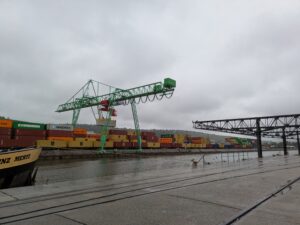
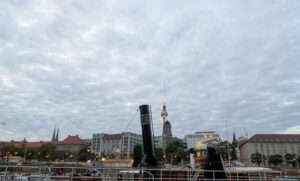
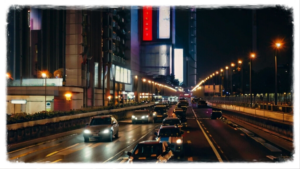
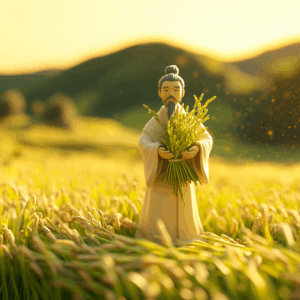
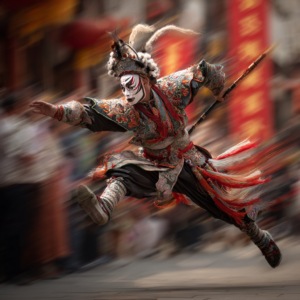
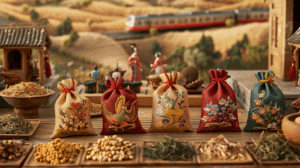
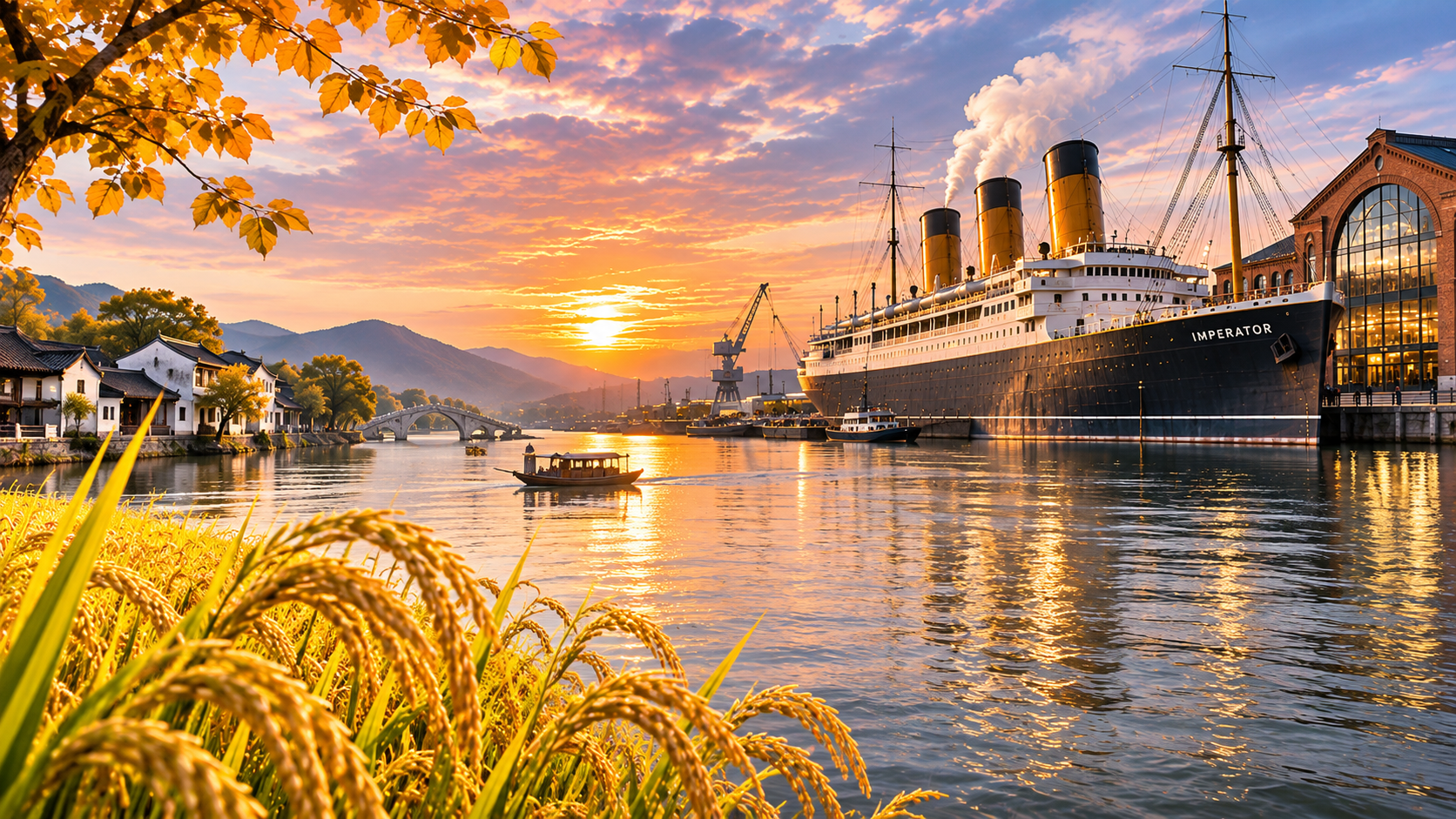
金黄的稻田与奔流的长江,
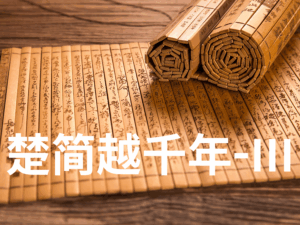
承载着两千三百年的楚文明记忆,
历经风浪仍然热爱世界,
帝国号诉说着我与船舶的浪漫情缘。
引文|为什么2026年是这三首歌?
有些歌,唱的是别人的故事,
听见的,却是自己的一生。三首歌,三种时间,三场与世界的相遇。
2026年听过许多歌曲,
有些旋律听过便渐渐淡忘,
有些却在不经意的瞬间,
悄悄走进了自己的生命。
为什么偏偏是这三首歌,
在这一年的时光里留下回声?
或许因为它们唱出的故事,
恰好触碰了我生命的三个世界。
《只有河南》唱着岁月与故人,
我却听见两千三百年前的楚国,
听见家族谱牒深处的黄歇,
也听见自己寻找一生的归属。
《我一定要和这世界再相爱一场》,
唱着风浪之后依然张扬的灵魂,
让我想起走过的坎坷与失望,
还有那颗始终不肯老去的心。
杨丞琳与王铮亮合唱的《爱河》,
原本是一首浪漫的爱情歌曲,
我却在海鸥、晚风与浪花之间,
听见了那些让我心动的船舶。
一首歌把我带回历史深处,
一首歌陪我继续走向远方,
还有一首歌让我在旅途中,
重新发现爱上万物的快乐。
一首歌从不解释自己,
它只是安静地待在时间里,
等你在某一天,
把自己的故事装进去。
一|《只有河南》|隔了2300年,我终于找到回家的路
我寻找了一辈子的家与归属,
却在两千三百年的岁月深处,
认出了自己的祖先,
也认出了自己的过去与未来。
1. 一生寻找的家|从花莲到德国
我出生在台湾花莲,
童年有山、有海、有铁道,
后来跨越海洋来到德国,
一住就是二十多年。
在不同的语言之间生活,
在不同的文化之间寻找位置。
我渐渐习惯了不断出发,
却始终没有停止寻找归属。
台湾保存着童年的记忆,
德国承载着成年的岁月。
两个地方都有生活的痕迹,
却无法回答我全部的问题。
家究竟是出生的地方,
还是生活了大半生的土地?
一个人究竟要走多远,
才能真正知道自己从哪里来?
2. 一张迟来的族谱|2025年8月31日
2025年8月31日,
一场在台湾的寻常饭局,
因为谈起江夏黄氏的祖源,
意外打开了家族历史的大门。
席间谈到了春申君黄歇,
随后广西亲属传来族谱照片,
让古老的名字有了具体的依据。
更令我感到不可思议的是,
在重新认识这段祖源之前,
我已经开始为《楚辞》谱曲,
并完成了四十九首作品的创作。
我以为自己在寻找一个从未去过的地方,
直到翻开族谱才明白,
我一直在写回家的路。
我并不知道这段家族历史,
却早已被楚辞的语言吸引,
一遍遍走进古老的诗歌,
试着让沉睡的声音重新响起。
3. 从江夏走到寿春|走向祖先的土地
2025年9月12日,
我独自走进武汉江夏,
来到黄氏大宗祠的门前,
完成了一场迟来的归宗仪式。
九叩之后抬起头来,
眼前仍是寻常的宗祠建筑,
但那些原本遥远的家族名字,
终于与脚下的土地连接起来。
到了2026年春天,
我又沿着楚国历史的线索,
走向安徽寿春一带,
寻找春申君黄歇留下的遗迹。
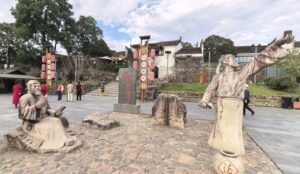
站在黄歇墓的历史现场,
我想到的不只是战国往事,
还有一个漂泊多年的后人,
终于走到了祖先名字的面前。
4. 我的过去,也是我的未来|楚文明的回声
《只有河南》写的是中原,
金黄的麦田铺展在大地上。
但当我听见这首歌曲,
心里浮现的却是长江与稻田。
江夏连接着家族的记忆,
寿春保存着楚国晚期的历史。
这些地方构成我的寻根地图。
祖先不是终点,
寻根也不意味着停止远行,
真正的传承不是留在过去,
而是带着过去走向未来。
对我而言,
寻根不意味着停止远行。
我想继续研究古老的文明,
让它与今天的世界重新对话。
黄歇是我的祖先,
是我寻找一生的历史来处,
也是我愿意继续走向世界、
把楚文明带往未来的理由。
有些归来不需要时光倒流,
有些重逢也不必真正相见,
当我终于认出祖先的名字,
两千三百年的距离再度重合。
Sie sehen gerade einen Platzhalterinhalt von YouTube. Um auf den eigentlichen Inhalt zuzugreifen, klicken Sie auf die Schaltfläche unten. Bitte beachten Sie, dass dabei Daten an Drittanbieter weitergegeben werden.
Mehr Informationen二|《我一定要和这世界再相爱一场》:经历风浪,依然热爱世界
世界未必始终温柔,
人生也不曾一路顺遂,
但我依然愿意张开双臂,
与这个世界再相爱一场。
1. 少年慢慢变老|灵魂依然张扬
年轻时以为人生很漫长,
总觉得还有许多时间可以等待。
直到岁月悄悄改变了容颜,
才发现生命早已走过大半。
身体渐渐不如年轻时轻盈,
生活也积累了许多责任。
但有一件事始终没有改变:
我对这个世界的好奇心。
为了看一艘喜欢的船,
我可以坐火车奔赴另一座城市。
为了理解一段工业历史,
我愿意走进陌生的博物馆。
年龄带走了青春的容貌,
却不一定带走探索的勇气。
身体会变老,
但好奇心不会,
只要心里还有想去的地方,
人生就永远有下一站。
2. 见过人性的暗礁|依然选择善良
人生并不总是风平浪静。
有些风浪来自现实的艰难,
有些伤害却来自人的算计,
甚至来自曾经给予的信任。
我也曾经真诚地对待别人,
却在后来发现人心的复杂。
有些关系留下难以理解的沉默,
有些经历让我反复检视自己。
是不是当初看得不够清楚?
是不是太容易相信别人的善意?
然而经历这些事情以后,
我从未想过用欺骗回应欺骗,
也不愿意为了避免受伤,
把自己变成曾经厌恶的人。
真诚不代表缺乏判断力,
善良也不意味着没有边界,
我可以重新学习辨认人心,
却不必否定当初真诚的自己。
那些曾经让我受伤的人,
或许改变了我对关系的期待,
却没有资格决定我的品格。
3. 落魄或是风光|不让别人定义自己
这些年走过不少弯路,
也经历过许多求职的挫折。
有时认真准备了很久,
最后仍然等不到期待的回应。
我曾经怀疑自己的能力,
也曾经反复检视过去的选择。
为什么努力未必带来机会?
为什么经验不一定获得认可?
但现实的结果并不能证明,
一个人的全部价值与能力。
于是我继续走进大学课堂,
认真准备每一堂中文与跨文化课程。
也继续走访铁路与海事博物馆,
把现场观察整理成自己的文字。
没有人委托我研究这些题目,
也没有人等待我的文章。
但当我发现值得记录的历史,
仍然愿意花时间把它写下来。
这些努力未必立即带来收入,
也不一定换来掌声与赞赏。
但它们让我在现实的困境里,
仍然保有创造与选择的能力。
没有掌声的时候,
就自己做自己的观众,
只要还在认真地记录这个世界,
就还没有向生活认输。
4. 不负人间一趟|继续走向世界
这一年我去了许多地方,
在车站、港口与博物馆之间,
沿着铁路与水路不断前行,
寻找人类文明留下的痕迹。
有时是一艘百年前的轮船,
有时是一台沉默的蒸汽机,
有时是一张古老的航海图,
都能让我驻足很长的时间。
真正的热爱,
不是从未经历失望与伤害,
而是经历了人生的风浪,
依然没有让它们耗尽自己。
未来还有许多未知的风浪,
现实也不会因为一首歌改变。
但我希望自己仍有勇气,
继续学习、创造、旅行与爱。
累了就停下来休息片刻,
遇到困难就重新寻找方法。
不必证明自己永远坚强,
也不必要求人生处处圆满。
热爱世界,
不是因为它始终美好,
而是看清它的复杂之后,
我依然愿意与它相爱。
歌曲与演唱参考
《我一定要和这世界再相爱一场》
Sie sehen gerade einen Platzhalterinhalt von YouTube. Um auf den eigentlichen Inhalt zuzugreifen, klicken Sie auf die Schaltfläche unten. Bitte beachten Sie, dass dabei Daten an Drittanbieter weitergegeben werden.
Mehr Informationen三|《爱河》:当爱情歌曲变成船舶之歌
别人听见的是恋人的情话,
我听见的却是海鸥与浪花,
还有一艘艘可爱的船舶,
在我的生命里轻轻荡漾。
1. 晚霞绕过火车|我的浪漫从铁道开始
第一次听见这首《爱河》,
是杨丞琳与王铮亮的合唱版本。
轻盈的旋律才刚刚响起,
我便被歌曲里的画面吸引。
晚霞映照着远行的火车,
恋人在暮色里等待彼此,
原本是一幅浪漫的爱情场景,
我却立刻想起自己的铁路旅行。
这几年我坐过许多火车,
从一座城市驶向另一座城市。
窗外不断变换着田野与河流,
心里惦记的却是下一座博物馆。
别人搭火车去见心上人,
我搭火车去见百年前的轮船。
这样的约会或许有点奇怪,
却总能让我开心好几天。
浪漫不一定属于恋人,
也可以属于一段铁道旅程,
当火车缓缓驶向目的地,
我知道又有船舶在前方等我。
2. 海鸥、晚风与浪花|船舶也有自己的表情
当歌曲唱到海鸥与晚风,
我的脑海便出现了港口。
我喜欢观察船首的线条,
也喜欢研究船身的结构。
有些船显得庄严而骄傲,
有些船却像天真的孩子。
1913年的帝国号客轮,
便是我爱上船舶的开始。
那艘庞大而华丽的远洋轮船,
仿佛仍保留着旧时代的气派。
每一道船体的曲线背后,
都藏着设计者与时代的故事,
当我开始给冰冷的钢铁一点性格,
历史便不再只是技术资料。
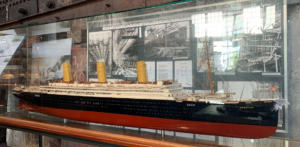
图:Imperator 1913,作者摄于2026年06月于汉堡港口博物馆
3. 手风琴响起|音乐让船舶开始摇晃
这一版《爱河》特别迷人,
还因为王铮亮演奏了手风琴。
手风琴是我熟悉的乐器。
风箱一开一合之间,
空气推动簧片发出声音,
旋律便随着呼吸流动。
手风琴舒展的旋律线条,
让我联想到船身轻轻摇摆。
歌声随着节拍向前流动,
仿佛小船正缓缓驶过河面。
这当然不是歌曲的原意,
而是我自己的听觉想象。
同一段旋律进入不同生命,
便可能生长出不同的风景。
4. 谁说一定要做智者|我偏偏爱上船舶
这首歌最有趣的地方,
是它对理性与爱情的调侃。
经历过人生的许多事情,
我当然明白判断的重要。
也知道不能轻易相信别人,
更不能把善良交给算计。
但面对一艘喜欢的船,
我实在不想时时保持理性。
明明只是博物馆里的模型,
却能让我看得舍不得离开。
有时为了研究一艘轮船,
我会翻阅厚厚的历史资料。
查找它的设计与建造年代,
甚至追踪它最后的命运。
喜欢船并不需要回报,
也不必担心它是否回应。
如果连喜欢一艘船,
都必须计算有什么好处,
那么人生未免太无趣了,
世界还有那么多美好的事物,
值得我们像孩子一样认真地喜欢。
5. 我的爱河里,航行着船舶
如果说第一首歌曲,
让我找到两千三百年的来处;
第二首让我经历人生风浪后,
依然愿意继续热爱世界;
那么第三首《爱河》,
便是这份热爱最轻盈的模样。
不必承担宏大的文明使命,
也不必证明自己的生命价值。
原来爱河不一定流向爱情,
也可以流向一生热爱的世界,
别人把情话送给恋人,
我把情话送给船舶。
Sie sehen gerade einen Platzhalterinhalt von YouTube. Um auf den eigentlichen Inhalt zuzugreifen, klicken Sie auf die Schaltfläche unten. Bitte beachten Sie, dass dabei Daten an Drittanbieter weitergegeben werden.
Mehr Informationen尾声|三首歌,三个我
一首歌让我认出自己的来处,
一首歌让我继续奔向远方,
一首歌让我爱上沿途的风景,
而三首歌,恰好唱出了这一年的我。
《只有河南》让我回望千年,
在族谱与楚文明的深处,
找到寻找了一辈子的根,
也找到继续创作的方向。
《我一定要和这世界再相爱一场》,
让我重新审视走过的风浪,
不因别人的算计放弃真诚,
也不因现实的挫折失去热情。
《爱河》则让我会心一笑,
原来一艘船也能令人心动,
一段手风琴旋律就能带来快乐,
生命不只有责任与追寻。
三首歌唱着不同的故事,
却恰好记录了2026年的我,
有历史可以回望,
有远方可以奔赴,
还有可爱的船舶值得深爱。
知道自己从哪里来,
也知道自己为何继续出发,
不必等到人生圆满的那一天,
此刻就值得与世界相爱。
带着历史的根,
怀着少年的心,
沿着生命的河流,
继续与世界相爱。
楚人对话后记|考烈王、黄歇与令尹夫人的观后感
两千三百年后,楚人也来听情歌
夜里播放今年喜欢的三首歌。
考烈王听见《只有河南》,
转头问黄歇:
“春申君,这歌是在等谁回来?”
黄歇笑着回答:
“大王,她找了一辈子的家,
如今终于在族谱里找到祖先,
还想把中原的麦田改成江南的稻田!”
考烈王听完第二首歌,
又好奇地问我:
“令尹夫人,人生已经这么辛苦,
为何还要与世界再相爱一场?”
我笑着回答:
“大王,遇见过不好的人,
不代表整个世界都不好。
还有许多值得我去爱的事物。”
第三首《爱河》刚刚响起,
考烈王立刻来了精神:
“令尹夫人,终于唱情歌了!
这回是哪位公子?”
我忍不住大笑:
“大王,这首是唱给船舶的!
尤其是1913年的帝国号,
那可是我喜欢的漂亮轮船!”
考烈王愣了一下:
“什么?连船都能谈情说爱?”
黄歇在旁边笑着回答:
“大王,她爱的是整个世界!”
三首歌曲渐渐结束,
考烈王摇头感叹:
“寻祖先、爱天下、恋船舶,
令尹夫人的心可真忙!”
黄歇望着我微笑:
“不过大王,这也未尝不好。
两千三百年后的楚人,
依然有勇气热爱这个世界。”
历史让我找到自己的根,
岁月教会我守住本心,
而世界还有无数值得惊叹的事物,
等着我继续去认识、去深爱。
两千三百年前,
屈子仰望星空,写下《天问》,
两千三百年后,一个后人听着情歌,
依然愿意为这个世界心动。
江风吹过,
歌声还在耳边回荡。
Appendix|English Narrative Overview
Three Songs That Defined My 2026: History, Life, and Ships
When a Song Becomes Your Own Story
A song never explains itself. It simply waits somewhere in time until, one day, someone fills it with a story of their own. Throughout 2026, I listened to countless melodies, yet three songs stayed with me: Only Henan (只有河南), I Must Fall in Love with This World Once Again (我一定要和这世界再相爱一场), and River of Love (爱河).
They were written for different purposes and told different stories. But somehow, they came to represent three dimensions of my life: the history I inherited, the life I continue to shape, and the unexpected things that still make my heart flutter.
The first song led me back more than 2,300 years. The second reminded me why growing older does not have to mean losing curiosity. The third, originally a romantic love song, made me think not of a man, but of ships. Yes, ships — especially those magnificent historical ocean liners that can persuade me to travel for hours just to admire them in a museum.
Only Henan: Finding My Way Home Across 2,300 Years
I was born in Hualien, Taiwan, surrounded by mountains, the sea and railway tracks. Later, I moved to Germany, where I have lived for more than twenty years. Both places have shaped my identity, yet neither fully answered a question that had accompanied me for much of my life: Where do I truly belong?
On 31 August 2025, an ordinary lunch conversation in Taiwan unexpectedly opened a door into my family’s history. We discussed the Huang lineage and Huang Xie, Lord Chunshen, a prominent statesman of the ancient state of Chu. Shortly afterwards, relatives in Guangxi sent photographs of our family genealogy. A name that had previously belonged to distant history suddenly became part of my own ancestral story.
What made this discovery particularly moving was its timing. Before learning about this family connection, I had already composed music for forty-nine works from the Chu Ci (Songs of Chu). I had spent months exploring the rhythms, imagery and emotional world of these ancient poems without knowing how closely they would later resonate with my family’s recorded ancestry.
On 12 September 2025, I visited the Huang ancestral temple in Jiangxia, Wuhan, and performed a ceremony of ancestral remembrance. In spring 2026, I continued my journey to the historical sites associated with Huang Xie near Shouchun, Anhui. Standing before the traces of a world more than two millennia old, I was no longer looking only at the history of an ancient statesman. I was looking at a name preserved in my family’s memory.
The original song Only Henan evokes golden wheat fields, the passing of generations and the longing for reunion. Yet whenever I hear it, I imagine the Yangtze River and golden rice fields instead. In my personal interpretation, Henan becomes Jiangnan, and wheat becomes rice. The landscape changes, but the longing remains.
For me, Huang Xie represents not only an ancestral past, but also a connection to the civilization of Chu that I hope to continue exploring and interpreting. Finding one’s roots does not mean remaining in the past. Sometimes, it provides a new reason to move forward.
Falling in Love with the World Again: Growing Older Without Growing Old Inside
The second song speaks to another part of my life. Its central message is that even as the years pass and the body grows older, the spirit can remain adventurous. This is perhaps the line of thought that resonates with me most deeply.
I am no longer young, and life has not always been gentle. I have experienced disappointment, difficult relationships, professional setbacks and moments when years of effort seemed to lead nowhere. Yet one thing has remained remarkably persistent: my curiosity about the world.
I can travel to another city simply to see a historical ship. I can spend hours in a railway or maritime museum, examining an unfamiliar machine and trying to understand how it works. I have become fascinated by shipbuilding, marine engineering, navigation, industrial history and the people whose knowledge made these technologies possible. I still enjoy traditional instruments, music, literature and the discoveries that come from entering an unfamiliar field of knowledge.
These interests do not necessarily produce income, professional recognition or immediate practical benefits. Sometimes I research a subject simply because I cannot bear to leave a fascinating question unanswered.
My professional life has also taught me that effort and recognition do not always arrive together. I continue teaching Chinese and intercultural subjects, preparing courses and documenting my field research, even when the results are uncertain. No institution commissioned many of my articles, and no audience was waiting for them. I wrote them because I believed the histories and objects I encountered deserved to be understood.
There is another lesson I have learned through difficult experiences: sincerity does not require naivety, and kindness does not mean living without boundaries. I can become more discerning without abandoning the values that have guided me. Other people’s behaviour may change my expectations, but it does not have to determine my character.
To love the world again is not to pretend that everything is beautiful. It is to recognise its complexity, accept that some experiences have been painful, and still remain willing to learn, travel, create and discover.
As long as there is another museum to explore, another river to follow or another unfamiliar machine to understand, I have a reason to look forward to the next journey.
River of Love: When a Romantic Song Becomes a Love Song for Ships
The third song brings a rather different mood. In 2026, I became particularly fond of a performance of River of Love by Rainie Yang and Wang Zhengliang. Its gentle melody, romantic imagery and accordion accompaniment created an atmosphere that immediately caught my attention.
The song evokes a train travelling beneath the evening sky, seabirds, breezes and waves. For most listeners, these images belong to the world of romance. For me, the train immediately became a journey to another maritime museum, while the seabirds and waves brought back memories of harbours and historical vessels.
Other people might take a train to meet someone they love. I take trains to meet ships that were built a century ago.
One of my favourites is the SS Imperator, the magnificent German ocean liner of 1913. I photographed a model of the vessel at the Hamburg Harbour Museum in June 2026. Its imposing hull, elegant proportions and four towering funnels evoke an era when ocean liners represented extraordinary achievements in engineering, design and international transportation.
I have always enjoyed giving machines and historical objects a little personality. Some ships appear proud and dignified; others seem almost playful. Of course, a vessel cannot speak or return affection. Yet its shape, construction and history reveal the ambitions, skills and imagination of the people who created it. Once I begin to see these qualities, cold steel becomes something much more interesting than technical material.
The accordion adds another personal connection to the song. As someone familiar with the instrument, I enjoy the way its bellows create a sense of breathing through sound. In my imagination, the flowing melody resembles a vessel gently moving across the water.
Perhaps the most amusing part of this interpretation is that I no longer feel the need to calculate the practical value of every affection. Must admiring a ship lead to a professional opportunity? Must visiting a museum produce a measurable result? Must every journey justify its cost through some achievement?
Sometimes, the simple pleasure of loving something is enough.
Other people dedicate romantic songs to their beloved. I dedicate this one to ships.
Three Songs, Three Ways of Experiencing Time
Looking back, these three songs represent three different relationships with time. Only Henan belongs to historical time, connecting me to ancestors, family records and the civilization of Chu. I Must Fall in Love with This World Once Again belongs to the time of an individual life, reminding me that curiosity and integrity can survive disappointment. River of Love belongs to the present moment, when a beautiful ship, a passing breeze or a familiar musical instrument can bring unexpected happiness.
Together, they describe my 2026 more accurately than any conventional list of achievements could. I found a deeper connection to my past, continued searching for ways to shape my future, and discovered that everyday wonder had never really left me.
I know more clearly where I come from. I do not yet know where I will finally settle. But I no longer believe that every journey must end before life can be meaningful.
With roots in history, a youthful curiosity and a heart still open to discovery, I intend to keep falling in love with the world.
Across Civilizations
When the King of Chu Discovered My Love Songs
One evening, I played the three songs for King Kaolie of Chu and Huang Xie, Lord Chunshen.
As Only Henan began, the king turned to his minister. “Lord Chunshen, whom is this song waiting to welcome home?”
Huang Xie smiled. “Your Majesty, Lady Lingyin has spent much of her life searching for a sense of belonging. Now she has found an ancestral connection in her family genealogy. She even wants to replace the wheat fields of the Central Plains with the rice fields of Jiangnan.”
The king nodded thoughtfully. Then the second song began.
“Lady Lingyin,” he asked, “if life has already brought you so many difficulties, why insist on falling in love with the world again?”
“Because, Your Majesty,” I replied, “meeting some unkind people does not mean the entire world is unkind. There are still countless things worth discovering and loving.”
When River of Love began, the king suddenly brightened.
“Ah! Finally, a love song! Tell me, Lady Lingyin, which gentleman has captured your heart this time?”
I burst out laughing. “Your Majesty, this song is for ships! Especially the beautiful Imperator of 1913.”
The king stared at me. “Ships? People can fall in love with ships?”
Huang Xie laughed. “Your Majesty, she is in love with the world itself.”
As the final melody faded, the king shook his head in amusement. “Searching for ancestors, loving the world and courting ships! Lady Lingyin certainly keeps her heart busy.”
Huang Xie smiled. “Perhaps that is not such a bad thing, Your Majesty. More than 2,300 years later, a descendant of Chu still has the courage to love the world.”
More than two thousand years ago, Qu Yuan looked towards the heavens and composed Tianwen, his Questions to Heaven. Today, a descendant of Chu listens to love songs and still finds reasons to be moved by the world.
The breeze drifted across the river, and the music lingered in the air.
📜 延伸阅读|从家族谱牒到楚文明
2025年8月31日的台湾饭局,记录江夏黄氏、族谱照片与楚文明祖源的重新发现。
2.《我沿着速度奔跑,撞见了一个文明的余温》|从高铁到楚文明的归途
从现代高铁走进《楚辞》,从四十九首谱曲走向江夏祖地,记录一段先有行动、后知祖源的文明寻根旅程,以及速度、创作与家族记忆如何在生命中交汇。
追寻祖父迁台之后中断的家族联系,重新认识广西陆屋黄氏的迁徙历史。
4. 《江夏堂与黄氏祖源》
记录江夏寻根、宗祠祭拜,以及家族历史与个人生命重新连接的过程。
从家族谱牒走向历史现场,在春申君黄歇的遗迹旁重新思考祖先与文明。
6. 《家在来处,还是航向?》
从台湾、德国与楚地的三重归属出发,思考家究竟是生命的起点,还是继续前行的方向。
歌曲歌词
🤖 人工智能协作声明
本文的主题选择、田野调查、资料搜集、核心观点与中文原始内容,均由作者独立完成。创作过程中,作者与人工智能模型,进行持续协作,包括多轮讨论、思路推演、节奏输出、部分翻译、英文 Narrative Overview 生成、语言检查、结构检测与文字润饰。
人工智能在此过程中,作为创作协作者,参与内容发展与语言表达,但不作为法律意义上的作者或著作权主体。所有 AI 协作产生的内容,均由作者依据田野资料、原始文献与中文母稿,进行选择、审校、修改与艺术化重构。文章的叙事方向、内容取舍、创作决策、最终表达与价值判断,均由作者决定并负责。
📜 本站所有原创作品均已完成区块链存证,确保原创凭证。部分重点作品另行提交国家版权登记,作为正式法律备案。原创声明与权利主张已公开。完整说明见:
👉 原创声明 & 节奏文明版权说明 | Originality & Rhythm Civilization Copyright Statement – NING HUANG
节奏文明存证记录
本篇博客文为原创作品,由黄甯与 AI 协作生成,于博客网页首发后上传至 ArDrive 区块链分布式存储平台进行版权存证:
- 博客首发时间:2026年11月03日
- 存证链接:44c5daa9-5d87-420b-850f-a30788b3a64c
- 存证平台:ArDrive(arweave.net)(已于 2026年11月03日上传)
- 原创声明编号:Rhythm_Archive_03_Nov_2026/three-songs-my-2026
- 用途声明:本文为《节奏文明观》之篇章,亦参与构建《AI×非遗文明共构档案》与《文明节奏回声计划》,用于文明节奏实地记录、区块链存证、跨域协作与版权登记用途。
© 黄甯 Ning Huang, 2026. All Rights Reserved.
本作品受版权法保护,未经作者书面许可,禁止复制、改编、转载或商用,侵权必究。
📍若未来作品用于出版、课程、NFT或国际展览等用途,本声明与区块链记录将作为原创凭证,拥有法律效力。