封面图说明|
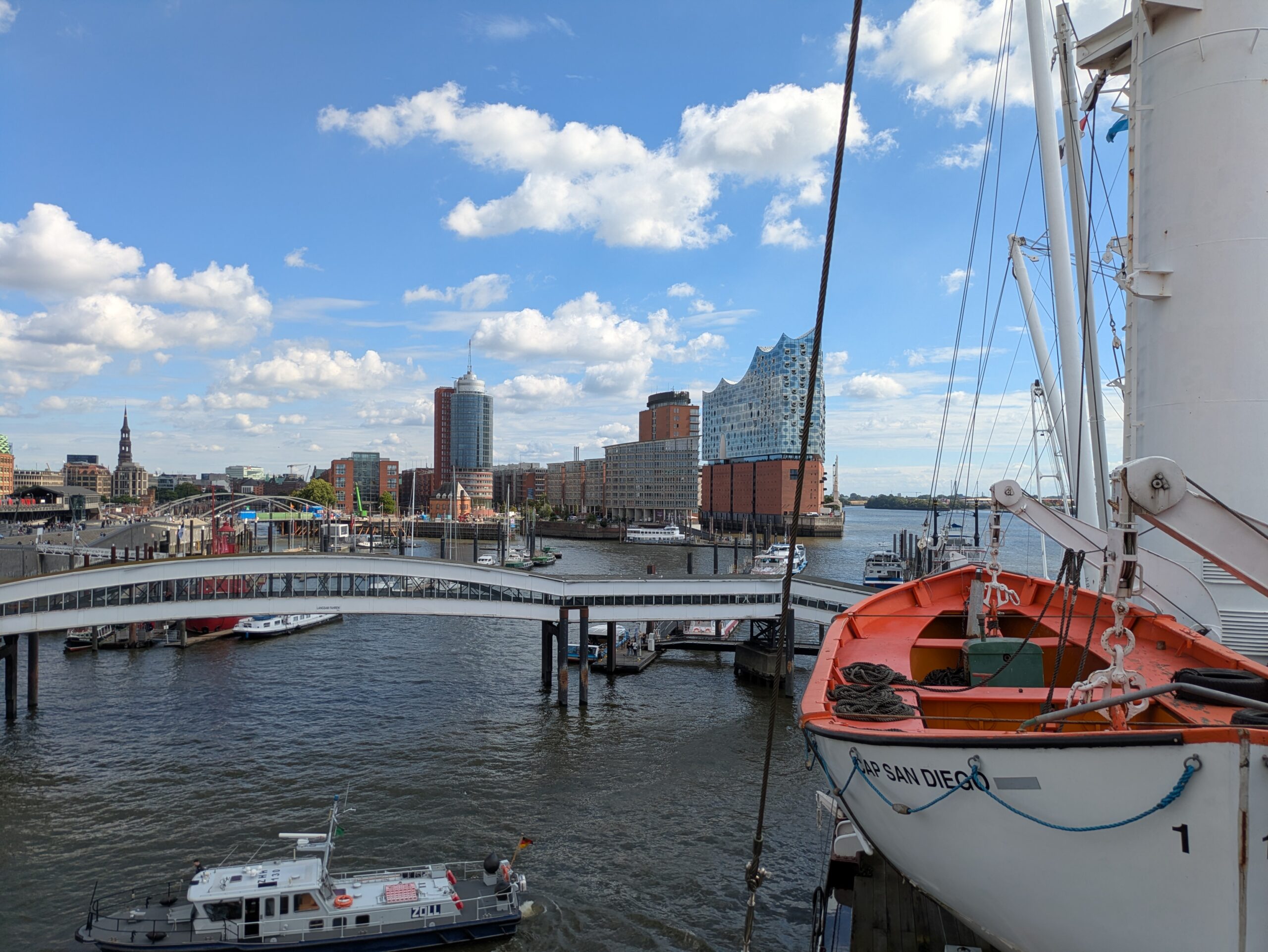
站在汉堡港的 Cap San Diego 船上,
我望向易北河与远方的城市。
船舶可以停泊,也可以再次启航,
而我仍在寻找自己的方向。
当身体遇见海港,
我开始思考,什么地方才能真正成为家。
图片说明|作者摄于 2026 年 09 月 02日汉堡田野。
引文|当回家不再像回家
当一个人拥有不止一个来处,
家究竟在回望的地方,
还是生命正在驶向的方向?
最近,我在 LinkedIn 上,
读到一篇关于回家的文章,
标题是 When Coming Home Doesn’t Feel Like Coming Home。
作者是一位长期生活在台湾的德国女性,
她写下了返回德国以后,
那种熟悉却又陌生的感受。
在台湾生活多年以后,
她习惯了当地的人际互动,
也适应了不同的生活节奏,
再次回到德国时,
却发现熟悉的故乡,
竟然也需要重新适应。
这让我想到自己。
我在台湾出生长大,
又在德国生活了二十多年,
后来沿着家族血缘与历史,
追寻两千多年前的楚文明。
这些不同性质的来处,
早已进入我的生命。
身体记得的地方,
祖先留下的地方,
与真正生活过的地方,
未必指向同一个方向。
如果一个人拥有多个来处,
那么所谓的“回家”,
究竟应该回到哪里?
为什么我们寻找家的时候,
总是习惯先回头?
一|回望:身体、人生与两千多年的血缘
有些来处,藏在身体的记忆里,
有些来处,留在走过的岁月中,
还有一些,要沿着血缘走回历史深处。
1. 台湾|身体记得的地方
我在台湾出生,也在那里长大,
童年的庙口、街道与人声,
连同熟悉的语言和生活节奏,
早已进入身体的记忆。
后来离开台湾多年,
走进不同的城市与文化环境,
却发现有些熟悉的声音与气味,
不需要刻意寻找,
身体便会自然地认出来。
2. 德国|二十多年走出来的人生
来到德国以后,
我学习语言、读书、工作与养育孩子。
二十多年的时间慢慢累积,
陌生的制度成为日常,
不同的语言进入生活。
德国并不是我血缘上的来处,
却承载了成年以后漫长的人生。
3. 楚地|沿着血缘走回古代楚国
可是,我还有另一条来路。
它不属于童年的身体记忆,
而是藏在家族谱系里的血缘。
沿着祖辈留下的线索,
从族谱中的名字与记载,
一路走向两千多年前的楚国。
后来,我真的走到广西灵山陆屋祖祠,
又来到湖北武汉江夏、荆州,
也走进了安徽寿春,
来到淮南当地所称的黄歇墓,
以及楚考烈王墓园旁。
族谱中的名字与眼前的土地,
第一次在真实的空间里相遇。
台湾留下身体的记忆,
德国承载二十多年的生活,
楚地连接血缘与文明的历史。
可是,当我重新看见这些来处,
一个问题也慢慢浮现:
知道自己从哪里来,
是否就意味着知道家在哪里?
延伸阅读|相关田野与寻根记录
台湾与身体记忆
楚文明与血缘寻根
寿春与淮南田野
二|迁徙:从楚居到尚未确定的航向
回望让我认出来处,
迁徙让我不断遇见新的世界,
而未来,
仍在等待身体走向它。
1|楚居:没有预先画好的人生地图
从台湾来到德国以后,
我在不同城市之间迁徙。
有些选择来自现实需要,
有些行动只是出于好奇。
当时看似毫无关系的经历,
直到多年以后重新回望,
才逐渐显现出彼此的联系。
后来,我读到清华简《楚居》,
看见楚人先祖不断迁徙的记载。
我开始借用「楚居」,
理解自己不断迁徙的人生。
2|模组型体质:身体先走,知识后来连接
我的学习也有类似的路径。
经常先走进一个陌生地方,
看见某件事物、产生疑问,
才开始寻找相关的知识。
从历史、语言到工程技术,
不同领域原本各有自己的知识,
却在一次次田野行动之后,
慢慢连接成新的理解。
身体先接触真实的世界,
知识随着行动不断累积;
而有些联系,
要等到后来才看得见。
3|航向:从回望祖源到走向海港
过去,我沿着血缘回望历史,
寻找那些比我早两千多年的名字。
后来,河流、湖泊与船舶进入生活,
我开始走访港口与历史船舶。
站在汉堡港的船上,
眼前是易北河与往来的船舶。
过去的经历没有消失,
新的知识仍在不断加入。
如果迁徙不只是离开故乡,
也可能是走向新的归属,
那么家,会不会还在前方?
延伸阅读|楚居、身体与知识生成
三|靠岸:海港可以停船,哪里可以安放一个人?
海港可以让船停泊,
但让人愿意留下的,
不只是港口,
还有人与人之间的回应。
1|吸引:喜欢一座海港,不等于属于那里
我曾经非常喜欢汉堡,
喜欢汉堡易北河上的往来船舶,
也喜欢那些保存至今的历史船。
我阅读船舶与城市的历史,
把田野观察写成文章,
尝试与当地的机构分享。
2|回应:人与人之间的温度
然而,随着交流逐渐展开,
有些分享没有得到回应,
有些联系也未能继续。
这些经历让我感受到另一种距离。
在德国东部的德勒斯登,
一个我原本没有特别亲近感的地方,
我却经历了不同的交流。
有人认真阅读我的文章,
从田野观察谈到身体哲学,
又延伸到山水与风景的理解。
原本只是一次博物馆参观,
后来竟然成为持续的知识对话。
风景可以吸引人前往,
但只有回应,
才能把人留下来。
3|安放:船需要泊位,人需要关系
船舶驶进港口以后,
需要安全的航道与泊位。
可是,人不是一艘船。
喜欢某个地方的历史与文化,
不代表在那里就能安居。
除了适合自己的生活空间,
还需要尊重、信任与交流。
过去,我用「楚居」理解迁徙。
如今,却开始提出另一个问题:
当一个人愿意走向某个地方,
那个地方是否也能接得住他?
所谓安居,
不是找到了一片没有风浪的水域,
而是找到了一个愿意接住你落锚的人。
尾声|家,也许不只有过去式,还有未来式
回望让我知道从哪里来,
而转过身以后,
我才发现,
家也可能在前方。
我回望台湾,
看见身体的记忆;
回望德国,
看见二十多年的生活;
再沿着家族血缘走向楚国,
看见两千多年前的历史。
这些来处,
都真实地属于我。
可是这一次,我转过身,
眼前有河流、有船舶,
还有易北河畔,
通向世界的港口。
也许,家不只有过去式,
它不只是我们不断回去的地方,
也可能随着身体的迁徙,
在人与人的相遇和回应中,
逐渐成为尚未抵达的未来。
延伸阅读|姐妹篇
《远方》追问:
走进陌生的空间以后,
身体如何通过感知与行动,
生成知识,遇见新的自己?
《家》则继续追问:
当生命不断生成新的自己,
我们又将在哪里,
找到能够安放自己的地方?
楚人对话后记|考烈王、黄歇与令尹夫人的观后感
祖宗找到了,然后呢?
考烈王:
「你当初费尽力气寻根问祖,
走回广西,
又回到江夏,
后来走到黄歇墓前,
连寡人的墓旁都去了。
如今祖宗找到了,
以后会常常回家吧?」
我:
「有研究需要再回去。」
黄歇:
「那你要去哪里?」
我:
「继续走向世界!」
考烈王:
「那寡人和春申君呢?」
我:
「你们当然跟我一起走啊!」
黄歇:
「看来你这趟寻根,
反倒成了下一段旅程的起点。」
考烈王:
「哈哈哈!
原来你千里迢迢来找我们,
不是为了留在楚国,
而是要带我们继续远行!」
我:
「没错!
只是下一站在哪里,
我还不知道。」
黄歇:
「不知道也无妨。
我们先看航向,
再看哪里值得靠岸。」
考烈王:
「好!
那就继续出发!」
我曾沿着血缘回望,
走到黄歇墓前,
也走过楚考烈王的墓旁。
跨越两千多年的寻根,
不是为了把自己留在过去,
而是为了认出自己的来处,
再带着祖先继续走向世界。
来处,让我知道自己是谁;
航向,让我继续寻找未来。
而家,也许就在我们共同走过的路上,
等待时间慢慢给出答案。
Appendix|English Narrative Overview
Is Home Where We Come From, or Where We Are Heading?
When I Stopped Looking Back and Saw a Harbour — From the Body, Ancestral Roots and Chu Ju to a New Understanding of Belonging
When Coming Home No Longer Feels Like Coming Home
Recently, I came across a LinkedIn article titled When Coming Home Doesn’t Feel Like Coming Home. It was written by a German woman who had spent many years living in Taiwan. After returning to Germany, she discovered that the country she had once called home no longer felt entirely familiar. She had grown accustomed to the rhythms of life and the ways people interacted in Taiwan. Returning to Germany meant learning to adjust once again.
Her experience made me think about my own life. I was born and raised in Taiwan, have lived in Germany for more than twenty years, and have followed the history of my family back to the ancient state of Chu, more than two thousand years ago. These three places belong to my life in very different ways. Taiwan is where my childhood memories were formed. Germany is where I have spent much of my adult life. Chu is where my search for ancestral roots has taken me.
For a long time, I had thought of home primarily as somewhere we return to. Yet the more I considered these different origins, the less certain the answer became. The place where we were born, the place where we have built a life, and the place to which our ancestry leads may not be the same. If all three are part of who we are, which one should we call home?
Three Ways of Remembering Where I Come From
Taiwan remains part of my bodily memory. I remember the temple forecourts of my childhood, the streets, the voices and the familiar rhythms of everyday life. Even after many years away, certain sounds and smells can bring back an immediate sense of recognition. I do not have to search consciously for those memories. Sometimes my body seems to recognise a place before I have found the words to describe it.
Germany holds a different kind of memory. Here, I learned another language, studied, worked and raised my child. More than twenty years have passed, and what was once unfamiliar has gradually become part of ordinary life. Germany is not the origin of my family lineage, but it is where a substantial part of my adult life has unfolded.
Then there is Chu. This connection did not begin with a childhood memory. It began with family genealogies, ancestral names and historical records. Following those traces, I began investigating the ancient civilisation of Chu and the history of my family more than two thousand years ago.
Eventually, I travelled to places that had previously existed for me mainly in family records and historical accounts. I visited the ancestral hall in Luwu, Lingshan County, Guangxi, followed by Jiangxia in Wuhan, Jingzhou and the ancient city of Shouchun. Near Huainan, I visited the site locally identified as Huang Xie’s tomb and the tomb of King Kaolie of Chu. Names I had encountered in my research were now connected to landscapes and places I could see with my own eyes.
These journeys gave my ancestry a physical dimension. Yet they also raised a question I had not expected. I could trace my family history, visit ancestral places and recognise the different origins that had shaped my life. But did knowing where I came from necessarily mean knowing where I belonged?
A Life That Never Followed a Straight Line
My life has rarely followed a predetermined route. After moving from Taiwan to Germany, I lived through different stages of migration, education, work and family life. Some decisions were practical; others began with curiosity. Experiences that once seemed unrelated only revealed their connections much later.
I eventually began using the idea of Chu Ju to understand this pattern of movement. The ancient text Chu Ju, preserved among the Tsinghua bamboo manuscripts, records the places where the ancestors and rulers of Chu lived and how they moved between them. Rather than seeing migration as a single departure from one homeland towards another, I began to see my life as a continuing process of encountering places, adapting to circumstances and forming new relationships with the world.
My way of learning has developed along similar lines. I often enter an unfamiliar environment before I know exactly what I want to investigate. Something catches my attention, I begin asking questions, and those questions lead me towards books, historical records or technical explanations. History, languages and engineering may initially seem to belong to separate worlds, yet fieldwork has repeatedly brought them into contact.
I have described this approach as my modular learning physiology. The body encounters something first, knowledge gradually accumulates, and connections sometimes become visible only years later. Not every experience needs to fit into a complete plan from the beginning. Some of its significance emerges through what happens afterwards.
For years, much of my curiosity had been directed towards the past. I followed ancestral names, investigated Chu history and travelled to places associated with that civilisation. Then another world gradually entered my life: rivers, lakes, ships and harbours. I began studying maritime history, visiting historic vessels and exploring how waterways had shaped cities and human movement.
One day, standing aboard a ship in Hamburg, I looked out across the Elbe and watched the vessels moving through the harbour. I had spent so much time following traces of the past. Now I found myself looking in another direction.
What if migration was not only about leaving a place or returning to one? What if it could also mean moving towards a form of belonging that had not yet taken shape?
A Harbour Is Not Necessarily a Home
Hamburg had fascinated me for some time. I loved its harbour, the ships moving along the Elbe and the historic vessels that preserve different chapters of maritime history. I read about the development of the city, explored its waterfront and turned my field observations into articles. I also tried sharing my work with institutions connected to the maritime world.
Yet as these exchanges developed, I began noticing something that had little to do with ships. Some of my messages received no response, and some contacts did not lead to further conversation. I could feel a strong connection to the maritime history of Hamburg without necessarily finding the same sense of connection in my exchanges with people there.
In Dresden, a city in eastern Germany where I had not initially felt a strong personal connection, I experienced something quite different. After visiting a transport museum and writing about its exhibition, I received a thoughtful response from someone who had taken the time to read my work. The conversation moved from my field observations to the philosophy of bodily experience, and then to Chinese mountains, waters and different ways of understanding landscape.
What had begun as an ordinary museum visit became an unexpected intellectual exchange. Someone had recognised questions in my writing and responded with questions of his own. The experience made me realise how much a genuine response can change our relationship with a place.
A beautiful landscape can make us want to visit. A harbour full of ships can give us countless reasons to return. But neither can guarantee that we will feel at home. That feeling also depends on whether people listen to one another, whether exchanges are reciprocal and whether there is room for trust and respect.
Ships need navigable waterways and suitable berths when they enter a harbour. People need something more complicated. We need relationships in which our presence is recognised and our attempts to communicate are met with a response.
I had once used Chu Ju to reflect on migration and the search for a place to live. Now I was asking a different question. When a person feels drawn towards a place, can that place also make room for them?
Perhaps finding home does not mean discovering waters where storms never occur. Perhaps it means finding somewhere, and someone, with whom we can finally drop anchor.
When Home Begins to Point Towards the Future
Looking back, I can see three different kinds of origins. Taiwan holds the memories of my childhood and my body. Germany holds more than twenty years of lived experience. Chu connects me to an ancestral history reaching back more than two thousand years. None of these origins needs to cancel out the others. They are all part of my life.
But this time, instead of continuing to look backwards, I turn around.
Ahead of me are rivers, ships and a harbour on the Elbe opening towards the wider world. I do not know whether Hamburg, or somewhere entirely different, will eventually become a place where I truly belong. The answer cannot be found in a family genealogy, a historical document or the beauty of a harbour alone.
Perhaps home is not exclusively something we have left behind. It may also emerge through the places we have yet to encounter, the lives we continue to build and the people who respond when we reach out to them.
I began this journey by asking where I came from. Now I find myself asking where I might be heading.
Perhaps home has a future tense, too.
Companion Essay | From Bodily Experience to Belonging
The companion essay explores how travelling through unfamiliar landscapes, museums and cultural environments can transform bodily experience into knowledge and open new ways of understanding ourselves.
This essay continues that reflection with another question: when our journeys change who we are, how do we begin to understand where we belong?
Further Reading | Sources and Related Fieldwork
The English narrative is based on the original Chinese essay and the author’s independent fieldwork. Historical references to Chu Ju, ancestral places and Chu heritage are discussed in the Chinese text, together with links to related fieldwork articles.
For further context, readers may explore the author’s writings on Chu ancestry, migration, bodily experience and modular learning physiology in the Chinese sections above.
Across Civilizations
We Found Our Ancestors. Now What?
King Kaolie looked at me with satisfaction.
“You went to extraordinary lengths to trace your ancestry. You travelled all the way to Guangxi, then back to Jiangxia. You visited the site locally identified as Huang Xie’s tomb, and you even came to my tomb. Now that you’ve finally found your ancestors, I suppose you’ll be coming home more often?”
“Whenever my research takes me there,” I replied.
Huang Xie looked curious. “Then where are you going next?”
“Out into the world!”
King Kaolie stared at me. “And what about me and Lord Chunshen?”
“You’re coming with me, of course!”
Huang Xie smiled. “It seems your search for your roots has turned into the starting point for another journey.”
The king burst out laughing. “Ha! So you travelled all that way to find us, not because you wanted to remain in Chu, but because you intended to take us travelling around the world!”
“Exactly! Although I haven’t the slightest idea where we’re going next.”
“That doesn’t matter,” Huang Xie replied. “First, we’ll see which direction we’re heading. Then we’ll decide where it might be worth dropping anchor.”
“Excellent!” declared King Kaolie. “Then let us continue our journey!”
I once followed the traces of my family lineage into the past, standing before the site locally identified as Huang Xie’s tomb and visiting the tomb of King Kaolie of Chu. My search across more than two thousand years of history was never intended to keep me in the past. It helped me recognise my origins so that I could continue exploring the world with my ancestors beside me.
My origins help me understand who I am. My course gives me a direction in which to search for the future. And perhaps home is somewhere along the road we travel together, waiting for time to reveal its answer.
🤖 人工智能协作声明
本文的主题选择、田野调查、资料搜集、核心观点与中文原始内容,均由作者独立完成。创作过程中,作者与人工智能模型,进行持续协作,包括多轮讨论、思路推演、节奏输出、部分翻译、英文 Narrative Overview 生成、语言检查、结构检测与文字润饰。
人工智能在此过程中,作为创作协作者,参与内容发展与语言表达,但不作为法律意义上的作者或著作权主体。所有 AI 协作产生的内容,均由作者依据田野资料、原始文献与中文母稿,进行选择、审校、修改与艺术化重构。文章的叙事方向、内容取舍、创作决策、最终表达与价值判断,均由作者决定并负责。
📜 本站所有原创作品均已完成区块链存证,确保原创凭证。部分重点作品另行提交国家版权登记,作为正式法律备案。原创声明与权利主张已公开。完整说明见:
👉 原创声明 & 节奏文明版权说明 | Originality & Rhythm Civilization Copyright Statement – NING HUANG
节奏文明存证记录
本篇博客文为原创作品,由黄甯与 AI 协作生成,于博客网页首发后上传至 ArDrive 区块链分布式存储平台进行版权存证:
- 博客首发时间:2026年10月28日
- 存证链接:2a2e6d3c-a52a-4d22-ac40-e3d8249fbc88
- 存证平台:ArDrive(arweave.net)(已于 2026年10月28日上传)
- 原创声明编号:Rhythm_Archive_28_Oct_2026/home-or-horizon-where-do-we-belong
- 用途声明:本文为《节奏文明观》之篇章,亦参与构建《AI×非遗文明共构档案》与《文明节奏回声计划》,用于文明节奏实地记录、区块链存证、跨域协作与版权登记用途。
© 黄甯 Ning Huang, 2026. All Rights Reserved.
本作品受版权法保护,未经作者书面许可,禁止复制、改编、转载或商用,侵权必究。
📍若未来作品用于出版、课程、NFT或国际展览等用途,本声明与区块链记录将作为原创凭证,拥有法律效力。