Why Did Ships Pull Themselves Along Riverbed Chains? The Rise and Fall of Chain Tugboats on Germany’s Neckar and Elbe Rivers
A Railway Beneath the River
In the nineteenth century, some German steamships travelled upstream by pulling themselves along heavy iron chains laid on the riverbed. Instead of relying entirely on paddlewheels to push against the water, these vessels lifted a chain from the river, passed it through steam-powered machinery and lowered it back into the water behind them. The chain remained in place while the ship moved forward.
It sounds like a strange solution. Why would a steamship, already equipped with an engine, need to hold on to an iron chain?
I encountered this forgotten technology during visits to five German museums in 2026: the Museum der Deutschen Binnenschifffahrt in Duisburg, the Städtische Museen Heilbronn, the Haus der Geschichte Baden-Württemberg in Stuttgart, the Deutsches Technikmuseum in Berlin and the Verkehrsmuseum Dresden.
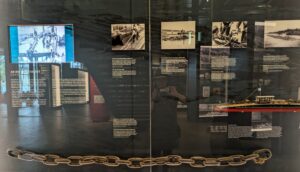
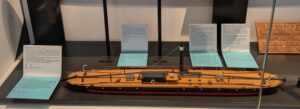
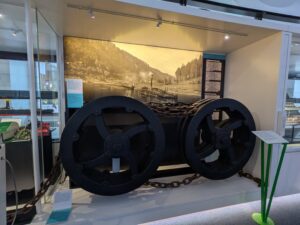
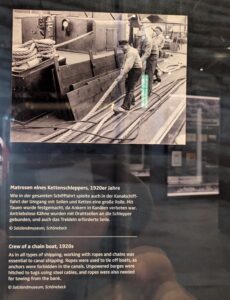
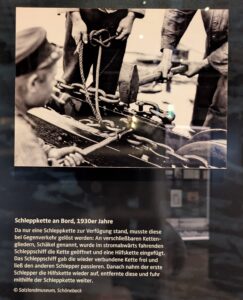
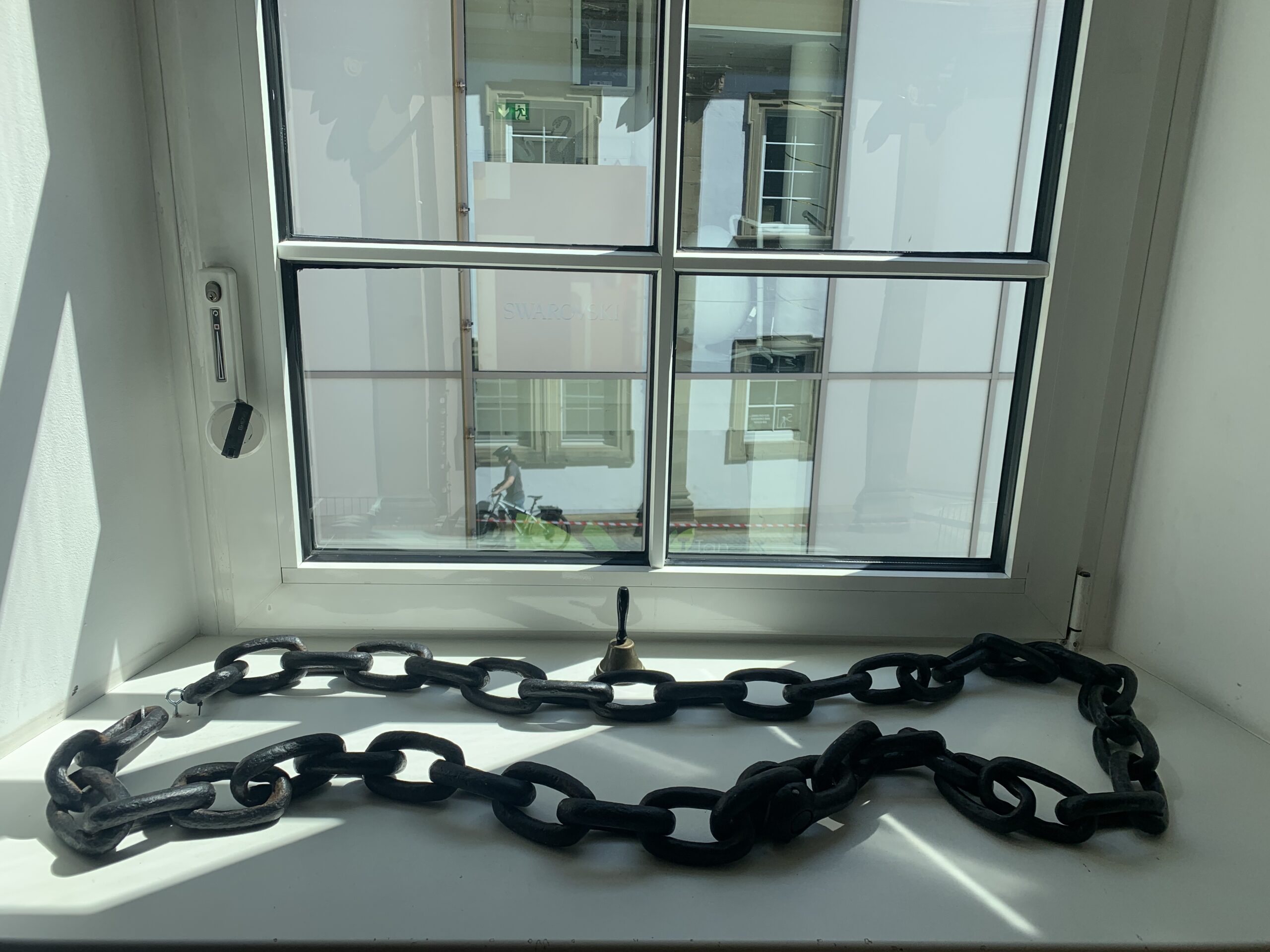
In Heilbronn and Stuttgart, surviving sections of towing chains recalled the history of the Neckar River. Duisburg preserved a detailed model of a Neckar chain tugboat. Berlin presented historical photographs of crews handling the chains, while Dresden displayed the enormous mechanical drums that once made this unusual form of propulsion possible.
Together, these exhibits revealed a remarkable chapter in transport history: a time when engineers discovered that the most effective way to overcome a river’s resistance was not necessarily to build a more powerful engine, but to give that engine something solid to pull against.
Two Rivers, One Engineering Problem
The Neckar and the Elbe presented different navigational challenges.
The Neckar was relatively narrow, shallow and winding. Before steam-powered towing became established, boats travelling upstream depended heavily on people and horses pulling them from paths along the riverbanks. This practice, known in German as Treideln, was slow and labour-intensive.
As railways expanded during the nineteenth century, traditional river transport faced increasing competition. Improving upstream navigation became an economic necessity.
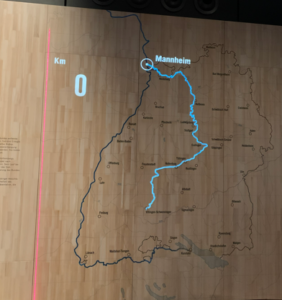
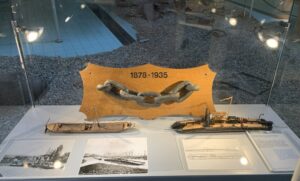
In 1878, chain tugboats began operating between Mannheim and Heilbronn. Approximately 113 kilometres of iron chain were laid along the riverbed. The steam-powered vessels, affectionately known as Neckaresel — Neckar donkeys — could pull heavily loaded barges upstream.
A journey that had previously taken almost a week could now be completed in approximately two or three days.
The Elbe was a much longer transport corridor, with different problems. Paddlewheel steam tugs already operated on the river, but shallow water, currents and fuel consumption limited their efficiency.
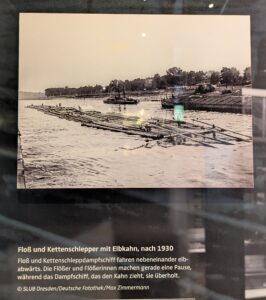
In 1866, an experimental chain-towing route of approximately 5.2 kilometres was established near Magdeburg. The successful experiment encouraged further investment, and regular chain-towing operations began in 1869. According to the Dresden museum displays, chain tugboats consumed approximately 90% less fuel than conventional paddlewheel tugs. By 1883, the chain system had expanded to approximately 725 kilometres, reaching from the German Elbe towards Mělník in Bohemia.
The Neckar demonstrated how chain towing could improve navigation on a difficult inland river. The Elbe showed how the same engineering principle could develop into an extensive transport infrastructure.
The rivers were different, but the question was the same: how could a heavily loaded vessel travel upstream without wasting so much energy fighting the current?
How a Steamship Pulled Itself Forward
The operating principle was surprisingly ingenious.
At the bow, a guiding mechanism lifted the iron chain from the riverbed. The chain then passed through the vessel’s machinery, wrapping around large drums driven by a steam engine. As the drums rotated, friction between the chain and the machinery produced the traction needed to move the ship forward.
Finally, the chain was lowered back into the river behind the vessel.
The ship did not carry the entire chain with it. Instead, it travelled along a fixed line of infrastructure that remained beneath the water.
A historical description presented in Heilbronn called these vessels Wasser-Lokomotiven — water locomotives. The comparison is revealing. A railway locomotive depends on rails to transmit its driving force effectively, while a chain tugboat used a submerged iron chain as its point of traction.
But the system also had limitations.
Early chain tugboats had to coordinate the handling of the shared chain when passing each other. Their crews used detachable chain connections, a demanding procedure documented in historical photographs at the Deutsches Technikmuseum Berlin. Later, the Gustav Zeuner could travel downstream independently using its water turbines, eliminating the need for this time-consuming chain exchange.
The same chain that made efficient upstream transport possible also restricted the vessels to a particular route.
This was the central paradox of chain towing: its greatest advantage was also the source of its eventual limitations.
When the Rivers Changed
Chain tugboats did not disappear because their engines suddenly stopped working. They disappeared because the conditions that had made them useful gradually changed.
On the Neckar, major river engineering projects began transforming navigation during the 1920s. Canalisation, locks and improved waterways created new possibilities for shipping. Self-propelled vessels also became increasingly practical.
In 1935, the opening of Heilbronn’s canal harbour marked the end of chain-tugboat operations between Mannheim and Heilbronn. After 57 years of service, the submerged chain was no longer the essential solution it had once been.
The Elbe followed a different path.
From the late nineteenth century onwards, improved paddlewheel tugs became increasingly competitive. Chain towing still offered advantages under certain conditions, but the costs of maintaining the infrastructure and the operational difficulties of sharing a single chain reduced its flexibility.
By around 1921, chain-towing operations had ceased along most sections of the Elbe and Saale.
One particularly interesting vessel was the Gustav Zeuner, built in 1894 at the KETTE shipyard in Dresden-Übigau. It entered service in 1895 and represented an attempt to improve chain-tugboat technology through innovations in propulsion and chain handling. Yet even this advanced vessel ended its working career in 1931.
Its story did not end there. In 1935, the vessel was placed on supports in Fermersleben and converted into the P. Michaelis bathing establishment. After restoration, the Gustav Zeuner is now preserved as a museum ship at Magdeburg’s Science Harbour.
The final stages of chain towing were shaped partly by war. The last two German chain tugboats at Magdeburg were destroyed in 1945, while operations on the Czechoslovak section of the Elbe continued until 1948.
On the Neckar, river engineering transformed the conditions of navigation. On the Elbe, competition from other propulsion systems, operational restrictions and historical disruptions gradually brought chain towing to an end.
The technology had not been a failure. It had successfully answered a particular transport problem for decades. But once the river and the vessels changed, the old answer was no longer the most effective one.
What Remains Beneath the Surface
Today, the iron chains no longer guide working steam tugs along the Neckar and Elbe. Yet their history survives in fragments distributed across five museums.
Heilbronn preserves the physical chain and the memory of its role in regional transport. Stuttgart places the technology within the wider history of Baden-Württemberg. Duisburg reconstructs the appearance of the vessels through detailed models. Berlin documents the people and operations behind the system, while Dresden reveals its impressive mechanical engineering.
These collections show that transport history is not only the history of vehicles. It is also the history of the infrastructure that makes movement possible.
Modern cargo vessels and railway trains use technologies very different from nineteenth-century chain tugboats. Nevertheless, they confront a related engineering question: how can power, infrastructure and operating conditions be combined to move people and goods more efficiently?
The chain tugboat was not an ancestor of the modern high-speed train. The two belong to different technological histories. But both remind us that successful transport depends on more than the vehicle itself.
Sometimes the decisive innovation is not a stronger machine, but a better way for the machine to interact with its environment.
Technology grows old. The human ability to discover new points of leverage does not.
Across Civilizations
What If the People of Chu Saw a Chain Tugboat?
At the Verkehrsmuseum Dresden, King Kaolie of Chu stopped before the enormous iron-chain drums of a steam tugboat. He turned to Huang Xie and asked, “Lord Chunshen, if this ship already has a steam engine, why does it still need an iron chain? Is someone afraid it might escape?”
Huang Xie smiled. “Your Majesty, the chain does not imprison the ship. It gives the engine something to pull against. Just as boat trackers once pulled vessels upstream along the rivers of Chu, this machine uses the chain to overcome the current.”
The king suddenly laughed. “So they have moved the boat trackers inside the ship! In the past, men pulled boats from the riverbank. Now the machine pulls itself forward!”
I pointed towards the machinery. “Exactly, Your Majesty. On the Neckar and Elbe, engineers laid iron chains along the riverbeds. Steam-powered tugboats used them to transport heavily loaded barges upstream. But when navigation improved and other vessels became more efficient, the chains gradually lost their purpose.”
The king looked puzzled again. “Something so useful could become unnecessary?”
Huang Xie replied, “Your Majesty, a solution may be brilliant in one age and unsuitable in another. The river changes, the ships change, and people must find new ways forward.”
More than two thousand years separated the boat trackers of ancient Chu from the steam-powered tugboats of industrial Germany. Their technologies were different, but they confronted the same challenge: how to move upstream against the force of a river.
The boat trackers once pulled the ships. Later, steam engines pulled the chains. What changed was the method of finding leverage; what remained was the human desire to move forward.
Historical and literary note: The conversations in “Across Civilizations” are imaginative literary dialogues with King Kaolie of Chu and Huang Xie, Lord Chunshen, rather than documented historical exchanges.

 时间与行程: