You are currently viewing 《“我是船的一部分”:一天六次穿过同一条河|在 MOSELPRINZ 驾驶室里看摩泽尔河与 KD 德意志莱茵航运》|“I Am Part of the Ship”: Crossing the Same River Six Times a Day | The Moselle from the Wheelhouse of MOSELPRINZ and the Story of KD
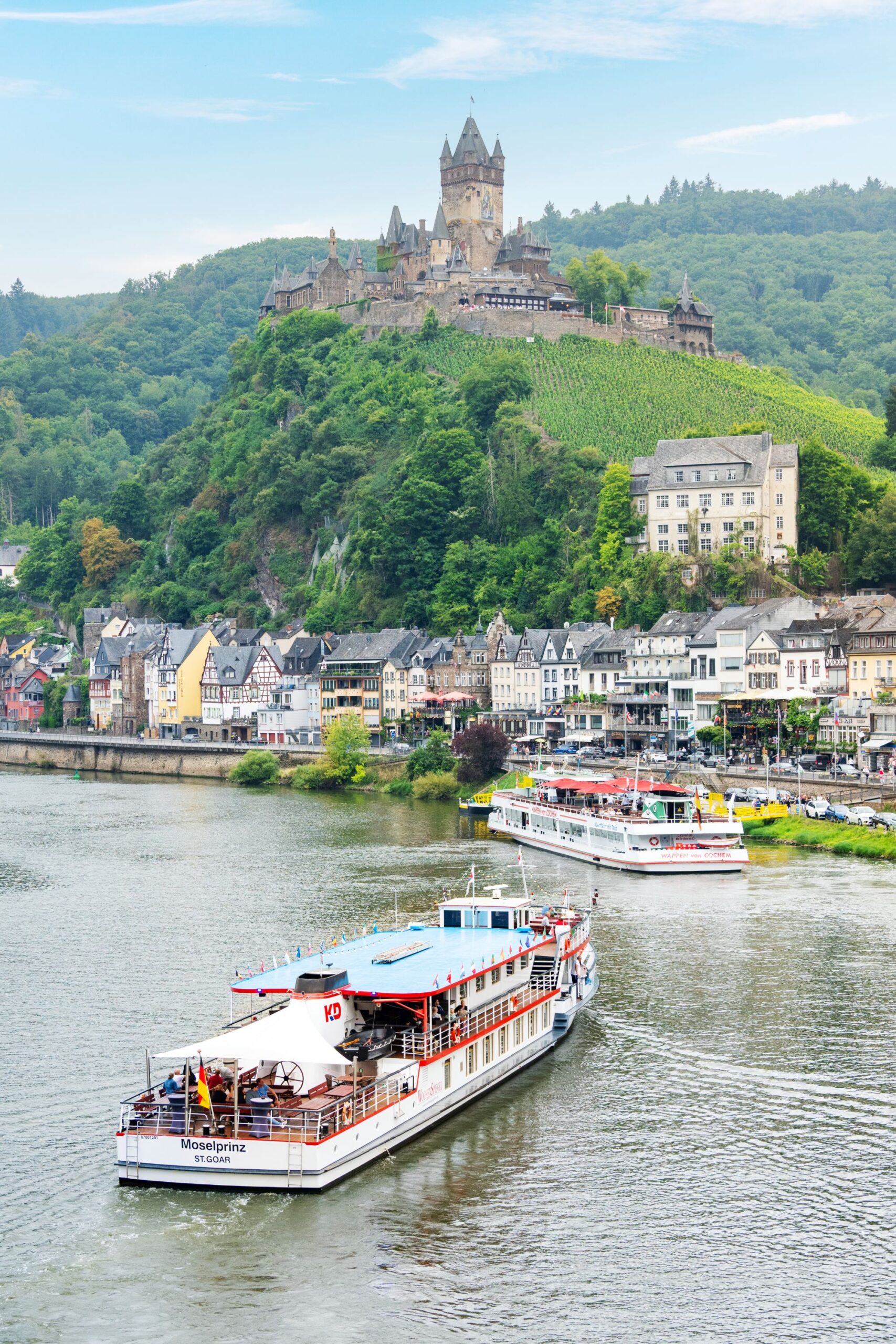
MOSELPRINZ,图片 © KD Deutsche Rheinschiffahrt。

《“我是船的一部分”:一天六次穿过同一条河|在 MOSELPRINZ 驾驶室里看摩泽尔河与 KD 德意志莱茵航运》|“I Am Part of the Ship”: Crossing the Same River Six Times a Day | The Moselle from the Wheelhouse of MOSELPRINZ and the Story of KD

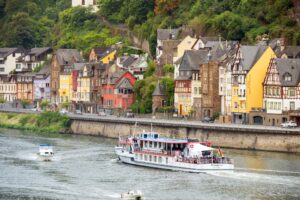
封面图说明|

摩泽尔河穿过 Cochem 河谷,
城堡立在葡萄园的山坡上,
MOSELPRINZ 从码头缓缓离岸,
一小时的航程由这里开始。

图片来源:MOSELPRINZ|© KD Deutsche Rheinschiffahrt GmbH,感谢授权使用。

引文|同一条河,坐了两次

📅 时间:2026年08月08日 (六)
📍 行程|科赫姆 · 摩泽尔河全景游船

Moselprinz,图片来源:© KD Deutsche Rheinschiffahrt GmbH。

河还是那条河,
船走过以后还会回来,
只是换了观看的位置,
风景便成了航道。

下午四点半登船,
MS Moselprinz缓缓离岸,
老城退向身后,
一小时的航程开始了。

帝国城堡立在高处,
葡萄园沿着陡坡展开,
河岸离船很近,
我坐在露天甲板看风景。

船走得很稳,
村庄从眼前慢慢经过,
河面没有太多变化,
坐到后来有点想睡觉。

一个小时以后返航,
游客陆续走下舷梯,
我原本也准备下船,
船长却邀请我进入驾驶室。

下午六点再次登船,
MS Moselprinz重新出发,
我没有坐回甲板,
这一次走进了驾驶室。

仪表排列在驾驶台前,
船长一直望着河道,
双手控制船的航向。

刚才还是风景,
现在成了每天工作的河道,
城堡仍从窗外经过,
河流有了另一种尺度。

游客只停留一个小时,
船长一天最多航行六趟,
靠岸以后再次离岸,
这样的往返成为日常。

第一次从甲板看河,
第二次从驾驶室看河,
景物始终没有改变,
我却换了位置,
于是看见了另一条河。

风景在甲板上,
航道在驾驶室里,
同一段河,
因为站的位置不同,
有了完全不同的读法。

一、KD:两百年的河流航运,最后来到摩泽尔

河上的船曾经运送人和货物,
铁路后来追到河岸,
货物渐渐离开甲板,
人们却为了看河重新登船。

1. 从莱茵河开始

1825年的科隆河岸,
一家蒸汽航运公司成立,
它成为后来KD的源头,
次年获得普鲁士政府批准。

1827年的莱茵河上,
Concordia投入航行,
木制船身装着明轮,
航线连接科隆与美因茨,
第二艘船随后加入。

蒸汽机持续运转,
船只沿河往返,
旅客进入船舱,
货物也跟着上船,
水路连接起沿岸城市。

1836年的杜塞尔多夫,
另一家公司成立,
新的船队进入莱茵河,
两家公司彼此竞争,
市场沿着河流展开。

1853年以后,
竞争转向合作,
两家公司组成经营共同体,
航线开始统一协调,
KD的轮廓逐渐形成。

2. 铁路来到河岸

铁路沿河铺开,
火车越来越快,
货物转向铁轨,
部分水路失去优势,
传统河运开始改变。

货物渐渐减少,
乘客却没有消失,
城市人口持续增加,
休闲旅行开始兴起,
人们有了新的登船理由。

1867年的船队里,
两艘纯客船投入运营,
船舱开始专门服务旅客,
河岸也进入观看范围。

进入20世纪以后,
客船继续增加,
1913年的KD拥有32艘船,
一年载客约两百万人次,
河上旅行已经成为日常。

3. 当航行本身成为目的

1920年代以后,
纯客船继续发展,
船舱更重视舒适,
柴油动力进入船队,
航行开始成为体验。

河仍是一条水路,
用途却慢慢改变,
有人不再赶往远方,
只是坐上甲板看河,
旅程本身成为目的。

两百年以后,
这条历史来到摩泽尔河,
Cochem夹在河谷之间,
葡萄园铺满陡坡,
Reichsburg俯视河面。

MS Moselprinz停在码头,
游客陆续登船,
船沿河湾慢慢前进,
一个小时以后折返,
最后又回到Cochem。

船没有驶向远方,
目的地仍在原处,
游客只是换到水面,
重新看一次河谷,
航运因此有了新的意义。

两百年前,
船运送货物。
今天,
船运送一种观看河流的方式。
河道没有改变,
改变的是人们登船的理由。

二、MS Moselprinz:1980年出生,2019年来到 Cochem

她不是一艘新船,
只是来到一条新的河段,
四十多年的船身继续工作,
每天载着人们穿过Cochem。

1. 1980年,她在杜伊斯堡出生

1980年MS Moselprinz建成,
出生地在杜伊斯堡,
建造她的是Meidricher Schiffswerft,
那时,她还没有来到摩泽尔河。

她长50.50米,
船宽8.60米,
吃水只有1.35米,
核定载客250人,
两具引擎各有340匹马力。
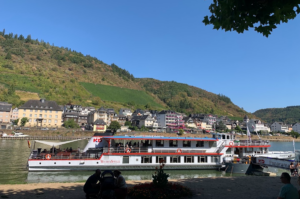
图:Moselprinz

船上有两座客舱,
前后都有露天甲板,
上层甲板面积45平方米,
下层则有74平方米,
船艏另外留下40平方米。

这些数字写在船舶资料里,
真正走上船以后,
数字开始变成空间,
甲板、楼梯与客舱,
一层一层展开。

2. 2019年,她来到Cochem

KD称她为Cochem的「新船」,
这个「新」容易让人误会,
它说的不是建造年份,
而是她来到这里的时间。

从2019年开始,
Moselprinz投入Cochem航线,
执行日常全景航程,
也承担包船与活动任务,
新的工作地点变成摩泽尔河。

到了2026年,
她已经航行约四十六年,
却没有停进博物馆,
也没有成为岸上的展品,
她仍是一艘工作的船。

每天有人走上甲板,
有人坐进靠窗的位置,
咖啡送到桌面,
河岸从玻璃外经过,
一小时以后再回到码头。

3. 一艘仍然工作的老船

从外面看Moselprinz,
白色船身压得很低,
红线沿着船舷向前,
KD标志留在烟囱上,
木质甲板铺满上层空间。

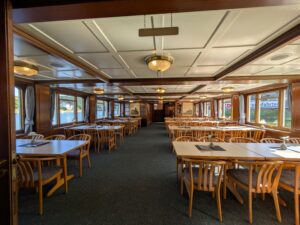
走进船舱以后,
光线从两侧长窗进入,
桌椅沿着河景排列,
深色木饰保留在墙面,
黄铜灯具仍在使用。

再往船内走,
木墙围住狭长通道,
楼梯连接不同甲板,
圆形舷窗嵌在厕所门上,
旧式船舱的尺度还留着。

墙上挂着一块绳结板,
粗绳被打成不同结法,
Schotstek、Palstek、Achtknoten,
每一种都有自己的用途,
航行经验被固定在木板上。
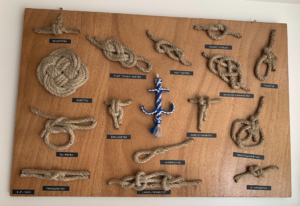
图:绳结板

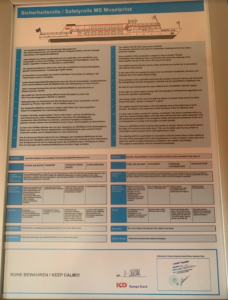
另一面墙上,
安全职责表密密排开,
火灾、碰撞、人员落水、撤离,
每个船员都有指定位置,
客船的日常也包括应急准备。
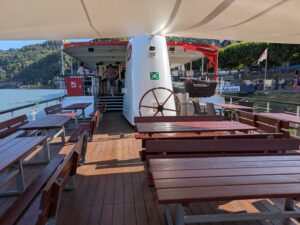
图:Moselprinz船内客舱。

4. 从甲板走向驾驶室

继续往上走,
开放甲板铺着木板,
长椅和桌子朝向河面,
乘客坐在遮阳棚下面,
Cochem从船的两侧滑过去。

船中央立着白色烟囱,
旁边保留一只大木舵轮,
今天它已经不是主要操纵设备,
却仍留在乘客经过的位置,
提醒人们这里首先是一艘船。

真正控制航向的地方在前方,
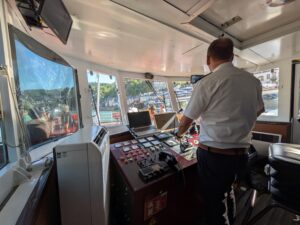
驾驶室被大片玻璃包围,
雷达横在屋顶上方,
雨刷停在前窗,
河道从这里直接进入视野。
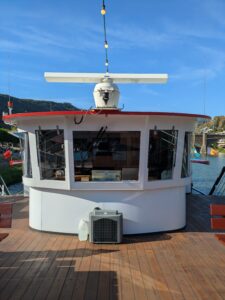
图:驾驶室

仪表与设备围着驾驶座,
船长坐在中央,
前方不是观景窗,
而是一条必须不断判断的航道,
Moselprinz每天从这里被驾驶。

她不是河景的背景,
也不只是游客脚下的平台,
发动机还在工作,
船员仍按职责值守,
四十六岁的船继续航行。

2019年只是新的航段,
不是她生命的起点,
从杜伊斯堡到Cochem,
她换过工作的河流,
却从来没有停止做一艘船。

三、她每天走过的河:Cochem、城堡、葡萄园

游客收藏一次经过,
船却每天回来,
同一座城堡反复出现,
同一片葡萄园不断后退,
重复才是一艘工作船的日常。

1. 一天最多六次的摩泽尔河

下午四点半,
我登上MS Moselprinz,
船从Cochem码头离岸,
一小时的全景航程开始了。

当天共有六个航次,
最早一班从10:30出发,
最后一班在18:00离岸,
同一条河一天最多走上六次。

游客只坐其中一趟,
船却不断重新出发,
靠岸以后再解开缆绳,
下一批乘客又走上甲板。
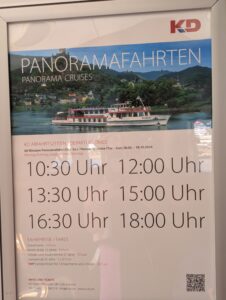
图:一天六次航班。

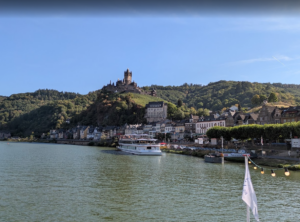
2. 城堡从高处出现

船离开Cochem以后,
老城贴着河岸展开,
圣马丁教堂露出尖塔,
Reichsburg立在葡萄园上方。

城堡早在1130年已有记载,
后来经历战争与毁坏,
十九世纪重新建起,
今天依旧俯视着摩泽尔河。

河谷很窄,
两侧山坡很快升高,
葡萄园顺着坡面向上铺开,
城市被挤在河与山之间。
3. 河弯继续向前

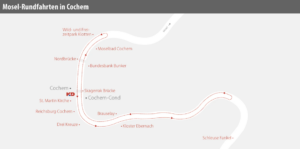
Moselprinz驶过Cochem-Cond,
河道开始弯曲,
Brauselay贴近水面,
船沿着山脚继续前进。

Brauselay位在Cond上方,
这里属于自然保护区域,
岩壁靠近河道,
两岸的距离也显得更近。

再往前走,
Kloster Ebernach出现在岸边,
河道继续向Fankel方向延伸,
远处便是Fankel船闸。

另一段航程经过Skagerrak-Brücke,
Bundesbank Bunker藏在山坡里面,
Nordbrücke从河面上方跨过,
Klotten出现在更远的河岸。
4. 游客看到一次

城堡从船侧经过,
葡萄园慢慢退到身后,
桥梁从头顶压过去,
村庄一段一段出现。

游客举起手机拍照,
有人坐在甲板聊天,
有人靠着栏杆看河,
一小时以后便准备下船。

对游客而言,
这是一次Cochem游船,
风景经过以后留下照片,
旅程也就结束了。

5. 船却每天回来

Moselprinz不会离开,
下一班还要继续,
同一座城堡再次出现,
同一个河弯再次进入视野。

航行季里,
这条路线每天重复,
船员看见相同的岸线,
也不断经过相同的桥。

旅游者收藏一次经过,
船员却拥有重复经过,
一边是短暂的风景,
另一边是每天的工作。

6. 下午四点半,我开始想睡觉

第一趟坐在外面,
阳光灿烂,
风轻、河面安静,
船稳定向前。

城堡看过了,
葡萄园还在继续,
河岸房屋慢慢往后移动,
眼前的变化并不多。

坐到后来,
我真的开始想睡觉,
摩泽尔河很漂亮,
却也安静得让人发困。

如果故事停在这里,
这只是一趟普通游船,
但18:00还有最后一班,
同一条河还会再走一次。

下一次,
我没有坐回甲板,
船长打开驾驶室的门,
河流也从风景变成航道。

四、船长室里的第二次航行:25年以后,他成为船的一部分

同一条河再走一次,
窗外的风景没有改变,
位置从甲板移进驾驶室,
我才看见一艘船如何工作。

1. 18:00,第二次上船

下午六点,
我第二次登上MS Moselprinz,
还是刚才走过的摩泽尔河,
但这一次,
我走进了驾驶室。

玻璃窗占据前方视野,
河道从船头向前展开,
仪表与设备围在身边,
城堡重新从窗外经过。

第一趟坐在甲板上,
我看到的是Cochem的风景,
第二趟站在船长身旁,
同一条河开始有了另一种读法。
2. 船长不只是开船的人

方向需要不断判断,
航班必须准时完成,
船上的人员需要协调,
安全始终排在前面。

KD对Schiffsführer的职责定义很具体,
其中包括航海指挥与航行记录,
也包括协调人员与跨部门工作,
以及面对旅客和主管机关。

船长还要负责维修协调,
冬季也有船舶维修任务,
航行之外还有值班工作,
即使船停下来,
职责也没有结束。

航班必须按照时刻运行,
操船必须符合相关法规,
安全规定与工作指令必须执行,
船舶补给与处置也属于责任。

这不是一个人的浪漫航行,
而是一套明确的职业体系,
驾驶室里的每一次判断,
最后都落在船与人的安全上。
3. 从克罗埃西亚到德国

船长来自克罗埃西亚,
1993年,他来到德国,
当时的背景与战争有关,
后来的人生转向了河流。

他一步一步取得资格,
进入真正的职业航运体系,
从学习航行到承担责任,
至今已有约25年的船长经验。

这些是他在驾驶室告诉我的,
不是KD官网上的人物介绍,
关于战争与迁移的部分,
我只记录他亲口说过的范围。
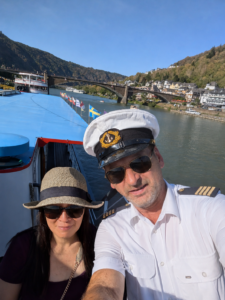
图:与船长合照。

4. 一年七个月,在河上工作

从春天到秋天,
Moselprinz每天离开Cochem,
航行季大约持续七个月,
一天最多有六个航次。

船长一周工作六天,
旺季的时间留在河上,
同一段航线不断往返,
每天重新靠岸再出发。

十月以后航班停下来,
他的工作并没有完全结束,
一部分时间用来消化加班时数,
另一部分则回到港口工作。

于是船长的一年分成两种节奏,
七个月跟着航班在河上运行,
其余月份回到岸上的工作体系,
直到下一季再次从Cochem出航。

对第一次登船的人来说,
这一小时是一段旅行,
对每天站在驾驶室的人来说,
这是必须不断完成的工作。

冬季航班停下来,
河上的工作节奏随之改变,
KD的职位资料也明确列出,
冬季维修属于船长职责之一。

「我是船的一部分」

我们站在驾驶室里说话,
窗外还是刚才那条河,
我问起长期重复的航行,
他却没有把它说成重复。

“Ich bin ein Teil des Schiffes.”

「我是船的一部分。」

这句话很短,
却让前面的25年有了重量,
工作不再只是每天开六趟船,
人已经进入船的运行之中。

MS Moselprinz并不是新船,
她建造于1980年的杜伊斯堡,
2019年才来到Cochem服务,
如今仍每天执行实际航程。

一个人在船上工作约25年,
一艘船已经航行约46年,
他们都不是河上的静态风景,
而是在航行中继续变老。

5. 同一条河,必须重新走好

一个小时以后,
游客会从Moselprinz下船,
第二天又有人来到Cochem,
另一趟全景航程再次开始。

城堡还在那里,
葡萄园仍沿着山坡生长,
Moselprinz再次解开缆绳,
驾驶室里的人重新看向前方。

对于游客,
那是一趟摩泽尔河游船,
对于船长,
那是走过无数次的航线。

所谓成为船的一部分,
也许不是感觉不到重复,
而是重复了几千次以后,
仍把这一趟船安全开回来。
尾之声|河流继续,船还会回来

河流记得经过的船,
船记得每天走过的河,
而人的一生,
也在一次次航行里留下时间。

两百年的KD,
46年的MS Moselprinz,
千万年的摩泽尔河,
仍在Cochem流动,
还有一个人,
在驾驶室里度过约25年。

他们的时间尺度不同,
却在Cochem这一段河上相遇,
公司安排航线,
船载着人一次次出发。

河不会记得时刻表,
城堡也不会计算航次,
每天来到这里的游客不同,
Moselprinz却沿着熟悉的河道往返。

船长看过无数次相同的河湾,
知道哪里转向,
什么时候减速,
也知道怎样把船重新靠回码头。

游客下船以后,
这一小时成为旅行中的一段记忆,
船长留在船上,
下一批乘客又会沿舷梯走来。

下午六点的航程结束,
Moselprinz重新回到Cochem,
缆绳再次系上码头,
一天的最后一趟船停了下来。

第二天,
河水仍会经过这里,
船还会再次离岸,
驾驶室里的人继续看向前方。

人会离开,
船也终会老去,
只有河流继续向前,
而我们能够留下的,
是曾经一起走过的一段航程。

后记|考烈王、黄歇与令尹夫人的观后感

同一条河,为什么还要走六次

考烈王站在驾驶室后面,
望着窗外再次出现的城堡:
“这条河刚才不是走过了吗,
为什么还要再走?”

黄歇看着前方河道:
“游客只走一次,
船却一天最多走六次,
每一次都要重新出发。”

考烈王又问:
“城堡还是那座城堡,
葡萄园也没有搬走,
走二十五年不会厌吗?”

我想起第一趟航程:
“我才坐一个小时,
看着河岸慢慢经过,
就已经快睡着了。”

考烈王看着我,笑了:
“你写了那么多船,
最后竟然败给一条河,
还在甲板上想睡觉。”

黄歇却指向驾驶台:
“因为那时她是游客,
游客看到的是风景,
船长看到的是航道。”

考烈王走近玻璃窗:
“同一个河湾,
同一座桥,
难道还能有什么不同?”

黄歇回答:
“水位会变,
河上的船会变,
靠岸的位置也要判断,
相同的是路线,不是航行。”

我看着船长的背影:
“他说自己一年约七个月在河上,
一天最多六趟,
一周工作六天,
这样的日子已经走了很多年。”

考烈王问:
“剩下的几个月呢,
船停了,
人也终于可以休息?”

我摇摇头:
“有些时间用来消化加班,
有些时间仍在港口工作,
船不载游客的时候,
航运也没有完全停止。”

考烈王沉默了一会儿:
“二十五年以后,
一个人每天站在这里,
他还只是在驾驶一艘船吗?”

我想起船长说过的话:
“他说,
Ich bin ein Teil des Schiffes,
我是船的一部分。”

黄歇望向前方:
“熟练到了最后,
河道进入人的判断,
船也进入人的身体,
许多动作已经不必重新学习。”

考烈王点点头:
“所以重复并不可怕,
可怕的是走过无数次以后,
便以为下一次,
一定和上一次相同。”

我看着Moselprinz重新靠岸:
“游客可以觉得无聊,
船长却不能走神,
因为无论这条河走过多少次,
这一趟都必须安全回来。”

三人走出驾驶室,
Cochem再次出现在岸边,
缆绳准备重新系上码头,
同一条河完成了今天又一次航行。

游客看见重复的风景,
船长看见每一次航行,
熟练来自走过无数遍,
责任却要求每一遍重新走好。

重复不是问题。
问题是,
以为重复之后,
便可以不用再认真,
走这一趟。

Appendix|English Narrative Overview

“I Am Part of the Ship”: Crossing the Same River Six Times a Day | The Moselle from the Wheelhouse of MOSELPRINZ and the Story of KD

From Steam Navigation to a River Seen for Pleasure

The story of KD begins on the Rhine.

In 1825, the Preußisch-Rheinische Dampfschiffahrts-Gesellschaft was founded in Cologne. A second steamship company followed in Düsseldorf in 1836. The two companies initially operated their own fleets and competed on the same river. In 1853, they began working together.

By then, however, another transport system was spreading along the riverbanks. Railways could move passengers and goods faster, and part of the freight traffic that had belonged to river shipping shifted onto the tracks. Passenger shipping remained. Gradually, the reason for boarding a ship began to change.

People no longer travelled by river only because they needed to reach another city. The journey itself became part of the attraction. Castles, vineyards, towns and river valleys entered the experience of passenger navigation. A ship could transport people without taking them very far at all.

Nearly two centuries later, this history has reached the Moselle.
In Cochem, passengers board a KD vessel, travel along the river for about an hour and return to the same landing place. The destination is almost where the journey began. What the ship carries is also a way of seeing the river.

A Ship Built in 1980

MS MOSELPRINZ is sometimes described by KD as a “new” ship for Cochem. The word refers to her arrival on the local service, not to the year in which she was built.

She was constructed in 1980 at Meidericher Schiffswerft in Duisburg. She is 50.50 metres long and 8.60 metres wide, with a draught of 1.35 metres. She is licensed for 250 passengers.
Two engines, each rated at 340 PS, provide her propulsion.

In 2019, MOSELPRINZ began operating for KD in Cochem. She now serves panoramic cruises and charter operations on the Moselle.
By 2026, she has been working for approximately forty-six years.

She is therefore neither a preserved historic ship nor a newly built excursion vessel. Her engines still run. Passengers still enter her saloons and climb onto her open decks. Crew members still prepare her for another departure.

Inside, the ship reveals the systems behind the excursion. Knots are displayed for practical reference.
Safety duties assign responsibilities for emergencies. Stairs and corridors connect the passenger spaces with working areas. At the front of the vessel, radar, instruments and controls fill the wheelhouse.

MOSELPRINZ is not merely the platform from which this story is observed. She is part of the story herself.

The River She Crosses Every Day

From the landing stage in Cochem, MOSELPRINZ enters a narrow landscape.

The old town remains close to the water. Reichsburg Cochem rises above the vineyards. Steep slopes press toward the river, while houses, roads and bridges occupy the limited space below. Farther along the route, Brauselay, Kloster Ebernach and the area around the Bundesbank Bunker become points within the repeated working geography of the ship.

For a visitor, these are sights. For MOSELPRINZ, they form a route.

During the operating season, the ship may complete as many as six cruises in a day. The same castle appears again. The same vineyards slide past the windows. The same bends have to be entered and left.

A tourist may make this journey only once in a lifetime. The ship and her crew repeat it throughout the season. The tourist collects a passage. The crew lives inside repetition.

At 16:30, I boarded as an ordinary passenger.

I sat outside. I watched the castle. I watched the vineyards. The ship moved quietly along the Moselle.

And after a while, I became sleepy.

It was beautiful. It was also calm enough to make me nearly fall asleep.

Had the story ended there, this would have remained an ordinary one-hour sightseeing cruise.

It did not.

The Same River from the Wheelhouse

At 18:00, I boarded MOSELPRINZ again.

The river was the same. The castle had not moved. The vineyards still covered the slopes. But this time, I entered the wheelhouse.

From there, the landscape changed function.

The river ahead was no longer only scenery. It was a navigable space that had to be read. Other vessels, course, speed, water conditions and docking operations belonged to the same view. The windows framed not simply a panorama, but a workplace.

KD’s description of the Schiffsführer makes this distinction clear. The captain is responsible for nautical command, voyage coordination, crew deployment and navigation records. The role also involves ship safety, maintenance coordination, communication with passengers and authorities, supplies and operational procedures. Even when passenger operations pause, responsibility for the vessel does not simply disappear.

The captain I met had his own history on the water.

He came from Croatia. He arrived in Germany in 1993, in a period connected in his account with the war. He then progressed through the stages required for professional inland navigation. By the time we met, he had approximately twenty-five years of experience as a captain.

During the operating season, his rhythm is demanding. He works six days a week. On busy days, the ship can make as many as six cruises.
For roughly seven months of the year, work takes place on the river.
The remaining months can include reducing accumulated overtime and work in the harbour.

The passenger season ends. The work around the ship does not necessarily end with it.

“I Am Part of the Ship”

I asked about a life built around the same vessel and repeated journeys.

His answer was short.

“Ich bin ein Teil des Schiffes.”

“I am part of the ship.”

The sentence changed the meaning of repetition.

For a passenger, repetition can look like sameness. For a professional, the route may be familiar while every voyage still requires attention.
The bend is known. The landing stage is known. The castle has appeared through the same window thousands of times.

The responsibility begins again nevertheless.

Passengers leave after an hour.
Another group arrives. The ropes are released. MOSELPRINZ moves away from Cochem once more.

KD carries nearly two centuries of passenger-shipping history. MOSELPRINZ carries approximately forty-six years of working life. The Moselle carries a history incomparably older than either of them. And in the wheelhouse stands a man who has spent about twenty-five years learning how to move safely through such waters.

Perhaps becoming part of a ship does not mean ceasing to notice repetition. It means that after thousands of repetitions, this particular voyage still has to be brought safely home.

Across Civilizations

King Kaolie looked through the wheelhouse window.

“Did we not pass this castle before?” he asked.
“Why must the ship pass it six times?”

Lord Chunshen Huang Xie watched the river ahead.

“The passenger sees the route once,” he replied.
“The captain must perform it again and again.”

“The castle is the same,” the king said.
“The vineyards have not moved.
Would twenty-five years of this not become unbearable?”

I remembered the 16:30 cruise.

“I lasted less than an hour,” I said.
“I was already getting sleepy.”

The king laughed.

“So the lady who writes about ships was defeated by a quiet river?”

Huang Xie pointed toward the controls.

“She was still a tourist then,” he said.
“A tourist sees scenery.
A captain sees a navigable river.”

King Kaolie moved closer to the window.

“But if the route is known, what remains to be judged?”

“The water changes,” Huang Xie replied.
“Other vessels change.
Approach and docking still require attention.
The route may repeat.
The voyage does not.”

I looked toward the captain.

“He told me something in the wheelhouse,” I said.
“‘Ich bin ein Teil des Schiffes.’
‘I am part of the ship.’”

The king fell silent for a moment.

“Then perhaps he is no longer merely driving it.”

MOSELPRINZ was approaching Cochem again.
The castle remained above the vineyards.
The landing stage returned ahead of us.

For the passenger, it was the end of an excursion.
For the captain, it was another familiar route completed safely.

The ropes would be tied again.
And when the next voyage began, the same river would have to be read once more.

🤖 人工智能协作声明

本文的主题选择、田野调查、资料搜集、核心观点与中文原始内容,均由作者独立完成。创作过程中,作者与人工智能模型,进行持续协作,包括多轮讨论、思路推演、节奏输出、部分翻译、英文 Narrative Overview 生成、语言检查、结构检测与文字润饰。
人工智能在此过程中,作为创作协作者,参与内容发展与语言表达,但不作为法律意义上的作者或著作权主体。所有 AI 协作产生的内容,均由作者依据田野资料、原始文献与中文母稿,进行选择、审校、修改与艺术化重构。文章的叙事方向、内容取舍、创作决策、最终表达与价值判断,均由作者决定并负责。

📜 本站所有原创作品均已完成区块链存证,确保原创凭证。部分重点作品另行提交国家版权登记,作为正式法律备案。原创声明与权利主张已公开。完整说明见:

👉 原创声明 & 节奏文明版权说明 | Originality & Rhythm Civilization Copyright Statement – NING HUANG

节奏文明存证记录

本篇博客文为原创作品,由黄甯与 AI 协作生成,于博客网页首发后上传至 ArDrive 区块链分布式存储平台进行版权存证:

  • 博客首发时间:2026年08月21日
  • 存证链接:f04c8ba7-738b-4f51-86b8-a931e74f25aa
  • 存证平台:ArDrive(arweave.net)(已于 2026年08月21日上传)
  • 原创声明编号:Rhythm_Archive_21_Aug_2026/moselprinz-wheelhouse-moselle-kd-river-cruise
  • 用途声明本文为《节奏文明观》之〈流动文明 〉与〈节奏文明地景书写 〉篇章,亦参与构建《AI×非遗文明共构档案》与《文明节奏回声计划》,用于文明节奏实地记录、区块链存证、跨域协作与版权登记用途。

© 黄甯 Ning Huang, 2026. All Rights Reserved.
本作品受版权法保护,未经作者书面许可,禁止复制、改编、转载或商用,侵权必究。

📍若未来作品用于出版、课程、NFT或国际展览等用途,本声明与区块链记录将作为原创凭证,拥有法律效力。