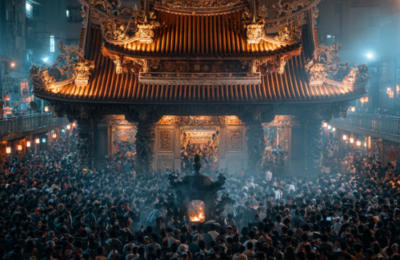
《妈祖绕境|神明的身体是九天八夜、338 公里的路》
这是一篇从“身体力”视角重新观看妈祖绕境的文章。 我来自东部,对绕境没有成长经验,因此不是在“内部叙述”, 而是以观察者的方式,看见中南部如何用三百多公里、九天八夜, 把信仰落实为动作,把仪式落实为身体,把善意落实为日常。 文章从路径、身体、村庄与纪录片四个角度, 呈现妈祖信仰如何在现代台湾持续生成、更新、扩散与自我确认。 This essay approaches the Mazu pilgrimage from a “body-based ethnography” perspective. Growing up in eastern Taiwan, I never participated in the pilgrimage myself. Instead, I observe how central and southern Taiwan embody faith through walking, ritual movement, communal hospitality, and collective rhythm across 338 kilometers over nine days and nights. Through four lenses—path, body, village, and documentary—the piece explores how Mazu belief continues to evolve, reaffirm itself, and illuminate the communities that carry it.