以身体为笔,以节奏为语,为这个时代写下一个充满气韵的节奏地图。
Rhythm Landscape Writing uses the body as a pen and rhythm as language,
to inscribe a map of this era filled with breath and resonance.
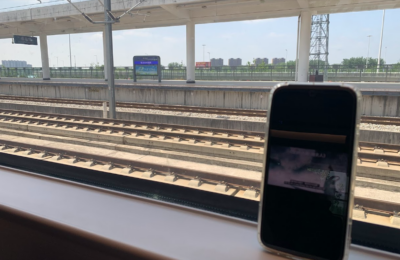
从郑州东到寿县的高铁上,我一路播放《楚辞·九歌》。当列车穿过豫东平原、驶向淮河流域时,河流、水塘、站点与歌声开始不断重叠。《国殇》《云中君》《大司命》《湘夫人》依序响起,现代高铁系统与两千多年前的楚地记忆,也在移动中的身体里重新接上。
On the high-speed rail journey from Zhengzhou East to Shouxian, I played songs based on the Nine Songs from the Chu Ci. As the train crossed the eastern Henan plains into the Huai River region, rivers, stations, landscapes, and ancient verses began to overlap. “Guoshang,” “Yun Zhong Jun,” “Da Si Ming,” and “Xiang Furen” unfolded one after another, while China’s modern high-speed rail system slowly reconnected with the memory of ancient Chu through a moving body.
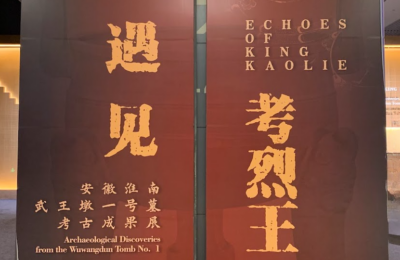
从北京国博“遇见考烈王”展出发,本文重新阅读楚考烈王墓中的九室、九鼎八簋、漆器、钟磬、马具与鄂君启金节,并尝试理解:楚文明真正留下来的,不只是器物,而是一个仍在运作、流动与连接中的世界。本文也结合《楚式营建学》的观察,重新思考晚期楚国的礼制、交通、水陆网络与文明惯性。
Starting from the “Encountering King Kaolie of Chu” exhibition at the National Museum of China in Beijing, this article re-examines the tomb of King Kaolie through its nine chambers, ritual bronzes, lacquerware, bells, horse gear, and the E Jun Qi Gold Tally. Rather than focusing on isolated artifacts, it explores how Chu civilization functioned as a living system of ritual, movement, sound, transportation, and embodied rhythm. The article also connects these observations with the framework of “Chu Yingjian Studies,” reflecting on the operational logic and inertia of late Chu civilization.
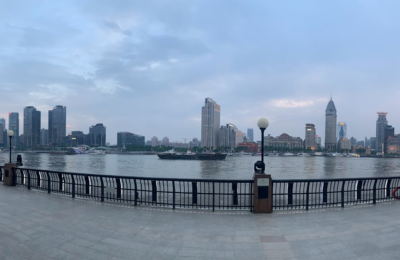
从寿春城的封土到黄浦江的夜风,作者沿着春申君黄歇留下的水路与城市记忆,从安徽寿县一路走到上海。本文记录春申君祠、申城地名、黄浦江渡轮与楚辞《涉江》之间,一场跨越两千多年的楚地田野行走。
From the burial mound of Lord Chunshen (Huang Xie) in Shouxian to the night wind of the Huangpu River in Shanghai, the author follows the surviving waterways, place names, and urban memories connected to Chu civilization. This fieldwork journey moves through Chunshen Jun Temple, Shanghai’s “Shen” geography, ferry crossings, and the Chu poem Shejiang, tracing how a Warring States figure still flows through a modern city.
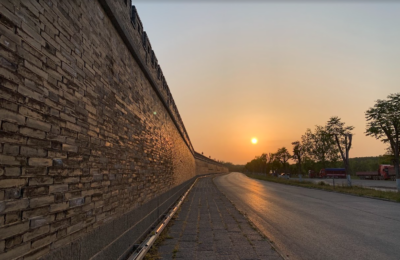
《令尹夫人的寿春走读》不是一篇普通游记,而是一场用身体完成的田野。作者以“令尹夫人”的身份,在安徽寿县古城里沿着城墙、月坝、内湖与洪水线行走,重新阅读楚国最后都城如何与水共处,也重新理解:一座城如何在时间里继续活着。
Walking Shouchun as the Lady Lingyin is not a conventional travel diary, but a fieldwork journey written through the body. Moving through the ancient city of Shouxian in Anhui, the author — writing as the “Lady Lingyin” — follows city walls, moon dams, inner lakes, and flood marks to rediscover how the last capital of Chu lived with water, and how a city continues to survive through time.
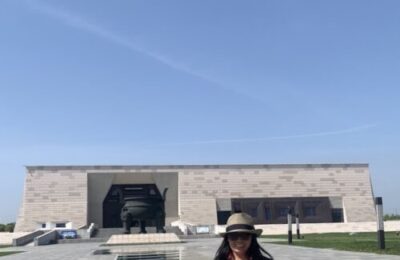
在安徽楚文化博物馆,我看到的不是楚辞与浪漫,而是楚国最后十九年的运作后台:排水系统、制陶作坊、物流通行、称量货币与行政印章。
楚,不只是诗,
是一套仍在运转的系统。
At the Chu Culture Museum in Shouxian, Anhui, I did not encounter poetic nostalgia, but the operational backend of Chu’s final 19 years: drainage systems, ceramic production, logistics permits, weight-based currency, and administrative seals.
Chu was not only poetic—it was a system in motion.
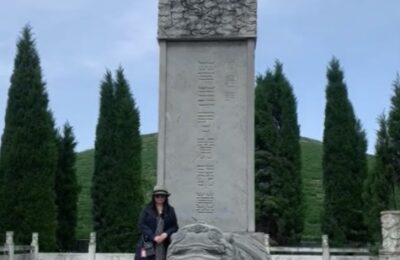
在安徽淮南的黄歇墓旁,我把两年的写作与身体行走带到他面前,在未入与入内之间,完成一次述职。
At the Huang Xie Tomb in Huainan, Anhui, I brought two years of writing and embodied fieldwork to him, completing a personal report between exclusion and entry.
台湾纵贯线,一场五站五诗的节奏播种旅程。从山线南下、海线北返,我不是走马观光,而是走一趟文明选择的铁道书写。送孩子,也是送自己确认——要种下的,不是回忆,而是节奏文明的印记。Taiwan’s main railway line — five stations, five poems, and a journey of rhythm and choice. From mountain line southward to coastal return, this was no sightseeing trip, but a path to plant civilization’s cadence, one verse at a time. I sent off my child, and also sent myself —to choose, to write, to remember.
在花莲,身体、海、信仰与石相互回响。从《毛月亮》的舞步到七星潭的潮声,从女娲庙的风声到大理石工厂的轰鸣,十个地点,十种节奏,构成一座城的呼吸。在这里,信仰不是抽象,土地就是信仰。这是一段从自然流入信仰,也流进人心的文明十部曲。In Hualien, body, sea, faith, and stone echo one another. From the moonlit dance of Cloud Gate to the tide of Qixingtan, from the whisper of the Goddess Nüwa to the roar of marble machines—ten places, ten rhythms, compose the breath of a city. Here, faith is not abstract; the land itself is sacred. This is a ten-part movement of civilization along Taiwan’s eastern coast.
在云林,时间放慢了脚步。从斗六的木屋光影到古坑绿廊的甘蔗回声,从咖啡山的雨雾到夜市的咸酥鸡香气,一切都不急。这里教人重新学会生活、也让文明学会——慢。In Yunlin, time takes a slower breath. From the wooden eaves of Douliu to the green tunnel of Gukeng, from the misty coffee hills to the night market’s fried chicken scent—life moves gently here. This land teaches not progress, but presence; not rush, but rhythm.
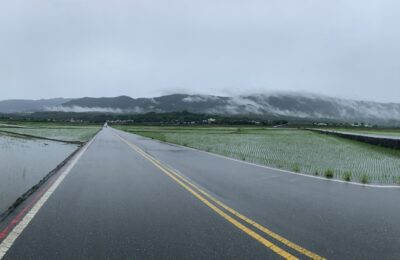
在台东池上,我先走进蒋勋书房的“慢与静”,再沿伯朗大道,将《楚辞》的旋律播进秧田。文字落土,节奏归田,一静一动,完成一次文明节气的闭环。// In Chishang, Taitung, I first stepped into the "slowness and stillness" of Chiang Hsun's study, then walked along Brown Boulevard, letting the melody of the "Chu Ci" flow into the rice fields. Words returned to the earth, rhythm returned to the land — stillness and motion completing one seasonal cycle of civilization.