身体文明关注人类如何通过身体感知、动作与节律理解世界。
在语言与理论出现之前,身体已经在生成知识与秩序。
舞蹈、技艺与日常实践,都是文明在身体中的记忆与算法。
Embodied Civilization explores how humans understand the world through the body, movement, and rhythm.
Before language and theory, the body already generated knowledge and order.
Dance, craft, and everyday practices preserve civilization as embodied memory and living algorithms.
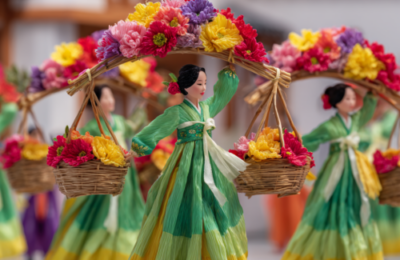
《麻城花挑》是一支在湖北大别山坡地上长成的行路舞。
它把劳动步与爱情身绑在同一段节奏里,
让“走路、做事、喜欢一个人”
在同一个动作系统中成立。
花挑的三人结构——妹、嫂、哥——
是一套能在任何场地启动的小型协作算法:
妹定方向,嫂调节位置,哥稳住节拍。
步是地形教的,形是三人维持的,
动作则在村落的日常路径中不断被更新。
随着武合铁路贯通、麻城北站投入使用,
花挑并未因外来速度而改变。
高铁带来的是可抵达性,
让更多人能走进这些动作原本就存在的生活场景。
在麻城,路到了,舞就能被看见。
“Macheng Flower Dance” is a walking-based folk choreography shaped by the slopes of the Dabieshan region.
It binds two seemingly unrelated movement logics—
the steps of labor and the gestures of affection—
turning everyday walking, working, and loving
into a single bodily system.
Its three-person formation—the younger girl, the elder sister, and the brother—
functions as a portable cooperative algorithm.
The girl sets direction,
the sister adjusts spacing,
and the brother stabilizes rhythm.
The steps come from the terrain;
the formations emerge from shared movement;
the dance survives by adapting to whatever space it enters.
With the opening of the Wu–He High-Speed Railway
and the operation of Macheng North Station,
the dance has not changed.
High-speed rail does not alter tradition—
it only increases access,
allowing more people to walk into the landscapes
where these movements have always lived.
In Macheng,
when the road arrives,
the dance becomes visible.
《峡江古声|长江峡江号子》以节奏叙事重访纤夫在急水中协作的方式,记录号子如何在雾气、浪声与断续视线里完成“瞬间对齐”,让几十副身体在同一时间点落力。三峡蓄水后号子退出生活现场,但协作的算法仍留在声腔的骨架里。本篇呈现平水、见滩、冲滩与滩后的四段节奏结构,让一种来自险滩的集体智慧在当代被重新听见。
This article revisits the rhythmic logic of Xiajiang work chants—
a coordination system that enabled Yangtze boatmen to align their bodies through sound in rapids, fog, and broken visibility. Although the chants disappeared after the Three Gorges impoundment, their underlying algorithm of synchronization remains embedded in the structure of the sound. Through the four-part rhythm of calm-water, pre-rapid tension, rapid-force alignment, and post-rapid release, this piece renders visible an ancient form of collective intelligence within a contemporary frame.
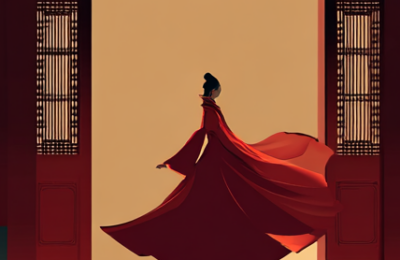
《云梦古舞》从云梦泽的湿地节奏出发,
追索楚舞的动作语法:
长袖的展开、细腰的三道弯、贴地的绕步与激楚的节奏。
本文将身体视为感知环境的工具,
并以武汉三座高铁枢点——武汉站、汉口站、武昌站——
对应“向前、向地、向回”三种节奏结构,
让楚舞的动势在当代城市中重新显形。
这不是对古舞的复原,
而是一种动作在时间里持续重复后的文明回声。
Cloud-Dream Ancient Dance begins with the rhythms of Yunmeng Marsh
and traces the movement grammar of Chu dance—
the expanding sleeves, the three-curved waist,
the ground-bound circling steps,
and the sudden surge of Ji Chu rhythm.
The body is treated as a sensor of environment,
while Wuhan’s three major railway hubs—Wuhan, Hankou, and Wuchang Stations—
mirror three movement logics:
forward, downward, and turning back.
Through these spatial rhythms,
the dynamics of Chu dance become visible again in the modern city.
This is not a reconstruction of the past,
but an echo carried by actions
that continue to be done—and redone—across time.
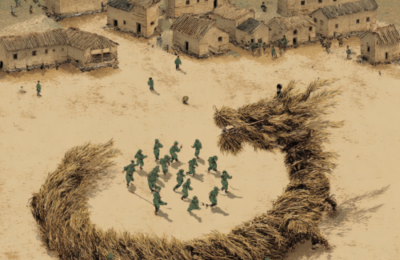
这篇《草把龙》写的是潜江湖区的一种路上舞蹈。
它的龙身由稻草扎成,靠步法、队形与愿望被撑起来。
文章整理它的来源、动作结构、礼制用途、地理现场
以及高铁到来后,让外来者能真正抵达的那条“年节之路”。
草把龙的核心不是保存,而是每年再走一次。
This “Grass Dragon” piece looks at a road-based ritual dance from Qianjiang’s lake region.
Its straw body is held together by steps, formations, and collective intent.
The article traces its origins, movement grammar, ceremonial functions,
the wetland geography that shapes it,
and how high-speed rail opens access to its annual route.
Its essence is not preservation, but repeating the path each year.

端公舞,流传于湖北襄阳南漳的山村,是一种以“迎、敬、安、送”四段为核心的仪式性舞蹈。
它不是舞台艺术,而是村落用来祈安、驱疫、送别、镇宅的实际做法。
六步、舞式、指诀、队形——
动作在身体里保存着楚地巫仪的逻辑;
村落的需要,让这套方法持续运作两千年。
郑渝高铁让南漳成为“可抵达的传统”。
空间被打开,节律被看见;
舞没有改变,只是多了一条能够抵达它的路径。
端公舞提示我们:
文明不只靠记住,也靠继续做。
那些在时间里不断被重复的动作,
正是文明真实的心跳。
The Duan Gong Dance, preserved in the mountain villages of Nanzhang in Xiangyang, Hubei, is a ritual dance built around four movements—welcoming, honoring, settling, and sending.
It is not a stage performance, but a living practice used to bless, appease, protect, and restore order within the community.
Six basic steps, ritual poses, hand seals, and shifting formations
carry the logic of ancient Chu shamanic traditions—
sustained not through written records,
but through the needs and repetitions of daily life.
The Zhengzhou–Chongqing High-Speed Railway has made Nanzhang newly reachable.
Space opens; rhythm becomes visible.
The dance remains unchanged—only the path to reach it has expanded.
The Duan Gong Dance reminds us that
civilization endures not by remembering alone,
but by continually being done.
The gestures repeated across time
are the true heartbeat of a culture.