身体文明关注人类如何通过身体感知、动作与节律理解世界。
在语言与理论出现之前,身体已经在生成知识与秩序。
舞蹈、技艺与日常实践,都是文明在身体中的记忆与算法。
Embodied Civilization explores how humans understand the world through the body, movement, and rhythm.
Before language and theory, the body already generated knowledge and order.
Dance, craft, and everyday practices preserve civilization as embodied memory and living algorithms.
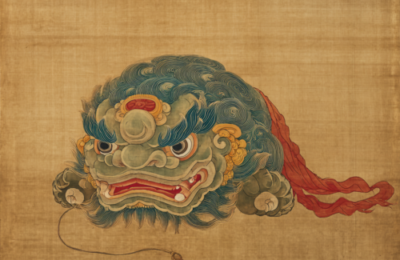
安徽郎溪青狮因“娃娃鱼狮头”走红网络。本文从动作、材料与湿地逻辑出发,解析为何青狮必须贴地、钻桌、模拟鱼类推进,呈现身体如何生成技艺结构,技艺如何反写文明语法。
The Langxi Green Lion went viral for its “giant salamander” look. This article explains how its flattened head, low posture, and frog-paddling movement arise from action-driven design, revealing the body algorithms and wetland logic embedded in Chinese folk performance.
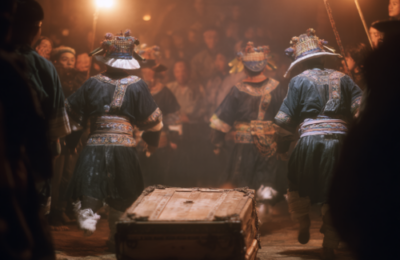
撒叶儿嗬不是舞蹈,而是一条要被身体踏出来的送行之路。顺拐、颤膝、下沉、反胴画圆,配合双龙抱柱、龙摆尾、双连环等阵法,让亡者的归途被集体托住。本文以节奏文明体写作,呈现土家族如何以身体回应死亡。
Sa’eyerho is not merely a dance, but a road carved by the body for the departing. Through distinctive movements—parallel steps, knee tremors, sinking weight, circular torso turns—and spatial patterns such as Double Dragons Embracing the Pillar and Twin Loops, the Tujia community collectively walks the deceased toward their ancestral destination. This article depicts how a body meets death through rhythm and movement.
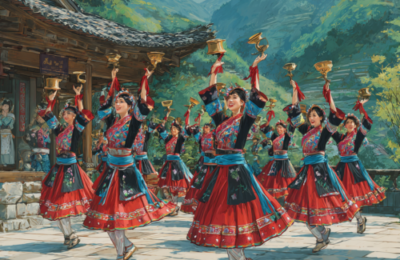
八宝铜铃舞不是表演,而是土家族梯玛用身体打开通神之路的仪式。铜铃的点、摇、抖、撩、绕构成仪式的语言,脚步画出的九宫格让人一步步走向祖先。本文从身体结构、动作逻辑与仪式流程切入,描写铜铃如何让整场祭祀走得下去,以及身体如何成为人神之间的通道。
The Eight-Treasure Copper Bell Dance is not a performance but a Tujia ritual in which the tima (ritual specialist) uses the body to open a passage between humans and ancestors. Through five core bell techniques—point, sway, shake, lift, and circle—and steps that trace the Nine-Palace pattern, the ritual unfolds as the copper bell guides the sequence and the body becomes a conduit. This article examines the dance through bodily structure, movement logic, and ritual progression to reveal how the copper bell carries the ceremony forward.
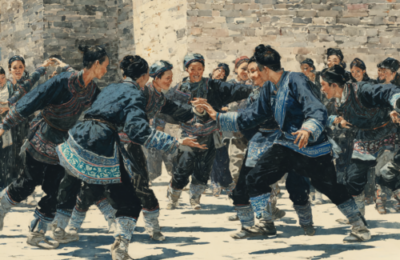
从芦笙、哆吔、合拢宴,到三月三挖地、四月八搭棚、九月九吃新豆子茶——侗族的“月地瓦”不是一天的节日,而是一整年的身体节奏与公共土地共同生成的爱情系统。本文以身体力视角,重新理解爱情如何被“种出来”。
From circle dances and lusheng music to night feasts, fieldwork, and seasonal rituals, the Dong tradition of “Yuediwa” is not a one-day event but a year-long system where love is cultivated through shared labor, public space, and embodied rhythm. This essay explores how love is “grown,” not merely “found.”
湘西古丈的跳马节,与古希腊酒神祭隔着千年与万里,却共享同一种人类学结构:死亡可被点亮,春天可以被召回。本文以巫傩文化、替罪机制与身体仪式为线索,解析扎马、游行、烧老爷等古老仪程如何让一个世界在冬天之后重新开始。
The Tujia “Jumping Horse” ritual in Xiangxi and the ancient Dionysian festival in Greece share a profound anthropological structure: the passage from death to renewal, the cleansing of misfortune, and the calling back of spring. This article explores how acts such as becoming the “horse,” ritual processions, and the burning of the effigy recreate the world’s beginning through embodied ceremony.
在湖南株洲渌口,游傩不是驱疫,而是用五天把一年重新“走起来”的方式。
五大傩神由五个宗族托举,从初一到初五巡行村庄,既非请神,也非斗鬼,而是巡视、确认、安放——让一个村庄的世界得以成立。
这篇文章记录渌口游傩的身体算法、宗族结构与楚文明的深层回声。
In Lukou, Zhuzhou, the Younuo ritual is not an exorcism but a five-day practice that “walks the new year into being.”
Five clan deities—carried by their respective lineages—traverse the village from the first to the fifth day of the lunar new year.
Rather than summoning or combatting spirits, the ritual performs a territorial and temporal inspection: seeing, confirming, and reinstalling the world.
This essay traces the bodily logic, clan structure, and deep echoes of Chu civilization embedded in Lukou’s Younuo tradition.
英歌舞为何一眼就让人“有感觉”?从潮汕的步法、阵法、衣甲与节奏出发,解析一种靠身体对齐、靠材料放大、靠街巷生成的集体节律。与楚地湿地步法、巴西战舞 Maculelê 同构的全球节奏逻辑,在正月里于潮汕再度亮起。
Why does Yingge dance feel instantly familiar to the body? This piece examines its steps, formations, armor-like costumes, and stick rhythms—revealing a system where movement aligns, materials amplify, and streets become collective engines of rhythm. Linked to Chu wetland step logic and Brazil’s Maculelê, Yingge shows how civilizations form through synchronized bodies.
这一篇记录黄陂僵狮子如何用身体发动节律。
起乩的“马脚”、贴身的村道、火力的热、走地界的路,
把正月的村庄重新亮一次。
狮子不是被舞起来的,
而是被身体震出来的;
村庄不是被画出来的,
而是被动作重新连起来的。
这是一个靠颤、靠火、靠贴近才能启动的乡土节律系统。
This piece explores how the Jiangshizi (Stiff Lion Dance) of Huangpi
uses the body as an engine of rhythm.
The trembling majiao, the narrow village paths, the heat of firecrackers,
and the boundary-walking ritual together
re-ignite the village each lunar January.
The lion is not performed—it is shaken alive by human bodies.
The village is not drawn on a map—it is reconnected through movement.
This is a rural rhythm system powered by tremor, fire, and touch.
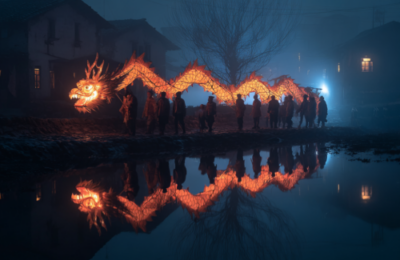
《楚地龙灯》不是在描述一个春节的热闹项目,而是在追踪一种“湿地身体算法”如何被点亮、放大,并以光的方式重新走过乡土。龙灯的动作——方向先行、摆幅恒定、中心推进——并非表演技巧,而是湿地文明古老的走路方式,被几十个身体合成一条脊柱,在黑夜中显形。火不是舞台效果,是显影剂;光不是照明,是路径。龙灯的意义,不在装饰,不在节庆,而在于:一个社区如何通过身体对齐、火光校准与路径确认,完成一年一次的“文明重新上路”。
“Dragon Lanterns of Chu” is not a study of festive spectacle but an inquiry into how a wetland civilization reactivates its oldest movement algorithms through light. The dragon lantern’s motions—direction-leading, amplitude-holding, core-driven—are not performance techniques but embodied memories of how people once moved across unstable ground. Dozens of bodies merge into a single spine; fire becomes a revealing agent; light becomes a pathway. The significance of the dragon lantern lies not in decoration or celebration but in how a community recalibrates itself—by aligning bodies, syncing rhythms, and retracing the essential routes that allow its world to start again each year.
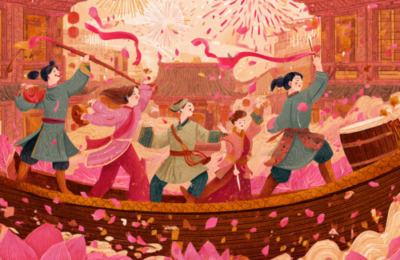
本篇从采莲船、彩船与旱地划龙船等年节船舞切入,
不以器物形制为主,而以“身体作为船”的底层算法为核心。
通过三个动作结构——方向先行、摆幅恒定与中心推进——
解析湿地文明如何在河网退去之后,
仍以步法保存“水的逻辑”。
文章提出:
不同地区的年节船舞并非彼此模仿,
而是同源于一条共同的湿地身体记忆。
在年节中,人以身为舟,
让一条看不见的河再次被走出来。
This essay examines New Year “boat dances” across the wetland cultural belt—
from lotus boats to decorated stage-boats and land-based dragon boats—
focusing not on their shapes but on the shared bodily algorithm that animates them.
Through three structural principles—direction leading before steps,
constant lateral sway, and core-driven propulsion—
the text reveals how wetland civilizations preserve the logic of water
through movement long after the waterways have shifted or vanished.
Rather than regional imitation, these boat dances emerge from a common
embodied memory shaped by river networks.
In the New Year season, the body becomes a boat,
and an unseen river rises again under the dancers’ feet.