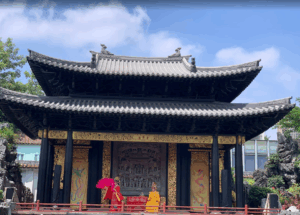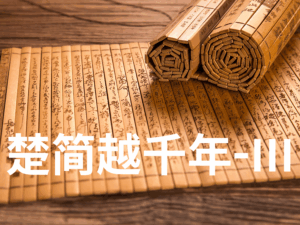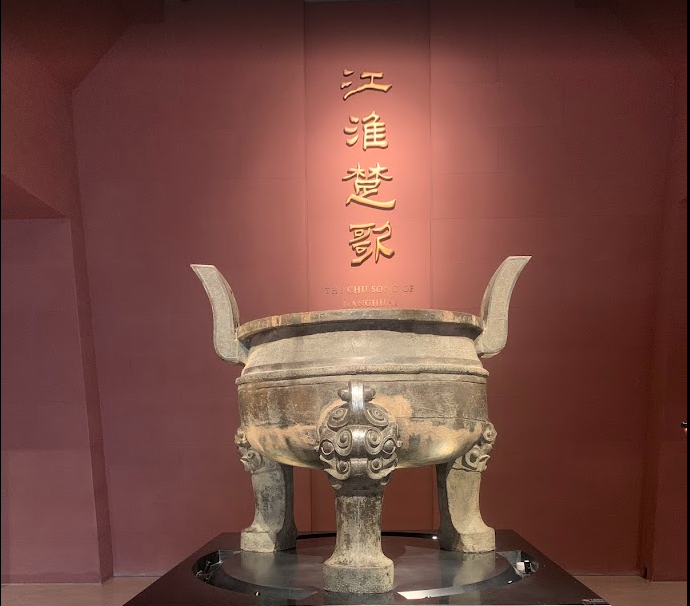
After entering Henan,
I strongly felt that the most striking thing here,
was not any single historical site,
but the way this region continuously organizes bodies, emotions, and movement on a massive scale.
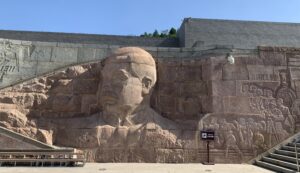
From the synchronized movements of the Huangdi Ancestor Ceremony,
to the phrase “Zhai Zi Zhong Guo” (“This is the center of the world”) inside the Henan Museum;
from Only Henan, a large-scale theatrical complex reconstructing collective memory,
to the bodily discipline embedded within Shaolin Temple and Songyang Academy;
and finally,
even extending into modern commercial spaces like Pangdonglai,
with its management of crowds, trust, and rhythm.
These places appear very different on the surface,
yet they are all dealing with the same underlying question:
How can large numbers of people continuously enter the same civilizational rhythm?
《从黄帝到胖东来:我在河南看到的中原文明如何运行》
(From Huangdi to Pangdonglai: How I Observed the Operation of Central Plains Civilization in Henan)
1|Huangdi Ancestor Ceremony: Entering Collective Rhythm Through the Body
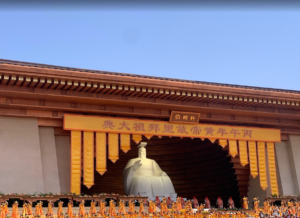
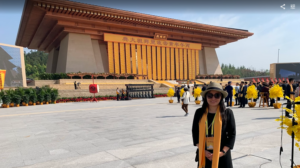
The Huangdi Ancestor Ceremony
showed me how a large civilization can bring thousands of people
into the same rhythm simultaneously.
Fixed ritual procedures,
fixed spatial positions,
fixed music and movements —
the body no longer remains merely a spectator,
but becomes absorbed into the collective process itself.
Civilization,
in many ways,
is the ability to synchronize large numbers of bodies over time.
2|Henan Museum: How Civilization Becomes a System
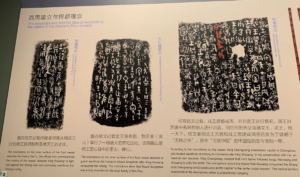
After entering the Henan Museum,
I gradually began to understand
why the Central Plains became the symbolic center of “China.”
What matters here
is not any individual artifact,
but the way ritual systems, burial structures, inscriptions, objects, and spatial arrangements
were gradually organized into a stable civilizational framework.
Beginning with the phrase “Zhai Zi Zhong Guo,”
a large and long-lasting civilizational structure
slowly begins to emerge.
3|Only Henan: How Civilization Reconstructs Collective Memory
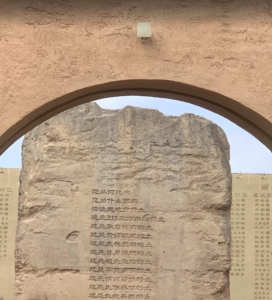
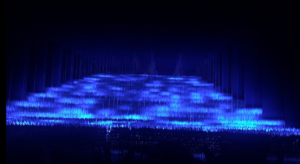
What Only Henan revealed to me
was not simply theatrical performance,
but the way contemporary China reconstructs collective civilizational experience.
People move through space
while sound, architecture, lighting, and narrative continuously surround the body.
The audience does not remain outside observing.
Instead, they become drawn into the space itself.
Civilization, once again,
becomes a bodily experience.
4|Shaolin Temple and Songyang Academy: How Space Organizes the Body
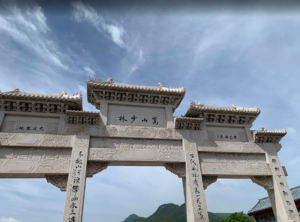
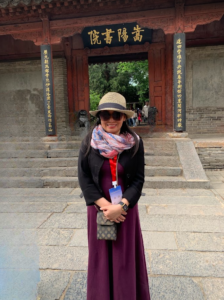
After entering Shaolin Temple and Songyang Academy,
I began to notice another thing:
Space has always been organizing the body.
How crowds move,
where silence begins,
where movement slows down,
where the center emerges —
all of these have already been designed in advance.
A mature civilization is never merely architecture itself,
but a long-term shaping of the relationship between body and space.
5|Pangdonglai: How Contemporary China Sustains Large-Scale Coordination
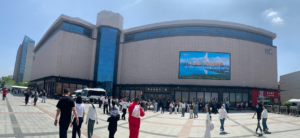
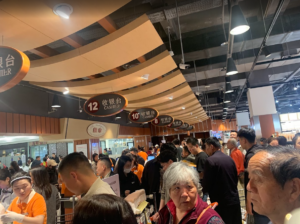
Finally, what I saw in Pangdonglai
was no longer simply commerce,
but a modern large-scale operational system.
Extremely dense flows of people,
massive quantities of goods,
transparent pricing mechanisms,
and meticulous maintenance of service and trust
all work together to sustain a vast field of movement.
From the Huangdi Ancestor Ceremony
to contemporary commercial spaces,
the fundamental strength of Central Plains civilization
has never really changed.
It lies in the ability
to organize large numbers of bodies and rhythms over long periods of time.
After leaving Henan,
the entire route gradually entered a different rhythm.
The Central Plains felt like the stabilized state of a large civilization
after long periods of consolidation.
But once I entered Chu territory,
I began to constantly sense water, movement, coordination, and generation.
The cities here did not emphasize central axes and frozen order
in the same way later imperial systems did.
Instead, they seemed to operate through continuous adaptation —
following waterways, terrain, and shifting spatial relationships.
It was also from this point onward
that I finally understood
why I had written what I call
Chu Yingjian Studies (楚式营建学).
1|The Zhengzhou East–Shouxian High-Speed Rail: Entering Chu Rhythm Through the Body
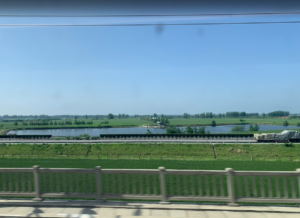
My true entry into Chu territory
actually began on the high-speed railway.
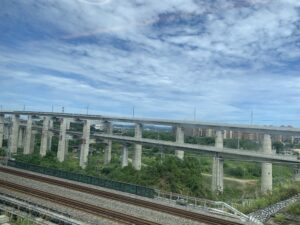
As the train traveled southward from Zhengzhou East Station,
the waterways, plains, and Jianghuai landscapes outside the window
slowly began to change.
That same day,
I happened to listen to the Nine Songs (Jiuge) throughout the journey.
The high-speed railway was not merely transportation.
It was also reorganizing the way the body enters space.
The railway carried the body into Shouxian,
while the Nine Songs carried the mind back into Chu civilization.
Corresponding Chinese essay:
《从中原进入楚地》—— 郑州东至寿县的高铁上,九歌诸神一路相送
(From the Central Plains into Chu Territory — The Gods of the Nine Songs Accompany the High-Speed Railway Journey from Zhengzhou East to Shouxian)
2|Jianghuai Chu Songs: The Operational Backstage of the Chu State
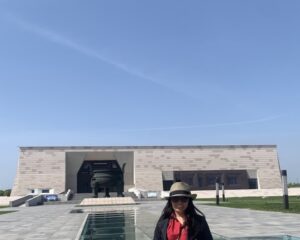
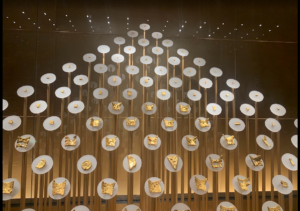
After entering the Anhui Chu Culture Museum,
I began to pay attention to a deeper question:
How exactly did the Chu state operate?
What appeared here
was no longer merely the romanticized imagery of Chu poetry and mythology,
but territorial administration, coordination systems, water networks, currency, governance, roads, and transportation.
The operational logic of Chu
often functioned through water itself.
This visit to the Anhui Chu Culture Museum
was not my first attempt to understand Chu civilization.
Instead, it became a return to the physical landscape behind ideas I had already written about in “Chu Yingjian Studies”.
Through territorial systems, waterways, urban layouts, and administrative structures,
I found myself re-verifying things that had previously existed only in writing.
Related reading:
Chu Yingjian Studies
(English edition available)
Corresponding Chinese essay:
《江淮楚歌:楚国在寿春的运作后台|安徽寿县楚文化博物馆》
(Jianghuai Chu Songs: The Operational Backstage of the Chu State in Shouxian)
3|Shouxian Ancient City: How a City Lives Together with Water
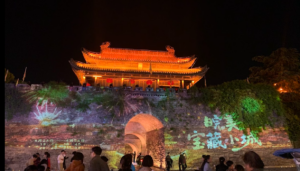
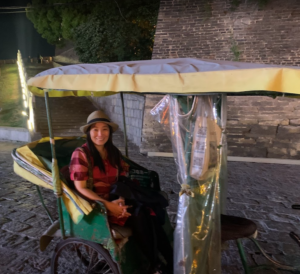
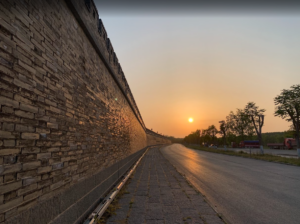
What truly allowed me to understand Chu,
was not the museum itself,
but the ancient city of Shouxian.
Differences in wall elevation,
flood-control embankments,
flood lines,
inner lakes,
and waterways
still remain embedded within the city.
Chu cities were not “planned first and built afterward.”
They seemed instead to grow gradually along the movement of water.
The logic of the city,
was not based on conquering nature,
but on continuous negotiation with water.
Corresponding Chinese essay:
《令尹夫人的寿春走读|安徽・寿县古城》
(A Walk Through Shouchun Ancient City)
4|The Twenty-Four Solar Terms Museum: How Time Enters the Body
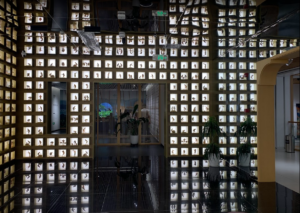
Inside the Twenty-Four Solar Terms Museum,
I saw with unusual clarity
that time itself can enter the body.
The labor movements displayed on the walls,
the bodily rhythms associated with seasonal cycles,
and the relationship between agriculture and time
all resembled a long-term civilizational choreography.
The “solar terms”
are not simply a calendar system.
They are also a method
through which the body enters time itself.
This visit was not my first reflection on the relationship between body and civilization.
Instead, it became a return to ideas I had already explored through what I call
“Embodied Generative Intelligence / Embodied Civilization.”
Here, I could directly observe
how time, labor, movement, and seasonality
become embedded within the human body.
Related reading, English edition available:
《身体生成式智能》
(Embodied Generative Intelligence)
Corresponding Chinese essay:
《二十四节气馆:时间如何进入人的身体|安徽寿县》
(The Twenty-Four Solar Terms Museum: How Time Enters the Human Body)
Conclusion|Why Chu Was Different from Later Empires
By this point in the journey,
I increasingly felt that
the Central Plains and Chu
represented two fundamentally different civilizational conditions.
Later imperial systems
became progressively more stable,
more centralized,
and more frozen in structure.
Chu, however,
remained closer to water —
continuously flowing, coordinating, generating,
and adapting itself according to terrain, waterways, and changing realities.
What Chu ultimately left behind
was not merely romance or poetry,
but a civilization that remained generative, adaptive, and in motion.
Chu, however,
remained closer to water —
continuously flowing, adapting, coordinating,
and generating itself through movement.
Civilization itself
is something sustained over time.
And that sustaining process
often takes place in the backstage —
within bodies,
and within the continuous dialogue between water, earth, and human activity.
If Shouxian allowed me to begin seeing the operational condition of Chu civilization,
then the Beijing Ancient Architecture Museum and the Xiannongtan complex
gradually made me realize something else:
Later imperial systems
increasingly became a kind of “frozen civilization.”
Central axes, gates, hierarchies, ritual structures, and spatial order
were progressively fixed into stable forms.
The state no longer functioned merely as a fluid system of coordination.
Instead,
it became a massive structure capable of being replicated, maintained,
and stabilized over long periods of time.
1|The Beijing Ancient Architecture Museum: Why States Become “Frozen”
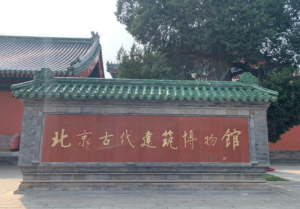
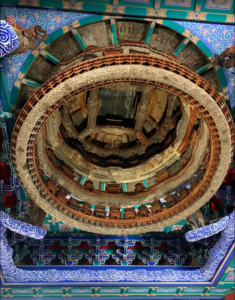
After entering the Beijing Ancient Architecture Museum,
I felt with unusual intensity
that states are, in many ways, physically constructed.
Central axes, gates, caisson ceilings, hierarchies, and spatial layers
all continuously repeat the same order.
Empires are able to sustain themselves over long periods
precisely because they gradually stabilize things that were once fluid.
Space becomes frozen.
Routes become frozen.
Power itself becomes frozen.
A “frozen empire”
slowly begins to emerge.
Corresponding Chinese essay:
《国家,是被盖出来的|北京古代建筑博物馆》
(The State Is Built Into Being)
2|Xiannongtan: How States Transform “Things” into Ritual
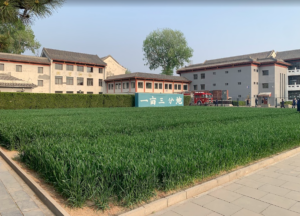
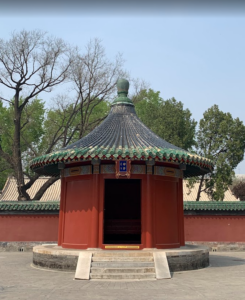
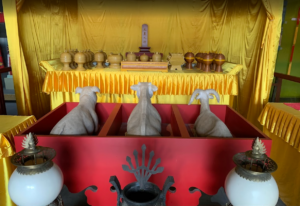
After entering Xiannongtan,
I began to notice something more fundamental:
What makes a state powerful
is not symbolism itself,
but the backstage systems behind it.
How a piece of land
becomes state ritual;
how grain enters storage, transportation, and ceremonial order;
how an ordinary object
is gradually transformed into sacrifice.
From the Divine Granary and Divine Kitchen
to the slaughtering pavilion and ritual altar,
what appears behind them
is an entire long-term backstage system of state maintenance.
Ritual does not suddenly appear on its own.
It emerges through the state’s continuous organization of material things.
Corresponding Chinese essay:
《先农坛:物如何成为祭|北京古代建筑博物馆》
(Xiannongtan: How Things Become Ritual)
3|Civilization Is Not an Exhibit: The Backstage of the Taipei Railway Museum
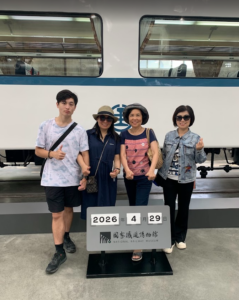
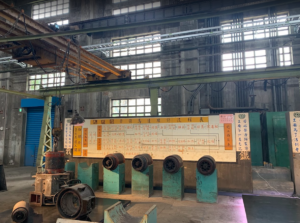
Upon arriving at the Taipei Railway Museum,
the entire “Central Plains–Chu Route”
suddenly returned to the world of modern infrastructure.
What moved me most
was not the trains themselves,
but the backstage spaces of repair and maintenance —
the machinery, cranes, tracks, tools, workshops,
and operational traces that still remained on site.
The places where civilization truly remains alive
are often not the exhibition halls in front,
but the backstage behind them.
There, systems continue to be repaired, adjusted, and maintained.
And civilizations themselves
continue to survive
through these endlessly repeated processes.
Corresponding Chinese essay:
《文明不是展品|台北铁道博物馆的后台现场》
(Civilization Is Not an Exhibit: The Backstage of the Taipei Railway Museum)
Conclusion|The Backstage Begins to Appear
By this stage of the journey,
the entire “Central Plains–Chu Route”
was no longer simply about looking at history.
Instead,
I gradually began to see
how rituals operate,
how states operate,
how ceremonial systems operate,
how logistics operate,
and how large civilizations sustain their backstage structures over time.
What makes civilizations truly remarkable
is often not the grand narratives presented in front,
but the backstage systems
that quietly keep the world functioning.
Beginning with the exhibition on King Kaolie of Chu at the National Museum of China,
I gradually began to realize
that what Chu civilization left behind
was never limited to tombs and artifacts.
What continues to flow even now
are often routes, waterways, names, systems of coordination,
and certain operational logics that never completely disappeared.
Shouxian preserves the final territorial remains and operational traces of the late Chu state.
Shanghai, meanwhile,
continues to carry the name “Shen,” the waterways of the Huangpu River,
and a constant sense of outward movement and expansion.
1|King Kaolie of Chu: What Was Still Operating at the End of the Chu State
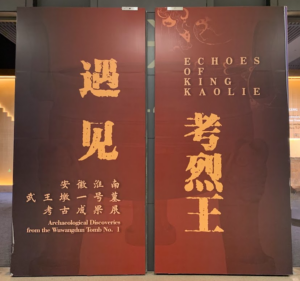
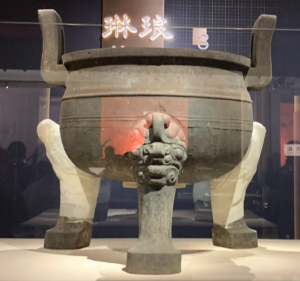
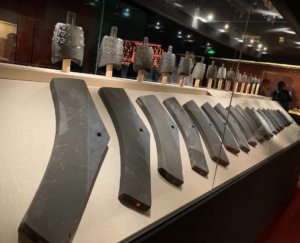
What truly moved me
was not the “fall of Chu,”
but the way the exhibition on King Kaolie of Chu
allowed me to see, with unusual clarity,
how a state continued to function during its final stage.
What mattered there
was not any single object,
but the continuing relationships between ritual vessels, roads, tally systems, circulation networks, currency, and coordination mechanisms.
A state, in the end,
is never merely palaces and rulers,
but the relationships capable of sustaining long-term operation.
Corresponding Chinese essay:
《国博里的楚考烈王》
(King Kaolie of Chu at the National Museum of China)
2|Beside the Tomb of Lord Chunshen: Not Ancestor Worship, but a Report Back
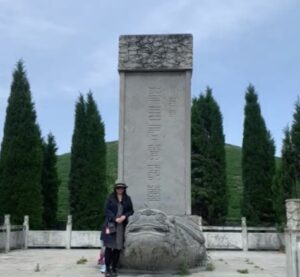
When I finally stood beside the tomb of Lord Chunshen,
I realized that I was not simply there to “honor ancestors.”
That day,
I placed Rhythm Civilization Theory,
The High-Speed Rail Civilization White Paper,
Chu Yingjian Studies,
and Embodied Generative Intelligence beside the burial mound.
Only afterward did I realize
that the act resembled something closer to a formal report back.
It was not nostalgia,
nor the romanticization of history,
but a return to the final territorial remains of the Chu state
in order to confirm
that certain things
were still continuing to operate.
Corresponding Chinese essay:
《我在黄歇墓旁|安徽・淮南》
(Beside the Tomb of Lord Chunshen)
3|Shen City and the Huangpu River: How Chu Continues into the Modern City
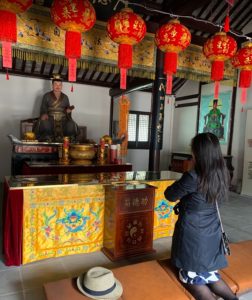
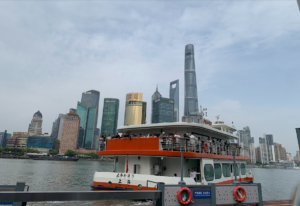
After entering Shanghai,
I felt with unusual clarity
that Lord Chunshen had never truly left the city.
The name “Shen”,
the Huangpu River,
and the waterways associated with Lord Chunshen
still remain embedded within the city today.
What truly survives in civilization
is often not palaces,
but names, rivers, routes, and modes of movement.
And Shanghai, in some ways,
still preserves a distinctly “Chu-like” quality.
Corresponding Chinese essay:
《申城与黄歇浦|春申君在上海》
(Shen City and the Huangpu River: Lord Chunshen in Shanghai)
Conclusion|Some Civilizations Never Truly End
What Chu ultimately left behind
was not merely poetry and romantic imagination.
It also left waterways, cities, names, systems of coordination,
and a condition of continual movement and adaptation.
Some civilizations never truly disappear.
They simply continue living
through new cities,
new routes,
and new forms.
 AI Collaboration Statement
(Statement on AI-Assisted Collaboration)
The conceptual frameworks, field observations, and civilizational interpretations presented in this work are independently developed by the author.
Artificial intelligence tools were used only for language support, structural organization, and bilingual editing assistance.
All theoretical interpretations, field-based observations, and conceptual conclusions remain the sole intellectual work of the author.
This work is part of the Rhythm Civilization project.
© Ning Huang, 2026.
 Originality & Rhythm Civilization Copyright Statement
Blockchain Proof of Originality
- First Publication Date: 15 May 2026
- Blockchain Record (Arweave TXID): fa4fc294-621f-4250-b088-b4230bc3e256
- Storage Platform: ArDrive / Arweave Permanent Storage
- Project: Rhythm Civilization Research Initiative