《国博里的楚考烈王》

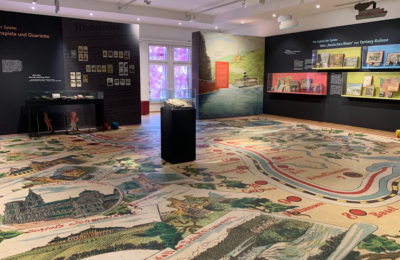
从北京国博“遇见考烈王”展出发,本文重新阅读楚考烈王墓中的九室、九鼎八簋、漆器、钟磬、马具与鄂君启金节,并尝试理解:楚文明真正留下来的,不只是器物,而是一个仍在运作、流动与连接中的世界。本文也结合《楚式营建学》的观察,重新思考晚期楚国的礼制、交通、水陆网络与文明惯性。 Starting from the “Encountering King Kaolie of Chu” exhibition at the National Museum of China in Beijing, this article re-examines the tomb of King Kaolie through its nine chambers, ritual bronzes, lacquerware, bells, horse gear, and the E Jun Qi Gold Tally. Rather than focusing on isolated artifacts, it explores how Chu civilization functioned as a living system of ritual, movement, sound, transportation, and embodied rhythm. The article also connects these observations with the framework of “Chu Yingjian Studies,” reflecting on the operational logic and inertia of late Chu civilization.

Weiterlesen《国博里的楚考烈王》

《申城与黄歇浦|春申君在上海》

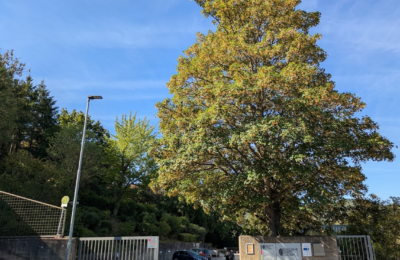
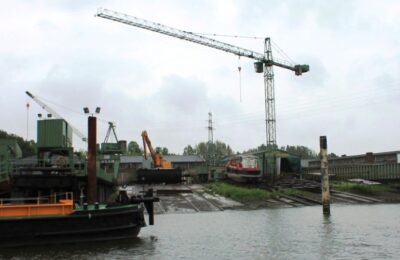
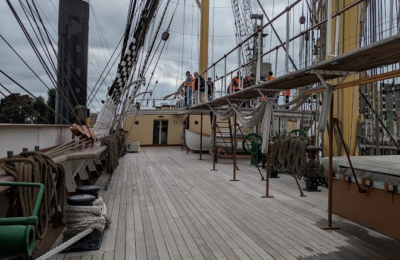
从寿春城的封土到黄浦江的夜风,作者沿着春申君黄歇留下的水路与城市记忆,从安徽寿县一路走到上海。本文记录春申君祠、申城地名、黄浦江渡轮与楚辞《涉江》之间,一场跨越两千多年的楚地田野行走。 From the burial mound of Lord Chunshen (Huang Xie) in Shouxian to the night wind of the Huangpu River in Shanghai, the author follows the surviving waterways, place names, and urban memories connected to Chu civilization. This fieldwork journey moves through Chunshen Jun Temple, Shanghai’s “Shen” geography, ferry crossings, and the Chu poem Shejiang, tracing how a Warring States figure still flows through a modern city.

Weiterlesen《申城与黄歇浦|春申君在上海》

《令尹夫人的寿春走读|安徽 • 寿县古城》

《令尹夫人的寿春走读》不是一篇普通游记,而是一场用身体完成的田野。作者以“令尹夫人”的身份,在安徽寿县古城里沿着城墙、月坝、内湖与洪水线行走,重新阅读楚国最后都城如何与水共处,也重新理解:一座城如何在时间里继续活着。 Walking Shouchun as the Lady Lingyin is not a conventional travel diary, but a fieldwork journey written through the body. Moving through the ancient city of Shouxian in Anhui, the author — writing as the “Lady Lingyin” — follows city walls, moon dams, inner lakes, and flood marks to rediscover how the last capital of Chu lived with water, and how a city continues to survive through time.

Weiterlesen《令尹夫人的寿春走读|安徽 • 寿县古城》

《江淮楚歌:楚国在寿春的运作后台|安徽楚文化博物馆》

在安徽楚文化博物馆,我看到的不是楚辞与浪漫,而是楚国最后十九年的运作后台:排水系统、制陶作坊、物流通行、称量货币与行政印章。 楚,不只是诗, 是一套仍在运转的系统。 At the Chu Culture Museum in Shouxian, Anhui, I did not encounter poetic nostalgia, but the operational backend of Chu’s final 19 years: drainage systems, ceramic production, logistics permits, weight-based currency, and administrative seals. Chu was not only poetic—it was a system in motion.

Weiterlesen《江淮楚歌:楚国在寿春的运作后台|安徽楚文化博物馆》

《我在黃歇墓旁|安徽・淮南》

在安徽淮南的黄歇墓旁,我把两年的写作与身体行走带到他面前,在未入与入内之间,完成一次述职。 At the Huang Xie Tomb in Huainan, Anhui, I brought two years of writing and embodied fieldwork to him, completing a personal report between exclusion and entry.

Weiterlesen《我在黃歇墓旁|安徽・淮南》

HSR Civilization White Paper — Abstract Edition

This white paper examines China’s high-speed rail (HSR) system as a large-scale civilizational structure rather than a purely technical infrastructure. With over 50,000 kilometers of track, China’s HSR network has fundamentally reshaped spatial organization, compressed temporal cycles, and transformed patterns of social interaction. Beyond engineering achievement, it represents the emergence of a new structural condition: a speed-based civilization. However, as systems increase in scale and complexity, speed alone becomes insufficient to maintain stability. This paper argues that future infrastructure systems require a transition toward rhythmic organization—where coordination, balance, and temporal alignment sustain long-term operation. Through analysis of engineering systems, cognitive frameworks, and cultural perception, the paper proposes a shift from speed toward rhythm as a key dimension of modern civilizational development.

WeiterlesenHSR Civilization White Paper — Abstract Edition

Rhythm Civilization™ White Paper — Abstract Edition

The Rhythm Civilization™ Framework proposes rhythm as a fundamental mechanism for the generation and organization of civilization. By examining embodied practice, the structural patterns of Chu civilization, and modern high-speed rail systems, this study demonstrates how rhythm operates across body, culture, and technological systems, forming a multidimensional resonance through which civilization emerges and evolves. This document is an abstract edition. The full-length version is available in Chinese.

WeiterlesenRhythm Civilization™ White Paper — Abstract Edition

《节奏文明观 · 白皮书》|从身体出发的文明生成模型

《节奏文明观白皮书》提出一种新的文明观察框架:节奏作为文明生成与组织的基础机制。通过身体实践、楚文明结构以及现代高铁系统三个不同尺度的案例,本研究展示节奏如何在身体、文化与技术系统之间形成共振结构,并揭示文明如何在多维节奏的互动中生成与演化。 The Rhythm Civilization Framework proposes rhythm as a fundamental mechanism for the generation and organization of civilization. By examining embodied practice, the structural patterns of Chu civilization, and modern high-speed rail systems, this study demonstrates how rhythm operates across body, culture, and technological systems, forming a multidimensional resonance through which civilization emerges and evolves.

Weiterlesen《节奏文明观 · 白皮书》|从身体出发的文明生成模型

《高铁文明白皮书|速度、系统、感官与节律文明》

《高铁文明白皮书》从文明结构与系统思维的角度,重新理解中国高速铁路的发展。文章讨论高铁如何重组空间、时间与社会流动,并提出“六大思维”与“感官文明”两个观察路径,尝试从工程系统进入更深层的文明结构讨论。 The High-Speed Rail Civilization White Paper explores China’s high-speed rail network from the perspective of civilizational structure and systems thinking. It examines how high-speed rail reorganizes space, time, and social mobility, and introduces two analytical frameworks—six cognitive patterns of large-scale engineering and the sensory dimension of culture—to understand infrastructure as a civilizational system.

Weiterlesen《高铁文明白皮书|速度、系统、感官与节律文明》

《节奏文明观 · 导航地图》

《节奏文明观 · 导航地图》整理身体、材料、声音、语言、空间、时间与学习等十个入口,说明文明如何在不同维度的节奏中逐渐生成。本篇并非理论总结,而是一张阅读地图,引导读者理解节奏如何组织文明结构。 Rhythm Civilization · Navigation Map brings together ten entry points — body, material, sound, language, space, time, learning, and life — to explore how civilization gradually emerges through rhythms across different dimensions. Rather than a theoretical conclusion, this essay functions as a reading map that guides readers through the structural logic of rhythm in civilization.

Weiterlesen《节奏文明观 · 导航地图》