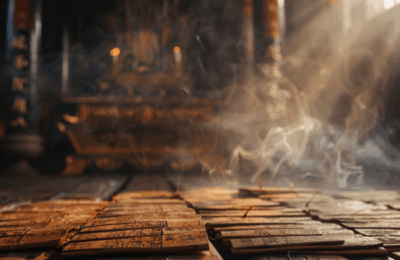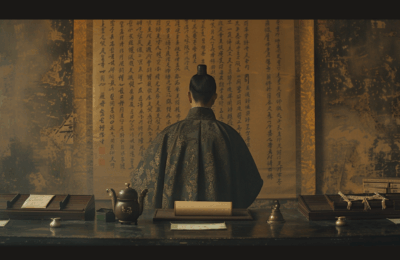
《上博简 · 柬大王泊旱|楚国CEO的危机管理手册》

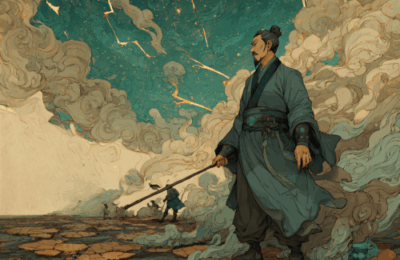
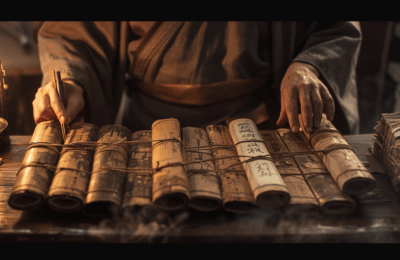
上海博物馆藏战国楚竹书于1994年由香港文物市场购入,并经香港收藏人士捐赠入藏,全批约一千七百枚、三万五千余字。竹简以楚系文字书写,内容涵盖儒家、道家、兵家等八十余种先秦古籍。其中的《柬大王泊旱》记录了一位楚王在旱灾与不确定中思考治理的篇章。内容涉及卜筮、水利、政务与德性反思,展现出战国晚期理性与礼制并行的治国智慧。它们不是权力的遗物,而是文明在危机中学习如何抉择与秩序共存的文本。The Shanghai Museum’s collection of Warring States Chu bamboo slips, acquired in 1994 from the Hong Kong antiquities market and later donated by local collectors, contains about 1,700 slips with more than 35,000 characters. Written in the Chu script, they include over eighty pre-Qin texts from the Confucian, Daoist, and military traditions. Among them, King Jian’s Drought Crisis records a Chu ruler’s reflections on governance amid drought and uncertainty—covering divination, hydraulics, statecraft, and moral reasoning. These slips embody the coexistence of reason and ritual in the late Warring States, not relics of power but living documents of how a civilization learned to balance choice and order in times of crisis.

Weiterlesen《上博简 · 柬大王泊旱|楚国CEO的危机管理手册》

《严仓楚简 |楚国暗室:大司马悼滑与他的财政、卜病及红印》

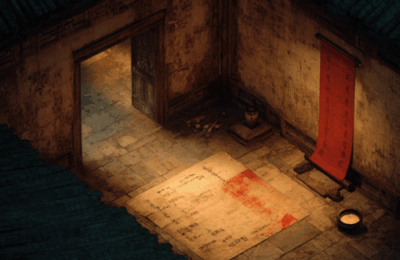
湖北荆门沙洋,一座无战争痕迹的墓室中,出土六百五十余枚竹简。 没有征伐的篇章,只有一位将军的身后记录:祭祷、问病、物品账目——皆以墨书朱印,静静封存。他是楚国大司马悼滑。这些竹简所写的,不是战功,而是一个人在职责、病痛与告别中的生命痕迹。它们不是遗物,而是秩序与人生交织过的证据。In a quiet tomb in Shayang, Jingmen, Hubei, over 650 bamboo slips were unearthed—no tales of war, but the final records of a high-ranking general: ritual petitions, medical inquiries, and personal inventories, inked and sealed in red. His name was Da Sima Dao Hua. These slips speak not of conquest, but of one man’s final journey through duty, illness, and departure. They are not relics, but the trace of how order and life once intertwined.

Weiterlesen《严仓楚简 |楚国暗室:大司马悼滑与他的财政、卜病及红印》

《清华简 · 系年与楚居》|上古档案室:被改写的历史与楚国的正名》

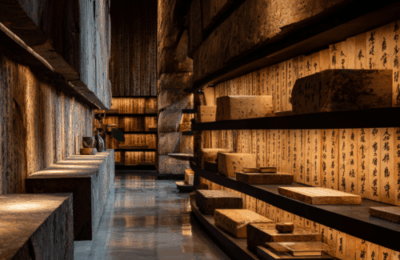
从香港文物市场辗转归来的竹简,到今日清华大学修复保存的《清华简》,一座被遗忘的上古档案室重新开启。它们不是沉默的遗物,而是活着的记录——在竹上改写了楚人眼中的周史,也为楚国正名。在这间“上古档案室”里,历史被一片片拼回,记忆也在手指的触碰中复原。From the fragments once circulated through the Hong Kong antiquities market to the restored bamboo slips now preserved at Tsinghua University, the Tsinghua Chu Slips reopen an ancient archive once thought lost. They are not silent relics but living records—rewriting how the Chu people viewed the Zhou world and themselves. In the “Ancient Archive Room,” history is pieced together strip by strip, revealing a civilization’s effort to reclaim its name and its memory.

Weiterlesen《清华简 · 系年与楚居》|上古档案室:被改写的历史与楚国的正名》

《郭店楚简|哲学书店:思想在竹简上发芽》

在楚地的泥土里,出土了一座没有屋顶的书店。墓主是一位爱读书的楚国士人,他把八百余枚竹简当作书架,将《太一生水》《五行》《老子》并列陈放。这里写着宇宙的生成,也描着修身的路径;水与德行、太一与仁义,在竹间交织成两千年前的思想森林。《郭店楚简》让思想重新生长,像春水,从竹简的纹理里缓缓流出。From the soil of ancient Chu emerged a bookstore without a roof. Its owner, a learned shi of the Chu state, arranged over 800 bamboo slips like shelves—placing Taiyi Sheng Shui, Wuxing, and Laozi side by side. Here the creation of the cosmos meets the practice of self-cultivation; water and virtue, the cosmos and humanity, intertwine into a forest of thought still alive after two millennia. The Guodian slips let philosophy breathe again—like spring water flowing through the grain of bamboo.

Weiterlesen《郭店楚简|哲学书店:思想在竹简上发芽》

《包山楚简|理性与神秘:楚人的双轨人生》

出土于湖北荆门包山的楚简,既是法的刻痕,也是魂的笔记。白日的楚人用律法维持秩序,夜晚的楚人以卜筮祈求庇佑;理性与神秘在同一根竹上并行,如两条永不交错的铁轨,在时间深处映照出一个文明对秩序的双重信仰。Unearthed at Baoshan in Jingmen, Hubei, the Chu bamboo slips record both the marks of law and the notes of the soul. By day, the people of Chu upheld order through legal codes; by night, they sought protection through divination. Rationality and mystery run side by side on the same bamboo line—two tracks that never cross, yet together reflect a civilization’s enduring faith in order across time.

Weiterlesen《包山楚简|理性与神秘:楚人的双轨人生》

《丁家嘴 · 望山楚简|祈福信箱:当楚人向祖先诉说忧患》

在湖北武汉江夏丁家咀与荆州江陵望山,两批楚简出土地点相隔百里,却都写下了相同的心愿:愿神听见,愿命延长。一方是为“亲父”所设的家祭文书,一方是贵族悼固写给五位先王的求问书信。当它们被同时读起,像两封从战国寄出的信,一封写给家族祖灵,一封写给历史长河,而我们,是两千年后,在信箱前拆信的后人。In Wuhan’s Jiangxia (Dingjiazui) and Jingzhou’s Jiangling (Wangshan) in Hubei, two sets of Chu bamboo slips were unearthed, separated by a hundred li of land, yet echoing the same wish: May the spirits hear, may life be prolonged. One was a private prayer to a “dear father”; the other, a formal petition to five ancestral kings. Read together, they feel like two letters sent from the Warring States era — one addressed to a family spirit, the other to the long river of history. And we, two thousand years later, are the descendants standing before the mailbox, opening them one by one.

Weiterlesen《丁家嘴 · 望山楚简|祈福信箱:当楚人向祖先诉说忧患》

《天星观楚简|楚国精英解忧事务所:CEO风险中的权力生活》

在楚国中层权力结构中,有一位叫“番胜”的封君,数次走进卜筮间,留下三道令人焦虑的问题——这个月侍奉楚王是否顺利?这场病会不会恶化?新宅能不能长久居住?他不是迷信,而是慎重评估一切变量,进行权力中的高压决策。天星观楚简,记录了一位战国精英的“风险控管日志”,也让我们看见:当年的贵族,就像今天的CEO,也需要一个“解忧事务所”。In the mid-tier power structure of the Chu state, there was a nobleman named Fan Sheng. He stepped into the divination chamber more than once, each time bringing a question shaped by deep anxiety: — Would his service to the King run smoothly this month? — Would his illness worsen, or pass? — Could his new residence truly become a long-term home? This was not superstition. It was a careful evaluation of shifting variables—power-bound decisions made under pressure. The Tianxingguan bamboo slips preserve his “risk management log”, showing us that even in the Warring States era, aristocrats—like today’s CEOs—needed a place to confront uncertainty. A Disquiet Affairs Office, where power meets precaution.

Weiterlesen《天星观楚简|楚国精英解忧事务所:CEO风险中的权力生活》

《九店楚简|黄历小铺:温柔的生活秩序》

从九店楚简的日书出发,把“黄历小铺”作为楚人日常的时间指南:记录节令、宜忌与行止。以出土竹简为本,温柔讨论战国楚地的生活秩序与时间观。From the Daybook manuscripts among the Jiudian Chu bamboo slips, this “almanac shop” explores how the people of Warring States Chu recorded seasons, taboos, and daily conduct. Grounded in excavated texts, it reflects on the gentle rhythm of order in ancient life.

Weiterlesen《九店楚简|黄历小铺:温柔的生活秩序》

《帛上文明四部曲·之四|漂泊之帛:失散与归来的文明》

这不是一段“流失文物”的普通纪实,而是三卷战国楚帛书在七十九年间的真实旅程。1942年,长沙子弹库楚墓被战火照亮;1946年,三卷楚帛书流失海外,开启了漫长的漂泊——几经转手、辗转异国。2025年5月18日,第二卷《五行令》与第三卷《攻守占》,在北京首都国际机场由中国正式接收。那一刻,被接过的不是丝,而是一段曾被撕裂、如今重新续起的祖先之气。而第一卷四时令仍然沉睡异国,等待归位。// This story is not about ordinary lost relics but tells the true seventy-nine-year journey of three silk manuscripts from the Chu State in the Warring States period. In 1942, the Chu tomb at the Bullet Depot in Changsha was uncovered during wartime. In 1946, the three manuscripts were taken overseas and passed through many hands. On May 18, 2025, two of them — "The Five Phases Ordinance" and "Attack and Defense Divinations" — were formally received back in China at Beijing Capital International Airport. That moment was more than a return of silk; it was the reunion of an ancient breath once torn apart. The first scroll, "The Four Seasons Ordinance," still remains abroad, waiting to come home.

Weiterlesen《帛上文明四部曲·之四|漂泊之帛:失散与归来的文明》

《帛上文明四部曲·之三|丝藏乾坤:帛书三宝中的天人修行》

马王堆三号墓出土的四卷帛书——《导引图》《老子》《天文气象杂占》和《五星占》,构成了承续战国楚学传统的西汉早期“天人修行系统”。从调息内气的导引,到观星定序的天文,丝帛上的每一笔线条,既描写身体的运行,也对应星辰的轨迹。它不是哲学的抽象,而是一种可实践的宇宙观:人身为地,气脉通天,在一匹丝的经纬之间,藏着早期中国文明对“天地一体”的全部想象。// The four silk manuscripts unearthed from Mawangdui Tomb No. 3 — "The Daoyin Chart", "The Laozi", "Astronomical and Meteorological Divinations", and "Divinations of the Five Planets" — form an early Western Han system of body–cosmos cultivation that continued the spiritual tradition of the Chu culture. Daoyin breathing and stretching practices to the celestial observations that marked the seasons, every brushstroke on the silk depicts both the movement of the body and the path of the stars. It is not abstract philosophy but a living cosmology: the human body mirrors the earth, the vital energy links to the sky, and within one piece of silk lies the ancient imagination of the unity between heaven and humankind.

Weiterlesen《帛上文明四部曲·之三|丝藏乾坤:帛书三宝中的天人修行》