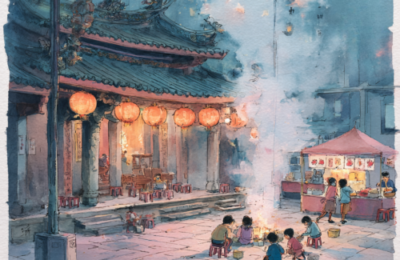
《庙口|我身体里的台湾》

花莲的庙很多。 妈祖守港,玄天上帝镇山, 王母、玉皇、城隍并存。 但我真正记得的,不是哪一尊神。 是庙口—— 戏台的灯光, 香肠的温度, 香火的烟, 水泥地上学骑脚踏车。 庙口不是景点。 是身体最早学会“和别人一起”的地方。 Hualien has many temples. Mazu by the harbor, Xuantian Shangdi in the mountains, local shrines scattered across town. Yet what I remember is not a particular deity, but the temple front — the glow of the stage lights, the warmth of grilled sausage in my hands, the sting of incense smoke, the concrete ground where I learned to ride a bicycle. The temple courtyard was not a religious concept. It was where my body first learned how to belong among others.
Weiterlesen《庙口|我身体里的台湾》

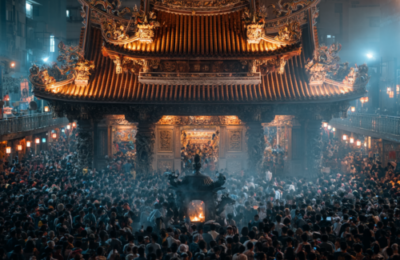
《妈祖绕境|神明的身体是九天八夜、338 公里的路》

这是一篇从“身体力”视角重新观看妈祖绕境的文章。 我来自东部,对绕境没有成长经验,因此不是在“内部叙述”, 而是以观察者的方式,看见中南部如何用三百多公里、九天八夜, 把信仰落实为动作,把仪式落实为身体,把善意落实为日常。 文章从路径、身体、村庄与纪录片四个角度, 呈现妈祖信仰如何在现代台湾持续生成、更新、扩散与自我确认。 This essay approaches the Mazu pilgrimage from a “body-based ethnography” perspective. Growing up in eastern Taiwan, I never participated in the pilgrimage myself. Instead, I observe how central and southern Taiwan embody faith through walking, ritual movement, communal hospitality, and collective rhythm across 338 kilometers over nine days and nights. Through four lenses—path, body, village, and documentary—the piece explores how Mazu belief continues to evolve, reaffirm itself, and illuminate the communities that carry it.

Weiterlesen《妈祖绕境|神明的身体是九天八夜、338 公里的路》