《墨隐江山》|墨色 · 徽墨· 合福高铁· 安徽黄山

在这篇文章中以“墨分五色”的东方笔法,书写黄山山水与合福高铁的文化对话。高铁不再只是速度,而是现代泼墨的笔触,写山写云,写时空穿行。黄山站宛如宣纸上的一笔飞白,钢铁与云烟并行,动中藏静。文中融合水墨哲思与高铁设计语言,从意境、功能解构“现代山水图”。一锭徽墨,一条轨道,在山川之间展开速度与文化的共书之旅。Using the Eastern brushwork of “ink in five shades,” this essay composes a cultural dialogue between Huangshan’s landscapes and the Hefei–Fuzhou high-speed rail. The HSR is no longer mere speed, but the stroke of a modern ink-wash—writing mountains and clouds, writing a passage through time and space. Huangshan Station appears like a swift “flying white” stroke upon xuan paper, steel running alongside mist, motion harboring stillness. Blending the philosophy of ink painting with the language of rail design, the piece deconstructs a “modern landscape scroll” through mood and function alike. One ingot of Huizhou ink, one line of track—together they unfold a co-authored journey of velocity and culture across rivers and peaks.
Weiterlesen《墨隐江山》|墨色 · 徽墨· 合福高铁· 安徽黄山

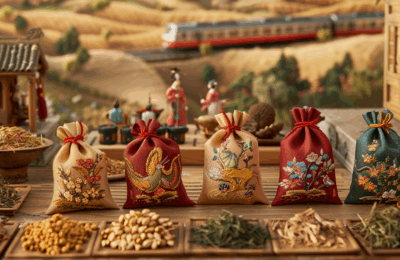
《香韵流转》|刺绣香囊 · 兰太高铁 · 甘肃庆阳

在高鐵疾馳與針線柔情之間,一只香囊連結起千年文化與當代生活。《香韻流轉》帶你走進甘肅慶陽香包的非遺世界,探索香囊的歷史、寓意與工藝,從屈原的佩蘭、紅樓的情絲,到端午節的驅瘟祝福與高鐵上的文化漂流,香氣穿越時光,流轉人心。慶陽香囊不只是佩飾,更是文化的回聲與記憶的容器,一針一線繡出人間至深情意。本文融合人文、地誌與美學,是一次嗅覺與情感的文化旅程。Between the speed of high-speed rail and the tenderness of needle and thread, a single sachet links a millennium of culture to contemporary life. Fragrance in Motion leads you into the intangible-heritage world of Qingyang sachets in Gansu—tracing their history, symbolism, and craft. From Qu Yuan’s “Peilan” (“Orchid Worn at the Waist”) and the silken affections of Dream of the Red Chamber, to Dragon Boat Festival charms warding off illness and the cultural drift of scents aboard today’s trains, fragrance crosses time and moves the heart. A Qingyang sachet is more than an adornment; it is an echo of culture and a vessel of memory, each stitch and thread embroidering the deepest human feeling. Blending humanities, place, and aesthetics, this essay offers a cultural journey of scent and emotion.

Weiterlesen《香韵流转》|刺绣香囊 · 兰太高铁 · 甘肃庆阳

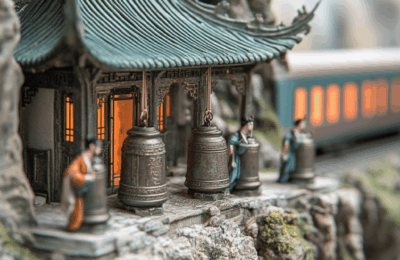
《乐动楚风》|青铜编钟 · 汉十高铁 · 武汉 – 随州

《乐动楚风》是一段穿越2400年的文化回响,也是一场古今中国的文明对话。文章以随州出土的曾侯乙编钟为起点,这套被誉为“金声玉振”的青铜礼乐重器,不仅是先秦音乐技术的巅峰,更是中华礼乐制度的声音化表达。它所铭刻的3755字乐律铭文,被联合国列入《世界记忆名录》,见证了中国古代节奏之精密。当汉十高铁疾驰而来,从武汉的长江涛声到随州的钟鸣,一场来自地下与地表、青铜与钢铁的双重奏悄然展开。高铁代表的是现代中国的速度与脉搏,编钟代表的是古代中国的节奏与秩序。两者在随州交汇,奏响的不仅是城市的过去与未来,更是中国文化在时空中的自省与奔赴。Resounding Chu is a cultural echo spanning 2,400 years—and a dialogue between ancient and modern China. The journey begins with the Zeng Hou Yi bianzhong unearthed in Suizhou: a bronze ritual-and-musical masterpiece famed as “golden sound and jade resonance.” It marks the pinnacle of pre-Qin musical technology and gives audible form to the rites-and-music order of Chinese civilization. Its 3,755-character inscription on pitch and scale—inscribed by UNESCO on the Memory of the World Register—attests to the astonishing precision of ancient Chinese rhythm. As the Wuhan–Shiyan high-speed rail hurtles into motion, from the Yangtze’s surge in Wuhan to the bell-tones of Suizhou, a quiet duet unfolds between earth and surface, bronze and steel. The railway embodies the velocity and pulse of contemporary China; the chime-bells, the rhythm and order of antiquity. Converging in Suizhou, they sound not only a city’s past and future, but China’s self-reflection—and its onward journey—across time and space.

Weiterlesen《乐动楚风》|青铜编钟 · 汉十高铁 · 武汉 – 随州