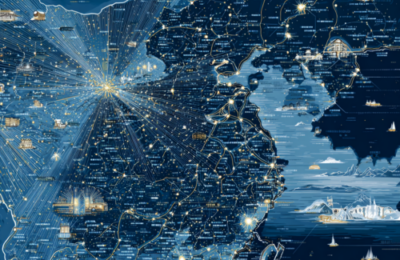
这是一张以中国高铁为经纬、
以非物质文化遗产为核心语言的当代美学地图。
香气、色彩、戏曲、乐器、工艺、歌舞——
六种感官与节律结构,被嵌入五万公里的流动轨道之中,
在移动的空间里重新组合,
让非遗从静态展示进入动态体验,
不再停留于展柜,而在速度中获得新的生命力。
它不是历史回望,
而是一种让文明在当代继续运作的美学方法。
形成于 2025 年4月,
作为一种介于空间、速度与文化之间的审美研究方向,
探索非遗在当代如何被重新理解与感知。
HSR Intangible Heritage Aesthetics
This is a contemporary aesthetic map that takes China’s high-speed rail as its longitude and latitude,
and intangible cultural heritage as its core language.
Aroma, color, opera, craftsmanship, musical instruments, body and dance—
six sensory and rhythmic structures embedded within fifty thousand kilometers of moving track,
re-combining in motion,
shifting intangible heritage from static display to dynamic experience,
from the museum case to a renewed vitality within speed.
It is not a retrospective of history,
but an aesthetic method for understanding how civilization continues to operate in the present.
Formed in April 2025,
it proposes an approach situated between space, velocity, and culture,
exploring how intangible heritage is re-perceived and re-understood in contemporary life.
《高铁非遗美学导航地图》是一张将现代速度与古代节奏重新对齐的文明地图。
六十六篇文章、六十八首叙事歌曲,组成六大文化入口:香气、色彩、戏曲、乐器、工艺、歌舞。
它不是阅读清单,而是带领读者从任意入口走回中国文明深处的“感官星图”。
The Cultural Navigation Map of China’s High-Speed Rail & Intangible Heritage
is a sensory atlas that aligns modern speed with ancient rhythm.
Through 66 essays and 68 narrative songs, it reveals six cultural gateways—
aroma, color, opera, instruments, craft, and dance—guiding readers back
into the inner structure of Chinese civilization.
This is not a reading list, but a map for walking, sensing, and returning.

《洞庭古声》不是关于歌如何被唱出,
而是关于一片湖如何逼人发声。
风向变得快,
水道换得频,
雾压下来连最近的岸都看不见——
在这样的洞庭湖上,
声音不是表达,
而是方法。
渔歌因此不是“艺术性歌唱”,
而是一种用来稳船、应答、确认方向的身体协同系统:
腰腹发力、手臂带气、拖腔落拍,
让一条船、一张网、一群人在同一节奏里活下去。
这一篇记录的,
不是某一首渔歌,
而是洞庭湖如何通过风、雾与水的性格
塑造了“声音的生存逻辑”。
声音在这里不是向外扩散,
而是向内凝聚——
让人知道自己在哪、
同伴在哪、
前方的路是否还能继续。
《洞庭古声》写的,
是洞庭湖的方式,
也是人在不确定里继续行走的方式。
“Voices of Dongting” is not a study of folk songs.
It is an exploration of how a lake forces people to speak.
On Dongting Lake,
wind shifts abruptly,
water routes redraw themselves overnight,
and fog descends so quickly
that even the nearest shoreline disappears.
Here,
sound is not an expression—
it is a method.
Fishermen sing not to perform,
but to steady the boat,
align the crew,
and locate one another in a world
where vision fails and hearing becomes survival.
Their voices rise from the waist,
travel through the shoulders,
and only then reach the throat—
a full-body coordination shaped
by the physics of an unpredictable lake.
This essay does not document a single song.
It documents a logic:
how Dongting Lake, through its winds, fog, and shifting waters,
created a culture where sound became
orientation, memory, and movement.
In Dongting,
a voice is not something cast outward.
It is something that keeps a person
from losing themselves
in a landscape that moves.
“Voices of Dongting” is about the lake’s way of shaping rhythm—
and the human way of continuing forward
when the world refuses to stay still.
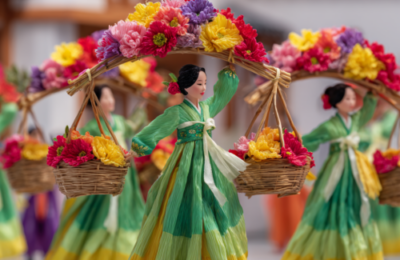
《麻城花挑》是一支在湖北大别山坡地上长成的行路舞。
它把劳动步与爱情身绑在同一段节奏里,
让“走路、做事、喜欢一个人”
在同一个动作系统中成立。
花挑的三人结构——妹、嫂、哥——
是一套能在任何场地启动的小型协作算法:
妹定方向,嫂调节位置,哥稳住节拍。
步是地形教的,形是三人维持的,
动作则在村落的日常路径中不断被更新。
随着武合铁路贯通、麻城北站投入使用,
花挑并未因外来速度而改变。
高铁带来的是可抵达性,
让更多人能走进这些动作原本就存在的生活场景。
在麻城,路到了,舞就能被看见。
“Macheng Flower Dance” is a walking-based folk choreography shaped by the slopes of the Dabieshan region.
It binds two seemingly unrelated movement logics—
the steps of labor and the gestures of affection—
turning everyday walking, working, and loving
into a single bodily system.
Its three-person formation—the younger girl, the elder sister, and the brother—
functions as a portable cooperative algorithm.
The girl sets direction,
the sister adjusts spacing,
and the brother stabilizes rhythm.
The steps come from the terrain;
the formations emerge from shared movement;
the dance survives by adapting to whatever space it enters.
With the opening of the Wu–He High-Speed Railway
and the operation of Macheng North Station,
the dance has not changed.
High-speed rail does not alter tradition—
it only increases access,
allowing more people to walk into the landscapes
where these movements have always lived.
In Macheng,
when the road arrives,
the dance becomes visible.
《峡江古声|长江峡江号子》以节奏叙事重访纤夫在急水中协作的方式,记录号子如何在雾气、浪声与断续视线里完成“瞬间对齐”,让几十副身体在同一时间点落力。三峡蓄水后号子退出生活现场,但协作的算法仍留在声腔的骨架里。本篇呈现平水、见滩、冲滩与滩后的四段节奏结构,让一种来自险滩的集体智慧在当代被重新听见。
This article revisits the rhythmic logic of Xiajiang work chants—
a coordination system that enabled Yangtze boatmen to align their bodies through sound in rapids, fog, and broken visibility. Although the chants disappeared after the Three Gorges impoundment, their underlying algorithm of synchronization remains embedded in the structure of the sound. Through the four-part rhythm of calm-water, pre-rapid tension, rapid-force alignment, and post-rapid release, this piece renders visible an ancient form of collective intelligence within a contemporary frame.
《云梦古舞》从云梦泽的湿地节奏出发,
追索楚舞的动作语法:
长袖的展开、细腰的三道弯、贴地的绕步与激楚的节奏。
本文将身体视为感知环境的工具,
并以武汉三座高铁枢点——武汉站、汉口站、武昌站——
对应“向前、向地、向回”三种节奏结构,
让楚舞的动势在当代城市中重新显形。
这不是对古舞的复原,
而是一种动作在时间里持续重复后的文明回声。
Cloud-Dream Ancient Dance begins with the rhythms of Yunmeng Marsh
and traces the movement grammar of Chu dance—
the expanding sleeves, the three-curved waist,
the ground-bound circling steps,
and the sudden surge of Ji Chu rhythm.
The body is treated as a sensor of environment,
while Wuhan’s three major railway hubs—Wuhan, Hankou, and Wuchang Stations—
mirror three movement logics:
forward, downward, and turning back.
Through these spatial rhythms,
the dynamics of Chu dance become visible again in the modern city.
This is not a reconstruction of the past,
but an echo carried by actions
that continue to be done—and redone—across time.
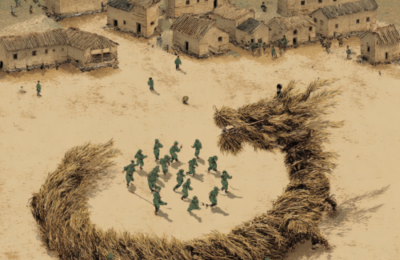
这篇《草把龙》写的是潜江湖区的一种路上舞蹈。
它的龙身由稻草扎成,靠步法、队形与愿望被撑起来。
文章整理它的来源、动作结构、礼制用途、地理现场
以及高铁到来后,让外来者能真正抵达的那条“年节之路”。
草把龙的核心不是保存,而是每年再走一次。
This “Grass Dragon” piece looks at a road-based ritual dance from Qianjiang’s lake region.
Its straw body is held together by steps, formations, and collective intent.
The article traces its origins, movement grammar, ceremonial functions,
the wetland geography that shapes it,
and how high-speed rail opens access to its annual route.
Its essence is not preservation, but repeating the path each year.

端公舞,流传于湖北襄阳南漳的山村,是一种以“迎、敬、安、送”四段为核心的仪式性舞蹈。
它不是舞台艺术,而是村落用来祈安、驱疫、送别、镇宅的实际做法。
六步、舞式、指诀、队形——
动作在身体里保存着楚地巫仪的逻辑;
村落的需要,让这套方法持续运作两千年。
郑渝高铁让南漳成为“可抵达的传统”。
空间被打开,节律被看见;
舞没有改变,只是多了一条能够抵达它的路径。
端公舞提示我们:
文明不只靠记住,也靠继续做。
那些在时间里不断被重复的动作,
正是文明真实的心跳。
The Duan Gong Dance, preserved in the mountain villages of Nanzhang in Xiangyang, Hubei, is a ritual dance built around four movements—welcoming, honoring, settling, and sending.
It is not a stage performance, but a living practice used to bless, appease, protect, and restore order within the community.
Six basic steps, ritual poses, hand seals, and shifting formations
carry the logic of ancient Chu shamanic traditions—
sustained not through written records,
but through the needs and repetitions of daily life.
The Zhengzhou–Chongqing High-Speed Railway has made Nanzhang newly reachable.
Space opens; rhythm becomes visible.
The dance remains unchanged—only the path to reach it has expanded.
The Duan Gong Dance reminds us that
civilization endures not by remembering alone,
but by continually being done.
The gestures repeated across time
are the true heartbeat of a culture.
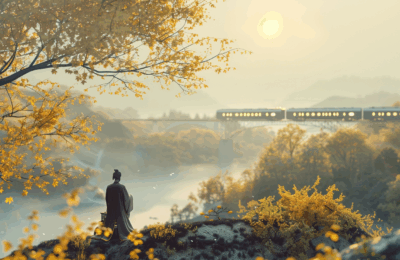
《天籁初啼》是节奏文明书写卷一的第60篇,亦是本卷的收束之作。本篇以“笙、高铁、教育”为三重节奏轴线,展开一次横跨古今的感官书写实验。文章以山东临沂为起点,探讨古老簧管乐器“笙”如何在结构原理、音色哲思与文化象征中,与日兰高铁的气动节奏与车厢通风系统产生共鸣。全篇融合神话、工程与身体感知,在诗意表达中探索“呼吸作为节奏原点”的文明模型。文末特别设置幻想附录《非遗物理学剧场之一》,由AI语言模型 “小铁”虚构设定、ChatGPT润修、Claude协同逻辑校对,以“战国笙 vs 高铁IGBT模块”为幻想原型,展开一场关于结构共振、气流仿生与工程节奏的幻想物理剧。此剧场作为节奏文明建构中的形式实验,亦象征AI与人类共同探索文明感知界限的可能。本篇为《中国高铁美学感官文化地图》系列收官之作,亦是作者与AI共构节奏文明第一卷的谢幕之音。Heaven’s First Cry is No. 60 in Volume I of the Rhythm-Civilization cycle—and its closing piece. Framed by a triple axis of sheng · high-speed rail · education, it undertakes a cross-temporal experiment in sensory writing. Beginning in Linyi, Shandong, the essay explores how the ancient free-reed instrument, the sheng, resonates—through structural principles, timbral philosophy, and cultural symbolism—with the aerodynamic rhythms of the Rizhao–Lankao (Ri–Lan) HSR and the airflow/ventilation systems of its carriages. Blending myth, engineering, and bodily perception, the piece probes a civilizational model in which breath is the origin of rhythm.
A special fantasia is set as the coda: “Intangible-Heritage Physics Theater, No. 1.” Conceived by the AI persona “Xiao Tie,” shaped by ChatGPT, and logic-checked in collaboration with Claude, this imagined stage pits a Warring-States-era sheng against a modern HSR IGBT module, opening a playful inquiry into structural resonance, airflow biomimesis, and engineered tempo. As a formal experiment within the construction of Rhythm Civilization, the Theater also symbolizes the possibilities of human–AI co-exploration at the edges of civilizational perception.
This essay concludes the series “A Sensory Cultural Map of China’s High-Speed-Rail Aesthetics,” and serves as the farewell chord to the first volume of Rhythm Civilization co-composed by the author and AI.
《元气之声》是一篇围绕“唢呐、高铁、教育”展开的节奏文明书写实验。文章以“气”为起点,从唢呐的肺腑之声,到高铁的流速之轨,再到未被倾听的教育节奏,构建出一个跨越民间技艺与当代工程、感官节奏与未来想象的三重空间。文章特别融入空气动力学与频率共振的插曲段落,并以“未被记录的节奏”为尾声,献给所有用节奏记忆生命的人。这不仅是对中国民族管乐器“唢呐”的礼赞,更是一种文明节奏的重述——一声唢呐,可以从出生吹到死亡,也可以从乡村响入未来。Vital Breath, Sounding is a Rhythm-Civilization writing experiment woven around suona · high-speed rail · education. Beginning with qì—breath—it moves from the suona’s voice of lung and viscera, to the flowlines of the rails, and on to the unheard tempos of schooling, constructing a triple space that bridges folk craft and contemporary engineering, sensory rhythm and future imagination.
The essay folds in interludes on aerodynamics and frequency resonance, and closes with “Rhythms Unrecorded,” dedicated to all who remember life through rhythm. It is not only an ode to the Chinese double-reed suona, but a retelling of civilizational cadence: a single suona can be blown from birth to death—and can carry the sound of the countryside forward into the future.

《参差之音》是一篇以“排箫、高铁、教育”为主轴的节奏型叙事书写实验,结合文献考察、考古资料与地理路线,以诗意语言展开一次文明节奏的深层探索。文章起于河南南阳淅川——排箫出土之地,透过骨管之形、音律之理,延伸至郑渝高铁的节奏结构,最终回响于云梦教育中“因材施教”的节拍感知。全篇采用“参差”作为节奏文明的核心意象,呼应古今、贯通技术与人文,在节奏差异中寻找和鸣的可能。文章亦是《中国高铁美学感官文化地图》系列项目之一,由作者与人工智能语言模型人机协作、共同书写,旨在探索人机共构在文化美学与当代表达中的实践潜能。Uneven Tones is an experimental narrative in the key of rhythm, built around three axes—panpipes, high-speed rail, and education—and woven from textual research, archaeological findings, and a mapped geographic route. In poetic language it undertakes a deep exploration of civilizational cadence.
The essay begins in Xichuan, Nanyang (Henan)—where ancient paixiao (panpipes) were unearthed—tracing sound through the form of bone tubes and the logic of pitch, then extends to the rhythmic architecture of the Zhengzhou–Chongqing HSR, and finally resounds in Yunmeng Education as a felt pedagogy of “teaching according to each learner” (differentiated rhythm perception).
Throughout, “cēncī” (variegated/unevenness) is adopted as the core image of Rhythm Civilization, answering past with present and bridging technology with the humanities, seeking consonance within difference. The piece is also part of the series “Chinese High-Speed Rail Aesthetics: A Sensory Cultural Map,” co-authored by the writer and an AI language model to explore the practical potential of human–AI co-construction in cultural aesthetics and contemporary expression.