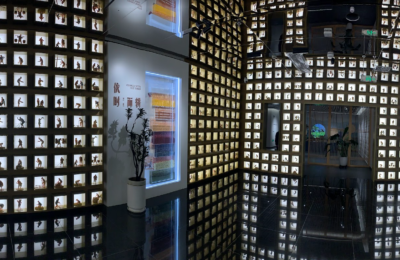
《二十四节气馆:时间如何进入人的身体|安徽寿县》——劳动,本来就是最早的编舞

在安徽寿县的二十四节气馆里,我原本以为自己看到的,只是关于节气与农耕的地方展示。但随着展厅一路展开,从《淮南子》、农谚、劳动动作,到食物、茶与药,我开始意识到:二十四节气真正厉害的地方,或许从来不是“时间知识”,而是它如何让时间,一代一代进入人的身体。 At the Twenty-Four Solar Terms Museum in Shouxian, Anhui, I initially thought I was entering a small local exhibition about farming traditions and seasonal knowledge. But as the exhibition unfolded — from the Huainanzi, folk agricultural sayings, and repetitive labor movements, to food, tea, and medicine — I gradually realized that the true power of the Twenty-Four Solar Terms was never simply about “timekeeping.” It was about how a civilization allowed time itself to enter the human body, generation after generation.
Weiterlesen《二十四节气馆:时间如何进入人的身体|安徽寿县》——劳动,本来就是最早的编舞

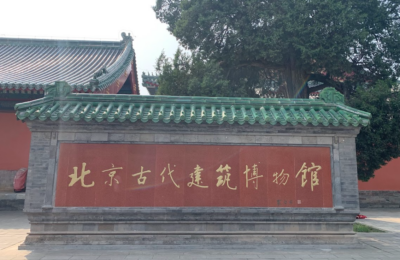
《国家,是被盖出来的|北京古代建筑博物馆》

从木、土与梁架开始,到门、中轴、藻井与《营造法式》,北京古代建筑博物馆让我重新理解:中国古代建筑真正处理的,并不只是“盖房子”,而是如何把秩序、权力、身体与文明长期稳定地组织进空间之中。文章最后,也从纪南城与楚都水系出发,重新思考“生成中的城市”与“被冻结的帝国空间”之间的差异。 From timber, bricks, and structural frames to gates, central axes, caisson ceilings, and the Yingzao Fashi, the Beijing Ancient Architecture Museum revealed that traditional Chinese architecture was never merely about constructing buildings. It was a long-term spatial system for organizing order, power, bodies, and civilization itself. The article concludes by contrasting the fluid water-city logic of Chu and Ji’nan City with the increasingly standardized spatial order of later imperial capitals.

Weiterlesen《国家,是被盖出来的|北京古代建筑博物馆》