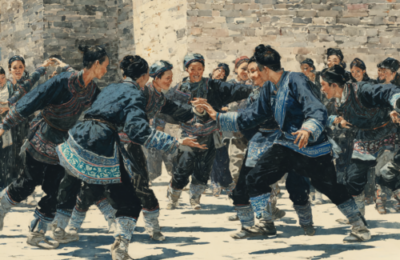
《月地瓦|种出来的爱情》

从芦笙、哆吔、合拢宴,到三月三挖地、四月八搭棚、九月九吃新豆子茶——侗族的“月地瓦”不是一天的节日,而是一整年的身体节奏与公共土地共同生成的爱情系统。本文以身体力视角,重新理解爱情如何被“种出来”。 From circle dances and lusheng music to night feasts, fieldwork, and seasonal rituals, the Dong tradition of “Yuediwa” is not a one-day event but a year-long system where love is cultivated through shared labor, public space, and embodied rhythm. This essay explores how love is “grown,” not merely “found.”
Weiterlesen《月地瓦|种出来的爱情》

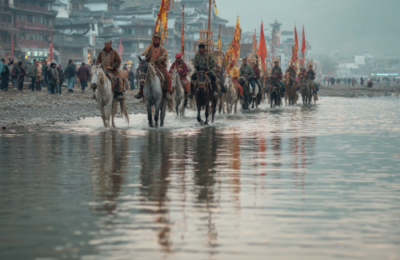
《跳马节|一个湘西村庄的酒神祭》

湘西古丈的跳马节,与古希腊酒神祭隔着千年与万里,却共享同一种人类学结构:死亡可被点亮,春天可以被召回。本文以巫傩文化、替罪机制与身体仪式为线索,解析扎马、游行、烧老爷等古老仪程如何让一个世界在冬天之后重新开始。 The Tujia “Jumping Horse” ritual in Xiangxi and the ancient Dionysian festival in Greece share a profound anthropological structure: the passage from death to renewal, the cleansing of misfortune, and the calling back of spring. This article explores how acts such as becoming the “horse,” ritual processions, and the burning of the effigy recreate the world’s beginning through embodied ceremony.

Weiterlesen《跳马节|一个湘西村庄的酒神祭》

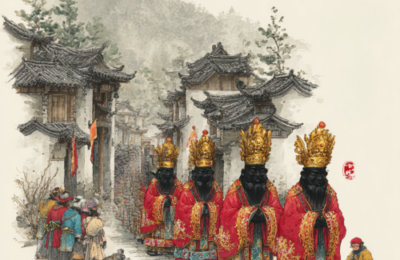
《株洲渌口游傩|大年初五,傩神归庙》

在湖南株洲渌口,游傩不是驱疫,而是用五天把一年重新“走起来”的方式。 五大傩神由五个宗族托举,从初一到初五巡行村庄,既非请神,也非斗鬼,而是巡视、确认、安放——让一个村庄的世界得以成立。 这篇文章记录渌口游傩的身体算法、宗族结构与楚文明的深层回声。 In Lukou, Zhuzhou, the Younuo ritual is not an exorcism but a five-day practice that “walks the new year into being.” Five clan deities—carried by their respective lineages—traverse the village from the first to the fifth day of the lunar new year. Rather than summoning or combatting spirits, the ritual performs a territorial and temporal inspection: seeing, confirming, and reinstalling the world. This essay traces the bodily logic, clan structure, and deep echoes of Chu civilization embedded in Lukou’s Younuo tradition.

Weiterlesen《株洲渌口游傩|大年初五,傩神归庙》