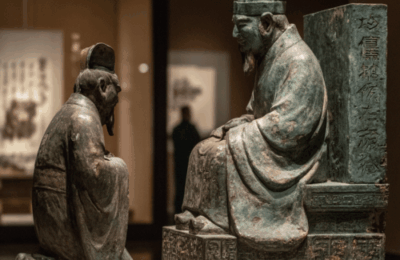
《上博六:楚平王逸篇|楚国衰亡密码:两次“社死”的现场直播》

这一篇记录了楚平王晚年的两场“失败对话”,资料来自上博六《平王与王子木》与《平王问郑寿》。一场发生在田埂之上,一场发生在朝堂之中。太子王子木不识五谷,揭开了教育失根的裂缝;大夫郑寿直言犯上,撞上了王权拒谏的冰墙。两场细微的语言事故,最终在竹简上成为楚国崩塌前的系统日志。This essay records two “failed dialogues” from the late years of King Ping of Chu, drawn from Shanghai Museum Chu Slips VI — Ping Wang and Prince Mu and Ping Wang Questions Zheng Shou. One took place on a field path, the other in the royal court. The crown prince’s inability to recognize a hemp plant exposed a fracture at the root of royal education; Minister Zheng Shou’s frank admonition collided with the icy wall of royal arrogance. These two seemingly minor linguistic incidents were inscribed on bamboo slips as the system log preceding the collapse of Chu.
Weiterlesen《上博六:楚平王逸篇|楚国衰亡密码:两次“社死”的现场直播》

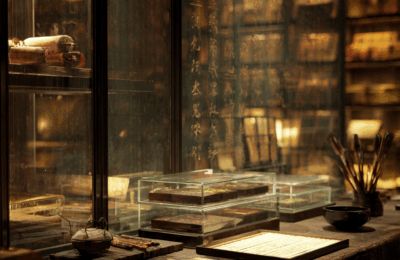
《安大·慈利楚简|楚国驿站:烽火情书》

这是一场跨越两千年的通信实验。两卷竹简,一卷出土于安徽安大,抄着《诗经》;一卷出土于湖南慈利,写着《吴语》。前者回响诗性的柔情与家国之思,后者传递战国的政语与谋略。它们都在时间的火线上被保存下来,像两封烽火中寄出的信——一封写给国家,一封写给人心。当竹简被重新展开,文字重新呼吸,我们看见楚人的书写,不只是记录,更是一种在战火中仍想彼此抵达的方式。This is a communication experiment spanning two millennia. Two bundles of bamboo slips—one unearthed in Anhui, inscribed with the Book of Songs; the other discovered in Cili, Hunan, bearing the Discourses of Wu. The former echoes with poetic tenderness and reflections on home and state; the latter carries the political and strategic language of the Warring States. Both were preserved on the front line of time—like letters sent through fire: one written to the nation, the other to the human heart. As the bamboo slips are unrolled and the words breathe again, we see the handwriting of the Chu people—not merely as record, but as a way of reaching one another even amid the flames of war.

Weiterlesen《安大·慈利楚简|楚国驿站:烽火情书》