在湿地、河谷、海岸与城市之间,
我追踪身体的力量如何穿过不同的地景:
把步法、队形、击节、甩发、牵手、传力、呼吸
编织成一种让世界运转的节奏结构。
从楚地划龙船的水线与桡劲,
到云南甩发舞的风线与弧度,
到台湾妈祖绕境的步巡与信众队列,
从南美 Zumba 的横移与甩步,
到西班牙 Flamenco 的重拍与后仰,
从旱船到巡境的长路,
身体力是一种跨区域的能力——
让人群对齐、让动作生长、
让节奏在身体之间被点亮。
Across wetlands, valleys, coastlines and cities,
I trace how the force of the body moves through place,
weaving steps, formations, strikes, hair-whirls, handholds, breath and momentum
into a living architecture of Rhythm Civilization.
From the waterline and oar-power of Chu dragon-boat rowing,
to the wind-carved arcs of Yunnan hair-whirling dances,
to the long pilgrim routes of Taiwan’s Mazu procession,
from the lateral flows of South American Zumba
to the accented footwork and lifted spine of Spanish Flamenco,
from dryland boats to processional roads,
Body Force reveals a cross-regional capacity—
the ability of people to align, to move,
and to generate rhythm together.
Prologue For three months I danced, and for three months I wrote.What began on the second day of the Lunar New Year—triggered by a stream of short videos showing ritual…
《身体力 · 第一季 · 导航地图》是一份以身体为入口的文明结构说明书。
通过三十六篇身体写作,我重新确认:
身体才是思想之前的第一知识。
顺势、亮度、自由、秩序、上升——
构成了人类理解世界的五种动作路径。
这是一张由身体生成的文明地图。
Body-Force · Season One · Navigation Map is a structural guide to a civilization understood through the body.
Across thirty-six embodied essays, one truth becomes clear:
the body is the first knowledge before thought.
Flow, brightness, freedom, order, ascent—
these five pathways form a map of how humans move through and make sense of the world.
This is a civilization atlas written by the body.
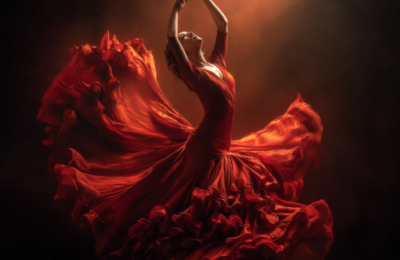
《佛朗明哥|仰、踏、绕的身体》探索这门诞生于流亡、苦难与抗争中的西班牙艺术,如何用三个动词——仰、踏、绕——把一个民族的火、力与命写进身体。本文从源起、结构与身体算法切入,呈现佛朗明哥的情绪密度与历史重量,并以“身体力”的视角,理解脊椎、脚步、手臂如何成为抵抗世界的方式。
Flamenco: The Body of Arch, Stomp, and Circle examines how this art form—born from exile, persecution, and cultural fusion—compresses an entire history of resistance into three verbs: arch, stomp, and circle. Through its origins, its triad structure of song–dance–toque, and its embodied grammar, the piece reveals how Flamenco transforms pain into fire and movement into survival.
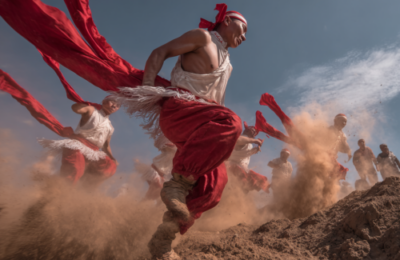
《横山腰鼓舞|黄土地的心跳》是一篇从身体出发、写土地如何在节奏里被唤醒的黄土文明研究。文章以“震”为核心线索,从文与武的身体脾气、鼓子手与拉花的对位结构、脚与道具的动作系统,一直到尾声的人与土地的回声,描写了横山腰鼓舞如何让黄土地“活起来”。这不是一门技艺,而是一种地方的精神动力。
“Yanshan Waist Drum Dance|The Heartbeat of the Yellow Earth” explores how the land itself is awakened through rhythm. Centered on the concept of “震 (zhèn) — the quake,” the article traces the dual temperaments of Wen and Wu, the counterpoint between the drummers and the flower-dancers, and the movement–tool system that keeps the formation alive. Ultimately, it reveals how the heartbeat of the Yellow Earth is not in the drum itself, but in the people who strike it.
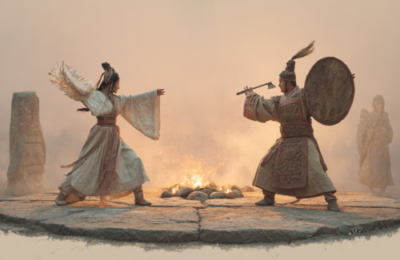
《万舞|用身体向天祭神》是一篇从“身体”重新理解上古礼乐体系的文章。
文舞与武舞两条身体路径,共同构成万舞的双轨结构:
羽的亮度来自劳动的身体,干戚的重量来自献的姿态。
本文从甲骨卜辞、礼乐传统与身体工法分析出发,
重建万舞的动作逻辑——身体如何从生活而来,再被举向神。
它不是求雨的身体,而是祭天的身体;
不是呼喊,而是呈献。
万舞的底层算法,只有一个字:祭。
“Wan Dance|A Body Offered to the Sky” reinterprets one of the earliest ritual dances in ancient China through the lens of bodily practice.
Wan Dance contains two intertwined bodies—
the wen body of feathers, bright and open, and the wu body of shield and axe, heavy and offering-oriented.
Drawing from oracle bone inscriptions, Zhou ritual aesthetics, and agricultural movement patterns,
this article reconstructs the embodied logic of Wan Dance:
how actions grow from labor, and how the body is lifted toward the divine.
It is not a body that asks, but a body that offers.
The fundamental algorithm of Wan Dance is a single word: sacrifice.
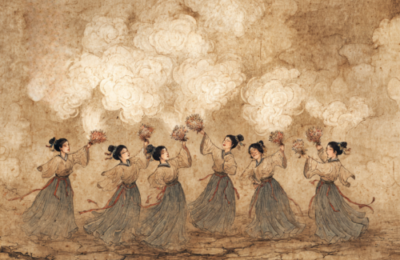
《雩舞|用身体向天求雨》探讨中国最早的求雨仪式——雩。以甲骨文、先秦典籍与礼制考证为基础,呈现雩舞的起源、羽饰技术、八重声音结构、巫与童子的角色、旱雩与常雩的制度分化,以及祈雨时身体如何成为人与天之间的最后语言。文章以“身体力”为线索,强调雩舞是古人面对极端旱灾时,以动作、呼号、歌哭共同组成的“求的身体”。
“Yu Dance|When the Body Begs the Sky for Rain” examines one of China’s earliest rain-invoking rituals—Yu (雩). Drawing on oracle bones, pre-Qin texts, and ritual scholarship, the essay presents the origins of Yu-dance, the function of feathers, the structure of its eight sonic components, the roles of shamans and children, and the distinction between drought rituals (han-yu) and seasonal rituals (chang-yu). Through a “body-force” perspective, the piece highlights how, in moments of extreme drought, movement becomes the final language between humans and the sky.
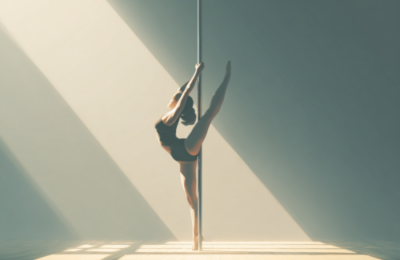
这篇文章以“垂直的身体”为线索,重新书写钢管舞的历史、身体结构与文化误读。钢管舞并非性感的代名词,而是一种对抗地心引力的身体技术:靠力量、皮肤、摩擦力、疼痛与上升组成的训练体系。从杂技到工地,从夜店到竞技场,它的身体方向始终只有一个——向上。文章将起源、身体算法、社会争议与上升意义整合成一条“离开地面”的文明叙述,展示身体如何在半空中重新找到自己的方向。
This essay explores pole dance through the lens of a “vertical body” — a body that chooses ascent over movement on the ground. Far from being a symbol of eroticism, pole dance is a discipline built on strength, friction, skin, pain, and elevation. Its history stretches from acrobatic pole climbing to construction sites, from nightclubs to professional sport, yet its direction has remained constant: upward. Integrating origin, bodily mechanics, cultural misunderstandings, and the meaning of ascent, the essay repositions pole dance as a practice in which the body rewrites itself the moment it leaves the ground.
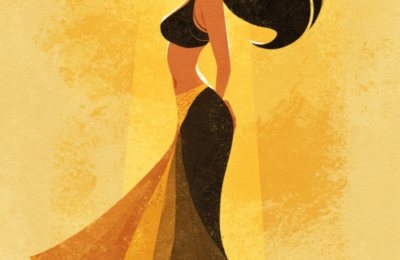
这篇文章从肚皮舞的源起、身体算法、到不同国家的风格差异,回到现代课堂里的自我亮度。
肚皮舞曾经是神庙里的祈愿,后来成为城市中的表演,如今是一种身体的语言学——用腹部、骨盆、波浪与震动,重新练出属于自己的方向感。
文章最后回到 2026 年 2 月 28 日斯图加特的现场:当教练带着全班复述 “I am beautiful!” 的那一刻,肚皮舞不再是求神,而是点亮自己。
“Belly Dance|The Body That Speaks Through the Belly”
This essay traces belly dance from its ancient ritual origins to its contemporary forms: the core-centered philosophy, the algorithm of isolation and recombination, and the stylistic differences among Egyptian, Turkish, and Lebanese traditions.
Modern belly dance becomes a language of the body—using waves, figure-eights, pelvic rhythms, and vibration to reclaim direction from within.
The article returns to Stuttgart on February 28, 2026, when the instructor guided the class to repeat “I am beautiful!”—a moment when belly dance ceased being a prayer to the divine and became an act of self-illumination.
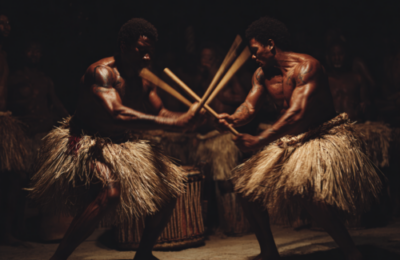
Maculelê 起源于巴西巴伊亚的非裔社区,是一种以棍击为核心的勇士舞蹈。
在现代课堂里,这套来自甘蔗园的节奏语言被重新点亮:
棍子替代刀锋,四拍建立身体的节奏线;
排列与圆阵成为对齐的空间;
每一拍都在训练身体如何在节奏中保持稳定。
这篇文章从器物、空间到节奏,追索 Maculelê 的身体算法,记录一次在 2026 年 2 月 8 日课堂里,
身体如何在第四拍被重新排列。
Maculelê, rooted in Afro-Brazilian communities of Bahia, is a warrior dance built on the rhythm of sticks.
In the contemporary studio, this ancestral language is reactivated:
sticks replace blades, the four-count structure resets the body,
and formations—circles or lines—become spaces for alignment.
Each count refines how the body stays steady inside moving rhythm.
This article traces the bodily algorithms of Maculelê through its tools, space, and rhythmic logic,
documenting how, in a class on February 8, 2026,
the body was reorganized by the force of the fourth beat.
Zumba 由一位哥伦比亚教练意外开启,却以南美节奏为骨,将 Merengue、Salsa、Cumbia、Reggaeton 重新组合成一种“当代的身体”。本篇从起源、身体算法、集体算法,一路写到尾之声,探讨 Zumba 如何让现代人在被压得满溢的生活里,用摇动重新听见自己。它不仅是健身课,而是一种没有祖先、没有禁忌、没有门槛的当代集体——让身体因节奏而成立,让情绪因呼吸而松开,让现代人得以以最温柔的方式回到自己。
Zumba began as an accident by a Colombian instructor, yet it draws on the full spectrum of South American rhythms—Merengue, Salsa, Cumbia, Reggaeton—to form what this essay calls “the body of the contemporary world.” Through origin, body algorithms, collective algorithms, and final resonance, this piece explores how Zumba allows modern individuals to hear themselves again through movement. Beyond fitness, Zumba becomes a ritual-free, borderless collective space where the body reclaims breath, emotion reorganizes itself, and a quiet form of self-return becomes possible in an overwhelming world.