
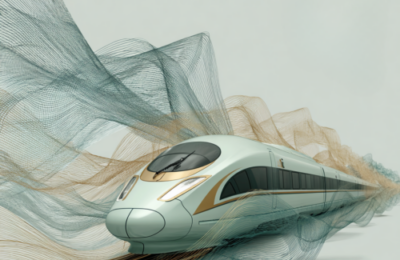
《六大思维之四|迭代思维:如何在现实中撞出道路》
这篇文章尝试用楚简《性自命出》的四个节律—— 待物、待悦、待习、待奠, 重新解释中国高铁的发展逻辑: 不是计划推动创新, 而是现实一次次撞出道路。 文章以六次大提速、600 公里磁悬浮、复兴号标准体系为案例, 展示了一个文明如何在 被迫应对 → 修正自身 → 形成稳态 → 再次被挑战 的循环中成长。 它不仅是一篇关于工程技术的观察, 更是关于系统、组织与个人如何 在不确定世界里建立自己的迭代节律的思考。 This article reframes the development of China’s high-speed rail through the four rhythms from the Chu bamboo manuscript Xing Zi Ming Chu: trigger (待物), alignment (待悦), practice (待习), and stabilization (待奠). Innovation here is not driven by linear planning, but by repeated collisions with reality that force the system to adapt. Through three key cases— the Six Rounds of Speed-Up, the 600 km/h magnetic-levitation program, and the Fuxing unified standard system— the article reveals how a complex civilization grows by cycling through: being disrupted → self-adjusting → reaching stability → being disrupted again. More than a technical narrative, it is a reflection on how systems, organizations, and individuals can build their own iterative rhythm in an uncertain and rapidly changing world.