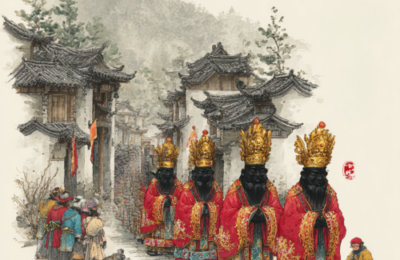
在楚地的山水、湖泽与古郡之间,
我触摸那些以不同方式延续至今的文明结构:
有以身体记住的——
舞步、号子、节令动作、摆手与呼吸;
有以声音延续的——
戏曲声腔、山歌水调、古老的呼号与应和;
有以器物与工艺承载的——
竹器、漆作、木工、丝织、香料、纹样与器型;
也有以仪式维系的——
季节的秩序、村落的节律、人与天地之间的尺度。
它们不是散落的传统,
而是一整套“仍在运行”的文化系统。
在这些非遗的纹理里,
文明并非停留在史册,
而是以动作、声音、手工与器物
继续呼吸、继续生长。
Across the rivers, wetlands, and ancient counties of Chu,
I trace the many forms in which civilization continues today.
Some are preserved through the body—
through dances, work chants, seasonal gestures,
and the shared breath of collective movement.
Some endure through sound—
in opera traditions, mountain songs,
and the ancient rhythms of call and response.
Some live within craft and material—
bamboo and lacquer work, woodcraft, weaving,
aroma traditions, patterns, and the shapes of everyday tools.
Others persist through ritual and seasonal order,
keeping the cadence between people and the land.
These are not isolated customs,
but a living system still in motion.
Within the fibers of Chu’s intangible heritage,
civilization does not rest in the archives—
it continues to breathe and unfold
through movement, sound, craft, and form.
Zwischen den Flüssen, Feuchtgebieten und alten Landkreisen des Chu
folge ich den vielen Wegen,
auf denen sich eine Zivilisation bis heute fortsetzt.
Ein Teil lebt im Körper fort –
in Tänzen, Arbeitsrufen, jahreszeitlichen Gesten
und dem gemeinsamen Atem kollektiver Bewegung.
Ein anderer Teil bleibt im Klang erhalten –
in Opernstilen, Bergliedern
und den alten Rhythmen von Ruf und Antwort.
Vieles zeigt sich im Handwerk und Material –
in Bambus- und Lackarbeiten, Holzhandwerk, Weberei,
Aromatraditionen, Mustern und den Formen alltäglicher Geräte.
Und manches wirkt in Ritual und jahreszeitlicher Ordnung fort,
im Takt zwischen Mensch und Landschaft.
Dies sind keine vereinzelten Bräuche,
sondern ein lebendiges, weiterhin wirkendes System.
In den Fasern des immateriellen Erbes von Chu
ruht die Zivilisation nicht in Archiven –
sie atmet weiter und entfaltet sich
in Bewegung, Klang, Handwerk und Form.
在南岭深山里,瑶族把建屋的二十四道工序写进身体:屈、拧、稳、矮的山地动律,成为造屋动作的底层语法;七十二套路让房子在身体之间一步步站起。对不断迁徙的族群而言,家不靠土地,而靠身体的顺序。跳一次舞,就是盖一次房;房子可能会散,但身体记得家如何再次生成。
In the mountains of the Nanling range, the Yao people inscribed the entire craft of house-building into the body. The mountain’s logic—bend, twist, ground, lower—became the foundation of their movement. Twenty-four construction procedures transformed into embodied memory, while seventy-two routines allowed a house to rise through rhythm and direction. For a migrating people, home is not secured by land but by a sequence held in the body. To dance once is to rebuild a house; the structure may vanish, but the body remembers how home is made again.
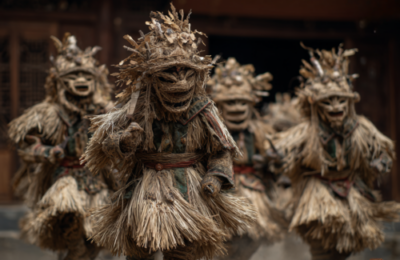
毛古斯舞是土家族最古老的歌舞戏剧之一,被视为中国民族舞蹈与戏剧的重要源头。舞者披草为衣、以土语吟唱、以碎步与抖身重演祖先的农事、渔猎、婚俗与祭祀。本篇以“草身—祖事—族脉”为线索,呈现毛古斯如何让身体成为记忆的容器,使一个族群最原始的生活逻辑与祖先关系,在当代重新被看见与理解。
The Maogus dance is one of the oldest ritual dance-theatre traditions of the Tujia people and is considered a deep ancestral source of Chinese dance and drama. Dancers wear straw “bodies,” speak in archaic Tujia dialect, and use fragmented steps and shaking movements to reenact hunting, farming, marriage customs, and seasonal rites. Organized around the themes of “Straw Body – Ancestral Day – Lineage,” this essay examines how Maogus transforms the human body into a vessel of cultural memory, allowing the living to present their continuity to the ancestors.
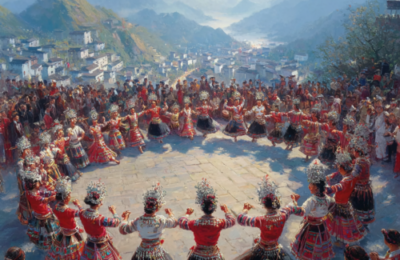
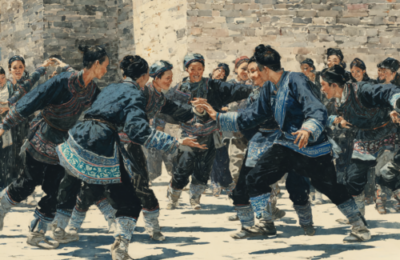
摆手舞流传于湘、鄂、渝、黔四地,是土家族历史悠久的集体舞蹈。顺拐、颤膝、下沉等动律源自山地行走,动作内容涵盖农事、狩猎、迁徙与节庆,把族群的生活史与记忆结构收进身体。队形因场域而变,圆形与行列并存,让动作在群体间流动。摆手舞不是舞姿,而是一套通过身体连接祖先与当代的记忆方式。
The Tujia Baishou Dance, practiced across Hunan, Hubei, Chongqing, and Guizhou, is a long-standing communal dance whose core movements—sync-step walking, knee vibration, and grounded sinking—originate from mountain terrain. Its gestures reenact daily life: farming, hunting, migration, warfare, and seasonal rituals. With circular and linear formations shaped by local contexts, Baishou allows movement to flow through the community. More than a dance, it is a bodily system that reconnects ancestors and the present through shared rhythm.
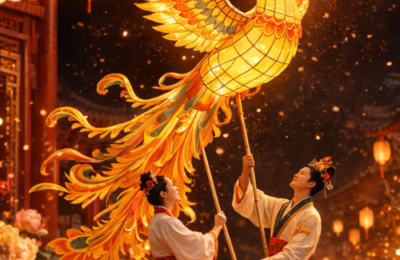
郧阳凤凰灯舞,是一套以“爱静、爱花、爱日”为核心的身体技术。文章从身体法、动作程序与朝阳三部分,呈现凤凰灯如何被立起、被引动、被光牵引,展现楚人将凤凰图腾化为灯舞的传统与美学。
The Yunyang Phoenix Lantern Dance reveals a body technique shaped by stillness, flowers, and sunlight. This essay explores its body method, fixed routines, and the three fire cues of “Morning Sun.”
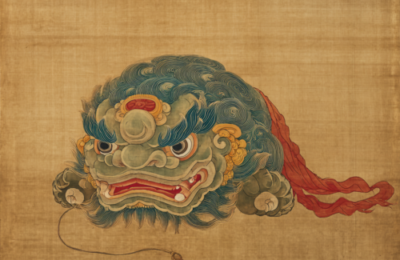
安徽郎溪青狮因“娃娃鱼狮头”走红网络。本文从动作、材料与湿地逻辑出发,解析为何青狮必须贴地、钻桌、模拟鱼类推进,呈现身体如何生成技艺结构,技艺如何反写文明语法。
The Langxi Green Lion went viral for its “giant salamander” look. This article explains how its flattened head, low posture, and frog-paddling movement arise from action-driven design, revealing the body algorithms and wetland logic embedded in Chinese folk performance.
撒叶儿嗬不是舞蹈,而是一条要被身体踏出来的送行之路。顺拐、颤膝、下沉、反胴画圆,配合双龙抱柱、龙摆尾、双连环等阵法,让亡者的归途被集体托住。本文以节奏文明体写作,呈现土家族如何以身体回应死亡。
Sa’eyerho is not merely a dance, but a road carved by the body for the departing. Through distinctive movements—parallel steps, knee tremors, sinking weight, circular torso turns—and spatial patterns such as Double Dragons Embracing the Pillar and Twin Loops, the Tujia community collectively walks the deceased toward their ancestral destination. This article depicts how a body meets death through rhythm and movement.
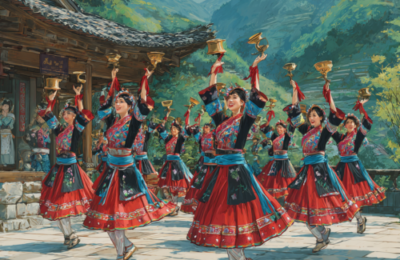
八宝铜铃舞不是表演,而是土家族梯玛用身体打开通神之路的仪式。铜铃的点、摇、抖、撩、绕构成仪式的语言,脚步画出的九宫格让人一步步走向祖先。本文从身体结构、动作逻辑与仪式流程切入,描写铜铃如何让整场祭祀走得下去,以及身体如何成为人神之间的通道。
The Eight-Treasure Copper Bell Dance is not a performance but a Tujia ritual in which the tima (ritual specialist) uses the body to open a passage between humans and ancestors. Through five core bell techniques—point, sway, shake, lift, and circle—and steps that trace the Nine-Palace pattern, the ritual unfolds as the copper bell guides the sequence and the body becomes a conduit. This article examines the dance through bodily structure, movement logic, and ritual progression to reveal how the copper bell carries the ceremony forward.
从芦笙、哆吔、合拢宴,到三月三挖地、四月八搭棚、九月九吃新豆子茶——侗族的“月地瓦”不是一天的节日,而是一整年的身体节奏与公共土地共同生成的爱情系统。本文以身体力视角,重新理解爱情如何被“种出来”。
From circle dances and lusheng music to night feasts, fieldwork, and seasonal rituals, the Dong tradition of “Yuediwa” is not a one-day event but a year-long system where love is cultivated through shared labor, public space, and embodied rhythm. This essay explores how love is “grown,” not merely “found.”
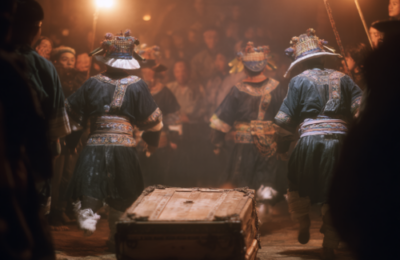
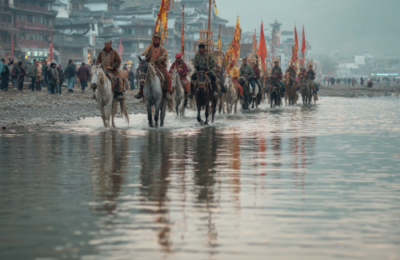
湘西古丈的跳马节,与古希腊酒神祭隔着千年与万里,却共享同一种人类学结构:死亡可被点亮,春天可以被召回。本文以巫傩文化、替罪机制与身体仪式为线索,解析扎马、游行、烧老爷等古老仪程如何让一个世界在冬天之后重新开始。
The Tujia “Jumping Horse” ritual in Xiangxi and the ancient Dionysian festival in Greece share a profound anthropological structure: the passage from death to renewal, the cleansing of misfortune, and the calling back of spring. This article explores how acts such as becoming the “horse,” ritual processions, and the burning of the effigy recreate the world’s beginning through embodied ceremony.
在湖南株洲渌口,游傩不是驱疫,而是用五天把一年重新“走起来”的方式。
五大傩神由五个宗族托举,从初一到初五巡行村庄,既非请神,也非斗鬼,而是巡视、确认、安放——让一个村庄的世界得以成立。
这篇文章记录渌口游傩的身体算法、宗族结构与楚文明的深层回声。
In Lukou, Zhuzhou, the Younuo ritual is not an exorcism but a five-day practice that “walks the new year into being.”
Five clan deities—carried by their respective lineages—traverse the village from the first to the fifth day of the lunar new year.
Rather than summoning or combatting spirits, the ritual performs a territorial and temporal inspection: seeing, confirming, and reinstalling the world.
This essay traces the bodily logic, clan structure, and deep echoes of Chu civilization embedded in Lukou’s Younuo tradition.