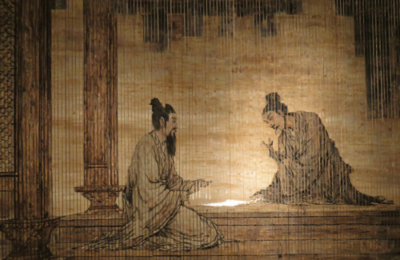
《败军之将的逆袭圣经:上博简〈曹沫之陈〉里的”弱国兵法册”》

《曹沫之陈》呈现的不是战场技艺,而是一套由失败逼出的治理哲学。竹简将“三战三败”的经验转化为结构性洞察:军事溃败源自政治偏离,逆袭必须从制度与德政的重建开始。文中批评“面子工程”、强调“修政善民”、破除宿命论、以德性重构国家的核心竞争力,其思想结构与安大简等楚系文献所体现的“德—政—治”框架高度同构。本文以文献互证的方式,展示春秋时期弱国如何通过自省与治理改革重获战略主动权;并指出真正的胜负,从不是战场决定,而是政治系统决定。 Cao Mo zhi Chen is not a treatise on battlefield tactics but a work of governance extracted from repeated defeat. The text reframes military failure as a symptom of political dysfunction and positions systemic reconstruction—rather than stratagem or force—as the basis for national resurgence. Its critique of vanity projects, emphasis on internal governance, rejection of fatalism, and insistence on virtue as political capital closely parallel the “Virtue–Governance–Order” structure seen in the Anhui University Chu manuscripts. Through cross-textual analysis, this essay demonstrates how weak states in the Spring and Autumn period regained strategic agency through introspection and reform, revealing that the true determinants of victory lie not on the battlefield but within the political system itself.
Weiterlesen《败军之将的逆袭圣经:上博简〈曹沫之陈〉里的”弱国兵法册”》

《楚国的”建国大纲”与”公务员手册”|上博简〈天子建州〉〈从政〉》

本篇文章以上博简《天子建州》《从政》为中心,对楚国政治思想中的“体用合一”治理结构进行系统性分析。《天子建州》展现了楚国王权秩序的顶层设计,可视为早期的“建国大纲”;《从政》则呈现从政者的品德规范与用人法度,具有“公务员手册”的性质。文章透过简文对“礼”“文德与武德”“五德”“言行一致”“君子与小人”的讨论,将先秦政治哲学与现代治理困境进行互文式对读,指出形式主义、信任危机、干部能力落差等现代问题的根源。本文试图透过两篇楚简重新思考制度与人的关系,提出技术理性与价值理性的双轨整合,是良好治理的关键。 This article examines the governance philosophy embedded in the Shanghai Museum Chu Bamboo Slips Tianzi Jianzhou (“The King Establishes the Domains”) and Congzheng (“On Serving in Office”). Tianzi Jianzhou outlines the constitutional blueprint of political order—analogous to an early “founding charter”—while Congzheng articulates the ethical standards and behavioral norms of officials, functioning as a “civil service manual.” Through a close reading of key concepts such as ritual authenticity, the balance between civil and martial governance, the Five Virtues of officials, integrity in action and speech, and the contrast between the gentleman and the petty man, this article places ancient Chu political thought in dialogue with contemporary governance challenges, including formalism, trust deficits, and competence gaps in public administration. It argues that effective governance requires the integration of institutional design (“ti,” the body) and human conduct (“yong,” the use), as well as a balance between technical rationality and value rationality.

Weiterlesen《楚国的”建国大纲”与”公务员手册”|上博简〈天子建州〉〈从政〉》

《上古CEO的终极困局:雄心、民心与臣子之心|上博简〈举治王天下〉〈邦人不称〉〈史蒥问于夫子〉》

本篇以上博简《举治王天下》《邦人不称》《史蒥问于夫子》为轴心,将三篇看似独立的竹简重组为一个“权力三角模型”。通过顶层战略(雄心)、民意认同(民心)、执行层德行(臣子之心)三者之间的动态张力,揭示先秦治理体系的结构性困局。文章不试图将现代政治投射到古代,而是透过这些竹简,重新理解一个组织为何成功,亦为何失败。在古老的制度纹理中,读者得以看见当代组织仍未逃脱的三角悖论:战略是否足够接地气?执行者能否以身作则?民众是否真正被看见? This essay reframes three Shanghai Museum Chu bamboo‐slip manuscripts—Raising Order to Rule All Under Heaven, The People Do Not Praise, and Shi Liu Asks the Master—as a unified “Triangular Model of Power.” Together they reveal the structural tension between leadership vision, administrative integrity, and popular recognition: ambition, execution, and legitimacy. Rather than projecting modern politics onto antiquity, the piece uses these bamboo texts to illuminate why organizations succeed or collapse. From the idealistic blueprint of Ju Zhi, to the silent dissent in Bang Ren Bu Cheng, to the ethical discipline required in Shi Liu, the analysis highlights a persistent organizational paradox that transcends time.

Weiterlesen《上古CEO的终极困局:雄心、民心与臣子之心|上博简〈举治王天下〉〈邦人不称〉〈史蒥问于夫子〉》

《楚人的决策厨房:治大国若烹小鲜—从宇宙食谱到行动料理|清华简〈筮法〉〈别卦〉上博简〈卜书〉〈卉茅之外〉》

本篇以“决策厨房”为整体框架,对清华简《别卦》《筮法》与上博简《卜书》《卉茅之外》做四重对读。文章依序展开:以《别卦》勾勒宇宙结构的“基础风味库”,以《筮法》建立围绕时令、卦位与爻象的“火候与节律”规则,以《卜书》读取兆纹、诊断局势的“食材状态”,并以《卉茅之外》检视信息流通、官位更替与民心冷暖等“厨房运作条件”。文中的烹饪与风味意象,并非原文本之义,而是当代读者进入这些结构的通感式转译路径,借熟悉的“做菜经验”,去触摸楚简中隐含的秩序感与决策逻辑。 This essay uses the metaphor of a “decision kitchen” to read four Warring States Chu manuscripts together: Bie Gua and Shi Fa from the Tsinghua corpus, and Bu Shu and Hui Mao Zhi Wai from the Shanghai Museum slips. It follows a four-step structure: Bie Gua as a cosmic “flavor library,” Shi Fa as timing and heat-control rules built from seasons, positions and lines, Bu Shu as a diagnostic reading of crack patterns and situational “ingredient states,” and Hui Mao Zhi Wai as the institutional and ethical conditions under which the whole kitchen can still function. The culinary and taste metaphors are not the texts’ original meanings, but a modern synaesthetic translation, using familiar cooking experience to help contemporary readers access the structural order and decision logic encoded in these ancient materials.

Weiterlesen《楚人的决策厨房:治大国若烹小鲜—从宇宙食谱到行动料理|清华简〈筮法〉〈别卦〉上博简〈卜书〉〈卉茅之外〉》

《楚国的”运营天书”:清华简《四时》与《八气五味》里的宇宙KPI》

清华简《四时》与《八气五味》看似晦涩,却是楚国王室为天地编写的“运营天书”。《四时》用三十七个精密节点建立永不宕机的“时间服务器”;《八气五味》以气与味的周期流转构成万物运行的“元素算法”,并提出五行的操作指令与五祀系统。本文用现代产品思维重读这两篇竹简,揭示楚人如何以“第一性原理”“资源周期”“异常监控”“系统对齐”等理念,主动将人间秩序与宇宙节奏对接,构建一套跨越两千年的“宇宙KPI”。 The Tsinghua bamboo manuscripts Four Seasons and Eight Qi and Five Flavors are not merely ancient calendrical texts—they are the Chu kingdom’s “Universal Operating Manual.” Four Seasons builds a never-failing “time server” through 37 precisely defined nodes. Eight Qi and Five Flavors outlines the elemental logic of the cosmos, defining cycles of qi, functional attributes (flavors), operational rules for the Five Elements, and the Five Spirit Interfaces. This article reinterprets these manuscripts through modern product and systems thinking, revealing how the Chu people aligned human activities with cosmic rhythm through first principles, resource cycles, anomaly detection, and systemic coherence—forming a two-millennia-old model of “cosmic KPIs.”

Weiterlesen《楚国的”运营天书”:清华简《四时》与《八气五味》里的宇宙KPI》

《楚国霸权合法性再造:楚庄王的顶级权谋 |上博简〈郑子家丧〉》

本文透过上博简《郑子家丧》,分析楚庄王如何在一场邻国葬礼中,完成楚国霸权的“合法性再造”。文章聚焦四个关键步骤:议程设置、道义叙事、规则武器化与旧霸权压力测试,呈现春秋时代权力、秩序与正当性的深层结构。通过对简文的逐段解析,展示楚国如何从“南方蛮夷”转变为“礼法卫士”,并在两棠之战中通过公开挑战完成霸权的最终确认。This article examines how, according to the Shanghai Museum Chu bamboo slip Zheng Zi Jia Sang, King Zhuang of Chu leveraged a neighboring minister’s funeral to reconstruct the legitimacy of Chu’s emerging hegemony. Focusing on four strategic moves—agenda setting, moral reframing, the weaponization of ritual norms, and a final stress test against the old hegemon Jin—the essay reveals the underlying logic of power, order, and legitimacy in the Spring and Autumn era. Through close reading of the text, it demonstrates how Chu transformed itself from a southern outsider into a guardian of ritual order, ultimately confirming its hegemonic status after the battle at Liangtang.

Weiterlesen《楚国霸权合法性再造:楚庄王的顶级权谋 |上博简〈郑子家丧〉》